Betofthan®
Ukraine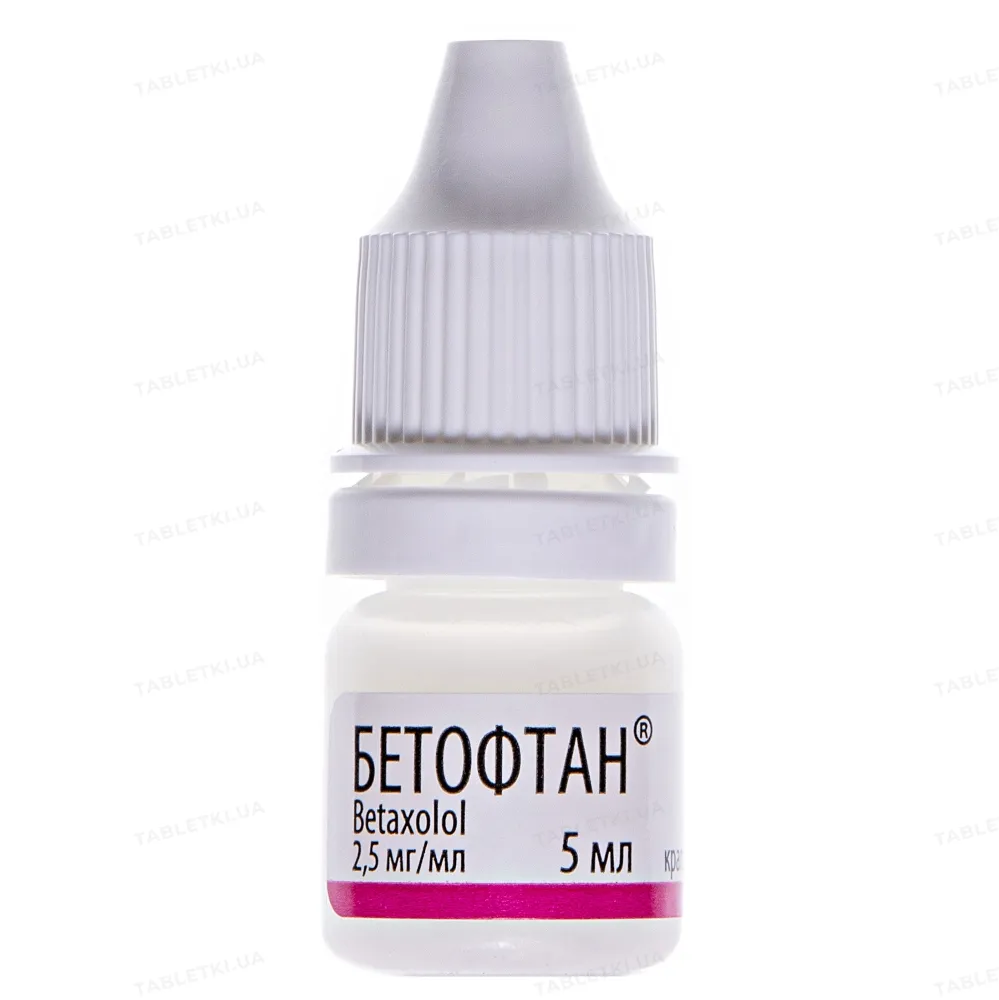
Table of Contents
INSTRUCTIONS for medical use of the medicinal product BETOFTAN® (BETOFTAN)
Composition:
Active substance: 1 ml of eye drops contains 2.8 mg betaxolol hydrochloride (calculated as 100% dry substance), equivalent to 2.5 mg of betaxolol;
Excipients: sodium polystyrene sulfonate, carbomer (974P), N-lauroylsarcosine, boric acid, mannitol (E 421), edetate disodium, benzalkonium chloride, sodium hydroxide solution and/or diluted hydrochloric acid, water for injections.
Pharmaceutical form. Eye drops.
Main physicochemical characteristics: white to almost white suspension.
Pharmacotherapeutic group. Ophthalmological agents. Anti-glaucoma preparations and miotics. Beta-adrenoreceptor blockers. ATC code: S01ED02.
Pharmacological properties.
Pharmacodynamics.
Betaxolol is a cardioselective beta-1 adrenergic receptor blocker that does not exert significant membrane-stabilizing (local anesthetic) or intrinsic sympathomimetic activity.
Elevated intraocular pressure is the major risk factor for the development of glaucomatous visual field loss. The higher the intraocular pressure, the greater the likelihood of optic nerve damage and visual field loss. After ocular instillation, betaxolol reduces both elevated and normal intraocular pressure, regardless of whether it is associated with glaucoma; its hypotensive mechanism of action is related to decreased production of aqueous humor, as demonstrated by tonography and fluorophotometry. Betaxolol begins to act within 30 minutes, and maximum effect is usually achieved within 2 hours after topical application. A single dose provides reduction of intraocular pressure for up to 12 hours.
Vasorelaxant effects of betaxolol on peripheral blood vessels have been demonstrated in an in vivo study in dogs. Additionally, the vasorelaxant effect of betaxolol and its ability to block calcium channels have been demonstrated in several in vitro studies using ocular and non-ocular vascular models in rats, guinea pigs, rabbits, dogs, pigs, and cows. The neuroprotective effect of betaxolol has been demonstrated in both in vivo and in vitro experiments on rabbit retina, rat cortical cultures, and chick retinal cultures.
Data from controlled clinical trials involving patients with chronic open-angle glaucoma and ocular hypertension indicate that treatment with betaxolol provides a longer-lasting beneficial effect on visual field compared to timolol, a non-selective beta-blocker. Furthermore, betaxolol administration was not associated with any negative impact on optic nerve blood supply. Betaxolol maintains or improves ocular blood flow/perfusion.
When applied topically as ophthalmic drops, betaxolol has minimal or no effect on pupillary constriction and exerts minimal influence on pulmonary and cardiovascular function. Ophthalmic betaxolol did not significantly affect lung function, as assessed by measurements of forced expiratory volume in one second, vital capacity, and their ratio. No signs of cardiovascular beta-adrenergic blockade were observed during the study.
Oral beta-adrenergic blockers reduce cardiac output in healthy volunteers and in patients with heart disease. In patients with severe myocardial dysfunction, beta-adrenergic receptor antagonists may suppress the sympathetic stimulation necessary to maintain adequate cardiac function.
Clinical trial results indicate that betaxolol suspension was better tolerated than the solution.
The polar nature of betaxolol may cause ocular discomfort. In Betoptik® formulation, betaxolol molecules are bound to amberlite resin via ionic bonds. After instillation, betaxolol molecules are released into the tear film by sodium ions. This transfer process occurs over several minutes and enhances ophthalmic comfort during application of Betoptik®.
Preclinical safety data
Carcinogenicity studies in mice and rats receiving oral betaxolol at doses of 6 mg/kg/day, 20 mg/kg/day, or 60 mg/kg/day (mice) and 3 mg/kg/day, 12 mg/kg/day, or 48 mg/kg/day (rats) demonstrated no evidence of carcinogenic potential.
Various in vitro and in vivo mutagenicity tests in bacterial and mammalian cells showed no mutagenic effect of betaxolol.
Studies evaluating the effects of betaxolol on reproductive function, as well as teratological, perinatal, and postnatal studies conducted in rats and rabbits following oral administration of betaxolol hydrochloride, demonstrated evidence of post-implantation loss in rats and rabbits at doses exceeding 12 mg/kg and 128 mg/kg, respectively.
Betaxolol hydrochloride showed no teratogenic effects, and no other adverse effects on reproductive function were observed at subtoxic doses.
Pharmacokinetics.
Betaxolol has high lipophilicity, resulting in a high degree of corneal penetration and high drug concentrations in ocular tissues. Plasma levels of betaxolol after topical administration are low. In clinical pharmacokinetic studies, plasma concentrations were below the quantification limit of 2 ng/mL. Betaxolol is well absorbed after oral administration, has low first-pass metabolism, and a relatively long elimination half-life of approximately 16–22 hours. Betaxolol is primarily excreted via the kidneys, with a smaller portion eliminated in feces. The main metabolites are two forms of carboxylic acid and unchanged betaxolol, which are excreted in urine (approximately 16% of the administered dose).
Betaxolol begins to act usually within 30 minutes, and maximum effect is usually achieved within 2 hours after topical application. A single dose provides reduction of intraocular pressure for up to 12 hours.
Clinical characteristics.
Indications.
Reduction of intraocular pressure in patients with chronic open-angle glaucoma or ocular hypertension (either as monotherapy or in combination with other medicinal products).
Contraindications.
- Hypersensitivity to the active substance or to any of the excipients of the medicinal product.
- Sinus bradycardia, sinoatrial node dysfunction syndrome, sinoatrial block, second- or third-degree atrioventricular block, uncontrolled by pacemaker. Severe heart failure or cardiogenic shock.
- Reactive respiratory diseases, including severe bronchial asthma or history of severe bronchial asthma, severe chronic obstructive pulmonary disease.
Interaction with other medicinal products and other forms of interaction.
Specific studies on the interaction of betaxolol with other medicinal products have not been conducted.
- There is a potential for additive effects leading to arterial hypotension and/or marked bradycardia when ophthalmic solutions containing beta-blockers are used concomitantly with oral calcium channel blockers, beta-adrenergic blocking agents, antiarrhythmic drugs (including amiodarone), digitalis glycosides, parasympathomimetics, or guanethidine.
- Beta-blockers may reduce sensitivity to adrenaline (epinephrine) used in the treatment of anaphylactic reactions. Should be used with caution in patients with atopy or history of anaphylaxis.
- In rare cases, mydriasis has been reported during concomitant use of ophthalmic beta-blockers and adrenaline (epinephrine).
- When administering several locally acting ophthalmic medicinal products, at least 5 minutes should be waited between applications. Ophthalmic ointments should be administered last.
- Since betaxolol is an adrenergic receptor blocker, it should be administered with caution to patients who are concurrently using adrenergic psychotropic agents, due to the risk of potentiation of their effects.
Special precautions for use.
For ophthalmic use only.
The incidence of adverse reactions with topical ocular administration is lower than with systemic administration. For measures to reduce systemic absorption, see section "Dosage and administration".
Corneal disease
Dry eye may occur with topical ocular administration of beta-blockers. Beta-blockers should be used with caution in patients with corneal diseases.
Other beta-blockers
The effect on intraocular pressure may be enhanced when betaxolol is administered to patients already receiving systemic beta-blocking agents. Systemic beta-blocking effects are known. Patients in this category should be carefully monitored when beta-blocking agents are administered. Concomitant use of two locally acting beta-adrenergic agents is not recommended (see section "Interaction with other medicinal products and other forms of interaction").
To reduce intraocular pressure in patients with closed-angle glaucoma, BETOPTAN® must be used only in combination with miotic agents.
Choroidal detachment
Choroidal detachment has been reported with the use of aqueous suppressant therapy (e.g., timolol, acetazolamide) following filtration procedures.
Surgical anesthesia
Beta-blocking anesthetic agents may block the effects of systemic beta-agonists such as epinephrine. If a patient is taking betaxolol, this should be reported to the anesthesiologist.
Nasolacrimal occlusion or keeping the eyelids closed for 2 minutes may reduce systemic absorption of the drug. This may decrease systemic effects and increase local effects of ophthalmic medications.
General
- Like other ophthalmic medicinal products for topical use, betaxolol is absorbed systemically. Due to the presence of a beta-adrenergic component, the same adverse reactions related to the cardiovascular and respiratory systems, as well as other adverse reactions, may occur with betaxolol as with systemic beta-adrenergic receptor blockers.
Cardiac disorders
- Patients with cardiovascular diseases (e.g., coronary heart disease, Prinzmetal's angina, and heart failure) and arterial hypotension should be critically evaluated regarding the necessity of beta-blocker therapy, and alternative active substances should be considered. Patients with cardiovascular diseases should be monitored. Due to the adverse effect of beta-blockers on conduction time, they may be administered with caution only to patients with first-degree heart block.
Vascular disorders
- Caution should be exercised when treating patients with severe impairment of peripheral circulation (i.e., severe forms of Raynaud's disease or Raynaud's syndrome).
Respiratory disorders
- Reports of respiratory reactions, including fatal cases due to bronchospasm, have been received in patients with asthma after administration of certain beta-blockers. This medicinal product should be used with caution in patients with mild/moderate bronchial asthma, including those with a history of asthma, or mild/moderate chronic obstructive pulmonary disease (COPD).
Hypoglycemia/diabetes
- Beta-adrenoblockers should be used with caution in patients prone to spontaneous hypoglycemia and in patients with labile diabetes, as beta-blockers may mask the symptoms of acute hypoglycemia.
Hyperthyroidism
- Beta-adrenoblockers may also mask signs of hyperthyroidism.
Muscle weakness
- Beta-adrenoblockers may exacerbate muscle weakness associated with certain symptoms of myasthenia gravis (e.g., diplopia, ptosis, and generalized weakness).
Anaphylactic reactions
- Patients with a history of atopy or severe anaphylactic reactions to various allergens may experience a more intense reaction upon re-exposure to these allergens while on beta-blockers, and they may not respond to usual doses of epinephrine used to treat anaphylactic reactions.
Contact lenses
- BETOPTAN® contains benzalkonium chloride, which may cause eye irritation and discolor soft contact lenses. Contact with soft contact lenses should be avoided. Patients should be advised to remove contact lenses before instilling BETOPTAN® eye drops and to wait 15 minutes before reinserting contact lenses.
Use during pregnancy or breastfeeding.
Reproductive function
There are no data on the effect of the medicinal product on human reproductive function.
Pregnancy
There are insufficient data on the use of betaxolol in pregnant women. For measures to reduce systemic absorption, see section "Dosage and administration".
Epidemiological studies have not shown a negative effect on fetal development; however, with oral administration of beta-blockers, a risk of intrauterine growth retardation has been observed. In addition, beta-blocking effects (e.g., bradycardia, arterial hypotension, respiratory distress, and hypoglycemia) have been observed in newborns when beta-blockers were administered prior to delivery.
Betaxolol should not be used during pregnancy except in cases of acute necessity. However, if BETOPTAN® was used prior to delivery, careful monitoring of the newborn is required during the first days after birth.
Lactation period
Beta-blockers pass into breast milk and may cause serious adverse effects in breastfed newborns. However, when therapeutic doses of betaxolol are administered as eye drops, it is unlikely that sufficient amounts will be excreted into breast milk to cause clinical symptoms of beta-blockade in the newborn. For measures to reduce systemic absorption, see section "Dosage and administration".
Ability to influence reaction speed when driving or operating machinery.
BETOPTAN® has no effect or a negligible effect on the ability to drive or operate machinery. Transient blurred vision or other visual disturbances may negatively affect the ability to drive or operate machinery. If blurred vision occurs during instillation, the patient should wait until vision clears before driving or operating machinery.
Method of administration and dosage.
For ophthalmic use.
Use in adults, including elderly patients
The recommended dose is 1 drop of Betoptan®, administered into the conjunctival sac of the affected eye(s) twice daily. In some patients, several weeks of treatment with Betoptan® may be required to achieve stabilization of the intraocular pressure-lowering effect. Close monitoring of patients with glaucoma is recommended.
If intraocular pressure is not adequately controlled with the recommended doses, concomitant therapy with other anti-glaucoma agents may be used.
After instillation, it is recommended to close the eyelid tightly or perform nasolacrimal occlusion. This reduces systemic absorption of ophthalmic drugs and decreases the likelihood of systemic adverse reactions.
When using other topical ophthalmic agents concomitantly, an interval of 10–15 minutes between administrations should be maintained.
Use in children
The efficacy and safety of Betoptan® eye drops in patients under 18 years of age have not been established.
Use in patients with hepatic or renal impairment
Betoptan® has not been studied in these patient populations.
Method of administration
The bottle should be shaken well before use.
To prevent contamination of the dropper tip and suspension, care must be taken to avoid touching the eyelids, surrounding areas, or other surfaces with the tip of the dropper bottle.
Children.
The efficacy and safety of Betoptan® eye drops in patients under 18 years of age have not been established.
Overdose.
In case of accidental ingestion, overdose symptoms may include bradycardia, hypotension, cardiac failure, and bronchospasm.
In the event of Betoptan® overdose, treatment should be symptomatic and supportive.
Adverse reactions.
Summary of safety data
The most common adverse effect observed during clinical studies of Betoptan® was eye discomfort, occurring in 12% of patients.
The adverse effects listed below were observed during clinical studies of the medicinal product and were classified as follows: very common (≥1/10), common (≥1/100, <1/10), uncommon (≥1/1000, <1/100), rare (≥1/10,000, <1/1000), very rare (<1/10,000). Within each frequency category, adverse effects are listed in order of decreasing severity.
| System organ |
Adverse reactions according to MedDRA classifier (version 13.0) |
| Cardiac disorders |
Uncommon: bradycardia, tachycardia |
| Nervous system disorders |
Common: headache Isolated cases: syncope |
| Eye disorders |
Very common: eye discomfort Common: blurred vision, increased lacrimation, foreign body sensation in eyes Uncommon: punctate keratitis, keratitis, conjunctivitis, blepharitis, decreased visual acuity, visual disturbance, photophobia, eye pain, dry eyes, asthenopia, blepharospasm, unusual eye sensation, eye pruritus, eye discharge, scaling along eyelid margins, eye inflammation, eye irritation, conjunctival disorders, conjunctival edema, ocular hyperemia Isolated cases: cataract, ophthalmological disorders |
| Respiratory, thoracic and mediastinal disorders |
Uncommon: asthma, dyspnea, respiratory disorders, rhinitis Isolated cases: cough, rhinorrhea |
| Gastrointestinal disorders |
Uncommon: nausea Isolated cases: dysgeusia |
| Skin and subcutaneous tissue disorders |
Isolated cases: dermatitis, rash |
| Vascular disorders |
Isolated cases: arterial hypotension |
| Psychiatric disorders |
Isolated cases: restlessness |
| Reproductive system and breast disorders |
Isolated cases: decreased libido |
Based on post-marketing studies, the adverse reactions listed below have been identified. According to available data, it is not possible to calculate the frequency of their occurrence.
| System organ |
Adverse reactions according to MedDRA classifier (version 13.0) |
| Immune system disorders |
hypersensitivity |
| Psychiatric disorders |
insomnia, depression |
| Nervous system disorders |
dizziness |
| Ophthalmological disorders |
eyelid erythema |
| Cardiac disorders |
arrhythmia |
| Skin and subcutaneous tissue disorders |
alopecia |
| General disorders and administration site conditions |
asthenia |
Description of the reported adverse reactions
As with other topically applied ophthalmic medicinal products, betaxolol is absorbed into the systemic circulation. This may cause similar adverse effects as those observed with systemic beta-blockers. The incidence of systemic adverse reactions following topical ocular administration is lower than with systemic administration. The reported adverse reactions include those observed within the class of ophthalmic beta-blockers.
Additional adverse reactions observed with ophthalmic beta-blockers and which may occur with the use of Betoftan® eye drops are:
- Immune system disorders: systemic allergic reactions including angioedema, urticaria, localized and generalized rash, pruritus, anaphylactic reaction, toxic epidermal necrolysis.
- Metabolism and nutrition disorders: hypoglycemia.
- Psychiatric disorders: depression, nightmares, memory loss, hallucinations, psychosis, confusion.
- Nervous system disorders: syncope, cerebrovascular disorder, cerebral ischemia, exacerbation of signs and symptoms of myasthenia gravis, paresthesia.
- Ophthalmic disorders: signs and symptoms of eye irritation (e.g., burning, stinging, itching, tearing, redness), blepharitis, choroidal detachment following filtration surgery (see section "Special precautions for use"), decreased corneal sensitivity, corneal erosion, ptosis, diplopia.
- Cardiac disorders: chest pain, tachycardia, edema, congestive heart failure, atrioventricular block, cardiac arrest, heart failure.
- Vascular disorders: hypotension, Raynaud's phenomenon, cold extremities, worsening of intermittent claudication.
- Respiratory, thoracic and mediastinal disorders: bronchospasm (predominantly in patients with pre-existing bronchospastic disease).
- Gastrointestinal disorders: dyspepsia, diarrhea, abdominal pain, vomiting, dry mouth, glossitis.
- Skin and subcutaneous tissue disorders: psoriasiform rash or exacerbation of psoriasis.
- Musculoskeletal and connective tissue disorders: myalgia.
- Reproductive system and breast disorders: sexual dysfunction, impotence.
- General disorders and administration site conditions: asthenia/fatigue.
Additionally, increased levels of antinuclear antibodies have been observed; clinical relevance is not established.
Shelf life. 2 years.
Shelf life after opening the container: 28 days.
Do not use the medicinal product after the expiry date stated on the packaging.
Storage conditions.
Store in the original packaging at a temperature not exceeding 25°C.
Keep out of reach and sight of children.
Packaging.
5 ml in a bottle No. 1 in a cardboard pack.
Prescription category. Prescription only.
Manufacturer.
JSC "Farmak".
Manufacturer's address and place of business.
74, Kyrylivska Street, Kyiv, 04080, Ukraine.