Bepanthen® plus
Ukraine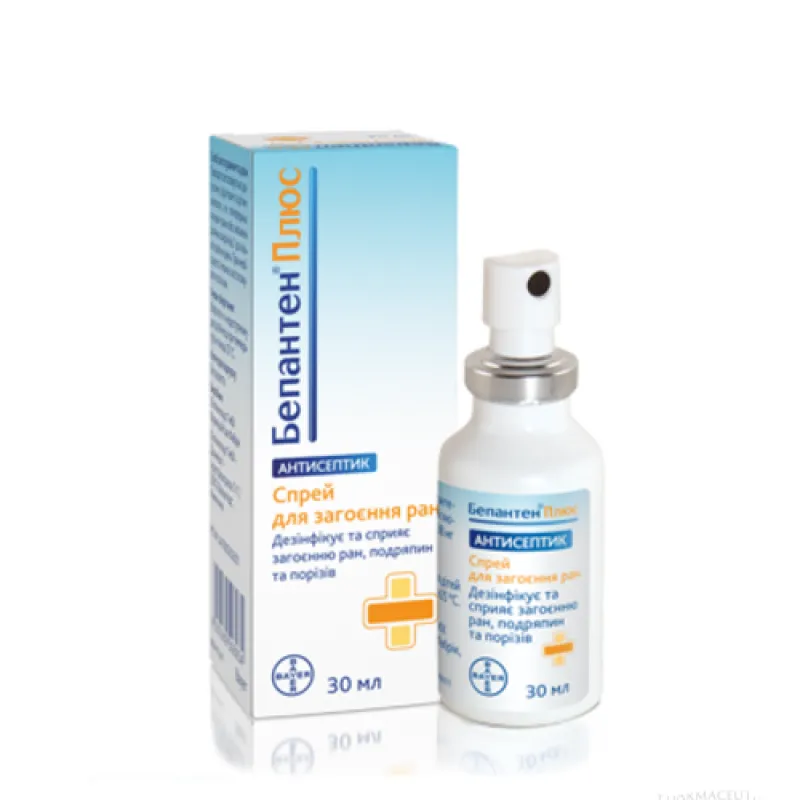
Table of Contents
INSTRUCTIONS FOR MEDICAL USE OF THE MEDICINAL PRODUCT Bepanthen® Plus (Bepanthen® Plus)
Composition:
Active substances: dexpanthenol, chlorhexidine digluconate;
1 ml of solution contains dexpanthenol 50 mg; chlorhexidine digluconate 5 mg, equivalent to 2.88 mg of chlorhexidine;
Excipients: DL-pantolactone, macrogol lauryl ether, ethanol 96%, purified water.
Pharmaceutical form. Topical spray solution.
Main physicochemical properties: clear, colorless liquid with a faint odor.
Pharmacotherapeutic group. Dermatologicals. Antiseptics and disinfectants. Chlorhexidine combinations. ATC code D08AC52.
Pharmacological properties.
Pharmacodynamics.
Dexpanthenol is rapidly converted within cells into pantothenic acid, which, as part of one of the most important coenzymes—coenzyme A—plays a key role in the metabolism of every cell. Pantothenic acid is essential for the formation of the epithelium of the skin and mucous membranes. It promotes increased mitotic activity and enhances the strength of collagen fibers during wound healing.
Chlorhexidine digluconate belongs to the well-known antiseptics that are well tolerated and exhibit bactericidal activity against gram-positive bacteria, particularly sensitive strains of Staphylococcus aureus (staphylococcus aureus), which are most commonly associated with skin infections. It has somewhat lower activity against gram-negative microorganisms. Some species of Pseudomonas and Proteus are insensitive. It has weak activity against fungi and is ineffective against viruses.
Pharmacokinetics.
Dexpanthenol is rapidly absorbed through the skin, immediately converted into pantothenic acid (vitamin B5), and incorporated into the endogenous stores of this vitamin.
In the blood, pantothenic acid binds to plasma proteins (particularly beta-globulin and albumin). In healthy adults, the concentration is approximately 500–1000 µg/L in whole blood and 100 µg/L in serum.
Pantothenic acid is not metabolized in the body and is excreted unchanged. 60–70% of an oral dose is excreted in urine, the remainder in feces. In adults, approximately 2–7 mg/day is excreted in urine; in children, 2–3 mg/day.
Absorption of chlorhexidine through intact skin in adults has not been detected. In infants bathed in a 4% chlorhexidine gluconate cleansing solution, low concentrations of chlorhexidine in blood (≤ 1 µg/mL) have been observed.
Clinical characteristics.
Indications.
Superficial skin lesions of any origin where there is a risk of infection: scratches, abrasions, cuts, skin fissures, burns, abscesses, dermatitis (inflammation of the skin).
Chronic skin lesions, such as leg ulcers and pressure sores.
Skin infections, for example, secondarily infected eczema and secondarily infected neurodermatitis.
Treatment of nipple fissures in breastfeeding women.
Minor surgical procedures: injuries and surgical wounds.
Contraindications.
Hypersensitivity to the components of the drug. Prohibited for use on a perforated eardrum.
Interaction with other medicinal products and other forms of interaction.
Concurrent use with other antiseptics is not recommended to avoid mutual interference (antagonism or inactivation). Chlorhexidine is incompatible with surfactants and other anionic compounds.
Special precautions for use
Avoid contact with eyes, ears, and mucous membranes.
It is not recommended for treating skin irritations with a low risk of infection (e.g., sunburn). In such cases, products without disinfectants are advised.
Rarely, when using antiseptic agents containing chlorhexidine, mild to moderate allergic reactions may occur, affecting the skin (e.g., itching, urticaria), face (e.g., angioneurotic edema), respiratory tract (e.g., asthma, wheezing, or other breathing difficulties), gastrointestinal tract, or cardiovascular system. If symptoms of a severe allergic reaction occur, use of Bepanthen Plus should be discontinued immediately and medical advice should be sought to prevent further progression. If infection persists or the condition worsens, consult a physician.
Bepanthen® Plus must not enter the eyes. Serious cases of persistent corneal damage, potentially requiring corneal transplantation, have been reported following accidental eye exposure to medicinal products containing chlorhexidine, despite protective measures, due to solution migration beyond the intended surgical site. Extreme caution must be taken during application to ensure Bepanthen® Plus does not migrate beyond the intended application site into the eyes. Particular caution is required in anesthetized patients, who may not be able to immediately report eye exposure. If Bepanthen® Plus enters the eyes, they should be immediately and thoroughly rinsed with water. Immediate consultation with an ophthalmologist is recommended.
Use during pregnancy or breastfeeding
Reproductive toxicity studies in animals have shown no risk to the fetus. However, during pregnancy, the product should not be used over large areas of skin, as controlled studies in pregnant women have not been conducted.
The product may be used by breastfeeding women, but application over large skin areas should be avoided. If the product is used to treat cracked nipples, it should be washed off before breastfeeding.
Ability to influence reaction rate when driving or operating machinery
Does not affect.
Method of Administration and Dosage
The medication should be applied to adults, adolescents, and children: apply to previously cleaned wounds or inflamed areas of skin once or several times daily. Dressings may be used if necessary.
Children. The medication may be used in children aged 1 year and older.
Overdose.
Dexpanthenol is well tolerated even at high doses and is considered non-toxic. Hypervitaminosis has not been reported.
Elevated levels of aminotransferase after chlorhexidine self-intoxication have been described. Skin irritation may occur after frequent repeated topical application to the same skin areas. The medication is intended for the treatment of superficial skin injuries. Application to large skin areas should be avoided.
Side effects.
Immune system, skin and subcutaneous tissue disorders. Allergic skin reactions and burning sensation may rarely occur. Cases of contact dermatitis, allergic dermatitis, pruritus, erythema, eczema, rash, urticaria, swelling, skin irritation and vesicles have been reported. Hypersensitivity, allergic reactions and anaphylactic shock (potentially life-threatening) with corresponding laboratory and clinical manifestations, including asthma syndrome, and mild to moderate reactions potentially affecting the skin, respiratory system, gastrointestinal tract, and cardiovascular system, including cardiopulmonary failure, have been reported.
Eye disorders. Corneal erosion, epithelial defect/corneal injury, severe irreversible visual impairment. In the post-marketing period, cases of severe corneal erosion and serious irreversible visual impairment have been reported following accidental ocular exposure, some of which required corneal transplantation (see section "Special precautions for use").
Shelf life.
3 years.
Storage conditions.
Keep out of reach of children. Store at a temperature not exceeding 25 °C.
Packaging.
30 ml in a spray bottle with a plastic cap, in a cardboard box.
Availability. Over-the-counter (without prescription).
Manufacturer.
Lichtenheldt GmbH Pharmazeutische Fabrik /
Lichtenheldt GmbH Pharmazeutische Fabrik.
Manufacturer's address and place of business.
Lichtenheldt GmbH - Werk I - Industriestrasse 7-11, 23812 Wahlstedt, Germany /
Lichtenheldt GmbH - Werk I - Industriestrasse 7-11, 23812 Wahlstedt, Germany.