Bageda
Ukraine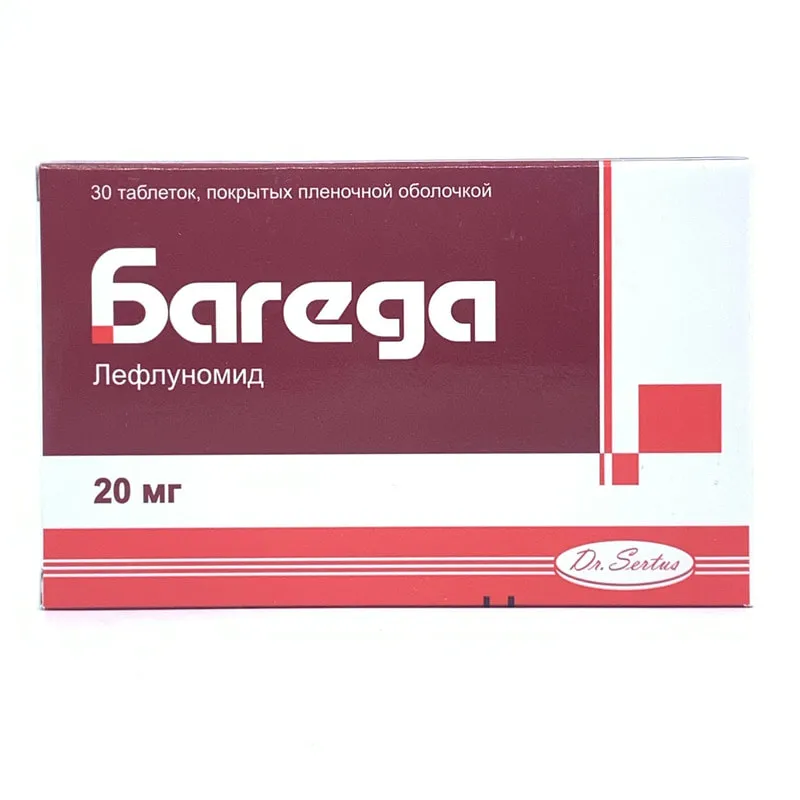
Table of Contents
INSTRUCTIONS FOR MEDICINAL USE OF THE MEDICINAL PRODUCT BAGEDA (BAGEDA)
Composition:
Active substance: leflunomide;
One film-coated tablet contains leflunomide 10 mg or 20 mg;
Excipients: hydroxypropylcellulose; lactose monohydrate; anhydrous lactose; pregelatinized corn starch; povidone K 30; magnesium stearate; sodium starch glycolate (type A); colloidal anhydrous silicon dioxide;
Tablets 10 mg: film coating Opadry® II White 85F18422 (polyvinyl alcohol; titanium dioxide (E 171); macrogol; talc);
Tablets 20 mg: film coating Opadry® II Yellow 85F220095 (polyvinyl alcohol; macrogol; titanium dioxide (E 171); talc; yellow iron oxide (E 172); tartrazine aluminium lake (E 102); brilliant blue FCF aluminium lake (E 110)).
Pharmaceutical form. Film-coated tablets.
Main physicochemical properties:
Tablets 10 mg: round, biconvex tablets, smooth on both sides, film-coated, white or almost white;
Tablets 20 mg: round, biconvex tablets, smooth on both sides, film-coated, light yellow.
Pharmacotherapeutic group.
Selective immunosuppressive agents. ATC code L04AA13.
Pharmacological properties.
Pharmacodynamics.
Leflunomide belongs to disease-modifying antirheumatic drugs (DMARDs) with anti-proliferative properties. It has immunomodulatory/immunosuppressive effects, acts as an anti-proliferative agent, and also exhibits anti-inflammatory properties.
Leflunomide is effective in animal models of arthritis and other autoimmune diseases, as well as in transplantation, primarily when administered during the sensitization phase. It demonstrates the best protective effect in animal models of autoimmune diseases when administered at an early stage of disease development.
Leflunomide is rapidly and almost completely metabolized to A771726, which is considered responsible for the therapeutic effect. The active metabolite A771726 inhibits the enzyme dihydroorotate dehydrogenase and thereby exerts anti-proliferative activity.
Pharmacokinetics.
Leflunomide is rapidly converted to the active metabolite A771726 via presystemic metabolism (ring opening) in the intestinal wall and liver. Unchanged leflunomide levels in blood plasma are rarely detected. The only metabolite detected in plasma is A771726. This metabolite is primarily responsible for the overall activity of leflunomide in the body.
Absorption
Following oral administration, absorption of leflunomide is at least 82–95%. In the intestinal wall and liver, it is rapidly converted to the active metabolite A771726 via first-pass metabolism (ring opening). The time to reach maximum plasma concentration (Cmax) of the metabolite A771726 is highly variable: from 1 to 24 hours after a single dose.
Leflunomide can be taken with food, as the extent of absorption is similar when taken with or without food.
Due to the very long elimination half-life of the metabolite A771726 (approximately 2 weeks), a loading dose of 100 mg for 3 days is used to achieve a rapid steady-state concentration. It is estimated that without a loading dose, nearly 2 months of leflunomide administration would be required to reach a steady-state plasma concentration.
With repeated administration in patients with rheumatoid arthritis, pharmacokinetic parameters of A771726 within the dose range of 5 to 25 mg were linear, and the clinical effect was closely related to the plasma concentration of A771726 and the daily dose of leflunomide.
With a daily dose of leflunomide of 20 mg, the mean steady-state plasma concentration of A771726 is approximately 35 µg/mL.
Distribution
In human plasma, the metabolite A771726 is highly protein-bound (mainly to albumin). The unbound fraction of A771726 metabolite is approximately 0.62%. Binding of A771726 occurs linearly within the therapeutic concentration range. In patients with rheumatoid arthritis or chronic renal insufficiency, plasma protein binding of A771726 was slightly reduced and more variable. Extensive protein binding of A771726 may lead to displacement of other drugs that are highly protein-bound. However, in vitro binding interaction studies using warfarin at clinically relevant concentrations showed no interaction. Similar studies demonstrated that ibuprofen and diclofenac did not displace A771726, whereas in the presence of tolbutamide, the unbound fraction of A771726 increased 2–3 times. A771726 displaced ibuprofen, diclofenac, and tolbutamide, but the unbound fraction of these drugs increased only by 10–50%. There is no evidence that these effects are clinically significant. Due to high protein binding, the metabolite A771726 has a low apparent volume of distribution (approximately 11 liters). There is no preferential uptake into erythrocytes.
Metabolism
Leflunomide is metabolized to one major metabolite (A771726) and several minor metabolites, including 4-trifluoromethylaniline (TFMA). The biotransformation of leflunomide to A771726 and subsequent metabolism of A771726 are mediated by multiple enzymes and occur in microsomal and cytosolic cellular fractions. Interaction studies using cimetidine (a non-specific cytochrome P450 inhibitor) and rifampicin (a non-specific cytochrome P450 inducer) indicate that cytochrome P450 enzymes play only a limited role in the in vivo metabolism of leflunomide.
Elimination
Elimination of the metabolite A771726 is slow, with an apparent clearance of 31 mL/h. In patients, the elimination half-life is approximately 2 weeks. After administration of a radiolabeled dose of leflunomide, radioactivity was detected in equal amounts in feces, likely due to biliary excretion, and in urine. A771726 remained detectable in urine and feces up to 36 days after a single dose. The main metabolites excreted in urine were glucuronide conjugates, leflunomide derivatives (predominantly in samples collected from 0 to 24 hours), and an oxalate derivative of metabolite A771726. The main component excreted via the intestine was the metabolite A771726.
It has been shown that in humans, oral administration of powdered activated charcoal suspension or cholestyramine leads to a rapid and significant increase in the elimination rate of A771726 and a reduction in its plasma concentration (see section "Overdose"). This is believed to occur via the mechanism of gastrointestinal dialysis and/or interruption of the enterohepatic recirculation.
Patients with renal impairment
Leflunomide was administered as a single 100 mg oral dose to 3 patients on hemodialysis and 3 patients on long-term peritoneal dialysis. Pharmacokinetic study results in this patient group showed that the pharmacokinetics of A771726 in patients undergoing long-term peritoneal dialysis were similar to those in healthy volunteers. A more rapid elimination of metabolite A771726 was observed in patients undergoing hemodialysis, which was not due to drug extraction into the dialysate.
Patients with hepatic impairment
There are no data on the use of leflunomide in patients with hepatic impairment. The active metabolite A771726 is highly protein-bound and eliminated via hepatic metabolism and biliary secretion. These processes may be impaired in liver dysfunction.
Children
Pharmacokinetic study results in this patient group showed that patients with body weight ≤ 40 kg experience lower systemic exposure (defined as Css) to metabolite A771726 compared to adult patients with rheumatoid arthritis.
Elderly patients
Pharmacokinetic data in elderly individuals (> 65 years) are limited but consistent with pharmacokinetic data in younger adults.
Clinical characteristics.
Indications.
- Active phase of rheumatoid arthritis in adults (as a disease-modifying antirheumatic drug [DMARD]).
- Active phase of psoriatic arthritis in adults.
Recent or concomitant treatment with hepatotoxic or hematotoxic DMARDs (e.g., methotrexate) increases the risk of serious adverse reactions. Therefore, when prescribing leflunomide therapy, the benefit-risk ratio should be carefully considered.
Switching from leflunomide to another DMARD without a subsequent washout procedure (see section "Special instructions") also increases the risk of serious adverse reactions, even after a prolonged period following the switch.
Contraindications.
- Hypersensitivity (especially in patients with a history of Stevens-Johnson syndrome, toxic epidermal necrolysis, or erythema multiforme) to leflunomide, its main active metabolite teriflunomide, or to any other components of the medicinal product.
- Impaired liver function.
- Severe immunodeficiency states (including AIDS).
- Severe bone marrow suppression or severe anemia, leukopenia, neutropenia, or thrombocytopenia due to other causes (other than rheumatoid or psoriatic arthritis).
- Severe infections (see section "Special instructions").
- Moderate or severe renal impairment (due to limited clinical experience in this patient group).
- Severe hypoproteinemia (including nephrotic syndrome).
- Pregnancy (see section "Use during pregnancy or breastfeeding").
- Use in women of childbearing potential who are not using reliable contraception during treatment and after treatment, if the plasma concentration of the active metabolite exceeds 0.02 mg/L (see section "Use during pregnancy or breastfeeding").
- Breastfeeding (see section "Use during pregnancy or breastfeeding").
Pregnancy must be excluded before initiating leflunomide therapy.
Interaction with other medicinal products and other forms of interaction.
Interaction studies have been conducted only in adult patients.
Leflunomide
Hepatotoxic and hematotoxic agents
An increased risk of adverse reactions may occur with recent or concomitant use of hepatotoxic or hematotoxic agents together with leflunomide, as well as when these agents are used after leflunomide treatment without considering the time required for complete elimination of leflunomide from the body (see information on combination with other treatments in section "Special instructions"). Therefore, more careful monitoring of liver enzymes and hematological parameters is recommended during the initial period after switching.
Methotrexate
In a small study (n = 30) of concomitant administration of leflunomide (10–20 mg daily) and methotrexate (10–25 mg weekly), 2- to 3-fold increases in liver enzyme levels were observed in 5 out of 30 patients. Elevated enzyme levels returned to normal: in 2 patients while continuing both drugs, and in 3 after discontinuation of leflunomide. In another 5 patients, liver enzyme levels increased by more than 3 times. All of them continued in the study: 2 while continuing both drugs and 3 after stopping leflunomide. No pharmacokinetic interaction was observed between leflunomide (10–20 mg daily) and methotrexate (10–25 mg weekly) in patients with rheumatoid arthritis.
Vaccination
There are no clinical data on the efficacy and safety of vaccination during leflunomide use; however, live vaccines are not recommended. The long half-life of leflunomide should be considered when planning administration of a live vaccine after discontinuation of the drug.
Warfarin and other coumarin anticoagulants
Cases of increased prothrombin time have been reported with concomitant use of leflunomide and warfarin. A pharmacodynamic interaction between warfarin and metabolite A771726 was observed in a clinical pharmacological study (see below). Therefore, careful monitoring of the international normalized ratio (INR) is recommended when these medicinal products are used concomitantly.
Nonsteroidal anti-inflammatory drugs (NSAIDs) and corticosteroids
Patients who were receiving treatment with NSAIDs and/or corticosteroids prior to starting leflunomide may continue their use concomitantly with leflunomide.
Effect of other medicinal products on leflunomide
Cholestyramine and activated charcoal
Treatment with cholestyramine or powdered activated charcoal is not recommended in patients taking leflunomide, as it leads to a rapid and significant reduction in plasma concentrations of A771726 (the active metabolite of leflunomide). This is believed to be due to disruption of enterohepatic recirculation of metabolite A771726 in the liver and small intestine and/or disruption of its gastrointestinal dialysis.
Cytochrome P450 inhibitors and inducers
In vitro studies using human liver microsomes confirmed that cytochrome P450 (CYP) isoenzymes 1A2, 2C19, and 3A4 are involved in the metabolism of leflunomide. An in vivo interaction study of leflunomide with cimetidine (a nonspecific weak inhibitor of CYP isoenzymes) showed no significant effect of cimetidine on systemic exposure to metabolite A771726. After administration of a single dose of leflunomide to volunteers receiving multiple doses of rifampicin (a nonspecific inducer of CYP), the Cmax of metabolite A771726 in plasma increased by approximately 40%, while the area under the concentration-time curve (AUC) did not change significantly. The mechanism of this effect is unknown.
Effect of leflunomide on other medicinal products
Oral contraceptives
In a study where leflunomide was administered concomitantly with triphasic oral contraceptives containing 30 μg ethinylestradiol, no reduction in contraceptive efficacy was observed, and the pharmacokinetics of metabolite A771726 were within predicted ranges. A pharmacokinetic interaction between oral contraceptives and metabolite A771726 was observed (see below).
Main active metabolite of leflunomide A771726
The studies described below were conducted to investigate pharmacokinetic and pharmacodynamic interactions of the main active metabolite of leflunomide, A771726. Since similar drug interactions cannot be excluded when leflunomide is used at recommended doses, the results of these studies and the recommendations formulated should be taken into account when treating with leflunomide.
Repaglinide (CYP2C8 substrate)
After repeated doses of metabolite A771726, mean Cmax and AUC values of repaglinide increased by 1.7- and 2.4-fold, respectively, confirming that metabolite A771726 is an in vivo inhibitor of the CYP2C8 isoenzyme. Therefore, monitoring of patients is recommended when medicinal products metabolized by the CYP2C8 isoenzyme (such as repaglinide, paclitaxel, pioglitazone, or rosiglitazone) are used concomitantly, as systemic exposure to these drugs may increase.
Effect on caffeine (CYP1A2 substrate)
Repeated dosing of metabolite A771726 reduced mean Cmax and AUC values of caffeine (a CYP1A2 substrate) by 18% and 55%, respectively, supporting the assumption that metabolite A771726 may be a weak in vivo inducer of the CYP1A2 isoenzyme. Therefore, caution should be exercised when using medicinal products metabolized by CYP1A2 (such as duloxetine, alosetron, theophylline, and tizanidine) concomitantly, due to the potential for reduced efficacy.
Organic anion transporter 3 (OAT3) substrates
After repeated doses of metabolite A771726, mean Cmax and AUC values of cefaclor increased by 1.43- and 1.54-fold, respectively, confirming that metabolite A771726 is an in vivo inhibitor of OAT3. Therefore, caution is recommended when using OAT3 substrates such as cefaclor, benzylpenicillin, ciprofloxacin, indomethacin, ketoprofen, furosemide, cimetidine, methotrexate, or zidovudine concomitantly.
Substrates of breast cancer resistance protein (BCRP) and organic anion transporting polypeptides B1 and B3 (OATP1B1/B3)
After repeated doses of metabolite A771726, mean Cmax and AUC values of rosuvastatin increased by 2.65- and 2.51-fold, respectively. However, no significant effect of this increased plasma exposure to rosuvastatin on HMG-CoA reductase activity was observed. When used concomitantly, the dose of rosuvastatin should not exceed 10 mg once daily. Caution is also recommended when using other BCRP substrates (e.g., methotrexate, topotecan, sulfasalazine, daunorubicin, doxorubicin) and OATP1 substrates (especially HMG-CoA reductase inhibitors such as simvastatin, atorvastatin, pravastatin, methotrexate, nateglinide, repaglinide, rifampicin). Careful monitoring of patients for symptoms of increased systemic exposure to these drugs and consideration of dose reduction are required.
Oral contraceptives (containing 0.03 mg ethinylestradiol and 0.15 mg levonorgestrel)
After repeated doses of metabolite A771726, mean Cmax and AUC0–24 values of ethinylestradiol increased by 1.58- and 1.54-fold, respectively, and Cmax and AUC0–24 values of levonorgestrel increased by 1.33- and 1.41-fold, respectively. Although an adverse effect of this interaction on the efficacy of oral contraceptives is not expected, the type of oral contraceptive used should be taken into account.
Warfarin (CYP2C9 substrate)
Repeated doses of metabolite A771726 do not affect the pharmacokinetics of S-warfarin, indicating that metabolite A771726 is neither an inhibitor nor inducer of the CYP2C9 isoenzyme. However, when metabolite A771726 was administered concomitantly with warfarin, a 25% reduction in maximum INR values was observed compared to warfarin alone. Therefore, careful monitoring of INR is required when used concomitantly with warfarin.
Special precautions for use.
Concomitant use of hepatotoxic or hematotoxic DMARDs (e.g., methotrexate) is not recommended.
The active metabolite of leflunomide, A771726, has a long elimination half-life, typically ranging from 1 to 4 weeks. Serious adverse reactions (e.g., hepatotoxicity, hematotoxicity, or allergic reactions) may occur even after leflunomide has been discontinued. Therefore, in case of such toxic effects or for any other reason, A771726 should be rapidly eliminated from the body by performing a washout procedure (see below). This procedure may be repeated depending on clinical needs.
Procedures for elimination and other recommended actions in case of desired or unplanned pregnancy are described in the section "Use during pregnancy or breastfeeding".
Hepatic reactions
During leflunomide use, rare cases of severe liver injury, including fatal outcomes, have been reported. Most such cases occurred within the first 6 months of treatment. Often, other hepatotoxic agents were used concomitantly.
Monitoring and strict adherence to recommendations are considered advisable.
Alanine aminotransferase (ALT) and glutamic-pyruvic transaminase (GPT) levels should be checked before initiating treatment, then every 2 weeks during the first 6 months of treatment, and every 8 weeks thereafter.
If ALT and GPT levels increase to 2–3 times above the upper limit of normal, dose reduction from 20 mg to 10 mg should be considered, with weekly monitoring. If ALT and GPT levels remain elevated more than 2 times above the upper limit of normal, or if ALT levels exceed 3 times the upper limit of normal, the drug should be discontinued and a washout procedure initiated. Monitoring of liver enzymes is recommended after discontinuation of treatment until liver enzyme levels return to normal.
Due to the potential for additional hepatotoxic effects, alcohol consumption should be avoided during treatment with this medicinal product.
Since the active metabolite of leflunomide, A771726, is highly protein-bound and eliminated via hepatic metabolism and biliary secretion, increased plasma levels of A771726 are expected in patients with hypoproteinemia. The drug is contraindicated in patients with severe hypoproteinemia or hepatic impairment (see section "Contraindications").
Hematological reactions
In addition to monitoring ALT levels before starting leflunomide treatment, a complete blood count, including white blood cell differential and platelet count, should be performed every 2 weeks during the first 6 months of treatment and every 8 weeks thereafter.
Patients with anemia, leukopenia, and/or thrombocytopenia, as well as those with bone marrow dysfunction or at risk of bone marrow suppression, have an increased risk of hematological disorders. In such cases, a leflunomide washout procedure (see below) should be considered to reduce plasma levels of A771726.
In case of severe hematological effects, including pancytopenia, the drug and any myelosuppressive agents should be discontinued, and a leflunomide washout procedure initiated.
Combination with other medicinal products
The use of leflunomide with antimalarial agents used in rheumatic diseases (e.g., chloroquine and hydroxychloroquine), intramuscular or oral gold preparations, D-penicillamine, azathioprine, and other immunosuppressive agents (except methotrexate), including tumor necrosis factor alpha inhibitors, has not been studied. The risk associated with combination therapy, especially with long-term treatment, has not been established.
Since such therapy may lead to additive or even synergistic toxicity (e.g., hepatotoxicity or hematotoxicity), concomitant use of leflunomide with hepatotoxic or hematotoxic DMARDs (e.g., methotrexate) is not recommended.
Concomitant use of teriflunomide with leflunomide is not recommended, as leflunomide is the prodrug of teriflunomide.
Switching to other treatment modalities
Since leflunomide remains in the body for a prolonged period, switching to another DMARD (e.g., methotrexate) without performing a washout procedure (see below) increases the risk of additional adverse effects even after a long period following the switch (kinetic interaction, organ toxicity).
Similarly, recent treatment with hepatotoxic or hematotoxic medicinal products (e.g., methotrexate) may increase the risk of adverse reactions. Therefore, initiation of this medicinal product should follow careful assessment of benefit/risk, and close monitoring of the patient is recommended during the initial period after switching.
Skin reactions
In case of development of ulcerative stomatitis, treatment with Bageda should be discontinued.
Very rare cases of Stevens-Johnson syndrome, toxic epidermal necrolysis, and drug reaction with eosinophilia and systemic symptoms (DRESS) have been reported during treatment. If skin and/or mucosal reactions suggestive of such severe reactions occur, the medicinal product and any other potentially causative drugs should be immediately discontinued, and a leflunomide washout procedure initiated without delay. Complete elimination is crucial in such cases, and re-administration of leflunomide is contraindicated (see section "Contraindications").
Development of pustular psoriasis and worsening of existing psoriasis have also been reported with leflunomide use. In such cases, discontinuation of treatment should be considered based on the patient's condition and medical history.
Skin ulcers may occur in patients during leflunomide treatment. If leflunomide-associated skin ulcer is suspected or if skin ulcers persist despite appropriate therapy, discontinuation of leflunomide and complete withdrawal should be considered. The decision to resume leflunomide treatment after skin ulcers should be based on clinical assessment of adequate wound healing.
Data from observational studies, literature, spontaneous reports, and mechanistic considerations suggest that leflunomide may impair wound healing after surgical procedures.
Infection risk
Medicinal products with immunosuppressive properties, such as leflunomide, are known to increase patients' susceptibility to infections, including opportunistic infections. Infections may be more severe and therefore may require early and intensive treatment. In case of severe uncontrolled infections, treatment with the medicinal product may need to be suspended, and a leflunomide washout procedure performed.
Rare cases of progressive multifocal leukoencephalopathy (PML) have been reported with concomitant use of leflunomide and other immunosuppressive agents.
Before initiating treatment, all patients should be evaluated for active and latent (inactive) tuberculosis. This may include medical history, possible prior exposure to tuberculosis carriers, and/or appropriate examinations (chest X-ray, tuberculin skin test, and/or interferon-gamma release assay). Healthcare providers should be aware of the risk of false-negative tuberculin skin test results, particularly in severely ill patients or those with immunodeficiency disorders.
Close monitoring of patients with tuberculin reactivity is recommended due to the risk of tuberculosis reactivation.
Respiratory reactions
Cases of interstitial lung disease and isolated cases of pulmonary hypertension have been reported during leflunomide treatment (see section "Adverse reactions"). The risk of these conditions is higher in patients with a history of such diseases. Interstitial lung disease may be fatal and can develop acutely during therapy. Respiratory symptoms such as cough and dyspnea may warrant discontinuation of therapy and, depending on the clinical situation, further investigations.
Peripheral neuropathy risk
Cases of peripheral neuropathy have been reported in patients receiving leflunomide. Most cases improved after discontinuation of the drug. However, outcomes of peripheral neuropathy may vary: in some patients, symptoms resolve completely, while in others, symptoms may persist. Age over 60 years, concomitant use of neurotoxic agents, and diabetes mellitus increase the risk of peripheral neuropathy. If peripheral neuropathy develops, discontinuation of the medicinal product and initiation of an elimination procedure should be considered (see section "Special precautions for use").
Effect on blood pressure
Blood pressure should be monitored before starting leflunomide treatment and periodically during therapy.
Colitis risk
Colitis, including microscopic colitis, has been reported during leflunomide use. In patients with chronic diarrhea of unknown etiology, appropriate diagnostic procedures should be performed.
Washout procedure
After discontinuation of leflunomide treatment:
- Cholestyramine 8 g three times daily for 11 days
or
- Powdered activated charcoal 50 g four times daily for 11 days.
Duration may vary depending on clinical or laboratory parameters. This procedure may be repeated depending on clinical needs.
Effect on reproductive system (recommendations for men)
Male patients should be aware of the potential for fetal toxicity from their side. Reliable contraception should be used during treatment.
There is no evidence-based data on the risk of fetal toxicity due to leflunomide intake by men. Animal studies evaluating this specific risk have not been conducted.
To minimize any risk, men who wish to father children should consider discontinuing leflunomide and undergoing a washout procedure. In any case, plasma concentrations of A771726 should be measured twice (immediately after discontinuation of the drug and at least 14 days apart). If both plasma concentrations are below 0.02 mg/L, and after a waiting period (see section "Use during pregnancy or breastfeeding. Waiting period") of at least 3 months, the risk of fetal toxicity is considered very low.
Effect on results of ionized calcium determination in plasma
During treatment with leflunomide and/or teriflunomide (the active metabolite of leflunomide), false results in the determination of ionized calcium in plasma (falsely low values) may occur depending on the analyzer used (e.g., blood gas analyzer). Thus, a decrease in ionized calcium levels in a patient receiving leflunomide or teriflunomide may not reflect the true situation. In case of doubtful results, determination of calcium concentration in plasma (corrected for total albumin) is recommended.
Special warnings regarding certain excipients
The medicinal product contains lactose; therefore, patients with rare hereditary problems of galactose intolerance, Lapp lactase deficiency, or glucose-galactose malabsorption should not use this product.
The medicinal product contains tartrazine aluminum lake (E 102) and Fast Green FCF aluminum lake (E 110), which may cause allergic reactions.
Use during pregnancy or breastfeeding
Pregnancy
There is a suspicion that the active metabolite of leflunomide, A771726, may cause severe fetal malformations when leflunomide is used during pregnancy. The medicinal product Bageda is contraindicated during pregnancy (see section "Contraindications").
Women of childbearing potential should use effective contraception for 2 years after completion of treatment (see "Waiting period" below) or for 11 days after completion of treatment (see "Washout procedure" below).
The patient should be informed that in case of menstrual delay or other signs suggesting pregnancy, she should immediately inform her physician for pregnancy diagnosis. If the test is positive, the physician should discuss with the patient the risks of leflunomide therapy for the fetus. The risk to the fetus from leflunomide use by the patient can be reduced by initiating a leflunomide elimination procedure in case of menstrual delay.
Women taking leflunomide who wish to become pregnant are advised to undergo one of the procedures described below to minimize the potential toxic effect of A771726 on the fetus (A771726 concentration below 0.02 mg/L is considered minimally risky for the fetus).
Waiting period
Plasma concentration of the metabolite A771726 is expected to remain above 0.02 mg/L for a prolonged period. It is considered that its concentration decreases below 0.02 mg/L approximately 2 years after discontinuation of leflunomide treatment. The first measurement of A771726 plasma concentration should be performed after the 2-year waiting period. A second measurement should be performed at least 14 days later. If both A771726 concentration measurements are below 0.02 mg/L, teratogenic risk is not expected.
Washout procedure
After discontinuation of leflunomide treatment:
- Cholestyramine 8 g three times daily for 11 days
or
- Powdered activated charcoal 50 g four times daily for 11 days.
Duration may vary depending on clinical or laboratory parameters. This procedure may be repeated depending on clinical needs.
Regardless of the chosen method of leflunomide elimination, plasma concentration of A771726 should be measured twice, with an interval of at least 14 days, before conception. After the first measurement showing A771726 concentration below 0.02 mg/L, conception should be delayed for 45 days.
Women of childbearing potential should be informed that they must wait 2 years after discontinuation of the drug before attempting pregnancy. If a waiting period of approximately 2 years with reliable contraception is considered unacceptable, a leflunomide washout procedure should be recommended.
Both cholestyramine and activated charcoal may affect the absorption of estrogens and progestogens; therefore, reliable oral contraceptives do not provide 100% efficacy during the leflunomide washout procedure. Alternative contraceptive methods are recommended.
Breastfeeding
Leflunomide and its metabolites pass into breast milk. Use of the medicinal product during breastfeeding is contraindicated.
Effect on fertility
Animal studies did not reveal any effect on male or female fertility. However, adverse effects on the male reproductive system were observed in repeat-dose toxicity studies.
Ability to influence the ability to drive and use machines
If adverse reactions such as dizziness occur, patients should refrain from driving or operating machinery.
Dosage and Administration
Treatment with leflunomide must be initiated and monitored by a specialist experienced in the management of rheumatoid and psoriatic arthritis.
Plasma ALT and AST levels, as well as a complete blood count including differential leukocyte count and platelets, should be checked with the following frequency:
- before initiation of treatment;
- once every 2 weeks during the first 6 months of treatment;
- once every 8 weeks thereafter.
The medicinal product is intended for oral administration. Tablets should be swallowed whole with sufficient amount of water. The extent of leflunomide absorption is not affected by food intake (see section "Special instructions").
Rheumatoid Arthritis
The loading dose of the medicinal product is 100 mg once daily for 3 days.
The recommended maintenance dose of the medicinal product is 10 to 20 mg once daily, depending on the severity (activity) of the disease.
If the loading dose is not used, the risk of adverse reactions is reduced (see section "Pharmacological properties").
Psoriatic Arthritis
The loading dose of the medicinal product is 100 mg once daily for 3 days.
The recommended maintenance dose of the medicinal product is 20 mg once daily.
Therapeutic effect begins to appear within 4–6 weeks after initiation of treatment and may increase over 4–6 months from the start of therapy.
Patients with Hepatic Impairment
Use of leflunomide in these patients is contraindicated.
Patients with Renal Impairment
No dose adjustment is required in patients with mild renal impairment. Leflunomide is contraindicated in patients with moderate to severe renal impairment.
Elderly Patients
No dose adjustment is required in elderly patients.
Children
The efficacy and safety of leflunomide in juvenile rheumatoid arthritis (JRA) have not been established. The medicinal product is not recommended for use in children.
Overdose.
Symptoms
Chronic overdose has been reported in patients taking leflunomide at daily doses up to 5 times higher than recommended. Acute overdose has also been reported in adults and children. In most cases, no adverse reactions were observed. The adverse reactions reported were consistent with the safety profile of leflunomide: abdominal pain, nausea, diarrhea, elevated liver enzymes, anemia, leukopenia, pruritus, and rash.
Treatment
In case of overdose, cholestyramine or activated charcoal is recommended to accelerate elimination of leflunomide from the body. Cholestyramine administered orally at a dose of 8 g three times daily for 24 hours in 3 healthy volunteers reduced plasma levels of A771726 by approximately 40% at 24 hours and by 49–65% at 48 hours. Administration of activated charcoal (powder as a suspension) orally or via nasogastric tube (50 g every 6 hours for 24 hours) has been shown to reduce plasma concentrations of the active metabolite A771726 by 37% at 24 hours and by 48% at 48 hours. Elimination procedures may be repeated if clinically necessary.
The primary metabolite of leflunomide is not dialyzable during hemodialysis or chronic ambulatory peritoneal dialysis.
Adverse Reactions
Short description of the safety profile
The most commonly reported adverse reactions during leflunomide use are: mild increase in blood pressure, leukopenia, paresthesia, headache, dizziness, diarrhea, nausea, vomiting, disorders of the oral mucosa (e.g., aphthous stomatitis, oral ulcers), abdominal pain, increased hair loss, eczema, rash (including maculopapular rash), pruritus, dry skin, tenosynovitis, elevated creatine kinase (CK) levels, anorexia, weight loss (usually mild), asthenia, mild allergic reactions, and increased liver enzyme levels (transaminases, especially ALT; less frequently gamma-GT, alkaline phosphatase, and bilirubin).
Criteria for assessing frequency of adverse reactions: very common (≥ 1/10); common (≥ 1/100, < 1/10); uncommon (≥ 1/1000, < 1/100); rare (≥ 1/10,000, < 1/1000); very rare (< 1/10,000); frequency not known (cannot be estimated from available data).
Infections and infestations:
Rare – development of severe infections, including sepsis, sometimes with fatal outcome.
Like other immunosuppressive agents, leflunomide may increase patients' susceptibility to various infections, including opportunistic infections (see section "Special precautions"). Thus, the risk of infections, including rhinitis, bronchitis, and pneumonia, is increased.
Benign, malignant and unspecified (cysts and polyps) neoplasms:
With the use of some immunosuppressive agents, the risk of developing malignancies, particularly lymphoproliferative disorders, may be increased.
Blood and lymphatic system disorders:
Common – leukopenia (white blood cells > 2 g/L); uncommon – anemia, mild thrombocytopenia (platelets < 100 g/L); rare – eosinophilia, leukopenia (white blood cells < 2 g/L), pancytopenia (apparently due to antiproliferative effect); very rare – agranulocytosis.
Recent, concomitant, or subsequent use of potentially myelotoxic agents may be associated with an increased risk of hematological effects.
Immune system disorders:
Common – mild allergic reactions; very rare – serious anaphylactic/anaphylactoid reactions, vasculitis, including cutaneous necrotic vasculitis.
Metabolism and nutrition disorders:
Common – elevated creatine phosphokinase levels; uncommon – hypokalemia, hyperlipidemia, hypophosphatemia; rare – elevated lactate dehydrogenase levels; frequency not known – hypouricemia.
Psychiatric disorders:
Uncommon – anxiety.
Nervous system disorders:
Common – headache, dizziness, paresthesia, peripheral neuropathy.
Cardiac disorders:
Common – mild increase in blood pressure; rare – marked increase in blood pressure.
Respiratory, thoracic and mediastinal disorders:
Rare – interstitial lung disease (including interstitial pneumonia), potentially with fatal outcome; frequency not known – pulmonary hypertension.
Gastrointestinal disorders:
Common – colitis, including lymphocytic or collagenous colitis (microscopic colitis), diarrhea, nausea, vomiting, disorders of the oral mucosa (e.g., aphthous stomatitis, ulcers), abdominal pain; uncommon – taste disturbances; very rare – pancreatitis.
Hepatobiliary disorders:
Common – increased liver function tests: transaminases (especially ALT, less frequently gamma-glutamyl transferase and alkaline phosphatase), hyperbilirubinemia; rare – hepatitis, jaundice/cholestasis; very rare – severe liver injury, such as liver failure, acute liver necrosis, sometimes with fatal outcome.
Skin and subcutaneous tissue disorders:
Common – increased hair loss, eczema, dry skin, rash (including maculopapular), pruritus; uncommon – urticaria; very rare – toxic epidermal necrolysis, Stevens-Johnson syndrome, erythema multiforme; frequency not known – discoid lupus erythematosus, pustular psoriasis or worsening of psoriasis, drug reaction with eosinophilia and systemic symptoms (DRESS), skin ulceration.
Musculoskeletal and connective tissue disorders:
Common – tenosynovitis; uncommon – tendon rupture.
Renal and urinary disorders:
Frequency not known – renal failure.
Reproductive system and breast disorders:
Frequency not known – a minimal (reversible) decrease in sperm concentration, total sperm count, and motility cannot be excluded.
General disorders:
Common – anorexia, weight loss (usually mild), asthenia.
Reporting suspected adverse reactions
Reporting of suspected adverse reactions after marketing authorization is important. It allows continued monitoring of the benefit-risk balance of the medicinal product. Healthcare professionals and patients, as well as their legal representatives, should report any suspected adverse reactions and lack of efficacy through the Automated Pharmacovigilance Information System at the following link: https://aisf.dec.gov.ua.
Shelf life.
3 years.
Storage conditions.
Store at temperatures not exceeding 25 °C in a place inaccessible to children.
Packaging.
10 film-coated tablets in a blister; 3 blisters in a cardboard box.
Prescription status.
Prescription only.
Manufacturer.
UORL D MEDICIN ILAC SAN. VE TIC. A.S., Turkey /
WORLD MEDICINE ILAC SAN. VE TIC. A.S., Turkey.
Manufacturer's address and location of its business operations.
15 Temmuz Mahallesi Cami Yolu Caddesi No:50 Gunesli Bagcilar/Istanbul, Turkey.