Azimax
Ukraine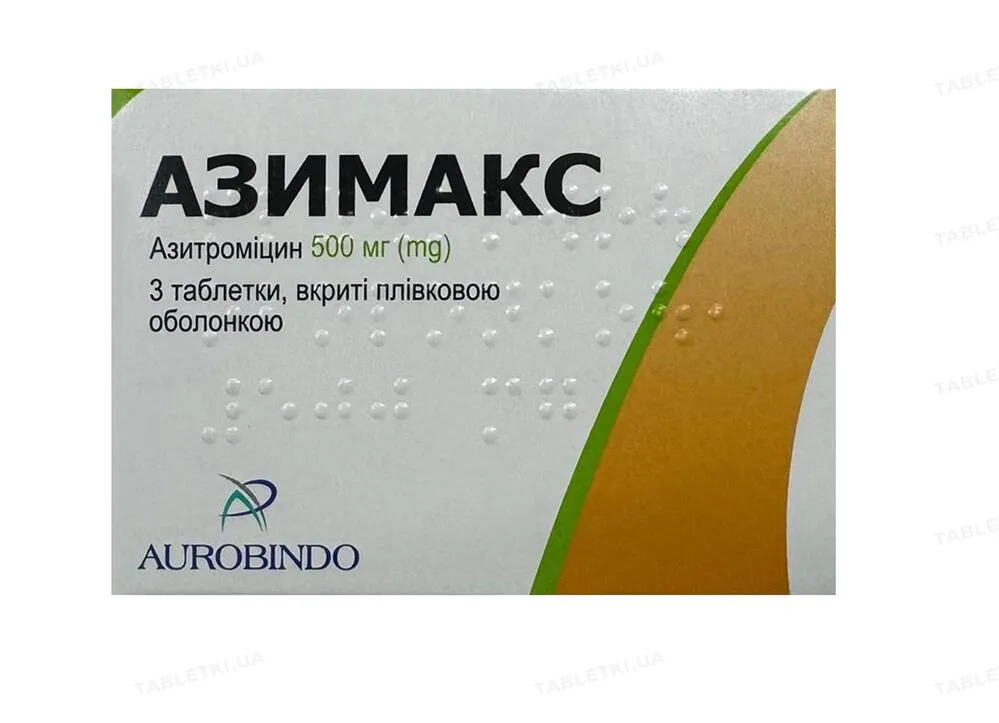
Table of Contents
INSTRUCTIONS FOR MEDICAL USE OF THE MEDICINAL PRODUCT AZIMAX (AZIMAX)
Composition:
Active substance: azithromycin;
1 tablet contains azithromycin dihydrate equivalent to azithromycin 250 mg or 500 mg;
Excipients: calcium hydrogen phosphate anhydrous, pregelatinized starch (corn starch), sodium croscarmellose, sodium lauryl sulfate, magnesium stearate; tablet coating: Opadry II 31K58902 white (lactose monohydrate; hypromellose; titanium dioxide (E171); triacetin).
Pharmaceutical form. Film-coated tablets.
Main physicochemical properties:
250 mg tablets: film-coated tablets, white to almost white, elongated shape, biconvex, with engraving "66" on one side and "D" on the other;
500 mg tablets: film-coated tablets, white to almost white, oval-shaped, biconvex, with engraving "6" and "7" on either side of a line on one side and "D" on the other side.
Pharmacotherapeutic group. Antibacterials for systemic use. Macrolides, lincosamides and streptogramins. Azithromycin. ATC code J01FA10.
Pharmacological properties.
Pharmacodynamics.
Azithromycin is a macrolide antibiotic belonging to the azalide group. The molecule is formed by insertion of a nitrogen atom into the 15-membered lactone ring of erythromycin A.
Mechanism of action
By binding to the 50S subunit of bacterial ribosomes, azithromycin prevents translocation of peptide chains from one side of the ribosome to the other. As a result, it inhibits RNA-dependent protein synthesis in susceptible microorganisms, leading to a bacteriostatic effect.
Pharmacokinetic (PK)/pharmacodynamic (PD) relationship
For azithromycin, the area under the concentration-time curve (AUC)/minimum inhibitory concentration (MIC) is the primary PK/PD parameter that best correlates with azithromycin efficacy.
Mechanisms of resistance
Resistance to azithromycin may occur via the following mechanisms:
- altered antibiotic transport: resistance due to increased expression of efflux pumps in the cytoplasmic membrane that specifically expel 14- and 15-membered macrolides (M-phenotype);
- modification of the antibiotic target: methylation of the 23S rRNA reduces affinity for ribosomal binding sites, resulting in resistance to macrolides (M), lincosamides (L), and streptogramin B (SB) (so-called MLSB phenotype);
- enzymatic inactivation of macrolides, which has limited clinical significance.
The M-phenotype demonstrates complete cross-resistance between azithromycin and clarithromycin, erythromycin, and roxithromycin. The MLSB-phenotype exhibits additional cross-resistance to clindamycin and streptogramin B. There is also partial cross-resistance to the 16-membered macrolide spiramycin.
Breakpoint values.
Susceptibility testing of azithromycin is performed using standard dilution methods. Microorganisms are categorized as susceptible or resistant according to the following MIC values:
MIC breakpoints established by the European Committee on Antimicrobial Susceptibility Testing (EUCAST)
| Pathogen |
Susceptible |
Resistant |
| Staphylococcus spp.1) |
≤ 1 mg/L |
> 2 mg/L |
| Streptococcus spp. (groups A, B, C, G)1) |
≤ 0.25 mg/L |
> 0.5 mg/L |
| Streptococcus pneumoniae1) |
≤ 0.25 mg/L |
> 0.5 mg/L |
| Moraxella catarrhalis1) |
≤ 0.25 mg/L |
> 0.5 mg/L |
| Neisseria gonorrhoeae2) |
≤ 0.25 mg/L |
> 0.5 mg/L |
- Erythromycin may be used as a test substance to demonstrate sensitivity to azithromycin.
- Value for a single dose of 2 g in monotherapy.
The prevalence of acquired resistance may vary geographically and over time for individual species; therefore, local information on resistance should be taken into account, especially when treating severe infections or in cases of treatment failure. If necessary, microbiological diagnostics can be performed, including pathogen isolation and determination of its individual sensitivity to azithromycin.
Pharmacokinetics.
Absorption
Maximum serum concentration (Cmax) is reached within 2–3 hours after oral administration of the drug. The terminal plasma elimination half-life fully reflects the tissue elimination half-life over 2–4 days. In elderly patients (>65 years of age), slightly higher AUC values were observed after five days of treatment compared to individuals under 40 years of age. The clinical significance is so minimal that dose adjustment is not required.
During animal studies, high concentrations of azithromycin were observed in phagocytes, with even higher concentrations released during active phagocytosis in experimental studies than in non-stimulated phagocytes. In animal models, this led to increased azithromycin concentrations at the site of infection.
Nonlinearity
Study data indicate nonlinear pharmacokinetics of azithromycin within the therapeutic range.
Distribution
Azithromycin concentrations in tissues are significantly higher (up to 50 times) than in blood plasma, indicating strong tissue binding of the drug. In target tissues such as lungs, tonsils, and prostate gland, concentrations exceeding the MIС90 of expected pathogens are achieved after a single 500 mg dose.
Protein binding in serum varies depending on plasma concentrations, ranging from 12% at 0.5 µg/mL to 52% at 0.05 µg/mL in serum. The mean volume of distribution at steady state (Vss) is 31.1 L/kg.
Elimination
Following oral administration, azithromycin is primarily excreted via bile in unchanged form. Particularly high concentrations of unchanged azithromycin, as well as 10 metabolites formed via N- and O-demethylation, hydroxylation of the desosamine and aglycone rings, and cleavage of cladinose conjugates, have been detected in human bile. Relevant studies indicate that azithromycin metabolites lack antimicrobial activity.
Renal impairment
In patients with glomerular filtration rate (GFR) between 10 and 80 mL/min, pharmacokinetic parameters after a single oral dose of 1 g azithromycin were not altered. In patients with GFR <10 mL/min, statistically significant differences were observed in AUC0–120 (8.8 µg·h/mL vs. 11.7 µg·h/mL), Cmax (1.0 µg/mL vs. 1.6 µg/mL), and CLr (renal clearance) (2.3 mL/min/kg vs. 0.2 mL/min/kg) compared to patients with normal renal function.
Hepatic impairment
In patients with mild (Child-Pugh class A) and moderate (Child-Pugh class B) hepatic impairment, no data indicate changes in azithromycin pharmacokinetics in serum compared to patients with normal liver function. In these patients, urinary excretion of azithromycin is enhanced, possibly to compensate for reduced hepatic clearance.
Clinical characteristics.
Indications.
Infections caused by microorganisms sensitive to azithromycin:
- infections of the upper respiratory tract (including sinusitis, pharyngitis, tonsillitis);
- infections of the lower respiratory tract (including bronchitis, pneumonia);
- infections of the ear, nose and throat organs (acute otitis media);
- skin and soft tissue infections;
- sexually transmitted infections: uncomplicated genital infections caused by Chlamydia trachomatis or Neisseria gonorrhoeae (except multidrug-resistant strains).
Contraindications.
Hypersensitivity to azithromycin, erythromycin, or to other macrolide or ketolide antibiotics, or to any other component of the medicinal product.
Interaction with other medicinal products and other forms of interaction.
Antacids or gastric acid secretion inhibitors. When mineral antacids are used concomitantly, no overall changes in bioavailability are observed, although plasma peak concentrations of azithromycin are reduced by approximately 24%. Azithromycin should be taken at an interval of 2 to 3 hours before antacids.
Cimetidine does not affect the rate or extent of azithromycin absorption; therefore, it may be administered simultaneously with Azimax tablets.
Cetirizine. Concomitant administration of a five-day course of azithromycin with 20 mg cetirizine at steady state did not result in pharmacokinetic interaction or significant changes in the QT interval.
Ergot alkaloids. Due to the theoretical possibility of ergotism (vasoconstrictive effects such as circulatory disturbances, particularly in fingers and toes), azithromycin should not be administered concomitantly with dihydroergotamine or non-hydrogenated ergot alkaloids.
Antiretroviral medicinal products. There are insufficient data on interactions with antiretroviral drugs to recommend dose adjustments.
The following medicinal products have been studied:
Zidovudine. Concomitant administration of azithromycin (single 1000 mg doses and multiple 1200 mg or 600 mg doses) has minimal effect on the plasma pharmacokinetics or urinary excretion of zidovudine or its glucuronide metabolite. However, azithromycin administration increases the concentration of phosphorylated zidovudine, the clinically active metabolite, in peripheral blood mononuclear cells. The clinical significance of these findings is not established, but may be beneficial for patients.
Didanosine. Concomitant administration of daily doses of 1200 mg azithromycin with didanosine (400 mg/day) showed no effect on the pharmacokinetics of didanosine compared to placebo.
Rifabutin. Concomitant administration of azithromycin and rifabutin did not affect plasma concentrations of either drug. Neutropenia was observed in patients receiving azithromycin and rifabutin concomitantly. Although neutropenia was associated with rifabutin use, a causal relationship with concomitant azithromycin administration has not been established.
Digoxin and colchicine. Concomitant use of macrolide antibiotics, including azithromycin, with P-glycoprotein substrates such as digoxin and colchicine, may lead to increased serum levels of the P-glycoprotein substrate. Therefore, when azithromycin is co-administered with digoxin, the possibility of increased digoxin serum concentrations should be considered. Clinical monitoring is required during and after azithromycin treatment.
Azithromycin has no significant interaction with the hepatic cytochrome P450 system. It is considered that the drug does not exhibit the pharmacokinetic drug interactions typical of erythromycin and other macrolides. Azithromycin does not induce or inactivate cytochrome P450 via the cytochrome-metabolite complex.
Medicinal products metabolized by cytochrome P450, such as atorvastatin, carbamazepine, efavirenz, fluconazole, indinavir, methylprednisolone, midazolam, sildenafil, triazolam, trimethoprim/sulfamethoxazole, have not shown significant interactions with azithromycin in clinical trials. However, caution should be exercised when co-administering these medicinal products with azithromycin.
Atorvastatin. Concomitant administration of atorvastatin (10 mg daily) and azithromycin (500 mg daily) does not alter plasma concentrations of atorvastatin (based on HMG-CoA reductase inhibition analysis). However, cases of rhabdomyolysis have been reported in patients receiving azithromycin in combination with statins.
Theophylline. Azithromycin does not affect the pharmacokinetics of theophylline when administered concomitantly. However, combined use of theophylline and other macrolide antibiotics has occasionally led to increased serum theophylline levels.
Coumarin anticoagulants. In a pharmacokinetic interaction study, azithromycin did not alter the anticoagulant effect of a single 15 mg dose of warfarin administered to healthy volunteers. During the post-marketing period, reports have been received regarding potentiation of the anticoagulant effect following concomitant administration of azithromycin and oral coumarin-type anticoagulants. Although a causal relationship has not been established, frequent monitoring of prothrombin time should be considered when prescribing azithromycin to patients receiving oral coumarin-type anticoagulants.
Cyclosporine. In a pharmacokinetic study involving healthy volunteers who received oral azithromycin 500 mg daily for 3 days followed by a single oral dose of cyclosporine 10 mg/kg, a significant increase in Cmax and AUC0-5 of cyclosporine was demonstrated. Therefore, caution should be exercised when administering these drugs concomitantly. If concomitant use is necessary, cyclosporine levels should be monitored and the dose adjusted accordingly.
Terfenadine. Pharmacokinetic studies have not reported interactions between azithromycin and terfenadine. In some cases, the possibility of such an interaction cannot be entirely excluded, although specific data on such an interaction are lacking. As with other macrolide antibiotics, azithromycin should be prescribed with caution in combination with terfenadine.
Other antibiotics. Parallel resistance may exist between azithromycin and macrolide antibiotics (e.g., erythromycin), as well as with lincomycin and clindamycin. Therefore, concomitant administration of drugs from these groups is not recommended.
Azithromycin should be prescribed cautiously together with other drugs that may prolong the QT interval.
Nelfinavir. Concomitant administration of azithromycin (1200 mg) and nelfinavir (750 mg three times daily) at steady-state concentrations increases azithromycin concentration. No clinically significant adverse events were observed; therefore, dose adjustment is not required.
Special precautions for use.
Hepatotoxicity. Since the primary route of elimination of azithromycin is hepatobiliary, azithromycin should be administered with caution in patients with severe hepatic disease. Cases of fulminant hepatitis, cholestatic jaundice, hepatic necrosis, and hepatic failure (rarely resulting in death) have been reported with azithromycin. Some patients had a history of liver disease or were taking other hepatotoxic medicinal products.
Liver function tests should be performed if signs or symptoms of liver dysfunction develop, such as rapidly developing asthenia accompanied by jaundice, dark urine, tendency to bleeding, or hepatic encephalopathy. Azithromycin should be discontinued if hepatic function impairment occurs.
Infantile hypertrophic pyloric stenosis (IHPS). Cases of infantile hypertrophic pyloric stenosis (IHPS) have been observed following administration of azithromycin in neonates (during treatment within the first 42 days of life). Parents and caregivers should seek medical advice if vomiting or gastrointestinal irritability occurs in neonates receiving azithromycin.
Clostridium difficile-associated diarrhea (CDAD). Clostridium difficile-associated diarrhea (CDAD), ranging in severity from mild diarrhea to fatal colitis, has been reported with nearly all antibacterial agents, including azithromycin. Antibacterial therapy alters the normal flora of the colon, leading to overgrowth of C. difficile.
C. difficile produces toxins A and B, which contribute to the development of CDAD. Hyperproducing toxin strains of C. difficile are associated with increased morbidity and mortality, as these infections may be refractory to antimicrobial therapy and may require colectomy. CDAD should be considered in all patients who present with diarrhea following antibiotic use. A careful medical history is necessary, as CDAD has been reported to occur up to two months after administration of antibacterial agents.
Pseudomembranous colitis. Cases of pseudomembranous colitis have been reported following the use of macrolide antibiotics. Pseudomembranous colitis should be considered in patients presenting with diarrhea during or within approximately 3 weeks after azithromycin therapy. If pseudomembranous colitis or antiperistaltic effects develop, the drug is contraindicated.
Superinfections. As with other antibacterial agents, superinfections (e.g., fungal infections) may occur. Development of superinfection may require discontinuation of azithromycin and appropriate measures.
Cross-resistance. Due to cross-resistance with erythromycin-resistant strains and most strains of methicillin-resistant staphylococci, azithromycin should not be used in these cases. Regional patterns of acquired resistance to azithromycin and other antibiotics should be considered.
Renal function impairment. In patients with severe renal impairment (creatinine clearance <10 mL/min), a 33% increase in systemic exposure to azithromycin has been observed.
Severe infections. Azithromycin tablets are not suitable for the treatment of severe infections requiring high antibiotic concentrations in the blood, as tissue concentrations of azithromycin are significantly higher than plasma concentrations.
Long-term treatment. There is no experience regarding the safety and efficacy of long-term use of azithromycin for the approved indications. For rapidly recurring infections, treatment with another antibiotic should be considered.
Pharyngitis/tonsillitis. Penicillin is the drug of choice for the treatment of pharyngitis/tonsillitis caused by Streptococcus pyogenes and for the prevention of acute rheumatic fever. Azithromycin is generally effective in treating streptococcal oropharyngeal infections, but there are no data demonstrating the efficacy of azithromycin in preventing rheumatic fever.
Sinusitis. Azithromycin is often not the first-line treatment for sinusitis.
Acute otitis media. Azithromycin is often not the first-line treatment for acute otitis media.
Infected burns. Azithromycin is not indicated for the treatment of infected burns.
Sexually transmitted infections. When treating sexually transmitted diseases, concomitant infection with T. pallidum should be ruled out.
Neurological and psychiatric disorders. Azithromycin should be used with caution in patients with neurological and psychiatric disorders.
Allergic reactions. As with erythromycin and other macrolides, rare allergic reactions to azithromycin have been reported, including angioedema and anaphylaxis (rarely fatal), dermatological reactions such as acute generalized exanthematous pustulosis (AGEP), Stevens-Johnson syndrome (SJS), toxic epidermal necrolysis (TEN, rarely fatal), and drug reaction with eosinophilia and systemic symptoms (DRESS). Some of these reactions have led to recurrent symptoms and required long-term monitoring and treatment. Physicians should anticipate that discontinuation of symptomatic treatment may lead to recurrence of allergic symptoms.
Ergot alkaloids and azithromycin. Concomitant administration of ergot alkaloids and macrolide antibiotics has been observed to accelerate the development of ergotism. The interaction between ergot alkaloids and azithromycin has not been studied, but due to the theoretical risk of ergotism, azithromycin should not be co-administered with ergot derivatives.
Prolonged cardiac repolarization and QT interval. Prolongation of cardiac repolarization and QT interval, associated with an increased risk of ventricular arrhythmias and torsades de pointes, has been observed with other macrolide antibiotics. A similar effect of azithromycin cannot be completely ruled out in patients at risk of prolonged cardiac repolarization; therefore, azithromycin should be administered with caution in patients:
- with congenital or documented acquired QT prolongation;
- receiving concomitant treatment with other medicinal products known to prolong the QT interval, such as class IA (quinidine, procainamide) and class III (dofetilide, amiodarone, sotalol) antiarrhythmics, cisapride, terfenadine, neuroleptics such as pimozide, antidepressants such as citalopram, and fluoroquinolones such as moxifloxacin and levofloxacin;
- with electrolyte imbalances, particularly hypokalemia and hypomagnesemia;
- with clinically relevant bradycardia, cardiac arrhythmias, or severe heart failure;
- in women and elderly patients with existing proarrhythmic conditions.
Myasthenia gravis. Cases of myasthenic syndrome and exacerbation of symptoms of myasthenia gravis have been reported in patients receiving azithromycin.
Lactose. This medicinal product is contraindicated in patients with rare hereditary problems of galactose intolerance, Lapp lactase deficiency, or glucose-galactose malabsorption.
Use during pregnancy or breastfeeding.
Pregnancy.
There are no adequate data on the use of azithromycin in pregnant women. Reproductive toxicity studies in animals have not shown teratogenic effects of azithromycin on the fetus, but the drug crosses the placenta. The safety of azithromycin during pregnancy has not been established. Therefore, azithromycin should be used during pregnancy only if the potential benefit justifies the potential risk to the fetus.
Breastfeeding period.
Azithromycin has been shown to pass into human milk, but there are no adequate and well-controlled clinical studies characterizing the pharmacokinetics of azithromycin excretion in human breast milk. Azithromycin may be used during breastfeeding only if the expected benefit to the mother outweighs the potential risk to the infant.
Fertility.
Fertility studies have been conducted in rats; pregnancy rates decreased after administration of azithromycin. The relevance of these findings to humans is unknown.
Ability to affect reaction speed when driving or operating machinery.
Azithromycin is known not to affect concentration or reaction ability. However, the occurrence of adverse effects may impair the ability to drive or operate machinery.
Method of Administration and Dosage.
Dosage
Azimaks tablets should be taken once daily, regardless of food intake. The tablets should be swallowed whole, without chewing, with water. If a dose is missed, it should be taken as soon as possible, and subsequent doses should be taken at 24-hour intervals.
Adults, including elderly individuals, children and adolescents with body weight over 45 kg
The total dose is 1500 mg – 500 mg once daily for 3 days. Alternatively, the same total dose (1500 mg) can be administered over 5 days: 500 mg on the first day and 250 mg for the following 4 days.
For the treatment of pneumonia, the efficacy of azithromycin has been well established with a 5-day regimen. In other cases, a 3-day treatment regimen is sufficient.
Dosage for the treatment of uncomplicated genital infections caused by Chlamydia trachomatis: a single dose of 1000 mg of azithromycin;
caused by Neisseria gonorrhoeae: 1000 mg or 2000 mg of azithromycin in combination with 250 mg or 500 mg of ceftriaxone, respectively, according to established clinical protocols. In patients with allergy to penicillins and/or cephalosporins, local treatment guidelines should be followed.
Elderly patients
Dosage adjustment is not required in elderly patients. However, since elderly patients may belong to high-risk groups for cardiac conduction disturbances, caution is recommended when using azithromycin due to the risk of developing cardiac arrhythmias and ventricular tachycardia torsade de pointes.
Patients with renal impairment
Dosage adjustment is not required in patients with mild to moderate renal impairment (creatinine clearance 10–80 mL/min).
Patients with hepatic impairment
Dosage adjustment is not required in patients with mild or moderate hepatic impairment. Azithromycin should not be administered to patients with severe hepatic impairment, as azithromycin is metabolized in the liver and excreted via bile.
Children
The drug is not administered to children with body weight less than 45 kg.
Overdose
Adverse effects observed with doses higher than recommended were similar to those seen with standard doses.
Symptoms
Typical symptoms of overdose with macrolide antibiotics include reversible hearing loss, severe nausea, vomiting, and diarrhea.
Treatment
In case of overdose, general symptomatic and supportive measures should be implemented as necessary.
Adverse reactions.
The adverse reactions are listed in the table below by system organ classes and frequency. Frequency groups are defined as follows: very common (≥ 1/10); common (≥ 1/100 and < 1/10); uncommon (≥ 1/1000 and < 1/100); rare (≥ 1/10000 and < 1/1000); very rare (< 1/10000); and frequency not known (cannot be estimated from the available data). Within each frequency group, adverse effects are listed in order of decreasing severity.
| Very common |
Common |
Uncommon |
Rare |
Very rare |
Frequency not known |
| Infections and infestations |
|||||
| Candidiasis Vaginal infections Pneumonia Fungal infection Bacterial infection Pharyngitis Gastroenteritis Rhinitis Oral candidiasis |
Pseudomembranous colitis |
||||
| Blood and lymphatic system disorders |
|||||
| Leukopenia Neutropenia Eosinophilia |
Thrombocytopenia Hemolytic anemia |
||||
| Immune system disorders |
|||||
| Angioedema Increased sensitivity |
Anaphylactic reaction |
||||
| Metabolism and nutrition disorders |
|||||
| Anorexia |
|||||
| Psychiatric disorders |
|||||
| Nervousness Insomnia |
Agitation |
Aggression Anxiety Delirium Hallucinations |
|||
| Nervous system disorders |
|||||
| Headache |
Dizziness Somnolence Dysgeusia Paraesthesia |
Syncope Seizures Psychomotor hyperactivity Anosmia Ageusia Parosmia Myasthenia gravis |
|||
| Eye disorders |
|||||
| Visual disturbance |
|||||
| Ear and labyrinth disorders |
|||||
| Deafness |
Hearing impairment Vertigo |
Hearing disorders, including deafness and/or tinnitus |
|||
| Cardiac disorders |
|||||
| Pounding heartbeat |
Ventricular tachycardia (torsade de pointes) Arrhythmia, including ventricular tachycardia of the "pirouette" type QT interval prolongation on ECG |
||||
| Vascular disorders |
|||||
| Hot flushes |
Arterial hypotension |
||||
| Respiratory, thoracic and mediastinal disorders |
|||||
| Dyspnoea Nosebleed |
|||||
| Gastrointestinal disorders |
|||||
| Diarrhoea |
Vomiting Abdominal pain Nausea |
Constipation Flatulence Dysphagia Gastritis Abdominal distension Dry mouth Belching Mouth ulcers Increased salivation |
Pancreatitis Change in tongue colour |
||
| Hepatobiliary disorders |
|||||
| Liver function abnormalities Cholestatic jaundice |
Liver failure (rarely leading to fatal outcome) Fulminant hepatitis Liver necrosis |
||||
| Skin and subcutaneous tissue disorders |
|||||
| Rash Itching Urticaria Dermatitis Skin dryness Hyperhidrosis |
Photosensitivity reaction Acute generalized exanthematous pustulosis (AGEP) Drug-induced eosinophilia with systemic symptoms (DRESS syndrome) |
Stevens-Johnson syndrome Toxic epidermal necrolysis Multiform erythema |
|||
| Musculoskeletal and connective tissue disorders |
|||||
| Osteoarthritis Myalgia Back pain Neck pain |
Arthralgia |
||||
| Renal and urinary disorders |
|||||
| Dysuria Kidney pain |
Acute renal failure Interstitial nephritis |
||||
| Reproductive system and breast disorders |
|||||
| Uterine bleeding Testicular disorders |
|||||
| General disorders and administration site conditions |
|||||
| Swelling Asthenia Malaise Fatigue Facial swelling Chest pain Increased body temperature Pain Peripheral oedema |
|||||
| Investigations |
|||||
| Lymphocyte count decreased Eosinophil count increased Blood bicarbonate decreased Basophil count increased Monocyte count increased Neutrophil count increased |
Increased aspartate aminotransferase level Increased alanine aminotransferase level Increased blood bilirubin level Increased blood urea level Increased blood creatinine level Blood potassium level abnormal Increased alkaline |
||||
| phosphatase in blood Increased chloride level Increased glucose level Increased platelet count Hematocrit decreased Increased bicarbonate level Sodium level abnormal |
|||||
| Injury and poisoning |
|||||
| Procedural complications |
|||||
Information on adverse reactions possibly associated with the prevention and treatment of Mycobacterium Avium Complex is based on clinical trial data. These adverse reactions differ in type or frequency from those reported with the use of immediate-release and extended-release dosage forms:
| Organ system class |
Adverse reaction |
Frequency |
| Metabolism and nutrition disorders |
Anorexia |
common |
| Psychiatric disorders |
Dizziness, headache, paraesthesia, dysgeusia |
common |
| Hypoaesthesia |
uncommon |
|
| Eye disorders |
Visual impairment |
common |
| Ear and labyrinth disorders |
Deafness |
uncommon |
| Hearing impaired, tinnitus |
uncommon |
|
| Cardiac disorders |
Palpitations |
uncommon |
| Gastrointestinal disorders |
Diarrhoea, abdominal pain, nausea, flatulence, gastrointestinal discomfort, frequent loose stools |
very common |
| Hepatobiliary disorders |
Hepatitis |
uncommon |
| Skin and subcutaneous tissue disorders |
Rash, pruritus |
common |
| Stevens-Johnson syndrome, photosensitivity |
uncommon |
|
| Musculoskeletal and connective tissue disorders |
Arthralgia |
common |
| General disorders and administration site conditions |
Increased fatigue |
common |
| Asthenia, malaise |
uncommon |
Reporting of suspected adverse reactions. It is important to report suspected adverse reactions after marketing authorization of the medicinal product. This will allow continued monitoring of the benefit-risk balance. Healthcare professionals are requested to report suspected adverse reactions through the national reporting system.
Shelf life. 3 years.
Storage conditions.
Store at temperatures not exceeding 25 °C in a place inaccessible to children.
Packaging.
3 tablets per blister; 1 blister (for 500 mg dosage) or 2 blisters (for 250 mg dosage) per cardboard box.
Prescription status. Prescription only.
Manufacturer. Aurobindo Pharma Limited - Unit VI.
Manufacturer's location and address of the site of operation.
Special Economic Zone, TSIIC, Plot No. S1, Sy. No. 411/R, 425/R, 434/R, 435/R and 458/R, Green Industrial Park, Polepally Village, Jeedimetla Mandal, Mahabubnagar District, Telangana State, 509302, India.