Azacitidine accord
UkraineTable of Contents
INSTRUCTIONS FOR MEDICAL USE OF THE MEDICINAL PRODUCT AZACITIDINE ACCORD (Azacitidine Accord)
Composition:
Active substance: azacitidine;
1 vial contains 150 mg of azacitidine;
Excipient: mannitol (E 421).
Pharmaceutical form. Powder for preparation of injectable suspension.
Main physicochemical properties: white lyophilized powder or mass in a clear glass vial.
Pharmacotherapeutic group. Antineoplastic agents. Pyrimidine analogues.
ATC code L01BC07.
Pharmacological Properties.
Pharmacodynamics.
Mechanism of action
Azacitidine is believed to exert its antineoplastic activity through multiple mechanisms, including cytotoxic effects on abnormal haematopoietic cells in the bone marrow and DNA hypomethylation. The cytotoxic effect of azacitidine may result from multiple mechanisms, including inhibition of DNA, RNA, and protein synthesis, incorporation into RNA and DNA, and activation of DNA damage pathways. Non-proliferating cells are relatively insensitive to azacitidine. Incorporation of azacitidine into DNA leads to inactivation of DNA methyltransferases, resulting in DNA hypomethylation. Hypomethylation of abnormally methylated genes involved in the regulation of normal cell cycle, differentiation, and death pathways may lead to re-expression of genes and restoration of tumour suppressor functions in cancer cells. The relative importance of DNA hypomethylation compared to cytotoxicity or other activities of azacitidine in achieving clinical outcomes has not been established.
Clinical efficacy and safety
Adult population (MDS, CMML, and AML [20-30% bone marrow blasts])
The efficacy and safety of azacitidine were evaluated in an international, multicentre, controlled, open-label, randomised, parallel-group phase 3 trial (AZA PH GL 2003 CL 001) in adult patients with: intermediate-2 and high-risk MDS according to the International Prognostic Scoring System (IPSS), refractory anaemia with excess blasts (RAEB), refractory anaemia with excess blasts in transformation (RAEB-T), and modified chronic myelomonocytic leukaemia (mCMML) according to the French-American-British (FAB) classification system. Patients with RAEB-T (21-30% blasts) are now considered to have AML according to the current WHO classification system. The regimen of azacitidine plus best supportive care (BSC) (n = 179) was compared with conventional care regimens (CCR). The CCR regimens included BSC only (n = 105), low-dose cytarabine plus BSC (n = 49), or standard induction chemotherapy plus BSC (n = 25). Patients were preassigned by their physician to one of the three CCR regimens prior to randomisation. Patients received this preassigned regimen if they were not randomised to the azacitidine group. Inclusion criteria required patients to have an Eastern Cooperative Oncology Group (ECOG) performance status of 0-2. Patients with secondary MDS were excluded from the study. The primary endpoint of the study was overall survival. Azacitidine was administered subcutaneously at a dose of 75 mg/m² daily for 7 days, followed by a 21-day break (28-day treatment cycle); the median number of cycles was 9 (range = 1-39), and the mean number of cycles was 10.2. In the intent-to-treat (ITT) population, the mean age was 69 years (range 38 to 88 years).
In the ITT population analysis of 358 patients (179 in the azacitidine group and 179 in the CCR group), treatment with azacitidine was associated with a median survival of 24.46 months compared to 15.02 months for those receiving CCR treatment; the difference was 9.4 months, with a stratified log-rank p-value of 0.0001. The hazard ratio (HR) for treatment effect was 0.58 (95% CI: 0.43, 0.77). Two-year survival rates were 50.8% in patients receiving azacitidine versus 26.2% in patients receiving CCR (p < 0.0001).
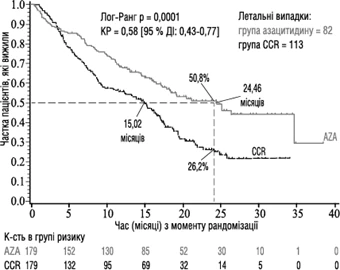
Abbreviations: AZA = azacitidine; CCR = conventional care regimens; CI = confidence interval; HR = hazard ratio.
Improved survival in the azacitidine group was consistently observed regardless of the CCR treatment arm (BSC only, low-dose cytarabine plus BSC, or standard induction chemotherapy plus BSC) used in the control group.
During analysis of IPSS cytogenetic subgroups, similar results for median overall survival were observed across all groups (good, intermediate, poor cytogenetics, including monosomy 7).
During analysis of age subgroups, increased median overall survival was observed in all groups (< 65 years, ≥ 65 years, and ≥ 75 years).
Treatment with azacitidine was associated with a median time to death or transformation to AML of 13.0 months versus 7.6 months for those receiving CCR treatment, representing an improvement of 5.4 months with a stratified log-rank p-value of 0.0025.
Treatment with azacitidine was also associated with reduction in cytopenia and related symptoms. Treatment with azacitidine led to reduced need for red blood cell and platelet transfusions. Among patients in the azacitidine group who were red blood cell transfusion-dependent at baseline, 45.0% became independent of red blood cell transfusions during the treatment period compared to 11.4% of patients in the combined CCR treatment groups (statistically significant difference of 33.6% (95% CI: 22.4, 44.6), p < 0.0001). Among patients who were red blood cell transfusion-dependent at baseline and became independent, the median duration of red blood cell transfusion independence was 13 months in the azacitidine group.
Response to treatment was assessed by the investigator or an Independent Review Committee (IRC). Overall response (complete remission [CR] + partial remission [PR]), as determined by the investigator, was 29% in the azacitidine group and 12% in the combined CCR treatment group (p = 0.0001). Overall response (CR + PR), determined by the IRC in the AZA PH GL 2003 CL 001 study, was 7% (12/179) in the azacitidine group compared to 1% (2/179) in the combined CCR treatment group (p = 0.0113). The differences between IRC and investigator response assessments were due to International Working Group (IWG) criteria requiring peripheral blood count improvement and sustained improvement for at least 56 days. A survival advantage was also demonstrated in patients who did not achieve complete/partial response after azacitidine treatment. Haematological improvement (major or minor), as defined by IRC, was achieved in 49% of patients receiving azacitidine compared to 29% of patients receiving combined CCR (p < 0.0001).
Among patients with one or more cytogenetic abnormalities at baseline, the percentage of patients with a major cytogenetic response was similar between the azacitidine and combined CCR treatment groups.
Minor cytogenetic response was statistically significantly higher (p = 0.0015) in the azacitidine group (34%) compared to the combined CCR treatment group (10%).
Adult population aged 65 years and older with AML with > 30% bone marrow blasts
The results below refer to the treated population studied in the AZA-AML-001 trial (approved indications are listed in section "Posology and method of administration").
The efficacy and safety of azacitidine were evaluated in an international, multicentre, controlled, open-label, parallel-group phase 3 trial in patients aged 65 years and older with newly diagnosed de novo or secondary AML with > 30% bone marrow blasts according to WHO classification, who were ineligible for haematopoietic stem cell transplantation (HSCT). Azacitidine plus BSC (n = 241) was compared with a CCR regimen. The CCR regimen included BSC only (n = 45), low-dose cytarabine plus BSC (n = 158), or standard intensive chemotherapy with cytarabine and an anthracycline plus BSC (n = 44). Patients were preassigned by their physician to one of the three CCR treatment regimens prior to randomisation. Patients received the preassigned regimen if not randomised to the azacitidine group. As part of the inclusion criteria, patients were required to have an ECOG performance status of 0-2 and intermediate or low-risk cytogenetic abnormalities. The primary endpoint of the study was overall survival.
Azacitidine was administered subcutaneously at a dose of 75 mg/m²/day for 7 days, followed by a 21-day break (28-day treatment cycle), with a median of 6 treatment cycles (range: 1 to 28): patients receiving BSC only had a median of 3 cycles (range: 1 to 20); patients receiving low-dose cytarabine had a median of 4 cycles (range: 1 to 25); and patients receiving standard intensive chemotherapy had a median of 2 cycles (range: 1 to 3, induction cycle plus 1 or 2 consolidation cycles).
Baseline characteristics were comparable between the azacitidine and CCR groups. The median age of participants was 75.0 years (range: 64 to 91 years), 75.2% were Caucasian, and 59.0% were male. At baseline, 60.7% were classified as having AML not otherwise specified, 32.4% as AML with myelodysplasia-related changes, 4.1% had therapy-related myeloid neoplasms, and 2.9% had AML with recurrent genetic abnormalities according to WHO classification.
In the ITT population analysis of 488 patients (241 in the azacitidine group and 247 in the CCR group), treatment with azacitidine was associated with a median survival of 10.4 months compared to 6.5 months for those receiving CCR treatment – a difference of 3.8 months, with a stratified log-rank p-value of 0.1009 (two-sided). The hazard ratio for treatment effect was 0.85 (95% CI = 0.69, 1.03). One-year survival was 46.5% in patients receiving azacitidine versus 34.3% in patients receiving the CCR regimen.
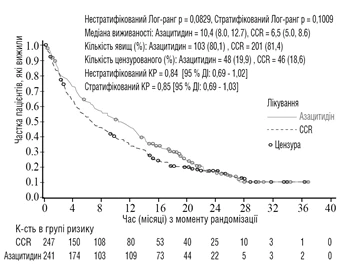
Abbreviations: CCR = conventional care regimens; CI = confidence interval; HR = hazard ratio.
According to the Cox proportional hazards model, adjusted for pre-specified baseline prognostic factors, the HR for azacitidine compared to the CCR regimen was 0.80 (95% CI = 0.66, 0.99; p = 0.0355).
Furthermore, although the study was not powered to demonstrate a statistically significant difference when comparing azacitidine with preselected CCR groups, survival in patients receiving azacitidine was longer compared to those receiving BSC only or low-dose cytarabine plus BSC, and similar to those receiving standard intensive chemotherapy plus BSC.
A trend towards overall survival (OS) benefit in favour of azacitidine was observed across all pre-specified subgroups: age (< 75 years and ≥ 75 years), sex, race, ECOG performance status (0, or 1 and 2), baseline cytogenetic risk (intermediate and low), geographic region, WHO AML classification (including AML with myelodysplasia-related changes), baseline white blood cell count (≤ 5 x 10⁹/L and > 5 x 10⁹/L), baseline bone marrow blast count (≤ 50% and > 50%), and prior history of MDS. In several pre-specified subgroups, the OS HR reached statistical significance, including patients with low cytogenetic risk, patients with AML with myelodysplasia-related changes, patients aged < 75 years, female patients, and Caucasian patients.
Haematological and cytogenetic responses were evaluated by the investigator and an institutional expert review board (IRC) compared with similar outcomes. The overall response rate (complete remission [CR] + complete remission with incomplete blood count recovery [CRi]), as determined by IRC, was 27.8% in the azacitidine group and 25.1% in the combined CCR treatment group (p = 0.5384). Among patients who achieved CR or CRi, the median duration of remission was 10.4 months (95% CI = 7.2, 15.2) for patients receiving azacitidine and 12.3 months (95% CI = 9.0, 17.0) for patients receiving CCR. Improved survival was also demonstrated in patients who did not achieve complete response with azacitidine compared to the CCR regimen.
Treatment with azacitidine improved peripheral blood counts and led to reduced need for red blood cell and platelet transfusions. A patient was considered red blood cell or platelet transfusion-dependent at baseline if they received one or more red blood cell or platelet transfusions within 56 days (8 weeks) prior to baseline or randomisation. A patient was considered independent of red blood cell or platelet transfusions during the treatment period if they had no red blood cell or platelet transfusions during any consecutive 56-day period during the reporting period.
Among patients in the azacitidine group who were red blood cell transfusion-dependent at baseline, 38.5% (95% CI = 31.1, 46.2) of these patients became red blood cell transfusion-independent during the treatment period compared to 27.6% (95% CI = 20.9, 35.1) of patients in the combined CCR treatment groups. Among patients who were red blood cell transfusion-dependent at baseline and achieved transfusion independence during treatment, the median duration of red blood cell transfusion independence was 13.9 months in the azacitidine group; transfusion independence was not achieved in the CCR group.
Among patients in the azacitidine group who were platelet transfusion-dependent at baseline, 40.6% (95% CI = 30.9, 50.8) of patients became platelet transfusion-independent during the treatment period compared to 29.3% (95% CI = 19.7, 40.4) of patients in the combined CCR treatment groups. Among patients who were platelet transfusion-dependent at baseline and achieved transfusion independence after treatment, the median duration of platelet transfusion independence was 10.8 months in the azacitidine group and 19.2 months in the CCR group.
Health-related quality of life (HRQoL) was assessed using the European Organisation for Research and Treatment of Cancer Core Quality of Life Questionnaire (EORTC QLQ-C30). HRQoL data may be analysed for a subset of the full study population. Despite limitations in the analysis, the available data suggest that patients do not experience significant deterioration in quality of life during azacitidine treatment.
Paediatric population
The AZA-JMML-001 study was an international, multicentre, open-label phase 2 study evaluating the pharmacokinetics, pharmacodynamics, safety, and activity of azacitidine prior to HSCT in paediatric patients with newly diagnosed progressive MDS or JMML. The primary objective of the clinical study was to evaluate the impact of azacitidine on treatment response rate at cycle 3, day 28.
Patients (with MDS: n = 10; with JMML: n = 18, aged 3 months to 15 years; 71% male) received intravenous azacitidine at a dose of 75 mg/m² daily on days 1 to 7 of a 28-day cycle for a minimum of three and up to six cycles.
Enrolment of MDS patients into the study group was discontinued after 10 MDS patients were enrolled due to insufficient treatment efficacy: no confirmed responses were observed in these 10 patients.
The JMML study group included 18 patients (13 with somatic PTPN11 mutations, 3 with NRAS mutations, 1 with a KRAS mutation, and 1 with a clinical diagnosis of neurofibromatosis type 1 [NF-1]). Sixteen patients completed three cycles of therapy, and five completed six cycles. Overall, 11 JMML patients had a clinical response at cycle 3, day 28; of these 11 study participants, 9 (50%) had a confirmed clinical response (3 participants with cCR and 6 participants with cPR). Among the cohort of JMML patients receiving azacitidine, 7 (43.8%) patients had a sustained response in platelet count (≥ 100 x 10⁹/L), and 7 (43.8%) patients required blood transfusions prior to HSCT. Seventeen of 18 patients proceeded to HSCT.
Due to the study design (small number of patients and various confounding factors), it is not possible to conclude from this clinical study whether azacitidine administration prior to HSCT improves survival outcomes in patients with JMML.
The AZA-AML-004 study was a multicentre, open-label phase 2 study evaluating the safety, pharmacodynamics, and efficacy of azacitidine compared with no antineoplastic treatment in children and young adults with AML in molecular relapse after CR1.
Seven patients (median age 6.7 years [range 2 to 12 years]; 71.4% male) received intravenous azacitidine at a dose of 100 mg/m² daily on days 1 to 7 of each 28-day cycle for up to 3 cycles.
Five patients showed evidence of minimal residual disease (MRD) on day 84, with 4 patients achieving either molecular stabilisation (n = 3) or molecular improvement (n = 1), and 1 patient experiencing clinical relapse. Six of the seven patients (90% [95% CI = 0.4, 1.0]) receiving azacitidine proceeded to HSCT.
Due to the small sample size, the efficacy of azacitidine in children with AML cannot be established. Safety information is provided in section "Adverse Reactions".
Pharmacokinetics.
Absorption
Following subcutaneous administration of a single 75 mg/m² dose, azacitidine was rapidly absorbed, with a peak plasma concentration of 750 ± 403 ng/mL observed 0.5 hours after dosing (first sampling point).
The absolute bioavailability of azacitidine following subcutaneous administration compared to intravenous administration (single 75 mg/m² dose) was approximately 89%, based on the area under the pharmacokinetic curve (AUC).
The area under the curve and maximum plasma concentration (Cmax) after subcutaneous administration of azacitidine were approximately dose-proportional over the dose range of 25 to 100 mg/m².
Distribution
Following intravenous administration, the mean volume of distribution was 76 ± 26 L, and systemic clearance was 147 ± 47 L/h.
Biotransformation
In vitro data indicate that azacitidine metabolism is not mediated by cytochrome P450 (CYP) isoenzymes, UDP-glucuronosyltransferases (UGT), sulfotransferases (SULT), or glutathione S-transferases (GST).
Azacitidine undergoes spontaneous hydrolysis and deamination mediated by cytidine deaminase. In human liver S9 fractions, metabolite formation was independent of reduced nicotinamide adenine dinucleotide phosphate (NADPH), indicating that azacitidine metabolism is not mediated by cytochrome P450 isoenzymes. In vitro studies in cultured human hepatocytes indicate that at concentrations of 1.0 µM to 100 µM (approximately 30 times higher than clinically achievable concentrations), azacitidine does not induce CYP 1A2, 2C19, or 3A4/3A5. Inhibition studies of several P450 isoenzymes (CYP 1A2, 2B6, 2C8, 2C9, 2C19, 2D6, 2E1, and 3A4) showed that azacitidine at doses up to 100 µM did not cause inhibition. Therefore, induction or inhibition of CYP enzymes by azacitidine at clinically achievable plasma concentrations is unlikely.
Elimination
Azacitidine is rapidly eliminated from plasma with a mean half-life (t1/2) of 41 ± 8 minutes after subcutaneous administration. Following subcutaneous administration of 75 mg/m² azacitidine once daily for seven days, no accumulation occurs. Renal excretion is the primary route of elimination of azacitidine and/or its metabolites. After intravenous and subcutaneous administration of 14C-azacitidine, 85% and 50% of the administered radioactive dose was recovered in urine, respectively, while < 1% was recovered in faeces.
Special populations
The effect of hepatic impairment (see section "Posology and method of administration"), sex, age, or race on the pharmacokinetics of azacitidine has not been formally studied.
Paediatric population
In the AZA-JMML-001 study, pharmacokinetic analysis was performed in 10 patients with MDS and 18 children with JMML on day 7 of cycle 1 (see section "Pharmacological properties"). The median (range) age of MDS patients was 13.3 (1.9-15) years, and JMML patients was 2.1 (0.2-6.9) years.
After intravenous administration of a 75 mg/m² dose, azacitidine rapidly reached Cmax within 0.083 hours in both MDS and JMML populations. The geometric mean Cmax was 1797.5 and 1066.3 ng/mL, and the geometric mean AUC0-∞ was 606.9 and 240.2 ng*h/mL for MDS and JMML patients, respectively. The geometric mean volume of distribution in MDS and JMML patients was 103.9 and 61.1 L, respectively. Total plasma exposure to azacitidine was found to be higher in MDS patients; however, moderate to high inter-patient variability was noted for both AUC and Cmax.
The geometric mean half-life (t1/2) was 0.4 and 0.3 hours, and the geometric mean clearance was 166.4 and 148.3 L/h for MDS and JMML patients, respectively.
Pharmacokinetic data from the AZA-JMML-001 study were pooled and compared with pharmacokinetic data from six adult MDS patients receiving 75 mg/m² intravenous azacitidine in the AZA-2002-BA-002 study. Mean Cmax and AUC0-t values of azacitidine were similar in adults and children after intravenous administration (2750 ng/mL vs. 2841 ng/mL and 1025 ng*h/mL vs. 882.1 ng*h/mL, respectively).
In the AZA-AML-004 study, pharmacokinetic analysis was performed in 6 of 7 paediatric patients who had at least one measured pharmacokinetic concentration after dosing (see section "Pharmacological properties"). The median (range) age of AML patients was 6.7 (2-12) years.
After multiple doses of 100 mg/m², geometric means for Cmax and AUC0-t on day 7 of cycle 1 were 1557 ng/mL and 899.6 ng*h/mL, respectively, with high inter-individual variability (coefficient of variation (CV) 201.6% and 87.8%, respectively). Azacitidine rapidly reached Cmax with a median time of 0.090 hours after intravenous administration and declined with a geometric mean half-life (t1/2) of 0.380 hours. Geometric means for clearance and volume of distribution were 127.2 L/h and 70.2 L, respectively.
Pharmacokinetic exposure (azacitidine) observed in children with AML in molecular relapse after CR1 was comparable to that obtained from pooled data for 10 children with MDS and 18 children with JMML, and also comparable to azacitidine exposure in adults with MDS.
Renal impairment
Renal impairment has no significant effect on the pharmacokinetic exposure of azacitidine after single or multiple subcutaneous administration. After subcutaneous administration of a single 75 mg/m² dose, mean exposure values (AUC and Cmax) in patients with mild, moderate, and severe renal impairment were increased by 11-21%, 15-27%, and 41-66%, respectively, compared to patients with normal renal function. However, exposure remained within the same general range observed in individuals with normal renal function. Azacitidine may be administered to patients with renal impairment without initial dose adjustment, provided these patients are monitored for signs of toxicity, as azacitidine and/or its metabolites are primarily excreted renally.
Pharmacogenomics
The effect of known cytidine deaminase polymorphisms on azacitidine metabolism has not been formally studied.
Clinical characteristics.
Indications.
Azacitidine Accord is indicated for the treatment of adult patients who are not candidates for haematopoietic stem cell transplantation (HSCT) and who have the following conditions:
- Intermediate-2, high-risk myelodysplastic syndromes (MDS) according to the International Prognostic Scoring System (IPSS),
- Chronic myelomonocytic leukaemia (CMML) with 10–29% bone marrow blasts without myeloproliferative disorder,
- Acute myeloid leukaemia (AML) with 20–30% blasts and multilineage dysplasia, according to the World Health Organization (WHO) classification,
- AML with > 30% bone marrow blasts according to the WHO classification.
Contraindications.
Hypersensitivity to the active substance or to any of the excipients.
Advanced malignant hepatic tumours (see section "Special precautions").
Breastfeeding (see section "Use in pregnancy or breastfeeding").
Special safety precautions.
Recommendations for safe handling
Azacitidine Accord is a cytotoxic medicinal product; therefore, as with other potentially toxic compounds, caution should be exercised when handling the product and preparing azacitidine suspensions. Appropriate handling and disposal procedures for antineoplastic medicinal products should be followed.
If the dissolved azacitidine comes into contact with the skin, wash immediately and thoroughly with soap and water. If contact with mucous membranes occurs, rinse thoroughly with water.
Reconstitution procedure
Azacitidine Accord must be reconstituted with water for injections. The stability of the reconstituted product can be prolonged by using cooled (2°C to 8°C) water for injections. Detailed information on storage of the reconstituted product is provided below.
The following materials should be prepared:
- Vial(s) of azacitidine; vial(s) of water for injections; non-sterile surgical gloves; alcohol swabs; 5 mL syringe(s) with needle(s).
- Draw the appropriate volume of water for injections into the syringe (see table below), and always remove any air introduced into the syringe.
| Flacon capacity |
Volume of water for injections |
Final concentration |
| 150 mg |
6 ml |
25 mg/ml |
- The needle of the syringe containing water for injections should be inserted through the rubber stopper of the azacitidine vial, and the water for injections should then be injected into the vial.
- After removing the syringe and needle, the vial should be shaken vigorously until a homogeneous, cloudy suspension is obtained. After reconstitution, each mL of suspension contains 25 mg of azacitidine (100 mg/4 mL or 150 mg/6 mL). The reconstituted product is a uniform, cloudy suspension free of aggregates. The product should be discarded if it contains large particles or aggregates. The suspension should not be filtered after reconstitution, as this may result in removal of the active ingredient. It should be noted that filters may be present in certain adapters, cones, and closed systems; therefore, such systems should not be used for administration of the drug after reconstitution.
- The rubber stopper should be cleaned and a new syringe with needle inserted into the vial. The vial should then be inverted upside down, ensuring that the tip of the needle is below the liquid level. The plunger should then be pulled back to withdraw the required amount of medication for the appropriate dose, making sure that any air introduced into the syringe is expelled. The syringe with needle should then be removed from the vial, and the needle discarded.
- A new needle for subcutaneous injection (25 gauge recommended) should be firmly attached to the syringe. The needle should not be primed with air before injection to reduce the frequency of local injection site reactions.
- If more than one vial is required, all the above steps for preparing the suspension should be repeated. For doses requiring more than one vial, the dose should be divided equally; for example, a 150 mg dose = 6 mL, two syringes with 3 mL each. Due to retention of product in the vial and needle, it may not be possible to withdraw all of the suspension from the vial.
- The contents of the dosing syringe should be resuspended immediately before administration. The syringe filled with reconstituted suspension should be warmed to approximately 20–25 °C for 30 minutes prior to administration. If more than 30 minutes have elapsed, the suspension should be properly discarded and a new dose prepared. To resuspend the contents, the syringe should be vigorously rolled between the palms until a uniform, cloudy suspension is formed. The product should be discarded if it contains large particles or aggregates.
Storage of the reconstituted product
Storage conditions after reconstitution of the medicinal product are provided in the section "Shelf life".
Calculation of individual dose
The total dose based on body surface area (BSA) can be calculated as follows:
Total dose (mg) = dose (mg/m²) × BSA (m²)
The table below is provided only as an example of how to calculate individual doses of azacitidine based on an average body surface area of 1.8 m².
| Dose, mg/m² (% of recommended initial dose) |
Total dose based on BSA of 1.8 m² |
Number of vials |
Total volume of reconstituted suspension required |
| 150 mg vial |
|||
| 75 mg/m² (100%) |
135 mg |
1 vial |
5.4 ml |
| 37.5 mg/m² (50%) |
67.5 mg |
1 vial |
2.7 ml |
| 25 mg/m² (33%) |
45 mg |
1 vial |
1.8 ml |
Method of Administration
Reconstituted Azacitidine Accord should be administered subcutaneously (injecting the needle at an angle of 45–90°) using a 25-gauge needle into the arm, thigh, or abdomen.
Doses exceeding 4 mL should be administered in two separate sites.
Injection sites should be rotated. New injections should be administered at least 2.5 cm away from the previous site and never into tender, bruised, erythematous, or hardened areas.
Disposal
Any unused medicinal product or waste material must be disposed of in accordance with local requirements.
Interaction with Other Medicinal Products and Other Forms of Interaction.
According to in vitro data, azacitidine metabolism is not mediated by cytochrome P450 (CYP) isoenzymes, UDP-glucuronosyltransferases (UGT), sulfotransferases (SULT), or glutathione transferases (GST); therefore, interactions related to these metabolizing enzymes in vivo are considered unlikely.
Clinically significant inhibitory or inductive effects of azacitidine on cytochrome P450 enzymes are unlikely (see section "Pharmacological Properties").
No formal clinical interaction studies with azacitidine have been conducted.
Special precautions for use.
Hematologic toxicity
Treatment with azacitidine is associated with anemia, neutropenia, and thrombocytopenia, particularly during the first two cycles (see section "Adverse reactions"). A complete blood count to monitor response to treatment and toxicity should be performed as needed, but at least prior to each treatment cycle. After administration of the recommended dose for the first cycle, the dose for subsequent cycles should be reduced or administration delayed based on the lowest blood cell counts and hematologic response to treatment (see section "Dosage and administration"). Patients should be advised to report immediately any occurrence of fever. Patients and physicians should also remain vigilant for signs and symptoms of bleeding.
Hepatic impairment
No formal studies have been conducted in patients with hepatic impairment. Progressive hepatic coma and fatal outcomes have been reported during azacitidine treatment in patients with significant tumor burden due to metastatic disease, particularly in those patients with a baseline serum albumin level < 30 g/L. Azacitidine is contraindicated in patients with advanced malignant hepatic tumors (see section "Contraindications").
Renal impairment
Renal dysfunction, ranging from elevated serum creatinine levels to renal failure and fatal outcomes, has been reported in patients receiving intravenous azacitidine in combination with other chemotherapeutic agents. Additionally, renal tubular acidosis developed in five patients with chronic myeloid leukemia (CML) who were treated with azacitidine and etoposide. This condition is defined by decreased serum bicarbonate levels to < 20 mmol/L in combination with increased urinary alkalinity and hypokalemia (serum potassium level < 3 mmol/L). If unexplained decreases in serum bicarbonate levels (< 20 mmol/L) or increases in serum creatinine or AST occur, the dose of azacitidine should be reduced or administration delayed (see section "Dosage and administration").
Patients should be advised to report immediately any occurrence of oliguria or anuria.
Although no clinically significant differences in the frequency of adverse reactions were observed between patients with normal renal function and those with renal impairment, patients with renal impairment should be closely monitored for signs of toxicity, since azacitidine and/or its metabolites are primarily excreted by the kidneys (see section "Dosage and administration").
Laboratory tests
Liver function tests, serum creatinine, and serum bicarbonate levels should be assessed prior to initiation of therapy and prior to each treatment cycle. A complete blood count should be performed before starting therapy and as needed to monitor treatment response and toxicity, but at least prior to each treatment cycle (see also section "Adverse reactions").
Cardiac and pulmonary diseases
Patients with a history of severe congestive heart failure, clinically unstable cardiac disease, or pulmonary disease were excluded from the pivotal registration trials (AZA PH GL 2003 CL 001 and AZA-AML-001); therefore, the safety and efficacy of azacitidine in these patients have not been established. Recent clinical trial data in patients with a history of cardiovascular or pulmonary disease showed a significant increase in cardiac complications with azacitidine use (see section "Adverse reactions"). Therefore, azacitidine should be used with caution in such patients. Assessment of cardiac and pulmonary function should be performed before and during treatment.
Necrotizing fasciitis
Cases of necrotizing fasciitis, including fatal outcomes, have been reported in patients receiving azacitidine. Patients who develop necrotizing fasciitis should discontinue azacitidine therapy and receive immediate appropriate treatment.
Tumor lysis syndrome
Patients at risk of tumor lysis syndrome are those with high tumor burden prior to treatment. Such patients should be closely monitored and appropriate preventive measures implemented.
Differentiation syndrome
Cases of differentiation syndrome (also known as retinoic acid syndrome) have been reported among patients receiving azacitidine. Differentiation syndrome can be fatal, and symptoms and clinical signs include respiratory distress, pulmonary infiltrates, fever, rash, pulmonary edema, peripheral edema, rapid weight gain, pleural effusion, pericardial effusion, hypotension, and renal dysfunction (see section "Adverse reactions"). High-dose intravenous corticosteroids and hemodynamic monitoring should be considered at the first appearance of symptoms or signs suggestive of differentiation syndrome. Temporary discontinuation of injectable azacitidine should be considered until symptoms resolve, and caution should be exercised if treatment is resumed.
Use during pregnancy or breastfeeding.
Women of reproductive potential / Contraception in men and women
Women of reproductive potential must use effective contraception during treatment and for at least 6 months after completion of therapy. Men are advised to use effective contraception during treatment and for 3 months after its completion.
Pregnancy
There are no adequate data on the use of azacitidine in pregnant women. Animal studies have shown reproductive toxicity of the drug. The potential risk of this medicinal product to humans is unknown. Based on animal studies and the mechanism of action, azacitidine
should not be used during pregnancy, particularly during the first trimester, except when clearly needed. The benefit of treatment and the potential risk to the fetus should be carefully weighed in each individual case.
Breastfeeding
It is unknown whether azacitidine and/or its metabolites are excreted in human milk. Due to the potential for serious adverse reactions in breastfed infants, breastfeeding is contraindicated during azacitidine therapy.
Fertility
Data on the effect of azacitidine on human fertility are lacking. Adverse effects on male fertility have been documented in animal studies with azacitidine. Male patients should be advised to seek counseling regarding sperm preservation prior to initiating treatment.
Ability to affect the speed of reactions when driving vehicles or operating machinery.
Azacitidine has a minor or moderate influence on the ability to drive vehicles or operate machinery. Fatigue has been reported with azacitidine use. Therefore, caution is recommended when driving or operating machinery.
Method of Administration and Dosage
Treatment with Azacitidine Accord should be initiated and supervised by a physician experienced in the use of chemotherapeutic agents. Patients should be premedicated with antiemetic agents to prevent nausea and vomiting.
Dosage
The recommended initial dose for the first treatment cycle in all patients, regardless of baseline hematological laboratory values, is 75 mg/m² body surface area administered subcutaneously once daily for 7 consecutive days, followed by a 21-day treatment-free period (a 28-day treatment cycle).
Patients are recommended to receive treatment for a minimum of six cycles. Treatment should be continued as long as the patient continues to benefit from therapy or until disease progression occurs.
Patients should be monitored for signs of hematological response/toxicity and renal toxicity (see section "Special Warnings and Precautions"); dose delays or dose reductions may be required as described below.
Azacitidine Accord must not be used interchangeably with oral azacitidine. Due to differences in exposure, dosing recommendations for orally administered azacitidine differ from those for injectable azacitidine. Healthcare professionals are advised to verify the drug name, dosage, and route of administration.
Laboratory Monitoring
Liver function tests, serum creatinine, and serum bicarbonate levels should be assessed prior to starting therapy and before each treatment cycle. A complete blood count should be performed before initiation of therapy and as needed to monitor response to treatment and toxicity, but at a minimum before each treatment cycle.
Dosage Adjustment for Hematologic Toxicity
Hematologic toxicity is defined as the lowest observed count (nadir) within a cycle if platelet count ≤ 50.0 x 10⁹/L and/or absolute neutrophil count (ANC) ≤ 1.0 x 10⁹/L.
Recovery is defined as an increase in the blood cell line(s) affected by hematologic toxicity to at least half of the absolute difference between the lowest and baseline counts plus the lowest count (i.e., blood cell count at recovery ≥ lowest count + (0.5 × [baseline count – lowest count])).
Patients without reduced baseline blood counts (i.e., white blood cell count (WBC) ≥ 3.0 x 10⁹/L and ANC ≥ 1.5 x 10⁹/L, and platelet count ≥ 75.0 x 10⁹/L) prior to the first treatment cycle
If hematologic toxicity occurs following treatment with Azacitidine Accord, the next treatment cycle should be delayed until recovery of platelet count and ANC. If recovery occurs within 14 days, no dose adjustment is required. However, if recovery is not achieved within 14 days, the dose should be reduced according to the table below. After any dose modification, the cycle length should return to 28 days.
| Worst value in cycle |
Dose in next cycle if recovery* not achieved within 14 days (%) |
|
| ANC (x 109/l) |
Platelets (x 109/l) |
|
| ≤ 1.0 |
≤ 50.0 |
50 % |
| > 1.0 |
> 50.0 |
100 % |
*Recovery = quantity ≥ lowest quantity + (0.5 × [initial quantity – lowest quantity])
Patients with reduced baseline blood cell counts (i.e. white blood cells < 3.0 x 10⁹/l or ANC < 1.5 x 10⁹/l or platelets < 75.0 x 10⁹/l) prior to first treatment
If after treatment with Azacitidine Accord the reduction in white blood cells, ANC or platelets compared to the pre-treatment period is ≤ 50% or exceeds 50% but there is improvement in differentiation of any cell line, the next cycle should not be delayed and dose adjustment is not required.
If the reduction in white blood cells, ANC or platelets exceeds 50% compared to pre-treatment values, without improvement in cell line differentiation, the next treatment cycle with Azacitidine Accord should be delayed until platelet and ANC counts recover. If recovery is achieved within 14 days, dose adjustment is not required. However, if recovery is not achieved within 14 days, bone marrow cellularity must be assessed. If bone marrow cellularity is > 50%, dose adjustment is not required. If bone marrow cellularity is ≤ 50%, treatment should be delayed and the dose reduced according to the table below:
| Cellularity of bone marrow |
Dose in the next cycle if recovery not achieved within 14 days (%) |
|
| Recovery* ≤ 21 days |
Recovery* > 21 days |
|
| 15-50 % |
100 % |
50 % |
| < 15 % |
100 % |
33 % |
*Recovery = quantity ≥ lowest quantity + (0.5 × [starting quantity – lowest quantity]).
After dose modification, the duration of the next cycle should return to 28 days.
Special populations
Elderly patients
No special dose adjustment is recommended for elderly patients. Since impaired renal function is more common in elderly patients, monitoring of renal function may be useful.
Patients with renal impairment
Azacitidine may be administered to patients with renal impairment without adjustment of the initial dose (see section "Pharmacological properties"). If unexplained reduction in serum bicarbonate levels to less than 20 mmol/L occurs, the dose should be reduced by 50% during the next cycle. In case of unexplained increase in serum creatinine or blood urea nitrogen (BUN) ≥ two-fold above baseline values and above the upper limit of normal (ULN), the next cycle should be delayed until values return to normal or baseline levels, and the dose should be reduced by 50% during the next treatment cycle (see section "Special precautions").
Patients with hepatic impairment
Formal studies in patients with hepatic impairment have not been conducted (see section "Special precautions"). Patients with severe hepatic impairment should be closely monitored for adverse reactions. For patients with hepatic impairment, no initial dose adjustment is recommended; subsequent dose modifications should be based on haematological laboratory parameters. Azacitidine Accord is contraindicated in patients with advanced malignant hepatic tumours (see sections "Contraindications" and "Special precautions").
Children
The safety and efficacy of azacitidine in children aged 0–17 years have not yet been established. Available data are described in sections "Pharmacological properties" and "Undesirable effects", but dosing recommendations cannot be provided.
Method of administration
After reconstitution, each mL of suspension contains 25 mg of azacitidine. Reconstituted Azacitidine Accord should be administered subcutaneously into the shoulder, thigh, or abdomen. Injection sites should be rotated. New injections should be administered at least 2.5 cm away from a previous injection site and never into tender, bruised, erythematous, or hardened areas.
After reconstitution, the suspension should not be filtered. Instructions for reconstitution of the medicinal product prior to administration are provided in the section "Special precautions for handling and disposal".
Children.
The product should not be used in children (under 18 years of age) as the safety and efficacy of the medicinal product in this patient group have not been established.
Overdose.
One case of azacitidine overdose has been reported in clinical trials. A patient experienced diarrhoea, nausea, and vomiting after a single intravenous dose of approximately 290 mg/m², which is nearly 4 times the recommended initial dose.
In case of overdose, the patient should be monitored by blood tests and, if necessary, supportive treatment should be provided. There is no known specific antidote for azacitidine overdose.
Adverse reactions.
Summary of safety profile
Adult population with myelodysplastic syndromes (MDS), chronic myelomonocytic leukemia (CMML), and acute myeloid leukemia (AML) (20–30% bone marrow blasts)
Adverse reactions that were possibly or probably related to azacitidine administration were observed in 97% of patients.
The most common serious adverse reactions reported in the pivotal study (AZA PH GL 2003 CL 001) included febrile neutropenia (8.0%) and anemia (2.3%), which were also reported in the supporting studies (CALGB 9221 and CALGB 8921). Other serious adverse reactions in these three studies included infections such as neutropenic sepsis (0.8%) and pneumonia (2.5%) (some with fatal outcome), thrombocytopenia (3.5%), hypersensitivity reactions (0.25%), and hemorrhagic events (e.g., intracranial hemorrhage [0.5%], gastrointestinal hemorrhage [0.8%], and intracerebral hemorrhage [0.5%]).
The most common treatment-related adverse reactions during azacitidine therapy were hematologic reactions (71.4%), including thrombocytopenia, neutropenia, and leukopenia (usually grade 3–4), gastrointestinal disorders (60.6%), including nausea, vomiting (usually grade 1–2), and injection site reactions (77.1%; usually grade 1–2).
Adult population aged 65 years and older with AML with > 30% bone marrow blasts
The most common serious adverse reactions (≥ 10%) observed in the AZA-AML-001 study in the azacitidine treatment group were febrile neutropenia (25.0%), pneumonia (20.3%), and pyrexia (10.6%). Other less frequent serious adverse reactions in the azacitidine treatment group included sepsis (5.1%), anemia (4.2%), neutropenic sepsis (3.0%), urinary tract infection (3.0%), thrombocytopenia (2.5%), neutropenia (2.1%), cellulitis (2.1%), dizziness (2.1%), and dyspnea (2.1%).
The most frequently reported (≥ 30%) adverse reactions with azacitidine treatment were gastrointestinal disorders, including constipation (41.9%), nausea (39.8%), and diarrhea (36.9%; usually grade 1–2); general disorders and administration site reactions, including pyrexia (37.7%; usually grade 1–2); and hematologic events, including febrile neutropenia (32.2%) and neutropenia (30.1%; usually grade 3–4).
Tabulated list of adverse reactions
Table 1 below lists adverse reactions associated with azacitidine treatment reported during the main clinical studies in patients with MDS and AML, and during the post-marketing period.
The frequency of adverse reactions was defined as follows: very common (≥ 1/10), common (≥ 1/100 to < 1/10), uncommon (≥ 1/1,000 to < 1/100), rare (≥ 1/10,000 to < 1/1,000), very rare (< 1/10,000), and not known (cannot be estimated from the available data). Within each frequency category, adverse reactions are listed in order of decreasing severity. Adverse reactions are presented in the table below according to the highest frequency observed in any of the main clinical studies.
Adverse reactions reported in patients with MDS or AML receiving azacitidine
(clinical studies and post-marketing period)
Table 1
| System Organ Class |
Very common |
Common |
Uncommon |
Rare |
Frequency not known |
| Infections and infestations |
pneumonia* (including bacterial, viral and fungal), nasopharyngitis |
sepsis* (including bacterial, viral and fungal), neutropenic sepsis*, respiratory tract infection (including upper respiratory tract infection and bronchitis), urinary tract infection, cellulitis, diverticulitis, oral fungal infection, sinusitis, pharyngitis, rhinitis, herpes simplex, skin infection |
necrotizing fasciitis* |
||
| Benign, malignant and unspecified neoplasms (including cysts and polyps) |
differentiation syndrome*, a |
||||
| Blood and lymphatic system disorders |
febrile neutropenia*, neutropenia, leukopenia, thrombocytopenia, anemia |
pancytopenia*, bone marrow failure |
|||
| Immune system disorders |
hypersensitivity reactions |
||||
| Metabolism and nutrition disorders |
anorexia, decreased appetite, hypokalemia |
dehydration |
tumour lysis syndrome |
||
| Psychiatric disorders |
insomnia |
confusion, anxiety |
|||
| Nervous system disorders |
dizziness, headache |
intracranial haemorrhage*, syncope, somnolence, lethargy |
|||
| Eye disorders |
ocular haemorrhage, conjunctival haemorrhage |
||||
| Cardiac disorders |
pericardial effusion |
pericarditis |
|||
| Vascular disorders |
hypotension*, hypertension, orthostatic hypotension, haematoma |
||||
| Respiratory, thoracic and mediastinal disorders |
dyspnoea, nosebleed |
pleural effusion, dyspnoea on exertion, pharyngo-laryngeal pain |
interstitial lung disease |
||
| Gastrointestinal disorders |
diarrhoea, vomiting, constipation, nausea, abdominal pain (including upper abdominal discomfort and abdominal pain) |
gastrointestinal haemorrhage* (including haematemesis), haemorrhoidal haemorrhage, stomatitis, gingival bleeding, dyspepsia |
|||
| Hepatobiliary and pancreatic disorders |
hepatic failure*, progressive hepatic coma |
||||
| Skin and subcutaneous tissue disorders |
petechiae, pruritus (including generalized), rash, ecchymosis |
purpura, alopecia, urticaria, erythema, maculopapular rash |
acute febrile neutrophilic dermatosis, pyoderma gangrenosum |
skin vasculitis |
|
| Musculoskeletal and connective tissue disorders |
arthralgia, musculoskeletal pain (including back, bone and limb pain) |
muscle spasms, myalgia |
|||
| Renal and urinary disorders |
renal failure*, haematuria, increased blood creatinine |
renal tubular acidosis |
|||
| General disorders and administration site conditions |
pyrexia*, fatigue, asthenia, chest pain, erythema at injection site, pain at injection site, reaction at injection site (unspecified) |
bruising, haematoma, induration, rash, pruritus, inflammation, discoloration, nodules and haemorrhage (at injection site), malaise, chills, haemorrhage at catheter site |
necrosis at injection site (site of administration) |
||
| Investigations |
weight decreased |
* – in rare cases, fatal outcomes have been reported.
a – see section "Special precautions".
Description of individual adverse reactions
Haematologic adverse reactions
Haematologic adverse reactions most frequently reported (≥ 10 %), associated with azacitidine treatment, included anaemia, thrombocytopenia, neutropenia, febrile neutropenia and leucopenia, and were usually of grade 3 or 4. There is a higher risk of these events during the first two treatment cycles, after which they occur less frequently in patients with recovery of haematologic function. Most haematologic adverse reactions were managed by regular monitoring of complete blood counts, delaying administration of azacitidine in the next cycle, prophylactic use of antibiotics and/or growth factor support (e.g., G-CSF [granulocyte colony-stimulating factor]) for treatment of neutropenia, and blood transfusions to control anaemia or thrombocytopenia, if necessary.
Infections
Myelosuppression may lead to neutropenia and increased risk of infection. Serious adverse reactions such as sepsis, including neutropenic sepsis, and pneumonia have been reported in patients receiving azacitidine, some with fatal outcomes. Infections can be managed with anti-infective agents and growth factor support (e.g., G-CSF) for treatment of neutropenia.
Bleeding
Bleeding may occur in patients receiving azacitidine. Serious adverse reactions such as gastrointestinal haemorrhage and intracranial haemorrhage have been reported. Patients should be monitored for signs and symptoms of bleeding, particularly those with pre-existing or treatment-related thrombocytopenia.
Hypersensitivity
Serious hypersensitivity reactions have been reported in patients receiving azacitidine. In the event of an anaphylactic reaction, azacitidine treatment should be discontinued immediately and appropriate symptomatic treatment initiated.
Skin and subcutaneous tissue adverse reactions
Most skin and subcutaneous tissue reactions were injection site-related. None of these adverse reactions led to discontinuation or dose reduction of azacitidine in the pivotal studies. Most adverse reactions occurred during the first two treatment cycles and tended to diminish in subsequent cycles. Subcutaneous tissue adverse reactions such as rash/inflammation/itching at injection site, rash, erythema and skin lesions may require treatment with concomitant medications such as antihistamines, corticosteroids and non-steroidal anti-inflammatory drugs (NSAIDs). These skin reactions should be differentiated from soft tissue infections, which sometimes occur at the injection site. Soft tissue infections, including cellulitis and necrotizing fasciitis, have been reported and, in rare cases, resulted in fatal outcomes during post-marketing use of azacitidine. Clinical management of infectious adverse reactions is described in the "Adverse reactions" section under "Infections".
Gastrointestinal adverse reactions
The most common gastrointestinal adverse reactions associated with azacitidine treatment included constipation, diarrhoea, nausea and vomiting. These adverse reactions were managed symptomatically using antiemetics to control nausea and vomiting; antidiarrhoeals for diarrhoea; and laxatives and/or stool softeners for constipation.
Renal adverse reactions
Renal function disorders have been reported in patients receiving azacitidine, ranging from increased serum creatinine levels and haematuria to renal tubular acidosis, renal failure and fatal outcomes (see section "Special precautions").
Hepatic adverse reactions
Hepatic failure, progressive hepatic coma and fatal outcomes have been reported in patients with significant tumour burden due to metastatic disease during azacitidine treatment (see section "Special precautions").
Cardiac disorders
Clinical trial data from a study including patients with a history of cardiovascular or pulmonary disease showed an increased incidence of cardiac disorders in patients with newly diagnosed AML receiving azacitidine treatment (see section "Special precautions").
Elderly patients
Limited safety data are available for patients aged ≥ 85 years (14 [5.9 %] patients aged ≥ 85 years were included in study AZA-AML-001).
Paediatric population
In study AZA-JMML-001, 28 paediatric patients (aged from 1 month to < 18 years) received azacitidine treatment for MDS (n = 10) or juvenile myelomonocytic leukaemia (JMML) (n = 18) (see section "Pharmacological properties").
All 28 patients experienced at least one adverse event, and 17 (60.7 %) experienced at least one treatment-related event. The most common adverse reactions in the overall paediatric population were pyrexia, haematologic events including anaemia, thrombocytopenia and febrile neutropenia, and gastrointestinal disorders including constipation and vomiting.
Treatment-related events leading to discontinuation of the study drug were observed in three participants (pyrexia, disease progression and abdominal pain).
In study AZA-AML-004, 7 paediatric patients (aged 2 to 12 years) received azacitidine treatment for AML during molecular relapse after first complete remission [CR1] (see section "Pharmacological properties").
All seven patients experienced at least one treatment-related adverse event. The most frequently reported adverse reactions were neutropenia, nausea, leucopenia, thrombocytopenia, diarrhoea and increased alanine aminotransferase (ALT) levels. Treatment-related events leading to discontinuation of the study drug occurred in two patients (febrile neutropenia, neutropenia).
In clinical trials involving a limited number of children receiving azacitidine, no new safety signals were identified. The overall safety profile was consistent with that of the adult population.
Reporting suspected adverse reactions
Reporting of adverse reactions after marketing authorisation is important. It allows continued monitoring of the benefit-risk balance of the medicinal product. Healthcare professionals, pharmacists, patients or their legal representatives should report all suspected adverse reactions and lack of efficacy through the Automated Pharmacovigilance Information System at: https://aisf.dec.gov.ua.
Shelf life.
3 years.
After reconstitution
When reconstituted with non-refrigerated Water for Injections, chemical and physical in-use stability of the reconstituted medicinal product has been demonstrated for 60 minutes at 25 °C and for 8 hours at 2 °C to 8 °C.
The shelf life of the reconstituted medicinal product may be extended by reconstituting with refrigerated (2 °C to 8 °C) Water for Injections. When reconstituted with refrigerated (2 °C to 8 °C) Water for Injections, chemical and physical in-use stability of the reconstituted medicinal product has been demonstrated for 22 hours at 2 °C to 8 °C.
From a microbiological point of view, the reconstituted product should be used immediately. If not used immediately, the user is responsible for the duration and conditions of storage prior to use, which should not exceed 8 hours at 2 °C to 8 °C when reconstituted with non-refrigerated Water for Injections, and 22 hours when reconstituted with refrigerated (2 °C to 8 °C) Water for Injections.
Storage conditions.
No special storage conditions required.
Keep out of the reach of children.
Incompatibilities.
Do not mix with other medicinal products except those specified in the section "Dosage and administration".
Packaging. 150 mg in a vial, 1 vial in a pack.
Prescription status. Prescription only.
Manufacturer.
Accord Healthcare Polska Sp. z o.o. Sklad Importera/Accord Healthcare Polska Sp. z o.o. Magazyn Importera.
Manufacturer's address and location of its operations.
ul. Lutomierska 50, Pabianice, 95-200, Poland.
Marketing Authorisation Holder. Accord Healthcare S.L.U.
Inquiries regarding product quality defects; safety concerns, improper use or complaints about the medicinal product are accepted 24/7 via phone: +380993100335 or by email: [email protected].
Marketing Authorisation Holder's address. World Trade Center, Moll de Barcelona, s/n, Edifici Est 6a planta, 08039 Barcelona, Spain.