Ayra-sanovel
Ukraine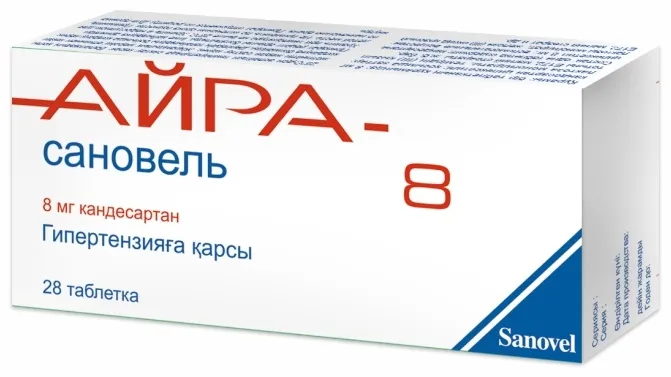
Table of Contents
INSTRUCTIONS FOR MEDICAL USE OF THE MEDICINAL PRODUCT AYRA–sanovel (AYRA–sanovel)
Composition:
One tablet contains candesartan cilexetil 8 mg or 16 mg;
Excipients: lactose monohydrate, calcium carboxymethylcellulose, hydroxypropyl cellulose, corn starch, polyethylene glycol 8000, magnesium stearate, iron oxide red (E 172).
Pharmaceutical form. Tablets.
Main physico-chemical properties:
8 mg — round, flat, light pink tablets with a score line on one side;
16 mg — round, flat, pink tablets with a score line on one side.
Pharmacotherapeutic group. Angiotensin II receptor antagonists. Candesartan.
ATC code C09CA06.
Pharmacological Properties
Angiotensin II is the primary vasoactive hormone of the renin-angiotensin-aldosterone system (RAAS), playing a key role in the pathophysiological mechanism of arterial hypertension, heart failure, and other cardiovascular diseases. It is also involved in the pathogenesis of end-organ hypertrophy and damage. The main physiological effects of angiotensin II, such as vasoconstriction, aldosterone stimulation, regulation of salt and water homeostasis, and stimulation of cell growth, are mediated via type 1 receptors (AT1).
Candesartan cilexetil is an orally active prodrug. It is rapidly converted into the active substance, candesartan, by ester hydrolysis during absorption from the gastrointestinal tract. Candesartan is a selective angiotensin II receptor antagonist (ARB) with high affinity and tight binding to the AT1 receptor, and it has a slow dissociation from the receptor. It does not exhibit agonistic activity.
Candesartan does not inhibit angiotensin-converting enzyme (ACE), which converts angiotensin I to angiotensin II and degrades bradykinin. There is no effect on ACE or potentiation of bradykinin or substance P. In controlled clinical trials comparing candesartan with ACE inhibitors, the incidence of cough was lower in patients receiving candesartan cilexetil. Candesartan does not bind to or block receptors of other hormones or ion channels important in cardiovascular regulation. Antagonism of angiotensin II receptors (AT1) leads to a dose-dependent increase in plasma levels of renin, angiotensin I, and angiotensin II, as well as a decrease in plasma aldosterone concentration.
Arterial Hypertension
In arterial hypertension, candesartan induces a dose-dependent and long-lasting reduction in blood pressure. The antihypertensive effect is due to a reduction in systemic vascular resistance without reflex tachycardia. There is no evidence of significant or excessive hypotension after the first dose or rebound effect after discontinuation of treatment.
After a single dose of candesartan cilexetil, the onset of antihypertensive effect typically occurs within 2 hours. With continuous treatment, the maximum reduction in blood pressure is usually achieved within 4 weeks and is maintained during long-term therapy. According to meta-analysis data, the average additional effect of increasing the dose from 16 mg to 32 mg once daily is small. Considering inter-individual variability, a greater than average effect may be expected in some patients. When administered once daily, candesartan cilexetil provides effective and consistent blood pressure reduction over 24 hours, with minimal difference between maximum and minimum effect during the dosing interval.
When candesartan cilexetil is used concomitantly with hydrochlorothiazide, an additional reduction in blood pressure is observed. Enhanced antihypertensive effect is also noted when candesartan cilexetil is combined with amlodipine or felodipine.
Medicinal products that block the renin-angiotensin-aldosterone system generally have a less pronounced antihypertensive effect in patients of non-black race (who typically represent a low-renin population) compared to other racial groups. This also applies to candesartan.
Candesartan increases renal blood flow and/or does not affect or increases glomerular filtration rate, while vascular resistance and filtration fraction are reduced. In a 3-month clinical study involving patients with arterial hypertension, type 2 diabetes, and microalbuminuria, antihypertensive treatment with candesartan cilexetil reduced urinary albumin excretion. Currently, there are no data on the effect of candesartan on the progression of diabetic nephropathy. In patients with arterial hypertension and type 2 diabetes, 12-week treatment with candesartan cilexetil at a dose of 8–16 mg did not show a negative effect on blood glucose or lipid profile.
Pediatric Population — Arterial Hypertension
The antihypertensive effect of candesartan was evaluated in children with arterial hypertension aged 1 to <6 years and 6 to <17 years in two randomized, double-blind, multicenter, 4-week dose-finding studies.
In children aged 1 to <6 years, among 93 patients, 74% of whom had renal impairment, patients were randomized to receive oral suspension of candesartan cilexetil at doses of 0.05, 0.20, or 0.40 mg/kg once daily. The primary analysis method was the slope of change in systolic blood pressure (SBP) according to dose. SBP and diastolic blood pressure (DBP) decreased from baseline by 6.0/5.2 to 12.0/11.1 mm Hg across the three doses of candesartan cilexetil. However, since there was no placebo group, the true magnitude of blood pressure reduction remains uncertain, complicating the final benefit-risk assessment in this age group.
Among children aged 6 to <17 years, 240 patients were randomized to receive placebo or low, medium, or high doses of candesartan cilexetil in a 1:2:2:2 ratio. For children with body weight <50 kg, candesartan cilexetil doses were 2, 8, or 16 mg once daily. For children with body weight >50 kg, doses were 4, 16, or 32 mg once daily. Candesartan at all doses reduced seated systolic blood pressure (SBP) by 10.2 mm Hg (p < 0.0001) and seated diastolic blood pressure (DBP) by 6.6 mm Hg (p = 0.0029) from baseline. In the placebo group, SBP decreased by 3.7 mm Hg (p = 0.0074) and DBP by 1.80 mm Hg (p = 0.0992) from baseline. Despite the significant placebo effect, all individual doses of candesartan (and all doses combined) were significantly more effective than placebo. The maximum blood pressure-lowering response in children with body weight less than and greater than 50 kg was achieved at doses of 8 mg and 16 mg, respectively, after which the effect plateaued. Of the enrolled participants, 47% were of non-black race and 29% were female; mean age (+/- SD) was 12.9 +/- 2.6 years.
In children aged 6 to <17 years, a trend toward reduced blood pressure effect was observed in non-black patients compared to other patients.
Heart Failure
Treatment with candesartan cilexetil reduces mortality, decreases hospitalization rates due to heart failure, and alleviates symptoms in patients with left ventricular systolic dysfunction. The positive effect of candesartan on reducing cardiovascular mortality or the frequency of first hospitalization due to chronic heart failure (CHF) was consistent regardless of age, sex, or concomitant therapy. Candesartan was also effective in patients concurrently receiving both beta-blockers and ACE inhibitors, with a positive effect achieved independently of whether patients were receiving target doses of ACE inhibitors as recommended in treatment guidelines. In patients with CHF and left ventricular systolic dysfunction (left ventricular ejection fraction ≤ 40%), candesartan reduces systemic vascular resistance and pulmonary capillary wedge pressure, increases plasma renin activity and angiotensin II concentration, and decreases aldosterone levels.
Dual Blockade of the Renin-Angiotensin-Aldosterone System (RAAS)
Concomitant use of ACE inhibitors and angiotensin II receptor blockers was investigated in two large-scale randomized controlled trials: ONTARGET (Ongoing Telmisartan Alone and in Combination with Ramipril Global Endpoint Trial) and VA NEPHRON-D (Veterans Affairs Nephropathy in Diabetes study). ONTARGET included patients with a history of cardiovascular or cerebrovascular disease or type 2 diabetes with evidence of target organ damage. VA NEPHRON-D included patients with type 2 diabetes and diabetic nephropathy.
These studies did not demonstrate a significant beneficial effect on renal and/or cardiovascular outcomes or mortality, while an increased risk of hyperkalemia, acute kidney injury, and/or arterial hypotension was observed compared to monotherapy. Given the similarity of pharmacodynamic properties, these results are also applicable to other ACE inhibitors and angiotensin II receptor blockers.
Concomitant use of ACE inhibitors and angiotensin II receptor blockers is contraindicated in patients with diabetic nephropathy.
ALTITUDE (Aliskiren Trial in Type 2 Diabetes Using Cardiovascular and Renal Endpoints) was a study designed to evaluate the benefit of adding aliskiren to standard therapy with ACE inhibitors or angiotensin II receptor blockers in patients with type 2 diabetes and chronic kidney disease, cardiovascular disease, or both. The study was terminated early due to an increased risk of adverse events. Cardiovascular mortality and stroke incidence were higher in the aliskiren group than in the placebo group, and adverse events and serious adverse events (hyperkalemia, arterial hypotension, and renal function impairment) were more frequent in the aliskiren group than in the placebo group.
Pharmacokinetics
Absorption and Distribution
After oral administration, candesartan cilexetil is converted into the active substance, candesartan. The absolute bioavailability of the tablet is 14%. The mean peak serum concentration (Cmax) is reached within 3–4 hours after tablet intake. Candesartan serum concentrations increase linearly with increasing doses within the therapeutic range. No gender-related differences in candesartan pharmacokinetics were observed. Food intake does not have a significant effect on the area under the serum concentration-time curve (AUC) of candesartan. Candesartan is highly bound to plasma proteins (>99%). The apparent volume of distribution of candesartan is 0.1 L/kg. The bioavailability of candesartan is independent of food intake.
Biotransformation and Elimination
Candesartan is primarily excreted unchanged in urine and bile, with only minor hepatic metabolism (CYP2C9). Available interaction studies indicate no effect on CYP2C9 or CYP3A4. Based on in vitro data, no in vivo interactions are expected with drugs whose metabolism depends on cytochrome P450 isoenzymes CYP1A2, CYP2A6, CYP2C9, CYP2C19, CYP2D6, CYP2E1, or CYP3A4. The terminal half-life of candesartan is approximately 9 hours. No accumulation occurs after multiple dosing.
Total plasma clearance of candesartan is approximately 0.37 mL/min/kg, and renal clearance is approximately 0.19 mL/min/kg. Renal excretion of candesartan occurs via both glomerular filtration and active tubular secretion. After oral administration of 14C-labeled candesartan cilexetil, approximately 26% of the dose is excreted in urine as candesartan and 7% as inactive metabolite, while approximately 56% of the dose is found in feces as candesartan and 10% as inactive metabolite.
Pharmacokinetics in Special Patient Populations
In elderly subjects (aged 65 years and older), Cmax and AUC of candesartan are increased by approximately 50% and 80%, respectively, compared to younger subjects. However, the blood pressure response and incidence of adverse effects are similar after administration of the standard dose of Ayrasanovel in young patients and elderly subjects.
In patients with mild to moderate renal impairment compared to those with normal renal function, Cmax and AUC of candesartan increased by approximately 50% and 70%, respectively, during multiple dosing, but the elimination half-life remained unchanged. Corresponding changes in patients with severe renal impairment were approximately 50% and 110%, respectively. The terminal half-life of candesartan was approximately doubled in patients with severe renal impairment. AUC values in patients undergoing hemodialysis were similar to those observed in patients with severe renal impairment.
In two studies, both including patients with mild to moderate hepatic impairment, an increase in mean AUC of candesartan of approximately 20% in one study and 80% in another was observed (see section "Adverse Reactions"). Experience in patients with severe hepatic impairment is lacking.
Pediatric Population
Pharmacokinetic properties of candesartan were evaluated in children with arterial hypertension aged 1 to <6 years and 6 to <17 years in two single-dose pharmacokinetic studies.
Ten children aged 1 to <6 years with body weight between 10 and 25 kg received a single 0.2 mg/kg dose of oral suspension. No correlation between Cmax and AUC with age or body weight was observed. Clearance data are lacking; therefore, the possibility of correlation between clearance and body weight/age in this population is unknown.
Twenty-two children aged 6 to <17 years received a single 16 mg dose of the medicinal product. No correlation between Cmax and AUC with age was observed. However, body weight likely significantly correlates with Cmax (p = 0.012) and AUC (p = 0.011). Clearance data are lacking; therefore, the possibility of correlation between clearance and body weight/age in this population is unknown.
Children over 6 years of age experienced a similar effect as adults receiving the same dose.
Pharmacokinetics of candesartan cilexetil in children under 1 year of age has not been studied.
Preclinical Safety Data
There was no evidence of abnormal systemic toxicity or target organ toxicity at clinically relevant doses. In preclinical safety studies, candesartan affected the kidneys and erythrocyte parameters at high doses in mice, rats, dogs, and monkeys. Candesartan caused a reduction in erythrocyte parameters (erythrocytes, hemoglobin, hematocrit). Renal effects (e.g., interstitial nephritis, tubular dilation, basophilic tubules; increased plasma urea and creatinine concentrations) induced by candesartan may be secondary to its hypotensive effect, leading to changes in renal perfusion.
Additionally, candesartan caused hyperplasia/hypertrophy of juxtaglomerular cells. These changes were considered to be pharmacologically mediated by candesartan. For therapeutic doses of candesartan in humans, juxtaglomerular cell hyperplasia/hypertrophy appears to have no clinical significance.
In preclinical studies in newborn and young normotensive rats, candesartan caused reduced body and heart weight. As in adult animals, these effects are considered to result from the pharmacological action of candesartan. At the lowest dose of 10 mg/kg, candesartan exposure was 12 to 78 times higher than in children aged 1 to <6 years receiving candesartan cilexetil at 0.2 mg/kg and 7 to 54 times higher than in children aged 6 to <17 years receiving candesartan cilexetil at 16 mg. Since no no-effect level was identified in these studies, the safety margin for the effect on heart weight and the clinical relevance of this finding are unknown.
Fetotoxicity was observed in late pregnancy (see section "Special Warnings and Precautions for Use").
In vitro and in vivo mutagenicity testing indicates that candesartan does not exhibit mutagenic or clastogenic effects under clinical use conditions.
No evidence of carcinogenicity has been found.
The renin-angiotensin-aldosterone system plays a crucial role in fetal kidney development. Blockade of the RAAS has been shown to lead to abnormal kidney development in very young mice. Administration of drugs acting directly on the RAAS may alter normal kidney development.
Therefore, Ayrasanovel should not be used in children under 1 year of age (see section "Special Warnings and Precautions for Use").
Clinical characteristics.
Indications.
Treatment of essential hypertension in adults.
Treatment of hypertension in children and adolescents aged 6 to <18 years.
Treatment of adult patients with heart failure and impaired left ventricular systolic function (left ventricular ejection fraction ≤ 40%) who are intolerant to angiotensin-converting enzyme (ACE) inhibitors, or as add-on therapy to ACE inhibitor treatment in patients with symptomatic heart failure despite optimal therapy and who are intolerant to mineralocorticoid receptor antagonists (see sections "Dosage and administration", "Special precautions", "Interaction with other medicinal products and other forms of interaction", and "Pharmacodynamics").
Contraindications.
Hypersensitivity to any component of the medicinal product.
Severe hepatic impairment and/or cholestasis.
Children under 1 year of age.
Concomitant use of candesartan with medicinal products containing aliskiren is contraindicated in patients with diabetes mellitus and in patients with renal impairment (glomerular filtration rate < 60 mL/min/1.73 m²) (see sections "Interaction with other medicinal products and other forms of interaction" and "Pharmacodynamics").
Interaction with other medicinal products and other forms of interaction.
Substances studied in clinical pharmacokinetic trials include hydrochlorothiazide, warfarin, digoxin, oral contraceptives (specifically: ethinylestradiol/levonorgestrel), glipizide, nifedipine, and enalapril. No clinically significant pharmacokinetic interactions with these medicinal products were observed.
Concomitant use with potassium-sparing diuretics, potassium supplements, potassium-containing salt substitutes, and other medicinal products that may increase potassium levels (e.g., heparin, etc.) may lead to increased serum potassium levels. Monitoring of plasma potassium levels is recommended (see section "Special precautions").
During concomitant use of lithium with ACE inhibitors, reversible increases in serum lithium concentrations and lithium toxicity have been reported. A similar effect may occur with angiotensin II receptor antagonists; therefore, careful monitoring of serum lithium levels is recommended during concomitant use.
When angiotensin II receptor antagonists are used concomitantly with non-steroidal anti-inflammatory drugs (e.g., selective COX-2 (cyclooxygenase) inhibitors, acetylsalicylic acid (> 3 g/day), and non-selective NSAIDs), attenuation of the antihypertensive effect may occur.
As with other ACE inhibitors, concomitant use of angiotensin II receptor antagonists and non-steroidal anti-inflammatory agents may increase the risk of worsening renal function, including possible acute renal failure, and elevation of serum potassium levels, particularly in patients with pre-existing renal impairment. This combination should be used with caution, especially in elderly patients. Patients should be adequately hydrated, and consideration should be given to monitoring renal function after initiation of concomitant therapy and periodically thereafter.
Dual blockade of the renin-angiotensin-aldosterone system (RAAS) by combined use of ACE inhibitors, angiotensin II receptor blockers, and aliskiren is associated with a higher frequency of adverse reactions such as arterial hypotension, hyperkalaemia, and decreased renal function (including acute renal failure), compared to use of a single RAAS-acting agent (see sections "Contraindications", "Special precautions", and "Pharmacodynamics").
Paediatric population
Interaction studies have been performed only in adults.
Special precautions for use.
Dual blockade of the renin-angiotensin-aldosterone system (RAAS)
Evidence exists that concomitant use of ACE inhibitors, angiotensin II receptor blockers, and aliskiren increases the risk of hypotension, hyperkalemia, and decreased renal function (including acute renal failure). Dual blockade of the RAAS by combining ACE inhibitors, angiotensin II receptor blockers, and aliskiren is therefore not recommended (see sections "Interaction with other medicinal products and other forms of interaction" and "Pharmacodynamics").
If dual blockade is considered absolutely necessary, it should be carried out only under specialist supervision and with frequent, careful monitoring of renal function, electrolytes, and blood pressure.
ACE inhibitors and angiotensin II receptor blockers should not be used concomitantly in patients with diabetic nephropathy.
Renal impairment
As with other agents that inhibit the RAAS, changes in renal function may be expected in susceptible patients receiving candesartan.
When candesartan is administered to patients with hypertension and renal impairment, periodic monitoring of serum potassium and creatinine levels is recommended.
Experience with the use of the drug in patients with very severe or end-stage renal failure (creatinine clearance <15 mL/min) is limited. In such patients, the dose of candesartan should be carefully titrated with close monitoring of blood pressure.
Assessment of patients with heart failure should include periodic evaluation of renal function, particularly in elderly patients (aged 75 years and older) and in patients with impaired renal function. Monitoring of serum creatinine and potassium levels is recommended during dose titration. Patients with serum creatinine levels > 265 μmol/L (> 3 mg/dL) should not be included in clinical trials of heart failure.
Pediatric population, including children with renal impairment.
Use in children, including patients with impaired renal function.
The use of the medicinal product AYRA-sanovel has not been studied in children with a glomerular filtration rate below 30 mL/min/1.73 m² (see section "Dosage and administration").
For children with potential depletion of intravascular volume (e.g., patients receiving diuretics, especially those with impaired renal function), treatment with candesartan should be initiated under close medical supervision, and consideration should be given to using a lower starting dose (see section "Dosage and administration").
In female patients after the onset of menstruation, the possibility of pregnancy should be regularly assessed. Appropriate information and/or measures should be provided to prevent the risk of adverse effects of candesartan during pregnancy (see sections "Contraindications" and "Use during pregnancy or breastfeeding").
Patients with rare hereditary problems of galactose intolerance, Lapp lactase deficiency, or glucose-galactose malabsorption should not take this medicinal product.
Concomitant therapy with ACE inhibitors in heart failure
The risk of adverse reactions, including hypotension, worsening renal function (including acute renal failure), and hyperkalemia, may increase when candesartan is used in combination with ACE inhibitors. Triple combination therapy with an ACE inhibitor, a mineralocorticoid receptor antagonist, and candesartan is also not recommended. The use of these combinations should only be carried out under specialist supervision and with frequent, careful monitoring of renal function, electrolytes, and blood pressure. Patients receiving such treatment require regular and careful monitoring.
ACE inhibitors should not be used concomitantly with angiotensin II receptor blockers in patients with diabetic nephropathy.
Hemodialysis
During dialysis, blood pressure may be particularly sensitive to blockade of AT1 receptors due to reduced plasma volume and activation of the RAAS. Therefore, in patients undergoing hemodialysis, the dose of the drug should be carefully adjusted with monitoring of blood pressure.
Renal artery stenosis
Medicinal products affecting the RAAS, including angiotensin-converting enzyme (ACE) inhibitors, may increase blood urea and serum creatinine levels in patients with bilateral renal artery stenosis or stenosis of the artery of a single kidney.
Kidney transplantation
There is no experience with the use of candesartan in patients after kidney transplantation.
Arterial hypotension
In patients with heart failure, hypotension may occur during treatment with candesartan. As described for other agents affecting the renin-angiotensin-aldosterone system, hypotension may also occur in patients with arterial hypertension who have reduced intravascular fluid volume, for example, those taking high doses of diuretics. Caution should be exercised at the start of treatment, and hypovolemia should be corrected whenever possible.
Anesthesia and surgical interventions
In patients taking angiotensin II antagonists, hypotension may occur during anesthesia and surgical procedures due to blockade of the renin-angiotensin system (RAS). Very rarely, hypotension may be so severe that intravenous fluids and/or vasopressor agents may be required.
Stenosis of aortic and mitral valves (obstructive hypertrophic cardiomyopathy)
As with other vasodilators, particular caution is advised in patients with hemodynamically significant stenosis of the aortic or mitral valve or obstructive hypertrophic cardiomyopathy.
Primary hyperaldosteronism
Patients with primary hyperaldosteronism generally do not respond to antihypertensive drugs acting through inhibition of the RAAS. Therefore, the use of candesartan in this population is not recommended.
Hyperkalemia
Concomitant use of candesartan with potassium-sparing diuretics, potassium supplements, potassium-containing salt substitutes, or other medicinal products capable of increasing potassium levels (e.g., heparin, co-trimoxazole, also known as trimethoprim/sulfamethoxazole) may lead to elevated serum potassium levels in hypertensive patients. Appropriate monitoring of serum potassium levels should be performed.
Hyperkalemia may occur in patients with heart failure receiving candesartan. Periodic monitoring of serum potassium levels is recommended. The combination of ACE inhibitors, potassium-sparing diuretics (e.g., spironolactone), and candesartan is not recommended and should only be used after careful assessment of potential benefits and risks.
Intestinal angioedema
Cases of intestinal angioedema have been reported in patients taking angiotensin II receptor blockers, including candesartan (see section "Adverse reactions"). These patients experienced abdominal pain, nausea, vomiting, and diarrhea. Symptoms resolved after discontinuation of angiotensin II receptor blockers. If intestinal angioedema is diagnosed, treatment should be discontinued and appropriate monitoring initiated until symptoms completely resolve.
General
In patients in whom vascular tone and renal function depend predominantly on RAAS activity (e.g., patients with severe congestive heart failure or underlying renal disease, including renal artery stenosis), treatment with other medicinal products affecting this system has been associated with acute hypotension, azotemia, oliguria, or rarely, acute renal failure. The possibility of such effects cannot be excluded with the use of ARBs. As with any antihypertensive agent, excessive reduction in blood pressure in patients with ischemic heart disease or cerebrovascular disease may lead to myocardial infarction or stroke.
The antihypertensive effect of candesartan may be enhanced by other medicinal products that have blood pressure-lowering properties, regardless of whether they are prescribed as antihypertensive agents or used for other indications.
The product contains a small amount of lactose. Patients with rare hereditary problems of galactose intolerance, Lapp lactase deficiency, or glucose-galactose malabsorption should not take this medicinal product.
Use during pregnancy or breastfeeding.
Pregnancy
The medicinal product is contraindicated in pregnant women or women who are planning to become pregnant. If pregnancy is confirmed during treatment with this product, its use must be immediately discontinued and replaced with another medicinal product approved for use during pregnancy.
Epidemiological data on the teratogenic risk associated with the use of ACE inhibitors during the first trimester of pregnancy are inconclusive, but a small increase in risk cannot be excluded. Since there are no controlled epidemiological data on the risk of angiotensin II receptor antagonists, similar risks may exist for this class of drugs. Except when continuation of therapy is considered necessary, women planning pregnancy should be switched to alternative antihypertensive therapy with an established safety profile during pregnancy. Upon confirmation of pregnancy, angiotensin II receptor antagonists must be discontinued immediately, and if necessary, alternative therapy should be initiated.
It is known that the use of angiotensin II receptor antagonists during the second and third trimesters of pregnancy induces fetotoxicity in humans (impaired renal function, oligohydramnios, delayed skull ossification) and neonatal toxicity (renal failure, arterial hypotension, hyperkalemia).
If angiotensin II receptor antagonists are used from the second trimester of pregnancy, ultrasound evaluation of renal function and skull ossification is recommended.
Newborns whose mothers have taken angiotensin II receptor antagonists should be carefully monitored for the development of arterial hypotension (see sections "Contraindications" and "Special precautions for use").
Breastfeeding
Since there is no information on the use of candesartan during breastfeeding, the drug is not recommended, and alternative treatments with better-established safety profiles during breastfeeding should be preferred, especially during breastfeeding of newborns or preterm infants.
Ability to affect reaction speed when driving vehicles and operating machinery.
Studies on the effect of candesartan on the ability to drive vehicles and operate machinery have not been conducted. However, it should be considered that dizziness or increased fatigue may occur during treatment with this drug.
Method of Administration and Dosage
Method of Administration in Arterial Hypertension
The usual recommended initial and maintenance dose of AYRA-SANOVEL is 8 mg once daily. The maximum antihypertensive effect is achieved within 4 weeks of starting treatment. In some patients whose blood pressure is not adequately controlled, the dose may be increased from 16 mg once daily up to a maximum of 32 mg once daily. Therapy should be adjusted according to blood pressure response.
AYRA-SANOVEL may also be used in combination with other antihypertensive agents (see sections "Contraindications", "Special Warnings and Precautions for Use", "Interaction with Other Medicinal Products and Other Forms of Interaction", and "Pharmacodynamics"). The addition of hydrochlorothiazide has been shown to provide additional antihypertensive effects with various doses of AYRA-SANOVEL.
Use in Elderly Patients
No initial dose adjustment is required in elderly patients.
Use in Patients with Reduced Intravascular Volume
An initial dose of 4 mg should be prescribed for patients at risk of developing arterial hypotension, such as those with possible reduction in circulating volume (see section "Special Warnings and Precautions for Use").
Use in Renal Impairment
The initial dose for patients with renal impairment, including those on hemodialysis, is 4 mg. The dose should be titrated according to response. Experience with use in patients with very severe or end-stage renal failure (creatinine clearance < 15 mL/min) is limited (see section "Special Warnings and Precautions for Use").
Use in Hepatic Impairment
For patients with mild to moderate hepatic impairment, an initial dose of 4 mg once daily is recommended. The dose may be adjusted according to blood pressure response. AYRA-SANOVEL is contraindicated in patients with severe hepatic impairment and/or cholestasis (see sections "Contraindications" and "Pharmacokinetics").
Use in Patients of Non-White Race
The antihypertensive effect of candesartan is less pronounced in patients of non-white race compared to others. Therefore, dose titration and concomitant therapy for blood pressure control may be more frequently required in patients of non-white race (see section "Pharmacodynamics").
Pediatric Population
Children and adolescents aged 6 to <18 years:
The recommended initial dose is 4 mg once daily.
- For patients with body weight < 50 kg: in patients whose blood pressure is not adequately controlled, the dose may be increased to a maximum of 8 mg once daily.
- For patients with body weight ≥ 50 kg: in patients whose blood pressure is not adequately controlled, the dose may be increased to 8 mg once daily, and then to 16 mg once daily if necessary (see section "Pharmacodynamics").
Doses above 32 mg have not been studied in children.
The maximum antihypertensive effect is achieved within 4 weeks of starting treatment.
For children with possible intravascular volume depletion (e.g., patients receiving diuretics, especially those with renal impairment), treatment with AYRA-SANOVEL should be initiated under close medical supervision, and consideration should be given to using a lower initial dose (see section "Special Warnings and Precautions for Use").
The use of AYRA-SANOVEL has not been studied in children with glomerular filtration rate below 30 mL/min/1.73 m² (see section "Special Warnings and Precautions for Use").
Pediatric Population of Non-White Race
The antihypertensive effect of candesartan is less pronounced in pediatric patients of non-white race compared to others (see section "Pharmacodynamics").
Children Aged 1 to <6 Years
Safety and efficacy in children aged 1 to <6 years have not been established. Available data are described in section "Pharmacodynamics", but dosage recommendations cannot be provided.
AYRA-SANOVEL is contraindicated in children under 1 year of age (see section "Contraindications").
Method of Administration in Heart Failure
The usual recommended initial dose of AYRA-SANOVEL in heart failure is 4 mg once daily. Titration to the target dose of 32 mg once daily (maximum dose) or to the maximum tolerated dose should be performed by doubling the dose at intervals of at least 2 weeks.
Evaluation of patients with heart failure should always include assessment of renal function, including monitoring of serum creatinine and potassium. AYRA-SANOVEL may be used in combination with other treatments for heart failure, including ACE inhibitors, beta-blockers, diuretics, and digoxin, or combinations of these agents. Candesartan may be used in combination with ACE inhibitors in patients with symptomatic heart failure despite optimal therapy and intolerance to mineralocorticoid receptor antagonists. The combination of ACE inhibitors, potassium-sparing diuretics (e.g., spironolactone), and candesartan is not recommended and should be used only after careful evaluation of potential benefits and risks (see sections "Special Warnings and Precautions for Use", "Undesirable Effects", and "Pharmacodynamics").
Special Patient Categories
No initial dose adjustment is required for elderly patients or for patients with reduced intravascular volume, renal impairment, or mild to moderate hepatic impairment.
Pediatric Population
The safety and efficacy of AYRA-SANOVEL for the treatment of heart failure in children from birth to 18 years of age have not been established. Data are lacking.
Method of Administration
Oral use.
AYRA-SANOVEL should be taken once daily, regardless of food intake.
Food intake does not affect the bioavailability of candesartan.
Children
AYRA-SANOVEL is used for the treatment of hypertension in children and adolescents aged 6 to 18 years.
Overdose
Symptoms
Given the pharmacological properties of the drug, the main manifestation of overdose is likely to be symptomatic hypotension and dizziness. In isolated cases of overdose (up to 672 mg of candesartan cilexetil), recovery has been reported without worsening of health status.
Treatment
If symptomatic hypotension develops, symptomatic treatment should be administered and vital signs monitored. The patient should be placed in a supine position with legs elevated. If this is insufficient, plasma volume should be expanded by infusion, for example, with 0.9% sodium chloride solution. If the above measures are inadequate, sympathomimetic agents may be used. Candesartan is not removed by hemodialysis.
Adverse reactions.
Treatment of arterial hypertension
In controlled clinical studies, adverse reactions were mild, transient, and comparable to placebo. The overall incidence of adverse effects showed no dose- or age-related dependence. Discontinuation of treatment due to adverse reactions was similar for candesartan cilexetil (3.1%) and placebo (3.2%).
In a pooled analysis of clinical trial data in patients with arterial hypertension, based on the frequency of adverse reactions during administration of candesartan cilexetil, adverse reactions were defined as those occurring at least 1% more frequently with candesartan cilexetil than with placebo. According to this definition, the most commonly reported adverse reactions were dizziness/vertigo, headache, and respiratory tract infections.
The table below presents adverse reactions reported during clinical trials and post-marketing surveillance.
In the tables of the section "Adverse reactions", the following frequency definitions are used: very common (≥ 1/10); common (≥ 1/100 to < 1/10); uncommon (≥ 1/1000 to < 1/100); rare (≥ 1/10,000 to < 1/1000); very rare (< 1/10,000).
| System organ class |
Frequency |
Adverse effect |
| Infections and infestations |
Common |
Respiratory tract infections |
| Blood and lymphatic system disorders |
Very rare |
Leukopenia, neutropenia and agranulocytosis |
| Metabolism and nutrition disorders |
Very rare |
Hyperkalemia, hyponatremia |
| Nervous system disorders |
Common |
Dizziness/vertigo, headache |
| Respiratory system disorders |
Very rare |
Cough |
| Gastrointestinal disorders |
Very rare |
Nausea, intestinal angioedema |
| Not known |
Diarrhea |
|
| Hepatobiliary disorders |
Very rare |
Elevated liver enzymes, hepatic dysfunction or hepatitis |
| Skin and subcutaneous tissue disorders |
Very rare |
Angioedema, rash, urticaria, pruritus |
| Musculoskeletal and connective tissue disorders |
Very rare |
Back pain, arthralgia, myalgia |
| Renal and urinary disorders |
Very rare |
Worsening of renal function, including renal failure in susceptible patients (see section "Special precautions") |
Laboratory test results
In most cases, candesartan has no clinically significant effect on routine laboratory parameters. As with other agents acting on the RAAS, a slight decrease in hemoglobin levels has been observed. Generally, routine monitoring of laboratory parameters is not required for patients receiving candesartan. However, in patients with renal impairment, periodic monitoring of serum potassium and creatinine levels is recommended.
Pediatric population
The safety of candesartan cilexetil was evaluated in 255 children and adolescents with hypertension aged 6 to <18 years in a 4-week efficacy study and a 1-year open-label study (see section "Pharmacodynamics"). In nearly all organ system classes, the frequency of adverse reactions in children falls within the common/ uncommon range. The nature and severity of adverse reactions in children are similar to those observed in adults (see table above), although the overall frequency of adverse reactions is higher in children and adolescents, particularly in the following cases:
- Headache, dizziness, and upper respiratory tract infections are "very common" (i.e., ≥1/10) in children and "common" (≥1/100 to <1/10) in adults.
- Cough is "very common" (i.e., >1/10) in children and "very rare" (<1/10,000) in adults.
- Rash is "common" (i.e., from ≥1/100 to <1/10) in children and "very rare" (<1/10,000) in adults.
- Hyperkalemia, hyponatremia, and hepatic function abnormalities are "uncommon" (≥1/1,000 to <1/100) in children and "very rare" (<1/10,000) in adults.
- Sinus arrhythmia, nasopharyngitis, fever are "common" (i.e., from ≥1/100 to <1/10), and oropharyngeal pain is "very common" (i.e., ≥1/10) in children, but were not reported in adults. However, these events are transient and commonly associated with pediatric illnesses.
The overall safety profile of candesartan cilexetil in children does not differ significantly from that in adults.
Treatment of heart failure
The adverse reaction profile of candesartan cilexetil in patients with heart failure was consistent with the pharmacological properties of the drug and the underlying health status of the patients. In the CHARM clinical program, which compared candesartan cilexetil at doses up to 32 mg (n = 3803) with placebo (n = 3796), 21% of patients in the candesartan cilexetil group and 16.1% in the placebo group discontinued treatment due to adverse reactions. The most frequently reported adverse reactions were hyperkalemia, hypotension, and renal failure. These reactions were most commonly observed in patients aged 70 years or older, patients with diabetes mellitus, or patients receiving other medicinal products affecting the renin-angiotensin-aldosterone system, particularly ACE inhibitors and/or spironolactone.
The table below presents data on adverse reactions observed during clinical studies and post-marketing surveillance.
| System organ class |
Frequency |
Adverse effect |
| Blood and lymphatic system disorders |
Very rare |
Leukopenia, neutropenia and agranulocytosis |
| Metabolism and nutrition disorders |
Common |
Hyperkalaemia |
| Very rare |
Hypotension |
|
| Nervous system disorders |
Very rare |
Dizziness, headache |
| Respiratory system disorders |
Very rare |
Cough |
| Vascular disorders |
Common |
Hypotension |
| Gastrointestinal disorders |
Very rare |
Nausea, intestinal angioedema |
| Not known |
Diarrhoea |
|
| Hepatobiliary disorders |
Very rare |
Elevated liver enzymes, hepatic dysfunction or hepatitis |
| Skin and subcutaneous tissue disorders |
Very rare |
Angioedema, rash, urticaria, pruritus |
| Musculoskeletal and connective tissue disorders |
Very rare |
Back pain, arthralgia, myalgia |
| Renal and urinary disorders |
Common |
Worsening of renal function, including renal failure in susceptible patients (see section "Special precautions") |
Laboratory test results
Hyperkalemia and renal failure are commonly observed in patients receiving candesartan for treatment of heart failure. Periodic monitoring of serum creatinine and potassium levels is recommended (see section "Dosage and administration").
Reporting of suspected adverse reactions
Reporting of suspected adverse reactions after marketing authorization of the medicinal product is important. It allows continued monitoring of the benefit-risk balance of the medicinal product. Medical and pharmaceutical professionals, as well as patients or their legal representatives, should report all cases of suspected adverse reactions and lack of efficacy via the automated pharmacovigilance information system at the following link: https://aisf.dec.gov.ua.
Shelf life. 4 years.
Storage conditions. Store in the original packaging, out of reach of children, at a temperature not exceeding 25 °C.
Packaging. 14 tablets in a blister; 2 blisters in a cardboard box.
Prescription status. Prescription only.
Manufacturer. Sanovel Ilac Sanayi ve Ticaret A.S., Turkey.
Manufacturer's address and place of business: Balaban Mahallesi, Cihaner Sokagi, No 10, Istanbul, 34580 Silivri, Turkey.