Ailya®
Ukraine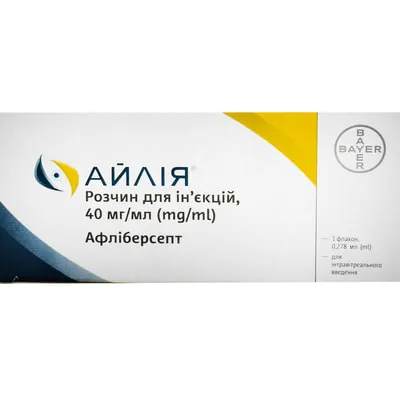
Table of Contents
INSTRUCTIONS for medical use of the medicinal product AYLYA® (EYLEA)
Composition:
Active substance: aflibercept;
1 ml of the injection solution contains 40 mg of aflibercept;
Excipients: polysorbate 20; sodium dihydrogen phosphate monohydrate; disodium hydrogen phosphate heptahydrate; sodium chloride; sucrose; water for injections.
Pharmaceutical form. Injection solution.
Main physicochemical properties: solution without visible particles.
Pharmacotherapeutic group. Agents used in disorders of ocular vessels.
ATC code S01L A05.
Pharmacological properties.
Pharmacodynamics.
Aflibercept is a recombinant fusion protein composed of the extracellular domains 1 and 2 of human vascular endothelial growth factor (VEGF) receptors 1 and 2, fused with the Fc portion of human IgG1.
Aflibercept is produced by Chinese hamster ovary (CHO) K1 cells using recombinant DNA technology.
Aflibercept acts as a soluble receptor trap, binding vascular endothelial growth factor-A (VEGF-A) and placental growth factor (PlGF) with significantly higher affinity than their natural receptors, thereby inhibiting the binding and activation of these VEGF-related receptors.
Mechanism of action. VEGF-A and PlGF are members of the VEGF family of angiogenic factors that can affect endothelial cells as potent mitogenic and chemotactic factors, as well as vascular permeability factors. VEGF exerts its effects through two tyrosine kinase receptors, VEGFR-1 and VEGFR-2, present on the surface of endothelial cells. PlGF binds only to VEGFR-1, which is also present on the surface of leukocytes. Excessive activation of these receptors by VEGF-A can lead to pathological neovascularization and excessive vascular permeability. PlGF can act synergistically with VEGF-A in these processes and promote leukocyte infiltration and vascular inflammation.
Pharmacodynamic effects.
Wet age-related macular degeneration (wet AMD).
Wet AMD is characterized by pathological choroidal neovascularization (CNV).
Leakage of blood and fluid caused by CNV can lead to retinal thickening or edema and/or sub-/intraretinal hemorrhage, resulting in loss of visual acuity.
In patients treated with Eylea® (one injection monthly for 3 consecutive months, followed by treatment every 2 months), a reduction in retinal thickness and mean size of the CNV lesion was observed soon after initiation of therapy, consistent with results obtained with ranibizumab administered at a dose of 0.5 mg monthly.
In the VIEW1 study, the mean reduction in retinal thickness measured by optical coherence tomography (OCT) at week 52 was -130 microns in the group receiving Eylea® 2 mg every 2 months and -129 microns in the group receiving ranibizumab 0.5 mg monthly. In the VIEW2 study, mean reductions in retinal thickness measured by OCT at week 52 were -149 and -139 microns in the Eylea® 2 mg every 2 months group and the ranibizumab 0.5 mg monthly group, respectively.
Reduction in CNV lesion size and retinal thickness was generally maintained throughout the second year of the studies.
The ALTAIR study was conducted in Japan in patients who had not previously received treatment for wet AMD. Results from ALTAIR were similar to those from the VIEW studies but were obtained using a regimen of 3 initial monthly injections of Eylea® 2 mg, followed by one injection after 2 months, then a "treat-and-extend" regimen with dose intervals extended by 2 or 4 weeks up to a maximum of 16 weeks according to predefined criteria. At week 52, mean reductions in retinal thickness measured by OCT were -134.4 and -126.1 microns in the 2-week extension interval group and the 4-week extension interval group, respectively. The proportion of patients without fluid on OCT at week 52 was 68.3% and 69.1% in the 2-week and 4-week extension interval groups, respectively. Reduction in central retinal thickness was generally maintained in both treatment groups during the second year of the ALTAIR study.
The ARIES study was designed to evaluate the non-inferiority of Eylea® 2 mg treatment using a "treat-and-extend" regimen initiated immediately after 3 consecutive monthly injections and one additional injection after 2 months, compared to a "treat-and-extend" regimen initiated after the first year of treatment. In patients who required injections more frequently than every 8 weeks (Q8) at least once during the study, central retinal thickness (CRT) remained higher, but the mean reduction in CRT from baseline to week 104 was -160.4 microns, comparable to that in patients treated every 8 weeks or less frequently.
Macular edema due to central retinal vein occlusion (CRVO) and branch retinal vein occlusion (BRVO).
In CRVO and BRVO, retinal ischemia develops, leading to VEGF release, which disrupts tight junctions and promotes endothelial cell proliferation. VEGF activation is associated with breakdown of the blood-retinal barrier, increased vascular permeability causing retinal edema, stimulation of endothelial cell growth, and neovascularization.
In patients treated with Eylea® (one injection monthly for 6 months), a sustained, rapid, and robust morphological response was observed in terms of central retinal thickness (CRT). At week 24, mean reduction in central retinal thickness was significantly greater compared to baseline values in all three studies (COPERNICUS (CRVO): -457 microns and -145 microns; GALILEO (CRVO): -449 microns and -169 microns; VIBRANT (BRVO): -280 microns and -128 microns). Reduction in retinal thickness compared to baseline was maintained until the end of the study: week 100 in the COPERNICUS study, week 76 in the GALILEO study, and week 52 in the VIBRANT study.
Diabetic macular edema (DME).
Diabetic macular edema is characterized by increased vascular permeability and retinal capillary damage, potentially leading to loss of visual acuity.
In patients, most of whom had type 2 diabetes, a rapid and robust morphological response (CRT, DRSS) was observed soon after initiation of Eylea® treatment.
In the VIVIDDME and VISTADME studies, mean reduction in central retinal thickness (CRT) was significantly greater compared to baseline values at week 52 in patients treated with Eylea® compared to the laser therapy group: -192.4 and -183.1 microns in the Eylea® 2Q8 groups and -66.2 and -73.3 microns in the control groups, respectively. At week 100, reductions were maintained at -195.8 and -191.1 microns in the Eylea® 2Q8 groups and -85.7 and -83.9 microns in the control groups in the VIVIDDME and VISTADME studies, respectively.
One of the predefined efficacy assessments in the VIVIDDME and VISTADME studies was improvement in the Diabetic Retinopathy Severity Scale (DRSS) score by ≥2 steps. Data on this assessment were available in 73.7% of patients in the VIVIDDME study and 98.3% in the VISTADME study. At week 52, improvement in DRSS score by ≥2 steps was observed in 27.7% and 29.1% of patients receiving Eylea® 2 mg every 8 weeks (Eylea 2Q8 groups) and 7.5% and 14.3% in the control groups. At week 100, improvement was observed in 32.6% and 37.1% of patients in the Eylea 2Q8 groups and 8.2% and 15.6% in the control groups.
The VIOLET study compared three different treatment regimens using Eylea® 2 mg in patients with DME after at least one year of treatment with fixed injection intervals, starting with 5 consecutive monthly injections followed by dosing every 2 months. At weeks 52 and 100 of the study, i.e., during the second and third years of treatment, mean changes in CRT were clinically comparable with the "treat-and-extend" (2T&E), "pro re nata" (2PRN), and 2Q8 regimens, amounting to -2.1, 2.2, and -18.8 microns at week 52 and 2.3, -13.9, and -15.5 microns at week 100 of treatment, respectively.
Myopic choroidal neovascularization (mCNV).
Myopic choroidal neovascularization (mCNV) is a common cause of vision loss in adults with pathological myopia. It develops during wound healing after rupture of Bruch's membrane and is the most vision-threatening complication of pathological myopia.
In patients treated with Eylea® in the MYRROR study (one injection at the beginning of treatment and additional injections if disease persisted or recurred), retinal thickness decreased soon after initiation of therapy by week 24 (-79 microns and -4 microns in the Eylea® 2 mg treatment group and the control group, respectively) and was maintained until week 48. The mean size of CNV lesions also decreased.
Clinical efficacy and safety.
Wet AMD.
The safety and efficacy of Eylea® were evaluated in two randomized, multicenter, double-masked, active-controlled studies in patients with wet AMD. A total of 2412 patients participated in the two efficacy studies (VIEW 1 and VIEW 2), of whom 1817 received Eylea®. Patient age ranged from 49 to 99 years, with a mean age of 76 years. In the clinical studies, approximately 89% (1616 of 1817) of patients randomized to receive Eylea® were aged 65 years or older, and nearly 63% (1139 of 1817) were aged 75 years or older. In each study, patients were randomized in a 1:1:1:1 ratio to four treatment groups:
- Eylea® 2 mg every 8 weeks (after 3 initial injections) (Eylea 2Q8);
- Eylea® 2 mg every 4 weeks (Eylea 2Q4);
- Eylea® 0.5 mg every 4 weeks (Eylea 0.5Q4);
- Ranibizumab 0.5 mg every 4 weeks (ranibizumab 0.5Q4).
During the second year of the studies, patients continued to receive the same doses assigned at randomization, but with a modified dosing regimen based on visual function and objective examination results, with a maximum protocol interval between doses of 12 weeks.
In both studies, the primary efficacy endpoint was the proportion of patients in the per-protocol population who maintained vision (loss of visual acuity of less than 15 letters at week 52 compared to baseline).
In the VIEW 1 study, vision was maintained in 95.1% of patients in the Eylea 2Q8 group and 94.4% in the ranibizumab 0.5Q4 group at week 52. Treatment with Eylea® was shown to be non-inferior and clinically equivalent to treatment in the ranibizumab 0.5Q4 group.
In the VIEW 2 study, vision was maintained in 95.6% of patients in the Eylea 2Q8 group and 94.4% in the ranibizumab 0.5Q4 group at week 52. Treatment with Eylea® was shown to be non-inferior and clinically equivalent to treatment in the ranibizumab 0.5Q4 group.
In the pooled analysis of the VIEW 1 and VIEW 2 studies, Eylea® demonstrated statistically significant superiority in the pre-specified secondary endpoint based on the NEI VPQ-25 (National Eye Institute Visual Function Questionnaire) without clinically significant differences from ranibizumab. The magnitude of these changes was similar to those observed in published studies, corresponding to an improvement in best-corrected visual acuity (BCVA) of 15 letters.
During the second year of the studies, efficacy was generally maintained until the last assessment at week 96. Monthly injections were required by 2–4% of patients, and one-third of patients required at least one injection every month.
Reduction in mean CNV lesion size was observed in all groups of both studies.
Efficacy results in all subgroups (e.g., by age, sex, race, baseline visual acuity, type of lesion, lesion size) in each study and in the pooled analysis were consistent with those in the overall population.
ALTAIR was a multicenter, 96-week, randomized, open-label study involving 247 Japanese patients with previously untreated wet AMD, designed to evaluate the efficacy and safety of Eylea® using a "treat-and-extend" regimen with dose intervals extended by 2 weeks or 4 weeks.
All patients received monthly doses of Eylea® 2 mg for three months, followed by one injection after 2 months. At week 16, patients were randomized in a 1:1 ratio to two groups:
- Treatment regimen with extension (adjustment) of Eylea® dosing intervals by 2 weeks;
- Treatment regimen with extension (adjustment) of Eylea® dosing intervals by 4 weeks.
Decisions on extending or shortening intervals were based on visual and/or anatomical criteria defined by the protocol, with a maximum interval between doses of 16 weeks for both groups.
The primary efficacy endpoint was change in BCVA from baseline to week 52. Secondary efficacy endpoints were the proportion of patients who did not lose ≥15 letters on the visual acuity scale and the proportion of patients whose visual acuity improved by at least 15 letters from baseline to week 52.
At week 52, in patients with a treatment regimen extending Eylea® dosing intervals by 2 weeks, visual acuity improved by 9.0 letters from baseline compared to 8.4 letters in the 4-week interval extension group [least squares mean difference (95% confidence interval (CI)): -0.4 (-3.8; 3.0), ANCOVA]. The proportion of patients who did not lose ≥15 letters on the visual acuity scale was similar with both regimens (96.7% in the 2-week interval extension group and 95.9% in the 4-week interval extension group). The proportion of patients whose visual acuity improved by at least 15 letters at week 52 was 32.5% in the 2-week interval extension group and 30.9% in the 4-week interval extension group. The proportion of patients whose interval was extended to 12 weeks or more was 42.3% in the 2-week interval extension group and 49.6% in the 4-week interval extension group. Additionally, in the 4-week interval extension group, 40.7% of patients had their interval extended to 16 weeks. At the last visit up to week 52, the next injection was scheduled for 12 weeks or more in 56.8% and 57.8% of patients in the 2-week and 4-week interval extension groups, respectively. During the second year of the study, efficacy was generally maintained, including the last assessment at week 96, with a mean gain from baseline of 7.6 letters in the 2-week adjustment group and 6.1 letters in the 4-week adjustment group. The proportion of patients who extended their treatment interval to 12 weeks or more was 56.9% in the 2-week adjustment group and 60.2% in the 4-week adjustment group. At the last visit up to week 96, 64.9% and 61.2% of patients in the 2-week and 4-week adjustment groups, respectively, had their next injection scheduled for an interval of 12 weeks or more. During the second year of treatment, patients in both the 2-week and 4-week adjustment groups received an average of 3.6 and 3.7 injections, respectively. Over 2 years of treatment, patients received an average of 10.4 injections. The ocular and systemic safety profile was similar to the safety data from the VIEW 1 and VIEW 2 studies.
ARIES was a 104-week, multicenter, randomized, open-label, active-controlled study involving 269 patients with previously untreated wet AMD, designed to evaluate the non-inferiority and safety of a "treat-and-extend" regimen initiated immediately after 3 consecutive monthly injections and one additional injection after 2 months, compared to a "treat-and-extend" regimen initiated after the first year of treatment.
The ARIES study also evaluated the proportion of patients requiring more frequent treatment than every 8 weeks, as determined by the investigator. Of the 269 study participants, 62 patients required more frequent injections at least once during the study. These patients remained in the study and received treatment at the frequency deemed necessary by the investigator, but no more frequently than every 4 weeks, with the possibility of extending intervals later. The mean interval between injections after the decision for more frequent treatment was 6.1 weeks. At week 104 of the study, BCVA was lower in patients who required more intensive treatment at least once during the study compared to those who did not, with a mean change in BCVA from baseline to the end of the study of +2.3 ± 15.6 letters. 85.5% of patients who received more frequent injections maintained their level of vision, i.e., lost fewer than 15 letters, and 19.4% improved their visual acuity by 15 or more letters. The safety profile in patients who received injections more frequently than every 8 weeks was similar to the safety data from the VIEW1 and VIEW2 studies.
Macular edema due to CRVO.
The safety and efficacy of Eylea® were studied in two randomized, multicenter, double-masked, controlled trials in patients with macular edema associated with central retinal vein occlusion (CRVO). A total of 358 patients received treatment and were evaluated for efficacy in both studies (COPERNICUS and GALILEO), of whom 217 received Eylea®. Patient age ranged from 22 to 89 years, with a mean age of 64 years. In the CRVO studies, approximately 52% (112 of 217) of patients receiving Eylea® were aged 65 years or older, and nearly 18% (38 of 217) were aged 75 years or older. In both studies, patients were randomized in a 3:2 ratio to receive Eylea® 2 mg every 4 weeks (2Q4) or sham injection in the control group, with a total of 6 injections.
After 6 monthly injections, patients received treatment only if they met predefined criteria for retreatment, except for subjects in the control group in the GALILEO study, who continued to receive sham injections (from control to control) until week 52. All patients meeting predefined criteria were offered treatment.
In both studies, the primary efficacy endpoint was the proportion of patients who showed improvement in BCVA of at least 15 letters from baseline at week 24.
Statistically significant differences between treatment groups favored Eylea® in both studies. In both pivotal studies, maximum improvement in visual acuity was achieved by month 3, with subsequent stabilization of the effect on visual acuity and central retinal thickness until month 6. Statistically significant differences were maintained until week 52.
The favorable effect of Eylea® treatment on visual function was similar in subgroups of patients regardless of retinal perfusion status at baseline. Efficacy results in other subgroups (e.g., by age, sex, race, baseline visual acuity, duration of CRVO) in each study were consistent with those in the overall population.
In the pooled analysis of the GALILEO and COPERNICUS studies, Eylea® demonstrated statistically significant improvement from baseline in the pre-specified secondary endpoint based on the NEI VPQ-25 (National Eye Institute Visual Function Questionnaire). The magnitude of these changes was similar to those observed in published studies, corresponding to an improvement in BCVA of 15 letters.
Macular edema due to BRVO.
The safety and efficacy of Eylea® were evaluated in a randomized, multicenter, double-masked, active-controlled study in patients with macular edema due to BRVO, including hemiretinal vein occlusion. Efficacy was studied in 181 patients who received treatment (91 received Eylea®) in the VIBRANT study. Patient age ranged from 42 to 94 years, with a mean age of 65 years. In the BRVO studies, approximately 58% (53 of 91) of patients receiving Eylea® were aged 65 years or older, and nearly 23% (21 of 91) were aged 75 years or older. In the study, patients were randomized in a 1:1 ratio to receive 2 mg of Eylea® every 8 weeks after 6 initial monthly injections or to receive laser photocoagulation at the beginning of the study (laser therapy control group). Patients in the laser therapy control group could receive additional laser photocoagulation ("rescue laser therapy") from week 12 if necessary. The minimum interval between laser photocoagulation sessions was 12 weeks. Starting from week 24, patients in the laser therapy group could, if necessary based on predefined criteria, receive rescue treatment with Eylea® 2 mg every 4 weeks for 3 months, followed by intravitreal injections every 8 weeks.
In the VIBRANT study, the primary efficacy endpoint was the proportion of patients who showed improvement in BCVA of at least 15 letters from baseline at week 24.
Change in visual acuity at week 24 compared to baseline was a secondary efficacy variable in the VIBRANT study. The difference in treatment efficacy between groups was statistically significant and favored Eylea®. Visual improvement occurred rapidly and reached its maximum at month 3, with efficacy maintained until month 12.
In the laser therapy group, 67 patients received rescue treatment with Eylea® starting from week 24 (active control/group receiving Eylea® 2 mg). In this group, visual improvement of approximately 5 letters was observed from week 24 to week 52.
At baseline, the proportion of patients with perfusion in the Eylea® injection group and the laser therapy group was 60% and 68%, respectively. At week 24, the proportions were 80% and 67%, respectively. In the Eylea® injection group, the proportion of patients with perfusion was maintained until week 52. In the laser therapy group, where patients could be prescribed Eylea® injections from week 24, the proportion of patients with perfusion increased to 78% by week 52.
Diabetic macular edema.
The safety and efficacy of Eylea® were evaluated in two randomized, multicenter, double-masked, active-controlled studies in patients with DME. Treatment efficacy was assessed based on data from 862 randomized patients who received treatment. Of these, 576 patients received Eylea® in two studies (VIVIDDME and VISTADME). Patient age ranged from 23 to 87 years, with a mean age of 63 years. In the phase III DME studies, approximately 47% (268 of 576) of patients receiving Eylea® were aged 65 years or older, and nearly 9% (52 of 576) were aged 75 years or older. The majority of patients in both studies had type 2 diabetes. In each study, patients were randomized in a 1:1:1 ratio to one of three treatment groups:
- Eylea® 2 mg every 8 weeks after 5 initial monthly injections (Eylea 2Q8);
- Eylea® 2 mg every 4 weeks (Eylea 2Q4);
- Macular laser photocoagulation (active control).
Starting from week 24, patients who met predefined threshold parameters for vision loss could receive additional treatment: patients in the Eylea® group could receive laser therapy, and patients in the laser therapy group could receive Eylea®.
In these two studies, the primary efficacy endpoint was the mean change in BCVA at week 52 compared to baseline according to the ETDRS scale (Early Treatment Diabetic Retinopathy Study visual acuity chart). Efficacy outcomes in both the Eylea 2Q8 and Eylea 2Q4 groups were statistically significant and superior to those in the laser therapy control group. This effect was maintained until week 100.
Efficacy results in subgroups (e.g., by age, sex, race, baseline HbA1c, baseline visual acuity prior to anti-VEGF therapy) in each study and in the pooled analysis were consistent with those in the overall population.
In the VIVIDDME and VISTADME studies, 36 (9%) and 197 (43%) patients, respectively, received primary anti-VEGF therapy with a washout period from the previous study phase of 3 months or more. Treatment outcomes in the subgroup of patients who received a VEGF inhibitor prior to study participation were similar to those observed in patients who did not receive VEGF inhibitors prior to study participation.
Patients with bilateral disease could receive anti-VEGF therapy in the second eye if deemed necessary by the physician. In the VISTADME study, 217 (70.7%) patients in the Eylea® treatment group received Eylea® injections in both eyes; in the VIVIDDME study, 97 (38.5%) patients in the Eylea® treatment group received different anti-VEGF therapy in both eyes.
In an independent comparative study (DRCR.net Protocol T), a flexible dosing regimen based on clear OCT and visual acuity criteria for retreatment was used. As a result of this regimen, patients in the Eylea® treatment group (n=224) received an average of 9.2 injections by week 52. This number is similar to that in the Eylea® 2 mg every 8 weeks (Eylea 2Q8) group in the VIVIDDME and VISTADME studies. Overall, treatment efficacy with Eylea® in the Protocol T study was comparable to that in the Eylea 2Q8 group in the VIVIDDME and VISTADME studies. Visual acuity improved by an average of 13.3 letters, and visual acuity improved by at least 15 letters from baseline in 42% of patients in the Protocol T study. Safety results demonstrated that the overall frequency of intraocular and systemic adverse events (including arterial thromboembolic complications) was comparable across all treatment groups in each study and between studies.
In the 100-week, multicenter, randomized, open-label, active-controlled VIOLET study, three different treatment regimens with Eylea® 2 mg were compared in patients with DME after at least one year of treatment with fixed injection intervals, starting with 5 consecutive monthly injections followed by dosing every 2 months. The VIOLET study evaluated the non-inferiority of Eylea® 2 mg treatment using a "treat-and-extend" regimen (2T&E, with intervals between injections of at least 8 weeks gradually extended based on clinical and anatomical results) and Eylea® 2 mg using a "pro re nata" regimen (2PRN, where patients were monitored every 4 weeks and received injections as needed based on clinical and anatomical results) compared to Eylea® 2 mg every 8 weeks (2Q8) during the second and third years of treatment.
The primary efficacy endpoint (change in BCVA from baseline to week 52) was 0.5 ± 6.7 letters in the 2T&E group and 1.7 ± 6.8 letters in the 2PRN group compared to 0.4 ± 6.7 letters in the 2Q8 group, with non-inferior efficacy (p < 0.0001 for both comparison groups; NI margin 4 letters). Changes in BCVA from baseline to week 100 were comparable to week 52 results: -0.1 ± 9.1 letters in the 2T&E group and 1.8 ± 9.0 letters in the 2PRN group compared to 0.1 ± 7.2 letters in the 2Q8 group. The mean number of injections over 100 weeks of treatment was 12.3, 10.0, and 11.5 for the fixed 2Q8 regimen, 2T&E, and 2PRN, respectively.
The intraocular and systemic safety profiles in all three treatment groups did not differ from those observed in the pivotal VIVID and VISTA studies.
In the 2T&E group, intervals between injections were extended or shortened at the investigator's discretion; the study recommended extending by 2 weeks.
Myopic choroidal neovascularization (mCNV).
The safety and efficacy of Eylea® were evaluated in a randomized, multicenter, double-masked study with sham injection in the control group, conducted in patients from Asian countries with previously untreated mCNV. A total of 121 patients received treatment with the possibility of evaluating its efficacy (90 patients received Eylea® treatment). All patients were aged 27 to 83 years; the mean age was 58 years. In the mCNV study, approximately 36% (33 of 91) of patients receiving Eylea® were aged 65 years or older, and nearly 10% (9 of 91) were aged 75 years or older.
Patients were randomized in a 3:1 ratio to receive intravitreal injection of Eylea® 2 mg or sham injection; interventions were performed once at the beginning of the study and additionally once a month if the disease persisted or recurred during the period up to week 24, when the primary endpoint of the study was assessed. At week 24, patients initially randomized to the sham injection group could receive the first dose of Eylea®. After this, patients in both groups could be prescribed additional injections if the disease persisted or recurred.
At week 24, compared to baseline, statistically significant differences favoring Eylea® were observed in the treatment groups for the primary endpoint (BCVA) and the confirmed secondary efficacy endpoint (proportion of patients with BCVA improvement of 15 letters). These differences for both endpoints were maintained until week 48.
Preclinical studies.
In preclinical studies of repeated-dose toxicity, adverse effects were observed only at systemic exposure levels considered substantially higher than the maximum exposure in humans after intravitreal administration of the drug at the clinically recommended dose, indicating minimal relevance for clinical use.
Studies of the mutagenic or carcinogenic potential of aflibercept were not conducted.
Pharmacokinetics.
Eylea® is administered directly into the vitreous body to achieve local ocular action.
Absorption/distribution.
After intravitreal administration, aflibercept is slowly absorbed from the eye into the systemic circulation; the majority is present in the systemic circulation as an inactive, stable complex with VEGF; however, only free aflibercept can bind endogenous VEGF.
In an additional pharmacokinetic study in 6 patients with neovascular (wet) AMD with frequent blood sampling, low maximum plasma concentrations of free aflibercept (systemic Cmax) averaging approximately 0.02 µg/mL (range 0 to 0.054) were observed within 1–3 days after intravitreal injection of 2 mg aflibercept and were undetectable in almost all patients two weeks after injection. Thus, aflibercept does not accumulate in plasma with intravitreal administration every 4 weeks.
The average maximum plasma concentration of free aflibercept is 50–500 times lower than the concentration of aflibercept required to inhibit 50% of the biological activity of systemic VEGF in animal models. In animals, changes in blood pressure were observed after reaching circulating free aflibercept levels of approximately 10 µg/mL. Blood pressure returned to baseline levels when concentrations decreased to approximately below 1 µg/mL. In a study involving healthy volunteers, after intravitreal administration of 2 mg aflibercept, the average maximum plasma concentration of free aflibercept was more than 100 times lower than the concentration required for half-maximal binding of systemic VEGF (2.91 µg/mL). Therefore, systemic pharmacodynamic effects, such as changes in blood pressure, are unlikely.
In pharmacokinetic sub-studies in patients with CRVO, BRVO, or DME, the mean Cmax of free aflibercept in plasma was 0.03–0.05 µg/mL, and individual values did not exceed 0.14 µg/mL. Thus, plasma concentration of free aflibercept decreased to these levels or was close to the lower limit of quantification within one week; undetectable concentrations were achieved in all patients before the next dose administration (after 4 weeks).
Elimination.
Metabolism studies of the Eylea® drug product were not conducted because this product is protein-based. Free aflibercept binds VEGF to form a stable, inert complex. Like other large protein molecules, free and bound aflibercept are expected to be eliminated via proteolytic catabolism.
Renal impairment.
No specific studies with Eylea® were conducted in patients with renal impairment.
Pharmacokinetic analysis of patients in the VIEW 2 study, among whom 40% had renal impairment (mild 24%, moderate 15%, and severe 1%), did not reveal differences in plasma concentrations of the active substance after intravitreal administration every 4 weeks or every 8 weeks.
Similar results were observed in the GALILEO study when Eylea® was prescribed for CRVO indication, in the VIVIDDME study when Eylea® was prescribed for diabetic macular edema (DME) indication, and in the MYRROR study when Eylea® was prescribed for myopic CNV indication.
Clinical characteristics.
Indications.
Aflibercept (Alyea®) is indicated for adult patients for the treatment of:
- neovascular (wet) age-related macular degeneration (AMD) (see section "Pharmacodynamics");
- visual impairment due to macular edema secondary to retinal vein occlusion (branch retinal vein occlusion (BRVO) or central retinal vein occlusion (CRVO)) (see section "Pharmacodynamics");
- visual impairment due to diabetic macular edema (DME) (see section "Pharmacodynamics");
- visual impairment due to myopic choroidal neovascularization (mCNV) (see section "Pharmacodynamics").
Contraindications.
- Hypersensitivity to aflibercept or to any of the excipients.
- Active or suspected ocular or periocular infection.
- Active severe intraocular inflammation.
Interaction with other medicinal products and other forms of interaction.
No studies of interactions with other medicinal products have been conducted. Concomitant use of photodynamic therapy with verteporfin together with administration of Alyea® has not been studied; therefore, there are no data on the safety profile of concomitant use of these treatment modalities.
Special precautions for use.
Traceability
To improve the traceability of biological medicinal products, the name and batch number of the administered product should be clearly recorded in the patient's medical record.
Reactions associated with intravitreal injections
Intravitreal injections, including those using the drug Eylea®, are associated with the development of endophthalmitis, intraocular inflammation, rhegmatogenous retinal detachment, retinal tear, and iatrogenic traumatic cataract (see section "Adverse reactions"). The injection of Eylea® should always be performed under appropriate aseptic conditions. In addition, patients should be monitored for 1 week after injection to allow timely treatment of possible infectious complications. Patients should be advised to immediately report any symptoms suggesting endophthalmitis or other aforementioned conditions.
The pre-filled syringe contains more than the recommended dose of 2 mg aflibercept (equivalent to 0.05 mL). The excess volume must be discarded before administration (see section "Dosage and administration").
An increase in intraocular pressure may occur within 60 minutes after intravitreal injection, including when using Eylea® (see section "Adverse reactions"). The drug should be used with particular caution in patients with poorly controlled glaucoma (do not administer Eylea® if intraocular pressure is ≥ 30 mmHg). In all cases, careful monitoring of intraocular pressure and optic nerve head perfusion is required, and appropriate measures should be taken if abnormalities are detected.
Immunogenicity
Since the product is a therapeutic protein, immunogenicity may occur with the use of Eylea® (see section "Adverse reactions"). Patients should be informed about the need to report any symptoms of intraocular inflammation, such as pain, photophobia, or redness, which may indicate hypersensitivity reactions.
Systemic effects
After intravitreal injection of VEGF inhibitors, systemic adverse events have been observed, including extraocular hemorrhage and arterial thromboembolic events. Based on theoretical considerations, there is a risk that such events may be related to VEGF suppression. Safety data for treating patients with CRVO, BRVO, DME, or mCNV who have a history of stroke, transient ischemic attack, or myocardial infarction within the previous 6 months are limited. Caution should be exercised when treating such patients.
Other considerations
As with other intravitreal VEGF inhibitors used for the treatment of AMD, CRVO, BRVO, DME, and mCNV, the following should be considered:
- Systemic safety and efficacy of administering Eylea® in both eyes simultaneously have not been studied (see section "Pharmacokinetics"). Simultaneous treatment of both eyes may increase systemic exposure, thereby increasing the risk of systemic adverse effects.
- Concomitant use with other anti-VEGF agents. There are no data on the concomitant use of Eylea® with other anti-VEGF agents (systemic or ophthalmic).
- Risk factors associated with the development of pigment epithelial tears after VEGF inhibitor treatment for wet AMD include large area and/or high pigment epithelial detachment. Patients with these risk factors for pigment epithelial tears should be treated with Eylea® cautiously.
- Treatment should be discontinued in patients with rhegmatogenous retinal detachment or retinal tears of grade 3 or 4.
- In case of retinal tear, administration of the drug should be postponed and treatment resumed only after the lesion has healed.
- Administration of the drug should be delayed, and resumption is possible no earlier than the next scheduled visit in the following cases:
- Decrease in best-corrected visual acuity by ≥30 letters compared to the most recent visual acuity assessment;
- Subretinal hemorrhage extending into the central fovea or if the hemorrhage area is ≥50% of the total lesion area.
- In case of intraocular surgery, administration of the drug should be discontinued 28 days before surgery and resumed 28 days after the procedure.
- Eylea® should not be used during pregnancy, except when the potential benefit to the pregnant woman outweighs the potential risk to the fetus (see section "Use during pregnancy or breastfeeding").
- Women of childbearing potential must use effective contraception during treatment and for at least 3 months after the last intravitreal aflibercept injection (see section "Use during pregnancy or breastfeeding").
- There is limited experience in treating patients with ischemic CRVO and BRVO. Treatment is not recommended in patients with clinical signs of irreversible ischemic visual function loss.
Patient populations with limited data
There is limited experience in treating patients with DME due to type 1 diabetes; patients with diabetes and HbA1c >12%, or with proliferative diabetic retinopathy.
Eylea® has not been studied in patients with active systemic infections or in patients with both eyes affected by retinal detachment or retinal tear. There is also no experience with Eylea® in diabetic patients with concomitant uncontrolled arterial hypertension. Physicians should consider the above information when treating such patients.
For the indication mCNV, there is no experience with the use of Eylea® in patients who are not of Mongoloid race, patients previously treated for mCNV, or patients with extrafoveal lesions.
Information on excipients
This medicinal product contains less than 1 mmol of sodium (23 mg) per dose, i.e., essentially "sodium-free".
Use during pregnancy or breastfeeding
Women of childbearing potential. Women of childbearing potential must use effective contraception during treatment and for at least 3 months after the last intravitreal aflibercept injection (see section "Special precautions for use").
Pregnancy. Data on the use of aflibercept in pregnant women are lacking.
Animal studies have shown embryofetal toxicity (see section "Pharmacological properties").
Although systemic exposure after intravitreal administration is extremely low, the use of Eylea® during pregnancy is not recommended, except when the potential benefit to the woman outweighs the potential risk to the fetus.
Breastfeeding. There are very limited data indicating that aflibercept may be excreted in low concentrations in human breast milk. Aflibercept is a large protein molecule. The amount of active substance expected to reach the infant's body is minimal. The effect of aflibercept on a breastfed newborn/infant is unknown. As a precautionary measure, breastfeeding is not recommended during treatment with Eylea®.
Fertility. Results from animal studies with systemic administration of high doses of the drug showed that aflibercept may have harmful effects on fertility in both men and women (see section "Pharmacological properties"). Such an effect is not expected after intravitreal administration due to the extremely low systemic exposure.
Ability to influence the ability to drive and use machines
Eylea® injections may have a minor influence on the ability to drive and use machines due to possible transient visual disturbances associated with the injection or ophthalmic examination. Driving or operating machinery is not recommended until visual function has recovered.
Method of Administration and Dosage.
Alyea® is administered only as intravitreal injections (injections into the vitreous body), which must be performed by a qualified physician experienced in intravitreal injections.
Dosage.
Wet age-related macular degeneration (wet AMD).
The recommended dose of Alyea® is 2 mg, equivalent to 0.05 mL. Treatment with Alyea® should begin with one injection per month for the first 3 months, followed by extending the interval between injections to two months.
Based on the physician's assessment of visual function and/or objective examination findings, the two-month interval between injections may be maintained or further extended using a "treat-and-extend" regimen, increasing the intervals between doses by 2 or 4 weeks to maintain stable visual function and/or favorable objective findings. If visual function worsens and/or unfavorable objective findings are observed, the interval between administrations should be appropriately shortened.
There is no need for monitoring between injections. Based on the physician’s judgment, the schedule of ophthalmological examinations may be more frequent than the injection schedule.
Intervals between injections longer than 4 months or shorter than 4 weeks have not been studied (see section "Pharmacological Properties").
Macular edema due to retinal vein occlusion (BRVO or CRVO).
The recommended dose of Alyea® is 2 mg of aflibercept, equivalent to 0.05 mL. After the first injection, treatment should be continued once per month. The interval between two doses should be at least 1 month.
Treatment with Alyea® should be discontinued if there is no improvement in visual function and no favorable objective findings during treatment.
Monthly therapy should continue until maximum visual acuity is achieved and/or signs of disease activity have resolved. Administration of 3 or more consecutive monthly injections may be required.
If needed, treatment may be continued with extended intervals between doses ("treat-and-extend") to maintain stable visual function and favorable objective findings; however, available data are insufficient to define the optimal duration of these intervals.
If visual function deteriorates and/or unfavorable objective findings are observed, the interval between administrations should be appropriately shortened.
The physician should determine the monitoring and treatment regimen based on the clinical response of each individual patient.
Monitoring of disease activity may include clinical examination, functional tests, or imaging techniques (e.g., OCT or fluorescein angiography).
Diabetic macular edema.
The recommended dose of Alyea® is 2 mg of aflibercept, equivalent to 0.05 mL. Treatment with Alyea® begins with one injection per month for 5 consecutive months, followed by one injection every 2 months.
Based on the physician’s assessment of visual and/or anatomical parameters, the injection interval may be maintained every 2 months or individualized, for example, using a "treat-and-extend" regimen, where the interval is typically extended by 2 weeks to maintain stable visual and/or anatomical parameters. Currently, there is limited experience with dosing intervals longer than 4 months. If visual and/or anatomical parameters worsen, the injection interval should be appropriately shortened. Dosing intervals shorter than 4 weeks have not been studied (see "Pharmacodynamics").
The schedule of ophthalmological examinations is determined by the physician.
If visual and anatomical parameters indicate lack of benefit from continued treatment, Alyea® should be discontinued.
Myopic choroidal neovascularization.
The recommended dose of Alyea® is a single intravitreal injection of 2 mg aflibercept, equivalent to 0.05 mL.
If visual function parameters and/or objective examination findings indicate persistent disease activity, an additional dose may be administered. Recurrences should be treated as new disease episodes.
The monitoring schedule is determined by the physician.
The interval between two doses should be at least one month.
Special patient categories.
Patients with hepatic/renal impairment.
No specific clinical studies have been conducted on the use of Alyea® in patients with hepatic or renal impairment. Based on available data, no dosage adjustment of Alyea® is required in these patients (see section "Pharmacological Properties").
Use in elderly patients.
Administration of the drug to elderly patients does not require special safety measures. Experience with use in patients over 75 years of age with DME is limited.
Instructions for Use.
Intravitreal injections must be performed by a qualified physician experienced in intravitreal injections, in accordance with medical standards and applicable guidelines. Appropriate anesthesia and aseptic preparation of the injection site should generally be ensured, using broad-spectrum antiseptic agents for topical application (e.g., skin around the eye, eyelid, and ocular surface should be prepared with povidone-iodine).
Preoperative hand disinfection is also recommended, along with the use of sterile gloves, drapes, and an eyelid speculum (or equivalent device).
The injection needle should be inserted into the vitreous cavity at a distance of 3.5–4.0 mm from the limbus, avoiding the horizontal meridian, and directed toward the center of the globe. Then, 0.05 mL of Alyea® should be administered. Subsequent injections should be administered at different scleral sites.
Immediately after intravitreal injection, intraocular pressure should be monitored to detect potential elevation. Appropriate monitoring measures may include assessment of optic nerve head perfusion or tonometry. Sterile paracentesis may be performed if necessary.
After intravitreal injection, patients should be advised to immediately report any symptoms suggestive of endophthalmitis (eye pain, eye redness, photophobia, decreased visual acuity) to their physician.
The contents of each pre-filled syringe or vial are intended for use in one eye only. Withdrawing multiple doses from a single pre-filled syringe or vial may increase the risk of contamination and infection.
Pre-filled syringes/vials contain a larger volume than the recommended dose of 2 mg aflibercept (equivalent to 0.05 mL of injection solution). The extractable volume from a pre-filled syringe/vial is the amount that can be withdrawn from the syringe/vial but should not be used in full. For the pre-filled syringe, the extractable volume is at least 0.09 mL. For the vial, the extractable volume is at least 0.1 mL. Before administration of the recommended dose, the excess volume must be removed.
Administration of the entire volume of a pre-filled syringe may result in overdose. Air bubbles and excess drug should be removed by slowly depressing the plunger until the base of the plunger dome (not the tip of the dome) aligns with the dose marking on the syringe barrel (corresponding to 0.05 mL, i.e., 2 mg aflibercept) (see section "Overdose").
Administration of the entire volume of a vial may result in overdose. Air bubbles and excess drug should be removed by slowly depressing the plunger until the flat edge of the plunger aligns with the 0.05 mL mark on the syringe barrel (equivalent to 0.05 mL, i.e., 2 mg aflibercept) (see section "Overdose").
After injection, any unused remainder of the drug should be discarded.
Pre-filled syringes/vials are intended for single use in one eye only.
The sterile blister pack of the pre-filled syringe must not be opened outside a medical facility.
The pre-filled syringe/vial contains a larger volume than the recommended dose of 2 mg aflibercept (equivalent to 0.05 mL). The excess volume must be removed before administration.
Before administration, the solution should be visually inspected for the presence of foreign particles and/or discoloration or any changes in appearance. The solution must not be used if such abnormalities are observed.
The BD Blunt filter needle is not intended for skin-penetrating injections.
Do not autoclave the BD Blunt filter needle. The filter needle is non-pyrogenic. Do not use the filter needle if its individual packaging is damaged.
Dispose of the used BD Blunt filter needle in a sharps container.
Caution: Reuse of the filter needle may lead to infection or additional illness/injury.
A 30 G x ½ inch needle should be used for intravitreal injections.
Pre-filled syringes
|
|
|
Fig. 1 |
|
Fig. 2 |
Note: correct plunger positioning is very important, as incorrect positioning may result in administration of a higher or lower drug dose. |
Fig. 3 |
| Fig. 4 Fig. 5 |
|
|
|
Vials
|
Fig. 6 |
|
|
Fig. 7 |
|
To prevent air intake, ensure the beveled edge of the filter needle remains submerged in the liquid. Continue tilting the vial during withdrawal, keeping the bevel of the filter needle immersed in the solution (Figs. 8–9). |
||
| Fig. 8 Fig. 9 |
||
Caution: The filtration needle must not be used for intravitreal injections. |
||
|
Fig. 10 |
|
|
Fig. 11 |
|
Fig. 12 Fig. 13 |
||
- The vial is intended for single use. Withdrawing multiple doses from one vial may increase the risk of contamination and infection due to contamination. Any unused portions of the medicinal product or materials must be disposed of according to local requirements.
Children.
There are no data on the safety and efficacy of the use of Ilyea® in children; therefore, Ilyea® is not indicated for use in children for the indications of wet AMD, PDR, PVR, DME, and myopic CNV.
Overdose.
In clinical studies, doses up to 4 mg administered at monthly intervals were used. Isolated cases of overdose were observed with an 8 mg dose.
Overdose resulting from administration of a larger injection volume may lead to increased intraocular pressure. Therefore, in the event of overdose, intraocular pressure should be monitored and, if necessary, appropriate treatment should be initiated at the physician’s discretion (see section "Dosage and administration").
Adverse reactions
In 8 phase III studies, a total of 3102 patients were included in the safety evaluation population. Of these, 2501 patients received treatment at the recommended dose of 2 mg.
Serious adverse reactions related to the intravitreal injection procedure of Aflibercept occurred at a frequency of less than 1 event per 1900 injections and included blindness, endophthalmitis, retinal detachment, traumatic cataract, cataract, vitreous hemorrhage, vitreous detachment, and increased intraocular pressure (see section "Use in Clinical Practice").
The most common adverse reactions (observed in at least 5% of patients treated with Aflibercept) were conjunctival hemorrhage (25%), retinal hemorrhage (11%), decreased visual acuity (11%), eye pain (10%), cataract (8%), increased intraocular pressure (8%), vitreous detachment (7%), and vitreous degeneration (7%).
The safety data presented below include all adverse reactions observed during 8 phase III studies with the use of Aflibercept for indications such as wet AMD, CRVO, BRVO, DME, and myopic choroidal neovascularization (mCNV), with a presumed causal relationship to either the injection procedure or the medicinal product.
Adverse reactions are listed by System Organ Class and frequency. Frequency categories are defined as follows: very common (≥1/10), common (≥1/100 to <1/10), uncommon (≥1/1,000 to <1/100), and rare (≥1/10,000 to <1/1,000). Within each frequency group, adverse reactions are listed in order of decreasing severity.
All adverse reactions were reported during treatment with the study drug in phase III trials (pooled data from phase III trials using Aflibercept for the indications of wet AMD, CRVO, BRVO, DME, and mCNV) or during the post-marketing period.
| System organ |
Very common |
Common |
Uncommon |
Single cases |
| Immune system disorders |
Increased sensitivity*** |
|||
| Eye disorders |
Decreased visual acuity, retinal hemorrhage, conjunctival hemorrhage, eye pain |
Rupture of retinal pigment epithelium*, retinal pigment epithelium detachment, retinal degenerative changes, vitreous hemorrhage, cataract, nuclear cataract, subcapsular catar combustus, corneal erosion, corneal abrasion, increased intraocular pressure, visual disturbance, vitreous destruction, vitreous detachment, injection site pain, foreign body sensation in eye, increased lacrimation, eyelid edema, injection site hemorrhage, punctate keratitis, conjunctival hyperemia, eye hyperemia |
Endophthalmitis**, retinal detachment, retinal tear, iritis, uveitis, iridocyclitis, lens opacities, corneal epithelial damage, injection site irritation, unusual sensations in eye, eyelid irritation, cellular opalescence in anterior chamber of eye, corneal edema |
Blindness, traumatic cataract, vitritis, hypopyon |
*Disorders associated with wet AMD. Observed only in clinical studies using the drug for the indication of wet AMD.
**Endophthalmitis with positive and negative culture.
***During the post-marketing period, hypersensitivity reactions included rash, pruritus, urticaria, and isolated cases of severe anaphylactic/anaphylactoid reactions.
Description of selected adverse reactions.
In phase III studies, when the drug was administered for the indication of wet AMD, patients receiving antithrombotic agents showed an increased frequency of conjunctival hemorrhages. This increased frequency was similar in patients receiving either ranibizumab or the drug Eylea®.
Arterial thromboembolic events are adverse events potentially associated with systemic VEGF inhibition. Based on theoretical considerations, there is a risk of developing arterial thromboembolic events, including stroke and myocardial infarction, after intravitreal administration of VEGF inhibitors.
A low frequency of arterial thromboembolic events with Eylea® was observed in clinical studies in patients with AMD, DME, RVO, and myopic CNV. For these indications, no significant differences were observed between patients treated with aflibercept and the corresponding control groups.
Like all medicinal products of protein origin administered therapeutically, Eylea® may induce immunogenic reactions.
Reporting suspected adverse reactions.
Reporting suspected adverse reactions after a medicinal product is authorized is important. It allows continued monitoring of the benefit-risk balance of the medicinal product. Healthcare professionals and patients, or their legal representatives, should report any suspected adverse reactions and lack of efficacy of the medicinal product via the automated pharmacovigilance information system at the following link: https://aisf.dec.gov.ua.
Shelf life.
2 years.
Storage conditions.
Prefilled syringes.
Store in a refrigerator (at a temperature of 2°C to 8°C). Do not freeze.
To protect from light, store in the blister and in the cardboard package.
Keep out of reach of children.
Vials.
Store in a refrigerator (at a temperature of 2°C to 8°C). Do not freeze.
To protect from light, store the vial in the cardboard package.
Keep out of reach of children.
Immediately prior to use, a closed vial/sealed blister of Eylea® may be stored at room temperature (below 25°C) for up to 24 hours. After opening the vial/blister, aseptic conditions must be maintained.
Incompatibilities.
Due to the lack of compatibility studies, Eylea® should not be mixed with other medicinal products.
Packaging.
Prefilled syringes.
A prefilled glass syringe, tightly closed with an elastomeric plunger stopper and an elastomeric screw cap forming part of the closure system with a Luer adapter, equipped with a plunger rod and finger flange, with a volume of 0.165 ml, sealed in a blister, in a cardboard package.
Vials.
A glass vial with a volume of 0.278 ml, elastomeric rubber stopper, and 18 G filter needle, in a cardboard package.
Prescription category.
Prescription only.
Manufacturer.
Responsible for batch release:
Bayer AG, Germany, Berlin (Bayer AG, Germany, Berlin).
Manufacturer's location and address of place of business.
Müllerstrasse 178, 13353, Berlin, Germany (Mullerstrasse 178, 13353 Berlin, Germany).