Ayglimet
Ukraine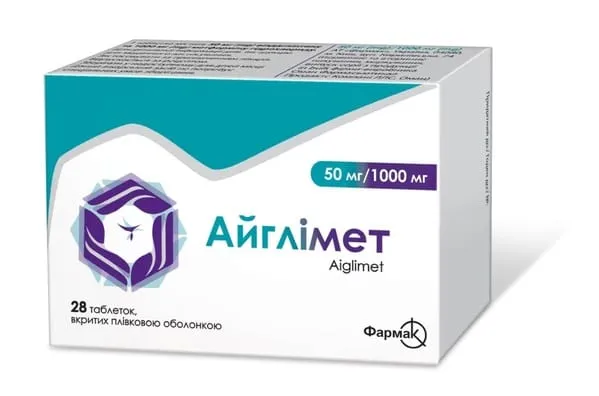
Table of Contents
INSTRUCTIONS FOR MEDICAL USE OF THE MEDICINAL PRODUCT AIGLIMET® (AIGLIMET)
Composition:
Active substances: vildagliptin, metformin hydrochloride;
1 tablet 50 mg/850 mg contains 50 mg of vildagliptin and 850 mg of metformin hydrochloride;
1 tablet 50 mg/1000 mg contains 50 mg of vildagliptin and 1000 mg of metformin hydrochloride;
Excipients: microcrystalline cellulose, copovidone K 25, crospovidone (type B), hydroxypropylcellulose, magnesium stearate; film coating – Opadry® Yellow 03F520096 (for 50 mg/850 mg tablets), Opadry® Yellow 03F520097 (for 50 mg/1000 mg tablets): hypromellose, titanium dioxide (E 171), iron oxide yellow (E 172), macrogol, talc.
Pharmaceutical form. Film-coated tablets.
Main physicochemical properties:
50 mg/850 mg tablets: oval-shaped, smooth on both sides, beveled edges, film-coated, yellow in color, approximately 20.7 × 8.8 mm in size;
50 mg/1000 mg tablets: oval-shaped, smooth on both sides, beveled edges, film-coated, dark yellow in color, approximately 21.3 × 10.1 mm in size.
Pharmacotherapeutic group. Antidiabetic agents. Combination of oral hypoglycemic agents. ATC code A10B D08.
Pharmacological properties.
Pharmacodynamics.
Ayglimet® is a combination of two antihyperglycaemic agents with different mechanisms of action that improve glycaemic control in patients with type 2 diabetes: vildagliptin, a member of the dipeptidyl peptidase-4 (DPP-4) inhibitor class, and metformin hydrochloride, a member of the biguanide class.
Vildagliptin, a member of the class of agents that enhance pancreatic islet function, is a potent and selective inhibitor of DPP-4. Metformin acts primarily by decreasing endogenous glucose production in the liver.
Vildagliptin
Vildagliptin acts primarily by inhibiting DPP-4, an enzyme responsible for the degradation of incretin hormones glucagon-like peptide-1 (GLP-1) and glucose-dependent insulinotropic polypeptide (GIP). Inhibition of DPP-4 activity by vildagliptin leads to a rapid and complete increase in endogenous levels of the incretin hormones GLP-1 and GIP after both food intake and in the fasting state.
By increasing endogenous levels of these incretin hormones, vildagliptin enhances beta-cell sensitivity to glucose, thereby improving glucose-dependent insulin secretion. Treatment of patients with type 2 diabetes with vildagliptin at doses of 50 to 100 mg per day significantly improved markers of beta-cell function, including HOMA-β (homeostatic model assessment of beta-cell function), proinsulin-to-insulin ratio, and beta-cell sensitivity indices during repeated oral glucose tolerance tests. In non-diabetic individuals (with normal glucose levels), vildagliptin did not stimulate insulin secretion or lower glucose levels.
By increasing endogenous GLP-1 levels, vildagliptin enhances alpha-cell sensitivity to glucose, thereby increasing glucose-responsive glucagon secretion. The enhanced increase in the insulin-to-glucagon ratio during hyperglycaemia results in increased incretin hormone activity, leading to reduced hepatic glucose production in both fasting and postprandial states, thereby lowering glucose levels.
The known effect of elevated GLP-1 levels causing delayed gastric emptying is not observed with vildagliptin treatment.
Metformin hydrochloride
Metformin is an oral antidiabetic agent of the biguanide class, whose hypoglycaemic effect is primarily based on overcoming insulin resistance in the liver and muscles. In the presence of insulin, it reduces both basal and postprandial plasma glucose levels. Metformin does not stimulate insulin secretion and therefore does not cause hypoglycaemia when used as monotherapy.
Metformin may reduce glucose levels through three mechanisms:
- Hepatic glucose production largely contributes to fasting hyperglycaemia. Metformin reduces insulin resistance-driven hepatic glucose production by inhibiting gluconeogenesis and glycogenolysis, thereby counteracting the hyperglycaemic effect of glucagon. Through this mechanism, metformin reduces fasting hyperglycaemia.
- Impaired peripheral glucose uptake and utilization primarily contribute to postprandial hyperglycaemia. Metformin increases cellular sensitivity to insulin by stimulating tyrosine kinase activity of insulin receptors, thereby promoting cellular glucose uptake. Metformin increases the transport capacity of all cellular glucose transporters (GLUT). This effect of metformin is particularly evident during hyperglycaemia. Intracellular glycogen synthesis is enhanced by stimulation of the key enzyme glycogen synthase. Through this mechanism, metformin reduces postprandial hyperglycaemia.
- Metformin reduces glucose absorption in the gastrointestinal tract, thereby decreasing the glucose impact after food intake.
In humans, regardless of its effect on glycaemia, metformin hydrochloride has shown beneficial effects on lipid metabolism. This has been demonstrated for therapeutic doses in controlled, medium- or long-term clinical studies: metformin hydrochloride reduces levels of total cholesterol, low-density lipoprotein cholesterol, and triglycerides.
Furthermore, in some studies, metformin has been shown to increase high-density lipoprotein cholesterol levels. Metformin also exhibits fibrinolytic properties.
The prospective randomised UKPDS (UK Prospective Diabetes Study) established long-term benefits of intensive blood glucose control in type 2 diabetes. Analysis of outcomes in overweight patients who received metformin after inadequate efficacy of diet alone showed:
- A significant reduction in the absolute risk of any diabetes-related complications in the metformin group (29.8 events/1000 patient-years) compared to the diet-only group (43.3 events/1000 patient-years), p = 0.0023, and compared to combined groups receiving sulfonylurea or insulin as monotherapy (40.1 events/1000 patient-years), p = 0.0034;
- A significant reduction in the absolute risk of diabetes-related mortality: metformin 7.5 events/1000 patient-years, diet-only 12.7 events/1000 patient-years, p = 0.017;
- A significant reduction in the absolute risk of all-cause mortality: metformin 13.5 events/1000 patient-years compared to diet-only 20.6 events/1000 patient-years (p = 0.011) and compared to combined groups receiving sulfonylurea or insulin as monotherapy, 18.9 events/1000 patient-years (p = 0.021);
- A significant reduction in the absolute risk of myocardial infarction: metformin 11 events/1000 patient-years, diet-only 18 events/1000 patient-years (p = 0.01).
Pharmacokinetics.
Absorption
Vildagliptin with metformin
In a bioequivalence study of vildagliptin with metformin tablets of different strengths (50 mg/850 mg and 50 mg/1000 mg), the combination was compared with co-administration of separate vildagliptin and metformin hydrochloride tablets at equivalent doses. Food intake did not affect the extent or rate of absorption of vildagliptin – the active ingredient in vildagliptin with metformin tablets. The maximum plasma concentration (Cmax) and area under the concentration-time curve (AUC) of metformin hydrochloride were reduced by 26% and 7%, respectively, when vildagliptin with metformin 50 mg/1000 mg was administered with food, and the time to reach maximum concentration (Tmax) was delayed (from 2.0 to 4.0 hours).
The pharmacokinetic properties of the individual active substances are described below. Vildagliptin
After oral administration in the fasting state, vildagliptin is rapidly absorbed. Absolute bioavailability is 85%. Cmax is reached approximately 1 hour after administration. Food intake does not alter total exposure (AUC).
Metformin hydrochloride
After oral administration, Cmax of metformin is reached approximately 2.5 hours after dosing. Absorption is believed to occur primarily in the upper gastrointestinal tract. Absolute bioavailability of metformin hydrochloride (850 mg tablets) administered in the fasting state is approximately 50–60% in healthy volunteers. Single oral doses of 500–2500 mg result in less than proportional increases in Cmax, possibly due to a saturable mechanism. At usual dosing and administration regimens, steady-state plasma concentrations are reached within 24–48 hours and typically remain below 1 µg/mL. In controlled clinical studies, Cmax did not exceed 4 µg/mL even with maximum doses.
Food intake reduces the extent and slightly delays the absorption of metformin hydrochloride, as evidenced by approximately 40% lower mean Cmax, 25% lower AUC, and a 35-minute increase in Tmax. The clinical significance of this reduction is unknown.
Distribution
Vildagliptin
Plasma protein binding of vildagliptin is low (9.3%). Vildagliptin distributes equally between plasma and erythrocytes. The mean volume of distribution at steady state (Vss) after intravenous administration is 71 L, indicating extravascular distribution.
Metformin hydrochloride
Plasma protein binding of metformin is negligible. Metformin penetrates into erythrocytes. Maximum blood concentration is lower than maximum plasma concentration and is reached at approximately the same time. Erythrocytes likely represent a secondary distribution compartment. The mean volume of distribution (Vd) ranges from 63 to 276 L.
Metabolism
Vildagliptin
Metabolism is the main route of elimination of vildagliptin in humans (69% of dose). The major metabolite LAY151 is pharmacologically inactive and results from hydrolysis of the cyano fragment (57% of dose), followed by the hydrolysis product of the amide fragment (4% of dose). Vildagliptin is not metabolized by cytochrome P450 enzymes.
Metformin hydrochloride
Metformin is excreted unchanged in urine. Metabolites of metformin have not been identified in humans.
Elimination
Vildagliptin
85% of the dose is excreted in urine and 15% in faeces. After oral administration, 23% of the dose is excreted in urine as unchanged vildagliptin. The elimination half-life after oral administration is approximately 3 hours.
Metformin hydrochloride
Metformin is excreted unchanged by the kidneys. Renal clearance is > 400 mL/min, approximately 3.5 times greater than creatinine clearance. Therefore, the drug is primarily eliminated via active tubular secretion. Terminal elimination half-life after oral administration is approximately 6.5 hours. When measured in whole blood, the elimination half-life is approximately 17.6 hours. In patients with normal renal function, metformin does not accumulate at standard doses (1500–2000 mg).
Vildagliptin
Linearity/non-linearity
Cmax and AUC for vildagliptin increased almost proportionally with dose across the entire therapeutic dose range.
Gender
No differences in vildagliptin pharmacokinetic parameters were observed between healthy male and female volunteers.
Age
Plasma concentrations are increased in patients aged 70 years and older; however, these changes are not considered clinically significant.
Hepatic impairment
Exposure to vildagliptin (100 mg) was not increased after a single 100 mg dose in patients with mild to moderate hepatic impairment. In patients with severe hepatic impairment, exposure was increased by 22% (68% upper limit of CI).
Renal impairment
In pharmacokinetic studies, AUC of vildagliptin increased on average by 1.4-, 1.7-, and 2-fold in patients with mild (creatinine clearance [CrCl] 50–<80 mL/min), moderate (CrCl 30–<50 mL/min), and severe (CrCl <30 mL/min) renal impairment, respectively, compared to healthy volunteers. AUC of the metabolite LAY151 increased by 1.6-, 3.2-, and 7.3-fold, and that of metabolite BQS867 by 1.4-, 2.7-, and 7.3-fold in patients with mild, moderate, and severe renal impairment, respectively. Limited data in patients with end-stage chronic kidney disease (CKD) indicate that values in this group are similar to those in patients with severe renal impairment. LAY151 AUC in patients with CKD was 6.8-fold higher than in patients with normal renal function. Elimination of vildagliptin during haemodialysis is limited (3% after a single dose within 4 hours, with procedure duration exceeding 3–4 hours).
Metformin exposure: in patients with impaired renal function, renal clearance decreases proportionally with creatinine clearance, prolonging elimination half-life and increasing the risk of accumulation.
Ethnic groups
Limited data indicate no effect of ethnicity on the pharmacokinetics of vildagliptin.
Clinical characteristics.
Indications.
Aiglimet® is indicated for the treatment of patients with type 2 diabetes mellitus (as an adjunct to diet and exercise to improve glycemic control):
- in adult patients whose glucose levels are not adequately controlled with metformin monotherapy;
- in adult patients already receiving a combination of vildagliptin and metformin as separate tablets;
- in combination with other antidiabetic medicinal products, including insulin, when they do not provide adequate glucose control (see sections "Pharmacodynamics", "Interaction with other medicinal products and other forms of interaction", and "Special precautions for use").
Contraindications.
- Hypersensitivity to vildagliptin or metformin hydrochloride, or to any of the excipients;
- any type of acute metabolic acidosis (e.g., lactic acidosis, diabetic ketoacidosis);
- diabetic precoma;
- renal failure or impaired renal function (creatinine clearance < 30 mL/min) (see section "Special precautions for use");
- acute conditions that may alter renal function, such as dehydration, severe infection, shock, or intravascular administration of iodinated contrast agents (see section "Special precautions for use");
- acute or chronic conditions that may lead to tissue hypoxia, such as cardiac or respiratory failure, recent myocardial infarction, shock;
- hepatic impairment (see sections "Special precautions for use", "Method of administration", and "Adverse reactions");
- acute alcohol intoxication, alcoholism;
- breastfeeding period (see section "Use during pregnancy or breastfeeding").
Interaction with other medicinal products and other forms of interaction.
Formal drug interaction studies of the vildagliptin/metformin combination product have not been conducted. The information below refers to interactions of the individual active substances, vildagliptin and metformin, separately.
Vildagliptin
Since vildagliptin is not a substrate of cytochrome P450 (CYP) enzymes and does not inhibit or induce CYP450 enzymes, clinically significant interactions with substrates, inhibitors, or inducers of these enzymes are unlikely when vildagliptin is co-administered.
Clinical studies conducted with oral antidiabetic agents pioglitazone, metformin, and glyburide in combination with vildagliptin did not reveal clinically significant pharmacokinetic interactions in the target population.
Drug interaction studies with digoxin (a P-glycoprotein substrate) and warfarin (a CYP2C9 substrate) in healthy volunteers did not reveal clinically significant pharmacokinetic interactions when co-administered with vildagliptin.
Drug interaction studies in healthy volunteers were conducted with amlodipine, ramipril, valsartan, and simvastatin. No clinically significant pharmacokinetic interactions were observed after co-administration with vildagliptin. However, this has not been established in the target population.
Combination with ACE inhibitors
In patients concurrently taking ACE inhibitors, the risk of developing angioedema may be increased (see section "Adverse reactions").
As with other oral antidiabetic medicinal products, the hypoglycemic effect of vildagliptin may be reduced by certain active substances, including thiazides, corticosteroids, thyroid hormones, and sympathomimetics.
Metformin hydrochloride
Not recommended combinations
Alcohol. In patients taking metformin, acute alcohol intoxication is associated with an increased risk of lactic acidosis, particularly after fasting or in conditions of malnutrition or impaired hepatic function.
Iodinated contrast agents. Metformin should be discontinued before or during contrast imaging procedures and should not be restarted for at least 48 hours after the procedure, provided that renal function has been re-evaluated and found to be stable (see sections "Special precautions for use" and "Dosage and method of administration").
Combinations requiring caution
Some medicinal products may adversely affect renal function, thereby increasing the risk of lactic acidosis, e.g., NSAIDs, including selective cyclooxygenase (COX)-2 inhibitors, ACE inhibitors, angiotensin II receptor antagonists, and diuretics, especially loop diuretics. Careful monitoring of renal function is required when such agents are used concomitantly with metformin.
Glucocorticoids, beta-2 agonists, and diuretics have intrinsic hyperglycemic activity. Patients should be informed about the need for more frequent blood glucose monitoring, especially at the beginning of treatment. Dose adjustment of the medicinal product may be necessary during concomitant therapy and upon its discontinuation.
ACE inhibitors may reduce blood glucose levels. If necessary, the dosage of the antihyperglycemic medicinal product should be adjusted during concomitant therapy with other medicinal products.
Concomitant use of medicinal products that affect the renal tubular transport systems involved in the renal elimination of metformin (e.g., inhibitors of organic cation transporter-2 [OCT2] / multidrug and toxin extrusion [MATE] inhibitors, such as ranolazine, vandetanib, dolutegravir, and cimetidine) may increase systemic exposure to metformin.
Special precautions for use.
General
Ayglimet® does not replace insulin in insulin-dependent patients. The drug should not be used in patients with type 1 diabetes.
Lactic acidosis
Lactic acidosis is an extremely rare but serious metabolic complication, most commonly occurring in the presence of impaired renal function, cardiorespiratory disorders, or sepsis. Accumulation of metformin occurs in acute renal dysfunction and increases the risk of lactic acidosis.
In case of dehydration (severe diarrhoea or vomiting, fever, or reduced fluid intake), metformin should be temporarily discontinued and medical advice sought.
Medicinal products that may cause acute renal dysfunction (such as antihypertensive agents, diuretics, and NSAIDs) should be prescribed with caution to patients receiving metformin. Other risk factors for lactic acidosis include excessive alcohol consumption, hepatic insufficiency, poorly controlled diabetes, ketosis, prolonged fasting, and any conditions associated with hypoxia, as well as concomitant use of medicinal products that may induce lactic acidosis (see sections "Contraindications" and "Interaction with other medicinal products and other forms of interaction").
Patients and/or caregivers should be informed about the risk of developing lactic acidosis. Lactic acidosis is characterized by acidotic dyspnoea, abdominal pain, muscle cramps, asthenia, hypothermia, and, later, coma may develop. If symptoms of lactic acidosis occur, the patient should discontinue metformin and seek immediate medical attention. Laboratory diagnosis includes decreased blood pH (<7.35), elevated plasma lactate levels (>5 mmol/L), and increased anion gap and lactate/pyruvate ratio.
Administration of iodinated contrast agents
Intravascular administration of iodinated contrast agents may lead to contrast-induced nephropathy, resulting in metformin accumulation and increased risk of lactic acidosis. Metformin should be discontinued before or during imaging procedures and not restarted for at least 48 hours thereafter, provided renal function has been re-evaluated and confirmed to be stable (see sections "Interaction with other medicinal products and other forms of interaction" and "Dosage and administration").
Renal impairment
eGFR should be assessed before initiating treatment and regularly thereafter (see section "Dosage and administration").
Metformin is contraindicated in patients with eGFR <30 mL/min and should be temporarily discontinued in conditions affecting renal function (see section "Contraindications").
Concomitant medicinal products that may affect renal function, cause significant haemodynamic changes, or inhibit renal transport and increase systemic exposure to metformin should be used with caution (see section "Interaction with other medicinal products and other forms of interaction").
Hepatic impairment
Vildagliptin should not be used to treat patients with hepatic impairment, including patients in whom alanine aminotransferase (ALT) or aspartate aminotransferase (AST) levels exceed the upper limit of normal (ULN) by more than 3 times before treatment initiation (see sections "Contraindications", "Dosage and administration", and "Adverse reactions").
Monitoring of liver enzymes
Rare cases of hepatic dysfunction (including hepatitis) have been reported during vildagliptin use. In these cases, patients usually had no symptoms or clinical complications, and liver function tests (LFTs) returned to normal after discontinuation of treatment. Prior to initiating Ayglimet®, LFTs should be performed to establish baseline values. LFTs should be monitored every 3 months during the first year of treatment and periodically thereafter. Patients with elevated transaminase levels require re-evaluation of liver function to confirm changes, followed by frequent LFT monitoring until values return to normal. If AST and ALT levels remain elevated more than 3 times above ULN, discontinuation of Ayglimet® is recommended. Patients who develop jaundice or other signs indicating hepatic dysfunction require discontinuation of Ayglimet®.
After discontinuation of Ayglimet® and normalization of LFTs, reinitiation of treatment with this drug is not recommended.
Skin disorders
In preclinical toxicological studies with vildagliptin, skin lesions including blistering and ulceration on extremities in animals were reported. Although no increased incidence of skin lesions was observed during clinical trials, experience regarding skin complications in diabetic patients has been limited. Additionally, post-marketing reports of bullous and exfoliative skin lesions have been received. Therefore, during routine follow-up of diabetic patients, monitoring for skin disorders such as blistering or ulceration is recommended.
Pancreatitis
Post-marketing surveillance has reported adverse reactions including acute pancreatitis. Patients should be informed about the characteristic symptom of acute pancreatitis – persistent, severe abdominal pain.
Pancreatitis symptoms resolved after discontinuation of vildagliptin. In case of suspected pancreatitis, vildagliptin and other potentially causative agents should be discontinued.
Hypoglycaemia
Sulfonylurea derivatives are known to cause hypoglycaemia. Patients receiving Ayglimet® in combination with sulfonylureas are at risk of hypoglycaemia. To reduce this risk, the lowest possible dose of sulfonylurea should be used.
Surgical procedures
Since Ayglimet® contains metformin, treatment should be discontinued 48 hours prior to elective surgery involving general, spinal, or epidural anaesthesia and not resumed earlier than 48 hours after surgery (provided normal renal function and resumption of oral food intake).
Use during pregnancy or breastfeeding.
Pregnancy
Animal studies have demonstrated reproductive toxicity with high doses of vildagliptin. Animal studies with metformin showed no reproductive toxicity. Animal studies using vildagliptin and metformin did not reveal teratogenic effects, but fetotoxic effects were observed at doses toxic to pregnant animals. The potential risk in humans is unknown. Ayglimet® should not be used during pregnancy.
Breastfeeding
Animal studies have shown excretion of both metformin and vildagliptin into milk. It is unknown whether vildagliptin is excreted in human breast milk, but metformin is known to be excreted in human breast milk in small amounts. Considering the potential risk of neonatal hypoglycaemia associated with metformin and the lack of data on vildagliptin effects, Ayglimet® should not be used in women who are breastfeeding.
Fertility
Studies on the effect of Ayglimet® on human fertility have not been conducted.
Ability to affect reaction speed when driving or operating machinery.
No studies have been conducted on the effect of the medicinal product on reaction speed when driving or operating machinery. Therefore, patients who may experience dizziness should avoid activities requiring driving or operating machinery.
Method of Administration and Dosage
The dosage of antihyperglycemic therapy for control of type 2 diabetes should be individually selected based on the current treatment regimen, efficacy, and tolerability. When using Aiglimet®, the maximum daily dose of vildagliptin (100 mg) must not be exceeded.
Method of Administration
For oral use.
The recommended initial dose of Aiglimet® should be determined based on the patient's current regimen of vildagliptin and/or metformin.
Administration of Aiglimet® with food or immediately after meals may reduce gastrointestinal disturbances associated with metformin use.
Treatment with Aiglimet® may be initiated with 50 mg/850 mg or 50 mg/1000 mg tablets taken twice daily (one tablet in the morning and one tablet in the evening).
For patients whose condition is not adequately controlled on monotherapy with hydrochloride metformin at the maximum tolerated doses.
The initial dose of Aiglimet® should consist of vildagliptin 50 mg twice daily (total daily dose – 100 mg) and the same dose of metformin the patient was previously receiving.
For patients switching from concomitant administration of vildagliptin and metformin as separate agents.
The initial dose of Aiglimet® should correspond to the doses of vildagliptin and met combustin previously used.
For patients whose condition is not adequately controlled on metformin and sulfonylurea agents.
Based on the current metformin dose, Aiglimet® should be administered at a dose of 50 mg/850 mg or 50 mg/1000 mg twice daily. When used in combination with a sulfonylurea, consideration should be given to reducing the sulfonylurea dose to minimize the risk of hypoglycemia.
Use in combination with insulin and maximum tolerated doses of metformin.
The recommended dose of Aiglimet® should consist of vildagliptin 50 mg twice daily (total daily dose – 100 mg) and the same metformin dose the patient was previously receiving.
The safety and efficacy of vildagliptin and metformin as triple oral therapy in combination with thiazolidinediones have not been established.
Special Patient Groups
Elderly patients (aged 65 years and older)
Since metformin is excreted by the kidneys, and elderly patients tend to have reduced renal function, regular monitoring of renal function is required during treatment with Aiglimet®.
Renal impairment
eGFR should be assessed before initiating treatment with metformin-containing products and at least annually thereafter. In patients at increased risk of further progression of renal impairment and in elderly patients, renal function should be assessed more frequently, for example every 3–6 months.
The maximum daily dose of metformin should preferably be divided into 2–3 daily doses. Before initiating metformin-containing products in patients with eGFR <60 mL/min, the presence of risk factors that may increase the risk of lactic acidosis should be evaluated (see section "Special Warnings and Precautions for Use"). The need for metformin therapy should be reassessed in such patients.
If the required dosage strength of Aiglimet® is not available, individual monotherapy agents should be used instead of the fixed-dose combination.
| eGFR mL/min |
Metformin |
Velagliflozin |
| 60-89 |
Maximum daily dose is 3000 mg. Dose reduction may be considered with decreased renal function. |
No need for dose adjustment. |
| 45-59 |
Maximum daily dose is 2000 mg. Initial dose should be at most half of the maximum dose. |
Maximum daily dose - 50 mg. |
| 30-44 |
Maximum daily dose is 1000 mg. Initial dose should be at most half of the maximum dose. |
|
| <30 |
Metformin is contraindicated. |
Hepatic impairment
The medicinal product Aiglimet® should not be used for the treatment of patients with hepatic impairment, including patients in whom baseline ALT or AST levels exceed the ULN by more than 3 times.
Children
Aiglimet® is not recommended for use in children and adolescents (under 18 years of age). Safety and efficacy of the drug in children and adolescents have not been established. Data are lacking.
Overdose
There have been no reports of overdose with this medicinal product.
Vildagliptin
Information on vildagliptin overdose is limited.
Symptoms. At a dose of 400 mg, three cases of muscle pain were reported, as well as isolated cases of mild and transient paraesthesia, fever, oedema, and transient elevation of lipase levels. At a dose of 600 mg, one patient developed oedema of the feet and hands, marked increase in creatine phosphokinase (CPK) levels, accompanied by increases in AST, C-reactive protein, and myoglobin. In three other patients in the same dose group, bilateral foot oedema occurred, associated with paraesthesia in two cases. After discontinuation of the investigational drug, all symptoms and laboratory abnormalities resolved.
Treatment. In case of overdose, the medicinal product should be discontinued and symptomatic and supportive treatment should be provided. Vildagliptin is not dialyzable, but the primary hydrolytic metabolite of vildagliptin can be removed by haemodialysis.
Metformin
Symptoms. Significant metformin overdose (or presence of risk factors for lactic acidosis) may lead to lactic acidosis, which requires emergency medical care and treatment in a medical facility.
Treatment. Haemodialysis is the most effective method for removing metformin from the body. However, vildagliptin is not removed by haemodialysis, unlike its main hydrolytic metabolite (LAY 151). Supportive therapy is recommended.
Adverse reactions.
Summary of safety profile
Safety data were obtained from a total of 6,197 patients who received vildagliptin/metformin in randomized, placebo-controlled studies. Of these patients, 3,698 received vildagliptin/metformin and 2,499 received placebo/metformin.
No clinical trials with vildagliptin/metformin hydrochloride combination have been conducted. However, bioequivalence of the vildagliptin/metformin hydrochloride combination to co-administered separate vildagliptin and metformin products has been demonstrated (see section "Pharmacological properties").
Most adverse reactions were mild and transient and did not require discontinuation of treatment.
No association between adverse reactions and age, ethnicity, exposure, or daily dose has been observed. Vildagliptin use is associated with a risk of developing pancreatitis. Lactic acidosis has been reported following metformin use, particularly in patients with renal impairment (see section "Special precautions for use").
List of adverse reactions
Adverse reactions observed in patients receiving vildagliptin as monotherapy or as add-on therapy in double-blind studies are listed below by system organ class and absolute frequency. The following criteria were used to assess the frequency of adverse reactions: very common (≥1/10), common (≥1/100 to <1/10), uncommon (≥1/1,000 to <1/100), rare (≥1/10,000 to <1/1,000), very rare (<1/10,000), frequency not known (cannot be estimated from available data).
Within each frequency grouping, adverse reactions are listed in order of decreasing severity.
Infections and infestations
Common: upper respiratory tract infections, nasopharyngitis.
Metabolism and nutrition disorders
Uncommon: hypoglycaemia, loss of appetite. Very rare*: decreased vitamin B12 absorption and lactic acidosis.
Nervous system disorders
Common: dizziness, headache, tremor. Uncommon: metallic taste.
Gastrointestinal disorders
Common: vomiting, diarrhoea, nausea, gastroesophageal reflux disease, flatulence, constipation, abdominal pain including upper abdominal pain. Uncommon: pancreatitis.
Hepatobiliary disorders
Uncommon: hepatitis.
Skin and subcutaneous tissue disorders
Common: hyperhidrosis, pruritus, rash, dermatitis. Uncommon: erythema, urticaria. Frequency not known†: exfoliative and bullous skin reactions, including bullous pemphigoid, skin vasculitis.
Musculoskeletal and connective tissue disorders
Common: arthralgia. Uncommon: myalgia.
General disorders
Common: asthenia. Uncommon: fatigue, chills, peripheral oedema.
Investigations
Uncommon: liver function test abnormalities.
* Adverse reactions observed in patients receiving metformin as monotherapy but not observed in patients receiving fixed-dose combination vildagliptin + metformin. For additional information, refer to the metformin summary of product characteristics.
† Based on post-marketing experience.
Description of selected adverse reactions
Vildagliptin
Hepatic impairment
Rare cases of liver function abnormalities (including hepatitis) have been reported with vildagliptin. These events were generally asymptomatic, without clinical consequences, and liver function returned to normal after discontinuation of treatment. In controlled monotherapy and add-on therapy studies of up to 24 weeks’ duration, the incidence of ALT or AST elevations ≥ 3 × ULN (at least two consecutive measurements or at the last visit on treatment) was 0.2%, 0.3%, and 0.2% with vildagliptin 50 mg once daily, vildagliptin 50 mg twice daily, and all comparators, respectively. These transaminase elevations were generally asymptomatic, non-progressive, and not associated with cholestasis or jaundice.
Angioedema
Rare cases of angioedema have been reported with vildagliptin, with a frequency similar to that in the control group. A higher incidence of angioedema was observed when vildagliptin was used in combination with an ACE inhibitor. The events were mostly mild in severity and resolved with continued vildagliptin treatment.
Hypoglycaemia
Hypoglycaemia was uncommon with vildagliptin (0.4%) as monotherapy in active comparator or placebo-controlled monotherapy studies (0.2%). No severe or serious cases of hypoglycaemia were reported. When vildagliptin was used as add-on to metformin, hypoglycaemia occurred in 1% of patients receiving vildagliptin and in 0.4% of patients receiving placebo. When pioglitazone was added, hypoglycaemia occurred in 0.6% of patients receiving vildagliptin and in 1.9% of patients receiving placebo. When a sulphonylurea was added, hypoglycaemia occurred in 1.2% of patients receiving vildagliptin and in 0.6% of patients receiving placebo. When both sulphonylurea and metformin were added, hypoglycaemia occurred in 5.1% of patients receiving vildagliptin and in 1.9% of patients receiving placebo. In patients receiving vildagliptin in combination with insulin, the incidence of hypoglycaemia was 14% in the vildagliptin group and 16% in the placebo group.
Metformin
Decreased vitamin B12 absorption
Very rare cases of decreased vitamin B12 absorption with reduced serum levels have been observed in patients treated with long-term metformin. This etiology should be considered if a patient presents with megaloblastic anaemia.
Liver function
Isolated cases of liver function test abnormalities or resolution of hepatitis after discontinuation of metformin have been reported.
Gastrointestinal disorders
Gastrointestinal adverse reactions occur most frequently at the start of therapy and usually resolve spontaneously. To minimize these effects, it is recommended to divide the daily dose of metformin into two doses taken with meals. Gradual dose escalation may also improve gastrointestinal tolerability.
Reporting suspected adverse reactions.
Reporting of suspected adverse reactions after marketing authorization is important. It allows continued monitoring of the benefit-risk balance of the medicinal product. Healthcare professionals, pharmacists, patients, and their legal representatives are encouraged to report all suspected adverse reactions and lack of efficacy through the automated pharmacovigilance information system at: https://aisf.dec.gov.ua.
Shelf life.
2 years.
Storage conditions.
This medicinal product does not require special storage conditions. Keep out of reach of children.
Packaging.
7 tablets in a blister pack, 4 blisters in a carton.
Prescription status.
Prescription only.
Manufacturer.
JSC "Farmak", Ukraine (primary and secondary packaging, labelling, batch release from bulk product manufactured by Oman Pharmaceutical Products Co. LLC, Oman).
Manufacturer's address and location of its operations.
74 Kyrylivska Street, Kyiv, 04080, Ukraine.