Aurodopox
Ukraine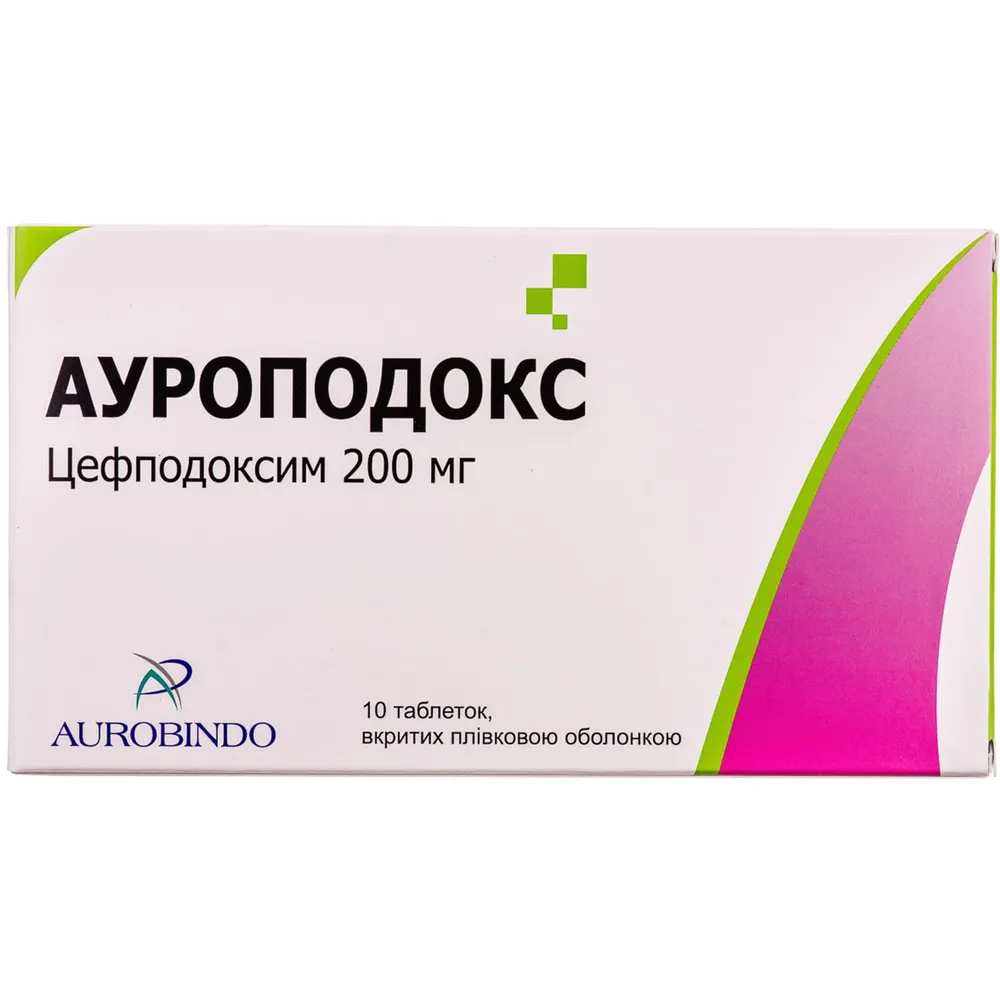
Table of Contents
INSTRUCTION FOR MEDICAL USE OF THE MEDICINAL PRODUCT AURPODOX (AUROPODOX)
Composition:
Active substance: cefpodoxime;
One film-coated tablet contains cefpodoxime proxetil equivalent to cefpodoxime 100 mg or 200 mg;
Excipients: calcium carmellose, lactose monohydrate, hydroxypropylcellulose, sodium lauryl sulfate, crospovidone (type B), maize starch, magnesium stearate, purified water; film coating: hypromellose, titanium dioxide (E 171), yellow azo dye FCF (E 110), propylene glycol; FD&C Red No. 40 (E 129) (for 200 mg film-coated tablets); iron oxide yellow (E 172) (for 100 mg film-coated tablets).
Pharmaceutical form. Film-coated tablets.
Main physicochemical properties:
100 mg film-coated tablets: light yellow to orange-colored, film-coated, elliptical-shaped tablets, with embossed marking "C" on one side and "61" on the other side;
200 mg film-coated tablets: coral to red-colored, film-coated, elliptical-shaped tablets, with embossed marking "C" on one side and "62" on the other side.
Pharmacotherapeutic group.
Antibacterials for systemic use. Other beta-lactam antibiotics. Third-generation cephalosporins. ATC code J01D D13.
Pharmacological properties.
Pharmacodynamics. Cefpodoxime is a well-absorbed oral third-generation cephalosporin, consisting of a racemic mixture of R(+) and S(-) enantiomers. It is a beta-lactam antibacterial agent for oral administration with a broad spectrum of activity. The bactericidal action of the drug is due to inhibition of bacterial cell wall synthesis in microorganisms. The drug is active against many gram-positive, gram-negative, aerobic, and anaerobic microorganisms. It is not destroyed by most beta-lactamases. The spectrum of cefpodoxime activity includes the following microorganisms:
susceptible (aerobic gram-positive bacteria) – Staphylococcus aureus (including penicillinase-producing, but not methicillin-resistant strains), Staphylococcus saprophyticus, Streptococcus pneumoniae, Streptococcus pyogenes, Streptococcus agalactiae, Streptococcus spp. (groups C, F, G), Corynebacterium diphtheriae;
susceptible (aerobic gram-negative bacteria) – Escherichia coli, Klebsiella pneumoniae, Klebsiella oxytoca, Proteus mirabilis, Proteus vulgaris, Haemophilus influenzae (including beta-lactamase-producing strains), Haemophilus parainfluenzae, Moraxella (Branhamella) catarrhalis, Neisseria gonorrhoeae (including penicillinase-producing strains), Neisseria meningitidis, Providencia rettgeri, Citrobacter diversus;
susceptible (anaerobic gram-positive bacteria) – Peptostreptococcus magnus;
resistant (aerobic gram-positive bacteria) – Streptococcus pneumoniae (penicillin-resistant strains); Enterococcus spp.; Listeria monocytogenes;
resistant (aerobic gram-negative bacteria) – Enterobacter spp., Pseudomonas spp., Acinetobacter baumannii, Clostridium difficile;
resistant (anaerobic gram-positive bacteria) – Bacteroides spp.
The pharmacological effect of the drug is due to the properties of cefpodoxime proxetil. Bioequivalence has been demonstrated for all studied parameters.
Pharmacokinetics. Average values of pharmacokinetic parameters of cefpodoxime proxetil, based on single oral administration of 200 mg tablets to healthy volunteers after food intake, are presented in Table 1.
Table 1
| Parameters |
Mean value |
Limit |
| Time to reach maximum plasma concentration (Tmax), hours |
3.509 |
[2.424–4.594] |
| Maximum plasma concentration (Cmax), ng/mL |
3703.054 |
[3056.177–4349.931] |
| Mean elimination half-life (T1/2), hours |
2.320 |
[1.972–2.668] |
| Area under the pharmacokinetic curve within the observation period (AUC0–t), µg × h/mL |
190488.352 |
[188100.210–192876.490] |
| Area under the pharmacokinetic curve from time 0 to infinity (AUCinf), ng × h/mL |
20317.873 ± 2775.7142 |
[17542.159–23093.587] |
| Elimination rate constant (Kel) |
0.3054 ± 0.04693 |
[0.2585–0.3523] |
Bioavailability. Aurocefodoksim is administered orally with food to improve absorption due to the food effect, which enhances the bioavailability of cefpodoxime proxetil.
Absorption. Cefpodoxime proxetil is an inactive compound (prodrug) that is absorbed from the gastrointestinal tract and de-esterified into its active metabolite—cefpodoxime. Therefore, cefpodoxime has almost no effect on intestinal flora.
In the intestinal epithelial cells, the ester group is cleaved, allowing cefpodoxime to enter the bloodstream.
Distribution. The mean volume of distribution (Vd/F) after a single oral dose of 100 mg or 200 mg tablets ranges from 0.7 to 1.15 L/kg.
Elimination half-life. The average elimination half-life of cefpodoxime is 2.4 hours, allowing for twice-daily dosing.
Protein binding. Cefpodoxime is moderately protein-bound—40%, primarily to albumin.
Tissue and fluid penetration. Cefpodoxime penetrates into tissues and fluids, including lung parenchyma, bronchial mucosa, pleural fluid, palatine tonsils, and prostate tissue, achieving concentrations exceeding the minimum inhibitory concentration (MIC) for most microorganisms.
Cefpodoxime concentrations in tissues and fluids are presented in Table 2.
Table 2
| Tissues |
Oral dose, mg |
Mean value, mg/ml or mg/(g) |
| Palatine tonsils |
100 |
0.24 |
| Maxillary sinus mucosa |
100 |
0.34 |
| Lung parenchyma |
200 |
0.63 |
| Bronchial mucosa |
200 |
0.91 |
| Prostate gland tissues |
200 |
1.25 |
| Pleural fluid |
200 |
1.84 |
| Skin blister fluid |
200 |
1.60 |
| Skin blister fluid |
400 |
2.8 |
| Inflamed tissue fluid |
200 |
2.84 |
Metabolism. Cefpodoxime proxetil is transformed in the body into cefpodoxime acid and consists of a racemic mixture of R- and S-isomers (enantiomers), which behave differently in the human body (at the same pH value of gastric and intestinal contents). The S-isomer is less sensitive to enzymatic metabolism in intestinal epithelial cells than the R-isomer. Therefore, according to results obtained in vitro and in vivo, the use of the S-isomer may improve the oral bioavailability of cefpodoxime proxetil. Research in this direction is ongoing.
Excretion. Approximately 30–35% of the dose is excreted unchanged in urine within 12 hours after administration. In case of impaired renal function, excretion is reduced: with a creatinine clearance of 50–80 mL/min, the T1/2 is 3.5 hours; with a creatinine clearance of 30–49 mL/min, it is 5.9 hours; with a creatinine clearance of 5–29 mL/min, it is 9.8 hours, respectively.
Clinical characteristics.
Indications.
Treatment of infections caused by microorganisms sensitive to the drug, such as:
- infections of the ear, nose, and throat organs, including sinusitis, tonsillitis, pharyngitis;
- lower respiratory tract infections, including acute community-acquired pneumonia;
- acute uncomplicated gonorrhea;
- uncomplicated urinary tract infections;
- skin infections, including infected wounds, ulcers, impetigo, abscesses, cellulitis, phlegmons, pyoderma.
Contraindications.
Hypersensitivity to cephalosporin or penicillin drugs. Hereditary galactose intolerance, lactase deficiency, or glucose-galactose malabsorption syndrome.
Interaction with other medicinal products and other forms of interaction.
Drugs that block histamine H2-receptors and antacid agents reduce the bioavailability of the drug. Concomitant use of the drug with loop diuretics may increase nephrotoxicity. Careful monitoring of renal function is recommended if Aurumdox is administered simultaneously with drugs exhibiting nephrotoxic effects. Plasma levels of cefpodoxime increase when the drug is administered with probenecid.
Special precautions for use.
Cross-reactivity to cephalosporins occurs in approximately 5–10% of patients with confirmed penicillin allergy. This medicinal product is contraindicated in patients hypersensitive to penicillins. In patients with a history of allergic reactions, continuous medical supervision is required from the first day of treatment; appropriate medical support and monitoring must be readily available in case of any anaphylactic episode following administration of the drug.
When treating patients who are allergic to other cephalosporins, cross-allergy to cefpodoxime should be considered.
Hypersensitivity reactions (anaphylaxis) have been observed with beta-lactam antibiotics (may be severe and occasionally fatal).
At the first signs of hypersensitivity, administration of the drug must be discontinued immediately.
Severe skin adverse reactions (SSARs)
Severe skin adverse reactions (SSARs), including Stevens-Johnson syndrome (SJS), toxic epidermal necrolysis (TEN), drug reaction with eosinophilia and systemic symptoms (DRESS), and acute generalized exanthematous pustulosis (AGEP), which may be life-threatening or fatal, have been reported at an "unknown" frequency in association with cefpodoxime therapy.
Patients should be informed about the signs and symptoms and closely monitored for skin reactions.
If signs or symptoms suggestive of these reactions occur, cefpodoxime should be discontinued immediately and alternative therapy considered.
If a serious reaction such as SJS, TEN, DRESS, or AGEP develops during cefpodoxime treatment, re-administration of cefpodoxime is absolutely contraindicated.
Auroropodox is not the primary antibiotic for the treatment of staphylococcal pneumonia and should not be used in the treatment of atypical pneumonia caused by Legionella, Mycoplasma, or Chlamydia species.
Dosage adjustment is required in patients with renal impairment based on creatinine clearance (recommended doses are provided in Table 2). Possible adverse effects include gastrointestinal disorders (e.g., vomiting, nausea, abdominal pain). Antibiotics should always be prescribed with caution in patients with gastrointestinal diseases, particularly those with colitis.
Use of cefpodoxime proxetil and other broad-spectrum antibiotics may disrupt intestinal microflora, leading to diarrhea, colitis, including pseudomembranous colitis caused by Clostridium difficile toxin. These adverse reactions may occur more frequently in patients receiving prolonged therapy and should therefore be considered potentially serious. Clostridium difficile infection should be investigated.
If colitis is suspected, the medicinal product should be discontinued immediately. Diagnosis should be confirmed by sigmoidoscopy and rectoscopy, and therapy should be replaced with intravenous vancomycin if clinically indicated. Medications that cause fecal retention should be avoided.
As with other beta-lactam antibiotics, prolonged use may lead to neutropenia and, very rarely, agranulocytosis. Blood parameters should be monitored, and the drug should be discontinued if neutropenia occurs.
A positive direct Coombs test may appear in some patients during treatment. Hemoglobin levels may decrease; hemolytic anemia is very rare.
Concomitant use with potentially nephrotoxic drugs (e.g., aminoglycosides, furosemide) may impair renal function. Renal function should be monitored. Prolonged use of cefpodoxime proxetil may lead to overgrowth of non-susceptible microorganisms.
Use during pregnancy or breastfeeding.
There are no data on the safety of using the drug in pregnant women. Therefore, during pregnancy, the drug should only be prescribed under life-threatening indications when the expected benefit to the mother outweighs the potential risk to the fetus, especially during the first trimester.
Cefpodoxime proxetil passes into breast milk; therefore, if its use is necessary, breastfeeding should be discontinued.
Ability to affect reaction speed when driving or operating machinery.
There are no data available; however, dizziness may occur during treatment with cefpodoxime proxetil, which could affect the ability to drive or operate complex machinery.
Dosage and Administration.
Tablets are taken orally during meals to enhance absorption.
The duration of treatment depends on the severity of the disease and is determined individually.
Recommended doses for adults and children aged 12 years and older with normal renal function:
Table 3
| Infections |
General daily dose, mg |
Dosing regimen |
| ENT infections: sinusitis; other infections (including tonsillitis, pharyngitis) |
400 200 |
200 mg twice daily 100 mg twice daily |
| Respiratory tract infections (including acute bronchitis, recurrent or exacerbations of chronic bronchitis, bacterial pneumonia) |
200–400 (depending on pathogen sensitivity) |
100–200 mg twice daily |
| Uncomplicated urinary tract infections: upper (acute pyelonephritis); lower (cystitis) |
400 200 |
200 mg twice daily 100 mg twice daily |
| Skin and soft tissue infections (abscess, cellulitis, infected wounds, furuncles, folliculitis, paronychia, carbuncles, and ulcers) |
400 |
200 mg twice daily |
| Uncomplicated gonococcal urethritis |
200 |
Single dose |
Elderly patients.
There is no need to adjust the dose for elderly patients with normal renal function.
Hepatic impairment.
There is no need to adjust the dose for patients with hepatic impairment.
Renal impairment.
There is no need to adjust the dose for patients with impaired renal function if creatinine clearance is greater than 40 ml/min.
Table 4
| Creatinine clearance, mL/min |
Recommended dose |
| 39-10 |
100 mg or 200 mg (depending on the type of infection) every 24 hours |
| <10 |
100 mg or 200 mg (depending on the type of infection) every 48 hours |
| Patients undergoing hemodialysis |
100 mg or 200 mg (depending on the type of infection) after each dialysis session |
Children.
This medicinal product in the form of film-coated tablets is not prescribed to children under 12 years of age.
Overdose.
Symptoms: nausea, vomiting, abdominal pain, diarrhea. In case of overdose, especially in patients with renal insufficiency, encephalopathy may occur. Cases of encephalopathy are usually reversible with low plasma levels of cefpodoxime.
Treatment: hemodialysis, peritoneal dialysis; symptomatic therapy.
Adverse reactions.
The following classification of adverse reaction frequencies is used: very common (≥ 1/10), common (≥ 1/100, < 1/10), uncommon (≥ 1/1000, < 1/100), rare (≥ 1/10,000, < 1/1000), very rare (< 1/10,000), frequency not known (cannot be estimated from available data).
Adverse effects caused by cefpodoxime proxetil are mild and occur rarely.
Data on adverse reactions are presented in Table 5.
Table 5
| Organs and systems |
Adverse reaction |
Frequency of occurrence |
| Infections and infestations |
Superinfection caused by some Candida species resistant to cefpodoxime. Antibiotic-associated colitis. |
Uncommon Very rare |
| Blood and lymphatic system disorders |
Eosinophilia. Leukopenia, neutropenia, thrombocytopenia, thrombocytosis, agranulocytosis, decreased hemoglobin concentration, hemolytic anemia. |
Uncommon Very rare |
| Immune system disorders |
Hypersensitivity, anaphylactic reactions. |
Uncommon |
| Metabolism and nutrition disorders |
Dehydration, gout, peripheral edema, weight gain. |
Uncommon |
| Musculoskeletal system disorders |
Myalgia. |
Uncommon |
| Nervous system disorders |
Headache. Vertigo. Dizziness, insomnia, somnolence, neurosis, irritability, nervousness, abnormal dreams, visual disturbances, confusion, night terrors, paresthesia. |
Common Uncommon Very rare |
| Respiratory system disorders |
Asthma, cough, epistaxis, rhinitis, wheezing, bronchitis, dyspnea, pleural effusion, pneumonia, sinusitis. |
Uncommon |
| Gastrointestinal disorders |
Diarrhea. Abdominal pain, nausea. Thirst, tenesmus, abdominal distension, vomiting, dyspepsia, dry mouth, decreased appetite, constipation, candidal stomatitis, anorexia, belching, gastritis, oral ulcers, pseudomembranous colitis. |
Common Uncommon Uncommon |
| Hepatobiliary disorders |
Cholestatic liver injury. |
Uncommon |
| Skin and subcutaneous tissue disorders |
Rash, pruritus, urticaria, increased sweating, macular rash, fungal dermatitis, desquamation, dry skin, alopecia, vesicular rash, sunburn erythema, purpura, bullous reactions (Stevens-Johnson syndrome), toxic epidermal necrolysis, erythema multiforme. Acute generalized exanthematous pustulosis (AGEP), drug-induced eosinophilia with systemic symptoms (DRESS) |
Uncommon Frequency unknown |
| Renal and urinary disorders |
Hematuria, urinary tract infections, metrorrhagia, dysuria, frequent urination, proteinuria, vaginal candidiasis. |
Uncommon |
| General disorders |
Discomfort, fatigue, asthenia, drug fever, chest pain (pain may radiate to the back), fever, generalized pain, candidiasis, abscess, allergic reaction, facial swelling, bacterial infections, parasitic infections. |
Uncommon |
| Cardiovascular system disorders |
Chronic heart failure, migraine, tachycardia, vasodilation, hematoma, arterial hypertension or arterial hypotension. |
Uncommon |
| Special senses disorders |
Taste disturbances, eye irritation, tinnitus. |
Uncommon |
| Laboratory findings |
Transient increases in liver function tests (AST, ALT, alkaline phosphatase, bilirubin) have been observed. Increased blood urea and creatinine levels. Pseudo-positive Coombs test. |
Uncommon |
Shelf life.
3 years.
Storage conditions.
Keep out of reach of children at a temperature not exceeding 25 ºC.
Packaging.
10 film-coated tablets in a blister pack; 1 blister pack in a cardboard box.
Prescription status.
By prescription only.
Manufacturer.
Aurobindo Pharma Ltd. Unit VI, Block D / Aurobindo Pharma Ltd. Unit VI, Block D.
Manufacturer's address and location of its business activity.
Sy. No. 329/39 & 329/47, Chitkul Village, Patancheru Mandal, Sanga Reddy District, Telangana State, 502307, India / Sy. No. 329/39 & 329/47, Chitkul Village, Patancheru Mandal, Sanga Reddy District, Telangana state, 502307 India.