Acetylsalicylic acid
Ukraine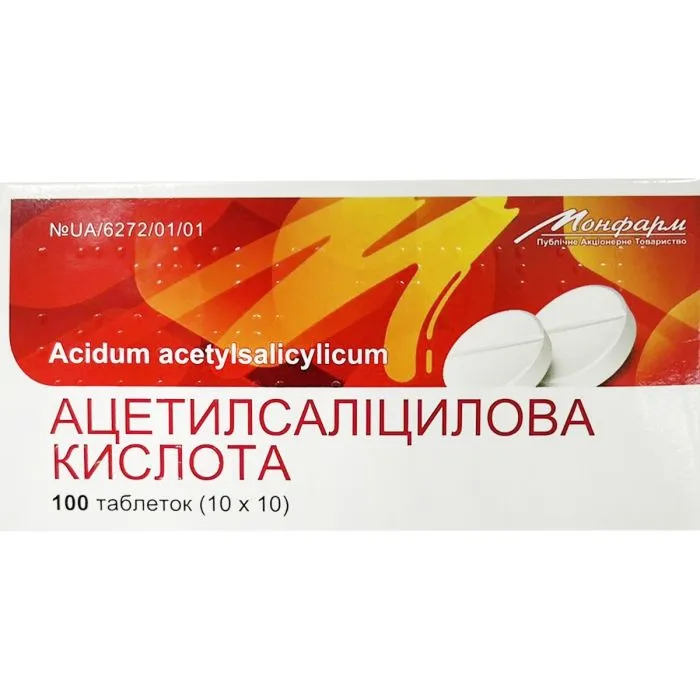
Table of Contents
INSTRUCTIONS FOR MEDICAL USE OF THE MEDICINAL PRODUCT ACETYLSALICYLIC ACID (ACETYLSALICYLIC ACID)
Composition:
Active substance: acetylsalicylic acid;
1 tablet contains 500 mg of acetylsalicylic acid;
Excipients: powdered cellulose, maize starch.
Medicinal form. Tablets.
Main physico-chemical properties: single-layer, round tablets with convex upper and lower surfaces, white or almost white in color. Under magnification, a relatively homogeneous structure is visible at the break.
Pharmacotherapeutic group. Analgesics and antipyretics. Acetylsalicylic acid.
ATC code N02BA01.
Pharmacological properties.
Pharmacodynamics.
Acetylsalicylic acid belongs to the group of nonsteroidal anti-inflammatory drugs (NSAIDs) with analgesic, antipyretic, and anti-inflammatory properties. Its mechanism of action involves irreversible inactivation of cyclooxygenase enzymes, which play an important role in the synthesis of prostaglandins.
Acetylsalicylic acid is administered orally in doses of 0.3 to 1 g for relief of pain and fever-associated conditions such as colds, to reduce fever and alleviate joint and muscle pain.
Acetylsalicylic acid inhibits platelet aggregation by blocking the synthesis of thromboxane A2.
Pharmacokinetics.
After oral administration, acetylsalicylic acid is rapidly and completely absorbed from the gastrointestinal tract. During and after absorption, it is converted into the main active metabolite – salicylic acid. Maximum plasma concentration of acetylsalicylic acid is reached within 10–20 minutes, and of salicylates – within 20–120 minutes.
Acetylsalicylic acid and salicylic acid are completely bound to plasma proteins and rapidly distributed throughout the body.
Salicylic acid crosses the placenta and is excreted into breast milk.
Salicylic acid is metabolized in the liver. Metabolites of salicylic acid include salicyluric acid, salicyl phenol glucuronide, salicyl acyl glucuronide, gentisic acid, and gentisic acid sulfate.
The elimination kinetics of salicylic acid are dose-dependent, as metabolism is limited by hepatic enzyme capacity. The elimination half-life depends on the dose, increasing from 2–3 hours with low doses to 15 hours with high doses. Salicylic acid and its metabolites are primarily excreted by the kidneys.
Clinical characteristics.
Indications.
For symptomatic treatment of headache, toothache, joint pain, and back pain.
In colds or acute respiratory diseases for symptomatic relief of pain and fever.
Contraindications.
- Hypersensitivity to acetylsalicylic acid, other salicylates, or any component of the drug.
- Bronchial asthma induced by salicylates or other NSAIDs in medical history.
- Acute gastrointestinal ulcers.
- Hemorrhagic diathesis.
- Severe renal insufficiency.
- Severe hepatic insufficiency.
- Severe heart failure.
- Combination with methotrexate at doses of 15 mg/week or higher (see section "Interaction with other medicinal products and other types of interactions").
- Third trimester of pregnancy.
Interaction with other medicinal products and other types of interactions.
Contraindicated combinations
The use of acetylsalicylic acid with methotrexate at doses of 15 mg/week or higher increases the hematological toxicity of methotrexate (due to reduced renal clearance of methotrexate by anti-inflammatory agents and displacement of methotrexate from plasma protein binding by salicylates).
Combinations requiring caution
When acetylsalicylic acid is used with methotrexate at doses less than 15 mg/week, hematological toxicity of methotrexate increases (due to reduced renal clearance of methotrexate by anti-inflammatory agents and displacement of methotrexate from plasma protein binding by salicylates).
Concomitant use of ibuprofen interferes with the irreversible inhibition of platelets by acetylsalicylic acid. Treatment with ibuprofen in patients at risk of cardiovascular diseases may reduce the cardioprotective effect of acetylsalicylic acid.
Concomitant use of high doses of salicylates with NSAIDs increases the risk of ulcers and gastrointestinal bleeding (due to synergistic effects).
Concomitant use of acetylsalicylic acid and anticoagulants increases the risk of bleeding.
Concomitant use with uricosuric agents such as benzbromarone or probenecid reduces uric acid excretion (due to competition for renal tubular excretion of uric acid).
When used concomitantly with digoxin, the plasma concentration of digoxin increases due to reduced renal excretion.
When used concomitantly with high doses of acetylsalicylic acid and oral antidiabetic agents of the sulfonylurea group or insulin, the hypoglycemic effect of the latter is enhanced due to the hypoglycemic effect of acetylsalicylic acid and displacement of sulfonylurea from plasma protein binding.
Diuretics in combination with high doses of acetylsalicylic acid reduce glomerular filtration due to decreased renal prostaglandin synthesis.
Systemic glucocorticosteroids (except hydrocortisone used for replacement therapy in Addison's disease). When acetylsalicylic acid is used concomitantly with corticosteroids, the level of salicylates in blood decreases and the risk of overdose after discontinuation increases, as well as the risk of gastrointestinal bleeding.
ACE inhibitors in combination with high doses of acetylsalicylic acid cause reduced glomerular filtration due to inhibition of vasodilatory prostaglandins and reduced antihypertensive effect.
Selective serotonin reuptake inhibitors. The risk of upper gastrointestinal bleeding increases due to possible synergistic effects.
When used concomitantly with valproic acid, acetylsalicylic acid displaces valproic acid from plasma protein binding, increasing its toxicity.
Ethyl alcohol causes damage to the gastrointestinal mucosa and prolongs bleeding time due to synergy between acetylsalicylic acid and alcohol.
Special precautions for use
Acetylsalicylic acid should be used with caution in the following cases:
- Hypersensitivity to analgesics, anti-inflammatory, or antirheumatic agents, as well as in the presence of allergy to other substances;
- History of gastrointestinal ulcers, including chronic or recurrent peptic ulcer disease or gastrointestinal bleeding;
- Concomitant use of anticoagulants;
- Impaired renal function or circulatory disorders (such as renal vascular disease, congestive heart failure, dehydration, major surgical procedures, sepsis, or significant blood loss), since acetylsalicylic acid may further increase the risk of kidney damage and may cause acute renal failure;
- Impaired hepatic function.
In patients with allergic complications, including bronchial asthma, allergic rhinitis, urticaria, skin itching, mucosal edema, nasal polyps, or their combination with chronic respiratory tract infections, and in patients with hypersensitivity to NSAIDs, administration of acetylsalicylic acid may lead to bronchospasm, asthma attacks, or other hypersensitivity reactions.
During surgical procedures (including dental surgery), the use of acetylsalicylic acid-containing drugs may increase the likelihood of occurrence or intensification of bleeding due to inhibition of platelet aggregation, which persists for several days after administration of acetylsalicylic acid.
When low doses of acetylsalicylic acid are used, excretion of uric acid may be reduced. This may lead to the development of gout in patients with reduced uric acid excretion.
In patients with glucose-6-phosphate dehydrogenase deficiency, acetylsalicylic acid may cause hemolysis or hemolytic anemia. Factors that increase the risk of hemolysis include, for example, use of high drug doses, fever, or acute infections.
Prolonged use of analgesics may lead to the development of headache.
Frequent use of analgesics may cause temporary impairment of kidney function with a risk of developing renal failure (analgesic nephropathy). The risk is particularly high when several different analgesics are used concomitantly.
Use during pregnancy or breastfeeding.
Pregnancy
Acetylsalicylic acid may be used during pregnancy only if other medicinal products are ineffective and only after careful assessment of the benefit-risk ratio.
Inhibition of prostaglandin synthesis may adversely affect pregnancy and/or embryonic/fetal development. Epidemiological data indicate a risk of miscarriage and fetal malformations following use of prostaglandin synthesis inhibitors in early pregnancy. The risk increases with higher doses and longer duration of treatment. According to available studies, a causal link between acetylsalicylic acid use and increased risk of miscarriage has not been confirmed.
An increased risk of gastroschisis cannot be ruled out with the use of acetylsalicylic acid. During early pregnancy (1st–4th month), no association with an increased risk of malformations has been established.
During the first and second trimesters of pregnancy, acetylsalicylic acid-containing drugs should not be prescribed without clear clinical necessity. In women who may be pregnant, as well as during the first and second trimesters of pregnancy, the dose of acetylsalicylic acid-containing drugs should be as low as possible and the duration of treatment as short as possible.
During the third trimester of pregnancy, all prostaglandin synthesis inhibitors may affect the fetus as follows:
- Cardio-pulmonary toxicity (with premature closure of the ductus arteriosus and pulmonary hypertension);
- Impaired renal function, potentially leading to renal failure with oligohydramnios.
In women and the fetus near the end of pregnancy, prostaglandin synthesis inhibitors may have the following effects:
- Prolongation of bleeding time, anti-aggregatory effect, which may occur even after very low doses;
- Inhibition of uterine contractions, which may lead to delayed or prolonged labor.
Due to these risks, acetylsalicylic acid is contraindicated during the third trimester of pregnancy.
Fertility
There is some evidence that drugs which inhibit prostaglandin synthesis may impair female reproductive function by affecting ovulation. This effect is reversible and resolves after discontinuation of treatment.
Breastfeeding period
Salicylates and their metabolites pass into breast milk in small amounts.
Since adverse reactions in infants whose mothers have taken acetylsalicylic acid have not been observed, breastfeeding interruption is usually not required. However, with long-term use of the drug or use of high-dose acetylsalicylic acid, the decision on whether to discontinue breastfeeding should be considered.
Ability to affect reaction speed when driving or operating machinery.
No effect of the drug on the ability to drive or operate machinery has been reported.
Method of Administration and Dosage
The drug should be taken orally after meals, with sufficient fluid.
The drug should not be used for longer than 3–5 days without consulting a physician.
Adults and children aged 15 years and older.
500–1000 mg as a single dose. Repeat dosing may be administered every 4–8 hours. Maximum daily dose should not exceed 4 g.
Warning.
For patients with concomitant liver or kidney dysfunction, the dose should be reduced or the dosing interval prolonged.
Children.
The drug is indicated for children aged 15 years and older. Medicinal products containing acetylsalicylic acid should not be used in children with acute respiratory viral infections (ARVI), whether accompanied by fever or not. In certain viral diseases, particularly influenza A, influenza B, and varicella, there is a risk of developing Reye's syndrome—a very rare but life-threatening condition requiring immediate medical intervention. The risk may be increased when acetylsalicylic acid is used as a concomitant medication; however, a causal relationship has not been established. If the aforementioned conditions are accompanied by persistent vomiting, this may be a sign of Reye's syndrome.
Overdose.
Salicylate toxicity (administration exceeding 100 mg/kg/day for more than 2 days may cause toxicity) may result from chronic intoxication due to prolonged therapy, or from acute intoxication (overdose), which is potentially life-threatening and may be caused, for example, by accidental ingestion in children or overdose.
Chronic intoxication with salicylates may have an insidious onset, as its symptoms are nonspecific. Moderate chronic intoxication, or salicylism, typically occurs only after repeated administration of high doses.
Symptoms. Dizziness, tinnitus, hearing loss, increased sweating, nausea and vomiting, headache, confusion. These symptoms can usually be managed by reducing the dose. Tinnitus may occur at plasma salicylate concentrations exceeding 150–300 µg/mL. More serious adverse reactions occur at plasma salicylate concentrations exceeding 300 µg/mL.
Acute intoxication is characterized by significant disturbances in acid-base balance, which vary depending on the patient's age and severity of intoxication. In children, metabolic acidosis is the most typical manifestation. The severity of intoxication cannot be assessed solely based on plasma salicylate concentration. Absorption of acetylsalicylic acid may be delayed due to delayed gastric emptying or formation of gastric concretions.
Due to complex pathophysiological effects, signs and symptoms of salicylate poisoning may include:
Mild to moderate intoxication – tachypnea, hyperpnea, respiratory alkalosis; increased sweating, nausea, and vomiting.
Moderate to severe intoxication – respiratory alkalosis accompanied by compensatory metabolic acidosis, hyperpyrexia. Respiratory system: from hyperpnea, non-cardiogenic pulmonary edema, to respiratory arrest and asphyxia. Cardiovascular system: from arrhythmias and arterial hypotension to cardiac arrest. Dehydration, oliguria progressing to renal failure; glucose metabolism disturbances, ketosis; gastrointestinal hemorrhage; hematological changes – from thrombocyte inhibition to coagulopathy. Nervous system: toxic encephalopathy and CNS depression, manifesting as drowsiness, decreased level of consciousness, coma, and seizures.
Laboratory and other test abnormalities: alkalemia, alkaluria, acidemia, aciduria, changes in blood pressure, ECG abnormalities, hypokalemia, hypernatremia, hyponatremia, impaired renal function, hyperglycemia, hypoglycemia (especially in children), elevated ketone bodies, hypoprothrombinemia.
Treatment.
Treatment of intoxication caused by acetylsalicylic acid overdose depends on the severity and clinical symptoms, and is based on standard management of poisoning (gastric lavage, activated charcoal, forced diuresis). All measures should aim to accelerate drug elimination and restore electrolyte and acid-base balance. Infusion of electrolyte solutions should be administered according to the patient's acid-base and electrolyte status. Hemodialysis is indicated in severe cases of poisoning.
Side effects.
Gastrointestinal system. Dyspepsia, epigastric pain and abdominal pain, heartburn; in individual cases – gastrointestinal tract inflammation, erosive-ulcerative lesions of the gastrointestinal tract, which may in rare cases lead to gastrointestinal bleeding and perforations with corresponding laboratory and clinical manifestations.
Rarely – transient hepatic insufficiency with increased levels of liver transaminases.
Blood and lymphatic system. Due to the anti-aggregatory effect of acetylsalicylic acid on platelets, the risk of bleeding may be increased. Bleeding events observed include perioperative bleeding, hematomas, urogenital bleeding, epistaxis, and gingival bleeding; rarely or very rarely – serious bleeding such as gastrointestinal hemorrhage and cerebral hemorrhage (especially in patients with uncontrolled arterial hypertension and/or concomitant use of antihemostatic agents), which in isolated cases may be life-threatening.
Bleeding may lead to acute and chronic post-hemorrhagic anemia/iron-deficiency anemia (due to so-called occult microbleeding) with corresponding laboratory findings and clinical symptoms such as asthenia, pallor of the skin, hypoperfusion.
In patients with severe glucose-6-phosphate dehydrogenase deficiency, hemolysis and development of hemolytic anemia have been reported.
Immune system. In patients with individual hypersensitivity to salicylates, allergic reactions may occur, including symptoms such as rash, urticaria, pruritus, eczema, rhinitis, nasal congestion, decreased blood pressure. Very rarely, severe hypersensitivity reactions have been observed, including anaphylactic shock, angioedema, non-cardiogenic pulmonary edema; severe skin reactions including exudative multiform erythema, Stevens–Johnson syndrome, toxic epidermal necrolysis. In patients with bronchial asthma, increased frequency of bronchospasm may occur; allergic reactions ranging from mild to moderate severity potentially affecting the skin, respiratory system, gastrointestinal tract, and cardiovascular system.
Nervous system. Headache, dizziness, hearing disturbances; tinnitus and confusion may be signs of overdose.
Urinary system. There are data on impaired kidney function and development of acute renal failure.
Shelf life. 3 years.
Storage conditions.
Store in the original packaging at a temperature not exceeding 30°C. Keep out of reach of children.
Packaging.
10 tablets in blisters;
10 tablets in a blister; 1 blister per carton.
Prescription status. Over-the-counter.
Manufacturer.
PJSC "Tekhnolog".
Manufacturer's address and location of business activity.
8 Stara Prorezna Street, Uman, Cherkasy Oblast, Ukraine, 20300.
INSTRUCTION
for medical use of medicinal product
ACETYLSALICYLIC ACID
(ACETYLSALICYLIC ACID)
Composition:
Active ingredient: acetylsalicylic acid;
1 tablet contains 500 mg of acetylsalicylic acid;
Excipients: powdered cellulose, corn starch.
Pharmaceutical form. Tablets.
Main physicochemical properties: single-layer, round tablets with convex upper and lower surfaces, white or almost white in color. Under magnification, a relatively homogeneous structure is visible at the break.
Pharmacotherapeutic group. Analgesics and antipyretics. Acetylsalicylic acid. ATC code N02BA01.
Pharmacological properties.
Pharmacodynamics.
Acetylsalicylic acid belongs to the group of non-steroidal anti-inflammatory drugs (NSAIDs) with analgesic, antipyretic, and anti-inflammatory properties. Its mechanism of action involves irreversible inactivation of cyclooxygenase enzymes, which play a key role in prostaglandin synthesis.
Acetylsalicylic acid is administered orally in doses of 0.3 to 1 g to relieve pain and fever-associated conditions such as colds, to reduce fever, and to alleviate joint and muscle pain.
Acetylsalicylic acid inhibits platelet aggregation by blocking thromboxane A2 synthesis.
Pharmacokinetics.
After oral administration, acetylsalicylic acid is rapidly and completely absorbed from the gastrointestinal tract. During and after absorption, it is converted into its main active metabolite – salicylic acid. Maximum plasma concentration of acetylsalicylic acid is reached within 10–20 minutes, and of salicylates – within 20–120 minutes.
Acetylsalicylic and salicylic acids are completely bound to plasma proteins and rapidly distributed throughout the body.
Salicylic acid crosses the placenta and is excreted into breast milk.
Salicylic acid is metabolized in the liver. Metabolites of salicylic acid include salicyluric acid, salicyl phenol glucuronide, salicyl acyl glucuronide, gentisic acid, and gentisic acid derivatives.
The elimination kinetics of salicylic acid are dose-dependent, as metabolism is limited by hepatic enzyme capacity. Elimination half-life depends on dose and increases from 2–3 hours with low doses to 15 hours with high doses. Salicylic acid and its metabolites are primarily excreted by the kidneys.
Clinical characteristics.
Indications.
For symptomatic treatment of headache, toothache, joint pain, and back pain.
For symptomatic relief of pain and fever associated with colds or acute respiratory infections.
Contraindications.
- Hypersensitivity to acetylsalicylic acid, other salicylates, or any component of the drug.
- Bronchial asthma induced by salicylates or other NSAIDs in medical history.
- Active gastrointestinal ulcers.
- Hemorrhagic diathesis.
- Severe renal failure.
- Severe hepatic failure.
- Severe heart failure.
- Combination with methotrexate at doses of 15 mg/week or higher (see section "Interaction with other medicinal products and other types of interactions").
- Third trimester of pregnancy.
Interaction with other medicinal products and other types of interactions.
Contraindicated combinations
The use of acetylsalicylic acid with methotrexate at doses of 15 mg/week or higher increases methotrexate hematological toxicity (due to reduced renal clearance of methotrexate by anti-inflammatory agents and displacement of methotrexate from plasma protein binding by salicylates).
Combinations requiring caution
When acetylsalicylic acid is used with methotrexate at doses below 15 mg/week, methotrexate hematological toxicity may increase (due to reduced renal clearance of methotrexate by anti-inflammatory agents and displacement of methotrexate from plasma protein binding by salicylates).
Concomitant use of ibuprofen interferes with the irreversible inhibition of platelets by acetylsalicylic acid. Treatment with ibuprofen in patients at risk of cardiovascular disease may reduce the cardioprotective effect of acetylsalicylic acid.
Simultaneous use of high-dose salicylates with NSAIDs increases the risk of ulcers and gastrointestinal bleeding due to synergistic effects.
Concomitant use of acetylsalicylic acid and anticoagulants increases the risk of bleeding.
Simultaneous use with uricosuric agents such as benzbromarone or probenecid reduces uric acid excretion (due to competition for renal tubular excretion of uric acid).
When used concomitantly with digoxin, digoxin plasma concentration increases due to reduced renal excretion.
Concomitant use of high-dose acetylsalicylic acid with oral antidiabetic agents of the sulfonylurea group or insulin enhances the hypoglycemic effect of the latter due to the hypoglycemic effect of acetylsalicylic acid and displacement of sulfonylurea from plasma protein binding.
Diuretics in combination with high doses of acetylsalicylic acid reduce glomerular filtration due to decreased renal prostaglandin synthesis.
Systemic glucocorticoids (except hydrocortisone used for replacement therapy in Addison's disease). When acetylsalicylic acid is used concomitantly with corticosteroids, blood salicylate levels decrease, increasing the risk of overdose after discontinuation, and the risk of gastrointestinal bleeding increases.
ACE inhibitors in combination with high doses of acetylsalicylic acid reduce glomerular filtration due to inhibition of vasodilatory prostaglandins and reduced antihypertensive effect.
Selective serotonin reuptake inhibitors (SSRIs). Increased risk of upper gastrointestinal bleeding due to possible synergistic effects.
Concomitant use with valproic acid: acetylsalicylic acid displaces valproic acid from plasma protein binding, increasing its toxicity.
Ethyl alcohol damages the gastrointestinal mucosa and prolongs bleeding time due to synergism between acetylsalicylic acid and alcohol.
Special precautions.
Acetylsalicylic acid should be used with caution in:
- Hypersensitivity to analgesics, anti-inflammatory, or antirheumatic drugs, or allergy to other substances;
- History of gastrointestinal ulcers, including chronic or recurrent peptic ulcer disease or gastrointestinal bleeding;
- Concomitant use of anticoagulants;
- Impaired kidney function or circulatory disorders (such as renal vascular disease, congestive heart failure, dehydration, major surgery, sepsis, or significant blood loss), as acetylsalicylic acid may further increase the risk of kidney damage and cause acute renal failure;
- Impaired liver function.
In patients with allergic complications, including bronchial asthma, allergic rhinitis, urticaria, pruritus, mucosal edema, nasal polyps, or their combination with chronic respiratory infections, and in patients hypersensitive to NSAIDs, treatment with acetylsalicylic acid may trigger bronchospasm, asthma attacks, or other hypersensitivity reactions.
During surgical procedures (including dental), use of drugs containing acetylsalicylic acid may increase the likelihood of bleeding or worsening of bleeding due to inhibition of platelet aggregation lasting several days after administration.
With low-dose acetylsalicylic acid, excretion of uric acid may be reduced, potentially leading to gout in patients with impaired uric acid excretion.
In patients with glucose-6-phosphate dehydrogenase deficiency, acetylsalicylic acid may cause hemolysis or hemolytic anemia. Factors increasing the risk of hemolysis include high drug doses, fever, or acute infections.
Prolonged use of analgesics may lead to medication-overuse headache.
Frequent use of analgesics may cause temporary kidney dysfunction with risk of renal failure (analgesic nephropathy). The risk is particularly high when multiple different analgesics are used concomitantly.
Use during pregnancy or breastfeeding.
Pregnancy
Acetylsalicylic acid may be used during pregnancy only when other medicinal products are ineffective and only after careful risk-benefit assessment.
Inhibition of prostaglandin synthesis may adversely affect pregnancy and/or embryonic/fetal development. Epidemiological data suggest an increased risk of miscarriage and congenital malformations after use of prostaglandin synthesis inhibitors in early pregnancy. The risk increases with higher doses and longer duration of treatment. However, a direct link between acetylsalicylic acid use and increased risk of miscarriage has not been confirmed.
An increased risk of gastroschisis cannot be ruled out with acetylsalicylic acid use. No association with increased risk of malformations has been established in early pregnancy (1st–4th month).
During the first and second trimesters of pregnancy, acetylsalicylic acid-containing drugs should not be prescribed without clear clinical necessity. In women who may be pregnant, or during the first and second trimesters, the dose should be as low as possible and treatment duration as short as possible.
During the third trimester, all prostaglandin synthesis inhibitors may affect the fetus as follows:
- Cardio-pulmonary toxicity (premature closure of the ductus arteriosus and pulmonary hypertension);
- Impaired kidney function with possible subsequent renal failure and oligohydramnios.
In late pregnancy, prostaglandin synthesis inhibitors may affect the mother and fetus as follows:
- Prolonged bleeding time, anti-aggregatory effect, which may occur even after very low doses;
- Inhibition of uterine contractions, potentially leading to delayed or prolonged labor.
Therefore, acetylsalicylic acid is contraindicated during the third trimester of pregnancy.
Fertility
There is evidence that drugs inhibiting prostaglandin synthesis may impair female reproductive function by affecting ovulation. This effect is reversible and resolves after discontinuation of treatment.
Breastfeeding period
Salicylates and their metabolites pass into breast milk in small amounts.
Since adverse reactions in infants whose mothers took acetylsalicylic acid have not been observed, breastfeeding interruption is generally not required. However, with prolonged use or high-dose acetylsalicylic acid, a decision on discontinuation of breastfeeding should be considered.
Ability to affect reaction rate when driving or operating machinery.
No effect of the drug on the ability to drive vehicles or operate machinery has been observed.
Administration and dosage.
The drug should be taken orally after meals with sufficient liquid.
The drug should not be used for longer than 3–5 days without medical consultation.
Adults and children over 15 years of age.
Single dose: 500–1000 mg. Repeat dosing may be performed every 4–8 hours. Maximum daily dose should not exceed 4 g.
Warning.
In patients with concomitant liver or kidney dysfunction, the dose should be reduced or the dosing interval increased.
Children.
The drug is intended for use in children over 15 years of age. Acetylsalicylic acid-containing drugs should not be used in children with acute respiratory viral infections (ARVI), with or without fever. In certain viral diseases, particularly influenza A, influenza B, and varicella, there is a risk of Reye's syndrome—a rare but life-threatening condition requiring urgent medical intervention. The risk may be increased if acetylsalicylic acid is used as an adjunctive treatment, although a causal relationship has not been proven. Persistent vomiting in such conditions may be a sign of Reye's syndrome.
Overdose.
Salicylate toxicity (administration exceeding 100 mg/kg/day for more than 2 days may cause toxicity) may result from chronic intoxication due to prolonged therapy, or acute intoxication (overdose), which may be potentially life-threatening and may result from accidental ingestion (e.g., by children) or overdose.
Chronic intoxication with salicylates may have an insidious onset due to non-specific symptoms. Moderate chronic intoxication (salicylism) typically occurs only after repeated administration of high doses.
Symptoms. Dizziness, tinnitus, hearing loss, excessive sweating, nausea and vomiting, headache, confusion. These symptoms may be managed by reducing the dose. Tinnitus may occur at plasma salicylate concentrations above 150–300 µg/mL. More serious adverse reactions occur at plasma salicylate concentrations above 300 µg/mL.
Acute intoxication is characterized by significant disturbances in acid-base balance, varying with patient age and severity of intoxication. In children, metabolic acidosis is most typical. The severity of intoxication cannot be assessed solely by plasma salicylate concentration. Absorption of acetylsalicylic acid may be delayed due to delayed gastric emptying or gastric concretion formation.
Due to complex pathophysiological effects, signs and symptoms of salicylate poisoning may include:
Mild to moderate intoxication – tachypnea, hyperpnea, respiratory alkalosis; excessive sweating, nausea, vomiting.
Moderate to severe intoxication – respiratory alkalosis with compensatory metabolic acidosis, hyperpyrexia. Respiratory system: from hyperpnea, non-cardiogenic pulmonary edema, to respiratory arrest and asphyxia. Cardiovascular system: from arrhythmia, arterial hypotension, to cardiac arrest. Dehydration, oliguria progressing to renal failure; glucose metabolism disturbances, ketosis; gastrointestinal bleeding; hematological changes – from platelet inhibition to coagulopathy. Nervous system: toxic encephalopathy and CNS depression, manifesting as drowsiness, impaired consciousness progressing to coma, and seizures.
Laboratory and other test abnormalities: alkalemia, alkaluria, acidemia, aciduria, blood pressure changes, ECG changes, hypokalemia, hypernatremia, hyponatremia, renal function changes, hyperglycemia, hypoglycemia (especially in children), elevated ketone bodies, hypoprothrombinemia.
Treatment.
Treatment of acetylsalicylic acid overdose-induced intoxication depends on severity and clinical symptoms and includes standard measures used in poisoning (gastric lavage, activated charcoal, forced diuresis). All measures should aim to accelerate drug elimination and restore electrolyte and acid-base balance. Intravenous electrolyte solutions should be administered according to acid-base and electrolyte status. Hemodialysis is indicated in severe cases.
Side effects.
Gastrointestinal system. Dyspepsia, epigastric pain and abdominal pain, heartburn; in individual cases – gastrointestinal tract inflammation, erosive-ulcerative lesions of the gastrointestinal tract, which may in rare cases lead to gastrointestinal bleeding and perforations with corresponding laboratory and clinical manifestations.
Rarely – transient hepatic insufficiency with increased levels of liver transaminases.
Blood and lymphatic system. Due to the anti-aggregatory effect of acetylsalicylic acid on platelets, the risk of bleeding may be increased. Bleeding events observed include perioperative bleeding, hematomas, urogenital bleeding, epistaxis, and gingival bleeding; rarely or very rarely – serious bleeding such as gastrointestinal hemorrhage and cerebral hemorrhage (especially in patients with uncontrolled arterial hypertension and/or concomitant use of antihemostatic agents), which in isolated cases may be life-threatening.
Bleeding may lead to acute and chronic post-hemorrhagic anemia/iron-deficiency anemia (due to so-called occult microbleeding) with corresponding laboratory findings and clinical symptoms such as asthenia, pallor of the skin, hypoperfusion.
In patients with severe glucose-6-phosphate dehydrogenase deficiency, hemolysis and development of hemolytic anemia have been reported.
Immune system. In patients with individual hypersensitivity to salicylates, allergic reactions may occur, including symptoms such as rash, urticaria, pruritus, eczema, rhinitis, nasal congestion, decreased blood pressure. Very rarely, severe hypersensitivity reactions have been observed, including anaphylactic shock, angioedema, non-cardiogenic pulmonary edema; severe skin reactions including exudative multiform erythema, Stevens–Johnson syndrome, toxic epidermal necrolysis. In patients with bronchial asthma, increased frequency of bronchospasm may occur; allergic reactions ranging from mild to moderate severity potentially affecting the skin, respiratory system, gastrointestinal tract, and cardiovascular system.
Nervous system. Headache, dizziness, hearing disturbances; tinnitus and confusion may be signs of overdose.
Urinary system. There are data on impaired kidney function and development of acute renal failure.
Shelf life. 3 years.
Storage conditions.
Store in the original packaging at a temperature not exceeding 30°C. Keep out of reach of children.
Packaging.
10 tablets in blisters;
10 tablets in a blister; 1 blister per carton.
Prescription status. Over-the-counter.
Manufacturer.
PJSC "Tekhnolog".
Manufacturer's address and location of business activity.
8 Stara Prorezna Street, Uman, Cherkasy Oblast, Ukraine, 20300.