Asacol
Ukraine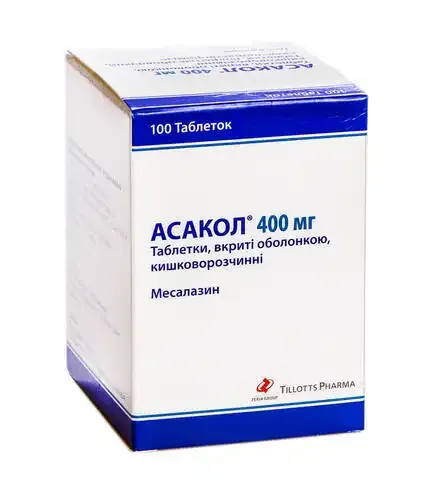
Table of Contents
INSTRUCTIONS FOR MEDICAL USE OF THE MEDICINAL PRODUCT ASACOL® (ASACOL®)
Composition:
Active substance: mesalazine;
1 tablet contains 1600 mg of mesalazine;
Excipients: microcrystalline cellulose, sodium starch glycolate (type A), hypromellose, colloidal anhydrous silicon dioxide, magnesium stearate, macrogol 6000, methacrylic acid - methyl methacrylate copolymer (1:2), triethyl citrate, glycerol monostearate 40-55 (type II), polysorbate 80, potassium dihydrogen phosphate, sodium hydroxide, corn starch, iron oxide red E172, iron oxide yellow E172.
Pharmaceutical form. Modified-release tablets.
Main physicochemical characteristics: film-coated tablets, semi-glossy, reddish-brown in color, elongated in shape.
Pharmacotherapeutic group.
Anti-inflammatory agents used in intestinal diseases.
ATC code A07EC02.
Pharmacological Properties.
Pharmacodynamics.
Mechanism of Action.
Asacol® contains mesalazine, also known as 5-aminosalicylic acid, which exerts a local anti-inflammatory effect on the colonic mucosal cells through mechanisms that are not yet fully understood.
Asacol® has been shown to inhibit LTB4-stimulated migration of intestinal macrophages by limiting macrophage migration to inflamed areas. Thus, the production of pro-inflammatory leukotrienes (LTB4 and 5-HETE) in intestinal wall macrophages is suppressed. Asacol® has been shown to activate PPAR-γ receptors, which counteract nuclear activation of inflammatory responses in the intestine.
Pharmacodynamic Effects.
An Asacol® tablet contains a core of 1600 mg mesalazine coated with a multilayered coating.
This system consists of a layer of methacrylic acid – methyl methacrylate copolymer (Eudragit S) in combination with starch particles over a middle alkaline buffering layer (which accelerates drug release). The coating is designed to delay the release of mesalazine until intestinal fluids reach the required pH level of 7. The starch may be digested by colonic bacteria, providing a second triggering mechanism for the release of mesalazine from the coated tablet. Thus, systemic bioavailability / plasma concentration of mesalazine is not relevant to therapeutic efficacy, but rather serves as a safety criterion.
The risk of colorectal cancer is somewhat increased in ulcerative colitis.
Effects observed with mesalazine in experimental models and in patient biopsies confirm that mesalazine prevents colitis-associated colorectal cancer by downregulating both inflammation-dependent and inflammation-independent signaling pathways involved in the development of colitis-associated colorectal cancer. Meta-analysis data from populations in both remission and relapsing phases, however, provide conflicting clinical information regarding the risk-benefit profile of mesalazine in ulcerative colitis carcinogenesis.
Clinical Efficacy and Safety.
Mild to moderate active ulcerative colitis. This indication was evaluated in a randomized, double-blind, multicenter, active-controlled induction study involving 817 patients who received 3.2 g of mesalazine daily for 8 weeks.
At week 8, 22.4% of per-protocol patients receiving Asacol® 1600 mg modified-release tablets and 24.6% of patients receiving 400 mg mesalazine tablets achieved clinical and endoscopic remission. The unadjusted difference between groups was 2.2% (95% confidence interval: -8.1% to 3.8%). Considering the pre-specified non-inferiority margin of 10%, Asacol® 1600 mg modified-release tablets administered once daily were considered non-inferior to 400 mg mesalazine tablets administered twice daily with regard to induction of clinical and endoscopic remission.
Overall, 10.3% of patients receiving Asacol® 1600 mg modified-release tablets and 9.8% of patients receiving 400 mg mesalazine tablets reported treatment-related adverse events. The incidence of serious adverse events in both treatment groups was 2% vs. 1.7%.
Maintenance Treatment.
An open-label extension of the induction study included 727 patients. A total of 243 patients who did not respond at week 8 entered this 8-week extension study at a daily dose of 4.8 g.
The daily dose of Asacol® in the maintenance phase was determined based on induction outcomes at 8 or 12 weeks. Patients in clinical remission (n=202) received 1.6 g/day, while patients with clinical response (n=274) received 3.2 g/day. Patients who initially did not respond at week 8 but responded after the subsequent 8 weeks on 4.8 g/day of mesalazine (n=199) remained on the 4.8 g dose for an additional 22 weeks.
At week 38, 70.3% (142/202) of patients in the 1.6 g/day group maintained remission. Additionally, 33.9% (93/274) and 30.7% (61/199) of patients in the 3.2 g/day and 4.8 g/day dose groups, respectively, achieved later clinical remission.
The frequency of adverse events in the study was low and independent of daily dose: 5% (10/202), 4.4% (12/274), and 1.5% (3/199) of patients receiving 1.6 g, 3.2 g, and 4.8 g/day, respectively.
Pharmacokinetics.
Absorption.
Asacol® tablets have modified release of mesalazine, which begins only at pH above 7, i.e., in the terminal ileum and colon. According to urinary excretion data over 60 hours, approximately 31% of the oral dose (fasting) is absorbed.
A single 1600 mg dose of modified-release Asacol® tablets in healthy fasting volunteers resulted in a 1.5-fold increase in mesalazine Cmax and a 1.5-fold increase in AUC compared to administration after food intake.
Distribution.
Approximately 43% of mesalazine and 78% of N-acetylmesalazine are bound to plasma proteins. Approximately 75% of the administered dose remains in the lumen and mucosa. The mean apparent volume of distribution (Vdss) is 12.1 L/kg. Low concentrations of mesalazine and N-acetylmesalazine have been detected in human breast milk. The clinical significance of this is not known.
Metabolism.
Mesalazine is metabolized both by the intestinal mucosa and the liver to the inactive metabolite N-acetylmesalazine. According to urinary excretion data, the absorbed dose is excreted in >95% as metabolites.
Elimination.
Mesalazine is eliminated primarily via urine and feces in the form of mesalazine and its N-acetyl metabolite. Approximately 23% of the administered dose was recovered in urine over 60 hours after food intake and 31% in the fasting state (single 1600 mg tablet dose). The mean elimination half-life of mesalazine is 20 hours (range: 5 to 77 hours).
Clinical characteristics.
Indications.
Treatment of mild to moderate non-specific ulcerative colitis; maintenance therapy during remission.
Contraindications.
Hypersensitivity to salicylates (including mesalazine) or to any other component of the medicinal product.
Severe hepatic impairment.
Severe renal impairment (creatinine clearance < 30 ml/min/1.73 m²).
Interaction with other medicinal products and other forms of interaction.
Interaction studies have not been conducted.
There is evidence that mesalazine may reduce the anticoagulant effect of warfarin.
Caution is recommended when mesalazine is used concomitantly with known nephrotoxic agents, including nonsteroidal anti-inflammatory drugs (NSAIDs), azathioprine, or methotrexate, as they may increase the risk of renal adverse reactions.
Possible enhancement of the myelosuppressive effect of azathioprine, 6-mercaptopurine, or thioguanine should be considered in patients receiving any of these agents concurrently. Life-threatening infection may occur. Patients should be closely monitored for signs of infection and myelosuppression. Hematological parameters, particularly white blood cell count, platelets, and lymphocytes, should be monitored regularly (once weekly), especially at the beginning of such combination therapy (see section "Special precautions for use").
Special precautions for use.
Before and during treatment, blood tests (white blood cell count, liver function tests such as ALT or AST; serum creatinine) and urine tests (using test strips) should be scheduled at the physician's discretion. Testing is recommended 14 days after initiation of treatment and subsequently 2–3 times at 4-week intervals. If test results remain within normal limits, periodic follow-up testing should be performed every three months. If additional signs of hepatic or renal impairment are detected, such tests should be performed immediately.
Renal impairment.
Asacol® must not be used in patients with impaired renal function. Mesalazine-induced renal toxicity should be suspected if renal function deteriorates during treatment, and therapy must be discontinued immediately. Renal function should be monitored before and during treatment with Asacol®.
Nephrolithiasis.
Cases of nephrolithiasis have been reported with mesalazine use, including stones composed of 100% mesalazine. Adequate fluid intake is recommended during treatment.
Change in urine color.
Mesalazine may cause red-brown discoloration of urine upon contact with sodium hypochlorite bleach (e.g., in toilets cleaned with sodium hypochlorite-containing bleaches).
Severe skin adverse reactions.
Severe cutaneous adverse reactions (SCAR), including drug reaction with eosinophilia and systemic symptoms (DRESS), Stevens-Johnson syndrome (SJS), and toxic epidermal necrolysis (TEN), have been reported in association with mesalazine therapy. Mesalazine should be discontinued at the first signs or symptoms of severe skin reactions, such as skin rash, mucosal lesions, or any other signs of hypersensitivity.
Hematological disorders.
Very rarely, severe hematological disorders have been reported. Treatment with Asacol® should be discontinued immediately if hematological disorder is suspected or detected (e.g., unexplained bleeding, bruising, purpura, anemia, persistent fever, or sore throat), and patients should seek immediate medical advice.
Hepatic impairment.
Elevated liver enzyme levels have been reported in patients receiving mesalazine-containing medicinal products. Asacol® should be used with caution in patients with hepatic impairment.
Cardiac hypersensitivity reactions.
Rare cases of mesalazine-induced cardiac hypersensitivity reactions (myo- or pericarditis) have been reported during treatment with Asacol®. Re-exposure to Asacol® should be avoided if cardiac hypersensitivity is suspected. The drug should be used cautiously in patients with a history of allergic myocarditis or pericarditis, regardless of the cause.
Idiopathic intracranial hypertension.
Idiopathic intracranial hypertension (pseudotumor cerebri) has been reported in patients taking mesalazine. Patients should be informed about the signs and symptoms of idiopathic intracranial hypertension, including severe or recurrent headache, visual disturbances, or tinnitus. If idiopathic intracranial hypertension occurs, discontinuation of mesalazine should be considered.
Lung disorders.
Patients with pulmonary disorders, particularly asthma, should be closely monitored during mesalazine therapy.
Hypersensitivity to sulfasalazine.
Patients with a history of adverse reactions to sulfasalazine should be closely monitored. Treatment should be discontinued immediately if acute intolerance symptoms occur, such as abdominal cramps, acute abdominal pain, fever, severe headache, or rash.
Gastric and duodenal ulcers.
Caution is recommended when treating patients with active gastric or duodenal ulcers.
Elderly patients.
Asacol® should be prescribed with caution in elderly patients and should only be administered to those with normal renal or hepatic function or mild to moderate renal or hepatic impairment (see section "Contraindications").
Important information about excipients.
Each tablet contains less than 1 mmol (23 mg) of sodium per tablet, i.e., essentially "sodium-free."
Use during pregnancy or breastfeeding.
Pregnancy
Adequate data on the use of Asacol® in pregnant women are lacking. However, in a limited number of pregnant women who received mesalazine, no adverse effects on pregnancy or fetal/neonatal health have been observed. Currently, no other relevant epidemiological data are available.
In one case, prolonged use of high doses of mesalazine (2–4 g orally) during pregnancy resulted in renal failure in the newborn. Animal studies with oral administration of mesalazine did not indicate any direct or indirect harmful effects on pregnancy, embryonic/fetal development, parturition, or postnatal development.
Therefore, Asacol® should be administered during pregnancy only if the potential benefit outweighs the potential risk.
Breastfeeding
N-acetyl-5-aminosalicylic acid and, to a lesser extent, mesalazine are excreted in human breast milk. The clinical significance of this is unknown. Currently, experience with the use of the drug in breastfeeding women is limited. Hypersensitivity reactions such as diarrhea in infants cannot be excluded. Therefore, Asacol® should be used during breastfeeding only if the potential benefit outweighs the possible risk. If diarrhea develops in the infant, breastfeeding should be discontinued.
Fertility
No effect on fertility has been observed.
Ability to affect reaction speed when driving or operating machinery.
No specific studies have been conducted. Asacol® is considered to have negligible influence on the ability to drive or operate machinery.
Method of Administration and Dosage.
Dosage.
Adults, including elderly patients (≥ 65 years of age).
The dosage should be adjusted according to the severity of the disease and tolerability.
Acute disease: during exacerbations, the dose may be increased up to 4800 mg per day, administered once daily or divided into 2–3 doses.
After achieving clinical remission, the dose should be gradually reduced to the maintenance dose. Continued therapy should be carefully reconsidered in patients who do not respond to treatment within 8 weeks.
Maintenance therapy: 1600 mg once daily.
Other oral formulations of mesalazine are available if an alternative maintenance dose is considered more appropriate.
Elderly patients.
Studies in elderly individuals have not been conducted.
Method of administration: orally.
The tablets should be swallowed whole with a glass of water. They must not be chewed, crushed, or broken before swallowing. The tablets may be taken independently of food intake. If one or more doses are missed, the next dose should be taken as usual.
Children.
The safety and efficacy of Asacol® in children and adolescents under 18 years of age have not been established.
Overdose.
Symptoms. Mesalazine is an aminosalicylate, and signs of salicylate toxicity include tinnitus, dizziness, headache, confusion, drowsiness, pulmonary edema, dehydration due to sweating, diarrhea, vomiting, hypoglycemia, hyperventilation, disturbances in electrolyte balance and blood pH, and hyperthermia.
Treatment. There is no specific antidote. Treatment is symptomatic and supportive. In cases of acute overdose, conventional therapy used for salicylate intoxication may be beneficial. Hypoglycemia and disturbances in fluid and electrolyte balance should be corrected by appropriate therapeutic measures. Adequate renal function should be maintained.
Adverse reactions.
Short description of the safety profile.
Organ-specific adverse reactions have been reported affecting the heart, lungs, liver, kidneys, pancreas, skin and subcutaneous tissue. Headache (1.7%), hematuria (1.7%), abdominal pain (1.5%), ulcerative colitis (1.5%) and proteinuria (1.5%) are the most commonly reported drug-related adverse events reported during clinical development of mesalazine. Treatment must be discontinued immediately if acute intolerance symptoms occur, such as cramps, acute abdominal pain, fever, severe headache and rash.
Severe cutaneous adverse reactions (SCAR), including drug reaction with eosinophilia and systemic symptoms (DRESS), Stevens-Johnson syndrome (SJS) and toxic epidermal necrolysis (TEN), have been reported in association with mesalazine treatment (see section "Special precautions").
Summary of adverse reaction data.
Adverse effects reported from clinical trials and other sources are listed below:
Common (≥1/100 to <1/10), uncommon (≥1/1000 to <1/100), rare (≥1/10000 to <1/1000), very rare (<1/10000), not known (cannot be estimated from available data).
| System Organ Classes |
Common (≥1/100 to <1/10) |
Uncommon (≥1/1000 to <1/100) |
Rare (≥1/10000 to <1/1000) |
Very rare (< 1/10000) |
Not known (cannot be estimated from available data) |
| Blood and lymphatic system disorders |
Eosinophilia (as part of an allergic reaction) |
Blood count changes (aplastic anemia, agranulocytosis, pancytopenia, neutropenia, leukopenia, thrombocytopenia), blood dyscrasias |
|||
| Immune system disorders |
Hypersensitivity reactions such as allergic exanthema, drug fever, lupus-like syndrome, pancolitis |
||||
| Nervous system disorders |
Paraesthesia |
Headache, dizziness |
Peripheral neuropathy |
Idiopathic intracranial hypertension (see section "Special warnings and precautions for use") |
|
| Cardiac disorders |
Myocarditis, pericarditis |
||||
| Respiratory, thoracic and mediastinal disorders |
Allergic and fibrosing pulmonary reactions (including dyspnea, cough, bronchospasm, alveolitis, pulmonary eosinophilia, pulmonary infiltration, pneumonitis), interstitial pneumonia, eosinophilic pneumonia, lung disease |
Pleuritis |
|||
| Gastrointestinal disorders |
Dyspepsia |
Abdominal pain, diarrhea, flatulence, nausea, vomiting |
Acute pancreatitis |
||
| Hepatobiliary disorders |
Liver function test abnormalities (elevated transaminases and cholestatic parameters), hepatitis, cholestatic hepatitis |
||||
| Skin and subcutaneous tissue disorders |
Rash |
Urticaria, pruritus |
Photosensitivity* |
Alopecia |
Drug reaction with eosinophilia and systemic symptoms (DRESS), Stevens-Johnson syndrome (SJS), toxic epidermal necrolysis (TEN) |
| Musculoskeletal and connective tissue disorders |
Myalgia, arthralgia |
Lupus-like syndrome with pericarditis and pleuropericarditis as prominent features, as well as rash and arthralgia |
|||
| Renal and urinary disorders |
Renal function impairment, including acute and chronic interstitial nephritis and renal failure, nephrotic syndrome, renal failure, which may be reversible upon early discontinuation |
Nephrolithiasis** |
|||
| Reproductive system and breast disorders |
Oligospermia (reversible) |
||||
| General disorders and administration site conditions |
Pyrexia, chest pain |
Intolerance to mesalazine and/or exacerbation of disease, increased C-reactive protein levels |
|||
| Investigations |
Increased blood creatinine levels, decreased body weight, decreased creatinine clearance, increased amylase levels, increased erythrocyte sedimentation rate, increased lipase levels, increased blood urea nitrogen (BUN) levels |
* see below.
** For additional information, see section "Special precautions for use".
*Description of individual adverse reactions.
A certain number of the above-mentioned adverse effects are probably related to the underlying inflammatory bowel disease rather than to Asacol®. This is particularly true for gastrointestinal adverse effects, arthralgia, and alopecia.
To avoid blood dyscrasias due to bone marrow depression, patients should be under close medical supervision (see section "Special precautions for use").
Life-threatening infections may occur when mesalazine is used concomitantly with immunosuppressive medicinal products such as azathioprine, 6-mercaptopurine, or thioguanine (see section "Interaction with other medicinal products and other forms of interaction").
Photosensitivity.
More severe reactions have been reported in patients with pre-existing skin disorders such as atopic dermatitis and atopic eczema.
Paediatric population.
There is no experience regarding the safety of Asacol® tablets in children. The target organs for potential adverse reactions in children are expected to be the same as in adults (heart, lungs, liver, kidneys, pancreas, skin and subcutaneous tissue).
Reporting of suspected adverse reactions.
Reporting suspected adverse reactions after authorization of the medicinal product is important. It allows continued monitoring of the benefit-risk balance of the medicinal product. Healthcare professionals, pharmacists, patients, and their legal representatives are encouraged to report any suspected adverse reactions and lack of efficacy via the Automated Pharmacovigilance Information System at: https://aisf.dec.gov.ua.
Shelf life. 2 years.
Storage conditions.
This medicinal product does not require special storage conditions.
Keep out of the reach of children.
Packaging.
10 tablets per blister; 3, 5 or 6 blisters per cardboard box.
Prescription status.
Prescription only.
Manufacturer.
Tilotts Pharma AG.
Manufacturer's address and place of business.
Hauptstrasse 27, 4417 Ziefen, Switzerland / Hauptstrasse 27, 4417 Ziefen, Switzerland.