Arimidex
Ukraine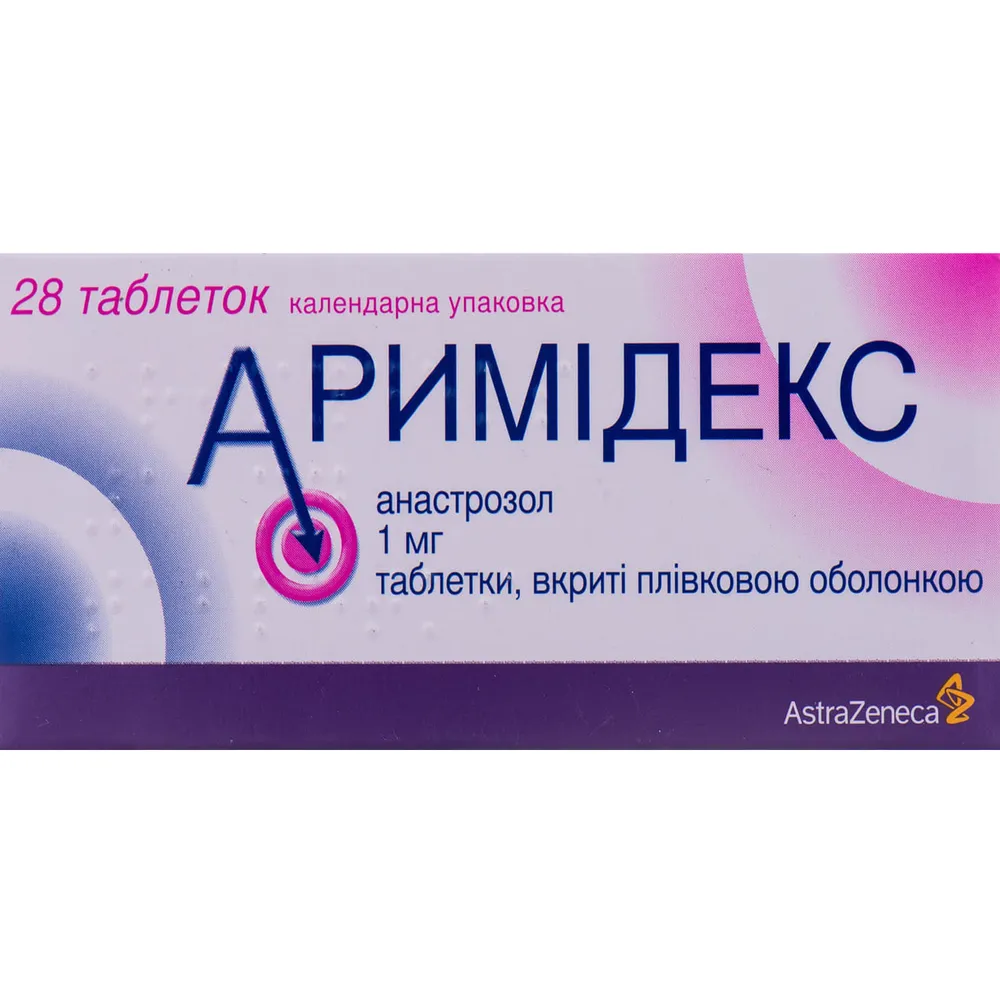
Table of Contents
INSTRUCTION FOR MEDICAL USE OF THE MEDICINAL PRODUCT AROMIDEX (ARIMIDEX)
Composition:
Active substance: anastrozole;
1 film-coated tablet contains 1 mg of anastrozole;
Excipients: lactose monohydrate; povidone; sodium starch glycolate (type A); magnesium stearate; film coating: hypromellose, macrogol 300, titanium dioxide (E 171).
Pharmaceutical form. Film-coated tablets.
Main physicochemical properties: round, white, biconvex film-coated tablets. Tablets are engraved.
Pharmacotherapeutic group. Hormone antagonists and related agents. Aromatase inhibitors. ATC code: L02BG03.
Pharmacological Properties
Pharmacodynamics
Mechanism of Action and Pharmacodynamic Effects
Arimidex is a potent, highly selective, non-steroidal aromatase inhibitor. In postmenopausal women, estradiol is primarily produced through the conversion of androstenedione to estrone in peripheral tissues by the aromatase enzyme complex. Estrone is then converted to estradiol. Reduction of circulating estradiol levels has been shown to have a therapeutic effect in women with breast cancer. In postmenopausal women, administration of Arimidex at a daily dose of 1 mg resulted in a reduction of estradiol levels by more than 80%, as confirmed by a highly sensitive assay.
Arimidex has no progestogenic, androgenic, or estrogenic activity.
Arimidex at daily doses up to 10 mg does not affect the secretion of cortisol or aldosterone, as measured before and after a standard adrenocorticotropic hormone (ACTH) stimulation test. Therefore, there is no need for corticosteroid replacement therapy.
Clinical Efficacy and Safety
Advanced Breast Cancer
First-line therapy in postmenopausal women with advanced breast cancer
Two double-blind, controlled clinical trials with similar designs (study 1033IL/0030 and study 1033IL/0027) were conducted to evaluate the efficacy of Arimidex compared to tamoxifen as first-line therapy for locally advanced or metastatic breast cancer with positive or unknown hormone receptor status in postmenopausal women. A total of 1021 patients were randomized to receive either Arimidex 1 mg once daily or tamoxifen 20 mg once daily. Primary endpoints in both studies were time to tumor progression, objective tumor response rate, and safety.
Evaluation of the primary endpoints in study 1033IL/0030 demonstrated that Arimidex had a statistically significant advantage over tamoxifen in terms of time to tumor progression (hazard ratio (HR) 1.42; 95% confidence interval (CI) [1.11; 1.82]; median time to progression 11.1 months for Arimidex vs. 5.6 months for tamoxifen; p = 0.006). The objective tumor response rate was similar between Arimidex and tamoxifen. Study 1033IL/0027 showed that the objective tumor response rate and time to tumor progression were similar for Arimidex and tamoxifen. Secondary endpoint results supported the findings of the primary efficacy endpoints. The relatively low mortality rate in the treatment groups of both studies did not allow conclusions to be drawn regarding differences in overall survival.
Second-line therapy in postmenopausal women with advanced breast cancer
Arimidex was evaluated in two controlled clinical trials (study 0004 and study 0005) involving postmenopausal women with advanced breast cancer whose disease had progressed after tamoxifen treatment for either advanced or early-stage breast cancer. A total of 764 patients were randomized to receive Arimidex 1 mg or 10 mg once daily or megestrol acetate 40 mg four times daily. Time to progression and objective response rate were the primary efficacy endpoints. Additional parameters included the rate of prolonged disease stabilization (more than 24 weeks), progression rate, and overall survival. In both studies, no significant differences between treatment groups were observed for any of the efficacy parameters.
Adjuvant treatment of early-stage hormone receptor-positive invasive breast cancer
In a large phase III trial involving 9366 postmenopausal women with operable breast cancer treated over 5 years (see below), Arimidex demonstrated statistically superior disease-free survival compared to tamoxifen. Significantly greater benefits in disease-free survival were observed in favor of Arimidex compared to tamoxifen in the prospectively defined population with hormone receptor-positive tumors.
Table 1
Summary of endpoints from the ATAC trial: analysis after completion of 5 years of treatment
| Efficiency endpoints |
Number of events (frequency) |
|||
| ITT population (intention-to-treat population) |
Tumour with positive hormone receptor status |
|||
| Anastrozole |
Tamoxifen |
Anastrozole |
Tamoxifen |
|
| Disease-free survivala |
575 (18.4) |
651 (20.9) |
424 (16.2) |
497 (19.1) |
| Hazard ratio |
0.87 |
0.83 |
||
| Two-sided 95% CI |
0.78 – 0.97 |
0.73 – 0.94 |
||
| p-value |
0.0127 |
0.0049 |
||
| Metastasis-free survivalb |
500 (16.0) |
530 (17.0) |
370 (14.1) |
394 (15.2) |
| Hazard ratio |
0.94 |
0.93 |
||
| Two-sided 95% CI |
0.83 – 1.06 |
0.80 – 1.07 |
||
| p-value |
0.2850 |
0.2838 |
||
| Time to recurrencec |
402 (12.9) |
498 (16.0) |
282 (10.8) |
370 (14.2) |
| Hazard ratio |
0.79 |
0.74 |
||
| Two-sided 95% CI |
0.70 – 0.90 |
0.64 – 0.87 |
||
| p-value |
0.0005 |
0.0002 |
||
| Time to metastatic recurrenced |
324 (10.4) |
375 (12.0) |
226 (8.6) |
265 (10.2) |
| Hazard ratio |
0.86 |
0.84 |
||
| Two-sided 95% CI |
0.74 – 0.99 |
0.70 – 1.00 |
||
| p-value |
0.0427 |
0.0559 |
||
| Contralateral primary breast cancer |
35 (1.1) |
59 (1.9) |
26 (1.0) |
54 (2.1) |
| Hazard ratio |
0.59 |
0.47 |
||
| Two-sided 95% CI |
0.39 – 0.89 |
0.30 – 0.76 |
||
| p-value |
0.0131 |
0.0018 |
||
| Overall survivale |
411 (13.2) |
420 (13.5) |
296 (11.3) |
301 (11.6) |
| Hazard ratio |
0.97 |
0.97 |
||
| Two-sided 95% CI |
0.85 – 1.12 |
0.83 – 1.14 |
||
| p-value |
0.7142 |
0.7339 |
||
aDisease-free survival includes all recurrence events and is defined as the first occurrence of local or regional recurrence, contralateral new primary breast cancer, distant recurrence, or death (from any cause).
bMetastasis-free survival is defined as the first occurrence of metastatic recurrence or death (from any cause).
cTime to recurrence is defined as the first occurrence of local or regional recurrence, contralateral new primary breast cancer, distant recurrence, or death due to breast cancer.
dTime to metastatic recurrence is defined as the first occurrence of metastatic recurrence or death due to breast cancer.
eNumber (%) of patients who died.
The combination of anastrozole and tamoxifen did not demonstrate greater efficacy compared to tamoxifen in all patients, or in the hormone receptor-positive population. This treatment arm was discontinued from the study.
According to updated follow-up data with a median of 10 years, the long-term effects of anastrozole treatment compared to tamoxifen are consistent with the previous analysis.
Adjuvant treatment of early-stage, hormone receptor-positive invasive breast cancer in postmenopausal women who have received prior adjuvant tamoxifen therapy
In a Phase III clinical trial (Austrian Breast and Colorectal Cancer Study Group [ABCSG] 8) involving 2,579 postmenopausal women with early-stage, hormone receptor-positive breast cancer who had undergone surgery with or without radiotherapy but had not received chemotherapy (see below), disease-free survival was statistically superior in the group switched to anastrozole after 2 years of adjuvant tamoxifen compared to the group continuing tamoxifen, after a median follow-up period of 24 months.
Table 2
Summary table of endpoints and results from the ABCSG 8 study
| Final efficacy outcomes |
Number of events (frequency) |
|
| Arimidex |
Tamoxifen |
|
| Disease-free survival |
65 (5.0) |
93 (7.3) |
| Hazard ratio |
0.67 |
|
| Two-sided 95% CI |
0.49 – 0.92 |
|
| p-value |
0.014 |
|
| Time to any recurrence |
36 (2.8) |
66 (5.1) |
| Hazard ratio |
0.53 |
|
| Two-sided 95% CI |
0.35 – 0.79 |
|
| p-value |
0.002 |
|
| Time to recurrence with metastasis |
22 (1.7) |
41 (3.2) |
| Hazard ratio |
0.52 |
|
| Two-sided 95% CI |
0.31 – 0.88 |
|
| p-value |
0.015 |
|
| New contralateral breast cancer |
7 (0.5) |
15 (1.2) |
| Hazard ratio |
0.46 |
|
| Two-sided 95% CI |
0.19 – 1.13 |
|
| p-value |
0.090 |
|
| Overall survival |
43 (3.3) |
45 (3.5) |
| Hazard ratio |
0.96 |
|
| Two-sided 95% CI |
0.63 – 1.46 |
|
| p-value |
0.840 |
|
Two further similar studies (GABG/ARNO 95 and ITA), one of which included patients who received surgical treatment and chemotherapy, as well as a combined analysis of the ABCSG 8 and GABG/ARNO 95 trials, confirm these results.
The safety profile of Arimidex in these three studies was consistent with the safety profile established in postmenopausal women with hormone receptor-positive early breast cancer.
Bone Mineral Density (BMD)
In a Phase III/IV study (Study of Anastrozole with the Bisphosphonate Risedronate [SABRE]), 234 postmenopausal women with hormone receptor-positive early breast cancer scheduled to receive Arimidex at a dose of 1 mg/day were stratified into low-, medium-, and high-risk groups based on their existing risk of osteoporotic fracture. The primary efficacy parameter was the analysis of lumbar spine bone mineral density using DEXA scanning. All patients received vitamin D and calcium. Patients in the low-risk group received Arimidex alone (N = 42), patients in the medium-risk group were randomized to receive either Arimidex plus risedronate 35 mg once weekly (N = 77) or Arimidex plus placebo (N = 77), and patients in the high-risk group received Arimidex plus risedronate 35 mg once weekly (N = 38). The primary endpoint was the change in lumbar spine bone mineral density at 12 months compared to baseline.
The primary analysis at 12 months showed no reduction in bone mineral density (assessed by DEXA scanning of lumbar spine BMD) in medium- and high-risk patients treated with Arimidex 1 mg/day in combination with risedronate 35 mg once weekly. Additionally, a non-statistically significant decrease in BMD was observed in the low-risk group treated with Arimidex 1 mg/day alone. These results were mirrored by a secondary efficacy endpoint—the change in total hip BMD at 12 months compared to baseline.
This study demonstrates that bisphosphonates should be considered for use in postmenopausal women with early breast cancer treated with Arimidex who are at risk of decreased bone mineral density.
Pharmacokinetics.
Absorption
Anastrozole is rapidly absorbed, with peak plasma concentrations usually reached within 2 hours (fasting state). Food slightly slows the rate but not the extent of absorption. The minor changes in absorption rate do not have a clinically significant impact on steady-state plasma concentrations when Arimidex tablets are administered once daily. Approximately 90–95% of steady-state plasma concentrations of anastrozole are achieved after 7 days of daily dosing, with accumulation being 3–4-fold. There is no evidence of time- or dose-dependent changes in the pharmacokinetic parameters of anastrozole.
The pharmacokinetics of anastrozole are independent of age in postmenopausal women.
Distribution
Only 40% of anastrozole is bound to plasma proteins.
Elimination
Anastrozole is eliminated slowly, with a plasma elimination half-life of 40–50 hours. Anastrozole is extensively metabolized in postmenopausal women, with less than 10% of the dose excreted unchanged in urine within 72 hours after administration. The metabolism of anastrozole occurs via N-dealkylation, hydroxylation, and glucuronidation. Metabolites are primarily excreted in urine. Triazole, the major metabolite in plasma, does not inhibit aromatase.
Renal or Hepatic Impairment
Compared to matched controls, the apparent clearance (CL/F) of anastrozole after oral administration was approximately 30% lower in volunteers with compensated liver cirrhosis (Study 1033IL/0014). However, plasma concentrations of anastrozole in volunteers with liver cirrhosis were within the range observed in healthy subjects from other studies. Plasma concentrations of anastrozole observed in long-term efficacy studies in patients with hepatic impairment were within the range of plasma concentrations observed in patients without hepatic impairment.
In Study 1033IL/0018, in volunteers with severe renal impairment (glomerular filtration rate [GFR] < 30 mL/min), the apparent clearance (CL/F) of anastrozole after oral administration was unchanged, consistent with the fact that anastrozole is primarily eliminated via metabolism. Plasma concentrations of anastrozole observed during long-term efficacy studies in patients with renal impairment were within the range of plasma concentrations observed in patients without renal impairment. Arimidex should be used with caution in patients with severe renal impairment (see sections "Dosage and Administration" and "Special Warnings and Precautions for Use").
Clinical Characteristics.
Indications.
Arimidex is indicated for:
- adjuvant treatment of early-stage hormone receptor-positive invasive breast cancer in postmenopausal women;
- adjuvant treatment of early-stage hormone receptor-positive invasive breast cancer in postmenopausal women who have received 2\–3 years of adjuvant tamoxifen therapy;
- treatment of advanced hormone receptor-positive breast cancer in postmenopausal women.
Contraindications.
Arimidex is contraindicated in patients:
- during pregnancy and breastfeeding;
- with known hypersensitivity to anastrozole or to any of the excipients.
Safety precautions.
Any unused medicinal products or waste materials should be disposed of in accordance with local requirements.
Interaction with other medicinal products and other forms of interaction.
Anastrozole inhibits CYP 1A2, 2C8/9, and 3A4 enzymes in vitro. Clinical studies using antipyrine and warfarin have demonstrated that anastrozole at a dose of 1 mg does not significantly inhibit the metabolism of antipyrine or R- and S-warfarin. These data suggest that concomitant administration of Arimidex with other medicinal products is unlikely to result in clinically significant drug interactions mediated by CYP enzymes.
The enzymes responsible for the metabolism of anastrozole have not been identified. Cimetidine, a weak non-specific inhibitor of CYP enzymes, does not affect plasma concentrations of anastrozole. Data on the effect of strong CYP inhibitors are lacking.
Review of the safety database accumulated during clinical trials has not revealed evidence of clinically significant drug interactions in patients who received Arimidex concomitantly with other commonly prescribed medications. No clinically significant interactions with bisphosphonates have been reported (see section "Pharmacological properties").
Concomitant use of tamoxifen or estrogen-containing products with Arimidex should be avoided, as this may attenuate its pharmacological effect (see sections "Special precautions for use" and "Pharmacological properties").
Special precautions for use.
General
Arimidex should not be used in premenopausal women. Menopause should be confirmed by biochemical test results (levels of luteinizing hormone [LH], follicle-stimulating hormone [FSH] and/or estradiol) in cases of uncertainty regarding the menopausal status of the patient. There are no data supporting the use of Arimidex together with luteinizing hormone-releasing hormone (LHRH) analogues.
Concomitant use of tamoxifen or estrogen-containing products with Arimidex should be avoided, as this may reduce its pharmacological effect (see sections "Interaction with other medicinal products and other forms of interaction" and "Pharmacological properties").
Effect on bone mineral density
Since Arimidex reduces circulating estrogen levels, this may lead to a decrease in bone mineral density with a possible increased risk of fracture (see section "Adverse reactions").
In women with osteoporosis or at risk of osteoporosis, bone mineral density should be assessed at the beginning of treatment and at regular intervals during treatment. If necessary, treatment or prophylaxis of osteoporosis should be initiated and the patient should be closely monitored. The use of specific agents, such as bisphosphonates, may halt further bone mineral density loss caused by Arimidex in postmenopausal women, and the appropriateness of such use should be considered (see section "Adverse reactions").
Hepatic impairment
The use of Arimidex has not been studied in patients with breast cancer and moderate or severe hepatic impairment. In patients with hepatic impairment, exposure to anastrozole may be increased (see section "Pharmacological properties"); therefore, caution is required when using Arimidex in patients with moderate or severe hepatic impairment (see section "Method of administration and dosage"). Treatment should be based on an individual assessment of benefit-risk ratio for each patient.
Renal impairment
The use of Arimidex has not been studied in patients with breast cancer and severe renal impairment. Exposure to anastrozole is not increased in patients with severe renal impairment (glomerular filtration rate [GFR] < 30 mL/min, see section "Pharmacological properties"); however, Arimidex should be used with caution in patients with severe renal impairment (see section "Method of administration and dosage").
Children
Arimidex is not indicated for use in children, as safety and efficacy have not been established in this patient group.
Arimidex should not be used in boys with growth hormone deficiency as an adjunct to growth hormone therapy. Efficacy was not demonstrated and safety was not established in the pivotal clinical trial. Since anastrozole reduces estradiol levels, Arimidex should not be used in girls with growth hormone deficiency as an adjunct to growth hormone therapy. There are no long-term safety data available for use in children.
Lactose intolerance
The product contains lactose. Patients with rare hereditary conditions such as galactose intolerance, Lapp lactase deficiency, or glucose-galactose malabsorption should not take this medicinal product.
Use during pregnancy or breastfeeding.
There are no data on the use of Arimidex in pregnant women. Animal studies have demonstrated reproductive toxicity. Arimidex is contraindicated during pregnancy (see section "Contraindications").
There are no data on the use of Arimidex during lactation. Arimidex is contraindicated during breastfeeding (see section "Contraindications").
Fertility
The effect of Arimidex on human fertility has not been studied. Animal studies have demonstrated reproductive toxicity.
Ability to affect reaction speed when driving or operating machinery.
Arimidex has no effect or has a negligible effect on the ability to drive or operate machinery. However, cases of asthenia and somnolence associated with Arimidex have been reported; therefore, caution should be exercised when driving or operating machinery if these symptoms occur.
Method of administration and dosage
Arimidex is taken orally.
The recommended dose for adults, including elderly women, is 1 tablet (1 mg) once daily.
For early-stage hormone receptor-positive invasive breast cancer in postmenopausal women, the recommended duration of adjuvant endocrine therapy is 5 years.
Renal impairment
Dose adjustment is not required in patients with mild or moderate renal impairment. Arimidex should be used with caution in patients with severe renal impairment (see sections "Special precautions" and "Pharmacological properties").
Hepatic impairment
Dose adjustment is not required in patients with mild hepatic disease. Arimidex should be used with caution in patients with moderate or severe hepatic impairment (see section "Special precautions").
Children
Arimidex is not recommended for use in children due to insufficient data on safety and efficacy (see section "Special precautions").
Overdose
Clinical experience with accidental overdose is limited. In animal studies, anastrozole demonstrated low acute toxicity. During clinical trials, various doses of Arimidex were administered: up to 60 mg as a single dose to healthy male volunteers and up to 10 mg daily to postmenopausal women with advanced breast cancer; these doses were well tolerated. A single dose of Arimidex causing life-threatening symptoms has not been established. There is no specific antidote for overdose; treatment should be symptomatic.
When managing overdose, consider the possibility that multiple substances may have been ingested. If the patient is not unconscious, vomiting may be induced. Dialysis may be beneficial since Arimidex is not highly protein-bound. General supportive care is recommended, including frequent monitoring of vital functions and careful observation of the patient.
Adverse reactions.
Table 3 presents adverse reactions observed during clinical and post-marketing studies or received as spontaneous reports. Unless otherwise stated, frequency categories were calculated based on the number of adverse reactions observed in a large Phase III study involving 9366 postmenopausal women with operable breast cancer who received adjuvant therapy for five years (Arimidex, Tamoxifen, Alone or in Combination [ATAC] trial).
The adverse reactions listed below are classified by frequency and by system organ classes (SOC). Frequency classification was performed according to the following criteria: very common (≥1/10), common (≥1/100 to <1/10), uncommon (≥1/1000 to <1/100), rare (≥1/10,000 to <1/1000), and very rare (<1/10,000). The most commonly reported adverse reactions were: headache, hot flushes, nausea, rash, arthralgia, joint stiffness, arthritis, and asthenia.
Table 3
| Adverse reactions by SOC and frequency |
||
| Metabolism and nutrition disorders |
Common |
Anorexia Hypercholesterolemia |
| Uncommon |
Hypercalcemia (with or without increased parathyroid hormone levels) |
|
| Psychiatric disorders |
Very common |
Depression |
| Nervous system disorders |
Very common |
Headache |
| Common |
Somnolence Carpal tunnel syndrome* Sensory disturbances (including paraesthesia, taste loss, and taste alterations) |
|
| Vascular disorders |
Very common |
Flushing |
| Gastrointestinal disorders |
Very common |
Nausea |
| Common |
Diarrhea Vomiting |
|
| Hepatobiliary disorders |
Common |
Elevated levels of alkaline phosphatase, alanine aminotransferase, and aspartate aminotransferase |
| Uncommon |
Elevated levels of gamma-GT and bilirubin Hepatitis |
|
| Skin and subcutaneous tissue disorders |
Very common |
Rash |
| Common |
Hair thinning (alopecia) Allergic reactions |
|
| Uncommon |
Urticaria |
|
| Rare |
Erythema multiforme Anaphylactoid reaction Skin vasculitis (including a number of reports of Henoch–Schönlein purpura)** |
|
| Very rare |
Stevens–Johnson syndrome Angioneurotic edema |
|
| Musculoskeletal and connective tissue disorders |
Very common |
Arthralgia/joint mobility disorders Arthritis Osteoporosis |
| Common |
Bone pain Myalgia |
|
| Uncommon |
Trigger finger syndrome |
|
| Reproductive system and breast disorders |
Common |
Vaginal dryness Vaginal bleeding*** |
| General disorders and administration site conditions |
Very common |
Asthenia |
*The incidence of carpal tunnel syndrome was higher in patients receiving Arimidex in clinical trials compared to those receiving tamoxifen. However, most of these cases occurred in patients with defined risk factors for developing this condition.
**Since cases of cutaneous vasculitis and Henoch-Schönlein purpura were not observed in the ATAC trial, the frequency of these events can be considered rare (from ≥0.01% to <0.1%) based on the worst-case value of the point estimate.
***Vaginal bleeding occurred commonly, primarily in patients with advanced breast cancer during the first few weeks after switching from hormonal therapy to treatment with Arimidex. If bleeding persists, further evaluation should be performed.
Table 4 presents the frequency of pre-specified adverse reactions observed during the ATAC trial (median observation period of 68 months), regardless of causality, in patients receiving the investigational treatment and within the period up to 14 days after discontinuation of therapy.
Table 4
Frequency of pre-specified adverse reactions in the ATAC trial
Adverse reactions |
Arimidex |
Tamoxifen |
| Hot flushes |
1104 (35.7 %) |
1264 (40.9 %) |
| Joint pain/stiffness |
1100 (35.6 %) |
911 (29.4 %) |
| Mood disturbances |
597 (19.3 %) |
554 (17.9 %) |
| Fatigue/asthenia |
575 (18.6 %) |
544 (17.6 %) |
| Nausea and vomiting |
393 (12.7 %) |
384 (12.4 %) |
| Fractures |
315 (10.2 %) |
209 (6.8 %) |
| Spinal, hip or wrist fractures/Colles’ fracture |
133 (4.3 %) |
91 (2.9 %) |
| Wrist fractures/Colles’ fracture |
67 (2.2 %) |
50 (1.6 %) |
| Spinal fractures |
43 (1.4 %) |
22 (0.7 %) |
| Hip fractures |
28 (0.9 %) |
26 (0.8 %) |
| Cataract |
182 (5.9 %) |
213 (6.9 %) |
| Vaginal bleeding |
167 (5.4 %) |
317 (10.2 %) |
| Ischemic heart disease |
127 (4.1 %) |
104 (3.4 %) |
| Angina pectoris |
71 (2.3 %) |
51 (1.6 %) |
| Myocardial infarction |
37 (1.2 %) |
34 (1.1 %) |
| Coronary artery disease |
25 (0.8 %) |
23 (0.7 %) |
| Myocardial ischemia |
22 (0.7 %) |
14 (0.5 %) |
| Vaginal discharge |
109 (3.5 %) |
408 (13.2 %) |
| Any venous thromboembolic event |
87 (2.8 %) |
140 (4.5 %) |
| Deep vein thrombosis, including pulmonary embolism |
48 (1.6 %) |
74 (2.4 %) |
| Ischemic cerebrovascular events |
62 (2.0 %) |
88 (2.8 %) |
| Endometrial cancer |
4 (0.2 %) |
13 (0.6 %) |
In the Arimidex and tamoxifen groups, the number of fractures observed was 22 per 1000 patient-years and 15 per 1000 patient-years, respectively (observation period with a median of 68 months). The fracture rate in the Arimidex group was similar to that observed in patients of corresponding age in the postmenopausal period. The incidence of osteoporosis was 10.5% in patients treated with Arimidex and 7.3% in patients treated with tamoxifen.
It has not been established whether the fracture rate and osteoporosis incidence observed in the ATAC trial in patients receiving Arimidex reflect the protective effect of tamoxifen, the specific effect of Arimidex, or both effects.
Reporting of suspected adverse reactions
Reporting of suspected adverse reactions after marketing authorization is important. It allows continued monitoring of the benefit/risk balance of the medicinal product. Healthcare professionals are requested to report any suspected adverse reactions.
Shelf life. 5 years.
Storage conditions. Store in the original packaging at a temperature not exceeding 30 °C. Keep out of reach and sight of children.
Packaging. 14 tablets in a blister pack, 2 blisters in a cardboard box.
Prescription status. Prescription only.
Manufacturer.
AstraZeneca UK Limited, United Kingdom.
Manufacturer's address and place of business.
Silk Road Business Park, Macclesfield, SK10 2NA, United Kingdom.