Artrokol
Ukraine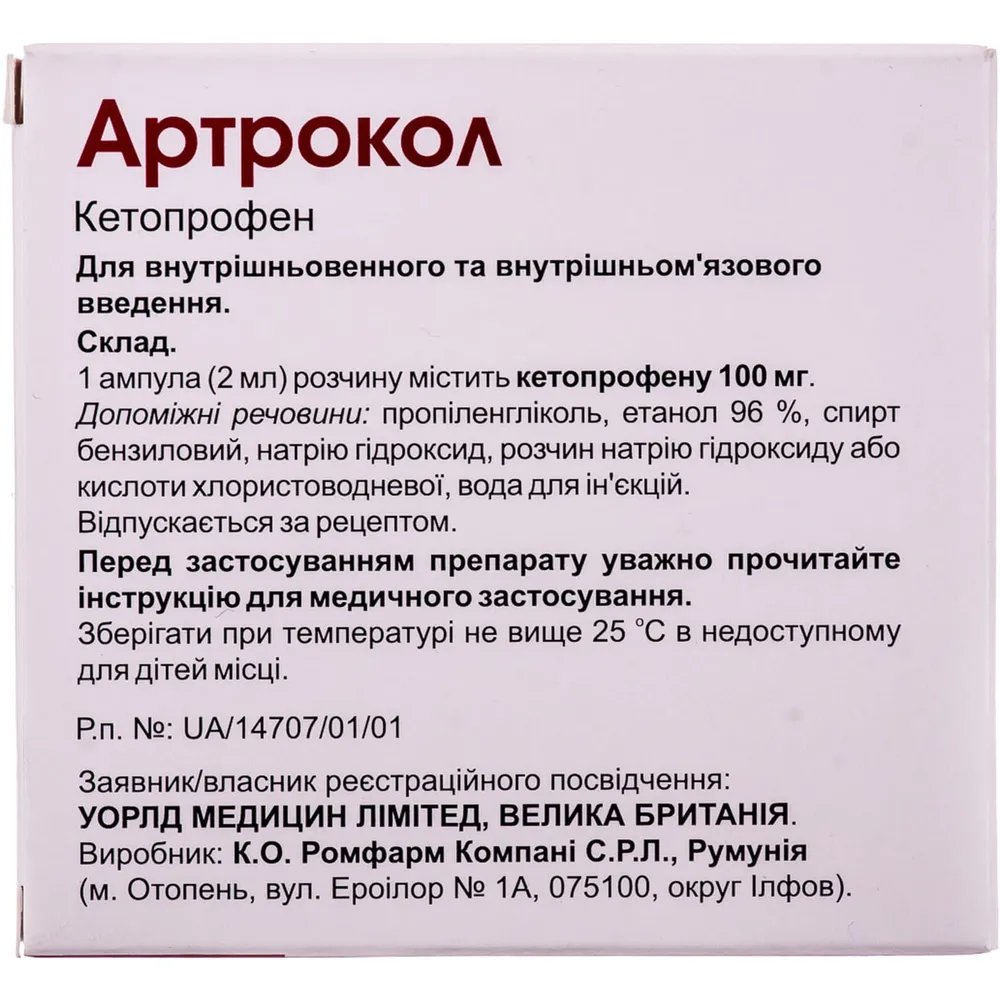
Table of Contents
INSTRUCTIONS FOR MEDICAL USE OF THE MEDICINAL PRODUCT ARTROCOL (ARTROCOL)
Composition:
Active substance: ketoprofen;
1 ampoule (2 ml) of solution contains ketoprofen 100 mg;
Excipients: propylene glycol, ethanol 96%, benzyl alcohol, sodium hydroxide, sodium hydroxide solution or hydrochloric acid, water for injections.
Pharmaceutical form. Solution for injection.
Main physico-chemical properties: clear, colorless or slightly yellowish solution.
Pharmacotherapeutic group.
Non-steroidal anti-inflammatory and antirheumatic agents. Propionic acid derivatives. Ketoprofen. ATC code M01AE03.
Pharmacological Properties
Pharmacodynamics
Ketoprofen is a nonsteroidal anti-inflammatory drug (NSAID) that exerts analgesic, anti-inflammatory, and antipyretic effects.
In inflammation, ketoprofen inhibits the synthesis of prostaglandins and leukotrienes by suppressing cyclooxygenase activity and partially lipoxygenase activity. It also inhibits bradykinin synthesis and stabilizes lysosomal membranes.
It produces central and peripheral analgesic effects and alleviates symptoms of inflammatory-degenerative disorders of the musculoskeletal system.
In women, ketoprofen reduces symptoms of primary dysmenorrhea due to inhibition of prostaglandin synthesis.
Pharmacokinetics
Absorption
In most patients, ketoprofen is detectable in blood plasma within 15 minutes after intramuscular administration, with maximum plasma concentration reached within 2 hours. The mean plasma concentration of ketoprofen is 26.4 + 5.4 µg/mL within 4–5 minutes after intravenous infusion or intramuscular injection. The bioavailability of ketoprofen in the form of injection solution is linearly dependent on the dose and amounts to 90%.
Distribution
Protein binding is 99%. The volume of distribution is 0.1–0.2 L/kg. Three hours after administration of 100 mg of ketoprofen, its concentration in blood plasma is approximately 3 µg/mL, while in synovial fluid it is 1.5 µg/mL. Although the concentration of ketoprofen in synovial fluid is somewhat lower than in blood plasma, it is more stable (after 9 hours, the concentration of ketoprofen in blood plasma is 0.3 µg/mL, while in synovial fluid it is 0.8 µg/mL), resulting in prolonged reduction of pain and joint stiffness. A steady-state concentration of ketoprofen in blood plasma is achieved within 24 hours after administration. In elderly patients, steady-state plasma concentration is reached within 8.7 hours and amounts to 6.3 µg/mL. Tissue accumulation of ketoprofen does not occur.
After intramuscular administration of 100 mg of ketoprofen, its concentration in blood plasma and cerebrospinal fluid was detected within 15 minutes. Maximum plasma concentration was achieved within 2 hours (1.3 µg/mL).
Metabolism
Ketoprofen is extensively metabolized in the liver by microsomal enzymes. It is excreted from the body in the form of a glucuronic acid conjugate.
Elimination
The elimination half-life is 2 hours. Up to 80% of the administered dose of ketoprofen is excreted in urine, predominantly (>90%) as glucuronide, and approximately 10% in feces.
Special patient populations
Patients with renal impairment
In patients with impaired renal function, elimination of ketoprofen is delayed, and the elimination half-life is prolonged by 1 hour.
Patients with hepatic impairment
In patients with impaired liver function, ketoprofen may accumulate in tissues.
Elderly patients
In elderly patients, metabolism and elimination of ketoprofen are slowed; however, this is clinically significant only in the presence of impaired renal function.
Clinical characteristics.
Indications.
- Joint diseases: rheumatoid arthritis; seronegative spondyloarthritis (ankylosing spondylitis, psoriatic arthritis, reactive arthritis); gout, pseudogout; osteoarthritis; extra-articular rheumatism (tendinitis, bursitis, shoulder capsulitis).
- Pain syndromes: lumbar pain (lumbago), post-traumatic joint and muscle pain; postoperative pain; pain associated with bone metastases of tumors; algodysmenorrhea.
Contraindications.
- Hypersensitivity to the active substance and/or to other excipients of the medicinal product.
- History of allergic reactions such as bronchospasm, asthmatic attacks, urticaria, angioedema, acute rhinitis following intake of acetylsalicylic acid or other NSAIDs.
- Chronic dyspepsia in medical history.
- Active peptic ulcer or duodenal ulcer, or gastrointestinal bleeding; history of ulcerative diseases or perforations.
- Cerebrovascular or other hemorrhages.
- Tendency to hemorrhage; hemorrhagic diathesis.
- Hemostatic disorders or concomitant use of anticoagulants.
- Severe heart failure.
- Severe hepatic dysfunction.
- Severe renal dysfunction.
- History of bronchial asthma and rhinitis.
- Treatment of perioperative pain associated with coronary artery bypass graft (CABG) surgery.
Interaction with other medicinal products and other forms of interaction.
Concomitant use of ketoprofen with the following agents is not recommended.
Other NSAIDs (including selective COX inhibitors and high-dose acetylsalicylic acid).
Concomitant use of ketoprofen with these agents increases the risk of developing gastrointestinal ulcers and bleeding.
Anticoagulants (heparin, vitamin K antagonists (e.g., warfarin), thrombin inhibitors (e.g., dabigatran), direct factor Xa inhibitors (e.g., apixaban, rivaroxaban, edoxaban), antiplatelet agents (e.g., ticlopidine, clopidogrel)).
Concomitant use of ketoprofen with these agents increases the risk of bleeding. If such combination cannot be avoided, close medical monitoring is required.
Agents that bind to plasma proteins (e.g., anticoagulants, sulfonamides, hydantoins).
Concomitant use with such agents may require dose adjustment to prevent increased plasma levels of these drugs due to competition for plasma protein binding.
Lithium.
Concomitant use with ketoprofen increases the risk of elevated plasma lithium levels, potentially up to toxic levels, due to reduced renal excretion of lithium. If concomitant use cannot be avoided, plasma lithium levels should be monitored at the beginning of treatment, during dose adjustments, and after discontinuation of NSAIDs.
Methotrexate (when administered at doses exceeding 15 mg/week).
Concomitant use with ketoprofen increases the risk of methotrexate hematological toxicity due to reduced renal clearance of methotrexate during NSAID therapy. At least 12 hours should elapse between the end or start of ketoprofen treatment and methotrexate administration.
Thrombolytic agents.
Concomitant use of ketoprofen with thrombolytic agents may increase the risk of bleeding.
Selective serotonin reuptake inhibitors (SSRIs).
Concomitant use of ketoprofen with SSRIs may increase the risk of gastrointestinal bleeding (see section "Special precautions").
Corticosteroids.
Concomitant use of ketoprofen with corticosteroids increases the risk of gastrointestinal ulceration or bleeding.
Caution is advised when using ketoprofen concomitantly with the following agents.
Diuretics.
Concomitant use of ketoprofen with diuretics increases the risk of reduced renal blood flow due to inhibition of prostaglandin synthesis, particularly in dehydrated patients. Adequate hydration and monitoring of renal function at the beginning of treatment are recommended when these agents are used together (see section "Special precautions").
ACE inhibitors and angiotensin II receptor antagonists.
Concomitant use of ketoprofen with these agents may lead to acute renal failure in high-risk patients (elderly, dehydration, combined therapy with diuretics, impaired renal function) due to decreased glomerular filtration rate (inhibition of vasodilatory prostaglandin function by NSAIDs).
Low-dose methotrexate (≤15 mg/week).
Concomitant use with ketoprofen increases the risk of methotrexate hematological toxicity (reduced renal clearance of methotrexate). Complete blood count should be monitored weekly during the first weeks of concomitant therapy. Careful monitoring of even minor changes in renal function is recommended in patients with renal impairment and in elderly patients.
Tenofovir.
Concomitant use with ketoprofen increases the risk of renal toxicity.
Nicorandil.
Concomitant use with ketoprofen increases the risk of serious complications such as gastrointestinal ulcers accompanied by perforation and bleeding (see section "Special precautions").
Cardiac glycosides.
No pharmacokinetic interaction between ketoprofen and digoxin has been observed. However, concomitant use of these agents should be performed with caution, especially in patients with renal impairment, as NSAIDs may impair renal function and reduce renal clearance of cardiac glycosides.
Pentoxifylline.
Concomitant use with ketoprofen increases the risk of bleeding. Monitoring of the coagulation system is recommended when these agents are used together.
The necessity of concomitant use of ketoprofen with the following agents should be carefully considered.
Antihypertensive agents (beta-blockers, ACE inhibitors, diuretics).
Concomitant use with ketoprofen may reduce the effectiveness of these agents (due to inhibition of prostaglandin synthesis).
Cyclosporine, tacrolimus.
Concomitant use of ketoprofen with these agents may increase the risk of additive nephrotoxic effects, particularly in elderly patients.
Probenecid.
Concomitant use with probenecid may significantly reduce the plasma clearance of ketoprofen.
Mifepristone.
The efficacy of mifepristone may be reduced when used concomitantly with NSAIDs. NSAIDs, including ketoprofen, should be administered 8–12 days after completion of mifepristone treatment.
Oral antidiabetic agents, antiepileptic agents (phenytoin).
The effects of these agents may be enhanced when used concomitantly with ketoprofen.
Risk of hyperkalemia.
Certain medicinal products, such as potassium salts, diuretics, angiotensin-converting enzyme (ACE) inhibitors, angiotensin II receptor blockers, NSAIDs, heparins (low molecular weight or unfractionated), cyclosporine, tacrolimus, and trimethoprim, may cause hyperkalemia.
The development of hyperkalemia may depend on the presence of additional risk factors. The risk of hyperkalemia increases with concomitant use of ketoprofen and the above-mentioned medicinal products.
Risk associated with use of antiplatelet medicinal products.
Several medicinal products may cause interactions due to inhibition of platelet aggregation. These include acetylsalicylic acid and other nonsteroidal anti-inflammatory drugs, ticlopidine, clopidogrel, tirofiban, eptifibatide, abciximab, and iloprost.
Special precautions for use.
Adverse effects of ketoprofen can be minimized by using the lowest effective dose for the shortest duration necessary to control symptoms.
The medicinal product should be used with caution in patients who are concurrently taking agents that may increase the risk of ulceration or bleeding, namely oral corticosteroids, anticoagulants (e.g., warfarin), SSRIs, or antiplatelet agents such as acetylsalicylic acid, as well as nicorandil (see section "Interaction with other medicinal products and other forms of interaction").
Concomitant use of the medicinal product with other NSAIDs, including selective COX-2 inhibitors, should be avoided.
Cases of gastrointestinal bleeding, ulceration, or perforation (sometimes fatal) have been reported with the use of all NSAIDs at various stages of treatment, regardless of the presence of preceding symptoms or history of serious gastrointestinal disorders.
According to epidemiological data, ketoprofen may be associated with an increased risk of severe gastrointestinal adverse reactions compared to some other NSAIDs, especially when administered at high doses (see section "Contraindications").
The risk of gastrointestinal bleeding, ulceration, or perforation increases with higher NSAID doses, in patients with a history of peptic ulcer, particularly if complicated by bleeding or perforation (see section "Contraindications"), and in elderly patients. In such cases, treatment should be initiated with the lowest possible dose of ketoprofen. For these patients and for patients taking low-dose acetylsalicylic acid or other agents increasing the risk of gastrointestinal adverse effects, concomitant therapy with protective agents such as misoprostol or proton pump inhibitors should be considered (see below and section "Interaction with other medicinal products and other forms of interaction").
Patients, especially elderly ones, with a history of gastrointestinal adverse reactions should be advised to inform their physician about any unusual gastrointestinal symptoms (particularly gastrointestinal bleeding), especially during the initial stages of treatment.
If gastrointestinal bleeding occurs, the medicinal product should be discontinued. Bleeding and perforation may occur without preceding symptoms.
Elderly patients have a higher frequency of adverse reactions to NSAIDs, including gastrointestinal bleeding and perforation, which may be fatal.
The medicinal product should be used with caution in patients with a history of gastrointestinal disorders (ulcerative colitis, Crohn’s disease), as there is a risk of exacerbation (see section "Adverse reactions").
During NSAID use, very rare cases of serious skin reactions (some fatal), including exfoliative dermatitis, Stevens–Johnson syndrome, and Lyell’s syndrome, have been reported (see section "Adverse reactions"). The highest risk of these reactions occurs at the beginning of treatment. In most patients, they develop within the first month of therapy. If skin rashes, signs of mucosal involvement, or other symptoms of hypersensitivity occur, the medicinal product should be discontinued.
Clinical studies and epidemiological data suggest that the use of some NSAIDs (especially at high doses and for prolonged periods) may increase the risk of arterial thrombosis (e.g., myocardial infarction or stroke). Data to exclude such risk with ketoprofen use are insufficient.
At the start of treatment, monitoring of renal function is recommended in elderly patients, patients with heart failure, liver cirrhosis, nephritis, chronic renal insufficiency, and in patients taking diuretics. In such patients, ketoprofen use may reduce renal blood flow due to inhibition of the vasodilatory effect of renal prostaglandins, potentially leading to renal decompensation.
An increased risk of arterial thrombosis has been observed in patients who used NSAIDs (except acetylsalicylic acid) to manage postoperative pain after coronary artery bypass grafting.
Patients with arterial hypertension and/or mild to moderate heart failure require careful medical supervision, as fluid retention and edema may occur during NSAID treatment.
The medicinal product should be administered only after careful evaluation in patients with uncontrolled arterial hypertension, chronic heart failure, established ischemic heart disease, peripheral arterial disease, and/or cerebrovascular disease. Before initiating long-term treatment, patients with risk factors such as hyperlipidemia, diabetes, or smoking should also undergo thorough evaluation.
Ketorolac may mask symptoms of infectious diseases, potentially delaying appropriate treatment and thereby complicating disease progression. This has been observed in bacterial community-acquired pneumonia and bacterial complications of varicella. When the medicinal product is used for fever or pain relief during infection, monitoring for infection is recommended. In outpatient settings, patients should consult a physician if symptoms persist or worsen.
The use of the medicinal product should be discontinued before major surgical procedures.
Periodic monitoring of transaminase levels is necessary in patients with impaired liver function or a history of liver disease, especially during prolonged treatment.
Ketoprofen use may reduce female fertility; therefore, the medicinal product is not recommended for women planning pregnancy. Women experiencing fertility problems or undergoing infertility evaluation should consider discontinuing ketoprofen use.
Patients suffering from asthma combined with chronic rhinitis, chronic sinusitis, and/or nasal polyps are at higher risk of allergy to acetylsalicylic acid and/or NSAIDs compared to other patients. The use of the medicinal product may trigger asthma attacks or bronchospasm, particularly in patients allergic to acetylsalicylic acid or NSAIDs.
The medicinal product should be used with caution in patients with coagulation disorders, hemophilia, von Willebrand disease, severe thrombocytopenia, renal or hepatic insufficiency, and in individuals taking anticoagulants (coumarin derivatives and heparin, particularly low-molecular-weight heparins).
Careful monitoring of diuresis and renal function is required during use of the medicinal product in patients with hepatic dysfunction, patients receiving diuretics, and in patients with hypovolemia following major surgery, especially in the elderly.
The relative risk of gastrointestinal bleeding is higher in patients with low body weight. If gastrointestinal bleeding or ulceration occurs, the medicinal product should be discontinued immediately.
During prolonged use of the medicinal product, blood cell counts, as well as liver and kidney function, should be monitored. The dose of ketoprofen should be adjusted when creatinine clearance is below 0.33 mL/s (20 mL/min).
For severe pain, the medicinal product may be used concomitantly with intravenous morphine.
Hyperkalemia may occur during ketoprofen use, particularly in patients with diabetes, renal insufficiency, and/or concomitant therapy with agents that promote hyperkalemia. In such cases, regular monitoring of plasma potassium levels is recommended.
Warnings related to excipients.
Each ampoule of the medicinal product contains 8 vol.% ethanol, i.e., 197.2 mg per dose, equivalent to 4 mL of beer or 1.6 mL of wine. The medicinal product may adversely affect individuals suffering from alcoholism and should be used with caution in such patients. The ethanol content should be considered when using the medicinal product during the first and second trimesters of pregnancy, during breastfeeding, in children, and in patients at risk, e.g., those with liver disease or epilepsy.
The medicinal product contains less than 1 mmol of sodium (23 mg) per dose, i.e., practically sodium-free.
The medicinal product contains 800 mg of propylene glycol in 1 ampoule (2 mL), corresponding to 400 mg/mL.
The medicinal product contains 40 mg of benzyl alcohol in 1 ampoule, which may cause allergic reactions. In large amounts, it may also accumulate in the body and lead to adverse reactions (metabolic acidosis).
Use during pregnancy or breastfeeding.
Pregnancy.
The safety of ketoprofen use during pregnancy has not been established. Therefore, use of the medicinal product during the first and second trimesters of pregnancy is possible only if absolutely necessary, when the expected benefit to the mother outweighs the potential risk to the fetus. Use of the medicinal product during the third trimester of pregnancy is contraindicated.
Inhibition of prostaglandin synthesis may adversely affect pregnancy and/or fetal development. According to epidemiological studies, use of drugs that inhibit prostaglandin synthesis during early pregnancy increases the risk of miscarriage and congenital heart defects and abdominal wall defects in the fetus. The absolute risk of cardiovascular malformations increases from <1% to approximately 1.5%. The risk of such events is considered to increase with higher doses and longer duration of therapy. In animal studies, prostaglandin synthesis inhibitors caused increased pre- and post-implantation losses and increased embryofetal mortality. Furthermore, in animals treated with prostaglandin synthesis inhibitors during organogenesis, a higher incidence of fetal malformations, including cardiovascular anomalies, was observed.
Use of ketoprofen from the 20th week of pregnancy may cause oligohydramnios due to fetal renal dysfunction. This may occur soon after starting treatment and is usually reversible upon discontinuation of the drug. Additionally, cases of arterial duct constriction after treatment during the second trimester have been reported, most of which resolved after stopping treatment.
Use of the medicinal product during the first and second trimesters of pregnancy is possible only if absolutely necessary. If ketoprofen is used in women planning pregnancy or during the first and second trimesters of pregnancy, the lowest possible dose and shortest duration of treatment should be observed.
Fetal monitoring for oligohydramnios and arterial duct constriction should be considered if ketoprofen is used for several days starting from the 20th gestational week. The medicinal product should be discontinued if oligohydramnios or arterial duct constriction is detected.
During the third trimester of pregnancy, use of any prostaglandin synthesis inhibitors may affect the fetus as follows:
- cardiopulmonary toxicity (premature constriction/closure of the arterial duct and pulmonary hypertension);
- impaired renal function, which may progress to renal failure with oligohydramnios (see above);
and may affect the mother and fetus near term:
- possible prolongation of bleeding time, reduced platelet aggregation, even with very low doses;
- inhibition of uterine contractility, potentially leading to prolonged labor.
Use of the medicinal product during the third trimester of pregnancy is contraindicated.
Period of breastfeeding.
Data on the excretion of ketoprofen into breast milk are lacking. The medicinal product is not recommended during breastfeeding, as the safety of ketoprofen during lactation has not been established.
Ability to affect reaction speed when driving or operating machinery.
Until individual response to the medicinal product is determined (dizziness, drowsiness, seizures, and visual disturbances may occur), refraining from driving or operating machinery is recommended.
Method of Administration and Dosage
The medicinal product is intended for intravenous and intramuscular administration.
Dosage should be individually adjusted depending on the patient's condition and response to treatment.
Intramuscular administration.
The medicinal product should be administered at a dose of 100 mg (1 ampoule) once or twice daily. The maximum daily dose should not exceed 200 mg.
If necessary, intramuscular administration may be supplemented with oral or rectal formulations of ketoprofen.
Intravenous administration.
The medicinal product should be administered as an infusion only in a hospital setting. The infusion should be given over 0.5–1 hour. The treatment course with intravenous administration should not exceed 48 hours. The maximum daily dose is 200 mg.
Intermittent intravenous infusion: 100–200 mg of ketoprofen should be dissolved in 100 mL of 0.9% sodium chloride solution and administered over 0.5–1 hour. The maximum daily dose is 200 mg.
Continuous intravenous infusion: 100–200 mg of ketoprofen should be dissolved in 500 mL of infusion solution (0.9% sodium chloride solution, Ringer's lactate solution, glucose solution) and administered over 8 hours. The maximum daily dose is 200 mg.
Warning: infusion bottles should be wrapped in dark paper or aluminum foil, as ketoprofen is sensitive to light.
Tramadol and ketoprofen should be administered separately, as mixing may result in precipitate formation.
The duration of treatment depends on the severity and course of the disease; however, adverse reactions to ketoprofen can be minimized by using the lowest effective dose for the shortest possible duration (see section "Special Warnings and Precautions for Use").
To prevent the negative effects of ketoprofen on gastrointestinal mucosa, antacid agents may be used concomitantly.
Concomitant use with other medicinal products.
Ketoprofen may be used together with centrally-acting analgesics; it may be mixed with morphine in the same bottle: 10–20 mg of morphine and 100–200 mg of ketoprofen should be dissolved in 500 mL of infusion solution (0.9% sodium chloride solution or Ringer's lactate solution). The maximum daily dose is 200 mg.
Special patient populations.
Elderly patients.
In elderly patients, the risk of adverse reactions to ketoprofen is increased. After 4 weeks of treatment initiation, patients should be monitored for signs of gastrointestinal bleeding. Treatment should be initiated with the lowest dose to maintain patients on the lowest effective dose.
Patients with renal impairment.
In patients with moderate renal impairment and creatinine clearance less than 0.33 mL/s (20 mL/min), the dose of ketoprofen should be reduced. Ketoprofen is contraindicated in patients with severe renal impairment.
Patients with hepatic impairment.
In patients with chronic liver disease and reduced plasma albumin levels, the dose of ketoprofen should be reduced. Ketoprofen is contraindicated in patients with severe hepatic impairment.
Children.
The medicinal product should not be used in children under 18 years of age.
Overdose.
Symptoms: headache, drowsiness, nausea, vomiting, epigastric pain, hematemesis, diarrhea, black stools, impaired consciousness, respiratory depression, apnea, seizures, dizziness, arterial hypotension, decreased renal function, renal failure, gastrointestinal bleeding.
Treatment.
In case of overdose, immediate hospitalization and treatment are required: gastric lavage and administration of activated charcoal. Further therapy should be symptomatic. H2-receptor antagonists, proton pump inhibitors, and prostaglandins may alleviate the harmful gastrointestinal effects of ketoprofen. There is no specific antidote.
Adverse Reactions.
Adverse reactions of ketoprofen are classified as follows: very common (≥1/10); common (from ≥1/100 to <1/10); uncommon (from ≥1/1,000 to <1/100); rare (from ≥1/10,000 to <1/1,000); very rare (<1/10,000); not known (frequency cannot be estimated from available data).
Adverse reactions are usually transient. Gastrointestinal disorders are the most frequently observed.
Blood and lymphatic system disorders:
Uncommon – haemorrhagic anaemia, haemolysis, purpura, thrombocytopenia, agranulocytosis, leukopenia; not known – haemolytic anaemia.
High doses of ketoprofen may inhibit platelet aggregation, thereby prolonging bleeding time, and may cause epistaxis and bruising.
Immune system disorders:
Rare – exacerbation of bronchial asthma; not known – bronchospasm or dyspnoea (especially in patients with hypersensitivity to acetylsalicylic acid and other NSAIDs), angioneurotic oedema and anaphylaxis, anaphylactic reactions including shock.
Metabolism and nutrition disorders:
Not known – hyponatraemia, hyperkalaemia (see sections "Special precautions for use" and "Interaction with other medicinal products and other forms of interaction").
Psychiatric disorders:
Common – depression, nervousness, nightmares, somnolence; rare – delirium with visual and auditory hallucinations, disorientation, speech disturbances, mood changes.
Nervous system disorders:
Uncommon – headache, asthenia, discomfort, increased fatigue, weakness, somnolence; rare – paraesthesia; not known – aseptic meningitis, convulsions, dizziness; isolated cases of pseudotumour cerebri have been reported.
Eye disorders:
Common – visual disturbances (see section "Special precautions for use"); rare – blurred vision, conjunctivitis.
Ear and labyrinth disorders:
Common – tinnitus.
Cardiovascular disorders:
Common – oedema; uncommon – heart failure, arterial hypertension; not known – vasculitis (including leukocytoclastic vasculitis).
Clinical studies and epidemiological data suggest that the use of certain NSAIDs (particularly at high doses and with long-term treatment) may be associated with a small increase in the risk of arterial thrombotic events (e.g., myocardial infarction, stroke). There are insufficient data to exclude such a risk with the use of ketoprofen (see section "Special precautions for use").
Respiratory, thoracic and mediastinal disorders:
Uncommon – haemoptysis, dyspnoea, pharyngitis, rhinitis, bronchospasm (particularly in patients with hypersensitivity to acetylsalicylic acid or other NSAIDs), laryngeal oedema (signs of anaphylactic reaction); rare – bronchial asthma attacks.
Gastrointestinal disorders:
Very common – dyspepsia; common – nausea, abdominal pain, diarrhoea, constipation, flatulence, anorexia, vomiting, stomatitis, gastritis;
not known – colitis, intestinal perforation (as a complication of diverticulosis), melaena, haematemesis, stomatitis, gastric or duodenal ulcer, exacerbation of ulcerative colitis or Crohn's disease, enteropathy with perforation, stenosis, pancreatitis. Peptic ulcers, perforation or gastrointestinal haemorrhage may occur. Enteropathy may be associated with mild bleeding and protein loss. Discomfort in the gastrointestinal tract, stomach pain, and rarely colitis have been observed.
There have been reports of rectal perforation in an elderly woman.
Ulceration, haemorrhage or perforation may develop in 1% of patients after 3–6 months of treatment or in 2–4% of patients after 1 year of treatment with NSAIDs.
Hepatobiliary disorders:
Not known – severe liver function disorders associated with jaundice and hepatitis.
Skin and subcutaneous tissue disorders:
Common – skin rashes, pruritus; uncommon – alopecia, eczema, purpuric-like rashes, increased sweating, urticaria, exacerbation of chronic urticaria, exfoliative dermatitis; rare – photosensitivity, photo dermatitis; not known – bullous reactions including Stevens–Johnson syndrome and toxic epidermal necrolysis, acute generalized exanthematous pustulosis.
Renal and urinary disorders:
Not known – acute renal failure, interstitial nephritis, nephrotic syndrome, acute pyelonephritis, organic kidney damage, acute tubular necrosis, acute papillary necrosis; fluid/sodium retention, hyperkalaemia (see sections "Special precautions for use" and "Interaction with other medicinal products and other forms of interaction").
Reproductive system disorders:
Uncommon – menometrorrhagia.
Laboratory findings:
Very common – liver transaminase (ALT, AST) levels outside the normal range, increased plasma bilirubin levels.
General disorders and administration site conditions:
Uncommon – burning sensation and/or pain at injection site, oedema; not known – injection site reaction known as Nicolau syndrome.
Ketoprofen reduces platelet aggregation, thereby prolonging bleeding time.
Reporting of suspected adverse reactions
Reporting of suspected adverse reactions that occur after marketing authorization is important. This allows continued monitoring of the benefit-risk balance of the medicinal product. Healthcare professionals should report any suspected adverse reactions via the national pharmacovigilance system.
Shelf life.
3 years.
Storage conditions.
Store at temperatures not exceeding 25°C, in a place inaccessible to children.
Incompatibilities.
Tramadol and ketoprofen should not be mixed in the same vial due to precipitate formation.
Packaging.
2 ml solution in a glass ampoule; 5 ampoules in a blister pack; 1 or 2 blister packs in a cardboard box.
Prescription status.
Prescription only.
Manufacturer.
K.O. Rompharm Company S.R.L., Romania / S.C. Rompharm Company S.R.L., Romania.
Manufacturer's address and place of business.
Otopeni city, Eroilor str. № 1A, 075100, jud. Ilfov, Romania.
Marketing Authorization Holder.
LLC "WORLD MEDICINE", Ukraine / WORLD MEDICINE LLC, Ukraine.