Armadin
Ukraine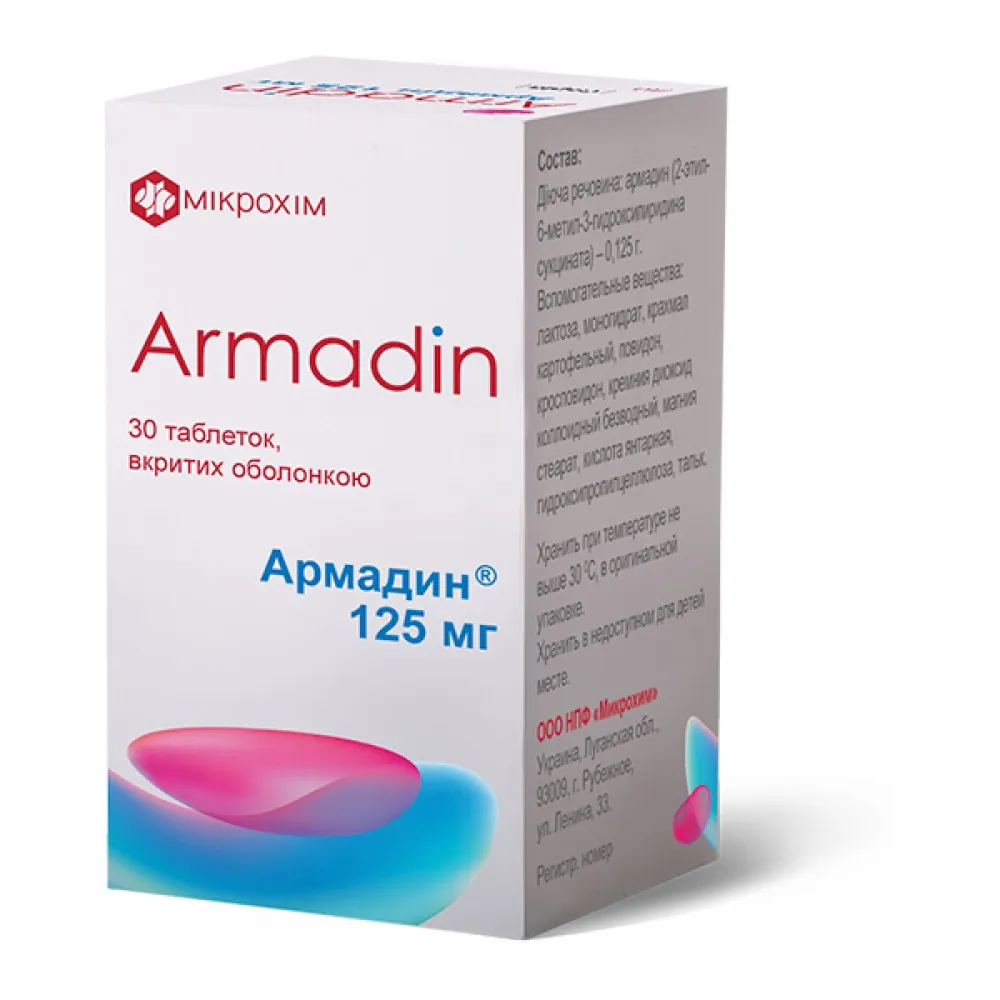
Table of Contents
- INSTRUCTIONS FOR MEDICAL USE OF THE MEDICINAL PRODUCT ARMADEEN® (ARMADIN)
- Composition:
- Pharmacological Properties.
- Clinical characteristics.
- Special precautions for use.
- Administration and Dosage
- Adverse Reactions.
- Composition:
- Pharmacological Properties
- Clinical characteristics.
- Special precautions for use.
- Method of Administration and Dosage.
- Side effects.
INSTRUCTIONS FOR MEDICAL USE OF THE MEDICINAL PRODUCT ARMADEEN® (ARMADIN)
Composition:
Active substance: armadin (2-ethyl-6-methyl-3-hydroxypyridine succinate);
1 tablet contains armadin (2-ethyl-6-methyl-3-hydroxypyridine succinate) 125 mg;
Excipients: lactose monohydrate; potato starch; povidone; crospovidone; colloidal anhydrous silicon dioxide; magnesium stearate; succinic acid; hydroxypropylcellulose; talc; titanium dioxide (E 171); hydroxypropylmethylcellulose.
Pharmaceutical form. Film-coated tablets.
Basic physico-chemical properties. Tablets are white or white with a creamy shade, with a biconvex smooth surface, coated with a film layer.
Pharmacotherapeutic group. ATC code.
Agents affecting the nervous system. ATC code N07X X.
Pharmacological Properties.
Pharmacodynamics.
Ethylmethylhydroxypyridine succinate belongs to heteroaromatic antioxidants. It has a broad spectrum of pharmacological activity: enhances the body's resistance to stress, exerts an anxiolytic effect without causing drowsiness or muscle relaxation; possesses nootropic properties, prevents and reduces memory impairments associated with aging and various pathogenic factors; exhibits anticonvulsant, antioxidant, and antihypoxic effects; improves attention and work performance; alleviates the toxic effects of alcohol. The drug enhances brain tissue metabolism and blood supply, improves microcirculation and blood rheological properties, reduces platelet aggregation. It stabilizes membrane structures of blood cells (erythrocytes and platelets); reduces total cholesterol and low-density lipoprotein levels.
The mechanism of action is due to its antioxidant and membrane-protective activity. It inhibits lipid peroxidation, increases superoxide dismutase activity, improves the lipid-protein ratio, and reduces membrane viscosity. It modulates the activity of membrane-bound enzymes (calcium-independent phosphodiesterase, adenylate cyclase, acetylcholinesterase) and receptor complexes (benzodiazepine, GABA, acetylcholine), thereby enhancing their ability to bind ligands, preserving the structural and functional organization of biomembranes, facilitating neurotransmitter transport, and improving synaptic transmission. ARMODIN® increases dopamine levels in the brain. Under tissue ischemia conditions, it enhances compensatory activation of aerobic glycolysis and reduces the degree of inhibition of oxidative processes in the Krebs cycle.
The drug improves cerebral metabolism and blood supply, enhances microcirculation and blood rheological properties, and reduces platelet aggregation. It stabilizes membrane structures of blood cells (erythrocytes and platelets) during hemolysis. It exerts a hypolipidemic effect, reducing total cholesterol and low-density lipoprotein levels. The anti-stress effect manifests as normalization after stress, somatic and vegetative disturbances, learning and memory impairments, restoration of sleep-wake cycles, and reduction of dystrophic and morphological changes in various brain structures. ARMODIN® has pronounced antitoxic effects in alcohol withdrawal syndrome. It eliminates neurological and neurotoxic manifestations of acute alcohol intoxication, restores impaired behavior and vegetative functions, and is capable of alleviating cognitive impairments caused by chronic ethanol use and its discontinuation. Under the influence of ARMODIN®, the effects of tranquilizers, neuroleptics, antidepressants, sedatives, and anticonvulsants are enhanced, allowing for dose reduction and decreased side effects. ARMODIN® improves the functional state of ischemic myocardium. Under conditions of coronary insufficiency, it increases collateral blood supply to the ischemic myocardium, supports cardiomyocyte integrity and maintains their functional activity. It effectively restores myocardial contractility in reversible cardiac dysfunction.
Pharmacokinetics.
Ethylmethylhydroxypyridine succinate is rapidly absorbed in the gastrointestinal tract, with a half-absorption period of 0.08–0.1 hours. Time to reach maximum plasma concentration is 0.46–0.5 hours. Maximum plasma concentration ranges from 50 to 100 ng/mL. The elimination half-life is 4.7–5 hours and 4.9–5.2 hours, respectively. Ethylmethylhydroxypyridine succinate undergoes extensive metabolism in the human body, forming its glucuronide conjugate. On average, within 12 hours, 0.3% of unchanged drug and 50% as glucuronide conjugate are excreted in urine. The most intensive excretion of ethylmethylhydroxypyridine succinate and its glucuronide conjugate occurs within the first 4 hours after drug administration. Urinary excretion parameters of ethylmethylhydroxypyridine succinate and its metabolites show considerable individual variability.
Clinical characteristics.
Indications.
- Consequences of acute cerebrovascular disorders;
- neurotic and neurosis-like conditions with anxiety symptoms;
- neurocirculatory dystonia;
- mild cognitive disorders of various etiologies (in psychorganic syndrome and asthenic disorders caused by acute and chronic cerebral circulation disorders, craniocerebral trauma, neuroinfections and intoxications, senile and atrophic processes);
- encephalopathies of various origins (due to circulatory, metabolic, post-traumatic, or mixed causes);
- mild traumatic brain injury, consequences of craniocerebral injuries;
- memory disorders and intellectual impairment in elderly patients;
- asthenic conditions, effects of extreme (stressful) factors;
- ischemic heart disease (as part of combination therapy);
- alcohol withdrawal syndrome with predominance of neurosis-like and neurocirculatory disturbances;
- conditions following intoxication with antipsychotic agents.
Contraindications.
Acute hepatic or renal insufficiency, increased individual sensitivity to the drug, pregnancy or lactation period, pediatric age.
Interaction with other medicinal products and other forms of interactions.
ARMADIN® enhances the effects of benzodiazepine anxiolytics, antiparkinsonian agents, and carbamazepine. Reduces the toxic effects of ethanol.
Enhances the antianginal activity of nitrate preparations and the antihypertensive effects of angiotensin-converting enzyme (ACE) inhibitors and beta-adrenergic blockers.
Concomitant use of ARMADIN® with nibendazole, propranolol, and verapamil reduces the risk of developing arrhythmogenic effects.
Special precautions for use.
In individual cases, severe hypersensitivity reactions may occur in patients with bronchial asthma who are hypersensitive to sulfites. Caution should be exercised when administering to patients with diabetic retinopathy (treatment course should not exceed 7–10 days) due to its potential to potentiate proliferative processes.
The preparation contains lactose and therefore should not be administered to patients with rare hereditary forms of galactose intolerance, Lapp lactase deficiency, or glucose-galactose malabsorption syndrome. Particular attention should be paid when prescribing the medicinal product ARMODIN® to patients with a severe allergic history.
Use during pregnancy or breastfeeding.
Well-controlled clinical studies on the safety of using the drug during pregnancy or breastfeeding have not been conducted; therefore, ARMODIN® should not be used during these periods.
Ability to influence reaction rate when driving or operating machinery.
During treatment, caution is necessary when driving or operating complex machinery, taking into account the potential adverse effects that may affect reaction speed and the ability to concentrate.
Administration and Dosage
ARMAIDIN® should be administered orally. Therapeutic doses and duration of treatment are determined by a physician depending on patient sensitivity to the drug. Treatment should be initiated with a dose of 250–500 mg; the average daily dose is 250–500 mg, the maximum dose is 800 mg. The daily dose should be divided into 2–3 administrations throughout the day.
For patients with anxiety states, neurocirculatory dysfunctions, and cognitive disorders, ARMAIDIN® should be taken for 2–6 weeks.
For management of alcohol withdrawal syndrome, the drug should be used for 5–7 days.
The duration of treatment course in patients with ischemic heart disease should be at least 1.5–2 months. It is recommended to conduct two 2-month treatment courses per year, during spring and autumn periods.
Course therapy with ARMAIDIN® should be discontinued gradually, reducing the dose over 2–3 days.
Children
No controlled clinical studies on the safety of the drug in children have been conducted; therefore, ARMAIDIN® should not be used in this patient population.
Overdose
In case of overdose, somnolence and insomnia may occur. Treatment includes detoxification and symptomatic therapy.
Adverse Reactions.
Cardiovascular system: increased blood pressure, decreased blood pressure.
Nervous system: drowsiness, difficulty falling asleep, anxiety, emotional lability, headache, impaired coordination.
Gastrointestinal tract: nausea, dryness of oral mucosa. In rare cases, dyspeptic disorders and diarrhea may occur. With prolonged use, meteorism may develop.
Immune system: allergic reactions, including hyperemia, skin rashes, itching.
Other: distal hyperhidrosis.
Shelf Life.
3 years.
Storage Conditions.
Store at a temperature not exceeding 30 °C in the original packaging.
Keep out of reach of children.
Packaging.
30 tablets in a polymer bottle in a cardboard box.
Or 30 tablets (10×3) in blisters in a cardboard box.
Prescription Category.
Prescription-only.
Manufacturer.
LLC NPF "MIKROKHEM".
Production unit (all stages of the manufacturing process).
Manufacturer's Address and Location of Business Activity.
33, Lenin St., Rubizhne, Luhansk Oblast, 93000, Ukraine.
You can report an adverse event associated with the use of this medicinal product by calling +38 (050) 309-83-54 (24/7).
INSTRUCTION
for medical use of the medicinal product
ARMAIDN®
(ARMADIN)
Composition:
Active substance: armadine (2-ethyl-6-methyl-3-hydroxypyridine succinate);
1 tablet contains armadine (2-ethyl-6-methyl-3-hydroxypyridine succinate) 125 mg;
Excipients: lactose monohydrate; potato starch; povidone; crospovidone; colloidal anhydrous silicon dioxide; magnesium stearate; succinic acid; hydroxypropyl cellulose; talc; titanium dioxide (E 171); hydroxypropylmethylcellulose.
Dosage form. Film-coated tablets.
Basic physicochemical properties. White or almost white tablets with a creamy shade, convex smooth surface, coated with a film layer.
Pharmacotherapeutic group. ATC code.
Agents affecting the nervous system. ATC code N07X X.
Pharmacological Properties
Pharmacodynamics
Ethylmethylhydroxypyridine succinate belongs to heteroaromatic antioxidants. It has a broad spectrum of pharmacological activity: enhances organism resistance to stress, exerts anxiolytic effects without causing drowsiness or muscle relaxation; possesses nootropic properties, prevents and reduces memory impairments associated with aging and various pathogenic factors; exhibits anticonvulsant activity; demonstrates antioxidant and antihypoxic properties; improves attention and work capacity; reduces the toxic effects of alcohol. The drug enhances brain tissue metabolism and blood supply, improves microcirculation and blood rheological properties, and reduces platelet aggregation. It stabilizes membrane structures of blood cells (erythrocytes and platelets); reduces total cholesterol and low-density lipoprotein levels.
The mechanism of action is determined by its antioxidant and membrane-protective activity. It inhibits lipid peroxidation, increases superoxide dismutase activity, improves the lipid-protein ratio, and reduces membrane viscosity. It modulates the activity of membrane-bound enzymes (calcium-independent phosphodiesterase, adenylate cyclase, acetylcholinesterase) and receptor complexes (benzodiazepine, GABA, and acetylcholine receptors), enhancing their ability to bind ligands, preserving the structural and functional organization of biomembranes, facilitating neurotransmitter transport, and improving synaptic transmission. ARMADIN® increases dopamine levels in the brain. Under tissue ischemia conditions, it enhances compensatory activation of aerobic glycolysis and reduces the degree of inhibition of oxidative processes in the Krebs cycle.
The drug improves brain metabolism and blood supply, enhances microcirculation and blood rheological properties, and reduces platelet aggregation. It stabilizes membrane structures of blood cells (erythrocytes and platelets) during hemolysis. It exerts a hypolipidemic effect, reducing total cholesterol and low-density lipoprotein levels. The anti-stress effect manifests as normalization after stress, somatic and vegetative disturbances, learning and memory impairments, restoration of sleep-wake cycles, and reduction of dystrophic and morphological changes in various brain structures. ARMADIN® exhibits pronounced antitoxic effects during withdrawal syndrome. It eliminates neurological and neurotoxic symptoms of acute alcohol intoxication, restores behavioral and vegetative functions, and is capable of alleviating cognitive impairments caused by prolonged ethanol use and its discontinuation. Under the influence of ARMADIN®, the effects of tranquilizers, neuroleptics, antidepressants, sedatives, and anticonvulsants are enhanced, allowing for dose reduction and decreased side effects. ARMADIN® improves functional status of ischemic myocardium. In conditions of coronary insufficiency, it increases collateral blood supply to ischemic myocardium, supports preservation of cardiomyocyte integrity and maintains their functional activity. It effectively restores myocardial contractility in reversible cardiac dysfunction.
Pharmacokinetics
Ethylmethylhydroxypyridine succinate is rapidly absorbed in the gastrointestinal tract, with a half-absorption period of 0.08–0.1 hours. Time to reach maximum plasma concentration is 0.46–0.5 hours. Maximum plasma concentration ranges from 50 to 100 ng/mL. Elimination half-life is 4.7–5 hours and 4.9–5.2 hours, respectively. Ethylmethylhydroxypyridine succinate undergoes extensive metabolism in the human body, forming its glucuronide conjugate. On average, within 12 hours, 0.3% of unchanged drug and 50% as glucuronide conjugate are excreted in urine. The most intensive excretion of ethylmethylhydroxypyridine succinate and its glucuronide conjugate occurs within the first 4 hours after drug administration. Urinary excretion parameters of ethylmethylhydroxypyridine succinate and its metabolites show considerable individual variability.
Clinical characteristics.
Indications.
- Consequences of acute cerebral circulation disorders;
- neurotic and neurosis-like conditions with anxiety symptoms;
- neurocirculatory dystonia;
- mild cognitive disorders of various etiologies (in psychorganic syndrome and asthenic disorders caused by acute and chronic cerebral circulation disorders, traumatic brain injuries, neuroinfections and intoxications, senile and atrophic processes);
- encephalopathies of various origins (circulatory, metabolic, post-traumatic, mixed);
- mild traumatic brain injury, consequences of traumatic brain injuries;
- memory disorders and intellectual impairment in elderly patients;
- asthenic conditions, exposure to extreme (stressful) factors;
- ischemic heart disease (as part of complex therapy);
- alcohol withdrawal syndrome with predominant neurosis-like and neurocirculatory disturbances;
- conditions following intoxication with antipsychotic agents.
Contraindications.
Acute liver or renal failure, increased individual sensitivity to the drug, pregnancy or lactation period, childhood.
Interaction with other medicinal products and other types of interactions.
ARMADEX® enhances the effects of benzodiazepine anxiolytics, anti-Parkinson agents, and carbamazepine. Reduces the toxic effects of ethanol.
Enhances the antianginal activity of nitro-compounds and the antihypertensive effects of angiotensin-converting enzyme (ACE) inhibitors and beta-adrenoblockers.
Concomitant use of the medicinal product ARMADEX® with nibentan, propranolol, and verapamil reduces the risk of developing arrhythmogenic effects.
Special precautions for use.
In individual cases, severe hypersensitivity reactions may occur in patients with bronchial asthma who are hypersensitive to sulfites. Use with caution in patients with diabetic retinopathy (treatment course should not exceed 7–10 days) due to its potential to enhance proliferative processes.
The drug contains lactose and therefore should not be administered to patients with rare hereditary forms of galactose intolerance, Lapp lactase deficiency, or glucose-galactose malabsorption syndrome. Particular caution is required when prescribing the medicinal product ARMODIUM® to patients with a significant history of allergic disorders.
Use during pregnancy or breastfeeding.
Well-controlled clinical studies on the safety of using the drug during pregnancy or breastfeeding have not been conducted; therefore, ARMODIUM® should not be used during these periods.
Ability to influence reaction rate while driving or operating machinery.
During treatment, caution is necessary when driving vehicles or operating complex machinery, taking into account the possible occurrence of adverse effects that may affect reaction speed and the ability to concentrate.
Method of Administration and Dosage.
ARMADIN® should be administered orally. Therapeutic doses and duration of treatment are determined by a physician depending on patient sensitivity to the drug. Treatment should be initiated at a dose of 250–500 mg; the average daily dose is 250–500 mg, with a maximum dose of 800 mg. The daily dose should be divided into 2–3 doses taken throughout the day.
For patients with anxiety states, neurocirculatory dystonia, and cognitive impairments, ARMADIN® should be administered for 2–6 weeks.
To manage alcohol withdrawal syndrome, the drug should be used for 5–7 days.
The duration of treatment course in patients with ischemic heart disease should be no less than 1.5–2 months. It is recommended to conduct two 2-month treatment courses per year, during the spring and autumn periods.
A course of therapy with ARMADIN® should be discontinued gradually, reducing the dose over 2–3 days.
Children.
No controlled clinical studies on the safety of ARMADIN® in children have been conducted; therefore, ARMADIN® should not be used in this patient population.
Overdose.
In case of overdose, somnolence and insomnia may occur. Treatment consists of detoxification and symptomatic therapy.
Side effects.
Cardiovascular system: increased blood pressure, decreased blood pressure.
Nervous system: drowsiness, difficulty falling asleep, feeling of anxiety, emotional reactivity, headache, coordination disturbances.
Gastrointestinal tract: nausea, dryness of oral mucosa. In rare cases, dyspeptic disorders and diarrhea may occur. With prolonged use, meteorism may develop.
Immune system: allergic reactions, including hyperemia, skin rashes, itching.
Other: distal hyperhidrosis.
Shelf life.
3 years.
Storage conditions.
Store at a temperature not exceeding 30 °C in the original packaging.
Keep out of reach of children.
Packaging.
30 tablets in a polymer bottle in a cardboard box.
Or 30 tablets (10×3) in blisters in a cardboard box.
Prescription status.
By prescription only.
Manufacturer.
MICROCHEM PHARMACEUTICAL COMPANY LLC
(responsible for batch release, excluding batch control/testing)
Manufacturer's address and location of business activity.
5 Budynstriji St., Kyiv, 01013, Ukraine
You can report an adverse event associated with the use of this medicinal product by calling +38 (050) 309-83-54 (24/7).