Armadin
Ukraine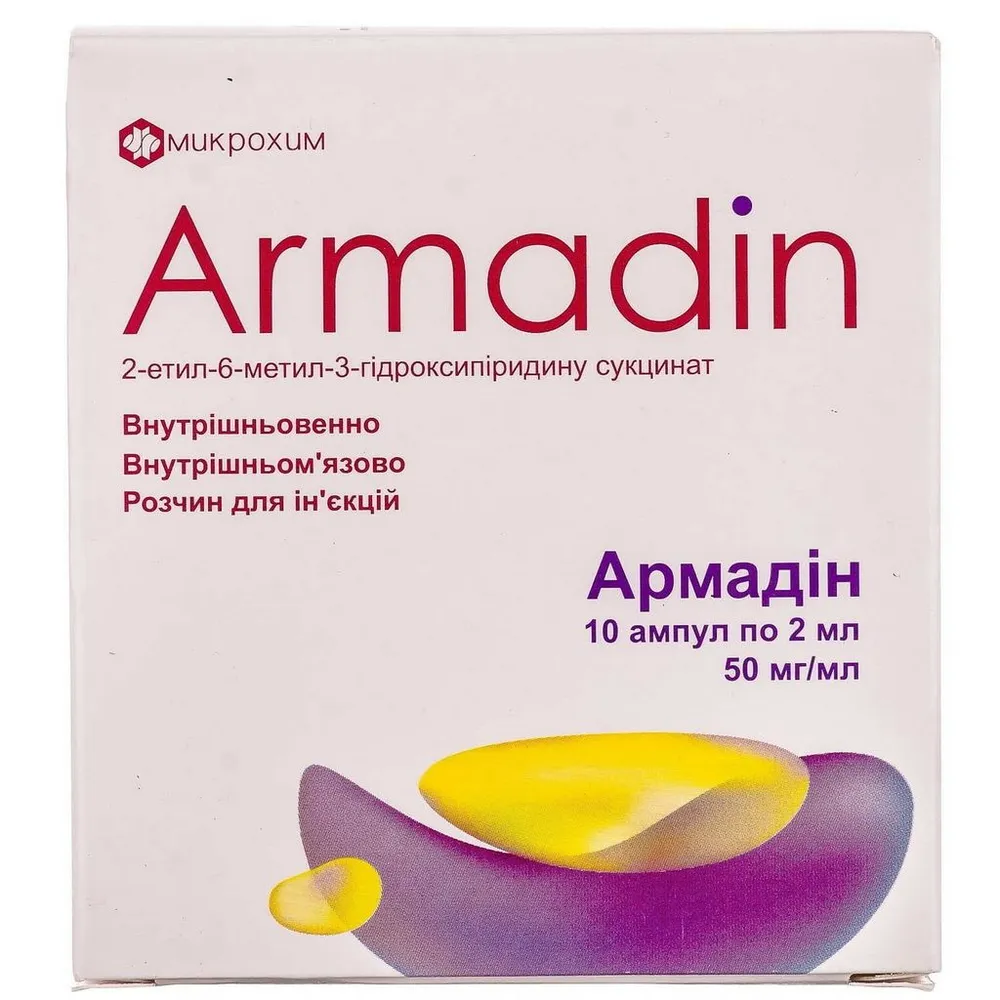
Table of Contents
- INSTRUCTIONS FOR MEDICAL USE OF THE MEDICINAL PRODUCT ARMA DIN (ARMADIN)
- Composition:
- Pharmacological Properties
- Clinical characteristics.
- Special precautions for use.
- Method of Administration and Dosage
- Adverse Reactions.
- Composition:
- Pharmacological Properties.
- Clinical characteristics.
- Special precautions for use.
- Method of Administration and Dosage
- Adverse reactions.
INSTRUCTIONS FOR MEDICAL USE OF THE MEDICINAL PRODUCT ARMA DIN (ARMADIN)
Composition:
Active substance: mexidol;
1 ampoule contains 2-ethyl-6-methyl-3-hydroxypyridine succinate 100 mg;
Excipient: water for injections.
Pharmaceutical form. Solution for injection.
Main physicochemical properties: colorless or slightly colored clear liquid.
Pharmacotherapeutic group.
Agents acting on the nervous system. ATC code N07XX.
Pharmacological Properties
Pharmacodynamics
ARMADIN is an inhibitor of free radical processes and a membrane protector, exerting anti-hypoxic, stress-protective, nootropic, anticonvulsant, and anxiolytic effects. The drug enhances the body's resistance to various damaging factors, including oxygen-dependent pathological conditions (shock, hypoxia and ischemia, cerebral circulation disorders, alcohol intoxication, and intoxication with antipsychotic agents (neuroleptics)).
The drug improves cerebral metabolism and cerebral blood supply, microcirculation, and rheological properties of blood, and reduces platelet aggregation. It stabilizes membrane structures of blood cells (erythrocytes and platelets) during hemolysis. ARMADIN exerts a hypolipidemic effect, reducing levels of total cholesterol and low-density lipoproteins (LDL). It reduces enzymatic toxemia and endogenous intoxication in acute pancreatitis.
The mechanism of action of the drug is due to its antioxidant and membrane-protective effects. It inhibits lipid peroxidation, increases superoxide dismutase activity, improves the lipid-protein ratio, reduces membrane viscosity, and increases membrane fluidity. ARMADIN modulates the activity of membrane-bound enzymes (calcium-independent phosphodiesterase, adenylate cyclase, acetylcholinesterase) and receptor complexes (benzodiazepine, γ-aminobutyric acid (GABA), acetylcholine), thereby enhancing their ability to bind ligands, promoting preservation of the structural and functional organization of biomembranes, neurotransmitter transport, and improved synaptic transmission. ARMADIN increases dopamine levels in the brain. It enhances compensatory activation of aerobic glycolysis and reduces the degree of suppression of oxidative processes in the Krebs cycle under hypoxic conditions, resulting in increased levels of adenosine triphosphate (ATP) and creatine phosphate, activation of mitochondrial energy-synthesizing functions, and stabilization of cellular membranes.
ARMADIN normalizes metabolic processes in ischemic myocardium, reduces the area of necrosis, restores and improves electrical activity and myocardial contractility, increases coronary blood flow in the ischemic area, and reduces the consequences of reperfusion syndrome in acute coronary insufficiency. It enhances the antianginal activity of nitro-compounds. ARMADIN promotes preservation of retinal ganglion cells and optic nerve fibers in progressive neuropathy caused by chronic ischemia and hypoxia. It improves functional activity of the retina and optic nerve, increasing visual acuity.
Pharmacokinetics
After intramuscular administration, the drug is detectable in blood plasma for up to 4 hours after injection. Time to reach maximum concentration is 0.45–0.5 hours. Maximum concentration at doses of 400–500 mg is 3.5–4.0 μg/mL. ARMADIN rapidly transfers from the bloodstream into organs and tissues and is rapidly eliminated from the body. The drug is excreted primarily in the urine, mainly in glucuronide-conjugated form, and in insignificant amounts unchanged.
Clinical characteristics.
Indications.
- Acute cerebrovascular disorders;
- Traumatic brain injury, consequences of traumatic brain injuries;
- Dyscirculatory encephalopathy;
- Neurocirculatory dystonia;
- Mild cognitive impairments of atherosclerotic origin;
- Anxiety disorders in neurotic and neurosis-like conditions;
- Acute myocardial infarction (from the first day), as part of complex therapy;
- Primary open-angle glaucoma at various stages, as part of complex therapy;
- Management of alcohol withdrawal syndrome with predominant neurosis-like and neurocirculatory disturbances;
- Acute intoxication with antipsychotic agents;
- Acute purulent-inflammatory processes in the abdominal cavity (acute necrotic pancreatitis, peritonitis), as part of complex therapy.
Contraindications.
Hypersensitivity to the drug, acute hepatic or renal failure. Pregnancy or breastfeeding period. Pediatric age.
Interaction with other medicinal products and other types of interactions.
ARMADIN enhances the effects of benzodiazepine anxiolytics, anticonvulsants (carbamazepine), and antiparkinsonian agents (levodopa). Reduces the toxic effect of ethanol.
Increases the antianginal activity of nitro compounds and the antihypertensive activity of ACE inhibitors and β-adrenoblockers. Concurrent use with nibentan, propranolol, and verapamil reduces the risk of developing arrhythmogenic effects of these agents; concurrent use with neuroleptics reduces the risk and severity of their adverse effects.
Special precautions for use.
In individual cases, especially in predisposed patients and in patients with bronchial asthma or hypersensitivity to sulfites, severe hypersensitivity reactions may occur. Use with caution in patients with diabetic retinopathy (treatment course should not exceed 7–10 days) due to the potential to promote proliferative processes.
After completion of parenteral administration, to maintain the achieved therapeutic effect, continuation of treatment with the drug orally in tablet form is recommended.
Use during pregnancy or breastfeeding.
Well-controlled clinical studies on the safety of the drug during pregnancy or breastfeeding have not been conducted; therefore, ARMODIN should not be used during these periods.
Ability to affect reaction rate when driving or operating machinery.
During treatment, caution should be exercised when driving or operating complex machinery, taking into account the possibility of adverse effects that may impair reaction speed and the ability to concentrate.
Method of Administration and Dosage
ARMADIN should be administered intramuscularly or intravenously (either as a bolus or by infusion). Doses should be individually adjusted. When administered by infusion, the drug should be diluted in 0.9% sodium chloride solution (200 ml). Initial treatment in adults should begin with a dose of 50–100 mg 1–3 times daily, gradually increasing the dose until a therapeutic effect is achieved. Bolus injections of ARMADIN should be administered slowly over 5–7 minutes; infusion should be performed at a rate of 40–60 drops per minute. The maximum daily dose should not exceed 800 mg.
In acute cerebral circulation disorders: ARMADIN should be administered as part of combination therapy during the first 2–4 days intravenously (either as a bolus or by infusion) once daily at a dose of 200–300 mg in adults, followed by intramuscular administration at 100 mg three times daily. The treatment duration is 10–14 days.
In traumatic brain injury and its consequences: ARMADIN should be used for 10–15 days via intravenous infusion at a dose of 200–500 mg 2–4 times daily.
In decompensated phase of dyscirculatory encephalopathy: ARMADIN should be administered intravenously (either as a bolus or by infusion) at a dose of 100 mg 2–3 times daily for 14 days, followed by intramuscular administration at 100 mg daily for the subsequent 2 weeks.
For course prophylaxis of dyscirculatory encephalopathy, the drug should be administered intramuscularly to adults at 100 mg twice daily for 10–14 days.
In mild cognitive impairment in elderly patients and in anxiety states: the drug should be administered intramuscularly at a dose of 100–300 mg daily for 14–30 days.
In acute myocardial infarction as part of combination therapy: ARMADIN should be administered intravenously or intramuscularly for 14 days, alongside conventional myocardial infarction therapy including nitrates, β-blockers, angiotensin-converting enzyme (ACE) inhibitors, thrombolytics, anticoagulant and antiplatelet agents, as well as symptomatic treatments as indicated. For maximum efficacy during the first 5 days, intravenous administration of ARMADIN is recommended; intramuscular administration may be used during the subsequent 9 days. Intravenous administration of ARMADIN should be performed by slow infusion (to avoid adverse effects) in 0.9% sodium chloride solution or 5% glucose solution in a volume of 100–150 ml over 30–90 minutes. If necessary, slow bolus injection may be administered over no less than 5 minutes.
Administration of ARMADIN (either intravenous or intramuscular) should be performed 3 times daily, every 8 hours. The daily therapeutic dose is 6–9 mg per kg of body weight; the single dose is 2–3 mg/kg. The maximum daily dose should not exceed 800 mg, and the maximum single dose should not exceed 250 mg.
In various stages of open-angle glaucoma as part of combination therapy: ARMADIN should be administered intramuscularly at 100–300 mg daily, 1–3 times daily, for 14 days.
In alcohol withdrawal syndrome: ARMADIN should be administered at a dose of 100–200 mg intramuscularly 2–3 times daily or intravenously by infusion 1–2 times daily for 5–7 days.
In acute intoxication with antipsychotic agents: the drug should be administered intravenously to adults at a dose of 50–300 mg daily for 7–14 days.
In acute purulent-inflammatory conditions of the abdominal cavity (acute necrotic pancreatitis, peritonitis): the drug should be administered on the first day both pre- and post-operatively. Doses depend on the form and severity of the disease, extent of the process, and clinical presentation. The drug should be discontinued gradually only after a stable positive clinical and laboratory response.
In acute edematous (interstitial) pancreatitis: ARMADIN should be administered to adults at 100 mg three times daily intravenously by infusion (in 0.9% sodium chloride solution) and intramuscularly. Mild severity of necrotic pancreatitis: 100–200 mg three times daily intravenously by infusion (in 0.9% sodium chloride solution) and intramuscularly. Moderate severity: 200 mg three times daily intravenously by infusion (in 0.9% sodium chloride solution). Severe course: pulse-dose regimen of 800 mg on the first day administered twice, followed by 300 mg twice daily with gradual reduction of the daily dose. Very severe course: initial dose of 800 mg daily until stable control of pancreatogenic shock is achieved; after stabilization of the patient's condition, 300–400 mg twice daily intravenously by infusion (in 0.9% sodium chloride solution), with gradual reduction of the daily dose.
Children.
No controlled clinical studies on the safety of ARMADIN in children have been conducted; therefore, ARMADIN should not be used in this patient population.
Overdose.
In case of overdose, somnolence or insomnia may occur. With intravenous administration, transient and slight elevation of arterial blood pressure may occur in individual cases.
Development of overdose symptoms generally does not require specific antidotal treatment. The indicated sleep disturbances resolve spontaneously within 24 hours. In particularly severe cases, administration of one of the oral sedative and anxiolytic agents (nitrazepam 10 mg, oxazepam 10 mg, or diazepam 5 mg) is recommended. In case of excessive increase in arterial blood pressure, antihypertensive agents should be used under blood pressure monitoring and/or therapy should be supplemented with nitrate-containing drugs. Treatment includes detoxification therapy.
Adverse Reactions.
Cardiovascular system: increased or decreased arterial pressure.
Nervous system: dizziness, drowsiness, sleep disturbances, anxiety, emotional lability, headache, coordination disorders.
Gastrointestinal system: nausea, dryness of oral mucosa.
Immune system: in case of individual hypersensitivity to the drug, allergic reactions may occur, including skin rashes, urticaria, pruritus, angioneurotic edema; severe hypersensitivity reactions and bronchospasm are possible.
Skin and subcutaneous tissue: distal hyperhidrosis, local reactions at the injection site.
When administered intravenously, especially by rapid bolus injection, a metallic taste in the mouth, sensation of warmth throughout the body, unpleasant odor, throat irritation, chest discomfort, dyspnea, palpitations, tachycardia, tremor, and facial hyperemia may occur. These effects are usually related to too rapid administration of the drug and are transient in nature.
During prolonged administration of the drug, the following adverse effects are possible: flatulence, weakness, peripheral edema.
Shelf life.
5 years.
Storage conditions.
Store at a temperature not exceeding 30 °C in the original packaging.
Keep out of reach of children.
Packaging.
2 ml in ampoules, 10 ampoules (5×2) per cardboard pack.
Prescription status.
By prescription only.
Manufacturers.
- Microkhim LLC (responsible for batch release, excluding batch control/testing)
- Lechim-Kharkiv Private Joint-Stock Company (responsible for manufacturing and batch control/testing, excluding batch release)
Manufacturers' addresses and locations of business activity.
- 5 Budynstustriyi St., Kyiv, 01013, Ukraine
- 36 Severin Pototskoho St., Kharkiv, Kharkiv Oblast, 61115, Ukraine
Adverse events related to the use of this medicinal product should be reported at: +38 (050) 309-83-54 (24/7).
INSTRUCTION
for medical use of the medicinal product
ARMADIN
(ARMADIN)
Composition:
Active substance: mexidol;
1 ampoule contains 2-ethyl-6-methyl-3-hydroxypyridine succinate 100 mg;
Excipient: water for injections.
Pharmaceutical form. Solution for injection.
Main physico-chemical properties: colorless or slightly colored clear liquid.
Pharmacotherapeutic group.
Agents affecting the nervous system. ATC code N07XX.
Pharmacological Properties.
Pharmacodynamics.
ARMADIN is an inhibitor of free radical processes and a membrane protector that exerts anti-hypoxic, stress-protective, nootropic, anticonvulsant, and anxiolytic effects. The drug enhances the body's resistance to various damaging factors, including oxygen-dependent pathological conditions (shock, hypoxia and ischemia, impaired cerebral circulation, alcohol intoxication, and intoxication with antipsychotic agents (neuroleptics)).
The drug improves cerebral metabolism and cerebral blood supply, microcirculation, and rheological properties of blood, and reduces platelet aggregation. It stabilizes blood cell membrane structures (erythrocytes and platelets) during hemolysis. It exerts a hypolipidemic effect, reducing total cholesterol and low-density lipoprotein (LDL) levels. ARMADIN reduces enzymatic toxemia and endogenous intoxication in acute pancreatitis.
The mechanism of action of the drug is due to its antioxidant and membrane-protective effects. It inhibits lipid peroxidation, increases superoxide dismutase activity, improves the lipid-protein ratio, reduces membrane viscosity, and enhances membrane fluidity. ARMADIN modulates the activity of membrane-bound enzymes (calcium-independent phosphodiesterase, adenylate cyclase, acetylcholinester enzyme), and receptor complexes (benzodiazepine, γ-aminobutyric acid (GABA), and acetylcholine), thereby enhancing their ability to bind with ligands, promoting preservation of the structural and functional organization of biomembranes, neurotransmitter transport, and improvement of synaptic transmission. ARMADIN increases dopamine levels in the brain. It enhances compensatory activation of aerobic glycolysis and reduces the degree of inhibition of oxidative processes in the Krebs cycle under hypoxic conditions, leading to increased levels of adenosine triphosphate (ATP) and creatine phosphate, activation of mitochondrial energy-synthesizing functions, and stabilization of cellular membranes.
ARMADIN normalizes metabolic processes in ischemic myocardium, reduces the area of necrosis, restores and improves electrical activity and myocardial contractility, increases coronary blood flow in the ischemic zone, and reduces the consequences of reperfusion syndrome in acute coronary insufficiency. It enhances the antianginal activity of nitro-compounds. ARMADIN helps preserve retinal ganglion cells and optic nerve fibers in progressive neuropathy caused by chronic ischemia and hypoxia. It improves functional activity of the retina and optic nerve, increasing visual acuity.
Pharmacokinetics.
After intramuscular administration, the drug is detectable in blood plasma for up to 4 hours post-injection. The time to reach maximum concentration is 0.45–0.5 hours. Maximum concentration at doses of 400–500 mg is 3.5–4.0 μg/mL. ARMADIN rapidly transfers from the bloodstream into organs and tissues and is quickly eliminated from the body. The drug is excreted primarily in urine, mainly in glucuronide-conjugated form, and in small amounts unchanged.
Clinical characteristics.
Indications.
- Acute cerebrovascular disorders;
- Traumatic brain injury, consequences of traumatic brain injuries;
- Dyscirculatory encephalopathy;
- Neurocirculatory dystonia;
- Mild cognitive impairments of atherosclerotic origin;
- Anxiety disorders in neurotic and neurosis-like conditions;
- Acute myocardial infarction (from the first day), as part of complex therapy;
- Primary open-angle glaucoma at various stages, as part of complex therapy;
- Management of alcohol withdrawal syndrome with predominant neurosis-like and neurocirculatory disturbances;
- Acute intoxication with antipsychotic agents;
- Acute purulent-inflammatory processes in the abdominal cavity (acute necrotic pancreatitis, peritonitis), as part of complex therapy.
Contraindications.
Hypersensitivity to the drug, acute hepatic or renal insufficiency. Pregnancy or lactation period. Pediatric age.
Interaction with other medicinal products and other types of interactions.
ARMADIN enhances the effect of benzodiazepine anxiolytics, anticonvulsants (carbamazepine), and antiparkinsonian agents (levodopa). Reduces the toxic effect of ethyl alcohol.
Enhances the antianginal activity of nitrates and the antihypertensive activity of ACE inhibitors and β-adrenoblockers. Concurrent use with nibentan, propranolol, and verapamil reduces the risk of developing arrhythmogenic effects of these drugs. Concurrent use with neuroleptics reduces the risk and severity of their adverse effects.
Special precautions for use.
In individual cases, especially in predisposed patients, in patients with bronchial asthma, and in those with increased sensitivity to sulfites, severe hypersensitivity reactions may occur. Use with caution in patients with diabetic retinopathy (treatment course should not exceed 7–10 days) due to the drug's potential to enhance proliferative processes.
After completion of parenteral administration, to maintain the therapeutic effect achieved, continuation of treatment with the drug orally in tablet form is recommended.
Use during pregnancy or breastfeeding.
Well-controlled clinical studies on the safety of the drug during pregnancy or breastfeeding have not been conducted; therefore, ARMODIN should not be used during these periods.
Ability to influence reaction rate while driving or operating machinery.
During treatment, caution is required when driving or operating complex machinery, taking into account the possibility of adverse effects that may affect reaction speed and the ability to concentrate.
Method of Administration and Dosage
ARMADIN should be administered intramuscularly or intravenously (by bolus or infusion). Doses should be individually adjusted. When administered by infusion, the drug should be diluted in 0.9% sodium chloride solution (200 mL). Initial treatment in adults should start at a dose of 50–100 mg 1–3 times daily, gradually increasing the dose until the therapeutic effect is achieved. ARMADIN should be administered intravenously by bolus injection slowly over 5–7 minutes, or by infusion at a rate of 40–60 drops per minute. The maximum daily dose should not exceed 800 mg.
In acute cerebral circulation disorders, ARMADIN should be used as part of combination therapy during the first 2–4 days, administered intravenously either by bolus or infusion at a dose of 200–300 mg once daily in adults, followed by 100 mg intramuscularly three times daily. The treatment duration is 10–14 days.
In traumatic brain injury and its sequelae, ARMADIN should be administered intravenously by infusion at a dose of 200–500 mg 2–4 times daily for 10–15 days.
In dyscirculatory encephalopathy during the decompensation phase, ARMADIN should be administered intravenously either by bolus or infusion at 100 mg 2–3 times daily for 14 days, followed by intramuscular administration of 100 mg daily for the next 2 weeks.
For course prophylaxis of dyscirculatory encephalopathy, the drug should be administered intramuscularly to adults at 100 mg twice daily for 10–14 days.
In mild cognitive impairment in elderly patients and in anxiety states, the drug should be administered intramuscularly at a dose of 100–300 mg daily for 14–30 days.
In acute myocardial infarction as part of combination therapy, ARMADIN should be administered intravenously or intramuscularly for 14 days, alongside conventional myocardial infarction therapy including nitrates, β-adrenoblockers, angiotensin-converting enzyme (ACE) inhibitors, thrombolytics, anticoagulants and antiplatelet agents, as well as symptomatic treatments as indicated. For maximum effect during the first 5 days, intravenous administration of ARMADIN is recommended; intramuscular administration may be used during the subsequent 9 days. Intravenous administration of ARMADIN should be performed by slow infusion (to avoid adverse effects) in 0.9% sodium chloride solution or 5% glucose solution in a volume of 100–150 mL over 30–90 minutes. If necessary, slow bolus injection may be used, administered over no less than 5 minutes.
Administration of ARMADIN (intravenous or intramuscular) should be performed three times daily, every 8 hours. The daily therapeutic dose is 6–9 mg per kg of body weight, and the single dose is 2–3 mg/kg. The maximum daily dose should not exceed 800 mg, and the maximum single dose should not exceed 250 mg.
In open-angle glaucoma at various stages as part of combination therapy, ARMADIN should be administered intramuscularly at 100–300 mg daily, 1–3 times daily, for 14 days.
In alcohol withdrawal syndrome, ARMADIN should be administered at a dose of 100–200 mg intramuscularly 2–3 times daily or intravenously by infusion 1–2 times daily for 5–7 days.
In acute intoxication with antipsychotic agents, the drug should be administered intravenously to adults at a dose of 50–300 mg daily for 7–14 days.
In acute purulent-inflammatory processes of the abdominal cavity (acute necrotic pancreatitis, peritonitis), ARMADIN should be administered on the first day both pre- and post-operatively. Doses depend on the form and severity of the disease, extent of the process, and clinical presentation. The drug should be discontinued gradually only after a stable positive clinical and laboratory effect has been achieved.
In acute edematous (interstitial) pancreatitis, ARMADIN should be administered to adults at 100 mg three times daily intravenously by infusion (in 0.9% sodium chloride solution) and intramuscularly. Mild severity of necrotic pancreatitis: 100–200 mg three times daily intravenously by infusion (in 0.9% sodium chloride solution) and intramuscularly. Moderate severity: 200 mg three times daily intravenously by infusion (in 0.9% sodium chloride solution). Severe course: pulse-dose regimen of 800 mg on the first day given in two doses, followed by 300 mg twice daily with gradual reduction of the daily dose. Very severe course: initial dose of 800 mg daily until persistent resolution of pancreatogenic shock; after stabilization of the patient’s condition, 300–400 mg twice daily intravenously by infusion (in 0.9% sodium chloride solution), with gradual reduction of the daily dose.
Children.
Controlled clinical studies on the safety of ARMADIN in children have not been conducted; therefore, ARMADIN should not be used in this patient population.
Overdose.
In case of overdose, somnolence or insomnia may occur. With intravenous administration, transient and slight elevation of arterial blood pressure may occur in individual cases.
Symptoms of overdose generally do not require specific antidotal treatment. The described sleep disturbances resolve spontaneously within 24 hours. In particularly severe cases, one of the oral sedative or anxiolytic agents may be administered (nitrazepam 10 mg, oxazepam 10 mg, or diazepam 5 mg). In case of excessive increase in arterial blood pressure, antihypertensive agents should be used under blood pressure monitoring and/or therapy may be supplemented with nitrate-containing drugs. Treatment includes detoxification therapy.
Adverse reactions.
Cardiovascular system: increased or decreased arterial pressure.
Nervous system: dizziness, drowsiness, difficulty falling asleep, anxiety, emotional lability, headache, impaired coordination.
Gastrointestinal system: nausea, dryness of the oral mucosa.
Immune system: in case of individual hypersensitivity to the drug, allergic reactions may occur, including skin rashes, urticaria, pruritus, angioedema; severe hypersensitivity reactions, bronchospasm are possible.
Skin and subcutaneous tissue: distal hyperhidrosis, local reactions at the injection site.
With intravenous administration, especially by bolus injection, a metallic taste in the mouth, sensation of warmth throughout the body, unpleasant odor, throat irritation, chest discomfort, dyspnea, palpitations, tachycardia, tremor, and facial hyperemia may occur. These phenomena are usually associated with too rapid administration of the drug and are transient.
During prolonged administration of the drug, the following adverse effects may occur: flatulence, weakness, peripheral edema.
Shelf life.
5 years.
Storage conditions.
Store at a temperature not exceeding 30 °C in the original packaging.
Keep out of reach of children.
Packaging.
2 ml in vials, 10 vials (5×2) per cardboard pack.
Prescription status.
Prescription only.
Manufacturer.
MICROCHEM PHARMACEUTICALS LLC (responsible for manufacturing and batch control/testing, including batch release).
Manufacturer's address and location of business activity.
33 Lenin St., Rubizhne, Luhansk Oblast, 93000, Ukraine.
To report an adverse event during the use of this medicinal product, please call: +38 (050) 309-83-54 (24/7).