Arlever
Ukraine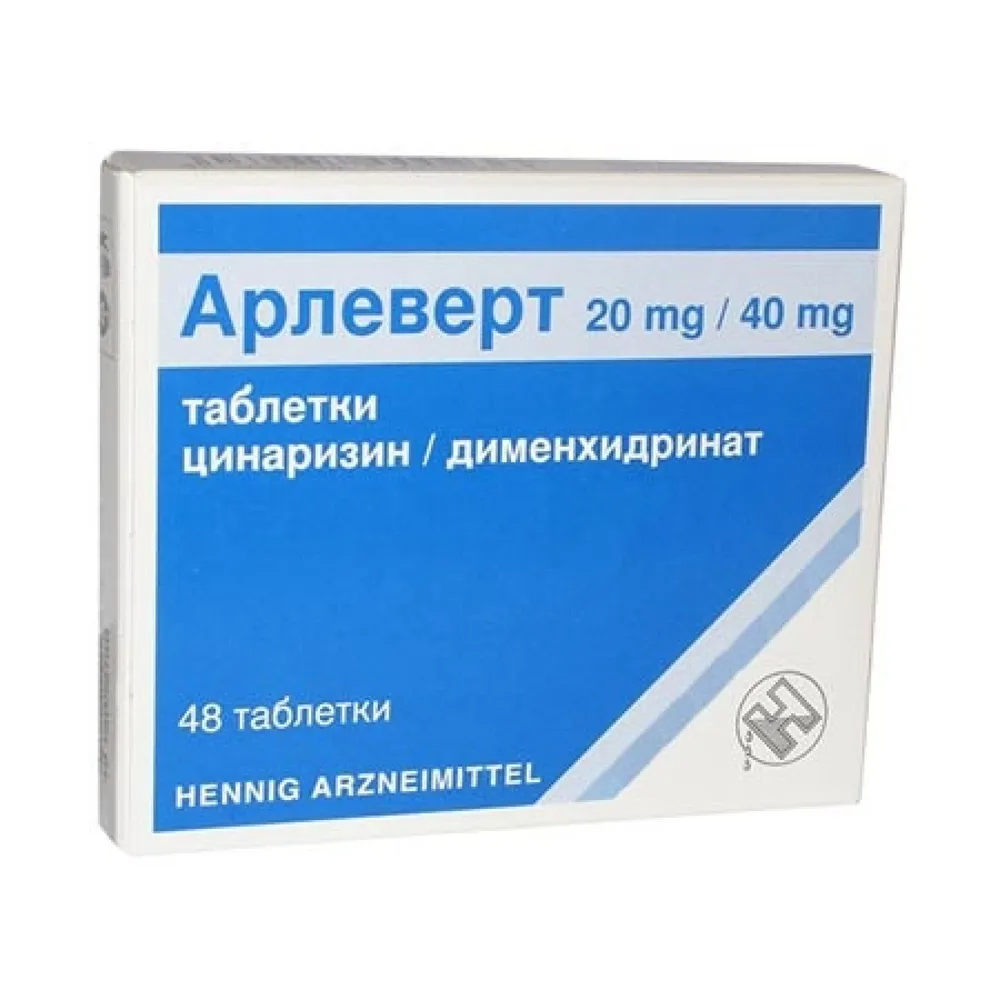
Table of Contents
INSTRUCTIONS FOR MEDICAL USE OF THE MEDICINAL PRODUCT ARLEVERT® (ARLEVERT®)
Composition:
Active substances: cinnarizine; dimenhydrinate;
One tablet contains 20 mg of cinnarizine and 40 mg of dimenhydrinate;
Excipients: microcrystalline cellulose, maize starch, talc, hypromellose, colloidal anhydrous silicon dioxide, magnesium stearate, sodium croscarmellose.
Pharmaceutical form. Tablets.
Main physicochemical properties: round, biconvex tablets of white to pale yellow color, with the imprint "A" on one side.
Pharmacotherapeutic group.
Agents acting on the nervous system. Combined cinnarizine preparation.
ATC code N07CA52.
Pharmacological properties.
Pharmacodynamics.
Dimenhydrinate, the chlorotheophylline salt of diphenhydramine, acts as an antihistamine with anticholinergic (M-cholinoblocking) activity, producing a parasympatholytic effect and central nervous system (CNS) depression. By acting on the chemoreceptor trigger zone in the area of the 4th ventricle, dimenhydrinate suppresses nausea and vomiting reflexes and dizziness. Thus, dimenhydrinate primarily affects the central vestibular system.
By blocking calcium channels, cinnarizine inhibits calcium influx into vestibular sensory cells, thereby acting as a vestibular suppressant. Thus, cinnarizine primarily affects the peripheral vestibular system.
Both cinnarizine and dimenhydrinate are well-known agents used in the treatment of dizziness. According to clinical trial results, the combined preparation is more effective than either of its individual components alone. This medication has not been studied for the prevention of motion sickness.
Pharmacokinetics.
Absorption and distribution. After oral administration, dimenhydrinate rapidly releases diphenhydramine. Both diphenhydramine and cinnarizine are rapidly absorbed from the gastrointestinal tract. In humans, maximum plasma concentrations (Cmax) of cinnarizine and diphenhydramine are reached within 2–4 hours. The elimination half-lives of both substances from plasma are 4 to 5 hours (regardless of whether they are administered separately or as part of the combined preparation).
Metabolism. Cinnarizine and diphenhydramine are extensively metabolized in the liver. Cinnarizine is metabolized via hydroxylation reactions, partially catalyzed by the CYP2D6 isoenzyme of cytochrome P450, and via N-dealkylation reactions, for which cytochrome isoenzymes show low selectivity. The main metabolic pathway of diphenhydramine is sequential N-demethylation of the tertiary amine. In vitro studies using human liver microsomal fractions indicate that these reactions are mediated by various cytochrome P450 isoenzymes, including CYP2D6.
Excretion. Cinnarizine is excreted mainly in feces (40–60%) and partially in urine (mainly as metabolites conjugated with glucuronic acid). Diphenhydramine is excreted primarily in urine, mostly as metabolites; the main metabolite (40–60%) is the deaminated derivative—diphenylmethoxyacetic acid.
Preclinical safety data
Preclinical studies revealed no particular hazard to humans in repeated-dose toxicity studies of the cinnarizine/dimenhydrinate combination, in studies of the effects of cinnarizine or dimenhydrinate on fertility, in studies of the effects of dimenhydrinate on embryonic/fetal development, or in teratogenicity studies of cinnarizine. According to one study, in rats administered cinnarizine, a reduced number of offspring, increased frequency of embryo resorption, and reduced birth weight were observed.
The genotoxic and carcinogenic potential of the cinnarizine/dimenhydrinate combination has not been evaluated.
Clinical characteristics.
Indications.
Symptomatic treatment of vertigo of various origins. Arlevert® is indicated for adult patients.
Contraindications.
Hypersensitivity to the active substances, diphenhydramine, or other structurally related antihistamines, or to any excipient.
Diphenhydramine is excreted exclusively by the kidneys; therefore, patients with severe renal impairment were excluded from the clinical development program. Arlevert® must not be used in patients with severe renal dysfunction (creatinine clearance ≤ 25 mL/min).
Since both active ingredients of Arlevert® are extensively metabolized by hepatic cytochrome P450 enzymes, plasma concentrations of the unchanged active substances and their elimination half-lives are increased in patients with severe hepatic impairment. This has been demonstrated for diphenhydramine in patients with hepatic cirrhosis. Therefore,
Arlevert® must not be used in patients with severe hepatic impairment.
Arlevert® must not be used in patients with closed-angle glaucoma, seizures, suspected increased intracranial pressure, as well as in patients with alcoholism, urinary retention due to urinary tract or prostatic disorders.
Interaction with other medicinal products and other forms of interaction.
Drug interaction studies have not been conducted.
The anticholinergic and sedative effects of Arlevert® may be enhanced when used concomitantly with monoamine oxidase inhibitors (MAOIs). The effect of the drug may be potentiated by procarbazine.
Like other antihistamines, Arlevert® may enhance the sedative effect of central nervous system (CNS) depressants, including alcohol, barbiturates, narcotic analgesics, and tranquilizers. Patients should be warned not to consume alcoholic beverages. Arlevert® may enhance the effects of antihypertensives, ephedrine, and anticholinergic agents, including atropine and tricyclic antidepressants.
Arlevert® may mask the ototoxic effects of aminoglycoside antibiotics and the skin reaction in skin allergy tests.
Concomitant use of drugs known to prolong the QT interval on ECG (antiarrhythmics of class Ia and III) should be avoided.
There is insufficient information regarding possible pharmacokinetic interactions of cinnarizine and diphenhydramine with other medicinal products. Diphenhydramine inhibits metabolic processes mediated by the CYP2D6 isoenzyme of cytochrome P450; therefore, caution is recommended when Arlevert® is used in combination with substrates of this enzyme (especially those with a narrow therapeutic index).
Special precautions for use
Arlevert® does not cause a significant reduction in arterial blood pressure; however, it should be used with caution in patients with low arterial pressure.
To minimize gastric irritation, Arlevert® should be taken after meals.
Arlevert® should be used with caution in patients with diseases or conditions that may be exacerbated by anticholinergic agents, for example, patients with increased intraocular pressure, pyloric or duodenal obstruction, prostate hypertrophy, arterial hypertension, hyperthyroidism, or severe ischemic heart disease.
Arlevert® should be used with caution in patients with Parkinson's disease.
Sodium
This medicinal product contains less than 1 mmol of sodium (23 mg) per tablet, i.e. it is practically sodium-free.
Use during pregnancy or breast-feeding.
Pregnancy. The safety of Arlevert® in pregnant women has not been established.
Animal studies alone are insufficient to fully assess the impact of Arlevert® on pregnancy, embryonic and fetal development, and postnatal development (see section "Preclinical safety data"). The teratogenic risk of each individual component (dimenhydrinate/diphenhydramine and cinnarizine) is considered low. Animal studies have not revealed teratogenic effects.
There are no clinical data available on the use of Arlevert® during pregnancy.
Dimenhydrinate may stimulate uterine muscle activity and prolong labor; therefore, Arlevert® should not be used during pregnancy.
Lactation (breast-feeding). Dimenhydrinate and cinnarizine pass into breast milk; therefore, Arlevert® should not be used in women who are breast-feeding.
Fertility. Unknown.
Ability to affect reaction speed when driving or operating machinery.
Arlevert® may have a minor influence on reaction speed when driving or operating machinery.
Arlevert® may cause drowsiness, particularly at the beginning of treatment. In such cases, patients should refrain from driving or operating machinery.
Dosage and Administration
Adults. 1 tablet 3 times daily after meals. Do not chew; swallow with a small amount of liquid.
Elderly patients. Dose adjustment is not required.
Renal impairment. Arlevert® should be used with caution in patients with mild to moderate renal impairment. Arlevert® is contraindicated in patients with creatinine clearance ≤ 25 mL/min (severe renal insufficiency).
Hepatic impairment. Studies on the use of the drug in patients with hepatic impairment have not been conducted. Arlevert® should not be used in patients with severe hepatic insufficiency.
The duration of treatment should not exceed 4 weeks. Any decision regarding longer-term therapy must be made by a physician.
Children.
The safety and efficacy of Arlevert® in children and adolescents (under 18 years of age) have not been established. Data are lacking.
Overdose.
Symptoms of Arlevert® overdose. Symptoms of Arlevert® overdose include drowsiness, dizziness, and ataxia in combination with anticholinergic effects such as dry mouth, facial flushing, pupil dilation, tachycardia, fever, headache, and urinary retention. Other complications may include seizures, hallucinations, agitation, respiratory depression, arterial hypertension, tremor, and coma (especially in cases of severe overdose).
Treatment. In cases of respiratory depression or acute circulatory failure, supportive therapy should be administered. Gastric lavage with isotonic sodium chloride solution is recommended. Body temperature should be closely monitored, as intoxication with antihistamines may cause hyperthermia (particularly in children).
In the case of colicky pain, short-acting barbiturates may be administered, but with caution. In cases of pronounced anticholinergic effects on the central nervous system, a physostigmine test should be performed, followed by administration of physostigmine via slow intravenous infusion (or, if necessary, intramuscular injection) at a dose of 0.03 mg/kg body weight (maximum adult dose – 2 mg; maximum pediatric dose – 0.5 mg).
Diphenhydramine can be removed from the blood by hemodialysis, but this method is considered unsuitable for treating overdose. Sufficient amounts of the drug can be removed by hemoperfusion using activated charcoal. Data on the removal of cinnarizine by hemodialysis are lacking.
Adverse reactions.
The most commonly observed adverse reactions during clinical trials were confusion (including drowsiness, feeling of fatigue, tiredness, stupor), observed in 8% of patients participating in clinical trials, and dry mouth, observed in 5% of patients participating in clinical trials. These reactions usually occur in mild form and resolve within several days, even with continued use of the drug.
Adverse reactions occurring during the use of Arlever® based on clinical trial data and subsequent spontaneous reports are listed in the table below.
| Organs and organ systems |
Frequency |
|||
| Common >1/100 - <1/10 |
Uncommon >1/1000 - <1/100 |
Rare >1/10000 - <1/1000 |
Very rare <1/10000 |
|
| Blood and lymphatic system disorders |
Leukopenia Thrombocytopenia Aplastic anemia |
|||
| Immune system disorders |
Allergic reactions (e.g. skin reactions) |
|||
| Nervous system disorders |
Somnolence Headache |
Paresthesia Amnesia Tinnitus Tremor Nervousness Seizures |
||
| Eye disorders |
Visual disturbances |
|||
| Gastrointestinal disorders |
Dry mouth Abdominal pain |
Dyspepsia Nausea Diarrhea |
||
| Skin and subcutaneous tissue disorders |
Sweating Rash |
Photosensitization |
||
| Renal and urinary disorders |
Difficulty initiating micturition |
|||
In addition, the following adverse reactions have been associated with dimenhydrinate and cinnarizine (frequency cannot be estimated from the available data):
Dimenhydrinate: paradoxical excitation (especially in children), worsening of pre-existing closed-angle glaucoma, reversible agranulocytosis.
Cinnarizine: constipation, weight gain, chest tightness, cholestatic jaundice, extrapyramidal disorders, skin reactions resembling systemic lupus erythematosus, lichen planus.
Reporting of suspected adverse reactions
Reporting of suspected adverse reactions after registration of the medicinal product is important. It allows continued monitoring of the benefit/risk balance of the medicinal product. Healthcare professionals should report any suspected adverse reactions.
Shelf life. 3 years. Do not use the medicinal product after the expiry date stated on the packaging.
Storage conditions. No special storage conditions required. Keep out of the reach of children.
Packaging. 15, 20, or 25 tablets in a blister; 1 blister with 20 tablets, or 2 blisters with 15 tablets each, or 2 or 4 blisters with 25 tablets each in a cardboard box.
Prescription status. Prescription only.
Manufacturer.
Hennig Arzneimittel GmbH & Co KG.
Manufacturer's address and place of business.
Libigstraße 1-2, 65439 Flörsheim-am-Main, Germany.
Marketing Authorisation Holder.
Menarini International Operations Luxembourg S.A.
Address of the Marketing Authorisation Holder.
1, Avenue de la Gare, L-1611 Luxembourg, Luxembourg.