Argol
Ukraine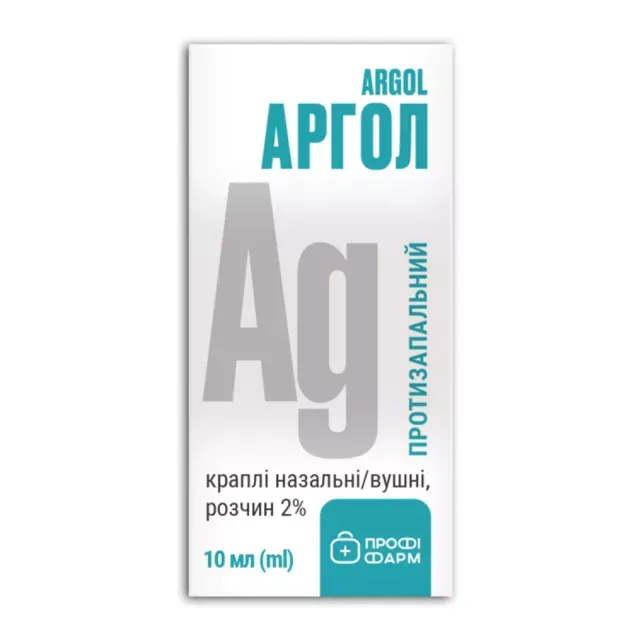
Table of Contents
INSTRUCTION FOR MEDICAL USE OF THE MEDICINAL PRODUCT ARGOl (ARGOL)
Composition:
Active ingredient: silver proteinate;
100 g of solution contains 2 g of silver proteinate;
Excipients: sodium hydrogen phosphate anhydrous, potassium dihydrogen phosphate, imidourea, purified water.
Pharmaceutical form. Nasal/ear drops, 2% solution.
Main physicochemical properties: brown solution with slight opalescence. Light sediment may form during storage.
Pharmacotherapeutic group. Preparations used in nasal cavity disorders. ATC code: R01A X10.
Pharmacological properties.
Pharmacodynamics.
The medicinal product has astringent, antiseptic, and anti-inflammatory properties. Silver ions contained in the preparation exert bactericidal and bacteriostatic effects against most gram-positive and gram-negative bacteria, such as Streptococcus pneumoniae, Staphylococcus aureus, Moraxella catarrhalis, and others, as well as against fungal flora. The mechanism of action of silver proteinate is based on the formation of a protective film due to precipitation of bacterial proteins by silver on the mucous membrane damaged by infectious process, which in turn reduces mucosal sensitivity to infectious agents, decreases capillary lumen, and thus inhibits inflammatory processes. In addition, Argol exerts a mild vasoconstrictive effect.
Pharmacokinetics.
Silver proteinate is poorly absorbed when applied locally.
Clinical characteristics.
Indications.
Anti-edematous and antiseptic agent for the nasal mucosa, and antiseptic for the ear canal.
Contraindications.
Hypersensitivity to any component of the medicinal product.
Special precautions.
Avoid contact of the medicinal product with the eyes.
Before use, apply a small amount of the solution to the skin in the area of the elbow flexion to check for individual intolerance. If symptoms of individual intolerance occur (irritation, burning, itching of the skin), wash the application site thoroughly with large amounts of water, discontinue use, and consult a physician if necessary.
Follow the recommended dosage and method of administration. Silver-containing preparations, when used over a prolonged period and in excessive doses, may cause argyria (pigmentation due to deposition of silver in tissues).
Interaction with other medicinal products and other forms of interaction.
Concomitant topical use of agents containing alkaloid salts and organic bases (e.g., adrenaline) is not recommended. Argol is pharmaceutically incompatible with zinc sulfate.
Argol may interact with preparations containing papain. Papain is a proteolytic enzyme belonging to the hydrolase class, extracted from immature fruits of papaya (Carica papaya). Concurrent use of silver proteinate and papain may reduce the enzymatic activity of papain.
Special precautions for use.
Use during pregnancy or breastfeeding.
Argol should not be used during pregnancy or breastfeeding, as there are insufficient data on the use of the medicinal product during these periods.
Ability to affect reaction rate when driving or operating machinery.
No effect.
Dosage and Administration.
Instill 1–2 drops into each nostril or into the ear canal 2–3 times daily. The treatment course lasts 5–10 days.
Children.
The medicinal product is recommended for children aged 3 years and older. The method of administration and dosage are the same as for adults.
Overdose.
In case of overdose, associated with accumulation of high concentrations of silver ions in blood plasma, skin discoloration and slurred speech may occur. Accumulation of silver in the skin, mucous membranes, membranes, and eyes, associated with prolonged use of the medicinal product, may cause argyria, characterized by grayish to dark-blue skin pigmentation, explained by the interaction of silver with various proteins and, as a result, pigment formation. UV radiation enhances pigmentation. In addition, systemic symptoms such as hepatotoxicity, cardiomyopathy, and amnesia may occur, which are consequences of neurotoxicity.
Side effects.
There is no data on the frequency of the listed effects.
Immune system side effects: hypersensitivity reactions, including allergic reactions such as urticaria, atopic dermatitis, anaphylactic shock, and Quincke's edema (angioedema).
General disorders and administration site reactions: mild irritation of the nasal mucosa, burning sensation, itching.
Prolonged use may cause argyria (see section "Overdose").
Shelf life.
3 years.
Shelf life after opening the bottle: 3 months.
Storage conditions.
Store in the original packaging at a temperature not exceeding 25 °C. Keep out of reach of children.
Packaging.
10 ml in a bottle; 1 bottle with dropper cap in a carton.
Availability.
Over-the-counter (without prescription).
Manufacturer.
LLC "DKP "Pharmaceutical Factory".
Manufacturer's address and location of business activity.
4 Korolova St., Stanyshivka village, Zhytomyr district, Zhytomyr region, 12430, Ukraine.