Anuzol
Ukraine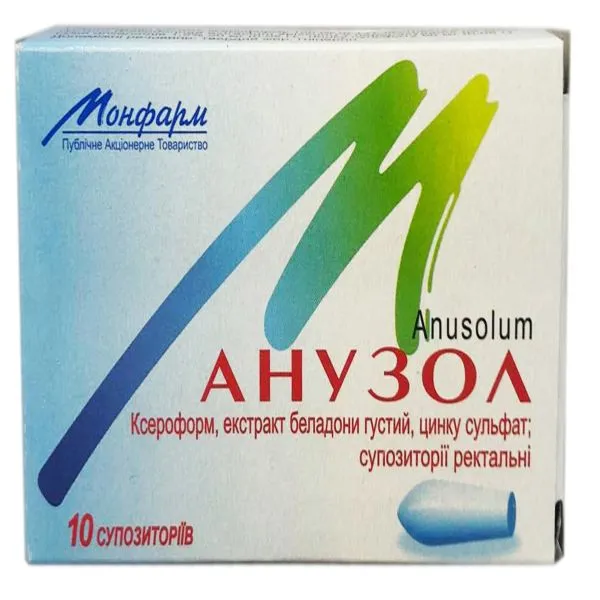
Table of Contents
I N S T R U C T I O N for medical use of the medicinal product ANUSOLUM (ANUSOLUM)
Composition:
Active substances: xeroform, extract of belladonna (dry extract), zinc sulfate.
One suppository contains: xeroform 100 mg (0.1 g), dry extract of belladonna (Belladonnae extractum spissum), calculated as total alkaloid content of 1.5% – 20 mg (0.02 g), zinc sulfate 50 mg (0.05 g);
Excipients: hard fat, glycerol.
Pharmaceutical form. Rectal suppositories.
Main physicochemical properties: yellow-colored suppositories with a brownish or greenish tint, with the odor of xeroform. A slight white coating on the surface of the suppository may be observed.
Pharmacotherapeutic group.
Agents for the treatment of hemorrhoids and anal fissures for local use.
ATC code C05A X03.
Pharmacological properties.
Pharmacodynamics.
The properties of Anuzol are determined by the effects of its ingredients, particularly their antiseptic, astringent, drying, spasmolytic, analgesic actions, which promote healing of wounds in the mucous membrane of the rectum.
Pharmacokinetics.
After administration of the suppository into the rectum, the effect of the drug appears within 15–90 minutes. The duration of systemic action of the alkaloids ranges from 2 to 6 hours.
Clinical characteristics.
Indications.
Hemorrhoids, anal fissures in adults.
Contraindications.
Hypersensitivity to the components of the drug. Atrial fibrillation, tachycardia, chronic heart failure, ischemic heart disease, mitral stenosis, severe arterial hypertension. Acute bleeding. Thyrotoxicosis. Hyperthermic syndrome, gastrointestinal disorders accompanied by obstruction (esophageal achalasia, pyloric stenosis, intestinal atony). Closed-angle glaucoma. Hepatic and renal failure. Myasthenia gravis. Prostatic adenoma in the stage of decompensation, acute urinary retention.
Interaction with other medicinal products and other forms of interaction.
When used with monoamine oxidase inhibitors, cardiac arrhythmia may occur; with quinidine and procainamide – synergism of anticholinergic effect is observed; with Convallaria preparations and tannins – physical-chemical interaction occurs, leading to mutual weakening of effects. Anuzol reduces the duration and depth of action of narcotic agents, weakens the analgesic effect of opioids. When used simultaneously with diphenhydramine or diprazine, the effect of atropine is enhanced; with nitrates, haloperidol, systemic corticosteroids – the risk of increased intraocular pressure rises; with sertraline – the depressive effect of both drugs is enhanced; with spironolactone and minoxidil – the effect of spironolactone and minoxidil is reduced; with penicillins – the effect of both drugs is enhanced; with nizatidine – the action of nizatidine is enhanced; with ketoconazole – absorption of ketoconazole is reduced; with ascorbic acid and attapulgite – the effect of Anuzol is reduced; with pilocarpine – the effect of pilocarpine in glaucoma treatment is reduced; with oxprenolol – the antihypertensive effect of the drug is reduced. Under the influence of octadine, a possible reduction in the hyposecretory effect of the drug may occur, which weakens the action of M-cholinomimetics and anticholinesterase agents. When used simultaneously with sulfonamide drugs, the risk of kidney damage increases; with potassium-containing preparations – intestinal ulceration may occur; with nonsteroidal anti-inflammatory drugs – the risk of gastric ulcers and bleeding increases. The effect of Anuzol may be enhanced when used simultaneously with other drugs having antimuscarinic effects: M-cholinolytics, antiparkinsonian agents (amantadine), spasmolytics, certain antihistamines, butyrophenone-group drugs, phenothiazines, disopyramide, quinidine, and tricyclic antidepressants, nonselective inhibitors of neuronal reuptake of monoamines.
Suppression of peristalsis under the influence of Anuzol may lead to altered absorption of other medicinal products.
Special precautions for use.
Use with caution in patients with hypertrophy of the prostate gland without urinary tract obstruction; in patients with Down's syndrome, cerebral palsy in children; in patients with reflux esophagitis; in patients with hiatal hernia associated with reflux esophagitis; in ulcerative colitis; in megacolon; in patients with xerostomia; in elderly patients or debilitated patients; in chronic lung diseases without reversible obstruction; in chronic lung diseases characterized by low production of thick, difficult-to-expectorate sputum, especially in debilitated patients; in autonomic (autonomic) neuropathy.
Use during pregnancy or breastfeeding.
Contraindicated.
Ability to affect reaction rate when driving vehicles or operating machinery.
Given the possibility of such adverse reactions as dizziness, hallucinations, and accommodation disorders, patients should refrain from driving vehicles or operating machinery during treatment with this drug.
Method of Administration and Dosage
Administer rectally. Insert into the rectum – 1 suppository 2–3 times daily. Maximum daily dose – 7 suppositories. Duration of use depends on the severity of the disease and the extent of therapeutic effect.
Children
Do not use.
Overdose
Symptoms: intensification of adverse reactions, nausea, vomiting, decreased arterial pressure, excitement, tremor, seizures, insomnia, drowsiness, hallucinations, irritability, hyperthermia. Central nervous system depression, depression of respiratory and vasomotor centers, urinary retention, hyperthermia.
Treatment: gastric lavage, parenteral administration of cholinomimetics and anticholinesterase agents. For hyperthermia, wet sponging and antipyretic agents are indicated; for excitement – intravenous administration of sodium thiopental or sodium oxybate; for mydriasis – locally as eye drops: phosphacol, physostigmine, pilocarpine. In the event of an acute glaucoma attack, immediately instill 2 drops of 1% pilocarpine solution into the conjunctival sac every hour and administer subcutaneously 1 ml of 0.05% proserine solution 3–4 times daily.
Adverse reactions.
Gastrointestinal disorders: dry mouth, sensation of thirst, taste disturbances, dysphagia, decreased intestinal motility up to atony, reduced tone of biliary tract and gallbladder, constipation, diarrhea.
Renal and urinary disorders: difficulty and retention of urination.
Cardiac disorders: tachycardia; palpitations; arrhythmia, including extrasystole; myocardial ischemia.
Vascular disorders: facial flushing, sensation of hot flashes.
Neurological disorders: headache, dizziness, nervousness, insomnia.
Eye disorders: mydriasis, photophobia, cycloplegia, increased intraocular pressure, transient visual disturbances.
Respiratory, thoracic and mediastinal disorders: formation of viscous sputum, difficult to expectorate.
Skin and subcutaneous tissue disorders: skin rashes, urticaria, exfoliative dermatitis.
Immune system disorders: anaphylactic reactions, anaphylactic shock.
Other: decreased sweating, dry skin, dysarthria, burning sensation in the anal area.
In case of any adverse events, consult a physician.
Shelf life.
2 years.
Storage conditions.
In the original packaging at a temperature not exceeding 25 °C.
Keep out of reach of children.
Packaging.
5 suppositories per strip. 2 strips per carton.
3 suppositories per strip. 2 or 3 strips per carton.
Availability category.
Over-the-counter.
Manufacturer.
JSC "Monfarm".
Manufacturer's address and location of its business activity.
8, Zavodska St., Avramivka, Uman district, Cherkasy region, 19161, Ukraine.