Analgin-darnitsa
Ukraine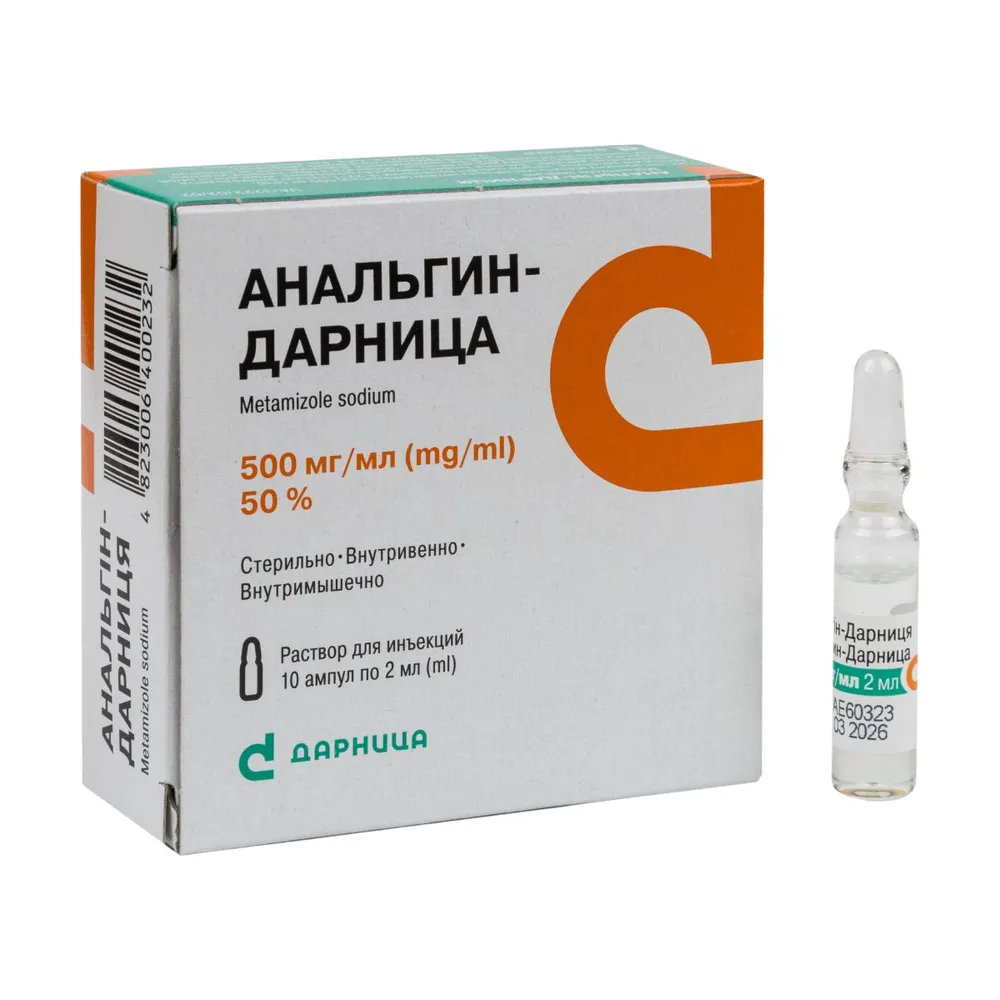
Table of Contents
INSTRUCTIONS FOR MEDICAL USE OF THE MEDICINAL PRODUCT Analgin-Darnitsa (Analgin-Darnitsa)
Composition:
Active substance: metamizole sodium;
1 ml of solution contains 500 mg of sodium metamizole (analgin);
Excipients: anhydrous sodium sulfite (E 221), sodium formaldehyde sulfoxylate dihydrate, diluted hydrochloric acid, water for injections.
Pharmaceutical form. Injection solution.
Main physicochemical properties: clear colorless or slightly yellowish liquid.
Pharmacotherapeutic group. Analgesics and antipyretics. Sodium metamizole.
ATC code N02B В02.
Pharmacological properties.
Pharmacodynamics.
A non-steroidal anti-inflammatory agent, a derivative of pyrazolone. Non-selectively inhibits cyclooxygenase, thereby reducing the formation of prostaglandins from arachidonic acid. Interferes with the conduction of extra- and proprioceptive pain impulses along the fasciculi gracilis and cuneatus, increases the excitation threshold of thalamic pain centers, and enhances heat dissipation. A distinctive feature is the weak anti-inflammatory effect, which results in minimal impact on water-electrolyte balance (retention of Na+ and water) and on the mucous membrane of the gastrointestinal tract. Exhibits analgesic, antipyretic, and some spasmolytic effects (relating to the smooth musculature of the urinary and biliary tracts).
Pharmacokinetics.
After intramuscular administration, it is rapidly and completely absorbed into the bloodstream. In the liver, it undergoes oxidative deamination to form an active metabolite. Protein binding of the active metabolite is 50–60%. In children, deamination processes proceed somewhat slower than in adults. With frequent administration (more than 4 times daily), drug accumulation and intoxication are possible in children. It rapidly and evenly distributes in tissues. Maximum concentration is reached within 1–1.5 hours after intramuscular injection. The elimination half-life (T1/2) is approximately 7 hours. It is excreted in urine.
Clinical characteristics.
Indications.
Mild to moderate pain of various origins and localizations (headache, toothache, burns, postoperative pain, dysmenorrhea, arthralgia, neuralgia, radiculitis, myositis); hyperthermic syndrome and febrile conditions (influenza, acute respiratory and other infections); renal and hepatic colic (in combination with spasmolytic agents).
Contraindications.
Hypersensitivity to the components of the drug. Agranulocytosis, cytostatic or infectious neutropenia. Hepatic and/or renal insufficiency. Hereditary hemolytic anemia associated with glucose-6-phosphate dehydrogenase deficiency. Asthma attacks induced by acetylsalicylic acid. Abdominal pain of unknown origin. Anemia, leukopenia. Kidney diseases: pyelonephritis, glomerulonephritis, including in medical history. Intravenous administration is contraindicated in patients with systolic blood pressure below 100 mm Hg. Polytrauma. Shock. Porphyria.
Interaction with other medicinal products and other types of interactions.
Due to the high risk of pharmaceutical incompatibility, this drug must not be mixed with other medicinal products in the same syringe.
Ethanol – the effect of ethanol is enhanced.
Chlorpromazine or other phenothiazine derivatives – concomitant use may lead to pronounced hypothermia.
X-ray contrast agents, colloidal plasma substitutes, and penicillin should not be used during treatment with sodium metamizole.
Cyclosporine – concomitant use reduces cyclosporine blood concentration.
Oral hypoglycemic agents, indirect anticoagulants, glucocorticosteroids, phenytoin, ibuprofen, and indomethacin – sodium metamizole increases the activity of these drugs by displacing them from protein binding.
Phenylbutazone, barbiturates, and other hepatic enzyme inducers reduce the efficacy of sodium metamizole when used concomitantly.
Non-narcotic analgesics, tricyclic antidepressants, hormonal contraceptives, and allopurinol – concomitant use with sodium metamizole may increase its toxicity.
Other nonsteroidal anti-inflammatory drugs (NSAIDs) – their analgesic and antipyretic effects are potentiated, and the risk of additive adverse effects increases.
Sedatives and tranquilizers (diazepam, trioxazin, valocordin) enhance the analgesic effect of sodium metamizole.
Sarkolysin, mercaptopurine (thiamazole), and drugs that suppress bone marrow activity, including gold compounds – increase the risk of hematotoxicity, including the development of leukopenia.
Codeine, histamine H2-blockers, and propranolol enhance the effect of sodium metamizole.
Caution is required when using the drug concomitantly with sulfonylurea hypoglycemic agents (hypoglycemic effect is enhanced) and diuretics (furosemide).
Myelotoxic medicinal products lead to increased hematotoxicity.
Metotrexate – high doses of metamizole may increase plasma concentration of methotrexate and enhance its toxic effects (on the gastrointestinal tract and hematopoietic system).
Special precautions for use
Parenteral administration requires medical supervision (high incidence of allergic reactions, including fatal outcomes) and availability of facilities for shock therapy.
Patients with atopic bronchial asthma and pollenosis have an increased risk of hypersensitivity reactions.
Severe skin reactions
Severe skin reactions, including Stevens-Johnson syndrome, toxic epidermal necrolysis, and drug-induced eosinophilia with systemic symptoms (DRESS syndrome), which may be life-threatening or fatal, have been reported during treatment with metamizole.
Patients should be informed about signs and symptoms of skin reactions and closely monitored.
If signs or symptoms indicating these reactions occur, metamizole treatment must be discontinued immediately and must not be restarted under any circumstances (see section "Contraindications").
Use for relief of acute abdominal pain of unknown origin is contraindicated (until the cause is established).
The medicinal product should be used with caution in patients:
- of advanced age – may lead to increased frequency of adverse reactions, especially those affecting the gastrointestinal system;
- with inflammatory bowel diseases, including ulcerative colitis and Crohn’s disease.
Careful hemodynamic monitoring is required when prescribing to patients with acute cardiovascular disorders. Use with caution in patients with blood pressure below 100 mm Hg, myocardial infarction, multiple trauma, history of liver or kidney disease (pyelonephritis, glomerulonephritis), during cytostatic therapy, chronic alcoholism, significant allergic history, or blood disorders.
Regular long-term use of the medicinal product is not recommended due to myelotoxicity of sodium metamizole; peripheral blood picture (leukocyte formula) should be monitored.
Agranulocytosis may develop during treatment. Therefore, if unexplained fever, chills, sore throat, difficulty swallowing, stomatitis, or inflammation of external genitalia and anus occur, the drug must be discontinued immediately.
Drug-induced liver injury
Cases of drug-induced liver injury, mainly of hepatocellular type, have been observed in patients treated with metamizole, occurring several days or months after initiation of therapy. Signs and symptoms include elevated serum liver enzymes, with or without jaundice, often in the context of hypersensitivity reactions to other drugs (e.g., skin rash, blood dyscrasias, fever, and eosinophilia), or accompanied by features of autoimmune hepatitis. In most patients, condition normalized after discontinuation of metamizole therapy. However, isolated cases of progression to acute liver failure requiring liver transplantation have been reported.
The mechanism of liver injury caused by metamizole is not fully understood, although available data suggest an immune-allergic mechanism.
Patients should be informed about the need to consult a physician if symptoms suggesting liver injury occur. In such cases, metamizole intake should be stopped and liver function assessed.
If symptoms such as nausea and vomiting, fever, fatigue, loss of appetite, dark-colored urine, pale-colored stools, jaundice of the skin or sclera, pruritus, skin rash, or upper abdominal pain occur, metamizole use should be discontinued and medical advice sought immediately. Metamizole must not be re-administered to patients who experienced liver injury during previous treatment with metamizole, unless other causes of liver injury have been ruled out.
Subcutaneous administration should not be used due to possible tissue irritation.
During treatment, urine may turn red (due to excretion of a metabolite), which has no clinical significance.
Rarely, anhydrous sodium sulfite (E 221) may cause hypersensitivity reactions and bronchospasm.
The drug should be discontinued if skin or mucosal rashes appear.
The product contains less than 1 mmol/dose of sodium, i.e., it is practically sodium-free.
Use during pregnancy or breastfeeding
Contraindicated during pregnancy, especially in the first trimester and the last 6 weeks.
Breastfeeding should be discontinued during treatment, as sodium metamizole passes into breast milk.
Ability to affect reaction speed when driving or operating machinery
During treatment, driving vehicles and engaging in other potentially hazardous activities requiring high attention and fast psychomotor reactions are not permitted.
Method of Administration and Dosage
Administer intramuscularly or intravenously as a bolus injection. The route of administration and dosage depend on the severity of the disease and are determined individually. Analgesic effect is higher with intravenous administration compared to intramuscular.
The solution to be administered should be at body temperature. To prevent a sharp drop in arterial blood pressure, intravenous administration must be performed slowly (at a rate not exceeding 1 mL/min), the patient must be in a supine position, and monitoring of arterial pressure, heart rate, and respiration is required. The procedure requires availability of facilities for anti-shock therapy. A long needle must be used for intravenous administration.
Adults: Administer 0.5–1 mL (250–500 mg) 2–3 times daily. The maximum single dose for both routes of administration is 1 mL (500 mg); the maximum daily dose is 2 mL (1 g).
Children under 1 year of age: Administer at a dose of 0.01 mL/kg body weight. The drug should be administered only intramuscularly in children under 1 year of age.
Duration of treatment: up to 3 days.
Children aged 1 year and older: Administer 0.1 mL per year of life 1–2 times daily. Duration of treatment: up to 3 days.
Children
The drug should be administered only intramuscularly in children under 1 year of age. The drug should be used in children under medical supervision and only for serious, life-threatening indications.
Overdose.
Symptoms: hypothermia, pronounced decrease in arterial blood pressure, palpitations, dyspnea, tinnitus, nausea, vomiting, gastralgia, weakness, oliguria, anuria, drowsiness, delirium, impaired consciousness, tachycardia, convulsive syndrome; acute agranulocytosis, hemorrhagic syndrome, acute renal and hepatic failure, and respiratory muscle paralysis may develop.
Treatment: induction of vomiting, gastric lavage via tube, administration of saline laxatives, activated charcoal. Implementation of forced diuresis, hemodialysis, blood alkalinization, and symptomatic therapy aimed at supporting vital functions. In case of convulsive syndrome, administer diazepam and fast-acting barbiturates intravenously.
Side effects.
Hepatobiliary and biliary tract disorders: hepatitis, drug-induced liver injury, including acute hepatitis, jaundice, increased levels of liver enzymes (see section "Special precautions for use").
Renal and urinary disorders: oliguria, anuria, proteinuria, interstitial nephritis, red discoloration of urine.
Cardiovascular disorders: decreased blood pressure, tachycardia.
Blood and lymphatic system disorders: agranulocytosis, leukopenia, thrombocytopenia, anemia, granulocytopenia.
Immune system disorders: hypersensitivity reactions, including skin and mucosal rashes, skin hyperemia, pruritus, urticaria, conjunctivitis, angioedema (Quincke's edema); bronchospastic syndrome, anaphylactoid reactions, anaphylactic shock.
Skin and subcutaneous tissue disorders: rarely – Stevens-Johnson syndrome, Lyell's syndrome; frequency not known – drug-induced eosinophilia with systemic symptoms (DRESS).
General disorders and administration site conditions: infiltration at injection site (with intramuscular administration), hyperemia, swelling, local skin rashes, and pruritus at the injection site.
Shelf life. 3 years.
Storage conditions.
Store in the original packaging at a temperature not exceeding 25 °C. Do not freeze.
Keep out of reach of children.
Incompatibility.
Due to a high probability of pharmaceutical incompatibility, this medicinal product must not be mixed with other medicinal products in the same syringe.
Packaging.
2 ml in a vial; 5 vials in a blister pack; 2 blister packs in a carton.
Prescription status. Prescription only.
Manufacturer. JSC "Pharmaceutical Company "Darnytsia".
Manufacturer's address and place of business.
13, Boryspilska Street, Kyiv, 02093, Ukraine.