Ampicillin
Ukraine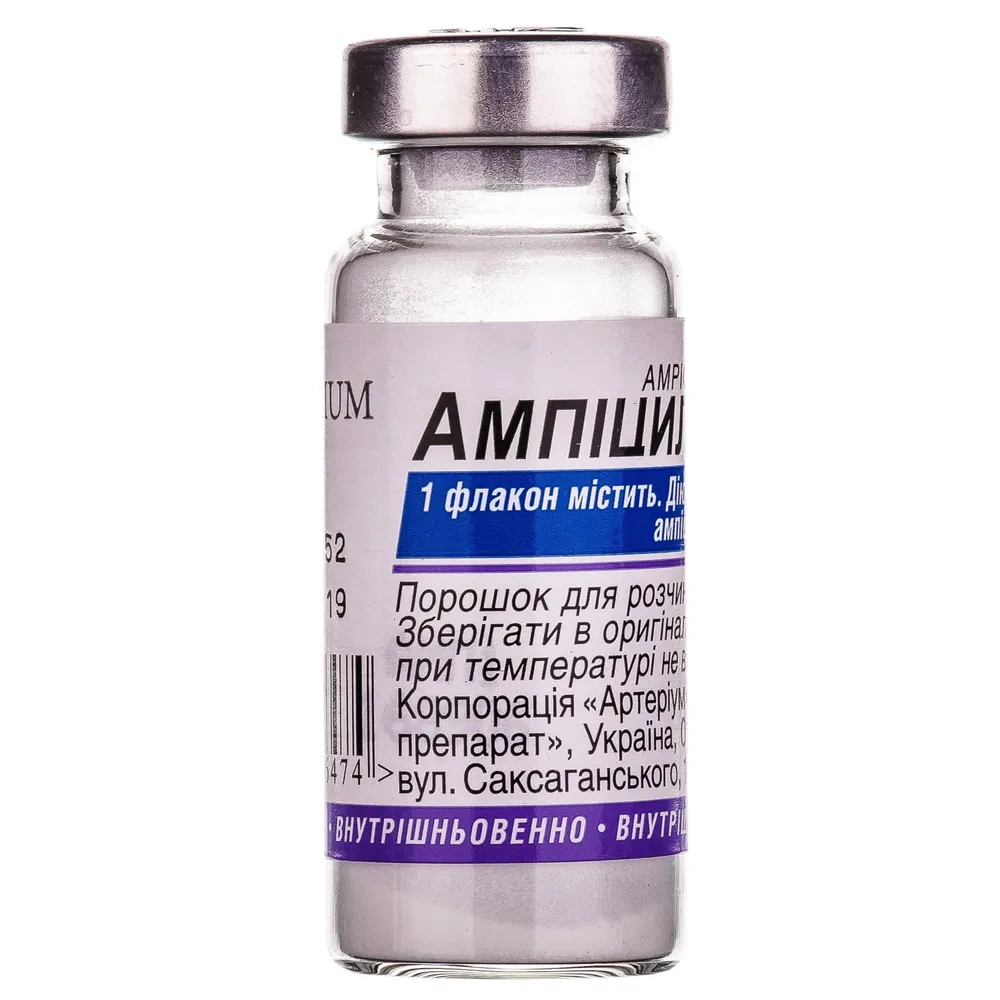
Table of Contents
INSTRUCTIONS FOR MEDICAL USE OF THE MEDICINAL PRODUCT AMPIcILLIN (AMPICILLIN)
Composition:
Active substance: 1 vial contains sterile sodium ampicillin salt, calculated as ampicillin – 0.5 g or 1.0 g.
Pharmaceutical form. Powder for solution for injection.
Main physico-chemical properties: white hygroscopic powder.
Pharmacotherapeutic group.
Beta-lactam antibiotics, penicillins. Broad-spectrum penicillins. ATC code J01CA01.
Pharmacological properties.
Pharmacodynamics.
Ampicillin has a broad spectrum of antibacterial (bactericidal) activity. It is active against Gram-positive microorganisms (Staphylococcus spp., except for strains producing penicillinase; Streptococcus spp., including S. pneumoniae; Corynebacterium diphtheriae, Bacillus anthracis, Clostridium spp., most enterococci) and Gram-negative microorganisms (Escherichia coli, Shigella spp., Salmonella spp., Neisseria meningitidis, N. gonorrhoeae, Proteus mirabilis, some strains of Klebsiella pneumoniae, Haemophilus influenzae).
The drug is destroyed by penicillinase and therefore is ineffective against penicillinase-producing bacterial strains. The drug inhibits peptidoglycan polymerase and transpeptidase, interferes with the formation of peptide bonds, and disrupts the later stages of cell wall synthesis in dividing microorganisms. The resulting defects in the cell wall reduce the osmotic stability of the bacterial cell, leading to its death (lysis).
Pharmacokinetics.
After intramuscular or intravenous administration, the drug circulates in high concentrations in the blood. Maximum blood concentration is achieved within 15 minutes after intravenous administration and within 0.5–1 hour after intramuscular administration. After intramuscular administration of 0.5–1 g of ampicillin at 4–6 hour intervals, therapeutic blood concentrations are maintained.
The drug penetrates well into tissues and body fluids, reaching therapeutic concentrations in pleural, peritoneal, and synovial fluid. In bile, concentrations may be 4–100 times higher than in blood. A relatively small portion (10–30%) binds to plasma proteins. It does not cross the blood-brain barrier. It undergoes minimal biotransformation. It is primarily excreted by the kidneys, partially via bile; in breastfeeding women, it is excreted into milk. Within 12 hours, 45–70% of the administered dose is excreted in urine. In cases of impaired renal excretory function, the drug concentration in blood increases and its elimination is slowed. When creatinine clearance is less than 10 ml/min, the blood level of the antibiotic may be up to 10 times higher than in patients with normal renal function. The elimination half-life is prolonged from 1–2 hours under normal conditions to 10–12 hours. Ampicillin does not accumulate upon repeated administration, allowing its use in high doses and for prolonged periods.
Clinical characteristics.
Indications.
Sepsis, septic endocarditis, meningitis, respiratory tract infections (pneumonia, chronic bronchitis, lung abscess); urinary and biliary tract infections (pyelitis, pyelonephritis, cystitis, cholangitis, cholecystitis); skin and soft tissue infections, and conditions caused by microorganisms sensitive to the antibiotic (caused by beta-hemolytic streptococci group A or coagulase-positive staphylococci sensitive to penicillin); eradication of typhoid carriers (carriers of Salmonella typhi and paratyphi).
Contraindications.
Hypersensitivity to ampicillin and other β-lactam antibiotics (penicillins, cephalosporins, carbapenems); severe impairment of liver and kidney function; infectious mononucleosis; leukemia; HIV infection; gastrointestinal disorders/antibiotic-associated colitis.
Interaction with other medicinal products and other forms of interaction.
Ampicillin enhances the effect of anticoagulants and aminoglycoside antibiotics, but reduces the efficacy of oral contraceptives. When ampicillin is used concomitantly with oral estrogen-containing drugs, a reduction in their effectiveness may occur due to decreased hepatic recirculation of estrogen.
Probenecid reduces tubular secretion of ampicillin, thereby increasing the risk of its toxic effects.
The likelihood of skin rash is increased by allopurinol.
High doses of ampicillin reduce plasma levels of atenolol; therefore, it is recommended to administer these drugs separately—atenolol should be administered first, followed by ampicillin.
Ampicillin reduces the clearance and increases the toxicity of methotrexate, and enhances digoxin absorption.
When ampicillin is used concomitantly with macrolides, paromomycin, tetracyclines, or chloramphenicol, the efficacy of both agents is reduced. Ampicillin may reduce the effect of sodium benzoate.
The concomitant use of ampicillin with beta-adrenergic blockers increases the risk of anaphylactic reactions.
Special precautions.
During treatment, regular monitoring of kidney, liver, and peripheral blood functions is required. The dose of the drug should be reduced in patients with renal impairment; in patients with severe renal impairment (creatinine clearance < 10 mL/min), the drug should be administered at half the dose with a 12-hour interval.
Caution is advised when treating children if the mother has a history of increased sensitivity to penicillins.
The drug should be used with caution in patients with bronchial asthma, hay fever, and other allergic diseases; desensitizing agents should be administered concurrently.
Prolonged treatment with the drug in debilitated patients may lead to the development of superinfection caused by microorganisms resistant to the drug.
The drug should be discontinued if skin rash occurs.
Patients with lymphocytic leukemia have an increased risk of developing skin rash.
Use during pregnancy or breastfeeding.
Teratogenic effects of ampicillin have not been observed. However, ampicillin should be used during pregnancy only if the expected benefit to the mother outweighs the potential risk to the fetus.
Ampicillin passes into breast milk in low concentrations. Breastfeeding should be discontinued during treatment with this drug.
Ability to affect reaction speed when driving or operating machinery.
During treatment with the drug, adverse reactions involving the central nervous system may occur in some patients (see section "Adverse reactions"). Therefore, caution should be exercised when driving vehicles or engaging in other potentially hazardous activities requiring increased attention and rapid psychomotor reactions.
Method of Administration and Dosage
The dosage and duration of treatment should be determined individually, depending on the severity of the disease, the site of infection, and the pathogen's sensitivity to the drug. The drug should be administered intramuscularly or intravenously (by infusion or bolus injection).
The recommended dose for adults is 250–500 mg four times daily. The daily dose ranges from 1–3 g. In severe infections, the daily dose may be increased up to 10 g or more.
For newborns, the drug should be administered at a daily dose of 20–40 mg/kg; for children of other age groups – 50–100 mg/kg. In severe infections, the indicated doses may be doubled. The daily dose should be divided into 4–6 doses administered at 4–6 hour intervals.
For meningitis in children: children under 1 month of age should receive 100–500 mg/kg daily; children aged 1 month and older should receive 200–300 mg/kg daily, administered in 6–8 doses. The daily dose should be divided into 4–6 administrations.
The duration of treatment is 7–14 days or longer. Ampicillin therapy should be continued for at least 48–72 hours after normalization of body temperature and disappearance of disease symptoms. In infections caused by hemolytic streptococcus, the duration of treatment should be at least 10 days.
A solution for intramuscular injection should be prepared immediately before use by adding 5 mL of sterile water for injection to the vial contents. For intravenous bolus injection, a single dose (not exceeding 2 g) should be dissolved in 5–10 mL of water for injection or 0.9% sodium chloride solution and administered slowly over 3–5 minutes (administration of 1–2 g doses should take 10–15 minutes). When the single dose exceeds 2 g, the drug should be administered intravenously by infusion. For intravenous infusion, a single dose (2–4 g) should be dissolved in a small volume of water for injection (7.5–15 mL, respectively), then the resulting antibiotic solution should be added to 125–250 mL of 0.9% sodium chloride solution or 5–10% glucose solution and administered at a rate of 60–80 drops per minute. For infusion in children, 5–10% glucose solution should be used as the solvent. The prepared solutions should be used immediately.
Children. Ampicillin is used in pediatric practice.
Overdose.
In case of overdose, toxic effects on the central nervous system (dizziness, headache), dyspeptic symptoms (nausea, vomiting, diarrhea), and allergic reactions in the form of skin rash may occur. If symptoms of overdose occur, the drug should be discontinued immediately, and symptomatic treatment should be administered as needed: gastric lavage, activated charcoal, saline laxatives, correction of water-electrolyte balance, and hemodialysis. In case of allergic reactions, antihistamines and desensitizing agents are indicated.
Adverse Reactions
Immune system disorders: allergic reactions, including rash, itching, hyperemia, urticaria, rhinitis, conjunctivitis; rarely – fever, joint pain, eosinophilia, exfoliative dermatitis, purpura, multiforme exudative erythema, Stevens-Johnson syndrome; very rarely – Quincke's edema (angioedema), anaphylactic shock.
Gastrointestinal disorders: nausea, vomiting, diarrhea, taste disturbances, abdominal pain, stomatitis, glossitis, dry mouth, intestinal dysbiosis, gastritis, enterocolitis, hemorrhagic colitis. During treatment or within several weeks after completion of antibiotic therapy, there is a risk of developing pseudomembranous colitis.
Hepatobiliary disorders: hepatitis, cholestatic jaundice.
Central and peripheral nervous system disorders: when high doses are administered to patients with renal insufficiency – dizziness, headache, tremor, seizures, neuropathy.
Local reactions: including swelling, itching, hyperemia at the injection site.
Laboratory findings: moderate increase in the activity of "liver" transaminases, lactate dehydrogenase, alkaline phosphatase, creatinine; false-positive results in non-enzymatic glucosuria tests and Coombs' test.
Other adverse effects: reversible hematopoietic disorders (leukopenia, thrombocytopenia, hemolytic anemia, agranulocytosis), interstitial nephritis, superinfection, candidiasis. In patients with bacteremia (sepsis) treated with Ampicillin, a bacterial lysis reaction (Jarisch-Herxheimer reaction) may occur.
Shelf life. 2 years.
Storage conditions.
Store in original packaging at a temperature not exceeding 25 °C.
Keep out of reach of children.
Incompatibility. Mixing Ampicillin with other medicinal agents in the same container is not permitted.
Packaging.
0.5 g or 1.0 g in vials; 10 vials per carton.
Prescription category. Prescription only.
Manufacturer. JSC "Kyivmedpreparat".
Manufacturer's location and address of place of business.
139 Saksaganskogo St., Kyiv, 01032, Ukraine.
INSTRUCTIONS
for medical use of medicinal product
AMPICILLIN
(AMPICILLIN)
Composition:
Active substance: 1 vial contains sterile sodium ampicillin salt equivalent to 0.5 g or 1.0 g of ampicillin.
Pharmaceutical form. Powder for solution for injection.
Main physicochemical properties: white, hygroscopic powder.
Pharmacotherapeutic group.
Beta-lactam antibiotics, penicillins. Broad-spectrum penicillins.
ATC code J01CA01.
Pharmacological properties.
Pharmacodynamics.
Ampicillin has a broad spectrum of antibacterial (bactericidal) activity. It is active against Gram-positive microorganisms (Staphylococcus spp., except penicillinase-producing strains; Streptococcus spp., including S. pneumoniae; Corynebacterium diphtheriae, Bacillus anthracis, Clostridium spp., most enterococci) and Gram-negative microorganisms (Escherichia coli, Shigella spp., Salmonella spp., Neisseria meningitidis, N. gonorrhoeae, Proteus mirabilis, some strains of Klebsiella pneumoniae, Haemophilus influenzae).
The drug is destroyed by penicillinase and therefore is ineffective against penicillinase-producing bacterial strains. It inhibits peptidoglycan polymerase and transpeptidase, prevents formation of peptide bonds, and disrupts late stages of cell wall synthesis in dividing microorganisms. Resulting defects in the cell wall reduce osmotic stability of bacterial cells, leading to their death (lysis).
Pharmacokinetics.
After intramuscular or intravenous administration, the drug circulates in high blood concentrations. Maximum blood concentration is reached within 15 minutes after intravenous injection and within 0.5–1 hour after intramuscular injection. Intramuscular administration of 0.5–1 g of ampicillin at 4–6 hour intervals maintains therapeutic blood concentrations.
The drug penetrates well into tissues and body fluids and reaches therapeutic concentrations in pleural, peritoneal, and synovial fluid. In bile, concentrations may be 4–100 times higher than in blood. A relatively small portion (10–30%) binds to plasma proteins. It does not cross the blood-brain barrier. It undergoes minimal biotransformation. It is excreted mainly by the kidneys, partially via bile; in breastfeeding women, it is excreted into milk. Within 12 hours, 45–70% of the administered dose is excreted in urine. Impaired renal excretory function increases drug levels in blood and slows elimination. When creatinine clearance is less than 10 ml/min, antibiotic levels in blood may be up to 10 times higher than in patients with normal renal function. Elimination half-life increases from 1–2 hours under normal conditions to 10–12 hours. Ampicillin does not accumulate with repeated administration, allowing its use in high doses and for prolonged periods.
Clinical characteristics.
Indications.
Sepsis, septic endocarditis, meningitis, respiratory tract infections (pneumonia, chronic bronchitis, lung abscess); urinary and biliary tract infections (pyelitis, pyelonephritis, cystitis, cholangitis, cholecystitis); skin and soft tissue infections, and diseases caused by microorganisms sensitive to the antibiotic (caused by beta-hemolytic group A streptococci or coagulase-positive staphylococci sensitive to penicillin); carrier state sanitation in typhoid carriers (Salmonella typhi and paratyphi).
Contraindications.
Hypersensitivity to ampicillin and other β-lactam antibiotics (penicillins, cephalosporins, carbapenems); severe liver or kidney dysfunction; infectious mononucleosis; leukemia; HIV infection; gastrointestinal disorders/colitis associated with antibiotic use.
Interaction with other medicinal products and other forms of interaction.
Ampicillin enhances the effects of anticoagulants and aminoglycoside antibiotics, and reduces the efficacy of oral contraceptives. When ampicillin is used concurrently with oral estrogen-containing drugs, a reduction in their effectiveness may occur due to decreased hepatic estrogen circulation.
Probenecid reduces tubular secretion of ampicillin, thereby increasing the risk of toxic effects.
Allopurinol increases the likelihood of skin rash.
High doses of ampicillin reduce plasma levels of atenolol; therefore, these drugs should be administered separately—atenolol first, followed by ampicillin.
Ampicillin reduces methotrexate clearance and increases its toxicity, and enhances digoxin absorption.
When ampicillin is used with macrolides, paromomycin, tetracyclines, or chloramphenicol, the efficacy of both drugs is reduced. Ampicillin may reduce the effect of sodium benzoate.
The risk of anaphylactic reactions increases when ampicillin is used concurrently with beta-adrenergic blockers.
Special precautions.
During treatment, regular monitoring of kidney and liver function and peripheral blood counts is required. The dose should be reduced in patients with renal insufficiency; in patients with severe renal impairment (creatinine clearance <10 ml/min), the drug should be administered at half-dose every 12 hours.
Use with caution in pediatric patients if the mother has a history of hypersensitivity to penicillins.
In patients with bronchial asthma, hay fever, or other allergic conditions, the drug should be prescribed along with desensitizing agents.
Prolonged treatment in weakened patients may lead to superinfection caused by drug-resistant microorganisms.
Discontinue the drug if skin rash develops.
Patients with lympholeukemia have an increased risk of developing skin rash.
Use during pregnancy or breastfeeding.
A teratogenic effect of ampicillin has not been demonstrated. However, ampicillin should be used during pregnancy only if the expected benefit to the woman outweighs the potential risk to the fetus.
Ampicillin passes into breast milk in low concentrations. Breastfeeding should be discontinued during treatment.
Ability to affect reaction speed when driving or operating machinery.
During treatment, some patients may experience adverse reactions affecting the central nervous system (see section "Adverse Reactions"). Therefore, caution is advised when driving or engaging in other potentially hazardous activities requiring high concentration and fast psychomotor reactions.
Method of administration and dosage.
The dosage and duration of treatment should be determined individually based on disease severity, infection site, and pathogen sensitivity to the drug. The drug is administered intramuscularly or intravenously (by infusion or bolus injection).
Recommended dose for adults: 250–500 mg four times daily. Daily dose: 1–3 g. In severe infections, the daily dose may be increased up to 10 g or more.
For newborns: daily dose of 20–40 mg/kg; for children of other age groups: 50–100 mg/kg. In severe infections, these doses may be doubled. The daily dose should be divided into 4–6 doses administered at 4–6 hour intervals.
For meningitis in children: children under 1 month: 100–500 mg/kg daily; children over 1 month: 200–300 mg/kg daily, administered in 6–8 doses. The daily dose should be divided into 4–6 doses.
Duration of treatment is 7–14 days or longer. Treatment with ampicillin should continue for at least 48–72 hours after body temperature normalizes and symptoms disappear. For infections caused by hemolytic streptococci, treatment duration should be at least 10 days.
For intramuscular injection: prepare the solution immediately before use by adding 5 ml of sterile water for injection to the vial contents. For intravenous bolus injection: dissolve a single dose (not exceeding 2 g) in 5–10 ml of water for injection or 0.9% sodium chloride solution and administer slowly over 3–5 minutes (administration of 1–2 g dose should take 10–15 minutes). For single doses exceeding 2 g, administer intravenously by infusion. For intravenous infusion: dissolve a single dose (2–4 g) in a small volume of water for injection (7.5–15 ml, respectively), then add the resulting antibiotic solution to 125–250 ml of 0.9% sodium chloride solution or 5–10% glucose solution and infuse at a rate of 60–80 drops per minute. For infusion in children, use 5–10% glucose solution as solvent. Prepared solutions should be used immediately.
Children. Ampicillin is used in pediatric practice.
Overdose.
Overdose may cause toxic effects on the central nervous system (dizziness, headache), dyspeptic symptoms (nausea, vomiting, diarrhea), and allergic reactions such as skin rash. In case of overdose symptoms, discontinue the drug immediately and provide symptomatic treatment as needed: gastric lavage, activated charcoal, saline laxatives, correction of water-electrolyte balance, hemodialysis. Antihistamines and desensitizing agents are indicated for allergic reactions.
Adverse Reactions
Immune system disorders: allergic reactions including rash, itching, hyperemia, urticaria, rhinitis, conjunctivitis; rarely – fever, joint pain, eosinophilia, exfoliative dermatitis, purpura, multiforme exudative erythema, Stevens-Johnson syndrome; very rarely – Quincke's edema (angioedema), anaphylactic shock.
Gastrointestinal disorders: nausea, vomiting, diarrhea, taste disturbances, abdominal pain, stomatitis, glossitis, dry mouth, intestinal dysbiosis, gastritis, enterocolitis, hemorrhagic colitis. During treatment or within several weeks after completion of antibiotic therapy, there is a risk of developing pseudomembranous colitis.
Hepatobiliary disorders: hepatitis, cholestatic jaundice.
Central and peripheral nervous system disorders: when high doses are administered to patients with renal insufficiency – dizziness, headache, tremor, seizures, neuropathy.
Local reactions: including swelling, itching, hyperemia at the injection site.
Laboratory findings: moderate increase in the activity of "liver" transaminases, lactate dehydrogenase, alkaline phosphatase, creatinine; false-positive results in non-enzymatic glucosuria tests and Coombs' test.
Other: reversible hematopoietic disorders (leukopenia, thrombocytopenia, hemolytic anemia, agranulocytosis), interstitial nephritis, superinfection, candidiasis. In patients with bacteremia (sepsis) treated with ampicillin, a bacterial lysis reaction (Jarisch-Herxheimer reaction) may occur.
Shelf life. 2 years.
Storage conditions.
Store in original packaging at a temperature not exceeding 25 °C.
Keep out of reach of children.
Incompatibility. Mixing ampicillin with other medicinal agents in the same container is not permitted.
Packaging.
0.5 g or 1.0 g in vials; 10 vials per carton.
Prescription category. By prescription only.
Manufacturer. JSC "Kievmedpreparat".
Manufacturer's location and address of place of business.
139 Saksaganskogo St., Kyiv, 01032, Ukraine.
Date of last revision.