Amitriptyline
Ukraine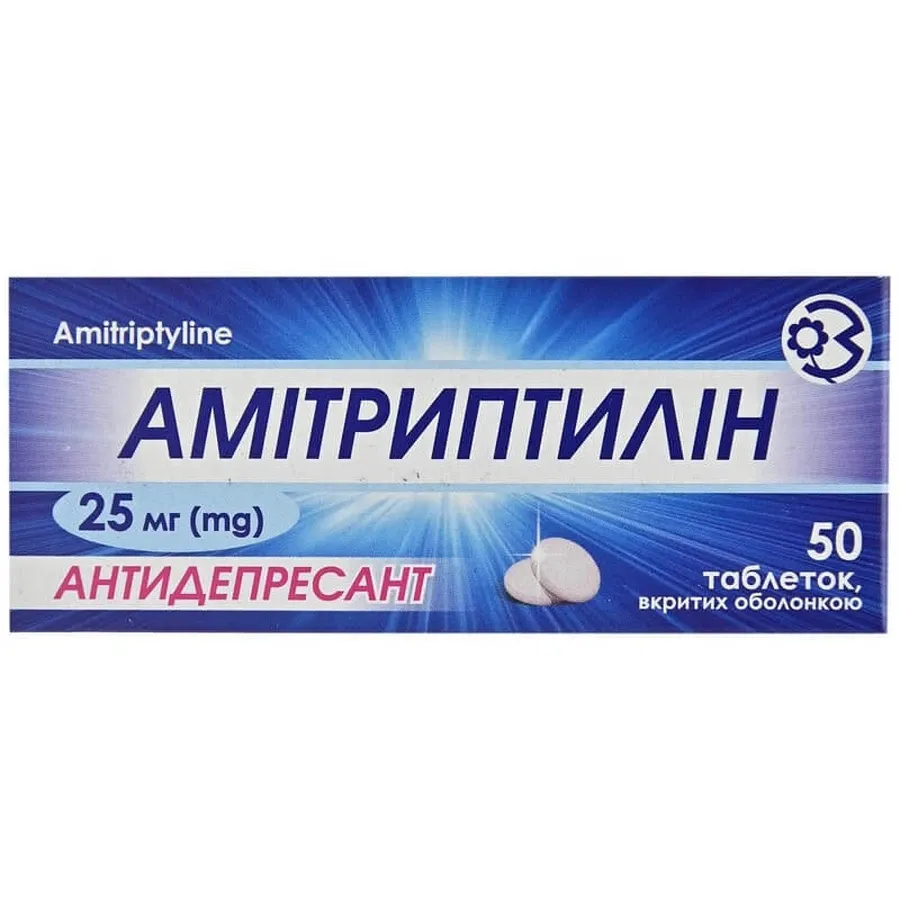
Table of Contents
INSTRUCTION FOR MEDICAL USE OF THE MEDICINAL PRODUCT AMITRIPTYLINE (AMITRIPTYLINE)
Composition:
Active substance: amitriptyline;
1 tablet contains 25 mg of amitriptyline;
Excipients: lactose monohydrate; sucrose; corn starch; gelatin; talc; calcium stearate; Opadry II White, containing: titanium dioxide (E-171), talc, polyethylene glycol, polyvinyl alcohol; Ponceau 4R (E-124); polyethylene glycol 6000.
Pharmaceutical form. Film-coated tablets.
Main physicochemical properties: film-coated tablets of light pink color. On cross-section, two layers are visible, the inner layer being slightly yellowish.
Pharmacotherapeutic group. Antidepressants. Non-selective inhibitors of monoamine reuptake. ATC code N06AA09.
Pharmacological Properties
Pharmacodynamics
Amitriptyline is a tricyclic antidepressant and analgesic. Its anticholinergic properties prevent the reuptake, and thus inactivation, of norepinephrine and serotonin at nerve receptors, thereby enhancing the activity of norepinephrine and serotonin in the brain. This mechanism underlies the action of amitriptyline.
The mechanism of action also includes blockade of sodium, potassium, and N-methyl-D-aspartate (NMDA) ion channels at the level of the central and spinal cord. The effects of norepinephrine, blockade of sodium and NMDA channels, are mechanisms involved in the suppression of neuropathic pain, prevention of chronic tension-type headache, and migraine prophylaxis. The analgesic effect of amitriptyline is not related to its antidepressant properties.
Tricyclic antidepressants have varying degrees of affinity for muscarinic and histamine H1 receptors.
Antidepressant and analgesic effects typically become evident after 2–4 weeks of therapy, while the sedative effect remains unchanged.
Pharmacokinetics
Absorption
Oral administration of the drug in tablet form results in peak serum concentrations being reached approximately 4 hours later (tmax = 3.89 ± 1.87 h; range 1.93–7.98 h). After oral administration of 50 mg, the mean Cmax is 30.95 ± 9.61 ng/mL (range 10.85–45.70 ng/mL; 111.57 ± 34.64 nmol/L; range 39.06–164.52 nmol/L). The mean value of absolute oral bioavailability is 53% (Fabs = 0.527 ± 0.123; range 0.219–0.756).
Distribution
The apparent volume of distribution (Vd) β, estimated after intravenous administration, is 1221 ± 280 L (range 769–1702 L; 16 ± 3 L/kg).
Plasma protein binding is approximately 95%. Amitriptyline and its main metabolite, nortriptyline, cross the placental barrier.
In breastfeeding women, amitriptyline and nortriptyline pass into breast milk in small amounts. The ratio of concentration in breast milk to serum concentration in women is 1:1. The estimated daily dose (amitriptyline + nortriptyline) received by the infant is approximately 2% of the maternal dose of amitriptyline, adjusted for infant body weight (in mg/kg).
Biotransformation
In vitro, amitriptyline metabolism occurs primarily via demethylation (CYP2C19, CYP3A) and hydroxylation (CYP2D6), followed by conjugation with glucuronic acid. This metabolism is characterized by genetically determined polymorphism. The main active metabolite is the secondary amine nortriptyline. Nortriptyline is a more potent inhibitor of norepinephrine reuptake than of serotonin reuptake, whereas amitriptyline equally inhibits the reuptake of both neurotransmitters. Other metabolites (cis- and trans-10-hydroxyamitriptyline, as well as cis- and trans-10-hydroxynortriptyline) have profiles identical to that of nortriptyline but with significantly lower potency. Demethylnortriptyline and amitriptyline-N-oxide are present in plasma only in negligible amounts, with the latter being completely devoid of activity. All metabolites have lower anticholinergic activity compared to amitriptyline and nortriptyline. In plasma, the total concentration of 10-hydroxynortriptyline predominates quantitatively, although most metabolites are present in conjugated form.
Elimination
The elimination half-life (t½β) of amitriptyline after oral administration is approximately 25 hours (24.65 ± 6.31 h; range 16.49–40.36 h). The mean systemic clearance (Cls) is 39.24 ± 10.18 L/h (range 24.53–53.73 L/h).
Excretion occurs primarily via urine. Renal excretion of unchanged amitriptyline is minimal (approximately 2%).
Steady-state plasma concentrations of amitriptyline and nortriptyline are achieved in most patients within 1 week. At steady state, plasma levels over 24 hours consist of approximately equal proportions of amitriptyline and nortriptyline during treatment with the standard tablet formulation administered three times daily.
Elderly Patients
In elderly patients, a prolonged elimination half-life and reduced oral clearance (Clo) have been observed due to less intensive metabolism.
Impaired Liver Function
Liver dysfunction may reduce hepatic extraction, resulting in higher plasma drug concentrations. The drug should be used with caution in patients with hepatic insufficiency.
Impaired Renal Function
Renal impairment does not affect the drug's pharmacokinetics.
Polymorphism
Drug metabolism depends on genetic polymorphism (CYP2D6 and CYP2C19 isoenzymes).
Pharmacokinetic/Pharmacodynamic Relationship
The therapeutic plasma concentration in major depressive disorders is 80–200 ng/mL (≈ 280–700 nmol/L) (combined for amitriptyline and nortriptyline). Levels above 300–400 ng/mL are associated with an increased risk of cardiac conduction disturbances, such as QRS complex widening or atrioventricular block.
Clinical characteristics.
Indications.
Major depressive disorder.
Neuropathic pain.
Prevention of chronic tension-type headache.
Prevention of migraine.
Nocturnal enuresis in children aged 11 years and older in the absence of organic pathology (see section "Dosage and administration").
Contraindications.
Hypersensitivity to the active substance or to any of the excipients of the medicinal product.
Recent myocardial infarction.
Any type of heart block or cardiac arrhythmia, as well as coronary artery insufficiency.
Concomitant use of monoamine oxidase inhibitors (MAOIs) is contraindicated (see section "Interaction with other medicinal products and other forms of interaction"). Concurrent use of amitriptyline and MAOIs may lead to the development of serotonin syndrome (a combination of symptoms that may include agitation, confusion, tremor, myoclonus, and hyperthermia). Treatment with amitriptyline may be initiated 14 days after discontinuation of irreversible non-selective MAOIs and no less than 1 day after discontinuation of reversible inhibitors such as moclobemide and selegiline. Treatment with MAOIs may be initiated 14 days after discontinuation of amitriptyline.
Severe liver disease.
Children under 11 years of age.
Interaction with other medicinal products and other forms of interaction.
Pharmacodynamic interactions
Contraindicated combinations.
MAOIs (non-selective, as well as selective A [moclobemide] and B [selegiline]): risk of serotonin syndrome (see section "Contraindications").
Undesirable combinations.
Sympathomimetic agents: amitriptyline may potentiate cardiovascular effects of adrenaline, ephedrine, isoprenaline, noradrenaline, phenylephrine, and phenylpropanolamine (present, for example, in local and general anesthetics and nasal decongestants).
Adrenergic neuron blockers: tricyclic antidepressants may interfere with the antihypertensive effects of centrally acting antihypertensive agents such as guanethidine, betanidine, reserpine, clonidine, and methyldopa. It is recommended to review the entire antihypertensive therapy regimen during treatment with tricyclic antidepressants.
Anticholinergic agents: tricyclic antidepressants may potentiate the effects of these drugs on the eyes, central nervous system (CNS), gastrointestinal tract, and urinary bladder; concomitant use should be avoided due to increased risk of paralytic ileus, hyperpyrexia, etc.
Medicinal products that prolong the QT interval on electrocardiogram, including antiarrhythmics (quinidine), antihistamines (astemizole and terfenadine), certain antipsychotics (e.g., pimozide and sertindole), cisapride, halofantrine, and sotalol, may increase the risk of ventricular arrhythmias when used concomitantly with tricyclic antidepressants. Caution is advised when combining amitriptyline with methadone due to possible additive effects on the QT interval and increased risk of serious cardiovascular events.
Caution is also recommended when combining amitriptyline with diuretics that cause hypokalemia (e.g., furosemide).
Thioridazine: concomitant use of amitriptyline and thioridazine (a CYP2D6 substrate) should be avoided due to inhibition of thioridazine metabolism and, consequently, increased risk of cardiac adverse effects.
Tramadol: concomitant use of tramadol (a CYP2D6 substrate) and tricyclic antidepressants (TCAs), such as amitriptyline, increases the risk of seizures and serotonin syndrome. In addition, this combination may inhibit the metabolism of tramadol to its active metabolite and thereby increase tramadol concentration, potentially causing opioid toxicity.
Antifungal agents, such as fluconazole and terbinafine, may increase serum concentrations of tricyclic antidepressants and the severity of associated toxicity. Cases of unconsciousness and torsade de pointes arrhythmia have been reported.
Combinations requiring special caution.
CNS depressants: amitriptyline may enhance the sedative effects of alcohol, barbiturates, and other CNS depressants.
Pharmacokinetic interactions
Effect of other medicinal products on the pharmacokinetics of amitriptyline
Tricyclic antidepressants (TCAs), including amitriptyline, are primarily metabolized by the hepatic cytochrome P450 isoenzymes CYP2D6 and CYP2C19, which exhibit polymorphism in the population. CYP1A2, CYP3A4, and CYP2C9 isoenzymes also participate in amitriptyline metabolism.
Inhibitors of CYP2D6: the activity of CYP2D6 isoenzyme may be inhibited by many medicinal products, such as neuroleptics, serotonin reuptake inhibitors, β-adrenoreceptor blockers, and antiarrhythmic agents. Examples of strong CYP2D6 inhibitors include bupropion, fluoxetine, paroxetine, and quinidine. These drugs may cause significant reduction in metabolism and substantial increase in plasma concentrations of TCAs. Plasma levels of TCAs should be monitored when co-administered with another drug that is a strong CYP2D6 inhibitor. The dose of amitriptyline should be adjusted accordingly. Caution is recommended when combining amitriptyline with duloxetine, a moderate CYP2D6 inhibitor.
Other inhibitors of cytochrome P450: cimetidine and methylphenidate, as well as calcium channel blockers (e.g., diltiazem and verapamil), may increase plasma levels of tricyclic antidepressants and the associated toxicity. Antifungal agents such as fluconazole (a CYP2C9 inhibitor) and terbinafine (a CYP2D6 inhibitor) have been shown to increase serum levels of amitriptyline and nortriptyline.
CYP3A4 and CYP1A2 isoenzymes play a lesser role in amitriptyline metabolism. However, fluvoxamine (a strong CYP1A2 inhibitor) increases plasma concentrations of amitriptyline, and such combination should be avoided. Clinically significant interactions may be expected with concomitant use of amitriptyline and strong CYP3A4 inhibitors such as ketoconazole, itraconazole, and ritonavir.
Tricyclic antidepressants and neuroleptics mutually inhibit each other's metabolism; this may lead to a reduced seizure threshold and occurrence of seizures. Dose adjustment of these medicinal products may be necessary.
Inducers of cytochrome P450: oral contraceptives, rifampicin, phenytoin, barbiturates, carbamazepine, and St. John's wort (Hypericum perforatum) may enhance metabolism and thereby reduce plasma concentrations of tricyclic antidepressants, leading to diminished antidepressant effect.
In the presence of ethanol, free plasma concentrations of amitriptyline and concentrations of nortriptyline were increased.
Plasma concentrations of amitriptyline may be increased by sodium valproate and valpromide. Therefore, clinical monitoring is recommended.
Special precautions for use.
When high doses of the drug are used, the risk of developing cardiac arrhythmias and severe arterial hypotension increases. Such conditions may also occur when standard doses are used in patients with pre-existing heart diseases.
QT interval prolongation.
Cases of QT interval prolongation and arrhythmias have been reported in the postoperative period. Amitriptyline should be used with caution in patients with marked bradycardia, decompensated heart failure, or those concurrently taking drugs that prolong the QT interval. Electrolyte disturbances (hypokalemia, hyperkalemia, hypomagnesemia) are factors that increase the proarrhythmic risk.
The use of anesthetics in patients receiving tricyclic or tetracyclic antidepressants may increase the risk of arrhythmias and arterial hypotension. If possible, amitriptyline should be discontinued several days before surgery. In case of unavoidable emergency surgery, the anesthesiologist must be informed about amitriptyline therapy.
Special attention is required when prescribing amitriptyline to patients with hyperthyroidism or those taking thyroid hormones, as cardiac arrhythmias may develop.
Elderly patients are particularly prone to postural hypotension during amitriptyline therapy.
The drug should be prescribed with caution to patients with seizure disorders, urinary retention, benign prostatic hyperplasia, hyperthyroidism, paranoid symptoms, as well as severe liver or cardiovascular diseases, pyloric stenosis, and paralytic ileus.
In patients with the rare condition of shallow anterior chamber and narrow chamber angle of the eye, mydriasis may provoke acute glaucoma attacks.
Depression is associated with an increased risk of suicidal thoughts, self-harm, suicide (and related events). This risk may persist until sustained remission is achieved. Since improvement may not occur during the first few weeks of treatment or longer, patients should be closely monitored until such improvement occurs. Clinical experience indicates that suicide risk may increase during the early stages of recovery. Patients with a history of suicidal behavior or pronounced suicidal ideation are more prone to suicide or suicide attempts and should be under careful supervision during treatment. A meta-analysis of placebo-controlled clinical trials of antidepressants involving adult patients with psychiatric disorders showed an increased risk of suicidal behavior with antidepressants compared to placebo in patients under 25 years of age. Close monitoring of patients, especially those at high risk of suicidal behavior, should accompany therapy, particularly at the beginning of treatment and after dose adjustments. Patients and their caregivers should be warned to monitor for any clinical worsening, suicidal thoughts or behavior, and unusual changes in behavior, and to seek medical help if such symptoms occur.
In patients with bipolar disorder, a shift into a manic phase may occur; amitriptyline therapy should be discontinued at the onset of the manic phase.
Like other psychotropic agents, amitriptyline may alter sensitivity to insulin and glucose, necessitating adjustment of antidiabetic therapy in diabetic patients; in addition, depressive illness itself may manifest with changes in glucose balance in the patient.
Cases of hyperpyrexia have been reported during concomitant use of tricyclic antidepressants with anticholinergic or neuroleptic drugs, especially in hot weather.
Abrupt discontinuation of therapy after prolonged treatment may cause withdrawal symptoms such as headache, malaise, insomnia, and irritability. These symptoms are not indicative of drug dependence.
Amitriptyline should be used with caution in patients taking selective serotonin reuptake inhibitors (SSRIs).
Night enuresis.
An ECG should be performed before initiating amitriptyline therapy to exclude QT interval prolongation syndrome.
Amitriptyline used for enuresis should not be combined with anticholinergic drugs.
Suicidal thoughts and behavior may also occur during early treatment with antidepressants for disorders other than depression. Therefore, the same precautionary measures should be followed when treating both depressed patients and those with enuresis.
Severe skin reactions.
Severe cutaneous adverse reactions, including drug reaction with eosinophilia and systemic symptoms (DRESS syndrome), have been reported with amitriptyline use, which may be life-threatening or lead to fatal outcomes. These reactions usually occur within 2–6 weeks.
Patients should be informed about the signs and symptoms of such reactions, and skin reactions should be carefully monitored during treatment.
If signs or symptoms suggestive of these reactions appear, the drug should be discontinued immediately. Reinitiating amitriptyline therapy in such patients is strictly contraindicated. Alternative treatment options (if needed) should be considered.
Children.
Long-term safety data regarding growth, sexual maturation, cognitive, and behavioral development in children and adolescents are lacking.
If a patient has known sugar intolerances, they should consult a physician before taking this medication.
The drug contains Ponceau 4R (E-124), which may cause allergic reactions.
Use during pregnancy or breastfeeding.
Pregnancy
Data on the use of amitriptyline during pregnancy are limited.
Animal studies have shown reproductive toxicity.
Amitriptyline is not recommended during pregnancy unless clearly necessary. Use is possible only after careful assessment of the risk-benefit ratio. With prolonged use or administration during the last weeks of pregnancy, withdrawal symptoms may occur in newborns, which may include irritability, hypertension, tremor, irregular breathing, feeding difficulties, loud crying, and possibly anticholinergic symptoms (urinary retention, constipation).
Breastfeeding
Amitriptyline and its metabolites are excreted in breast milk (0.6–1% of maternal dose).
Risk to infants cannot be excluded. The decision to discontinue breastfeeding or to discontinue/withhold amitriptyline therapy should be made considering the benefits of breastfeeding for the child and the therapeutic benefit for the mother.
Fertility
Amitriptyline reduced the frequency of pregnancy in rats.
There are no data on the effect of amitriptyline on human fertility.
Ability to influence reaction speed when driving or operating machinery.
Amitriptyline is a sedative drug. In patients receiving psychotropic medication, impaired attention and concentration may be expected, which contraindicates driving vehicles or operating machinery. These adverse effects may be potentiated by concomitant alcohol consumption.
Dosage and Administration
The medicinal product is taken orally. Tablets should be swallowed with water.
Major Depressive Disorder.
Treatment should be initiated with low doses, gradually increasing them under careful monitoring of the clinical effect and signs of sensitivity to the medicinal product.
Adults.
Initially 25 mg twice daily (50 mg per day). If necessary, the dose may be increased by 25 mg every other day up to 150 mg per day, divided into two doses.
The maintenance dose corresponds to the lowest effective dose.
Patients aged 65 years and older, and patients with cardiovascular diseases.
Initially 25 mg once daily.
The daily dose may be increased to 100–150 mg per day, divided into two doses, depending on individual patient response and tolerability. Doses above 100 mg should be used with caution. The maintenance dose corresponds to the lowest effective dose.
Children.
Amitriptyline should not be used for the treatment of major depressive disorder in children and adolescents (under 18 years of age), as the safety and efficacy of the medicinal product in this patient age group have not been established.
Treatment duration.
The antidepressant effect usually develops within 2–4 weeks. Antidepressant treatment is symptomatic and should be continued for an appropriate period, typically up to 6 months after recovery, to prevent relapse. For patients with recurrent (unipolar) depression, maintenance therapy may be required for several years to prevent new episodes.
Neuropathic pain, prophylactic treatment of chronic tension-type headache, and prophylactic treatment of migraine in adults.
The dose should be titrated individually for each patient to ensure adequate analgesia and tolerability of adverse reactions. Generally, the lowest effective dose should be used for the shortest duration necessary to treat symptoms.
Adults.
Recommended doses are 25–75 mg once daily in the evening. Doses above 100 mg should be used with caution.
The initial dose is 25 mg taken in the evening. The dose may be increased by 25 mg every 3–7 days, provided tolerability is acceptable.
The dose may be taken once daily or divided into two doses. A single dose above 75 mg is not recommended.
Patients aged 65 years and older, and patients with cardiovascular diseases.
The recommended initial dose is 25 mg in the evening.
Doses above 75 mg should be used with caution.
The dose may be increased depending on individual patient response and tolerability.
Children.
Amitriptyline should not be used for the treatment of neuropathic pain, prophylactic treatment of chronic tension-type headache, or prophylactic treatment of migraine in children and adolescents (under 18 years of age), as the safety and efficacy of the medicinal product in this patient age group have not been established.
Treatment duration.
Neuropathic pain
Treatment is symptomatic and should be continued for an appropriate period. In many patients, therapy may last several years. Regular assessment of the need for continued treatment is recommended.
Prophylactic treatment of chronic tension-type headache and prophylactic treatment of migraine in adults
Treatment should be continued for a defined period. Regular assessment of the need for continued treatment is recommended.
Nocturnal Enuresis.
Children.
Children aged 11 years and older: 25–50 mg per day. The dose should be increased gradually.
The medicinal product should be taken 1–1.5 hours before bedtime.
Prior to initiating amitriptyline therapy, an ECG should be performed to exclude QT interval prolongation syndrome.
Treatment duration.
The maximum treatment course duration should not exceed 3 months.
If repeated courses of amitriptyline treatment are required, medical evaluation should be conducted every 3 months.
When discontinuing treatment, the dose of amitriptyline should be gradually reduced.
Renal impairment.
The medicinal product may be administered in usual doses to patients with impaired renal function.
Hepatic impairment.
Careful dose titration is recommended, and, if possible, monitoring of plasma drug concentrations.
Cytochrome P450 CYP2D6 inhibitors.
Depending on individual patient response, a reduction in the amitriptyline dose may be considered when co-administered with a strong CYP2D6 inhibitor (e.g., bupropion, quinidine, fluoxetine, paroxetine).
Poor metabolizers of CYP2D6 or CYP2C19.
Patients who are poor metabolizers of CYP2D6 or CYP2C19 may have increased plasma concentrations of amitriptyline and its active metabolite nortriptyline. A 50% reduction of the recommended initial dose may be considered.
Discontinuation of treatment
When discontinuing treatment, the dose should be gradually reduced over several weeks.
Children.
Treatment of nocturnal enuresis in children aged 11 years and older is possible only in the absence of organic pathology, including spina bifida, and concomitant disorders, and only if there is no response to non-pharmacological and pharmacological treatments, including antispasmodic agents and vasopressin preparations. This medicinal product should be prescribed only by a physician experienced in treating refractory enuresis.
Overdose.
Symptoms.
Anticholinergic symptoms include mydriasis, tachycardia, urinary retention, dryness of mucous membranes, and gastrointestinal motility depression. Seizures, hyperthermia, and sudden onset of CNS depression may occur. Decreased consciousness may progress to coma with respiratory depression.
Cardiac symptoms: arrhythmias (ventricular tachyarrhythmias, flutter-fibrillation, ventricular fibrillation). On ECG, typical findings include prolonged PR interval, widened QRS complex, QT prolongation, widening or inversion of the T wave, ST segment depression, and various degrees of heart block up to cardiac arrest. Widening of the QRS complex usually correlates clearly with the severity of toxicity following acute overdose. Cardiac failure, arterial hypotension, and cardiogenic shock may develop. Metabolic acidosis, hypokalemia, and hyponatremia may worsen.
Post-marketing studies and literature report cases of unmasking Brugada syndrome and Brugada-type ECG patterns following amitriptyline overdose.
Ingestion of a dose of 750 mg or more by an adult may result in severe toxicity.
Toxic effects are enhanced when taken concomitantly with alcohol and other psychoactive substances. There is considerable individual variability in response to overdose.
Overdose in children may have serious consequences. Children are particularly sensitive to the development of coma, cardiotoxicity, respiratory depression, seizures, hyponatremia, lethargy, sinus tachycardia, somnolence, nausea, vomiting, and hyperglycemia.
After awakening, confusion, anxious agitation, hallucinations, and ataxia may recur.
Treatment.
Patients should be hospitalized (in an intensive care unit) and closely monitored, even if the case appears to be mild. Treatment is symptomatic and supportive.
A comprehensive set of measures is required to assess and restore respiratory and cardiovascular function as quickly as possible. Airway patency should be ensured, if necessary, by intubation. Treatment with mechanical ventilation is recommended to prevent possible respiratory arrest.
Check urea, electrolytes, arterial blood CO2 and O2 levels, and perform ECG. ECG monitoring should be continued for 3–5 days. Gastric lavage should be performed if the patient has ingested a potentially lethal dose within the last hour. Administer 50 g of activated charcoal within one hour after overdose.
Treatment of the following conditions should be prescribed depending on the specific clinical situation:
- QRS interval widening, heart failure, and ventricular arrhythmias;
- circulatory failure;
- hypotension;
- hyperthermia;
- seizures;
- metabolic acidosis.
Agitation and seizures may be treated with diazepam.
Since overdoses are often intentional, patients may attempt suicide by other means during the remission period. Fatal outcomes from intentional or accidental overdose of drugs of this class have been reported.
Adverse reactions.
Amitriptyline may cause adverse effects similar to those observed with other tricyclic antidepressants. Some of the adverse effects listed below (headache, tremor, difficulty concentrating, constipation, and decreased libido) may also be symptoms of depression and usually diminish as the depressive condition improves.
The adverse reactions listed below are classified according to frequency: very common (> 1/10); common (> 1/100, < 1/10); uncommon (> 1/1000, < 1/100); rare (> 1/10000, < 1/1000); very rare (< 1/10000); frequency unknown (cannot be estimated from the available data).
| Organ systems according to MedDRA |
Frequency |
Manifestations |
| Blood and lymphatic system disorders |
Rare |
Bone marrow depression, agranulocytosis, leukopenia, eosinophilia, thrombocytopenia |
| Metabolism and nutrition disorders |
Rare |
Decreased appetite |
| Frequency not known |
Anorexia, increased or decreased blood glucose levels |
|
| Psychiatric disorders |
Very common |
Aggression |
| Common |
Confusional state, decreased libido, agitation |
|
| Uncommon |
Hypomania, mania, anxiety, insomnia, nightmares |
|
| Rare |
Delirium (in elderly patients), hallucinations, suicidal thoughts or behavior* |
|
| Frequency not known |
Paranoia |
|
| Nervous system disorders |
Very common |
Somnolence, tremor, dizziness, headache, lethargy, speech disorders (dysarthria) |
| Common |
Attention disorders, dysgeusia, paraesthesia, ataxia |
|
| Uncommon |
Seizures |
|
| Very rare |
Akathisia, polyneuropathy |
|
| Frequency not known |
Extrapyramidal disorder |
|
| Eye disorders |
Very common |
Accommodation disorders |
| Common |
Mydriasis |
|
| Very rare |
Acute glaucoma attack |
|
| Frequency not known |
Xerophthalmia |
|
| Ear and labyrinth disorders |
Uncommon |
Tinnitus |
| Cardiac disorders |
Very common |
Palpitations, tachycardia |
| Common |
Atrioventricular block, bundle branch block |
|
| Uncommon |
Collapsing state, exacerbation of heart failure |
|
| Rare |
Arrhythmia |
|
| Very rare |
Cardiomyopathy, torsades de pointes |
|
| Frequency not known |
Drug-induced hypersensitivity myocarditis |
|
| Vascular disorders |
Very common |
Orthostatic hypotension |
| Uncommon |
Arterial hypertension |
|
| Frequency not known |
Hyperthermia |
|
| Respiratory, thoracic and mediastinal disorders |
Very common |
Nasal congestion |
| Very rare |
Allergic inflammation of pulmonary alveoli and lung tissue (alveolitis, Löffler's syndrome) |
|
| Gastrointestinal disorders |
Very common |
Dry mouth, constipation, nausea |
| Uncommon |
Diarrhea, vomiting, tongue edema |
|
| Rare |
Salivary gland enlargement, paralytic ileus |
|
| Hepatobiliary disorders |
Uncommon |
Liver failure (e.g. cholestatic liver disease) |
| Rare |
Jaundice |
|
| Frequency not known |
Hepatitis |
|
| Skin and subcutaneous tissue disorders |
Very common |
Hyperhidrosis |
| Uncommon |
Rash, urticaria, facial edema |
|
| Rare |
Alopecia, photosensitivity reactions |
|
| Frequency not known |
Severe cutaneous adverse reactions, including drug reaction with eosinophilia and systemic symptoms (DRESS syndrome) (see section "Special precautions") |
|
| Renal and urinary disorders |
Common |
Urinary dysfunction |
| Uncommon |
Urinary retention |
|
| Reproductive system and breast disorders |
Common |
Erectile dysfunction |
| Uncommon |
Galactorrhea |
|
| Rare |
Gynecomastia |
|
| General disorders |
Common |
Fatigue, thirst |
| Rare |
Pyrexia |
|
| Other manifestations |
Very common |
Weight gain |
| Common |
Abnormal ECG, prolonged QT interval on ECG, prolonged QRS complex on ECG, hyponatremia |
|
| Uncommon |
Increased intraocular pressure |
|
| Rare |
Weight loss. Liver dysfunction, increased blood alkaline phosphatase, elevated transaminase levels. |
* Suicidal thoughts and behaviors have been reported during treatment with amitriptyline or immediately after discontinuation of treatment (see section "Special precautions").
Epidemiological studies, mainly conducted in patients aged 50 years and older, have shown an increased risk of bone fractures in patients receiving SSRIs and tricyclic antidepressants. The mechanism underlying this risk is unknown.
Reporting of suspected adverse reactions
It is important to report suspected adverse reactions after marketing authorization of the medicinal product. This allows ongoing monitoring of the benefit-risk balance of the medicinal product.
Shelf life. 5 years.
Storage conditions. Store in the original packaging at a temperature not exceeding 25 °C.
Keep out of reach and sight of children.
Packaging. Tablets, pack of 25 in bottles or containers; pack of 10 in blisters; pack of 10×5 blisters in a box.
Prescription status. Prescription only.
Manufacturer.
LIMITED LIABILITY COMPANY "CORPORATION "ZDOROV'YA".
Limited Liability Company "Research Plant "GNCLS".
Limited Liability Company "FARMEKS GROUP".
Manufacturer's address and site of operations.
Ukraine, 61013, Kharkiv region, city of Kharkiv, Shevchenko Street, 22.
(LIMITED LIABILITY COMPANY "CORPORATION "ZDOROV'YA")
Ukraine, 61057, Kharkiv region, city of Kharkiv, Vorobiova Street, 8.
(Limited Liability Company "Research Plant "GNCLS")
Ukraine, 08301, Kyiv region, city of Boryspil, Shevchenka Street, 100.
(Limited Liability Company "FARMEKS GROUP")