Alprazolam-zn
Ukraine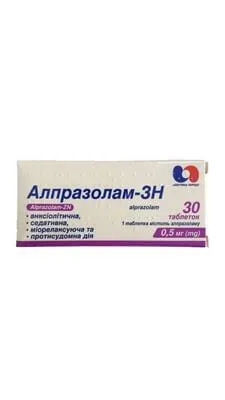
Table of Contents
INSTRUCTIONS FOR MEDICAL USE OF THE MEDICINAL PRODUCT ALPRAZOLAM-ZN (ALPRAZOLAM-ZN)
Composition:
Active ingredient: alprazolam;
1 tablet contains 0.25 mg or 0.5 mg of alprazolam;
Excipients: lactose monohydrate; microcrystalline cellulose; maize starch; magnesium stearate; colloidal anhydrous silicon dioxide; sodium docusate.
Pharmaceutical form. Tablets.
Main physico-chemical properties: nearly white, round cylindrical tablets with a flat surface, beveled edge, and a score line on one side.
Pharmacotherapeutic group. Anxiolytics. Benzodiazepine derivatives. ATC code N05BA12.
Pharmacological properties.
Pharmacodynamics.
The drug has anxiolytic, hypnotic-sedative, central muscle relaxant, and anticonvulsant properties.
The pharmacological effect of the drug is associated with enhancement of neuronal inhibition mediated by γ-aminobutyric acid (GABA) receptors.
Pharmacokinetics.
The drug is readily absorbed from the gastrointestinal tract. After oral administration, maximum plasma concentration is reached within 1–2 hours.
The mean elimination half-life is 12–15 hours. Repeated dosing may lead to accumulation; this should be taken into account in elderly patients and in patients with impaired renal or hepatic function. Alprazolam is 80% bound to human serum proteins. Alprazolam and its metabolites are excreted from the body predominantly in the urine.
Clinical characteristics.
Indications.
Short-term treatment of moderate to severe anxiety disorders and anxiety associated with depression. The medicinal product is indicated only when the disorder is severe, disabling, or causing significant distress.
The medicinal product should not be used for the treatment of transient mild anxiety, such as anxiety or tension associated with everyday stress. Since the efficacy of alprazolam in depression and phobic or obsessive conditions has not been established, specific treatment may be required.
Contraindications.
Hypersensitivity to alprazolam or to other benzodiazepines or to any of the excipients, myasthenia gravis, severe hepatic insufficiency, sleep apnoea syndrome, severe respiratory insufficiency.
Interaction with other medicinal products and other forms of interaction.
Opioids. Concomitant use of sedative medicines such as benzodiazepines or related medicines, for example alprazolam, with opioids increases the risk for sedation, respiratory depression, coma, and fatal outcome due to additive central nervous system (CNS) depressant effects. Dosage and duration of concomitant use should be limited (see section "Special precautions for use"). Concomitant use with alcohol is not recommended. Alprazolam should be used with caution in combination with CNS depressants.
Enhanced central depressive effects may occur when used concomitantly with antipsychotics (neuroleptics), hypnotics, anxiolytics/sedatives, antidepressants, opioid analgesics, antiepileptic drugs, anaesthetics, and antihistamines. When used with opioid analgesics, enhanced euphoria may also occur, which could lead to increased psychological dependence. Pharmacokinetic interactions may occur during alprazolam administration with drugs that interfere with its metabolism.
CYP3A inhibitors. Compounds that inhibit certain liver enzymes (particularly CYP3A4) may increase alprazolam concentrations and enhance its activity. In vitro and clinical studies on alprazolam provide evidence of varying degrees of interaction and potential interaction with several medicinal products. Based on the extent of interaction and the type of available data, the following recommendations apply:
- concomitant use of alprazolam with ketoconazole, itraconazole, or other azole antifungal agents is not recommended;
- concomitant use of nefazodone or fluvoxamine increases the AUC of alprazolam by approximately two-fold. Dose reduction is recommended, and special attention should be paid when alprazolam is used concomitantly with nefazodone, fluvoxamine, and cimetidine;
- caution is recommended when alprazolam is used concomitantly with fluoxetine, propoxyphene, oral contraceptives, sertraline, diltiazem, or macrolides such as erythromycin, clarithromycin, and troleandomycin.
CYP3A4 inducers. Since alprazolam is metabolized by CYP3A4, inducers of this enzyme may increase the metabolism of alprazolam. The interaction between human immunodeficiency virus (HIV) protease inhibitors (e.g., ritonavir) and alprazolam is complex and time-dependent. Short-term low-dose ritonavir leads to a marked reduction in alprazolam clearance, prolonged elimination half-life, and enhanced clinical effects. However, with prolonged ritonavir therapy, enzyme induction of CYP3A compensates for this inhibition. Therefore, dosage adjustment or discontinuation of alprazolam may be necessary.
Digoxin. Increased plasma concentrations of digoxin have been observed during concomitant use, particularly in elderly individuals (aged 65 years and older). Therefore, patients receiving alprazolam and digoxin should be monitored for signs and symptoms related to digoxin toxicity.
Special precautions.
Renal and hepatic impairment. Alprazolam should be used with caution in patients with impaired renal function or mild to moderate hepatic insufficiency.
Depression/anxiety. In patients with severe depression or anxiety associated with depression, benzodiazepines and benzodiazepine-like agents should not be used solely for the treatment of depression, as they may provoke or increase the risk of suicide. Therefore, alprazolam should be used cautiously and only for a limited duration in patients exhibiting signs and symptoms of depressive disorders or suicidal ideation.
Children. The safety and efficacy of alprazolam have not been established in children under 18 years of age; therefore, the use of alprazolam is not recommended in this patient population.
Elderly patients. Benzodiazepines should be used with caution in elderly patients, as there is a risk of sedation and/or muscle weakness, which may lead to sudden falls, often with serious consequences in this population group.
It is recommended to follow the general principle of using the lowest effective dose in elderly or debilitated patients to prevent the development of ataxia or excessive sedative effects (see section "Dosage and administration"). A lower dose is also recommended for patients with chronic respiratory insufficiency due to the risk of respiratory depression.
Benzodiazepines should be used with particular caution in patients who abuse alcohol or drugs (see section "Interaction with other medicinal products and other forms of interaction").
Risk associated with concomitant use of opioids. Concomitant use of alprazolam and opioids may result in sedation, respiratory depression, coma, and fatal outcomes. Because of these risks, co-prescription of sedative agents such as benzodiazepines or related agents (e.g., alprazolam) with opioids should occur only in patients for whom alternative treatment options are not feasible.
If a decision is made to prescribe alprazolam concomitantly with opioids, the lowest effective dose should be used, and the duration of treatment should be as short as possible.
Patients should be closely monitored for signs and symptoms of respiratory depression and sedation. Therefore, it is strongly recommended to inform patients and their caregivers about these symptoms (see section "Interaction with other medicinal products and other forms of interaction").
Dependence. The use of benzodiazepines may lead to the development of physical and psychological dependence. The risk of dependence increases with higher doses and longer duration of treatment; the risk is also higher in patients who abuse alcohol or drugs. The risk of dependence may also occur with therapeutic doses and/or in patients with individual risk factors. The risk of dependence is increased during combined use of multiple benzodiazepine-like agents, regardless of anxiolytic or hypnotic indication. Cases of abuse have also been reported.
Withdrawal symptoms: after physical dependence has developed, abrupt discontinuation of treatment will be accompanied by withdrawal symptoms. Manifestations may include headache, muscle pain, anxiety, tension, restlessness, confusion, irritability, and insomnia. In severe cases, symptoms such as derealization, depersonalization, numbness and tingling in the extremities, increased sensitivity to light, noise, and physical contact, hallucinations, or epileptic seizures may occur.
When discontinuing alprazolam treatment, the dosage should be gradually reduced. It is expected that the daily dose of alprazolam should be reduced by no more than 0.5 mg every 3 days. For some patients, an even slower dose reduction may be necessary.
Insomnia and restlessness may occur during discontinuation of alprazolam treatment. This may be accompanied by other reactions, including mood changes, anxiety, or sleep disturbances and restlessness. Since the risk of withdrawal/abstinence phenomena is higher after abrupt discontinuation of treatment, it is recommended to gradually reduce the dosage by no more than 0.5 mg every 3 days. Some patients may require an even slower dose reduction.
Duration of treatment. The duration of treatment should be as short as possible (see section "Dosage and administration"), depending on the indication, but not exceeding 8–12 weeks, including tapering off the drug. The treatment period should not be extended without re-evaluation. The patient should be informed about the limited duration of treatment and the possibility of withdrawal syndrome.
It may be helpful to inform the patient at the start of treatment that it will be time-limited and to explain how the dose will be gradually reduced. Furthermore, it is important that the patient understands the possibility of rebound phenomena, thereby minimizing anxiety about such symptoms if they occur upon discontinuation of the drug.
When short-acting benzodiazepines are used, abstinence phenomena may occur between therapeutic doses, especially at high therapeutic doses. When using long-acting benzodiazepines, switching to short-acting benzodiazepines should be avoided, as withdrawal symptoms may develop.
Amnesia. Benzodiazepines may cause anterograde amnesia. This most commonly occurs several hours after drug intake, and to reduce this risk, patients should have uninterrupted sleep for 7–8 hours (see section "Adverse reactions").
Psychiatric and paradoxical reactions. If restlessness, excitement, irritability, aggression, delirium, nightmares, hallucinations, psychosis, inappropriate behavior, or other adverse behavioral effects occur during benzodiazepine use, the drug should be discontinued. These manifestations occur most frequently in children and elderly patients.
Tolerance. Ineffectiveness of benzodiazepines may develop after repeated use over several weeks.
Episodes of hypomania and mania have been reported in connection with the use of alprazolam in patients with depression.
Benzodiazepines are not recommended for primary treatment of psychoses.
If a patient has intolerance to certain sugars, medical advice should be sought before using this medicinal product.
Use during pregnancy or breastfeeding.
Pregnancy. Data on the teratogenicity of benzodiazepines, as well as their impact on postnatal development and child behavior, are conflicting. Data based on study results indicate that the use of alprazolam during the first trimester of pregnancy does not increase the risk of major congenital malformations. However, some early epidemiological case-control studies have reported a twofold increase in the risk of oral clefts.
Treatment with benzodiazepines at high doses during the second and/or third trimester of pregnancy has been associated with reduced fetal movements and fetal heart rate abnormalities. If the drug is used during the third trimester of pregnancy, even at low doses, a floppy infant syndrome may occur, characterized by axial hypotonia and feeding difficulties leading to reduced infant body weight. These signs are reversible but may last from 1 to 3 weeks, depending on the drug's half-life. With high-dose use, respiratory depression or apnea and hypothermia in newborns are possible. Additionally, withdrawal symptoms in newborns, such as hyperexcitability, agitation, and tremor, may appear several days after birth, even in the absence of floppy infant syndrome. The onset of withdrawal symptoms after birth depends on the half-life of the substance.
The medicinal product should not be used during pregnancy unless the clinical condition of the woman requires treatment. If alprazolam is used during pregnancy or if a patient becomes pregnant while taking alprazolam, she should be informed of the potential risk to the fetus.
If treatment with alprazolam is necessary during the third trimester of pregnancy, high doses should be avoided, and withdrawal syndrome and/or floppy infant syndrome in newborns should be monitored.
Breastfeeding. Alprazolam passes into breast milk in small amounts. Nevertheless, the use of the medicinal product is not recommended during breastfeeding.
Ability to affect reaction speed when driving or operating machinery.
The medicinal product may affect psychomotor performance (sedation, amnesia, impaired concentration, and muscle function), especially when used concomitantly with alcohol or other CNS depressants. Therefore, patients should refrain from driving or operating machinery until it is established that they do not experience drowsiness or dizziness in response to the drug.
Method of Administration and Dosage.
Dosage.
Anxiety. From 0.25 mg to 0.5 mg three times daily, increasing if necessary to a total daily dose of 3 mg.
Elderly patients or presence of debilitating diseases. 0.25 mg two to three times daily, gradually increasing if necessary and well tolerated.
If adverse effects occur, the dose should be reduced. It is advisable to regularly review the treatment and discontinue it as soon as possible. If prolonged treatment is necessary, consider intermittent treatment to minimize the risk of dependence.
Route of Administration. For oral use.
Treatment should be as short as possible. It is recommended to re-evaluate the patient after no more than 4 weeks of treatment to determine the need for continued therapy, especially if the patient is asymptomatic. The total duration of treatment should not exceed 8–12 weeks, including the tapering-off process.
In some cases, extension of the maximum treatment period may be required; if so, this should not occur without re-evaluation of the patient’s condition by specialist assessment. As with all benzodiazepines, physicians should be aware that long-term use may lead to dependence in some patients.
Optimal dosing should be based on symptom severity and individual patient response. The lowest effective dose that controls symptoms should be used. Dosage should be reviewed at intervals of no more than 4 weeks. The usual dosage is indicated below; in some patients requiring higher doses, the dose should be increased cautiously to avoid adverse effects. If a higher dose is needed, the evening dose should be increased before the daytime doses. In general, patients who have not previously received psychotropic medications will require lower doses than those who have undergone such treatment, or patients with a history of chronic alcoholism.
Treatment should always be discontinued gradually. When stopping alprazolam, the dose should be tapered slowly according to standard medical practice. It is recommended to reduce the daily dose of alprazolam by no more than 0.5 mg every 3 days. Some patients may require an even slower tapering schedule (see section "Special Warnings and Precautions for Use").
Elderly patients. Reduced clearance of the drug and, as with other benzodiazepines, increased sensitivity to the drug are observed in elderly patients (see section "Pharmacokinetics").
Children.
Safety and efficacy of alprazolam in children and adolescents under 18 years of age have not been established. No data available.
Overdose.
Overdose rarely results in life-threatening consequences, except when combined with other CNS depressants (including alcohol). In such cases, it should be considered that the patient may have taken multiple medications.
Symptoms: overdose of benzodiazepines typically manifests as varying degrees of CNS depression, ranging from drowsiness to coma. In mild cases, symptoms include drowsiness, confusion, and lethargy; in more severe cases, symptoms may include ataxia, hypotonia, hypotension, respiratory depression, rarely coma, and very rarely, fatal outcome.
Treatment: following oral benzodiazepine overdose, emesis should be induced (within 1 hour) and activated charcoal administered if the patient is conscious, or gastric lavage performed if the patient is unconscious. Particular attention in resuscitation should be paid to respiratory and cardiovascular function.
Flumazenil may be used as an antidote.
Adverse reactions.
Adverse reactions, if they occur, are usually observed at the beginning of therapy and typically resolve with continuation of treatment or dose reduction.
The following adverse effects have been reported during treatment with alprazolam, with the following frequencies: very common (> 1/10); common (> 1/100, < 1/10); uncommon (> 1/1000, < 1/100); rare (> 1/10000, < 1/1000); very rare (< 1/10000); unknown (frequency cannot be estimated from available data).
| System organ classes by MedDRA |
Frequency |
Manifestations |
| Endocrine system disorders |
Unknown |
Hyperprolactinaemia* |
| Metabolism and nutrition disorders |
Common |
Decreased appetite |
| Psychiatric disorders |
Very common |
Depression |
| Common |
Confusional state, disorientation, decreased libido, anxiety, insomnia, restlessness, increased libido* |
|
| Uncommon |
Mania*, hallucinations*, anger*, agitation* |
|
| Unknown |
Hypomania*, aggression*, hostility*, disorganized thinking*, psychomotor hyperactivity* |
|
| Nervous system disorders |
Very common |
Sedation, somnolence, ataxia, memory impairment, dysarthria, dizziness, headache |
| Common |
Balance disorders, coordination disturbances, attention disturbances, hypersomnia, lethargy, tremor |
|
| Uncommon |
Amnesia |
|
| Unknown |
Autonomic nervous system imbalance*, dystonia* |
|
| Eye disorders |
Common |
Blurred vision |
| Gastrointestinal disorders |
Very common |
Constipation, dry mouth |
| Common |
Nausea |
|
| Unknown |
Gastrointestinal disorders* |
|
| Hepatobiliary disorders |
Unknown |
Hepatitis*, liver function abnormalities*, jaundice* |
| Skin and subcutaneous tissue disorders |
Common |
Dermatitis* |
| Unknown |
Angioedema, photosensitivity |
|
| Musculoskeletal and connective tissue disorders |
Uncommon |
Muscle weakness |
| Renal and urinary disorders |
Uncommon |
Urinary incontinence* |
| Unknown |
Urinary retention* |
|
| Reproductive system and breast disorders |
Common |
Sexual dysfunction* |
| Uncommon |
Irregular menstruation* |
|
| General disorders |
Very common |
Increased fatigue, irritability |
| Unknown |
Peripheral edema* |
|
| Other manifestations |
Common |
Increased or decreased body weight |
| Unknown |
Increased intraocular pressure* |
* - post-marketing observations
Withdrawal symptoms may occur after abrupt dosage reduction or abrupt discontinuation of benzodiazepines, including alprazolam. These symptoms may range from mild dysphoria and insomnia to a full-blown withdrawal syndrome, which may include abdominal cramps and muscle spasms, vomiting, sweating, tremor, and seizures. In addition, withdrawal seizures may occur during rapid dose reduction or abrupt discontinuation of the drug.
Amnesia. Anterograde amnesia may occur with therapeutic doses, but the risk increases with higher doses. Amnesic effects may be associated with inappropriate behavior.
Depression. Pre-existing depression may be unmasked during benzodiazepine therapy.
Psychiatric and paradoxical reactions. Reactions such as restlessness, stimulation, irritability, aggression, delusions, nightmares, hallucinations, psychoses, inappropriate behavior, and other adverse behavioral effects have been reported with benzodiazepines or benzodiazepine-like drugs. These adverse effects may be severe. They occur more frequently in children and elderly patients.
In many spontaneous reports of adverse behavioral effects, patients were receiving other centrally acting drugs concomitantly and/or were characterized as having psychiatric disorders. Patients with a history of personality disorders involving violent or aggressive behavior, or with alcohol or psychoactive substance abuse, may be predisposed to such reactions. Cases of irritability, hostility, and obsessive thoughts have been reported during drug discontinuation in patients with post-traumatic stress disorder.
Dependence. Use (even at therapeutic doses) may lead to physical dependence; discontinuation of therapy may result in withdrawal syndrome (see section "Special precautions"). Psychological dependence is also possible. Cases of benzodiazepine abuse have been reported.
Reporting of adverse reactions
Reporting of adverse reactions after drug registration is of great importance. It allows continuous monitoring of the benefit-risk balance of the drug. Healthcare and pharmacy professionals, as well as patients or their legal representatives, are encouraged to report all suspected adverse reactions and lack of efficacy via the Automated Pharmacovigilance Information System at the following link: https://aisf.dec.gov.ua.
Shelf life. 2 years.
Storage conditions. Store in the original packaging at a temperature not exceeding 25 °C.
Keep out of reach and sight of children.
Packaging. 10 tablets in a blister; 1 or 3 blisters per cardboard box.
Prescription status. Prescription only.
Manufacturer. Limited liability company "Kharkiv Pharmaceutical Enterprise "Zdorov'ya Narodu".
Manufacturer's address and location of operations. 41 Kulikivska Street, Kharkiv, Kharkiv Oblast, 61002, Ukraine.