Alpha normix
Ukraine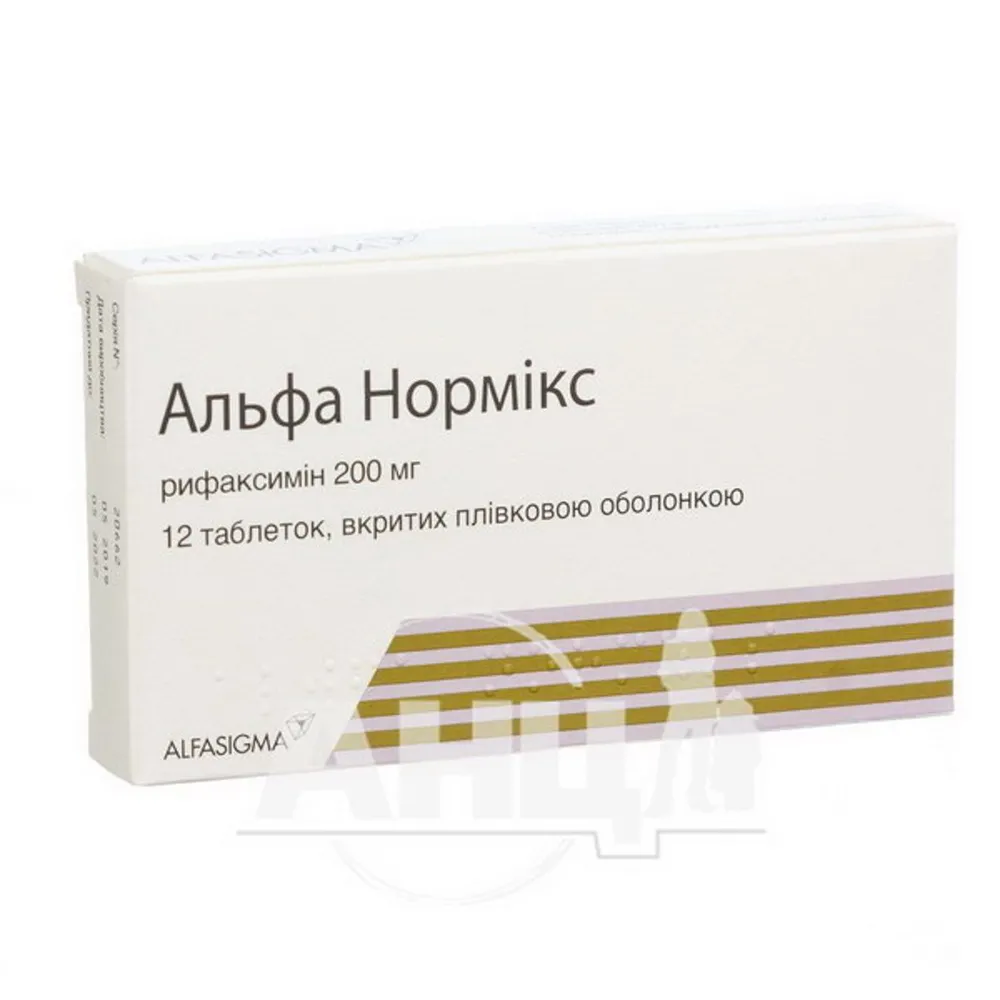
Table of Contents
INSTRUCTION FOR MEDICAL USE OF THE MEDICINAL PRODUCT ALFA NORMIX®
Composition:
Active substance: rifaximin;
One film-coated tablet contains 200 mg of rifaximin;
Excipients: sodium starch glycolate (type A), glycerol distearate, colloidal anhydrous silicon dioxide, talc, microcrystalline cellulose, hypromellose, titanium dioxide (E 171), disodium edetate, propylene glycol, iron oxide red (E 172).
Pharmaceutical form. Film-coated tablets.
Main physicochemical characteristics: pink, round, biconvex, film-coated tablets.
Pharmacotherapeutic group. Agents used in intestinal infections. Antibiotics. Rifaximin. ATC code A07AA11.
Pharmacological properties.
Pharmacodynamics.
Alpha Normix contains the active substance rifaximin in the α polymorphic form. Rifaximin is a broad-spectrum antibiotic that is a semisynthetic derivative of rifamycin SV. Like other rifamycins, it irreversibly binds to the β-subunits of bacterial DNA-dependent RNA polymerase, thereby inhibiting bacterial RNA and protein synthesis. This irreversible binding to the enzyme results in the bactericidal activity of rifaximin against susceptible bacteria.
Rifaximin has a broad spectrum of antimicrobial activity against both Gram-positive and Gram-negative aerobic and anaerobic bacteria causing intestinal infections.
The broad antibacterial spectrum of rifaximin leads to a reduction in the number of pathogenic bacteria in the intestine, which are involved in the pathogenesis or clinical manifestations of certain diseases.
Rifaximin may reduce:
- bacterial production of ammonia and other toxic compounds involved in the pathogenesis and clinical symptoms of hepatic encephalopathy in severe liver disease with impaired detoxification function;
- bacterial hyperproliferation in small intestinal bacterial overgrowth (SIBO);
- the number of bacteria in intestinal diverticula, which may cause intra- and peridiverticular inflammation and likely significantly influence the development of symptoms and complications of diverticulosis;
- antigenic stimuli that, in the presence of genetically determined defects in immune regulation and/or intestinal mucosal barrier function, may trigger or sustain chronic intestinal inflammation;
- the risk of infectious complications in colorectal surgical procedures.
Mechanism of resistance
Resistance to rifaximin is primarily due to a reversible chromosomal single-step mutation in the rpoB gene, which encodes bacterial RNA polymerase. The prevalence of resistance among bacteria isolated from patients with traveler's diarrhea is very low.
Clinical studies investigating changes in intestinal flora sensitivity in patients with traveler's diarrhea during a 3-day course of rifaximin treatment failed to detect any rifaximin-resistant Gram-positive (e.g., enterococci) or Gram-negative (E. coli) microorganisms.
The development of resistance in normal intestinal bacterial flora was studied following repeated high-dose administration of rifaximin to healthy volunteers and patients with inflammatory bowel disease. Resistant strains emerged during the study, but they were unstable, did not colonize the gastrointestinal tract, and did not displace rifaximin-sensitive strains. Resistant strains disappeared rapidly after discontinuation of treatment.
Preclinical and clinical data suggest that treatment with rifaximin in patients colonized with Mycobacterium tuberculosis or Neisseria meningitidis will not lead to the development of resistance to rifampicin.
Susceptibility
Rifaximin is a non-absorbable antibacterial agent. In vitro susceptibility testing results cannot reliably predict bacterial susceptibility or resistance to rifaximin. Currently, there are insufficient data to establish a clinical susceptibility breakpoint for rifaximin.
In vitro, the activity of rifaximin was evaluated against various pathogens causing traveler's diarrhea in four different regions of the world: ETEC (enterotoxigenic E. coli), EAEC (enteroaggregative E. coli), Salmonella spp., Shigella spp., Non-V. cholerae vibrios, Plesiomonas spp., Aeromonas spp., Campylobacter spp. The MIC90 (minimum inhibitory concentration) value for isolated bacterial strains was 32 µg/mL, which is easily achieved in the intestinal lumen due to high rifaximin concentrations in feces.
Due to its very low absorption from the gastrointestinal tract, α-polymorphic rifaximin acts locally within the intestinal lumen and is clinically ineffective against invasive pathogens, even if these bacteria are in vitro susceptible to rifaximin.
Clinical efficacy
Clinical studies on the treatment of patients with traveler's diarrhea have demonstrated the clinical efficacy of rifaximin against ETEC (enterotoxigenic E. coli) and EAEC (enteroaggregative E. coli). These bacteria are primarily responsible for traveler's diarrhea in individuals traveling to Mediterranean, tropical, or subtropical regions.
Pediatric patient population
Nine efficacy studies of rifaximin in the treatment of bacterially confirmed diarrhea (confirmed before, during, or after treatment) were conducted, involving 371 participants, of whom 233 children aged predominantly 2 years and older received rifaximin.
Both individual studies and meta-analysis of their results indicate a positive response to rifaximin in the treatment of acute diarrhea when it is confirmed or suspected to be caused by non-invasive bacteria susceptible to rifaximin, such as E. coli.
In these limited clinical studies, the most commonly used dose for treating children aged 6 to 12 years was 20–30 mg of rifaximin/kg/day, divided into 2–4 doses.
Pharmacokinetics.
Absorption
Pharmacokinetic studies have shown virtually no absorption of α-polymorphic rifaximin (less than 1%) following oral administration. Comparative pharmacokinetic studies have demonstrated that other polymorphic forms of rifaximin are more readily absorbed than the α-polymorphic form.
After administration of therapeutic doses in both healthy volunteers and patients with impaired intestinal mucosa (patients with ulcerative colitis or Crohn’s disease), plasma rifaximin levels were very low (less than 10 ng/mL).
Clinically insignificant increases in systemic absorption of rifaximin were observed when the drug was administered within 30 minutes after a high-fat meal.
Distribution
Rifaximin is moderately bound to human plasma proteins. In vivo, the average degree of protein binding was 67.5% in healthy volunteers and 62% in patients with liver disease.
Metabolism
Studies have shown that rifaximin is not metabolized during passage through the gastrointestinal tract.
It has been established that 0.025% of the administered dose is excreted in urine, and less than 0.01% of the dose is metabolized to 25-desacetylrifaximin—the only identified metabolite of rifaximin in humans.
Excretion
Data from studies using radiolabeled rifaximin indicate that it is almost exclusively and completely excreted in feces (96.9% of the administered dose). Urinary excretion of labeled rifaximin does not exceed 0.4% of the administered dose.
Linearity/Non-linearity
Rifaximin is considered to exhibit nonlinear, dose-dependent pharmacokinetics in humans, consistent with dissolution-rate-limited absorption.
Pediatric patient population
The pharmacokinetic parameters of rifaximin have not been studied in pediatric patients of any age.
Clinical characteristics.
Indications.
- Gastrointestinal infections caused by bacteria sensitive to rifaximin, such as acute gastrointestinal infections and traveler's diarrhea;
- small intestinal bacterial overgrowth syndrome;
- hepatic encephalopathy;
- intestinal diverticular disease (diverticulitis) during exacerbation phase and chronic intestinal inflammation;
- prevention of infectious complications in colorectal surgical procedures.
Contraindications.
- Hypersensitivity to rifaximin, other rifamycin derivatives, or to any excipients of the medicinal product; hypersensitivity reactions include exfoliative dermatitis, angioneurotic edema, and anaphylaxis;
- intestinal obstruction;
- severe ulcerative lesions of the intestine.
Interaction with other medicinal products and other types of interactions.
There is no experience with the concomitant use of rifaximin and other antibacterial agents of the rifamycin group for the treatment of systemic bacterial infections.
In vitro studies indicate that rifaximin does not inhibit the main enzymes of the cytochrome P450 system (1A2, 2A6, 2B6, 2C8, 2C9, 2C19, 2D6, 2E1, and 3A4) responsible for drug metabolism. In in vitro induction studies, rifaximin did not induce CYP1A2 and CYP2B6, but acted as a weak inducer of the CYP3A4 isoenzyme of cytochrome P450.
In clinical drug interaction studies involving healthy volunteers, rifaximin was shown not to significantly affect the pharmacokinetics of substrates of the CYP3A4 enzyme. However, in patients with liver impairment, the possibility cannot be excluded that rifaximin may reduce the efficacy of concomitantly administered CYP3A4 substrates (e.g., warfarin, antiepileptic and antiarrhythmic agents, and oral contraceptives), due to increased systemic exposure to rifaximin in such patients compared to healthy volunteers.
When rifaximin is prescribed to patients taking warfarin, both decreases and increases in the international normalized ratio (INR) have been reported. If such concomitant administration is necessary, careful monitoring of the INR is recommended when initiating or discontinuing rifaximin. Dose adjustment of oral anticoagulants may be required.
In vitro study results suggest that rifaximin is a substrate with moderate affinity for P-glycoprotein (P-gp) and that it is metabolized by the CYP3A4 enzyme. It is unknown whether concomitant administration with agents that inhibit CYP3A4 may increase systemic exposure to rifaximin.
In healthy volunteers, concomitant administration of a single 600 mg dose of cyclosporine, a potent P-glycoprotein inhibitor, and a single 550 mg dose of rifaximin resulted in 83-fold and 124-fold increases in the mean Cmax and AUC∞ values for rifaximin, respectively. The clinical significance of this increase in systemic exposure is unknown.
In vitro studies have investigated the potential for drug interactions at the level of transport systems; results of these studies suggest that clinical interactions between rifaximin and other compounds eliminated via P-gp and other transport proteins (MRP2, MRP4, BCRP, and BSEP) are unlikely.
When administered concomitantly, rifaximin should be taken at least 2 hours after activated charcoal.
Special precautions for use.
Clinical data indicate that rifaximin is ineffective in the treatment of intestinal infections caused by invasive enteric pathogens such as Campylobacter jejuni, Salmonella spp., and Shigella spp., which typically cause diarrhea accompanied by fever, bloody stools, and very frequent bowel movements. If diarrhea symptoms worsen or do not improve within 48 hours, the drug should be discontinued and alternative antimicrobial therapy initiated.
Cases of diarrhea caused by Clostridium difficile (CDAD) have been reported with nearly all antibiotics, including rifaximin. A potential association between rifaximin treatment and CDAD or pseudomembranous colitis cannot be excluded.
Rifaximin should be administered with caution when used concomitantly with P-glycoprotein inhibitors such as cyclosporine.
Despite minimal absorption, rifaximin, similar to other rifamycin derivatives, may turn urine reddish in color; patients should be informed about this possibility.
When rifaximin is co-administered with warfarin, both decreases and increases in the international normalized ratio (INR) have been reported, with bleeding events observed in some cases. If concomitant use is necessary, careful monitoring of INR is recommended when initiating or discontinuing rifaximin. Dose adjustments of oral anticoagulants may be required to maintain the desired level of anticoagulation.
Alpha Normix film-coated tablets contain less than 1 mmol of sodium (23 mg) per dose and are therefore essentially "sodium-free".
Use during pregnancy or breastfeeding.
There are no data on the use of rifaximin in pregnant women. Studies in animals have not shown any direct or indirect harmful effects of rifaximin on fertility.
As a precautionary measure, the use of rifaximin during pregnancy is not recommended.
It is unknown whether rifaximin and its metabolites are excreted in human breast milk; therefore, a risk to breastfed infants cannot be excluded. Thus, during breastfeeding, a decision should be made whether to discontinue breastfeeding or to discontinue/withhold the drug, taking into account the benefits of breastfeeding for the child and the necessity of treatment for the mother.
Ability to influence the speed of reactions while driving or operating machinery.
If dizziness or somnolence occurs during treatment with the drug, patients should refrain from driving or operating machinery.
Method of Administration and Dosage
Adults and children aged 12 years and older: from 1 tablet 3 times daily up to 2 tablets 2–3 times daily (corresponding to a daily dose of 600–1200 mg of rifaximin).
The duration of treatment should not exceed 7 days and depends on the clinical response to therapy. A repeat course of treatment may be administered with an interval of 20–40 days.
The administered doses and frequency of intake may be adjusted according to physician's recommendation.
Method of Administration
Administer orally, swallowing with a glass of water. The drug can be taken regardless of food intake.
Special Patient Groups
Geriatric Patients
Since there are no differences in safety and efficacy of rifaximin between younger patients and elderly patients, dosage adjustment is not required when prescribing the drug to elderly patients.
Patients with Hepatic Impairment
Available clinical data indicate increased systemic exposure to rifaximin in patients with hepatic impairment compared to healthy volunteers. Nevertheless, this increased systemic exposure in patients with hepatic impairment should be considered in light of the local gastrointestinal action of rifaximin, its low systemic bioavailability, and existing safety data from use in patients with hepatic cirrhosis. Therefore, due to the local action of rifaximin, dosage adjustment in these patients is not recommended. However, the drug should be prescribed with caution to patients with severe hepatic insufficiency.
Patients with Renal Impairment
Clinical data on the use of rifaximin in patients with renal impairment are lacking. Although dosage adjustment is not anticipated for such patients, the drug should be prescribed with caution in patients with renal impairment.
Children
Since the efficacy, dosing, and safety of rifaximin in children under 12 years of age have not been established, dosage recommendations for this patient group are not available.
Overdose
In clinical trials treating patients with traveler's diarrhea, doses of rifaximin up to 1800 mg/day were well tolerated without development of any severe clinical manifestations. Administration of doses up to 2400 mg/day of rifaximin for 7 days in patients and healthy volunteers did not result in any clinically significant symptoms related to high-dose exposure.
In case of overdose, symptomatic and supportive treatment is recommended.
Adverse Reactions
Clinical trials: During double-blind controlled studies and clinical pharmacology studies in which rifaximin was compared with placebo or other antibiotics, results were obtained allowing a quantitative assessment of the frequency of adverse reactions.
Note. Most of the adverse reactions listed (particularly gastrointestinal disorders) may also be symptoms of the underlying disease; in clinical trials, they were observed with the same frequency as with placebo.
Post-marketing experience: Additional adverse reactions have been reported during post-marketing surveillance of rifaximin use. The frequency of occurrence of these reactions is unknown (cannot be estimated based on available data).
Adverse reactions, at least possibly related to rifaximin, are classified according to system organ classes and frequency of occurrence as follows: very common (≥ 1/10); common (≥ 1/100 to < 1/10); uncommon (≥ 1/1000 to < 1/100); rare (≥ 1/10000 to < 1/1000); very rare (< 1/10000); frequency not known (cannot be estimated based on available data).
Infections and infestations
Uncommon: Candidiasis, herpes infection, nasopharyngitis, pharyngitis, upper respiratory tract infections.
Frequency not known: Clostridial infection.
Blood and lymphatic system disorders
Uncommon: Lymphocytosis, monocytosis, neutropenia.
Frequency not known: Thrombocytopenia.
Immune system disorders
Frequency not known: Anaphylactic reactions, hypersensitivity reactions.
Metabolism and nutrition disorders
Uncommon: Decreased appetite, dehydration.
Psychiatric disorders
Uncommon: Abnormal sleep, depressive mood, insomnia, restlessness.
Nervous system disorders
Common: Dizziness, headache.
Uncommon: Hypoesthesia, migraine, paresthesia, sinus headache, somnolence.
Frequency not known: Presyncope.
Eye disorders
Uncommon: Diplopia.
Ear and labyrinth disorders
Uncommon: Ear pain, vertigo.
Cardiac disorders
Uncommon: Tachycardia.
Vascular disorders
Uncommon: Increased blood pressure, hot flushes.
Respiratory, thoracic and mediastinal disorders
Uncommon: Cough, dry throat, dyspnea, nasal congestion, oropharyngeal pain, rhinorrhea.
Gastrointestinal disorders
Common: Abdominal pain, constipation, sudden urge to defecate, diarrhea, flatulence, bloating, nausea, vomiting, rectal tenesmus.
Uncommon: Upper abdominal pain, ascites, dry lips, dyspepsia, gastrointestinal motility disorders, hard stools, blood or mucus in stool, taste disturbances.
Hepatobiliary disorders
Uncommon: Increased aspartate aminotransferase levels.
Frequency not known: Abnormalities in liver function laboratory parameters.
Skin and subcutaneous tissue disorders
Uncommon: Rash, urticaria and exanthema, sunburn (sunburn itself is meant, not photosensitivity).
Frequency not known: Angioneurotic edema, exfoliative dermatitis, dermatitis, eczema, erythema, pruritus, purpura, urticaria.
Musculoskeletal and connective tissue disorders
Uncommon: Back pain, muscle spasm, muscle weakness, myalgia, neck pain.
Renal and urinary disorders
Uncommon: Hematuria, glycosuria, pollakiuria, polyuria, proteinuria.
Reproductive system and breast disorders
Uncommon: Polymenorrhea.
General disorders and administration site conditions
Common: Increased temperature.
Uncommon: Asthenic conditions, cold, cold sweat, hyperhidrosis, influenza-like syndrome, peripheral edema, pain and discomfort.
Other
Frequency not known: Abnormal international normalized ratio (INR) values.
Shelf life. 3 years.
Do not use after the expiry date stated on the packaging.
Storage conditions. No special storage conditions required. Keep out of the reach of children.
Packaging.
- 12 tablets in a blister; 1 blister in a cardboard box;
- 14 tablets in a blister; 2 blisters in a cardboard box.
Prescription status. Prescription only.
Manufacturer. Alfasigma S.p.A.
Manufacturer's address and place of business.
Via Enrico Fermi 1, 65020 Alanno (Pescara), Italy.