Aldara
Ukraine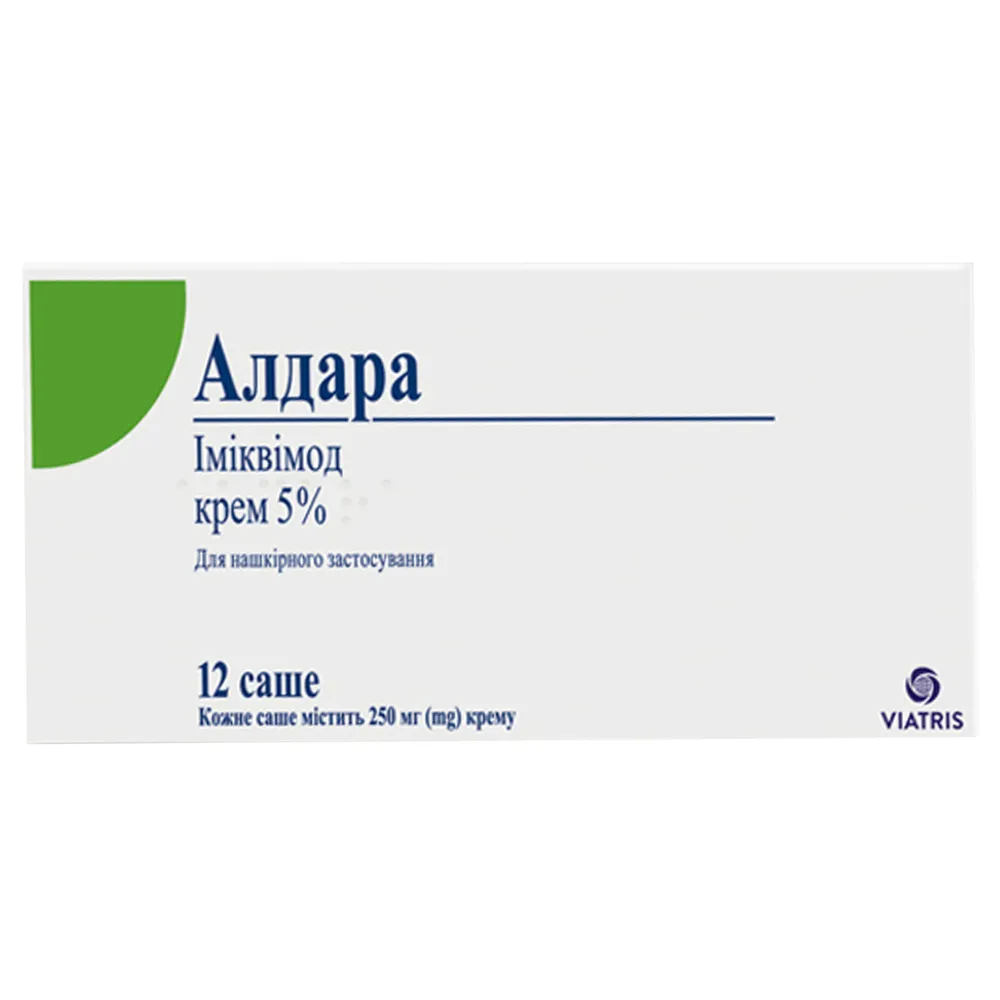
Table of Contents
INSTRUCTIONS FOR MEDICAL USE OF THE MEDICINAL PRODUCT ALDARA (ALDARA)
Composition:
Active substance: imiquimod;
1 mg of cream contains 0.05 mg of imiquimod;
Excipients: isostearic acid, benzyl alcohol, stearyl alcohol, cetyl alcohol, soft white paraffin, polysorbate 60, sorbitan stearate, glycerol, methylparahydroxybenzoate (E218), propylparahydroxybenzoate (E216), xanthan gum, purified water.
Pharmaceutical form. Cream.
Main physico-chemical properties: homogeneous cream, white to pale yellow in color.
Pharmacotherapeutic group. Local chemotherapeutic agents. Antiviral agents. Imiquimod.
ATC code D06B B10.
Pharmacological Properties
Pharmacodynamics
Imiquimod is an immune response modifier. Saturation binding studies suggest the presence of receptors for imiquimod on immune cell membranes. Imiquimod does not possess direct antiviral activity. In animal experimental models, imiquimod has demonstrated efficacy against viral infections and acts as an antitumor agent, primarily by inducing the synthesis of α-interferon and other cytokines. Induction of α-interferon and other cytokines following topical application of the cream to tissues affected by anogenital warts has also been demonstrated in clinical studies.
Increased systemic levels of α-interferon and other cytokines following topical application of imiquimod have been demonstrated in pharmacokinetic studies.
Anogenital Warts
Clinical Efficacy
Results from three pivotal Phase III efficacy studies showed that treatment with imiquimod for sixteen weeks was significantly more effective than placebo treatment, as determined by complete clearance of treated warts.
In 119 female patients treated with imiquimod, the cumulative complete clearance rate was 60% compared to 20% in 105 female patients treated with the cream base (95% CI for the difference in event rates: 20% to 61%, p < 0.001). In patients receiving imiquimod who achieved complete clearance of warts, the median time to clearance was 8 weeks.
In 157 male patients treated with imiquimod, the cumulative complete clearance rate was 23% compared to 5% in 161 patients receiving the cream base (95% CI for the difference in event rates: 3% to 36%, p < 0.001). In patients receiving imiquimod who achieved complete clearance of warts, the median time to clearance was 12 weeks.
Superficial Basal Cell Carcinoma
Clinical Efficacy
The efficacy of imiquimod applied five times per week for 6 weeks was evaluated in two double-blind, placebo-controlled clinical studies. Target tumors were histologically confirmed as single primary superficial basal cell carcinomas with a minimum size of 0.5 cm² and a maximum diameter of 2 cm. Tumors located within 1 cm of the eyes, nose, mouth, ears, or hairline were excluded.
In the combined analysis of these two studies, histological clearance was observed in 82% (152/185) of patients. Clinically assessed clearance, evaluated by a composite endpoint, was observed in 75% (139/185) of patients. These results were statistically significant (p < 0.001) compared to corresponding rates in the placebo group: 3% (6/179) and 2% (3/179), respectively. A significant association was observed between the intensity of local skin reactions (e.g., erythema) during treatment and complete clearance of basal cell carcinoma.
Data from a five-year long-term, open-label, uncontrolled study show that clinical resolution of signs was observed in 77.9% [95% CI (71.9%, 83.8%)] of all subjects initially treated, and this state was maintained over 60 months.
Actinic Keratosis (AK)
Clinical Efficacy
The efficacy of imiquimod applied three times per week for one or two 4-week treatment cycles separated by a 4-week treatment-free period was evaluated in two double-blind, placebo-controlled clinical studies.
Patients had clinically typical, visible, discrete, non-hyperkeratotic, non-hypertrophic AK lesions on balding scalp or face within two adjacent 25 cm² treatment areas. Four to eight AK lesions were treated. The complete clearance rate (imiquimod minus placebo) for the combined studies was 46.1% (CI 39.0%, 53.1%).
One-year data from two combined observational studies indicate a recurrence rate of 27% (35/128 patients) among patients who achieved clinical resolution after one or two treatment cycles.
The recurrence rate per lesion was 5.6% (41/737). Corresponding recurrence rates for the cream base were 47% (8/17 patients) and 7.5% (6/80 lesions).
In two open-label, randomized, controlled clinical studies involving patients with actinic keratosis, the long-term effects of imiquimod and topical diclofenac were compared regarding the risk of progression to squamous cell carcinoma (SCC) in situ or invasive SCC. Treatments were administered according to official recommendations. If the treated AK area was not completely cleared of lesions, additional treatment cycles could be initiated. All patients were followed until study exit or up to 3 years after randomization. Results were obtained from a meta-analysis of the two studies.
Overall, 482 patients were included in these studies, of whom 481 received investigational treatment: 243 patients were treated with imiquimod and 238 with topical diclofenac. The treated AK area was located on the bald scalp or face, with an adjacent area of approximately 40 cm². In both treatment groups, the median number of clinically typical AK lesions at baseline was 7. Clinical experience included 90 patients who received 3 or more imiquimod treatment cycles, and 80 patients who received 5 or more imiquimod treatment courses over the 3-year study period.
Regarding the primary endpoint (histological progression), histological progression to SCC in situ or invasive SCC was observed in 13 of 242 patients (5.4%) in the imiquimod group and in 26 of 237 patients (11.0%) in the diclofenac group over 3 years; the difference was -5.6% (95% confidence interval [CI]: -10.7% to -0.7%). Specifically, histological progression to invasive SCC was observed in 4 of 242 patients (1.7%) in the imiquimod group and in 7 of 237 patients (3.0%) in the diclofenac group over the 3-year period.
Overall, complete clinical clearance of the treated AK area at week 20 (i.e., approximately 8 weeks after completion of the initial treatment cycle) was observed in 126 of 242 patients (52.1%) treated with imiquimod and in 84 of 237 patients (35.4%) treated with topical diclofenac; the difference was 16.6% (95% CI: 7.7–25.1%). In this group of patients with complete clinical clearance of the treated AK area, AK recurrences were evaluated. In these studies, recurrence was defined as the presence of at least one AK lesion on the fully cleared area, which could represent either a lesion recurring at the same site as a previously treated lesion or a newly detected lesion anywhere within the treated AK area. The risk of AK recurrence in the treated area (as defined above) was 39.7% (50 out of 126 patients) in the imiquimod group compared to 50.0% (42 out of 84 patients) in the topical diclofenac group by 12 months (difference: -10.3% [95% CI: -23.6% to 3.3%]); and 66.7% (84 out of 126 patients) in the imiquimod group and 73.8% (62 out of 84 patients) in the topical diclofenac group by 36 months (difference: -7.1% [95% CI: -19.0% to 5.7%]). The probability of achieving complete remission again in a patient with AK recurrence (as defined above) on a fully cleared area was approximately 80% after an additional imiquimod treatment cycle compared to approximately 50% with repeat treatment using topical diclofenac.
Children
The registered indications—genital warts, actinic keratosis, and superficial basal cell carcinoma—are generally not observed in children and have not been studied.
Aldara cream was evaluated in four double-blind, randomized, placebo-controlled studies in children aged 2 to 15 years with molluscum contagiosum (imiquimod n = 576, placebo n = 313).
These studies failed to demonstrate efficacy of imiquimod under any of the treatment regimens tested (3 times/week for ≤16 weeks and 7 times/week for ≤8 weeks).
Pharmacokinetics
Anogenital Warts, Superficial Basal Cell Carcinoma, and Actinic Keratosis
With topical application, less than 0.9% of a single dose of radiolabeled imiquimod is absorbed through the skin in humans. A small amount of the cream absorbed into the systemic circulation is rapidly excreted via the urinary and gastrointestinal systems in an average ratio of 3:1. After single or multiple topical applications, serum concentrations (> 5 ng/mL) of the drug were not quantifiable.
Systemic exposure (via dermal penetration) was estimated based on the recovery of carbon-14 [14C] from imiquimod in urine and feces.
Minimal systemic absorption of 5% imiquimod cream through the skin was observed in 58 patients with actinic keratosis treated three times per week for 16 weeks. The extent of transdermal absorption did not significantly change between the first and last dose in this study. Peak serum concentrations of the active substance at the end of week 16 were reached between 9 and 12 hours after application and were 0.1, 0.2, and 1.6 ng/mL when applied to the face (12.5 mg, 1 single-use sachet), scalp (25 mg, 2 sachets), and hands (75 mg, 6 sachets), respectively. The application surface area was not controlled in the scalp and hand/arm groups. Dose proportionality was not observed. The apparent elimination half-life was approximately 10 times longer than the 2-hour half-life observed after subcutaneous administration in a previous study, suggesting prolonged retention of the drug in the skin. Urinary excretion in these patients was less than 0.6% of the dose applied at week 16.
Children
Pharmacokinetic properties of imiquimod after single and multiple applications were studied in the pediatric population with molluscum contagiosum (MC). Systemic exposure data showed that the extent of imiquimod absorption following topical application in children aged 6–12 years with MC was low and comparable to that in healthy adults and adults with actinic keratosis or superficial basal cell carcinoma. In younger patients aged 2–5 years, absorption based on Cmax values was higher compared to adults.
Clinical characteristics.
Indications.
The cream is used for topical treatment of:
- external genital and perianal warts (anogenital condylomata acuminata);
- small superficial basal cell carcinomas (BCC);
- clinically typical, non-hyperkeratotic, non-hypertrophic actinic keratosis (AK) on the face or scalp in patients with normally functioning immune systems, when the size or number of lesions limits the effectiveness and/or appropriateness of cryotherapy, and when other topical treatment methods are contraindicated or less appropriate.
Contraindications. Hypersensitivity to the active substance or to any of the excipients.
Interaction with other medicinal products and other forms of interaction.
No interaction studies have been conducted, including interactions with immunosuppressive agents. Interaction with systemic medicinal products is expected to be limited due to minimal absorption of imiquimod-based creams through the skin.
Since Aldara stimulates the immune system, the cream should be used with caution in patients receiving immunosuppressants (see section "Special precautions for use").
Special precautions for use.
Special precautions for use for all indications.
Contact with the mucous membranes of the eyes, lips, and nose should be avoided.
Imiquimod may exacerbate inflammatory skin processes.
The cream should be used with caution in patients with autoimmune diseases and in patients who have undergone organ transplantation (see section "Interaction with other medicinal products and other forms of interaction"). The benefit-risk ratio of imiquimod treatment in these patients should be carefully considered, taking into account the potential worsening of their autoimmune disease and the risk of organ rejection or graft-versus-host reaction.
Treatment with the cream is not recommended if the skin has not healed after previous medical or surgical treatment. Application of the cream to damaged skin may increase systemic absorption of imiquimod, thereby increasing the risk of adverse reactions (see sections "Adverse reactions", "Overdose").
The use of occlusive dressings is not recommended.
The excipients methylparahydroxybenzoate (E218) and propylparahydroxybenzoate (E216) may cause allergic reactions (possibly delayed in time). Cetyl alcohol and stearyl alcohol may cause local skin reactions (e.g., contact dermatitis).
In isolated cases, an acute inflammatory reaction, including weeping or erosion, may occur after several applications of imiquimod cream. Acute local inflammatory reactions may accompany or even precede systemic signs and symptoms resembling influenza, including malaise, fever, nausea, muscle pain, and chills. Discontinuation of treatment should be considered.
Imiquimod should be used with caution in patients with reduced hematological reserve (see section "Adverse reactions").
External genital warts.
There is limited experience with the use of imiquimod cream for the treatment of warts located under the foreskin in men. In the safety database for men who were uncircumcised and used imiquimod cream three times a week while performing daily hygiene of the foreskin, fewer than 100 patients were reported. In other studies, where patients did not maintain foreskin hygiene, two cases of severe phimosis and one case of stricture requiring circumcision were reported.
Treatment of men with warts located on the foreskin is possible only if daily hygiene procedures are performed. Early signs of stricture may include local skin reactions (e.g., erosion, ulceration, swelling, induration) or difficulty retracting the foreskin. If such symptoms occur, treatment should be discontinued immediately.
Treatment of urethral, intra-vaginal, cervical, rectal, or intra-anal warts is not recommended. Treatment of tissues with open ulcers or wounds should not be initiated until complete healing has occurred.
Local skin reactions such as erythema, erosion, excoriation, desquamation, and edema are common. Other local reactions reported include induration, ulceration, crusting, and vesicles. Therefore, if the skin reaction becomes intolerable, the area of cream application should be washed with warm water and mild soap. Treatment with the cream may be resumed after the skin reactions have subsided. The risk of severe local skin reactions may increase with the use of imiquimod at doses exceeding those recommended (see section "Method of administration and dosage"). However, in isolated cases, severe local reactions requiring treatment and/or resulting in temporary disability have been observed in patients using imiquimod according to instructions. If such reactions occur in the urethral canal, some women may experience difficulty urinating, sometimes requiring emergency catheterization and treatment of the affected area.
There are no clinical data on the immediate application of the cream after treatment of genital and perianal warts with other medicinal products.
Imiquimod cream must be washed off before sexual intercourse. It may reduce the effectiveness of condoms and vaginal diaphragms; therefore, their concurrent use with imiquimod-based cream is not recommended. Other contraceptive methods should be used.
Repeat treatment with the cream is not recommended in immunocompromised patients.
Although limited data suggest an increased frequency of wart reduction in HIV-positive patients undergoing treatment for condyloma, the use of the cream has not always been effective in HIV-positive patients.
Superficial basal cell carcinoma.
When treating basal cell carcinoma, the cream should not be applied closer than 1 cm from the hairline, the edge of the eye, mouth, or nose.
During treatment and until complete recovery, the affected skin significantly differs from healthy skin. Local skin reactions are common, but the severity of these reactions usually decreases during treatment and resolves after discontinuation of therapy.
There is a correlation between the degree of complete clearance and the occurrence of local skin reactions (e.g., erythema). These local skin reactions may be associated with stimulation of a local immune response. A treatment break of several days may be considered due to patient discomfort or severe local skin reactions. Treatment may be resumed after the skin reactions have subsided.
The clinical outcome of treatment can be assessed approximately 12 weeks after completion of therapy, once the treated skin has recovered.
There are no clinical data on the use of the cream in immunocompromised patients.
There are no clinical data on the use of the cream in patients with recurrent or previously treated basal cell carcinomas; therefore, therapy in this patient group is not recommended.
Data from an open clinical study showed that larger tumors (>7.25 cm²) are less responsive to imiquimod treatment.
The area of skin undergoing treatment should be protected from exposure to ultraviolet radiation.
Actinic keratosis.
If lesions are clinically atypical for actinic keratosis or if there is suspicion of a malignant neoplasm, a biopsy should be performed to determine appropriate treatment.
When treating actinic keratosis, the cream should not be applied to the eyelids, the inner surface of the nose or ears, or the vermilion border of the lips.
There is very limited data on the use of the cream for treatment at anatomical sites other than the face or scalp. Data on the treatment of keratosis in the axillary region or on the hands do not confirm efficacy; therefore, such treatment is not recommended.
Imiquimod is not recommended for the treatment of actinic lesions with marked hyperkeratosis or hypertrophy, as seen in cutaneous horn.
During treatment and until complete recovery, the affected skin significantly differs from healthy skin. Local skin reactions are common, but their severity usually decreases during treatment and resolves after discontinuation of cream therapy. There is a correlation between the degree of complete clearance and the occurrence of local skin reactions (e.g., erythema). These local reactions may be associated with stimulation of a local immune response. A treatment break of several days may be considered due to patient discomfort or severe local skin reactions. Treatment may be resumed after the skin reactions have subsided.
Each treatment period should not exceed 4 weeks, including missed doses or rest periods.
The clinical outcome of treatment can be assessed approximately 4–8 weeks after completion of therapy, once the treated skin has recovered.
There are no clinical data on the use of the cream in immunocompromised patients.
Information on re-treatment of actinic keratosis lesions that cleared after one or two treatment courses but subsequently recurred is provided in the sections "Method of administration and dosage" and "Pharmacodynamics".
Data from an open clinical study indicate that subjects with more than 8 actinic keratosis lesions showed a reduced frequency of complete skin clearance compared to patients with fewer than 8 lesions.
Areas of skin undergoing treatment should be protected from ultraviolet radiation.
Use during pregnancy or breastfeeding. The medicinal product is not recommended for use in pregnant or breastfeeding women.
Ability to affect reaction speed when driving or operating machinery. Aldara cream does not affect or has a negligible effect on the ability to drive or operate machinery.
Method of Administration and Dosage
The frequency and duration of use are determined individually by a physician for each patient.
External genital warts in adults.
Imiquimod cream should be applied three times per week (e.g., Monday, Wednesday, and Friday, or Tuesday, Thursday, and Saturday) before bedtime and left on the skin for 6–10 hours. Treatment with imiquimod cream should continue until visible genital and perianal warts have disappeared, but not for more than 16 weeks per episode of warts.
The cream should be applied in a thin layer and rubbed into the clean surface of the affected areas until completely absorbed. The cream should be applied only to affected areas and should avoid contact with internal surfaces. For 6–10 hours after application, the patient should avoid showering or bathing. After the specified period, the cream should be washed off with warm water and mild soap. Applying excessive amounts of cream or leaving it on the skin for longer periods may cause local site reactions (see sections "Special Instructions," "Adverse Reactions," "Overdose"). One sachet of cream is sufficient for application to a 20 cm² area of skin affected by warts. The cream from a previously opened sachet must not be reused. Hands must be thoroughly washed with warm water and soap before and after applying the cream.
Uncircumcised men undergoing treatment for warts under the foreskin should retract the foreskin and wash the area underneath daily during treatment (see section "Special Instructions").
Superficial basal cell carcinoma in adults.
Apply imiquimod cream five consecutive days per week for 6 weeks (e.g., Monday through Friday) before bedtime, leaving it on the skin for approximately 8 hours.
Before applying imiquimod cream, the affected areas should be washed with mild soap, then dried thoroughly. A sufficient amount of cream should be applied to the entire affected area, including 1 cm of surrounding healthy skin. The cream should be rubbed into the affected area until completely absorbed. The cream should be applied before bedtime and left on the skin for 8 hours. During this time, the patient should avoid showering or bathing. After the specified period, the cream should be washed off with warm water and mild soap.
The cream from a previously opened sachet must not be reused. Hands must be thoroughly washed with warm water and soap before and after applying the cream.
The response of the treated tumor should be evaluated 12 weeks after completion of treatment. If the treated tumor does not show an adequate response, alternative treatment should be considered (see section "Special Instructions").
If local skin reactions cause significant discomfort to the patient or if the treated area becomes infected, treatment should be interrupted for several days (see section "Special Instructions"). In the latter case, appropriate measures should be taken.
Actinic keratosis in adults.
Treatment should be prescribed and monitored by a physician. Imiquimod cream should be applied three times per week (e.g., Monday, Wednesday, and Friday, or Tuesday, Thursday, and Saturday) before bedtime for 4 weeks, and left on the skin for 8 hours. A sufficient amount of cream should be applied to the entire affected area. Four weeks after discontinuation of treatment, the presence of actinic keratosis should be evaluated. If any lesions remain, treatment should be continued for an additional 4 weeks.
Maximum recommended dose: one sachet.
If a severe local inflammatory reaction occurs (see section "Special Instructions") or if the treated area becomes infected, treatment should be discontinued. In the latter case, appropriate measures should be taken. Each treatment period, including dose omissions or breaks, should not exceed 4 weeks.
If, approximately 8 weeks after the last 4-week treatment course, the treated area has not completely cleared, an additional 4-week course of Aldara may be considered.
Alternative therapy is recommended if the treated lesion(s) show inadequate response to Aldara.
Lesions of actinic keratosis that cleared after one or two treatment courses but later reappeared may be retreated with Aldara cream for one or two additional courses after a treatment-free interval of at least 12 weeks (see section "Pharmacodynamics").
Before applying the cream, the affected areas should be washed with mild soap and allowed to dry. A sufficient amount of cream should be applied to the entire affected area and rubbed in until completely absorbed. The cream should be applied before bedtime and left on the skin for approximately 8 hours. During this time, the patient should avoid showering or bathing. After the specified period, the cream should be washed off with warm water and mild soap.
The cream from a previously opened sachet must not be reused. Hands must be thoroughly washed with warm water and soap before and after applying the cream.
Information for all indications.
If a dose is missed, the patient should apply the cream as soon as remembered, then continue treatment according to the regular schedule. However, it should be noted that the cream should not be applied more than once per day.
Children. Use in pediatric patients is not recommended. There are no data on the use of imiquimod in children and adolescents for approved indications.
Aldara should not be used in children for molluscum contagiosum due to insufficient efficacy for this indication (see section "Pharmacodynamics").
Overdose. Systemic overdose following topical application is unlikely due to the low systemic absorption of the drug through the skin. Animal studies have shown that the lethal dose following topical application exceeds 5 g/kg. Repeated overdose with topical application may cause severe local skin reactions.
Following accidental ingestion of a single 200 mg dose of imiquimod (equivalent to the contents of approximately 16 sachets), nausea, vomiting, headache, muscle pain, and fever may occur. The most serious adverse event observed after repeated oral doses of ≥ 200 mg was arterial hypotension, which resolved following oral or intravenous infusion therapy.
Adverse Reactions
General Description
External genital warts
In the pivotal studies using the cream three times per week, the most frequently reported adverse reactions considered probably or possibly related to imiquimod cream treatment were local skin reactions at the site of application for wart treatment (33.7% of patients receiving imiquimod). Some systemic adverse reactions were also reported, including headache (3.7%), influenza-like symptoms (1.1%), and myalgia (1.5%).
Adverse reactions reported in placebo-controlled and open-label clinical trials involving 2,292 patients treated with imiquimod cream are listed below. These adverse reactions are considered to have at least a possible causal relationship with imiquimod treatment.
Superficial basal cell carcinoma
In studies using the product five times per week, at least one adverse reaction was observed in 58% of patients. The most common adverse reactions recorded during clinical trials, considered probably or possibly related to imiquimod cream treatment, were application site reactions with a frequency of 28.1%. Patients treated with imiquimod cream reported some systemic adverse reactions, including back pain (1.1%) and influenza-like symptoms (0.5%).
Adverse reactions observed in a Phase III placebo-controlled clinical trial in superficial basal cell carcinoma involving 185 patients treated with imiquimod cream are listed below. These adverse reactions are considered to have at least a possible causal relationship with imiquimod treatment.
Actinic keratosis
In the main studies using the product three times per week for two 4-week treatment courses, 56% of patients treated with imiquimod reported at least one adverse reaction. The most common adverse reactions recorded during clinical trials, considered probably or possibly related to imiquimod cream treatment, were application site reactions (22% of patients receiving imiquimod treatment). Patients receiving treatment reported some systemic adverse reactions, including myalgia (2%).
Adverse reactions observed in a Phase III placebo-controlled clinical trial in actinic keratosis involving 252 patients treated with imiquimod cream are listed below. These adverse reactions are considered to have at least a possible causal relationship with imiquimod treatment.
Adverse Reactions in Tabular Form
Adverse reactions are categorized by frequency as very common (≥1/10), common (≥1/100 to <1/10), and uncommon (≥1/1000 to <1/100).
External genital warts.
When the cream was applied three times per week, the most frequent adverse reactions were local skin reactions at the application site, including erythema, erosion, desquamation, and edema. Some systemic adverse reactions were also observed, such as headache, influenza-like symptoms, and muscle pain.
Delayed skin reactions, primarily erythema, were also observed at non-affected areas that may have come into contact with Aldara cream. The majority of these reactions resolved within 2 weeks after treatment ended. However, in some cases, these reactions were severe and led to dysuria in women.
Infections and infestations
Common: predisposition to bacterial infections.
Uncommon: herpes simplex, genital candidiasis, vaginitis, bacterial infection, mycosis, upper respiratory tract infections, vulvitis.
Blood and lymphatic system disorders
Uncommon: lymphadenopathy.
Metabolism and nutrition disorders
Uncommon: anorexia.
Psychiatric disorders
Uncommon: insomnia, depression.
Nervous system disorders
Common: headache.
Uncommon: paraesthesia, dizziness, migraine, somnolence.
Ear and labyrinth disorders
Uncommon: tinnitus.
Vascular disorders
Uncommon: hyperemia.
Respiratory, thoracic and mediastinal disorders
Uncommon: pharyngitis, rhinitis.
Gastrointestinal disorders
Common: nausea.
Uncommon: vomiting, abdominal pain, diarrhea, tenesmus, rectal discomfort.
Skin and subcutaneous tissue disorders
Uncommon: pruritus, dermatitis, folliculitis, erythematous rash, eczema, rash, hyperhidrosis, urticaria.
Musculoskeletal and connective tissue disorders
Common: myalgia.
Uncommon: arthralgia, back pain.
Renal and urinary disorders
Uncommon: dysuria.
Reproductive system and breast disorders
Uncommon: genital pain in men, penile disorders, dyspareunia, erectile dysfunction, uterine and vaginal prolapse, vaginal pain, atrophic vaginitis, vulvar disorders.
General disorders and administration site conditions
Very common: itching and pain at application site.
Common: burning and irritation at application site, fatigue.
Uncommon: hyperthermia, influenza-like symptoms, pain, asthenia, discomfort, chills.
Superficial basal cell carcinoma.
Infections and infestations
Common: predisposition to bacterial infections, acne.
Lymphatic system disorders
Common: lymphadenopathy.
Psychiatric disorders
Uncommon: irritability.
Gastrointestinal disorders
Uncommon: nausea, dry mouth.
Skin and subcutaneous tissue disorders
Uncommon: dermatitis.
Musculoskeletal and connective tissue disorders
Common: back pain.
General disorders and administration site conditions
Very common: pruritus at application site.
Common: burning, irritation, and pain at application site, erythema, bleeding at application site, papule formation at application site, paraesthesia at application site, rash at application site.
Uncommon: influenza-like symptoms, discharge at application site, inflammation, swelling, and edema at application site, scab formation, edema, erosion at application site, vesicle formation, lethargy.
Actinic keratosis.
Infections and infestations
Uncommon: predisposition to bacterial infections, acne, influenza, rhinitis.
Blood and lymphatic system disorders
Uncommon: lymphadenopathy.
Metabolism and nutrition disorders
Common: anorexia.
Psychiatric disorders
Uncommon: depression.
Nervous system disorders
Common: headache.
Eye disorders
Uncommon: eyelid edema, conjunctivitis.
Respiratory, thoracic and mediastinal disorders
Uncommon: sore throat, nasal congestion.
Gastrointestinal disorders
Common: nausea.
Uncommon: diarrhea.
Skin and subcutaneous tissue disorders
Uncommon: erythema, actinic keratosis, facial edema, skin ulceration.
Musculoskeletal and connective tissue disorders
Common: myalgia, arthralgia.
Uncommon: limb pain.
General disorders and administration site conditions
Very common: pruritus at application site.
Common: fatigue, burning, irritation, and pain at application site, erythema, reaction at application site.
Uncommon: bleeding at application site, papule formation, paraesthesia, hyperthermia, asthenia, chills, dermatitis, discharge at application site, hyperaesthesia at application site, edema, scab and scar formation, swelling and ulceration at application site, vesicle formation, sensation of heat at application site, discomfort, inflammation.
Frequently Occurring Adverse Reactions
External genital warts
In placebo-controlled trials, protocol-defined clinical signs (skin reactions) were assessed. Results indicate that local skin reactions, including erythema (61%), erosion (30%), exfoliation/desquamation/flaking (23%), and edema (14%), were common in these placebo-controlled clinical trials using imiquimod cream three times weekly (see section "Special precautions for use"). Local skin reactions such as erythema are likely an extension of the pharmacological effects of imiquimod-based creams.
Delayed local skin reactions, predominantly erythema (44%), were also reported in placebo-controlled trials. These reactions occurred at sites without warts and possibly exposed to imiquimod cream.
Most skin reactions were mild to moderate in severity and resolved within 2 weeks after treatment discontinuation. However, in some cases, these reactions were severe, required treatment, and/or led to disability. In very rare cases, severe reactions in the urethral meatus may lead to dysuria in women (see section "Special precautions for use").
Superficial basal cell carcinoma
In placebo-controlled trials, protocol-defined clinical signs (skin reactions) were assessed. Results indicate that severe erythema (31%), severe erosions (13%), and marked desquamation and crusting (19%) were very common in these trials of imiquimod cream applied five times per week. Local skin reactions such as erythema are likely an extension of the pharmacological effect of imiquimod cream.
Skin infections were observed during imiquimod treatment. Although no serious consequences were noted, the possibility of infection in skin fissures should always be considered.
Actinic keratosis
In clinical trials using imiquimod cream three times per week for 4 or 8 weeks, the most common application site reactions were pruritus (14%) and burning at the target skin area (5%).
Severe erythema (24%) and marked desquamation and crusting (20%) were very frequently observed. Local skin reactions such as erythema are likely an extension of the pharmacological effect of imiquimod cream. See information on treatment-free periods in sections "Dosage and administration" and "Special precautions for use."
Skin infections were observed during imiquimod treatment. Although no serious consequences were noted, the possibility of infection in skin fissures should always be considered.
Adverse Reactions Applicable to All Indications
Cases of localized hypopigmentation and hyperpigmentation have been reported following the use of imiquimod cream. Follow-up data indicate that in some patients, these skin color changes may be permanent. In a 5-year follow-up study of 162 patients after treatment of superficial basal cell carcinoma, mild hypopigmentation was observed in 37% of patients, and moderate hypopigmentation in 6%. Hypopigmentation was absent in 56% of patients; no cases of hyperpigmentation were recorded.
In clinical trials of imiquimod for the treatment of actinic keratosis, 0.4% (5/1214) of patients developed alopecia at or around the application site. Post-marketing reports have suspected alopecia during treatment of superficial basal cell carcinoma and external genital warts.
In clinical trials, decreases in hemoglobin levels, leukocyte count, absolute neutrophil count, and platelet count were observed. These decreases are not considered clinically significant in patients with normal hematological reserve. Patients with impaired hematological reserve were not included in clinical trials.
During post-marketing use, cases of decreased hematological parameters requiring clinical intervention have been reported. Elevations in liver enzymes have also been reported during post-marketing use.
Isolated reports of exacerbation of autoimmune diseases have been received.
Rare cases of distant dermatological drug reactions, including erythema multiforme, were reported during clinical trials. Serious skin reactions reported during post-marketing use include erythema multiforme, Stevens-Johnson syndrome, and cutaneous lupus erythematosus.
Paediatric population
Imiquimod has been studied in controlled clinical trials involving children (see sections "Dosage and administration" and "Pharmacodynamics"). There was no evidence of systemic reactions. The frequency of application site reactions was higher with imiquimod than with placebo, but the frequency and intensity of these reactions did not differ from those observed in adults when used according to approved indications. There was no evidence of serious adverse reactions caused by imiquimod in children.
Shelf life: 2 years.
Storage conditions
Store at temperatures not exceeding 25°C.
Keep out of the reach of children!
Do not reuse opened sachets.
Packaging
250 mg of cream in an aluminum foil sachet.
12 single-use sachets in a cardboard package.
Prescription category: Prescription only.
Manufacturer
Swiss Caps GmbH /
Swiss Caps GmbH.
Manufacturer's address and location of operations
Grassinger Strasse 9, Bad Aibling, Bavaria, 83043, Germany /
Grassinger Strasse 9, Bad Aibling, Bavaria, 83043, Germany.
Date of last review
If you become aware of any adverse reactions related to the use of this product, including use during pregnancy or breastfeeding, or those arising from medication errors, incorrect use, misuse, overdose, interactions with other medicinal products or food, off-label use, or occupational or non-occupational exposure, suspected transmission of infectious agents, lack of efficacy, or quality defects, please report them to the person responsible for pharmacovigilance at the following email address: [email protected]