Axitinib-vista
Ukraine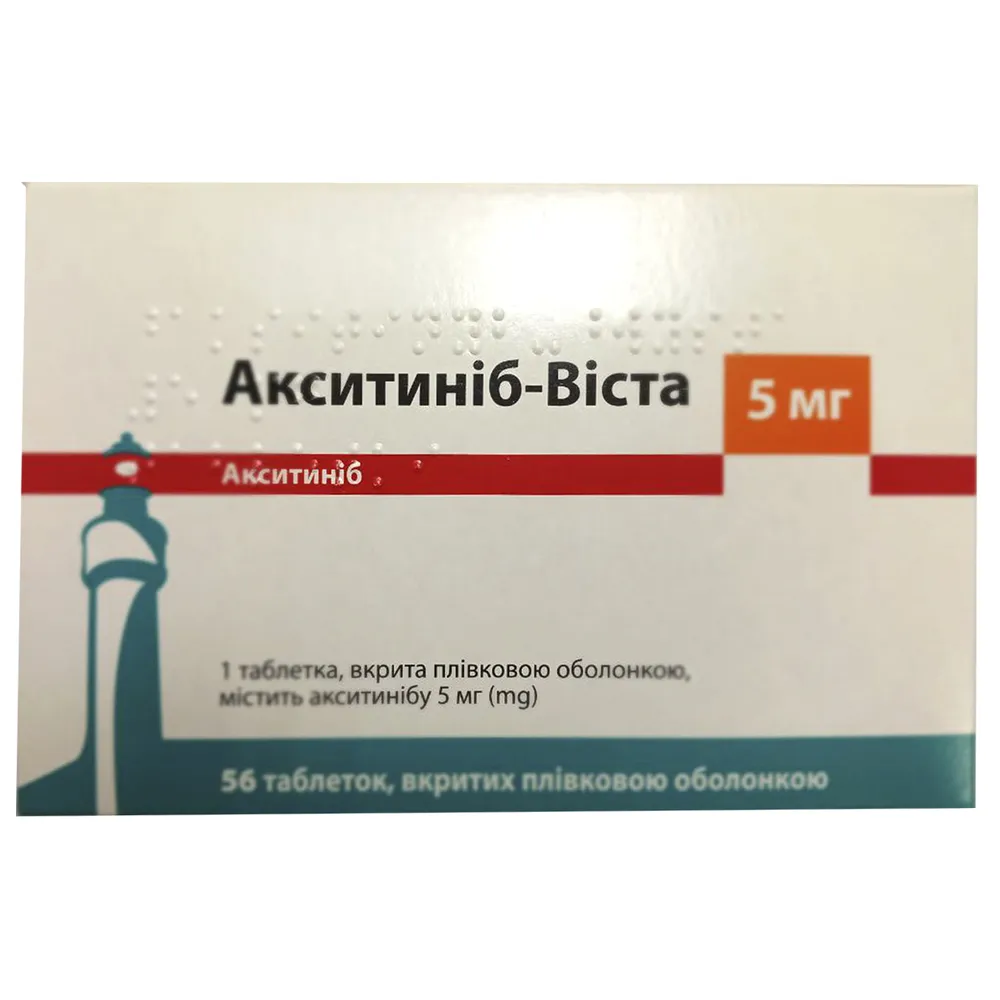
Table of Contents
INSTRUCTIONS FOR MEDICAL USE OF THE MEDICINAL PRODUCT Axitinib-Vista (AXITINIB-VISTA)
Composition:
Active substance: axitinib;
1 film-coated tablet contains 1 mg or 5 mg of axitinib;
Excipients: lactose monohydrate; microcrystalline cellulose (type 101); sodium croscarmellose; microcrystalline cellulose (type 102); sodium croscarmellose; magnesium stearate;
tablet coating: hypromellose; lactose monohydrate; titanium dioxide (E 171); iron oxide red (E172); triacetin.
Pharmaceutical form. Film-coated tablets.
Main physicochemical properties:
1 mg tablets – round, biconvex, film-coated tablets, red in color, with embossing "A7TI" on one side and "1" on the other;
5 mg tablets – oval, biconvex, film-coated tablets, red in color, with embossing "A7TI" on one side and "5" on the other.
Pharmacotherapeutic group. Antineoplastic and immunomodulating agents. Antineoplastic agents. Protein kinase inhibitors. Vascular endothelial growth factor receptor tyrosine kinase inhibitors. Axitinib. ATC code L01EK01.
Pharmacological Properties
Mechanism of Action
Axitinib is a potent and selective inhibitor of vascular endothelial growth factor receptor tyrosine kinases (VEGFR-1, VEGFR-2, and VEGFR-3). These receptors are involved in pathological angiogenesis, tumor growth, and progression of malignant neoplasms. In in vitro studies and mouse models, axitinib demonstrated potent inhibition of VEGFR-mediated proliferation and endothelial cell survival. In mouse tumor xenograft models, axitinib was shown to inhibit tumor growth and phosphorylation of VEGFR-2.
A randomized, double-blind, two-period crossover study was conducted in 35 healthy volunteers to evaluate the effect of a single oral dose of axitinib (5 mg) on QTc interval when administered with 400 mg ketoconazole and as monotherapy. Within the first 3 hours after axitinib administration, no notable changes in mean QTc interval duration (i.e., greater than 20 ms) were observed compared to the placebo group. However, a small increase in mean QTc interval duration (i.e., less than 10 ms) cannot be excluded.
Pharmacokinetics
A population pharmacokinetic analysis combined data from 17 studies involving healthy volunteers and oncology patients. The concentration-time profile of axitinib is described by a two-compartment distribution model with first-order absorption and a lag time.
Absorption and Distribution
Peak plasma concentrations of axitinib are generally achieved within 4 hours after oral administration of axitinib (5 mg), with a median time to maximum concentration (Tmax) ranging from 2.5 to 4.1 hours. Given the short elimination half-life of axitinib, steady-state concentrations are expected to be reached within 2–3 days after initiation of axitinib dosing. Administration of axitinib at 5 mg twice daily resulted in a 1.4-fold increase in drug accumulation compared to a single dose. The pharmacokinetics of axitinib at steady state are nearly linear within the dose range of 1 to 20 mg. After oral administration, the mean absolute bioavailability of axitinib is 58% relative to intravenous administration.
Administration of axitinib with a meal moderately enriched in fat resulted in a 10% decrease in exposure compared to administration in the fasted state in the morning. Administration with a high-fat, high-calorie meal increased the AUC of axitinib by 19% compared to administration in the fasted state in the morning. Axitinib may be administered independently of food intake (see section "Dosage and Administration").
In vitro, axitinib binding to human plasma proteins (primarily to albumin and to a lesser extent to α1-acid glycoprotein) is >99%.
In patients with advanced renal cell carcinoma (n = 20) who received axitinib 5 mg twice daily after food, the geometric mean Cmax and AUC0–24 were 27.8 ng/mL (79%) and 265 ng·h/mL (77%), respectively. Oral clearance and apparent volume of distribution were 38 L/h (CV [coefficient of variation] 80%) and 160 L (CV 105%), respectively.
Metabolism and Elimination
The elimination half-life of axitinib in plasma ranges from 2.5 to 6.1 hours.
Axitinib is primarily metabolized in the liver by CYP3A4/5, with minor contributions from CYP1A2, CYP2C19, and UGT1A1. After oral administration of a 5 mg radiolabeled dose of axitinib, approximately 41% of radioactivity was excreted in feces and 23% in urine. Unchanged axitinib, accounting for 12% of the administered dose, was the main component detected in feces. Unchanged axitinib was not detected in urine. The majority of radioactivity in urine was attributed to carboxylic acid and sulfoxide metabolites of the active substance. The main radioactive component in plasma is the N-glucuronide metabolite, which accounts for 50% of circulating plasma radioactivity. Unchanged axitinib and the sulfoxide metabolite each account for approximately 20% of circulating plasma radioactivity.
The in vitro affinity of the sulfoxide and N-glucuronide metabolites for VEGFR-2 is approximately ≥400-fold lower than that of axitinib.
Effect of Other Medicinal Products on Axitinib
Axitinib is primarily metabolized in the liver by the CYP3A4/5 enzyme. In addition, the aqueous solubility of axitinib is pH-dependent: solubility decreases as pH increases. The effects of a strong CYP3A4/5 inhibitor, a strong CYP3A4/5 inducer, and an antacid on the pharmacokinetics of axitinib are shown in Table 1 (see also sections "Dosage and Administration" and "Interaction with Other Medicinal Products and Other Forms of Interaction").
Table 1
Effect on axitinib pharmacokinetics of concomitantly administered medicinal products and hepatic impairment
| Population characteristic |
PK |
Range of changes and 90% CI |
Recommendations |
| Potent CYP3A4/5 inhibitor: ketoconazole 400 mg once daily for 7 days |
Cmax AUC |
Reduce axitinib dose* |
|
| Potent CYP3A4/5 inducer: rifampicin 600 mg once daily for 9 days |
Cmax AUC |
Avoid concomitant use |
|
| Antacid: rabeprozole 20 mg once daily for 5 days |
Cmax AUC |
No dose adjustment required |
|
| Hepatic impairment |
|||
| Mild/normal |
Cmax AUC |
No dose adjustment required |
|
| Moderate/normal |
Cmax AUC |
Reduce axitinib dose* |
|
| Severe/normal |
Experience lacking |
||
AUC — area under the plasma concentration-time curve.
Cmax — maximum concentration.
*See section "Dosage and administration".
PK — pharmacokinetics.
CI — confidence interval.
Special patient groups
Population pharmacokinetic analysis shows no clinically important effect of age, gender, body weight, race, body surface area, UGT1A1 genotype, or CYP2C19 genotype on axitinib clearance.
Hepatic impairment. The effect of hepatic impairment on axitinib pharmacokinetics is shown in Table 1 (see also sections "Dosage and administration", "Special instructions").
Renal impairment. A population pharmacokinetic analysis was performed in 590 healthy volunteers and patients based on renal function parameters. Among the patients, five had severe renal impairment (creatinine clearance ranging from 15 to <29 mL/min), 64 had moderate impairment (30 to <59 mL/min), and 139 had mild impairment (creatinine clearance from 60 to <89 mL/min). Mild to severe renal impairment does not have a clinically significant effect on axitinib pharmacokinetics. Data regarding axitinib use in patients with end-stage renal disease are available for only one patient.
Pediatric population. Axitinib has not been studied in patients under 18 years of age.
Clinical Characteristics
Indications. Axitinib-Vista is indicated for the treatment of advanced renal cell carcinoma (RCC) after failure of one prior systemic therapy.
Contraindications. Hypersensitivity to axitinib or to any of the excipients of the medicinal product.
Interaction with other medicinal products and other forms of interaction
CYP3A4/5 Inhibitors
Ketoconazole, a strong CYP3A4/5 inhibitor, increased axitinib plasma levels in healthy volunteers. Concomitant use of axitinib with strong CYP3A4/5 inhibitors should be avoided.
Consumption of grapefruit or grapefruit juice may increase axitinib plasma concentrations. The combination of these products with axitinib should also be avoided. It is recommended to select a concomitant medicinal product that does not inhibit or only minimally inhibits CYP3A4/5 activity. If co-administration of axitinib with a strong CYP3A4/5 inhibitor is necessary, the axitinib dose should be reduced.
CYP1A2 and CYP2C19 Inhibitors
CYP1A2 and CYP2C19 play a minor role (< 10%) in axitinib metabolism. The effect of strong inhibitors of these isoenzymes on the pharmacokinetics of axitinib has not been studied. Caution is advised when administering axitinib with strong inhibitors of these isoenzymes due to the risk of increased axitinib plasma concentrations.
CYP3A4/5 Inducers
Administration of rifampicin, a strong CYP3A4/5 inducer, resulted in decreased axitinib plasma levels in healthy volunteers.
Concomitant use of axitinib with strong CYP3A4/5 inducers (e.g., rifampicin, dexamethasone, phenytoin, carbamazepine, rifabutin, rifapentine, phenobarbital, and St. John's wort) should be avoided. It is recommended to select concomitant medicinal products with no or minimal CYP3A4/5 induction potential. Moderate CYP3A4/5 inducers (such as bosentan, efavirenz, etravirine, modafinil, and nafcillin) may also reduce axitinib plasma levels. Use of these agents should also be avoided.
In vitro inhibition and induction studies of CYP and UGT
In vitro studies showed that axitinib does not inhibit CYP2A6, CYP2C9, CYP2C19, CYP2D6, CYP2E1, CYP3A4/5, or UGT1A1 at therapeutic plasma concentrations.
However, it is capable of inhibiting CYP1A2. Therefore, concomitant administration of axitinib with CYP1A2 substrates may lead to increased plasma concentrations of CYP1A2 substrates (e.g., theophylline).
Studies also showed that axitinib has the potential to inhibit CYP2C8. However, co-administration of axitinib with paclitaxel, a known CYP2C8 substrate, did not result in increased paclitaxel plasma concentrations in patients with advanced cancer, indicating a lack of clinically relevant CYP2C8 inhibition.
According to in vitro studies in human hepatocytes, axitinib does not induce CYP1A1, CYP1A2, or CYP3A4/5. Therefore, a reduction in plasma concentrations of CYP1A1, CYP1A2, or CYP3A4/5 substrates in vivo due to concomitant administration of axitinib is not expected.
In vitro studies with P-glycoprotein
In vitro studies showed that axitinib inhibits P-glycoprotein. However, inhibition of P-glycoprotein by axitinib at therapeutic plasma concentrations is not expected. Therefore, it is anticipated that concomitant administration of axitinib will not increase plasma concentrations of digoxin or other P-glycoprotein substrates in vivo.
Special precautions for use
Heart failure
In clinical studies for the treatment of patients with renal cell carcinoma, cases of heart failure were reported in 6/359 patients (2%) receiving axitinib and in 3/355 patients (1%) receiving sorafenib. Grade 3–4 heart failure was observed in 2/359 patients (1%) receiving axitinib and in 1/355 patients (<1%) receiving sorafenib. Fatal heart failure was reported in 2/359 patients (1%) receiving axitinib and in 1/355 patients (<1%) receiving sorafenib.
Symptoms of heart failure should be monitored throughout the treatment period with axitinib. Management of heart failure may require interruption or permanent discontinuation of treatment and dose reduction of axitinib therapy.
Hypertension
Blood pressure should be carefully controlled before starting axitinib treatment. Patients should be monitored for signs of arterial hypertension and, if necessary, standard antihypertensive therapy should be initiated. Depending on the severity of arterial hypertension, treatment with axitinib should either be temporarily interrupted with subsequent dose reduction, or permanently discontinued (see section "Dosage and administration").
Thyroid dysfunction
Thyroid function should be monitored before starting axitinib treatment and periodically during treatment. Hypothyroidism or hyperthyroidism should be managed according to standard medical practice to maintain a euthyroid state.
Arterial thromboembolism
The use of axitinib has not been studied in patients who had arterial embolism or thrombotic disorders within the previous 12 months. In clinical studies with axitinib, arterial embolism and thrombotic events (including transient ischemic attack, myocardial infarction, cerebrovascular accident, and retinal artery occlusion) were reported in 17 out of 715 patients (2%), including two fatal cases following acute cerebrovascular accident (see section "Adverse reactions").
In the event of arterial thromboembolism during treatment, axitinib should be permanently discontinued.
Venous thromboembolism
In clinical studies with axitinib, cases of venous thromboembolism (VTE) (including pulmonary embolism, deep vein thrombosis, and retinal vein occlusion/thrombosis) were reported, including fatal cases (see section "Adverse reactions"). The use of axitinib has not been studied in patients who had venous embolism or thrombotic disorders within the previous 6 months.
During clinical studies with axitinib, venous thromboembolic events occurred in 22 out of 715 patients (3%), including two fatal cases following pulmonary embolism.
Monitoring for symptoms of VTE and pulmonary embolism is required. Depending on the severity of VTE, treatment with axitinib should either be temporarily interrupted with subsequent resumption without dose change, or permanently discontinued.
Elevated hemoglobin or hematocrit levels
During treatment with axitinib, elevated hemoglobin or hematocrit levels may occur, reflecting an increase in red blood cell mass. Increased red blood cell mass increases the risk of embolism and thrombotic events.
Hemoglobin or hematocrit levels should be monitored before starting axitinib treatment and periodically during treatment. If hemoglobin or hematocrit levels exceed the normal range, patients should be treated according to standard medical practice to reduce hemoglobin or hematocrit to acceptable levels.
Bleeding
In clinical studies with axitinib, cases of hemorrhage, hemoptysis, intracranial hemorrhage, lower gastrointestinal bleeding, melena, and fatal bleeding were reported. Axitinib has not been studied in patients with untreated brain metastases or in patients with recent active gastrointestinal bleeding. Axitinib should not be administered to such patients. Depending on the severity and persistence of bleeding, treatment with axitinib should either be temporarily interrupted with subsequent dose reduction, or permanently discontinued.
Gastrointestinal perforation and fistula formation
In clinical studies with axitinib, cases of gastrointestinal perforation and fistula formation, including fatal cases, were reported.
Patients should be periodically monitored during axitinib treatment for signs of gastrointestinal perforation or fistula formation.
Impaired wound healing
Impaired wound healing has been observed in patients receiving drugs that inhibit the vascular endothelial growth factor (VEGF) signaling pathway. Therefore, axitinib may adversely affect wound healing.
Axitinib treatment should be discontinued at least 2 days prior to planned surgery. Axitinib should not be used for at least 2 weeks after major surgery until adequate wound healing has occurred. Depending on the severity and persistence of impaired wound healing, treatment with axitinib may either be resumed at a reduced dose or permanently discontinued. The safety of resuming axitinib after resolution of wound healing complications has not been established (see section "Dosage and administration").
Posterior reversible encephalopathy syndrome (PRES)
PRES is a neurological disorder that may present with headache, seizures, lethargy, confusion, blindness, and other visual and neurological disturbances. Arterial hypertension of any degree (from mild to severe) may also occur. MRI is required to confirm the diagnosis of PRES. If PRES occurs, axitinib treatment should be discontinued. The safety of resuming axitinib treatment in patients who previously experienced PRES is unknown.
Proteinuria
Patients should be monitored for proteinuria before starting and periodically during axitinib treatment. For patients who develop moderate or severe proteinuria, the dose of axitinib should be reduced or treatment should be temporarily discontinued.
Elevated liver enzyme activity
Alanine aminotransferase (ALT), aspartate aminotransferase (AST), and bilirubin levels should be monitored before starting and periodically during axitinib treatment.
Hepatic impairment
In a dedicated study in patients with hepatic impairment, systemic exposure levels after single doses of axitinib in patients with mild hepatic impairment (Child-Pugh class A) were similar to those in patients with normal hepatic function, while in patients with moderate hepatic impairment (Child-Pugh class B), systemic exposure to axitinib was higher compared to patients with normal hepatic function.
For patients with moderate hepatic impairment (Child-Pugh class B), a reduced starting dose of axitinib is recommended.
The effect of axitinib has not been studied in patients with severe hepatic impairment (Child-Pugh class C).
Effect of patient age and race
In a controlled clinical study of axitinib for the treatment of patients with renal cell carcinoma, 34% of patients receiving axitinib were aged ≥65 years. The majority of patients were Caucasian (77%) or of Asian origin (21%). Although increased sensitivity to the drug in elderly patients and Asians cannot be entirely ruled out, overall, no differences in safety and efficacy of axitinib were observed between patients aged ≥65 years and younger patients, or between Caucasians and patients of other races.
Dose adjustment based on patient age or race is not required (see sections "Dosage and administration" and "Pharmacokinetics").
Lactose content
Axitinib-Vista contains lactose. If a patient has been diagnosed with intolerance to certain sugars, consultation with a physician is required before taking this medicinal product.
Sodium content
The medicinal product contains less than 1 mmol (23 mg) of sodium per 1 mg and 5 mg tablet, i.e., it is practically sodium-free.
Use during pregnancy or breastfeeding
Pregnancy
There are no data on the use of axitinib in pregnant women. Due to the mechanism of action and findings from animal studies, harmful effects of axitinib on the fetus can be expected. In animal developmental toxicity studies, axitinib showed teratogenic, embryotoxic, and fetotoxic effects at exposure levels lower than those in humans receiving recommended starting doses.
Women of reproductive potential should be informed of the potential risk to the fetus and the need to use effective contraception during treatment with axitinib and for one week after the last dose.
Breastfeeding
It is unknown whether axitinib is excreted in human milk or affects breastfed infants or milk production. Due to the potential for serious adverse reactions in breastfed infants, women should be advised to discontinue breastfeeding during treatment with axitinib and for 2 weeks after the last dose.
Fertility
Based on preclinical data, axitinib may impair reproductive function and fertility in patients.
Contraception
Men and their reproductive potential partners should use effective contraception during treatment with axitinib and for one week after the last dose.
Ability to affect reaction speed when driving or operating machinery
Patients should be warned about the possible occurrence of dizziness, somnolence, and visual disturbances during treatment with axitinib, and advised to avoid driving or operating machinery if these symptoms occur (see sections "Adverse reactions" and "Special precautions for use").
Administration and Dosage
The recommended starting dose of axitinib is 5 mg twice daily. The intervals between doses of axitinib should be approximately 12 hours; the drug can be taken independently of food intake (see section "Pharmacodynamics"). Tablets should be swallowed whole with a glass of water.
In case of vomiting after taking a dose or if a dose is missed, an additional dose should not be taken. The next prescribed dose should be taken at the usual time.
Dose Adjustment
Depending on individual tolerability and safety, the dose of the drug may be decreased or increased.
Recommendations for dose escalation or reduction of Axitinib-Vista are provided in Table 2.
Dose escalation of axitinib may be considered in patients who have tolerated the treatment well for at least two consecutive weeks without experiencing adverse reactions of grade 2 or higher (according to the Common Terminology Criteria for Adverse Events), have normal blood pressure, and are not receiving antihypertensive medications.
Table 2
Recommendations for dose escalation or reduction of Axitinib-Vista
| Dose adjustment |
Dosing regimen |
| Recommended initial dose |
5 mg twice daily |
| Dose escalation |
|
| First dose increase |
7 mg twice daily |
| Second dose increase |
10 mg twice daily |
| Dose reduction |
|
| First dose reductiona |
3 mg twice daily |
| Second dose reduction |
2 mg twice daily |
| a For management of adverse reactions to the medicinal product. b From 5 mg twice daily. |
|
Dosage modification recommendations for adverse reactions to the medicinal product Axitinib-Vista are provided in Table 3.
Table 3
Dosage modification recommendations for the medicinal product Axitinib-Vista in the event of adverse reactions
| Adverse reaction |
Severity |
Axitinib dose modification |
| Arterial hypertension |
Systolic blood pressure > 150 mm Hg or diastolic blood pressure > 100 mm Hg despite antihypertensive therapy |
|
| Systolic blood pressure > 160 mm Hg or diastolic blood pressure > 105 mm Hg |
|
|
| Grade 4 or hypertensive crisis |
|
|
| Bleeding |
Grade 3 or 4 |
|
| Heart failure |
Asymptomatic cardiomyopathy (left ventricular ejection fraction more than 20% but less than 50% below baseline or below lower limit of normal if baseline was not measured) |
|
| Congestive heart failure with clinical symptoms |
|
|
| Impaired wound healing |
Any grade |
|
| Posterior reversible encephalopathy syndrome |
Any grade |
|
| Proteinuria |
≥ 2 g protein in urine over 24 hours |
|
| Other adverse reactions |
Grade 3 |
|
| Grade 4 |
|
Dosage adjustments due to interactions with other medicinal products
Concomitant use of strong CYP3A4/5 inhibitors
Concomitant use of axitinib with strong CYP3A4/5 inhibitors (such as ketoconazole, itraconazole, clarithromycin, atazanavir, indinavir, nefazodone, nelfinavir, ritonavir, saquinavir, telithromycin, and voriconazole) should be avoided. An alternative concomitant medicinal product with no or minimal CYP3A4/5 inhibitory potential should be selected.
Although dose adjustment of axitinib in patients receiving strong CYP3A4/5 inhibitors has not been studied, if concomitant use of a strong CYP3A4/5 inhibitor is necessary, a reduction of the axitinib dose by approximately half is recommended (e.g., the initial dose should be reduced from 5 mg twice daily to 2 mg twice daily). Such a reduction is considered to restore AUC values to the range observed when the drug is administered without inhibitors.
Subsequent dose increases or decreases of axitinib may be considered based on individual safety and tolerability. After discontinuation of the strong inhibitor (after 3–5 inhibitor half-lives), the axitinib dose should be increased again to the level prescribed before initiating the strong CYP3A4/5 inhibitor (see section "Interaction with other medicinal products and other forms of interaction").
Elderly patients (≥65 years of age)
Dose adjustment is not required.
Renal impairment
Specific studies on the use of axitinib in patients with renal impairment have not been conducted. Population pharmacokinetic analyses showed no significant differences in axitinib clearance in patients with mild, moderate, or severe renal impairment (creatinine clearance from ≤15 mL/min to <89 mL/min) (see section "Pharmacokinetics"). Patients with mild, moderate, or severe renal impairment do not require adjustment of the initial dose. Axitinib should be used with caution in patients with end-stage renal disease (creatinine clearance <15 mL/min).
Hepatic impairment
Dose adjustment is not required when axitinib is administered to patients with mild hepatic impairment (Child-Pugh class A). When axitinib is administered to patients with moderate hepatic impairment (Child-Pugh class B), the initial dose should be reduced by half. Subsequent dose increases or decreases of axitinib may be considered based on individual safety and tolerability. The use of axitinib in patients with severe hepatic impairment (Child-Pugh class C) has not been studied.
Children
The safety and efficacy of axitinib in children have not been established.
Overdose
There is no specific antidote for axitinib overdose.
In a controlled clinical trial of axitinib for the treatment of patients with renal cell carcinoma, one patient accidentally received a dose of 20 mg twice daily for 4 days and experienced dizziness.
In a clinical trial designed to determine the dose of axitinib, adverse reactions including arterial hypertension, seizures associated with arterial hypertension, and fatal haemoptysis occurred in participants who received initial doses of 10 or 20 mg twice daily.
In case of suspected axitinib overdose, drug administration should be discontinued and symptomatic treatment initiated.
Adverse Reactions
The most clinically significant adverse reactions are described in detail in the section "Special Warnings and Precautions for Use," namely: heart failure, arterial hypertension, thyroid dysfunction, arterial thromboembolism, venous thromboembolism, hepatic impairment, hemorrhage, gastrointestinal perforation and fistula formation, posterior reversible encephalopathy syndrome (PRES), proteinuria, and elevated liver enzymes.
Because clinical trials are conducted under highly variable conditions, the frequency of adverse reactions observed in clinical trials of one medicinal product cannot be directly compared with that of another; also, this frequency may not reflect the frequency observed in clinical practice.
The safety of axitinib was evaluated in clinical trials involving a total of 715 patients treated with monotherapy, of whom 537 had advanced renal cell carcinoma. The data presented in this section are from 359 patients with advanced renal cell carcinoma who participated in a randomized clinical trial comparing axitinib with sorafenib.
Clinical trial experience
The median duration of treatment was 6.4 months (range: 0.03 to 22 months) for patients receiving axitinib and 5 months (range: 0.03–20.1 months) for those receiving sorafenib. Dose modifications or temporary treatment interruption due to adverse reactions were required in 199 of 359 patients (55%) receiving axitinib and in 220 of 355 patients (62%) receiving sorafenib. Treatment was permanently discontinued due to adverse reactions in 34 of 359 patients (9%) receiving axitinib and in 46 of 355 patients (13%) receiving sorafenib.
The most common adverse reactions (incidence ≥20%) observed with axitinib treatment were: diarrhea, arterial hypertension, fatigue, decreased appetite, nausea, dysphonia, palmar-plantar erythrodysesthesia syndrome, weight decreased, vomiting, asthenia, and constipation.
Table 4 lists adverse reactions reported in ≥10% of patients receiving axitinib or sorafenib.
Table 4
| Adverse reactionsa |
Axitinib |
Sorafenib |
||
| (N = 359) |
(N = 355) |
|||
| All gradesb |
Grade 3 or 4 |
All gradesb |
Grade 3 or 4 |
|
| % |
% |
% |
% |
|
| Diarrhea |
55 |
11 |
53 |
7 |
| Arterial hypertension |
40 |
16 |
29 |
11 |
| Fatigue |
39 |
11 |
32 |
5 |
| Decreased appetite |
34 |
5 |
29 |
4 |
| Nausea |
32 |
3 |
22 |
1 |
| Dysphonia |
31 |
0 |
14 |
0 |
| Palmar-plantar erythrodysesthesia syndrome |
27 |
5 |
51 |
16 |
| Weight decreased |
25 |
2 |
21 |
1 |
| Vomiting |
24 |
3 |
17 |
1 |
| Asthenia |
21 |
5 |
14 |
3 |
| Constipation |
20 |
1 |
20 |
1 |
| Hypothyroidism |
19 |
<1 |
8 |
0 |
| Cough |
15 |
1 |
17 |
1 |
| Mucosal inflammation |
15 |
1 |
12 |
1 |
| Arthralgia |
15 |
2 |
11 |
1 |
| Stomatitis |
15 |
1 |
12 |
<1 |
| Dyspnea |
15 |
3 |
12 |
3 |
| Abdominal pain |
14 |
2 |
11 |
1 |
| Headache |
14 |
1 |
11 |
0 |
| Limb pain |
13 |
1 |
14 |
1 |
| Rash |
13 |
<1 |
32 |
4 |
| Proteinuria |
11 |
3 |
7 |
2 |
| Dysgeusia |
11 |
0 |
8 |
0 |
| Dry skin |
10 |
0 |
11 |
0 |
| Dyspepsia |
10 |
0 |
2 |
0 |
| Pruritus |
7 |
0 |
12 |
0 |
| Alopecia |
4 |
0 |
32 |
0 |
| Erythema |
2 |
0 |
10 |
<1 |
| a Expressed as a percentage of all treatment-emergent reaction categories. b National Cancer Institute (USA) Common Terminology Criteria for Adverse Events, version 3.0. |
||||
The adverse reactions (of all severity grades) listed below occurred in patients receiving axitinib treatment, with a frequency of <10%. Among these reactions were dizziness (9%), abdominal pain upper (8%), myalgia (7%), dehydration (6%), epistaxis (6%), anemia (4%), hemorrhoids (4%), hematuria (3%), tinnitus (3%), increased lipase levels (3%), glossodynia (3%), pulmonary embolism (2%), rectal hemorrhage (2%), hemoptysis (2%), deep vein thrombosis (1%), occlusion/retinal vein thrombosis (1%), polycythemia (1%), and transient ischemic attack (1%).
Table 5 lists the most common laboratory test abnormalities reported in ≥10% of patients receiving axitinib or sorafenib.
Table 5
| Laboratory parameter abnormality |
N |
Axitinib |
N |
Sorafenib |
|||
| All gradesa |
Grade 3 or 4 |
All gradesa |
Grade 3 or 4 |
||||
| % |
% |
% |
% |
||||
| Clinical blood parameters |
|||||||
| Decreased hemoglobin level |
320 |
35 |
<1 |
316 |
52 |
4 |
|
| Decreased (absolute) lymphocyte count |
317 |
33 |
3 |
309 |
36 |
4 |
|
| Decreased platelet count |
312 |
15 |
<1 |
310 |
14 |
0 |
|
| Decreased white blood cell count |
320 |
11 |
0 |
315 |
16 |
<1 |
|
| Biochemical blood parameters |
|||||||
| Increased creatinine level |
336 |
55 |
0 |
318 |
41 |
<1 |
|
| Decreased bicarbonate level |
314 |
44 |
<1 |
291 |
43 |
0 |
|
| Hypocalcemia |
336 |
39 |
1 |
319 |
59 |
2 |
|
| Elevated ALP |
336 |
30 |
1 |
319 |
34 |
1 |
|
| Hyperglycemia |
336 |
28 |
2 |
319 |
23 |
2 |
|
| Elevated lipase level |
338 |
27 |
5 |
319 |
46 |
15 |
|
| Elevated amylase activity |
338 |
25 |
2 |
319 |
33 |
2 |
|
| Elevated ALT level |
331 |
22 |
<1 |
313 |
22 |
2 |
|
| Elevated AST level |
331 |
20 |
<1 |
311 |
25 |
1 |
|
| Hypernatremia |
338 |
17 |
1 |
319 |
13 |
1 |
|
| Hypoalbuminemia |
337 |
15 |
<1 |
319 |
18 |
1 |
|
| Hyperkalemia |
333 |
15 |
3 |
314 |
10 |
3 |
|
| Hypoglycemia |
336 |
11 |
<1 |
319 |
8 |
<1 |
|
| Hyponatremia |
338 |
13 |
4 |
319 |
11 |
2 |
|
| Hypophosphatemia |
336 |
13 |
2 |
318 |
49 |
16 |
|
and National Cancer Institute (USA) Common Terminology Criteria for Adverse Events, version 3.0.
ALP — alkaline phosphatase.
ALT — alanine aminotransferase.
AST — aspartate aminotransferase.
Individual laboratory abnormalities (all grades) were observed in < 10 % of patients receiving axitinib, including increased hemoglobin levels above the upper limit of normal (9 % in the axitinib group vs. 1 % in the sorafenib group) and hypercalcemia (6 % in the axitinib group vs. 2 % in the sorafenib group).
Post-marketing experience
The adverse reactions listed below have been reported during the post-marketing use of axitinib. Since these reactions are reported voluntarily from a population of uncertain size, it is not possible to reliably estimate their frequency or establish a causal relationship to drug exposure.
Vascular disorders: arterial (including aortic) aneurysms, dissections, and ruptures.
Reporting of suspected adverse reactions
Reporting suspected adverse reactions after authorization of the medicinal product is important. It allows continued monitoring of the benefit-risk balance of the medicinal product. Medical and pharmaceutical professionals, as well as patients or their legal representatives, should report any suspected adverse reactions and lack of efficacy via the Automated Pharmacovigilance Information System at the following link: https://aisf.dec.gov.ua.
Shelf life. 3 years.
Storage conditions. Store at a temperature not exceeding 25 °C. Keep out of reach and sight of children.
Packaging. 7 tablets in a blister; 8 blisters in a cardboard carton.
Prescription status. Prescription only.
Manufacturer. Sandoz Spain, S.L.
Manufacturer's address and location of manufacturing site. Calle C/ Castello, n° 1, Sant Boi de Llobregat, Barcelona, 08830, Spain.