Acriptega
Ukraine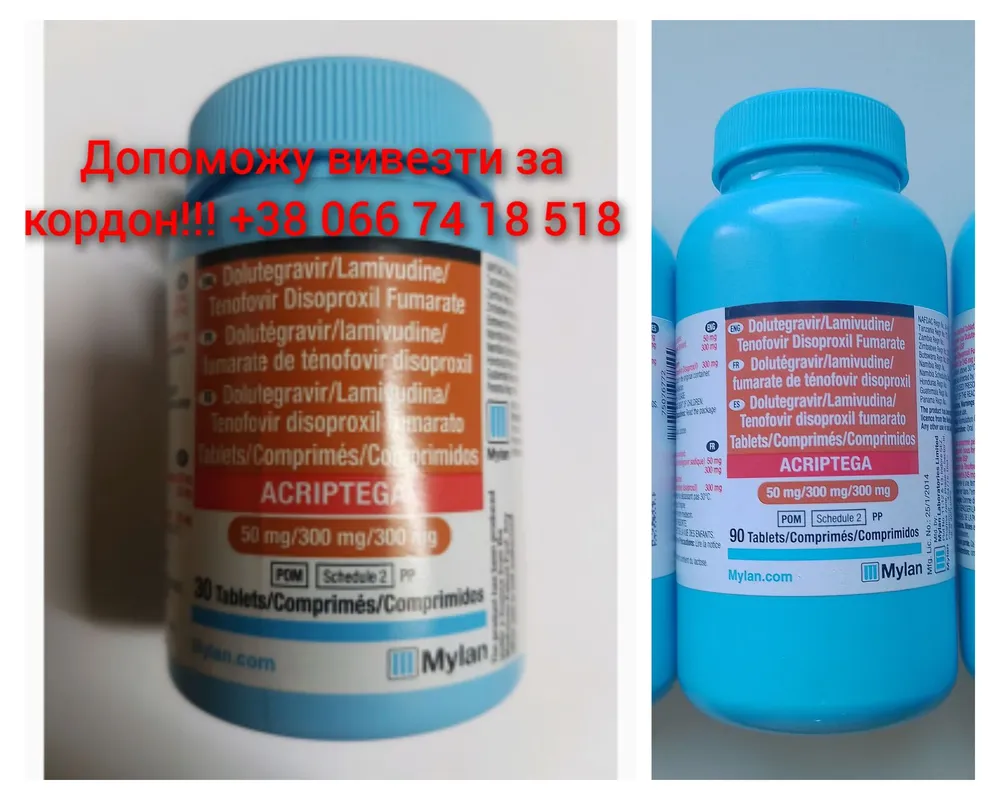
Table of Contents
INSTRUCTIONS FOR MEDICAL USE OF THE MEDICINAL PRODUCT ACRIPTEGA (ACRIPTEGA)
Composition:
Active substances: dolutegravir, lamivudine, tenofovir disoproxil fumarate;
1 tablet contains dolutegravir sodium 52.6 mg equivalent to dolutegravir 50 mg, lamivudine 300 mg, tenofovir disoproxil fumarate 300 mg equivalent to tenofovir disoproxil 245 mg;
Excipients: mannitol (E 421); microcrystalline cellulose; sodium starch glycolate (type A); povidone K-30; lactose monohydrate; sodium croscarmellose; magnesium stearate; tablet coating: Opadry II White (85F18422) (partially hydrolyzed polyvinyl alcohol, titanium dioxide (E 171), macrogol 4000, talc).
Pharmaceutical form. Film-coated tablets.
Main physicochemical properties: capsule-shaped, biconvex tablets with bevelled edges, film-coated, white to almost white in colour, with an imprint "M" on one side and "LTD" on the other side of the tablet.
Pharmacotherapeutic group. Direct-acting antiviral agents for systemic use. Antiviral agents for treatment of HIV infection in combination.
ATC code J05A R27.
Pharmacological properties.
Pharmacodynamics.
Mechanism of action
Dolutegravir inhibits HIV integrase by binding to the active site of the integrase enzyme and blocking the strand transfer step in the integration process of retroviral deoxyribonucleic acid (DNA), which is essential for the replication cycle of human immunodeficiency virus (HIV).
Lamivudine, the negative enantiomer of 2’-deoxy-3’-thiacytidine, is a nucleoside analogue. Tenofovir disoproxil is converted in vivo into tenofovir, an analogue of nucleoside monophosphate (nucleotide) of adenosine monophosphate.
Lamivudine and tenofovir are phosphorylated by cellular enzymes to form lamivudine triphosphate and tenofovir diphosphate, respectively. Lamivudine triphosphate and tenofovir diphosphate competitively inhibit HIV-1 reverse transcriptase, leading to chain termination of DNA. Both substances are active against HIV-1 and HIV-2, as well as against hepatitis B virus.
Pharmacodynamic effects
Antiviral activity in cell culture
Dolutegravir
The IC50 value for dolutegravir against various laboratory strains of HIV-1, using peripheral blood mononuclear cells (PBMCs), was 0.5 nM, and ranged from 0.7 to 2 nM using MT-4 cells. IC50 values were similar across cellular isolates with no significant differences among subtypes (A, B, C, D, E, F, and G). The mean IC50 value for three HIV-2 isolates was 0.18 nM (range 0.09–0.61 nM).
Lamivudine
The antiviral activity of lamivudine against HIV-1 was evaluated in several cell lines, including monocytes and PBMCs, using standard susceptibility assays. EC50 values ranged from 0.003 to 15 µM against HIV-1 clades A–G and group O.
Tenofovir disoproxil
The antiviral activity of tenofovir against laboratory and clinical strains of HIV-1 was evaluated in T-lymphoblastoid cell lines, primary monocyte/macrophage cells, and PBMCs. EC50 values for tenofovir ranged from 0.04 to 8.5 µM. Tenofovir demonstrated antiviral activity in cell culture against HIV-1 clades A, B, C, D, E, F, G, and O (EC50 values ranged from 0.5 to 2.2 µM).
Antiviral activity in combination with other antiviral agents
No antagonistic effects were observed in vitro when dolutegravir was used in combination with other studied antiretroviral agents: stavudine, abacavir, efavirenz, nevirapine, lopinavir, amprenavir, enfuvirtide, maraviroc, and raltegravir. In addition, no antagonistic effects were observed with dolutegravir and adefovir, and ribavirin had no apparent effect on dolutegravir activity.
No antagonistic effects in vitro were observed when lamivudine was used in combination with other antiretroviral agents (tested agents: abacavir, didanosine, nevirapine, and zidovudine).
In vitro resistance (dolutegravir)
Mutations E92Q (fold change, FC 3) and G193E (also FC 3) were observed in the NL432 strain. The E92Q mutation was observed in patients with pre-existing resistance to raltegravir who subsequently received dolutegravir (classified as a secondary mutation for dolutegravir).
Using clinical isolates of subtypes B, C, and A/G to determine integrase substitutions R263K and G118R (in C and A/G), R263K was reported in two patients receiving antiretroviral therapy who had not received integrase inhibitors, with subtypes B and C in a clinical program, but without impact on sensitivity to dolutegravir in vitro. The G118R mutation reduced sensitivity to dolutegravir in site-directed mutants (FC 10), but was not observed in patients receiving dolutegravir in phase III trials.
Primary mutations associated with raltegravir/elvitegravir use (Q148H/R/K, N155H, Y143R/H/C, E92Q, and T66I) did not affect sensitivity to dolutegravir in vitro as single mutations. When secondary mutations associated with integrase inhibitors (for raltegravir/elvitegravir) were added to these primary mutations in site-directed mutant experiments, sensitivity to dolutegravir remained unchanged (FC < 2 compared to wild-type virus), except for Q148 mutations, where in combination with known secondary mutations, the FC value was 5–10 or higher. The impact of Q148 mutations (H/R/K) was also confirmed in passage experiments with site-directed mutants. In serial passage with the NL432 strain, starting from site-directed mutants with masked mutations N155H or E92Q, no further resistance selection was observed (FC values remained unchanged, close to 1). In contrast, starting from mutants with masked Q148H mutations (FC 1), various secondary mutations were observed with a subsequent increase in FC values to >10.
No clinically significant phenotypic threshold (FC compared to wild-type virus) has been established; genotypic resistance was a better predictor of outcome.
In analyzing sensitivity to dolutegravir in raltegravir-resistant isolates obtained from patients previously treated with raltegravir, dolutegravir had an FC ≤ 10 in 94% of 705 clinical isolates.
In vivo resistance (dolutegravir)
In treatment-naïve patients receiving dolutegravir in combination with two nucleoside reverse transcriptase inhibitors (NRTIs) in clinical trials, no development of resistance to integrase inhibitors or NRTIs was observed (n = 1118, follow-up 48–96 weeks).
In patients with prior failed antiretroviral therapy who had not received integrase inhibitors, integrase substitutions were observed in 4 of 354 patients (follow-up 48 weeks) receiving dolutegravir in combination with a background regimen selected by the investigator. Of these four patients, two had the unique integrase substitution R263K (maximum FC 1.93), one had the polymorphic integrase substitution V151V/I (maximum FC 0.92), and one had pre-existing integrase mutations and was considered to have previously received integrase inhibitors or was infected with an integrase inhibitor-resistant virus. The R263K mutation was also isolated in vitro (see above).
In cases of resistance to integrase inhibitors after week 24 in 32 patients (all receiving dolutegravir 50 mg twice daily + optimized background regimens) with protocol-defined virological failure (PDVF), the following mutations with paired genotypes were identified: L74L/M (n = 1), E92Q (n = 2), T97A (n = 9), E138K/A/T (n = 8), G140S (n = 2), Y143H (n = 1), S147G (n = 1), Q148H/K/R (n = 4), N155H (n = 1), and E157E/Q (n = 1). Resistance to integrase inhibitors emerging during treatment typically occurred in patients with a history of Q148 mutation (at baseline or historical control). PDVF was observed in five other patients between weeks 24 and 28, and treatment-emergent mutations were detected in two of these five. The treatment-emergent mutations or mutation combinations were L74I (n = 1) and N155H (n = 2). Treatment-emergent mutations were observed in 30 patients with baseline genotypic resistance to integrase inhibitors who received dolutegravir (plus optimized background therapy), consistent with these observations.
In vitro and in vivo resistance (tenofovir)
The K65R mutation was selected in vitro when HIV-1 was cultured in the presence of increasing concentrations of tenofovir. This may also occur in vivo during virological failure of regimens containing tenofovir. K65R reduces sensitivity to tenofovir in vitro by approximately 2-fold and is associated with loss of response to tenofovir-containing regimens. In clinical trials involving previously treated patients, the activity of tenofovir against HIV-1 strains with thymidine analogue mutations (TAMs) was evaluated; TAMs were not selected by tenofovir. HIV strains expressing 3 or more TAMs, including the M41L or L210W mutations, demonstrated reduced response to tenofovir.
In vitro and in vivo resistance (lamivudine)
In many cases where lamivudine-containing regimens fail (less frequently when the regimen includes a ritonavir-boosted protease inhibitor), the M184V mutation emerges early. M184V causes high-level resistance to lamivudine (>300-fold reduction in sensitivity). Viral replication with M184V is less efficient than wild-type virus replication. In vitro data suggest that continuing lamivudine as part of an antiretroviral regimen despite the emergence of M184V may provide residual antiretroviral activity (likely due to impaired viral replication). The clinical significance of these observations is not established. Therefore, the decision to continue lamivudine therapy despite the emergence of the M184V mutation should only be considered when the activity of the most effective and available NRTIs is significantly compromised.
Cross-resistance due to the M184V mutation is limited to nucleoside/nucleotide reverse transcriptase inhibitors. Zidovudine and stavudine retain their antiretroviral activity against lamivudine-resistant HIV-1. Abacavir retains its antiretroviral activity against lamivudine-resistant HIV-1 with only the M184V mutation. Strains with the M184V mutation show <4-fold reduction in sensitivity to didanosine; the clinical significance of this is not established.
Effect on electrocardiogram (dolutegravir)
No effect on QTc interval was observed with doses three times higher than the clinical dose.
Clinical efficacy and safety
The efficacy of individual components of this fixed-dose combination product has been confirmed in several clinical trials. Dolutegravir, lamivudine, and tenofovir disoproxil have been used as individual agents in various combination treatment regimens. Clinical trials of the combination of dolutegravir, lamivudine, and tenofovir disoproxil have not been conducted.
In two clinical trials, emtricitabine and tenofovir disoproxil in combination with dolutegravir were administered to treatment-naïve patients with HIV-1 infection. The proportion of patients (ITT) with HIV RNA < 50 copies/mL was 93% and 94% at 48 weeks, respectively.
Pharmacokinetics.
The pharmacokinetic parameters of the medicinal product Akrigtegra, determined after oral administration of one tablet to healthy volunteers under fasting conditions, are presented in Tables 1 and 2.
Table 1
Pharmacokinetic parameters
| Pharmacokinetic parameters |
Arithmetic mean (± standard deviation) |
||
| Dolutegravir |
Lamivudine |
Tenofovir |
|
| Maximum concentration (Cmax) (ng/ml) |
2531 ± 532 |
2292 ± 787 |
314 ± 80 |
| Area under the curve (AUC0-∞) (ng·h/ml) |
54883 ± 15004 |
11501 ± 2501 |
2462 ± 537 |
| Time to maximum concentration (Tmax) |
2.77 ± 0.94 |
1.97 ± 0.93 |
0.95 ± 0.32 |
Table 2
Pharmacokinetics (PK) of dolutegravir, lamivudine, and tenofovir disoproxil
| Dolutegravir |
Lamivudine |
Tenofovir disoproxil |
|||||||||||||||||||||||||||||
| General Information |
|||||||||||||||||||||||||||||||
| PK is similar in healthy volunteers and HIV-infected patients. Low to moderate PK variability. |
PK is similar in healthy volunteers and HIV-infected patients. Low to moderate PK variability. |
||||||||||||||||||||||||||||||
| Absorption |
|||||||||||||||||||||||||||||||
| Absolute bioavailability |
Unknown |
Not studied (N/D) |
N/D |
||||||||||||||||||||||||||||
| Oral bioavailability |
At least 32% |
80–85% |
25% |
||||||||||||||||||||||||||||
| Effect of food intake |
Elevation may be clinically significant in the presence of certain resistance to integrase inhibitors. Therefore, HIV-infected patients with resistance to integrase inhibitors are recommended to take dolutegravir with food. |
Administration of lamivudine with food results in a delayed time to reach Tmax and reduced Cmax (decrease by 47%). However, this does not affect the extent of lamivudine absorption (based on AUC). |
|
||||||||||||||||||||||||||||
| Distribution |
|||||||||||||||||||||||||||||||
| Volume of distribution (mean value) |
17 to 20 L |
1.3 L/kg |
800 mL/kg |
||||||||||||||||||||||||||||
| Plasma protein binding in vitro |
> 99 %, increased level of unbound fraction at low serum albumin levels (as in moderate hepatic impairment) |
< 36 % serum albumin in vitro |
< 0.7 % (binding to serum proteins < 7.2 %) |
||||||||||||||||||||||||||||
| Tissue distribution |
CSF: mean value 18 ng/mL (comparable to unbound plasma concentration and > IC50). Vaginal, cervical tissues, cervicovaginal fluid: 6–10 %. Seminal fluid: 7 %. Rectal tissues: 17 % (relative to corresponding plasma levels at steady state) |
Widely distributed, highest concentrations in kidneys and liver. |
|||||||||||||||||||||||||||||
| Metabolism |
|||||||||||||||||||||||||||||||
| Hepatic metabolism: glucuronidation via UGT1A1, minor pathway via CYP3A |
Minor pathway only (< 10 %) |
In vitro studies demonstrated that neither tenofovir disoproxil nor tenofovir are substrates of CYP450 enzymes. |
|||||||||||||||||||||||||||||
| Active metabolite(s) |
ND |
ND |
Tenofovir. |
||||||||||||||||||||||||||||
| Elimination |
|||||||||||||||||||||||||||||||
| Elimination half-life |
14 hours |
5–7 hours 22 hours for intracellular lamivudine triphosphate |
Tenofovir: 12 to 18 hours. Tenofovir diphosphate: 10 hours intracellularly in activated peripheral blood mononuclear cells and 50 hours in resting peripheral blood mononuclear cells. |
||||||||||||||||||||||||||||
| Mean systemic clearance (Cl/F) |
≈1 L/hour |
0.32 L/hour/kg |
0.23 L/hour/kg |
||||||||||||||||||||||||||||
| % of dose excreted in urine |
Total 32 %; < 1 % unchanged, 19 % as glucuronide ester. Other metabolites: N-dealkylated metabolite and metabolite formed by oxidation at the benzyl carbon position |
> 70 % (mainly excreted unchanged) |
70–80 % as unchanged drug. |
||||||||||||||||||||||||||||
| % of dose excreted in faeces |
53 % excreted unchanged in faeces |
ND |
|||||||||||||||||||||||||||||
| Pharmacokinetic linearity |
Dose- and formulation-dependent. For tablets: dose-proportional increase from 25 to 50 mg |
Linear pharmacokinetics |
Linear pharmacokinetics (dose range 75 to 600 mg). |
||||||||||||||||||||||||||||
| Drug interactions (in vitro) |
|||||||||||||||||||||||||||||||
| Transporters |
No significant inhibition of P-gp, BCRP, BSEP, OATP1B1, OATP1B3, OCT1, MATE2-K, MRP2 or MRP4. Not a substrate of human OATP1B1, OATP1B3 or OCT1. |
OCT (organic cation transporters) |
Substrate of hOAT1, hOAT3 and MRP4. |
||||||||||||||||||||||||||||
| Metabolizing enzymes |
No significant inhibition of (CYP)1A2, CYP2A6, CYP2B6, CYP2C8, CYP2C9, CYP2C19, CYP2D6, CYP3A, uridine diphosphate-glucuronosyltransferases (UGT)1A1 or UGT2B7. No induction of CYP1A2, CYP2B6 or CYP3A4 |
No significant inhibition of CYP3A4, CYP2D6, CYP2C9, CYP2E1 or CYP1A1/2. |
|||||||||||||||||||||||||||||
Relationship between pharmacokinetics and pharmacodynamics
In a dose-finding study where patients received dolutegravir monotherapy, rapid and dose-dependent antiviral activity was demonstrated, with a mean reduction of 2.5 log10 HIV-1 RNA on day 11 with the 50 mg dose. This antiviral response was maintained for 3–4 days after the last dose in the group receiving 50 mg.
Modeling results using pooled clinical trial data from patients with resistance to integrase inhibitors suggest that increasing the dose from 50 mg twice daily to 100 mg twice daily may enhance the efficacy of dolutegravir in patients with resistance to integrase inhibitors and limited treatment options due to resistance to drugs from different classes. It was predicted that among patients with the Q148 mutation and two or more secondary mutations (G140A/C/S, E138A/K/T, L74I), the proportion of patients with response (HIV-1 RNA < 50 copies/mL) at week 24 would increase by approximately 4–18 %. Although these modeling results have not been confirmed in clinical trials, such a high dose may be considered in the presence of the Q148 mutation with two or more secondary mutations (G140A/C/S, E138A/K/T, L74I) in patients with limited treatment options due to resistance to drugs from different classes. Clinical data on the safety and efficacy of the 100 mg twice daily dose are lacking. When co-administered with atazanavir, dolutegravir exposure significantly increases; therefore, such a high dose of dolutegravir should not be prescribed in combination therapy, as the safety of such exposure has not been established.
Special patient groups
Children
The pharmacokinetics of dolutegravir in 10 children (aged 12 to 18 years) infected with HIV-1 and receiving antiretroviral therapy showed that a dolutegravir dose of 50 mg once daily results in exposure comparable to that in adults receiving 50 mg once daily. Pharmacokinetics in 11 children aged 6 to 12 years demonstrated that a dose of 25 mg once daily in patients with body weight of at least 20 kg and 35 mg once daily in patients with body weight of at least 30 kg resulted in dolutegravir exposure comparable to that in adults. Additionally, population pharmacokinetic modeling and simulation analysis demonstrated that weight-based dosing (20, 25, 35, and 50 mg) in children aged 6 years and older with body weight of at least 15 kg provides exposure comparable to that in adults (50 mg), with the lowest weight range being 15–20 kg corresponding to a daily dose of 20 mg.
Tenofovir exposure in children receiving tenofovir disoproxil orally at a dose of 245 mg daily was similar to exposure in adults receiving tenofovir disoproxil 245 mg once daily. Pharmacokinetic studies with tenofovir disoproxil 245 mg tablets in children under 12 years of age or with renal impairment have not been conducted.
Data on the use of lamivudine in children at a dose of 300 mg daily are limited. Pharmacokinetic parameters are comparable to those observed in adults.
Elderly patients
Population pharmacokinetic analysis of dolutegravir using data from HIV-1-infected adults showed no clinically significant effect of patient age on dolutegravir exposure.
Pharmacokinetic data for dolutegravir, tenofovir, and lamivudine in patients over 65 years of age are limited.
Renal impairment
Pharmacokinetic data were obtained separately for dolutegravir, tenofovir, and lamivudine. Renal clearance of unchanged active substance is a minor elimination pathway for dolutegravir. A pharmacokinetic study of dolutegravir 50 mg was conducted in adult patients with severe renal impairment (CLcr < 30 mL/min) and healthy control volunteers. Dolutegravir exposure decreased by approximately 40 % in patients with severe renal impairment. The mechanism of this phenomenon is unknown. Dose adjustment is not considered necessary for patients with renal impairment. Dolutegravir has not been studied in patients on dialysis.
Lamivudine studies demonstrated that plasma concentration (AUC) increases in patients with renal impairment due to reduced clearance. Based on lamivudine data, the medicinal product Akrypega is not recommended for patients with creatinine clearance < 50 mL/min.
Compared to patients with normal renal function, in individuals not infected with HIV or hepatitis B virus with creatinine clearance exceeding 80 mL/min, mean tenofovir exposure increased from 2185 ng·h/mL to 3064 ng·h/mL, 6009 ng·h/mL, and 15,985 ng·h/mL in patients with mild, moderate, and severe renal impairment, respectively.
An increased dosing interval in patients with renal impairment is expected to result in higher peak plasma concentrations and lower Cmin levels compared to patients with normal renal function. The clinical significance of this is unknown.
In patients with end-stage renal disease (creatinine clearance < 10 mL/min) requiring hemodialysis, tenofovir concentrations between dialysis sessions significantly increased over 48 hours, reaching a mean Cmax of 1032 ng/mL and a mean AUC0-48h of 42,857 ng·h/mL. It is recommended to adjust the dosing interval of tenofovir disoproxil 245 mg in patients with creatinine clearance < 50 mL/min and in patients with end-stage renal disease requiring dialysis.
The pharmacokinetics of tenofovir in patients with creatinine clearance < 10 mL/min not undergoing hemodialysis and in patients with end-stage renal disease undergoing peritoneal or other forms of dialysis have not been studied.
Hepatic impairment
Pharmacokinetic data were obtained separately for dolutegravir, tenofovir, and lamivudine. Dolutegravir is primarily metabolized and eliminated by the liver. A single 50 mg dose of dolutegravir was administered to 8 patients with moderate hepatic impairment (Child-Pugh class B) and 8 healthy control volunteers. Total plasma concentration of dolutegravir was similar. However, in patients with moderate hepatic impairment, an increase in unbound dolutegravir concentration by 1.5–2 times was observed compared to healthy control volunteers. Dose adjustment is not considered necessary for patients with mild or moderate hepatic impairment. The effect of severe hepatic impairment on dolutegravir pharmacokinetics has not been studied.
Tenofovir pharmacokinetics after a single 245 mg dose of tenofovir disoproxil were studied in patients without HIV infection with moderate or severe hepatic impairment (Child-Pugh classes B and C).
No significant changes in the pharmacokinetics of lamivudine and tenofovir disoproxil were observed in patients with varying degrees of hepatic impairment.
Polymorphism of drug-metabolizing enzymes
There is no evidence that common polymorphisms of drug-metabolizing enzymes have a clinically significant impact on dolutegravir pharmacokinetics. A meta-analysis using pharmacogenomics showed that individuals with UGT1A1 genotypes had a 32 % lower dolutegravir clearance and a 46 % higher AUC compared to individuals with genotypes associated with normal UGT1A1-mediated drug metabolism.
Gender
Population pharmacokinetic analysis using pooled data from studies in adults did not reveal a clinically significant effect of patient gender on dolutegravir exposure. There is no evidence that dose adjustment of dolutegravir, tenofovir, or lamivudine is required based on the effect of patient gender on the pharmacokinetic parameters of these drugs.
Race/ethnicity
Population pharmacokinetic analysis using pooled data from studies in adults did not reveal a clinically significant effect of patient race on dolutegravir exposure. There is no evidence that dose adjustment of dolutegravir, tenofovir, or lamivudine is required based on the effect of patient race/ethnicity on the pharmacokinetic parameters of these drugs.
Concomitant hepatitis B or C virus infection
Pharmacokinetic analysis indicates that concomitant hepatitis C virus infection has no clinically significant effect on dolutegravir exposure. Data in patients with concomitant hepatitis B virus infection are limited.
Preclinical safety data
Dolutegravir
Dolutegravir did not show mutagenic or clastogenic properties in studies in bacteria and cultured mammalian cells and in the in vivo micronucleus test in rodents. Dolutegravir did not show carcinogenic properties in long-term studies in mice and rats.
Dolutegravir did not affect reproductive function in male or female rats; exposure at the highest dose tested was 24 times higher than human exposure based on AUC at a dose of 50 mg twice daily. Oral administration of dolutegravir to pregnant female rats from gestation days 6 to 17 showed no toxic effect on the maternal organism, fetal development, or teratogenic effect (AUC exposure was 27 times higher than human exposure at a dose of 50 mg twice daily).
Oral administration of dolutegravir to pregnant female rabbits at doses up to 1000 mg/kg/day from gestation days 6 to 18 showed no toxic effect on fetal development or teratogenic effect. In rabbits, toxic effects on the maternal organism (reduced food intake, low number/absence of physiological defecation/urination, reduced weight gain) were observed at a dose of 1000 mg/kg.
In a juvenile toxicity study in rats, two deaths in rat offspring were recorded during lactation at a dolutegravir dose of 75 mg/kg/day. During lactation, mean body weight gain was reduced, and this reduction persisted throughout the study in females after the lactation period. Systemic dolutegravir exposure at this dose (based on AUC) was approximately 17–20 times higher than exposure at recommended pediatric doses. No new target organs were identified in juvenile offspring compared to adult animals. In a prenatal and postnatal development study in rats, body weight decreased in offspring during lactation at maternally toxic doses (when exposure was approximately 27 times higher than human exposure at the maximum recommended dose).
The effect of long-term daily treatment with high doses of dolutegravir was evaluated in studies in rats (up to 26 weeks) and monkeys (up to 38 weeks). At doses providing systemic exposure in rats and monkeys 21 times and 0.82 times higher, respectively, than human exposure based on AUC at a dose of 50 mg twice daily, the main findings were gastrointestinal intolerance or irritation. Since gastrointestinal intolerance is associated with local effects of the active substance, comparison based on body weight or body surface area is appropriate for this toxicity. Gastrointestinal intolerance in monkeys occurred at a dose 15 times higher than the human equivalent dose expressed in mg/kg (based on a 50 kg human) and 5 times higher than the human equivalent dose expressed in mg/m² for the clinical dose of 50 mg twice daily.
Tenofovir
In preclinical studies in rats, dogs, and monkeys, effects on target organs (gastrointestinal tract, kidneys, bones) and decreased serum phosphate concentrations were observed. Toxic effects on bones manifested as osteomalacia (monkeys) and decreased bone mineral density (rats and dogs). Studies in rats and monkeys demonstrated that this substance-related reduction in intestinal phosphate absorption has the potential for secondary reduction in bone mineral density. However, no conclusions could be drawn regarding the mechanisms underlying this toxic effect.
Reproduction studies were conducted in rats and rabbits. No effects on mating parameters or fertility, or on pregnancy course or fetal condition, were observed. No macroscopic abnormalities of soft tissues or fetal bones were observed. Tenofovir disoproxil reduced the viability index and body weight of offspring in peri-/postnatal toxicity studies.
Genotoxicity studies demonstrated that tenofovir disoproxil was not genotoxic in the in vivo mouse bone marrow micronucleus test, but induced direct mutations in the in vitro L5178Y mouse lymphoma cell assay with or without metabolic activation (S9). Tenofovir disoproxil was positive in the Ames test (strain TA 1535) in two of three studies, once with S9 mix (6.2–6.8-fold increase) and once without S9. Tenofovir disoproxil was also weakly positive in the unscheduled DNA synthesis test in vivo/in vitro in primary rat hepatocytes.
Tenofovir disoproxil did not demonstrate carcinogenic potential in a long-term carcinogenicity study in rats with oral administration. A long-term oral carcinogenicity study in mice demonstrated a low incidence of duodenal tumors, likely related to high local concentrations of tenofovir disoproxil in the gastrointestinal tract at a dose of 600 mg/kg/day. Although the mechanism of tumor formation is unknown, it is unlikely that the results will be relevant to humans.
Lamivudine
Administration of lamivudine at high doses in animal toxicity studies was not associated with any significant organ toxicity. Lamivudine was not mutagenic in bacterial tests but demonstrated activity in the in vitro cytogenetic test and mouse lymphoma assay. Lamivudine was not genotoxic in vitro at doses leading to plasma concentrations approximately 40–50 times higher than expected clinical levels. Since lamivudine's mutagenic activity in vitro cannot be confirmed in vivo, it is assumed that lamivudine does not pose a genotoxic risk to patients receiving treatment.
Long-term carcinogenicity studies in rats and mice did not demonstrate any carcinogenic potential relevant to humans.
Clinical characteristics.
Indications.
Treatment of adults and children with body weight at least 40 kg who are infected with human immunodeficiency virus (HIV).
Treatment regimens should follow the most recent WHO recommendations, taking into account other official guidelines.
When antiretroviral medicinal products are used for post-exposure prophylaxis, information provided in the most recent official guidelines, such as those published by WHO, should be considered.
Contraindications.
Hypersensitivity to the active substances or to any of the excipients.
Concomitant use with medicinal products having a narrow therapeutic window that are substrates of organic cation transporter 2 (OCT2), including dofetilide and fampridine (also known as dalfampridine); see section "Interaction with other medicinal products and other forms of interaction".
Interaction with other medicinal products and other forms of interaction.
Drug interaction studies with the medicinal product Acriptega have not been conducted. Since this medicinal product contains dolutegravir, lamivudine, and tenofovir disoproxil, all interactions identified for these active substances individually may apply to this fixed-dose combination tablet. Interaction studies with these active substances were conducted only in adults.
Interactions related to dolutegravir
Effect of other agents on dolutegravir pharmacokinetics
Factors that reduce plasma concentrations of dolutegravir should be avoided in the presence of HIV-1 resistant to integrase inhibitors. This includes concomitant use of medicinal products that reduce blood concentrations of dolutegravir (e.g., antacids containing magnesium or aluminum, iron and calcium supplements, multivitamins, and inducers, etravirine (without boosting by protease inhibitors), tipranavir/ritonavir, rifampicin, rifapentine, St. John’s wort, and certain antiepileptic medicinal products) (see Table 3).
Dolutegravir is primarily eliminated via metabolism by the enzyme uridine diphosphate glucuronosyltransferase (UGT1A1). Dolutegravir is also a substrate of UGT1A3, UGT1A9, CYP3A4, P-glycoprotein (P-gp), and breast cancer resistance protein (BCRP); therefore, medicinal products that induce these enzymes may reduce plasma concentrations of dolutegravir and diminish its therapeutic effect (see Table 3). Concomitant use of dolutegravir with other medicinal products that inhibit these enzymes may increase plasma concentrations of dolutegravir (see Table 3).
Absorption of dolutegravir is reduced by certain antacids (see Table 3).
Effect of dolutegravir on pharmacokinetics of other agents
In vivo, dolutegravir does not affect midazolam—a CYP3A4 probe. Based on in vivo and in vitro data, no effect of dolutegravir on the pharmacokinetics of medicinal products that are substrates of any major enzyme or transporter such as CYP3A4, CYP2C9, or P-gp is expected (see section "Pharmacokinetics").
In vitro, dolutegravir inhibits the renal organic cation transporter 2 (OCT2) and the multidrug and toxin extrusion 1 (MATE-1) transporter protein. In vivo, patients have shown a 10–14% reduction in creatinine clearance (the secretory component depends on OCT2 and MATE-1 transport). In vivo, dolutegravir may increase plasma concentrations of medicinal products whose elimination depends on OCT2 and/or MATE-1 (e.g., fampridine [also known as dalfampridine], metformin); see Table 3 below.
In vitro, dolutegravir inhibited renal uptake transporters, organic anion transporters (OAT1) and OAT3. Due to the lack of in vivo effect on the pharmacokinetics of the OAT substrate tenofovir, in vivo inhibition of OAT1 is unlikely. In vivo inhibition of OAT3 has not been studied. Dolutegravir may increase plasma concentrations of medicinal products whose elimination depends on OAT3.
Established and probable interactions with specific antiretroviral and other medicinal products are listed in Table 3; pharmacokinetic data reflect results from studies conducted in adults.
Interactions related to lamivudine
The likelihood of metabolic interactions is low due to limited metabolism and plasma protein binding and nearly complete renal clearance.
Administration of trimethoprim/sulfamethoxazole 160 mg/800 mg results in a 40% increase in lamivudine exposure due to trimethoprim; sulfamethoxazole does not interact. However, if the patient has no renal impairment, dose adjustment of lamivudine is not required (see section "Dosage and administration"). Lamivudine does not affect the pharmacokinetics of trimethoprim or sulfamethoxazole. If concomitant use is necessary, patients should be under clinical monitoring. Concomitant use of lamivudine with high-dose co-trimoxazole for the treatment of Pneumocystis jirovecii pneumonia and toxoplasmosis should be avoided.
Potential interactions with other concomitantly administered medicinal products should be considered, particularly when the primary elimination pathway involves active renal secretion via the organic cation transporter system, such as with trimethoprim. Other medicinal products (e.g., ranitidine, cimetidine) are only partially eliminated via this mechanism, and no interaction with lamivudine has been demonstrated. Nucleoside analogues similar to zidovudine are not eliminated via this mechanism, and their interaction with lamivudine is unlikely.
Moderate increases in Cmax (28%) of zidovudine have been observed when co-administered with lamivudine, but overall exposure (AUC) was not significantly altered. Zidovudine does not affect the pharmacokinetics of lamivudine (see section "Pharmacokinetics").
Due to similarity, lamivudine should not be used concomitantly with other cytidine analogues such as emtricitabine. In addition, the medicinal product Acriptega should not be used concomitantly with any other medicinal products containing lamivudine.
In vitro, lamivudine inhibits the intracellular phosphorylation of cladribine, potentially leading to a risk of reduced efficacy of cladribine when used concomitantly in clinical practice. Some clinical data also support a possible interaction between lamivudine and cladribine. Therefore, concomitant use of lamivudine with cladribine is not recommended.
CYP3A is not involved in lamivudine metabolism, making interactions with medicinal products metabolized by this system (such as protease inhibitors) unlikely.
Concomitant administration of sorbitol solution (3.2 g, 10.2 g, 13.4 g) with a single oral dose of lamivudine 300 mg solution resulted in dose-dependent reductions in lamivudine exposure of 14%, 32%, and 36% (AUC∞) and Cmax of lamivudine by 28%, 52%, and 55% in adults. If possible, prolonged concomitant use of Acriptega with medicinal products containing sorbitol or other osmotically active polyols or monosaccharide alcohols (e.g., xylitol, mannitol, lactitol, maltitol) should be avoided. If such prolonged concomitant use cannot be avoided, more frequent monitoring of HIV-1 viral load should be considered.
Interactions related to tenofovir
Since tenofovir is primarily eliminated by the kidneys, concomitant use of tenofovir disoproxil with medicinal products that reduce renal function or compete for active tubular secretion via transporters hOAT1, hOAT3, or MRP4 (such as cidofovir) may increase serum concentrations of tenofovir and/or the concomitantly administered medicinal products.
Concomitant use of tenofovir disoproxil with nephrotoxic medicinal products should be avoided. These include, in particular, non-steroidal anti-inflammatory drugs (NSAIDs) used at high doses, or concomitant use of multiple NSAIDs, aminoglycosides, amphotericin B, foscarnet, ganciclovir, pentamidine, vancomycin, cidofovir, and interleukin-2 (see section "Special precautions").
Because tacrolimus may affect renal function, careful monitoring of patients is recommended when used concomitantly with tenofovir disoproxil.
Based on in vitro experimental results and the established elimination pathway of tenofovir, the potential for CYP450-mediated interactions between tenofovir and other medicinal products is low.
The medicinal product Acriptega should not be used concomitantly with any other medicinal products containing:
- tenofovir disoproxil;
- tenofovir alafenamide;
- adefovir dipivoxil;
- didanosine.
Interactions between Acriptega and concomitantly administered medicinal products are presented in Table 3, where increases are denoted by ↑, decreases by ↓, no change by ↔, area under the concentration-time curve by AUC, maximum observed concentration by Cmax, and concentration at the end of the dosing interval by Cτ.
Table 3
Drug interactions
| Medicinal products according to therapeutic indication |
Interaction, geometric mean change |
Recommendations for concomitant use |
| ANTIMICROBIAL AGENTS |
||
| Antiretroviral agents |
||
| Non-nucleoside reverse transcriptase inhibitors |
||
| Etravirine without boosted protease inhibitors/ dolutegravir |
Dolutegravir ↓ AUC ↓ 71 %; Cmax ↓ 52 %; Cτ ↓ 88 % Etravirine ↔ (stimulation of UGT1A1 and CYP3A enzymes) |
Etravirine reduces dolutegravir plasma concentrations. The recommended adult dose of dolutegravir is 50 mg twice daily when co-administered with etravirine without boosted protease inhibitors. For children, the body weight-based once-daily dose should be administered twice daily. When used with etravirine for treatment of patients with resistance to integrase inhibitors, dolutegravir should be co-administered with atazanavir/ritonavir, darunavir/ritonavir, or lopinavir/ritonavir (see below in the table). |
| Lopinavir (LPV)/ritonavir (RTV) + etravirine/dolutegravir |
Dolutegravir ↔ AUC ↑ 11 %; Cmax ↑ 7 %; Cτ ↑ 28 % LPV ↔ RTV ↔ |
No dose adjustment required. |
| Darunavir (DRV)/ritonavir (RTV) + etravirine/dolutegravir |
Dolutegravir ↓ AUC ↓ 25 %; Cmax ↓ 12 %; Cτ ↓ 36 % DRV ↔ RTV ↔ |
No dose adjustment required. |
| Efavirenz/dolutegravir |
Dolutegravir ↓ AUC ↓ 57 %; Cmax ↓ 39 %; Cτ ↓ 75 % Efavirenz ↔ (historical control) (stimulation of UGT1A1 and CYP3A enzymes) |
The recommended adult dose of dolutegravir is 50 mg twice daily when co-administered with efavirenz. For children, the body weight-based once-daily dose should be administered twice daily. In case of integrase inhibitor resistance, alternative combinations not including efavirenz should be considered. |
| Nevaripine/dolutegravir |
Dolutegravir ↓ (not studied, similar reduction in exposure expected as with efavirenz due to induction) |
The recommended adult dose of dolutegravir is 50 mg twice daily when co-administered with nevirapine. For children, the body weight-based once-daily dose should be administered twice daily. In case of integrase inhibitor resistance, alternative combinations not including nevirapine should be considered. |
| Rilpivirine/dolutegravir |
Dolutegravir ↔ AUC ↑ 12 %; Cmax ↑ 13 %; Cτ ↑ 22 % Rilpivirine ↔ |
No dose adjustment required. |
| Nucleoside reverse transcriptase inhibitors |
||
| Emtricitabine/lamivudine |
Akriptega should not be co-administered due to similarity between emtricitabine and lamivudine, which may lead to expected additive toxicity without efficacy benefit. |
|
| Didanosine/tenofovir disoproxil |
Didanosine AUC ↑ 40–60 % |
The risk of didanosine-related adverse effects (such as pancreatitis, lactic acidosis) may be increased, and CD4 cell counts may significantly decrease with concomitant use. Additionally, co-administration of didanosine 250 mg and tenofovir disoproxil in various antiretroviral combination regimens has been associated with a high rate of virological non-response. Concomitant use of Akriptega and didanosine is not recommended. |
| Adefovir dipivoxil/tenofovir disoproxil |
AUC: ↔ Cmax: ↔ |
Tenofovir disoproxil should not be co-administered with adefovir dipivoxil. |
| Entecavir/tenofovir disoproxil |
AUC: ↔ Cmax: ↔ |
No clinically significant pharmacokinetic interactions observed with concomitant use of tenofovir disoproxil and entecavir. |
| Protease inhibitors |
||
| Atazanavir/dolutegravir |
Dolutegravir ↑ AUC ↑ 91 %; Cmax ↑ 50 %; Cτ ↑ 180 % Atazanavir ↔ (historical control) (inhibition of UGT1A1 and CYP3A enzymes) |
Due to limited data, dolutegravir in combination with atazanavir should not be used at doses exceeding 50 mg twice daily. |
| Atazanavir + ritonavir/dolutegravir Atazanavir + ritonavir/tenofovir disoproxil |
Dolutegravir ↑ AUC ↑ 62 %; Cmax ↑ 34 %; Cτ ↑ 121 % Atazanavir ↔ Ritonavir ↔ (inhibition of UGT1A1 and CYP3A enzymes) Tenofovir: AUC: ↑ 37 %; Cmax: ↑ 34 %; Cmin: ↑ 29 % Atazanavir: AUC: ↓ 25 %; Cmax: ↓ 28 %; Cmin: ↓ 26 % |
No dose adjustment required. Due to limited data, dolutegravir in combination with atazanavir should not be used at doses exceeding 50 mg twice daily. Increased tenofovir exposure may enhance tenofovir-related adverse reactions, including renal impairment. Renal function should be closely monitored. |
| Tipranavir + ritonavir/dolutegravir |
Dolutegravir ↓ AUC ↓ 59 %; Cmax ↓ 47 %; Cτ ↓ 76 % (stimulation of UGT1A1 and CYP3A enzymes) |
The recommended adult dose of dolutegravir is 50 mg twice daily when co-administered with tipranavir/ritonavir. For children, the body weight-based once-daily dose should be administered twice daily. When integrase inhibitor resistance is present, this combination should be avoided. |
| Fosamprenavir + ritonavir/dolutegravir |
Dolutegravir ↓ AUC ↓ 35 %; Cmax ↓ 24 %; Cτ ↓ 49 % (stimulation of UGT1A1 and CYP3A enzymes) |
No dose adjustment required in the absence of integrase inhibitor resistance. If integrase inhibitor resistance is present, alternative combinations not including fosamprenavir/ritonavir should be considered. |
| Darunavir + ritonavir/dolutegravir Darunavir + ritonavir/tenofovir disoproxil |
Dolutegravir ↓ AUC ↓ 22 %; Cmax ↓ 11 %; C24h ↓ 38 % (stimulation of UGT1A1 and CYP3A enzymes) Darunavir: no significant effect on pharmacokinetic parameters of darunavir/ritonavir. Tenofovir: AUC: ↑ 22 %; Cmin: ↑ 37 % |
No dose adjustment required. Increased tenofovir exposure may enhance tenofovir-related adverse reactions, including renal impairment. Renal function should be closely monitored. |
| Lopinavir + ritonavir/dolutegravir Lopinavir + ritonavir/tenofovir disoproxil |
Dolutegravir ↔ AUC ↓ 4 %; Cmax ↔ 0 %; C24h ↓ 6 % Lopinavir/ritonavir: no significant effect on pharmacokinetic parameters of lopinavir/ritonavir. Tenofovir: AUC: ↑ 32 %; Cmax: ↔; Cmin: ↑ 51 % |
No dose adjustment required. Increased tenofovir exposure may enhance tenofovir-related adverse reactions, including renal impairment. Renal function should be closely monitored. |
| Antiviral agents for hepatitis C |
||
| Daclatasvir/ dolutegravir Daclatasvir/tenofovir disoproxil |
Dolutegravir ↔ AUC ↑ 33 %; Cmax ↑ 29 %; Cτ ↑ 45 % Daclatasvir ↔ ↔ Daclatasvir AUC: 1.10 (1.01, 1.21) Cmax: 1.06 (0.98, 1.15) Cmin: 1.15 (1.02, 1.30) ↔ Tenofovir AUC: 1.10 (1.05, 1.15) Cmax: 0.95 (0.89, 1.02) Cmin: 1.17 (1.10, 1.24) |
No dose adjustment required. |
| Sofosbuvir/tenofovir disoproxil |
Tenofovir ↑ Cmax 1.25 (1.08, 1.45) ↔ AUC 0.98 (0.91, 1.05) ↔ Cmin 0.99 (0.91, 1.07) Sofosbuvir ↓ Cmax 0.81 (0.60, 1.10) ↔ AUC 0.94 (0.76, 1.16) Cmin (N/D) GS-331007 (major inactive metabolite of sofosbuvir) ↓ Cmax 0.77 (0.70, 0.84) ↔ AUC 0.84 (0.76, 0.92) Cmin (N/D) |
No dose adjustment required for sofosbuvir or Akriptega when co-administered. |
| Ledipasvir/sofosbuvir + dolutegravir + tenofovir disoproxil (+emtricitabine) |
Sofosbuvir: AUC: ↔ Cmax: ↔ GS-331007 AUC: ↔ Cmax: ↔ Cmin: ↔ Ledipasvir: AUC: ↔ Cmax: ↔ Cmin: ↔ Dolutegravir AUC: ↔ Cmax: ↔ Cmin: ↔ Emtricitabine: AUC: ↔ Cmax: ↔ Cmin: ↔ Tenofovir: AUC: ↑ 65 % Cmax: ↑ 61 % Cmin: ↑ 115 % |
No dose adjustment required. Patients receiving ledipasvir/sofosbuvir concomitantly with Akriptega should be monitored for tenofovir-related adverse reactions. Renal function should be carefully monitored. |
| Ledipasvir/sofosbuvir+ atazanavir/ritonavir + emtricitabine/tenofovir disoproxil |
Ledipasvir: AUC: ↑ 96 % Cmax: ↑ 68 % Cmin: ↑ 118 % Sofosbuvir: AUC ↔ Cmax: ↔ GS-331007 (metabolite of sofosbuvir): AUC ↔ Cmax: ↔ Cmin: ↑ 42 % Atazanavir: AUC ↔ Cmax: ↔ Cmin: ↑ 63 % Ritonavir: AUC ↔ Cmax: ↔ Cmin: ↑ 45 % Emtricitabine: AUC ↔ Cmax: ↔ Cmin: ↔ Tenofovir: AUC ↔ Cmax: ↑ 47 % Cmin: ↑ 47 % |
Increased plasma tenofovir concentrations due to concomitant use of tenofovir disoproxil, ledipasvir/sofosbuvir, and atazanavir/ritonavir may enhance tenofovir disoproxil-related adverse reactions, including renal impairment. The safety of tenofovir disoproxil with ledipasvir/sofosbuvir and a pharmacokinetic booster (e.g., ritonavir) has not been established. The combination should be used with caution and frequent monitoring of renal function if alternatives are not available. |
| Ledipasvir/sofosbuvir+ darunavir/ritonavir + emtricitabine/tenofovir disoproxil |
Ledipasvir: AUC: ↔ Cmax: ↔ Cmin: ↔ Sofosbuvir: AUC ↓ 27 % Cmax: ↓ 37 % GS-331007: AUC ↔ Cmax: ↔ Cmin: ↔ Darunavir: AUC ↔ Cmax: ↔ Cmin: ↔ Ritonavir: AUC ↔ Cmax: ↔ Cmin: ↑ 48 % Emtricitabine: AUC ↔ Cmax: ↔ Cmin: ↔ Tenofovir: AUC ↑ 50 % Cmax: ↑ 64 % Cmin: ↑ 59 % |
Increased plasma tenofovir concentrations due to concomitant use of tenofovir disoproxil, ledipasvir/sofosbuvir, and darunavir/ritonavir may enhance tenofovir disoproxil-related adverse reactions, including renal impairment. The safety of tenofovir disoproxil with ledipasvir/sofosbuvir and a pharmacokinetic booster (e.g., ritonavir) has not been established. The combination should be used with caution and frequent monitoring of renal function if alternatives are not available. |
| Ledipasvir/sofosbuvir+ efavirenz/ emtricitabine/tenofovir disoproxil |
Ledipasvir: AUC: ↓ 34 % Cmax: ↓ 34 % Cmin: ↓ 34 % Sofosbuvir: AUC ↔ Cmax: ↔ GS-331007: AUC ↔ Cmax: ↔ Cmin: ↔ Efavirenz: AUC ↔ Cmax: ↔ Cmin: ↔ Emtricitabine: AUC ↔ Cmax: ↔ Cmin: ↔ Tenofovir: AUC ↑ 98 % Cmax: ↑ 79 % Cmin: ↑ 163 % |
No dose adjustment required. Increased tenofovir exposure may enhance tenofovir disoproxil-related adverse reactions, including renal impairment. Renal function should be carefully monitored. |
| Ledipasvir/sofosbuvir+ emtricitabine/ rilpivirine/tenofovir disoproxil |
Sofosbuvir: AUC ↔ Cmax: ↔ GS-331007: AUC ↔ Cmax: ↔ Cmin: ↔ Emtricitabine: AUC ↔ Cmax: ↔ Cmin: ↔ Rilpivirine: AUC ↔ Cmax: ↔ Cmin: ↔ Tenofovir: AUC ↑ 40 % Cmax: ↔ Cmin: ↑ 91 % |
No dose adjustment required. Increased tenofovir exposure may enhance tenofovir disoproxil-related adverse reactions, including renal impairment. Renal function should be carefully monitored. |
| Sofosbuvir/velpatasvir + tenofovir disoproxil (+ emtricitabine + atazanavir/ritonavir) |
Sofosbuvir: AUC: ↔ Cmax: ↔ GS-331007: AUC: ↔ Cmax: ↔ Cmin: ↑ 42 % Velpatasvir: AUC: ↑ 142 % Cmax: ↑ 55 % Cmin: ↑ 301 % Tenofovir: AUC: ↔ Cmax: ↑ 55 %; Cmin: ↑ 39 % |
Sofosbuvir/velpatasvir has been shown to increase tenofovir exposure (P-gp inhibition). Increased tenofovir exposure (AUC and Cmax) was approximately 40–80 % when sofosbuvir/velpatasvir and tenofovir disoproxil were co-administered in various HIV treatment regimens. The safety of tenofovir disoproxil when co-administered with sofosbuvir/velpatasvir and a pharmacokinetic booster (e.g., ritonavir or cobicistat) has not been established. Patients receiving tenofovir disoproxil and sofosbuvir/velpatasvir concomitantly require monitoring for tenofovir disoproxil-related adverse reactions. |
| Sofosbuvir/velpatasvir/ voxilaprevir + tenofovir disoproxil (+ emtricitabine + darunavir/ritonavir) |
Sofosbuvir: AUC: ↔ Cmax: ↓ 30 % Cmin: N/D GS-3310072: AUC: ↔ Cmax:↔ Cmin: N/D Velpatasvir: AUC: ↔ Cmax: ↔ Cmin: ↔ Voxilaprevir: AUC: ↑ 143 % Cmax:↑ 72 % Cmin: ↑ 300 % Tenofovir: AUC: ↑ 39 % Cmax: ↑ 48 % Cmin: ↑ 47 % |
Sofosbuvir/velpatasvir/voxilaprevir has been shown to increase tenofovir exposure (P-gp inhibition). Increased tenofovir exposure (AUC and Cmax) was approximately 40 % when sofosbuvir/velpatasvir/voxilaprevir and darunavir + ritonavir + tenofovir disoproxil/emtricitabine were co-administered. The safety of tenofovir disoproxil when co-administered with sofosbuvir/velpatasvir/voxilaprevir and a pharmacokinetic booster (e.g., ritonavir or cobicistat) has not been established. Patients receiving tenofovir disoproxil and sofosbuvir/velpatasvir/voxilaprevir concomitantly require monitoring for tenofovir disoproxil-related adverse reactions. |
| Sofosbuvir/velpatasvir + lopinavir/ritonavir + emtricitabine/ tenofovir disoproxil |
Sofosbuvir: AUC: ↓ 29 % Cmax: ↓ 41 % GS-3310072: AUC: ↔ Cmax: ↔ Cmin: ↔ Velpatasvir: AUC: ↔ Cmax: ↓ 30 % Cmin: ↑ 63 % Lopinavir: AUC: ↔ Cmax: ↔ Cmin: ↔ Ritonavir: AUC: ↔ Cmax: ↔ Cmin: ↔ Emtricitabine: AUC ↔ Cmax: ↔ Cmin: ↔ Tenofovir: AUC ↔ Cmax: ↑ 42 % Cmin: ↔ |
Increased plasma tenofovir concentrations due to concomitant use of tenofovir disoproxil, sofosbuvir/velpatasvir, and lopinavir/ritonavir may enhance tenofovir disoproxil-related adverse reactions, including renal impairment. The safety of tenofovir disoproxil with sofosbuvir/velpatasvir and a pharmacokinetic booster (e.g., ritonavir) has not been established. The combination should be used with caution and frequent monitoring of renal function. |
| Sofosbuvir/velpatasvir + raltegravir + emtricitabine/ tenofovir disoproxil |
Sofosbuvir: AUC: ↔ Cmax: ↔ GS-3310072: AUC: ↔ Cmax: ↔ Cmin: ↔ Velpatasvir: AUC: ↔ Cmax: ↔ Cmin: ↔ Raltegravir: AUC: ↔ Cmax: ↔ Cmin: ↓ 21 % Emtricitabine: AUC ↔ Cmax: ↔ Cmin: ↔ Tenofovir: AUC ↑ 40 % Cmax: ↑ 46 % Cmin: ↑ 70 % |
No dose adjustment required. Increased tenofovir exposure may enhance tenofovir disoproxil-related adverse reactions, including renal impairment. Renal function should be carefully monitored. |
| Sofosbuvir/velpatasvir + emtricitabine/ rilpivirine/ tenofovir disoproxil |
Sofosbuvir: AUC: ↔ Cmax: ↔ GS-3310072: AUC: ↔ Cmax: ↔ Cmin: ↔ Velpatasvir: AUC: ↔ Cmax: ↔ Cmin: ↔ Emtricitabine: AUC ↔ Cmax: ↔ Cmin: ↔ Rilpivirine: AUC ↔ Cmax: ↔ Cmin: ↔ Tenofovir: AUC ↑ 40 % Cmax: ↑ 44 % Cmin: ↑ 84 % |
No dose adjustment required. Increased tenofovir exposure may enhance tenofovir disoproxil-related adverse reactions, including renal impairment. Renal function should be carefully monitored. |
| Antimycobacterial agents |
||
| Rifampicin/ dolutegravir |
Dolutegravir ↓ AUC ↓ 54 %; Cmax ↓ 43 %; Cτ ↓72 % (stimulation of UGT1A1 and CYP3A enzymes) |
The recommended adult dose of dolutegravir is 50 mg twice daily when co-administered with rifampicin. For children, the body weight-based once-daily dose should be administered twice daily. In case of integrase inhibitor resistance, concomitant use of dolutegravir and rifampicin should be avoided. |
| Rifabutin/dolutegravir |
Dolutegravir ↔ AUC ↓ 5 %; Cmax ↑ 16 %; Cτ ↓ 30 % (stimulation of UGT1A1 and CYP3A enzymes) |
No dose adjustment required. |
| Rifapentine/dolutegravir |
Dolutegravir ↓ |
Concomitant use reduced dolutegravir concentrations, but minimum concentrations remained above target levels. Dose adjustment of dolutegravir 50 mg once daily is not required when co-administered with isoniazid/rifapentine once weekly. However, patients suspected of suboptimal efficacy should consider using dolutegravir 50 mg twice daily. |
| Antifungal agents |
||
| Fluconazole Itraconazole Ketoconazole Posaconazole Voriconazole |
Tenofovir disoproxil ↑ |
Concomitant use of itraconazole or ketoconazole may increase tenofovir exposure. Monitoring for tenofovir-related adverse reactions, including frequent monitoring of renal function, is recommended. Based on theoretical considerations, no interaction with dolutegravir or lamivudine is expected. |
| Flucytosine/ lamivudine/tenofovir disoproxil |
Potential hematological toxicity. Hematological parameters should be monitored and dose reduction considered if necessary. |
|
| Antiepileptic agents |
||
| Carbamazepine/ dolutegravir |
Dolutegravir ↓ AUC ↓ 49 %; Cmax ↓ 33 %; Cτ ↓ 73 % |
The recommended adult dose of dolutegravir is 50 mg twice daily when co-administered with carbamazepine. For children, the body weight-based once-daily dose should be administered twice daily. For patients with integrase inhibitor resistance, alternative agents to carbamazepine should be considered if possible. |
| Oxcarbazepine/ dolutegravir Phenytoin/dolutegravir Phenobarbital/ dolutegravir |
Dolutegravir ↓ (not studied, expected reduction due to stimulation of UGT1A1 and CYP3A enzymes, similar reduction in exposure expected as with carbamazepine) |
The recommended adult dose of dolutegravir is 50 mg twice daily when co-administered with these enzyme inducers. For children, the body weight-based once-daily dose should be administered twice daily. For patients with integrase inhibitor resistance, alternative combinations not including these enzyme inducers should be considered if possible. |
| Antiarrhythmic agents |
||
| Dofetilide/dolutegravir |
Dofetilide ↑ (not studied, potential increase due to inhibition of OCT2 transporter) |
Concomitant use of dolutegravir and dofetilide is contraindicated due to potentially life-threatening toxicity from high dofetilide concentrations. |
| Amiodarone/tenofovir disoproxil Quinidine/tenofovir disoproxil |
Concomitant use may increase tenofovir exposure. Monitoring for tenofovir-related adverse reactions, including frequent monitoring of renal function, is recommended. |
|
| Antacids and dietary supplements |
||
| Antacids containing magnesium or aluminium/dolutegravir |
Dolutegravir ↓ AUC ↓ 74 %; Cmax ↓ 72 % (chelation with polyvalent ions) |
Antacids containing magnesium/aluminium should be taken separately from dolutegravir (at least 2 hours after or 6 hours before dolutegravir administration). |
| Calcium supplements/dolutegravir (administered fasting) |
Dolutegravir ↓ AUC ↓ 39 %; Cmax ↓ 37 %; C24h ↓ 39 % (chelation with polyvalent ions) |
If dolutegravir is administered fasting, calcium, iron supplements or multivitamins should be taken separately from dolutegravir (at least 2 hours after or 6 hours before dolutegravir administration). When taken with food, dolutegravir and supplements or multivitamins containing calcium, iron or magnesium may be taken at the same time. Decreased dolutegravir exposure was observed when dolutegravir and these supplements were taken fasting. Food influenced the change in exposure after co-administration with calcium or iron supplements, resulting in exposure similar to that observed with fasting dolutegravir administration. |
| Iron supplements/dolutegravir (administered fasting) |
Dolutegravir ↓ AUC ↓ 54 %; Cmax ↓ 57 %; C24h ↓ 56 % (chelation with polyvalent ions) |
|
| Multivitamins containing calcium, iron and magnesium / dolutegravir (administered fasting) |
Dolutegravir ↓ AUC ↓ 33 %; Cmax ↓ 35 % C24h ↓ 32 % (chelation with polyvalent ions) |
|
| Antidiabetic agents |
||
| Metformin/dolutegravir |
With concomitant use of dolutegravir 50 mg once daily: metformin ↑ AUC ↑ 79 %; Cmax ↑ 66 %. With concomitant use of dolutegravir 50 mg twice daily: metformin ↑ AUC ↑ 145 %; Cmax ↑ 111 % |
Dose adjustment of metformin should be considered at initiation and upon discontinuation of concomitant dolutegravir to maintain glycemic control. In patients with moderate renal impairment, metformin dose adjustment should be considered when co-administered with dolutegravir due to increased risk of lactic acidosis from elevated metformin concentrations. |
| Anticancer agents |
||
| Cisplatin |
Tenofovir disoproxil and lamivudine: potential nephrotoxicity. Renal function monitoring is required. |
|
| Oxaliplatin |
Concomitant use of dolutegravir reduces oxaliplatin efficacy. Tenofovir disoproxil ↑ |
Dolutegravir: concomitant use may reduce oxaliplatin efficacy. Raltegravir should be used if possible. Tenofovir disoproxil: potential nephrotoxicity. Renal function monitoring is required. Lamivudine: weak interaction, no dose adjustment needed. |
| Dacarbazine |
Concomitant use may increase tenofovir and dacarbazine exposure. |
Preemptive dose adjustment not recommended, but renal function and hematological parameters should be monitored. |
| Paclitaxel |
Concomitant use with dolutegravir: dolutegravir ↓ |
Concomitant use may reduce dolutegravir exposure. Response to antiretroviral therapy should be monitored. |
| Vinblastine |
Concomitant use with dolutegravir: dolutegravir ↓ |
Concomitant use may reduce dolutegravir exposure. Response to antiretroviral therapy should be monitored. |
| Contraceptives |
||
| Ethinylestradiol and norelgestromin /dolutegravir |
Dolutegravir ↔ Ethinylestradiol ↔ AUC ↑ 3 %; Cmax ↓ 1 % Norelgestromin ↔ AUC ↓ 2 %; Cmax ↓ 11 % |
Dolutegravir has no pharmacodynamic effect on luteinizing hormone, follicle-stimulating hormone, or progesterone. No dose adjustment of oral contraceptives is required when co-administered with dolutegravir. |
| Corticosteroids |
||
| Prednisone/dolutegravir |
Dolutegravir ↔ AUC ↑ 11 %; Cmax ↑ 6 %; Cτ ↑ 17 % |
No dose adjustment required. |
| Drug abuse |
||
| Methadone/dolutegravir |
Dolutegravir ↔ Methadone ↔ AUC ↓ 2 %; Cmax ↔ 0 %; Cτ ↓ 1 % |
No dose adjustment required. |
| Herbal products |
||
| St. John's wort/dolutegravir |
Dolutegravir ↓ (not studied, expected reduction due to stimulation of UGT1A1 and CYP3A enzymes, similar reduction in exposure expected as with carbamazepine) |
The recommended adult dose of dolutegravir is 50 mg twice daily when co-administered with St. John's wort. For children, the body weight-based once-daily dose should be administered twice daily. For patients with integrase inhibitor resistance, alternative combinations not including St. John's wort should be considered if possible. |
| Garlic/dolutegravir |
Concomitant use is not recommended, as it may reduce dolutegravir exposure. |
|
| Agents for treatment of multiple sclerosis |
||
| Fampridine (also known as dalfampridine)/ dolutegravir |
Fampridine ↑ |
Concomitant use of dolutegravir may cause seizures due to increased plasma fampridine concentrations resulting from OCT2 transporter inhibition; not studied. Concomitant use of fampridine with dolutegravir is contraindicated. |
| Analgesics |
||
| Aspirin (as analgesic) /ibuprofen + tenofovir disoproxil |
No pharmacokinetic interaction expected. However, concomitant use may increase the risk of nephrotoxicity. For patients at risk of renal dysfunction, alternative options without nonsteroidal anti-inflammatory drugs (NSAIDs) should be considered. If tenofovir disoproxil is used concomitantly with NSAIDs, appropriate monitoring of renal function should be performed. |
|
Special precautions for use.
General
Prior to initiating treatment with lamivudine and tenofovir disoproxil, all patients must be tested for hepatitis B virus (HBV) antibodies (see below, "Patients with HIV and hepatitis B (HBV) or C (HCS) co-infection").
HIV transmission
Effective antiviral therapy may substantially reduce the risk of sexual transmission of HIV. However, the risk may not be completely eliminated. Therefore, it is important to take safety precautions in accordance with national and other authoritative guidelines to prevent transmission.
HIV-1 resistance to integrase inhibitors
When considering the use of dolutegravir in the presence of HIV-1 resistance to integrase inhibitors, it should be noted that the activity of dolutegravir is significantly reduced in patients infected with viral strains carrying two or more secondary mutations Q148 plus G140A/C/S, E138A/K/T, or L74I. The efficacy of dolutegravir in treating HIV-1 with this type of integrase inhibitor resistance is unknown.
Hypersensitivity reactions
Hypersensitivity reactions, characterized by rash, constitutional symptoms, and sometimes organ dysfunction, including severe hepatic reactions, have been reported with dolutegravir use. If hypersensitivity reactions occur (including, but not limited to, severe rash or rash accompanied by elevated liver enzymes, fever, malaise, fatigue, joint or muscle pain, blistering, oral mucosal lesions, conjunctivitis, facial swelling, eosinophilia, or angioedema), dolutegravir and any other drugs that may cause such reactions must be discontinued immediately. Clinical status, including monitoring of liver aminotransferases and bilirubin levels, should be closely monitored. Delay in discontinuing dolutegravir or other causative agents after onset of such reactions may lead to life-threatening allergic reactions.
Immune reconstitution syndrome
In HIV-infected patients with severe immunodeficiency at the start of combination antiretroviral therapy (cART), an inflammatory response to asymptomatic or residual opportunistic pathogens may occur, leading to serious clinical manifestations or worsening of symptoms. These reactions are typically observed within the first few weeks or months of initiating cART. Appropriate examples include cytomegalovirus retinitis, generalized or focal mycobacterial infections, and Pneumocystis jirovecii pneumonia. Any inflammatory symptoms should be evaluated, and treatment initiated if necessary.
Autoimmune disorders (such as Graves' disease and autoimmune hepatitis) have also been reported during immune reconstitution. However, the time to onset of these conditions is more variable, and such events may occur many months after starting treatment.
In some patients co-infected with hepatitis B or C virus, elevations in liver enzymes have been observed upon initiation of dolutegravir therapy, consistent with immune reconstitution syndrome. Liver function should be monitored in patients with hepatitis B or C. Particular caution is advised when initiating or maintaining effective hepatitis B therapy (refer to treatment guidelines) in patients with hepatitis B who are starting dolutegravir-based treatment.
Pancreatitis
Treatment with Acriptega must be discontinued immediately if clinical signs, symptoms, or laboratory abnormalities suggestive of pancreatitis develop (see section "Adverse reactions").
Renal function
Lamivudine and tenofovir disoproxil are primarily eliminated by the kidneys via both glomerular filtration and active tubular secretion. Acriptega is not recommended for patients with moderate or severe renal impairment (creatinine clearance < 50 mL/min). Dose adjustments for lamivudine and tenofovir disoproxil are required in patients with moderate or severe renal impairment, which cannot be achieved with fixed-dose combination tablets (see sections "Pharmacokinetics" and "Dosage and administration"). In clinical practice, use of tenofovir disoproxil has been associated with renal failure, renal dysfunction, elevated creatinine levels, hypophosphatemia, and proximal tubulopathy (including Fanconi syndrome) (see section "Adverse reactions").
Creatinine clearance/estimated glomerular filtration rate should be determined in all patients prior to initiating treatment and, if clinically necessary, during treatment with Acriptega. If serum creatinine testing is routinely available, estimated glomerular filtration rate should be assessed at baseline before initiating regimens containing tenofovir disoproxil. If serum creatinine testing is not routinely available, urine dipsticks may be used to detect glucosuria or severe nephrotoxicity in patients receiving tenofovir disoproxil who have no risk factors. Serum creatinine testing is particularly recommended for high-risk patients (elderly, pre-existing kidney disease, long-standing diabetes, uncontrolled hypertension, or concomitant use of boosted protease inhibitors or nephrotoxic drugs) to detect and limit further progression of renal dysfunction. The benefit-risk balance should be carefully considered. If possible, serum phosphate levels should also be measured in such patients. If a patient's serum phosphate level falls below 1.5 mg/dL (0.48 mmol/L) or creatinine clearance decreases to < 50 mL/min, renal function should be reassessed within one week, including measurement of blood glucose and potassium levels and urine glucose (see "Proximal tubulopathy" in section "Adverse reactions"). Since Acriptega is a fixed-dose combination product and the dosing interval of individual components cannot be adjusted, treatment must be discontinued in patients with confirmed creatinine clearance < 50 mL/min or serum phosphate levels < 1.0 mg/dL (0.32 mmol/L).
Discontinuation of this medicinal product should also be considered in cases of progressive decline in renal function when no other cause is identified. If discontinuation of one of the components is indicated or dose adjustment is required, individual medicinal products containing dolutegravir, lamivudine, or tenofovir disoproxil may be used.
Concomitant use of this medicinal product with nephrotoxic agents (e.g., high-dose nonsteroidal anti-inflammatory drugs, multiple NSAIDs, aminoglycosides, amphotericin B, foscarnet, ganciclovir, pentamidine, vancomycin, cidofovir, interleukin-2) should be avoided. If concomitant use of Acriptega and nephrotoxic drugs is necessary, renal function should be monitored weekly (see section "Interaction with other medicinal products and other forms of interaction").
No clinical evaluation of tenofovir disoproxil use in patients receiving concomitant drugs secreted via the same renal pathway, including human organic anion transporters (hOAT) 1 and 3 or MRP 4 (e.g., cidofovir, a drug with established nephrotoxicity), has been conducted. These renal transport proteins may be responsible for tubular secretion and partially for renal elimination of both tenofovir and cidofovir. Therefore, the pharmacokinetics of drugs secreted via the same renal pathway, including hOAT 1 and 3 or MRP 4, may be altered when used concomitantly. Unless clearly necessary, concomitant use of drugs secreted via the same renal pathway is not recommended. However, if such use is necessary, renal function should be monitored weekly (see section "Interaction with other medicinal products and other forms of interaction").
Elderly patients
Renal function decline is more likely in elderly patients; therefore, caution should be exercised when administering tenofovir disoproxil to elderly patients.
Bone effects
In a controlled clinical trial comparing tenofovir disoproxil and stavudine (both in combination with lamivudine and efavirenz) in adult patients, bone mineral density of the spine decreased and bone biomarkers changed from baseline in both treatment groups, but changes were significantly greater in the tenofovir disoproxil group at week 144. Decreases in femoral neck bone mineral density were significantly greater in this group up to week 96. However, fracture risk was not increased and no signs of clinically significant bone abnormalities were observed by week 144.
In HIV-1-infected children aged 12 years and older, the mean rate of increase in bone mineral content was lower in the tenofovir disoproxil group compared to the placebo group. No effect on skeletal growth (height) was observed. Bone remodeling markers in children receiving tenofovir disoproxil indicate increased bone turnover, consistent with effects observed in adults. Due to the potential impact of tenofovir on bone metabolism, Acriptega should be used in children (under 18 years) only when the expected benefit outweighs the risk (see also section "Adverse reactions").
Bone abnormalities (which may occasionally predispose to fractures) may be associated with proximal renal tubulopathy (see section "Adverse reactions"). If bone abnormalities are suspected, the patient should be referred to an appropriate specialist.
Osteonecrosis
Cases of osteonecrosis have been reported, particularly in patients with advanced HIV disease and/or after prolonged combination antiretroviral therapy. Etiology may be multifactorial and include corticosteroid use, bisphosphonates, excessive alcohol consumption, severe immunosuppression, and increased body mass. Patients should be advised to consult a physician if they experience joint pain, stiffness, or difficulty moving.
Hepatic function
The safety and efficacy of Acriptega in patients with significant concomitant liver disease have not been established.
Patients with pre-existing hepatic dysfunction, including chronic active hepatitis, have an increased frequency of liver function abnormalities during combination antiretroviral therapy and require monitoring according to standard practice. If signs of worsening liver function occur, consideration should be given to suspending or discontinuing the drug in such patients (see section "Adverse reactions").
Patients with HIV and hepatitis B (HBV) or C (HCV) co-infection
Healthcare providers should follow current applicable guidelines for optimal management of patients with HIV infection co-infected with HBV or HCV.
Patients with chronic hepatitis B or C receiving combination antiretroviral therapy have an increased risk of developing severe and potentially fatal hepatic adverse reactions. When antiviral agents for hepatitis B or C are used concomitantly, the respective product information for these drugs should be consulted.
Lamivudine and tenofovir disoproxil are also active against HBV. Therefore, discontinuation of Acriptega in patients co-infected with HIV and HBV may be associated with severe hepatitis flares. Patients co-infected with HIV and HBV who discontinue Acriptega should be closely monitored clinically and laboratory-wise (liver function tests and HBV replication markers) for at least six months after stopping treatment. Hepatitis B treatment may be reinitiated if necessary. Discontinuation of treatment is not recommended in patients with progressive liver disease or hepatic cirrhosis, as hepatitis flare after treatment cessation may lead to hepatic decompensation.
Hepatitis flares
On-treatment flares: spontaneous flares of chronic hepatitis B are relatively common and are characterized by transient increases in serum alanine aminotransferase (ALT) levels. After initiation of antiviral therapy, ALT levels may increase in some patients (see section "Adverse reactions"). In patients with compensated liver disease, these ALT elevations are usually not accompanied by increased serum bilirubin or hepatic decompensation. Patients with hepatic cirrhosis may be at higher risk of hepatic decompensation following hepatitis flare and should be closely monitored during therapy.
Post-treatment flares: hepatitis flares have also been reported in patients who discontinued hepatitis B treatment. Post-treatment flares are usually associated with increased HBV DNA levels, and most do not require intervention. However, severe flares, including fatal cases, have been reported. Periodic monitoring of liver function, including clinical and laboratory assessments, is required for at least six months after discontinuation of hepatitis B treatment. Hepatitis B treatment may be reinitiated if necessary. Discontinuation of treatment is not recommended in patients with progressive liver disease or hepatic cirrhosis, as hepatitis flare after treatment cessation may lead to hepatic decompensation.
In patients with decompensated liver disease, hepatic flares are particularly serious and may sometimes be fatal.
Antiviral agents for HCV treatment
Concomitant use of tenofovir disoproxil with ledipasvir/sofosbuvir, sofosbuvir/velpatasvir, or sofosbuvir/velpatasvir/voxilaprevir has been shown to increase tenofovir plasma concentrations, especially when used concomitantly with an HIV regimen containing tenofovir disoproxil and a pharmacokinetic booster (e.g., ritonavir). Patients receiving ledipasvir/sofosbuvir, sofosbuvir/velpatasvir, or sofosbuvir/velpatasvir/voxilaprevir concomitantly with tenofovir disoproxil should be monitored for adverse reactions associated with tenofovir disoproxil.
Concomitant use of other medicinal products
Since Acriptega is a fixed-dose combination product, it should not be used concomitantly with other medicinal products containing any of the same active substances, namely dolutegravir, lamivudine, or tenofovir disoproxil.
Due to structural similarity to lamivudine, Acriptega should not be used concomitantly with other cytidine analogues such as emtricitabine. Acriptega should not be used concomitantly with medicinal products containing adefovir dipivoxil or tenofovir alafenamide.
In cases of integrase inhibitor resistance, factors reducing dolutegravir exposure, such as concomitant use of drugs that decrease dolutegravir exposure (e.g., magnesium/aluminum-containing antacids, iron or calcium supplements, multivitamins, inducers, etravirine (without boosted protease inhibitors), tipranavir/ritonavir, rifampicin, St. John's wort, garlic, and certain antiepileptic drugs), should be avoided (see section "Interaction with other medicinal products and other forms of interaction").
Dolutegravir and food supplements or multivitamins containing calcium, iron, or magnesium may be taken at the same time if taken with food. If dolutegravir is taken on an empty stomach, food supplements or multivitamins containing calcium, iron, or magnesium should be taken 2 hours after or 6 hours before dolutegravir.
Dolutegravir increases metformin concentrations. Dose adjustment of metformin should be considered at initiation and upon discontinuation of concomitant dolutegravir to maintain glycemic control (see section "Interaction with other medicinal products and other forms of interaction"). Metformin is eliminated by the kidneys; therefore, renal function monitoring is important when used concomitantly with dolutegravir. This combination may increase the risk of lactic acidosis in patients with moderate renal impairment (creatinine clearance stage 3a (45–59 mL/min)); therefore, caution is advised. Dose reduction of metformin is strongly recommended.
Concomitant use of tenofovir disoproxil and didanosine is not recommended, as didanosine exposure is significantly increased when used concomitantly with tenofovir disoproxil (see section "Interaction with other medicinal products and other forms of interaction"). Rare cases of pancreatitis and lactic acidosis, sometimes fatal, have been reported.
Combination of lamivudine with cladribine is not recommended (see section "Interaction with other medicinal products and other forms of interaction").
There is no information on the safety and efficacy of using the combination of dolutegravir, lamivudine, and tenofovir disoproxil with other antiretroviral agents.
Opportunistic infections
Opportunistic infections and other complications of HIV infection may continue to occur in patients receiving Acriptega or any other antiretroviral therapy. Therefore, patients should remain under close clinical supervision by healthcare providers experienced in managing HIV infection.
Body weight and metabolic parameters
Weight gain and increases in blood lipid and glucose levels may occur during antiretroviral therapy. These changes may be partly related to treatment and lifestyle. Regarding lipid levels, evidence links some changes to treatment effects, whereas for weight gain, there is no convincing evidence linking it to any specific treatment effect. Monitoring of blood lipid and glucose levels should follow current HIV treatment guidelines. Lipid abnormalities should be managed according to clinical judgment.
Mitochondrial dysfunction following in utero exposure
Nucleoside and nucleotide analogues may cause mitochondrial damage of varying severity. Mitochondrial dysfunction has been reported in HIV-negative infants exposed to nucleoside analogues in utero or during the postnatal period, primarily in regimens containing zidovudine. Main adverse reactions include hematological (anemia, neutropenia) and metabolic (hyperlactatemia, hyperlipasemia) effects. These reactions are often transient. Rarely, some delayed neurological disorders (hypertonia, seizures, behavioral disorders) have been reported. It is currently unknown whether such neurological disorders are transient or permanent. All children exposed to nucleoside and nucleotide analogues in utero, including HIV-negative children, require clinical and laboratory monitoring and should be fully evaluated for possible mitochondrial dysfunction if appropriate signs or symptoms occur. These observations do not affect national recommendations for antiretroviral treatment of pregnant women to prevent vertical transmission of HIV.
Excipients
This medicinal product contains mannitol, which may have a mild laxative effect.
One film-coated tablet contains approximately 136 mg of lactose monohydrate. Patients with rare hereditary problems of galactose intolerance, lactase deficiency, or glucose-galactose malabsorption should not take this medicinal product.
This medicinal product contains less than 1 mmol sodium (1 mg) per tablet, i.e., essentially "sodium-free." The excipient content of all medicinal products taken by the patient should be considered.
Use during pregnancy or breastfeeding.
Pregnancy
Dolutegravir
Pregnancy
Dolutegravir may be used during pregnancy if clinically necessary.
Extensive data from pregnant women (over 1,000 exposure cases) do not indicate an increased risk of birth defects or fetal or neonatal toxicity.
Two large pregnancy outcome surveillance studies conducted in Botswana (Tsepamo) and Eswatini, along with data from other sources, do not indicate an increased risk of neural tube defects following dolutegravir exposure.
The incidence of neural tube defects in the general population ranges from 0.5 to 1 case per 1,000 live births (0.05–0.1%).
Tsepamo study data show no significant difference in the prevalence of neural tube defects (0.11%) in newborns whose mothers took dolutegravir at conception (over 9,400 exposures) compared to those who received antiretroviral therapy without dolutegravir at conception (0.11%) or HIV-negative women (0.07%).
Data from the Eswatini study show similar prevalence of neural tube defects (0.08%) in newborns whose mothers took dolutegravir at conception (over 4,800 exposures) and in infants born to HIV-negative women (0.08%).
Data from the antiretroviral pregnancy registry do not indicate an increased risk of serious congenital defects in over 1,000 women who took dolutegravir during the first trimester of pregnancy compared to baseline or HIV-negative women.
Reproductive toxicity studies in animals did not reveal any adverse effects on fetal development, including cases of neural tube defects (see section "Preclinical safety data").
Dolutegravir crosses the human placenta. In HIV-infected pregnant women, the median concentration of dolutegravir in umbilical cord blood was 1.3 times higher than in maternal peripheral plasma. Information on the effects of dolutegravir on neonates is limited.
Lamivudine and tenofovir disoproxil
Animal studies with tenofovir disoproxil and lamivudine do not indicate reproductive toxicity or direct or indirect adverse effects of these substances (see section "Preclinical safety data"). Data on use in pregnant women do not indicate developmental abnormalities or effects on the fetus/neonate related to tenofovir disoproxil or lamivudine. Tenofovir disoproxil and lamivudine may be considered during pregnancy if clinically necessary.
In patients co-infected with hepatitis viruses receiving lamivudine, the possibility of hepatitis relapse upon discontinuation of lamivudine should be considered at conception.
Mitochondrial dysfunction
In vitro and in vivo studies have demonstrated that nucleoside and nucleotide analogues may cause mitochondrial damage of varying severity. Mitochondrial dysfunction has been reported in HIV-negative infants exposed to nucleoside analogues in utero or during the postnatal period (see section "Special precautions for use").
Breastfeeding
Dolutegravir, lamivudine, and tenofovir disoproxil are excreted in human breast milk.
Dolutegravir is excreted in human breast milk in small amounts (median milk-to-plasma ratio of dolutegravir is 0.033). Information on the effects of dolutegravir on neonates/infants is limited.
Women living with HIV are recommended not to breastfeed to prevent transmission of HIV to the newborn.
Before advising patients on breastfeeding, current guidelines on HIV and breastfeeding (e.g., WHO guidelines) should be consulted. Recommendations may vary depending on local circumstances.
Fertility
Data on the effects of dolutegravir on fertility in men and women are lacking. Animal studies did not demonstrate negative effects of dolutegravir, lamivudine, or tenofovir disoproxil on fertility (see section "Preclinical safety data").
Ability to drive and use machines.
Patients should be informed that Acriptega may cause dizziness. The patient's clinical status and adverse effects of Acriptega should be considered when determining the patient's ability to drive or operate machinery.
Administration and Dosage
The medicinal product Acriptega must be prescribed by a physician experienced in managing HIV infection.
Dosage
Adults and children with body weight at least 40 kg
The recommended dose of Acriptega for HIV-1 infected adults and children with body weight at least 40 kg who have no resistance to integrase inhibitors is one tablet once daily.
Dose adjustment for adults and children
If there is a need to discontinue one of the components of Acriptega or if dose adjustment is required, the individual medicinal products containing dolutegravir, lamivudine, and tenofovir disoproxil should be used. Refer to the prescribing information for each individual medicinal product.
If patients infected with HIV-1 have confirmed or suspected resistance to integrase inhibitors, additional doses of dolutegravir may be prescribed to adult patients. Refer to the prescribing information for dolutegravir for further details or follow current WHO recommendations. Information on the use of dolutegravir in children infected with HIV-1 who have resistance to integrase inhibitors is insufficient.
Elderly patients
Acriptega should be used with caution in elderly patients (see section "Special Warnings and Precautions for Use").
Renal impairment
No dose adjustment is required for patients with mild renal impairment (creatinine clearance 50–80 mL/min). Acriptega is not recommended for patients with creatinine clearance < 50 mL/min (see sections "Pharmacokinetics" and "Special Warnings and Precautions for Use") because appropriate dose adjustment cannot be achieved. Such patients should receive individual medicinal products containing dolutegravir, lamivudine, and tenofovir disoproxil.
Hepatic impairment
No dose adjustment is required for patients with mild or moderate hepatic impairment (Child–Pugh class A or B).
There are no data on the use of dolutegravir in patients with severe hepatic impairment (Child–Pugh class C); therefore, Acriptega should be used with caution in these patients.
Discontinuation of therapy
If patients co-infected with HIV and hepatitis B virus (HBV) discontinue Acriptega, careful monitoring for signs of hepatitis flare-up is required (see section "Special Warnings and Precautions for Use").
Missed doses and vomiting after dose administration
It is important to take this medicinal product regularly as prescribed. Missing doses may increase the risk of developing resistance and reduce treatment effectiveness.
If a dose is missed, the patient should take it if at least 12 hours remain before the next scheduled dose. If more than 12 hours have passed since the missed dose was due, the patient should not take the missed dose but take the next scheduled dose at the usual time. The patient should not take a double dose.
If vomiting occurs within one hour after taking Acriptega, the patient should take an additional dose. If vomiting occurs more than one hour after dose administration, the patient does not need to take an additional dose and may take the next dose at the scheduled time.
Administration method
For oral use.
It is recommended to swallow the Acriptega tablet whole with water.
The medicinal product can generally be taken with or without food. However, in patients with resistance to integrase inhibitors, the medicinal product should be taken with food to enhance its effect (particularly in patients with Q148 mutations).
Children
Acriptega should not be administered to children with body weight less than 40 kg, as appropriate dose adjustment cannot be achieved with this formulation. Separate medicinal products containing lower amounts of dolutegravir, tenofovir disoproxil, or lamivudine are required.
Overdose
There is no specific antidote for overdose with Acriptega. In case of overdose, supportive treatment should be administered as needed, and the patient should be monitored for signs of toxicity (see section "Adverse Reactions"). Due to the high plasma protein binding of dolutegravir, elimination by dialysis is unlikely to be significant.
During (4-hour) hemodialysis, continuous ambulatory peritoneal dialysis, and automated peritoneal dialysis, only a small amount of lamivudine is removed; therefore, it is unknown whether prolonged hemodialysis would provide clinical benefit in lamivudine overdose.
Tenofovir disoproxil may be removed by hemodialysis; the median hemodialysis clearance of tenofovir disoproxil is 134 mL/min. Elimination of tenofovir disoproxil by peritoneal dialysis has not been studied.
Adverse reactions.
The assessment of the frequency of adverse events associated with dolutegravir treatment is based on data from clinical trials. The most serious adverse reactions were hypersensitivity reactions, including rash and severe hepatic effects. The most commonly occurring adverse reactions during treatment with dolutegravir were nausea (13%), diarrhea (18%), and headache (13%).
Rare cases of renal dysfunction, renal failure, and proximal renal tubulopathy (including Fanconi syndrome) have been reported with tenofovir disoproxil use, sometimes leading to bone abnormalities (which occasionally contributed to fractures). Renal function should be monitored in patients receiving the medicinal product Acriptega (see section "Special warnings and precautions for use").
Adverse reactions identified as related to the use of dolutegravir, tenofovir disoproxil, and lamivudine are listed below by system organ class and absolute frequency. The frequency of occurrence is defined as follows: very common (≥ 1/10), common (≥ 1/100 to < 1/10), uncommon (≥ 1/1,000 to < 1/100), rare (≥ 1/10,000 to < 1/1,000), very rare (< 1/10,000), unknown (cannot be estimated from the available data).
Blood and lymphatic system disorders
Uncommon: neutropenia, anemia (sometimes severe), thrombocytopenia.
Very rare: pure red cell aplasia.
Metabolism and nutrition disorders
Very common: hypophosphatemia.
Rare: lactic acidosis.
Unknown: hypokalaemia.
Respiratory, thoracic and mediastinal disorders
Common: cough, nasal symptoms.
Very rare: dyspnoea.
Immune system disorders
Uncommon: hypersensitivity (see section "Special warnings and precautions for use"), immune reconstitution syndrome (see section "Special warnings and precautions for use" and "Description of selected adverse reactions" below).
Psychiatric disorders
Common: insomnia, abnormal dreams, depression, anxiety.
Uncommon: panic attack, suicidal ideation or suicide attempts (particularly in patients with a history of depression or psychiatric illness).
Rare: completed suicide (particularly in patients with a history of depression or psychiatric illness).
Nervous system disorders
Very common: headache.
Common: dizziness, insomnia.
Very rare: peripheral neuropathy (paraesthesia).
Gastrointestinal disorders
Very common: nausea, diarrhoea.
Common: flatulence, abdominal pain, upper abdominal pain, abdominal discomfort, bloating, vomiting.
Rare: pancreatitis, increased serum amylase levels.
Hepatobiliary disorders
Common: increased alanine aminotransferase (ALT) and aspartate aminotransferase (AST) levels.
Uncommon: hepatitis.
Rare: hepatic steatosis, acute liver failure, increased bilirubin levels (concomitant with increased transaminases).
Skin and subcutaneous tissue disorders
Very common: rash.
Common: pruritus, hair loss.
Rare: angioneurotic oedema.
Musculoskeletal and connective tissue disorders
Common: arthralgia, muscle disorders, decreased bone mineral density.
Uncommon: myalgia, rhabdomyolysis, muscle weakness.
Rare: osteomalacia (manifested as bone pain and occasionally leading to fractures), myopathy.
Unknown: osteonecrosis.
Renal and urinary disorders
Uncommon: increased creatinine levels, proximal renal tubulopathy (including Fanconi syndrome).
Rare: acute renal failure, renal failure, acute tubular necrosis, nephritis (including acute interstitial nephritis), nephrogenic diabetes insipidus.
General disorders
Very common: asthenia.
Common: increased fatigue, malaise, pyrexia.
Unknown: immune reconstitution syndrome.
Investigations
Common: increased creatine phosphokinase levels, weight increase.
Description of selected adverse reactions
Serum creatinine level changes
An increase in serum creatinine levels may occur during the first week of treatment with dolutegravir and then remain stable for up to 48 weeks. After 48 weeks of treatment, the mean change from baseline was 9.96 µmol/L. The increase in creatinine levels was similar across different background regimens. These changes are not considered clinically significant, as they do not reflect changes in glomerular filtration rate.
Immune reconstitution syndrome
In HIV-infected patients with severe immunodeficiency at the start of combination antiretroviral therapy (cART), an inflammatory reaction to asymptomatic or residual opportunistic infections may occur. Autoimmune disorders (such as Graves' disease and autoimmune hepatitis) have also been reported; however, the time to onset of such disorders is more variable, and these events may occur many months after initiation of treatment (see section "Special warnings and precautions for use").
Renal function disorders
Since lamivudine and tenofovir disoproxil may cause renal impairment, renal function should be monitored (see section "Special warnings and precautions for use"). Proximal renal tubulopathy usually resolves or its symptoms diminish after discontinuation of tenofovir disoproxil. However, in some patients, reduced creatinine clearance does not fully resolve despite discontinuation of tenofovir disoproxil. Patients at risk of developing renal function impairment (e.g., patients with pre-existing risk factors for renal damage, late-stage HIV infection, or those receiving concomitant nephrotoxic agents) have an increased risk of incomplete recovery of renal function despite discontinuation of tenofovir disoproxil (see section "Special warnings and precautions for use").
Renal tubulopathy
The adverse reactions listed above by system organ class may occur as a result of proximal renal tubulopathy: rhabdomyolysis, osteomalacia (manifested as bone pain and occasionally contributing to fractures), hypokalaemia, muscle weakness, myopathy, and hypophosphataemia. In the absence of proximal renal tubulopathy, it is unlikely that the cause of these events is related to tenofovir disoproxil use.
Interaction with didanosine
Concomitant use of tenofovir disoproxil and didanosine is not recommended, as it leads to a 40–60% increase in systemic exposure to didanosine, which may increase the risk of didanosine-related adverse reactions (see section "Interaction with other medicinal products and other forms of interaction"). Rare cases of pancreatitis and lactic acidosis, sometimes fatal, have been reported.
Metabolic parameters
Body weight and blood lipid and glucose levels may increase during antiretroviral therapy (see section "Special warnings and precautions for use").
Osteonecrosis
Cases of osteonecrosis have been reported, particularly in patients with well-known risk factors, late-stage HIV infection, or long-term cART. The frequency of this phenomenon is unknown (see section "Special warnings and precautions for use").
Concomitant hepatitis B or C virus infection
Patients co-infected with hepatitis B and/or C virus were allowed in phase III clinical trials provided baseline liver function parameters did not exceed five times the upper limit of normal. Overall, the safety profile in patients co-infected with hepatitis B and/or C virus was similar to that in patients without hepatitis B or C virus co-infection. However, abnormal AST and ALT levels were higher in patients with concomitant hepatitis B and/or C virus infection across all treatment groups. Biochemical liver function test elevations consistent with immune reconstitution syndrome were observed in some patients co-infected with hepatitis B and/or C virus at the start of treatment with dolutegravir, especially in those who discontinued hepatitis B treatment (see section "Special warnings and precautions for use").
Limited data in patients co-infected with HIV/HBV or HIV/HCV indicate that the adverse reaction profile of emtricitabine and tenofovir disoproxil in patients co-infected with HIV/HBV or HIV/HCV is similar to the adverse reaction profile in HIV-infected patients without co-infection. However, as expected, elevations in AST and ALT levels were observed more frequently than in the general population of HIV-infected patients.
Hepatitis flare after discontinuation of treatment
In HIV-infected patients co-infected with HBV, clinical and laboratory signs of hepatitis may occur after discontinuation of treatment (see section "Special warnings and precautions for use").
Specific patient populations
Paediatric population
Limited available data in children (aged 12 years and older with body weight at least 40 kg) indicate no additional adverse reactions beyond those identified in adults.
Adverse reactions observed in children receiving tenofovir disoproxil or lamivudine as individual medicinal products were similar to those observed in clinical trials involving adult patients.
Decreased bone mineral density (BMD) has been reported in children receiving tenofovir disoproxil. BMD Z-scores in HIV-infected children receiving tenofovir disoproxil were lower than in those receiving placebo. BMD Z-scores in HIV-infected children who switched to tenofovir disoproxil were lower than in those who continued regimens containing stavudine or zidovudine.
Elderly patients
Caution should be exercised, as elderly patients are more likely to have decreased renal function.
Reporting of suspected adverse reactions
Reporting suspected adverse reactions after authorization of the medicinal product is important. It allows continued monitoring of the benefit-risk balance of the medicinal product. Healthcare professionals, pharmacists, patients, or their legal representatives should report all suspected adverse reactions and lack of efficacy via the automated pharmacovigilance information system at: https://aisf.dec.gov.ua.
Shelf life.
Bottles of 30 and 90 – 48 months.
Bottles of 180 – 36 months.
90 days after first opening of the bottle.
Storage conditions.
Store in the original packaging at a temperature not exceeding 30 °C. Keep out of the reach of children.
Packaging.
30 film-coated tablets in a bottle with desiccant, or 90 film-coated tablets in a bottle with desiccant, or 180 film-coated tablets in a bottle with desiccant.
Prescription status. Prescription only.
Manufacturer.
Mylan Laboratories Limited.
Manufacturer's address and location of operations.
Plot No. 11, 12 and 13, Indore SEZ, Pharma Zone, Phase II, Sector III, District Dhar, Pithampur, Madhya Pradesh, 454775, India.
The medicinal product was manufactured under license from the Medicines Patent Pool.