Acard
Ukraine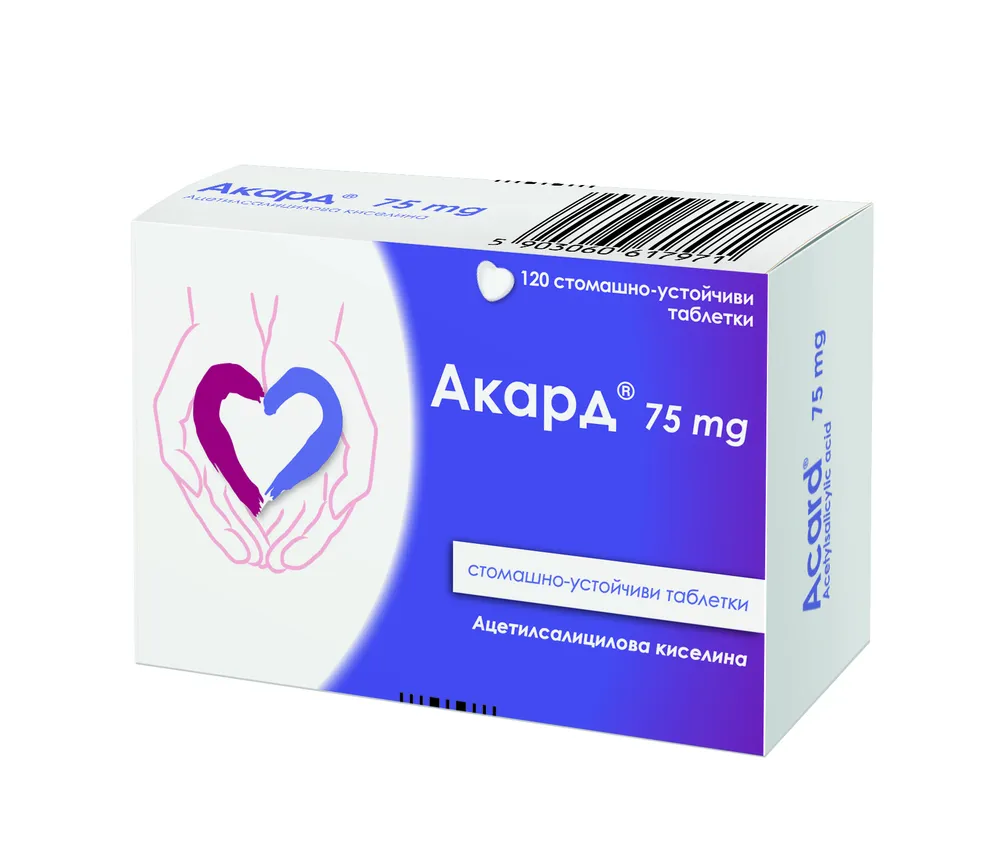
Table of Contents
INSTRUCTION FOR MEDICAL USE OF THE MEDICINAL PRODUCT AKARD (AKARD)
Composition:
Active substance: Acidum acetylsalicylicum;
One enteric-coated tablet contains 75 mg or 150 mg of acetylsalicylic acid;
Excipients: maize starch, powdered cellulose, sodium starch glycolate (type A), hypromellose;
coating: triethyl citrate, methacrylic acid copolymer (type C), talc, titanium dioxide (E 171), sodium lauryl sulfate, colloidal anhydrous silicon dioxide, sodium bicarbonate.
Pharmaceutical form. Enteric-coated tablets.
Main physicochemical properties: white, round, biconvex tablets coated with a film.
Pharmacotherapeutic group. Antithrombotic agents. Platelet aggregation inhibitors, excluding heparin.
ATC code B01AC06.
Pharmacological properties.
Pharmacodynamics.
Acard contains acetylsalicylic acid, an acetyl derivative of salicylic acid, which has antiplatelet, antipyretic, analgesic, and anti-inflammatory effects.
The mechanism of platelet aggregation inhibition by acetylsalicylic acid involves irreversible inactivation of the enzyme cyclooxygenase-1 (COX-1) in blood platelets. COX-1 converts arachidonic acid into cyclic peroxides (PGG2 and PGH2), which are precursors of platelet prostaglandins and thromboxane A2.
Inhibition of platelet aggregation occurs even after small doses of the drug and persists for several days after a single dose.
These properties of acetylsalicylic acid have been utilized for the prevention and treatment of thrombosis-related complications, as well as for the prevention of myocardial infarction and ischemic heart disease.
Acard enteric-coated tablets are a dosage form that does not dissolve in the stomach, thereby reducing the risk of direct contact between acetylsalicylic acid and the gastric mucosa. The tablet dissolves and releases the active ingredient only in the more alkaline environment of the duodenum.
Absorption of acetylsalicylic acid from enteric-coated tablets is slower compared to standard formulations. It begins 3–6 hours after drug administration, indicating that the coating effectively prevents drug disintegration in the stomach.
Pharmacokinetics.
Maximum plasma concentration is reached approximately 6 hours after administration and averages 12.7 μg/mL for 150 mg tablets and 6.72 μg/mL for 75 mg tablets.
The presence of food in the gastrointestinal tract slows absorption of the drug but does not reduce the bioavailability of acetylsalicylic acid.
Acetylsalicylic acid is absorbed in the gastrointestinal tract by 80–100%.
Acetylsalicylic acid is rapidly and extensively distributed into most tissues and biological fluids of the body.
The apparent volume of distribution is approximately 0.15–0.2 L/kg and increases proportionally with rising drug concentration in blood serum.
Approximately 33% of the drug binds to plasma proteins at a concentration of 120 μg/mL.
The extent of drug binding to proteins depends on albumin concentration; in healthy volunteers, it decreases as albumin concentration declines.
In renal insufficiency, during pregnancy, and in newborns, binding of acetylsalicylic acid to plasma proteins is reduced not only due to hypoalbuminemia but also because of accumulation of endogenous factors that displace the drug from protein complexes.
Acetylsalicylic acid undergoes partial biotransformation during absorption. This process is mediated by esterases, primarily in the liver, but also in blood serum, erythrocytes, and synovial fluid.
Salicylates are mainly conjugated with glycine to form salicyluric acid and with glucuronic acid to form phenolic and acyl salicyl glucuronides; only a small fraction undergoes hydroxylation to gentisic acid, 2,3-dihydroxybenzoic acid, and 2,3,5-trihydroxybenzoic acid.
In women, the hydroxylation process proceeds more slowly (lower esterase activity in serum).
The elimination half-life of acetylsalicylic acid in plasma is approximately 2–3 hours.
Unlike other salicylates, non-hydrolyzed acetylsalicylic acid does not accumulate in blood serum after repeated administration.
Only about 1% of an orally administered dose of acetylsalicylic acid is excreted in urine in non-hydrolyzed form; the remainder is excreted as salicylates and their metabolites.
In patients with preserved renal function, 80–100% of a single dose is excreted in urine within 24–72 hours.
Clinical characteristics.
Indications.
For 75 mg and 150 mg doses:
- Acute and chronic ischemic heart disease.
For 75 mg dose:
- Prevention of recurrent thrombosis.
- Primary prevention of thrombotic and cardiovascular diseases, such as acute coronary syndrome in patients aged 50 years and older who have risk factors for cardiovascular disease: arterial hypertension, hypercholesterolemia, diabetes mellitus, obesity (body mass index > 30), family history (myocardial infarction in a parent or sibling aged under 55 years).
Contraindications.
- Hypersensitivity to acetylsalicylic acid, to other salicylates, or to any component of the medicinal product.
- Asthma induced by salicylates or substances with similar action, particularly NSAIDs, in medical history.
- Active peptic ulcers.
- Hemorrhagic diathesis.
- Severe renal failure.
- Severe hepatic failure.
- Severe heart failure.
- Combination with methotrexate at doses of 15 mg/week or higher (see "Interaction with other medicinal products and other forms of interaction").
- Use at doses exceeding 100 mg/day during the third trimester of pregnancy.
Interaction with other medicinal products and other forms of interaction.*
Contraindications for concomitant use.
Metotrexate. Concomitant use of acetylsalicylic acid and methotrexate at doses of 15 mg/week or higher increases hematological toxicity of methotrexate (due to reduced renal clearance of methotrexate caused by anti-inflammatory agents and displacement of methotrexate from plasma protein binding by salicylates).
ACE inhibitors. Angiotensin-converting enzyme (ACE) inhibitors in combination with high doses of acetylsalicylic acid may reduce glomerular filtration due to inhibition of vasodilatory prostaglandin effects and reduced antihypertensive efficacy.
Carbonic anhydrase inhibitors (acetazolamide). Possible reduction in acetazolamide excretion; salicylate intoxication may occur in patients receiving high-dose salicylates and carbonic anhydrase inhibitors. Concomitant use of carbonic anhydrase inhibitors such as acetazolamide and salicylates may lead to severe acidosis and increase central nervous system toxicity.
Uricosuric agents (probenecid, sulfinpyrazone, benzbromarone). When probenecid and high-dose salicylates (> 500 mg) are used together, metabolism of each may be inhibited, and renal tubular excretion of uric acid may be reduced.
Combinations requiring caution.
Metotrexate. When acetylsalicylic acid is used concomitantly with methotrexate at doses less than 15 mg/week, hematological toxicity of methotrexate may increase (due to reduced renal clearance of methotrexate by anti-inflammatory agents and displacement of methotrexate from plasma protein binding by salicylates).
Clopidogrel, ticlopidine. Combined use of clopidogrel and acetylsalicylic acid has a synergistic effect. Such combination should be used with caution due to increased risk of bleeding.
Anticoagulants (warfarin, phenprocoumon). Possible reduction in thrombin production, resulting in indirect effects on reduced platelet activity (vitamin K antagonist), thereby increasing the risk of bleeding.
Abciximab, tirofiban, eptifibatide. Possible inhibition of platelet glycoprotein IIb/IIIa receptors, leading to increased risk of bleeding.
Heparin. Possible reduction in thrombin production, resulting in indirect effects on reduced platelet activity, thereby increasing the risk of bleeding.
If two or more of the above-mentioned agents are used concomitantly with acetylsalicylic acid, a synergistic effect enhancing platelet inhibition may occur, resulting in increased hemorrhagic diathesis.
NSAIDs and COX-2 inhibitors (celecoxib). Concomitant use increases the risk of gastrointestinal disorders, which may lead to gastrointestinal bleeding.
ibuprofen. Concomitant use of ibuprofen may inhibit the irreversible platelet aggregation induced by acetylsalicylic acid. Treatment with ibuprofen in patients with increased cardiovascular risk may reduce the cardioprotective effect of acetylsalicylic acid.
Patients taking acetylsalicylic acid once daily for cardiovascular prevention and occasionally taking ibuprofen should take acetylsalicylic acid at least 2 hours before ibuprofen.
Furosemide. Concomitant use of acetylsalicylic acid at doses of 3 g or more per day and diuretics may reduce the diuretic effect of furosemide due to sodium and water retention caused by reduced glomerular filtration from decreased renal prostaglandin synthesis. Inhibition of proximal tubular elimination of furosemide may also occur, leading to reduced diuretic efficacy. Acetylsalicylic acid may enhance the ototoxic effects of furosemide.
Quinidine. Possible additive effects on platelets, leading to prolonged bleeding time.
Spironolactone. Possible altered renin effect, leading to reduced efficacy of spironolactone.
Selective serotonin reuptake inhibitors (SSRIs). Concomitant use increases the risk of gastrointestinal disorders, which may lead to gastrointestinal bleeding.
Antiepileptic drugs (valproate, phenytoin). When used concomitantly with valproate, acetylsalicylic acid displaces it from plasma protein binding, increasing its toxicity (central nervous system depression, gastrointestinal disturbances). Valproate enhances the antiplatelet effect of acetylsalicylic acid due to synergistic action. Acetylsalicylic acid enhances the effect of phenytoin.
Systemic glucocorticosteroids (excluding hydrocortisone used for replacement therapy in Addison's disease) reduce salicylate blood levels and increase the risk of overdose after discontinuation of treatment.
Antidiabetic agents (insulin, sulfonylurea derivatives). Concomitant use of acetylsalicylic acid and antidiabetic agents increases the risk of hypoglycemia due to the hypoglycemic properties of acetylsalicylic acid and displacement of sulfonylureas from plasma protein binding.
Antacids. Possible increased renal clearance and reduced renal reabsorption (due to increased urine pH), leading to reduced efficacy of acetylsalicylic acid.
Varicella vaccine. Concomitant use increases the risk of Reye's syndrome.
Ginkgo biloba. Concomitant use with ginkgo biloba inhibits platelet aggregation, increasing the risk of bleeding.
Digoxin. When used concomitantly with digoxin, digoxin plasma concentration increases due to reduced renal excretion.
Alcohol promotes gastrointestinal mucosal damage and prolongs bleeding time due to synergism between acetylsalicylic acid and alcohol.
Antibacterials. Possible increased toxicity of sulfonamides.
Anti-nausea agents (metoclopramide) enhance the effect of acetylsalicylic acid by increasing absorption rate.
Leukotriene receptor antagonists. Possible increased plasma concentration of zafirlukast.
Metamizole. Concomitant use of metamizole with acetylsalicylic acid may reduce the inhibitory effect of acetylsalicylic acid on platelet aggregation. Therefore, metamizole should be prescribed with caution to patients taking low-dose acetylsalicylic acid for cardiovascular disease prevention.
Effect on thyroid function tests. Acetylsalicylic acid may affect thyroid function tests.
Aspirin may interfere with the following urine tests: catecholamines, DOPA, glucose, ketone bodies, hippuric acid, homovanillic acid, 17-hydroxycorticosteroids, 5-hydroxyindoleacetic acid, pregnancy tests, and certain plasma assays for albumin, barbiturates, calcium, propylthiouracil, tyrosine, and uric acid.
Special precautions for use.
Use Acard with caution in the following cases:
- Hypersensitivity to analgesic, anti-inflammatory, or antirheumatic agents, as well as in the presence of allergy to other substances;
- Gastrointestinal ulcers, including chronic or recurrent ulcers, or history of gastrointestinal bleeding;
- Concomitant use of anticoagulants;
- Impaired kidney and/or liver function;
- In patients with renal dysfunction or those with cardiovascular disorders (e.g., renal vascular disease, congestive heart failure, hypovolemia, major surgery, sepsis, or severe bleeding), since acetylsalicylic acid may increase the risk of renal impairment and acute kidney failure;
- In patients with severe glucose-6-phosphate dehydrogenase deficiency, acetylsalicylic acid may cause hemolysis or hemolytic anemia, especially in the presence of risk factors such as high drug doses, fever, or acute infection.
Ibuprofen may reduce the inhibitory effect of acetylsalicylic acid on platelet aggregation. Patients should consult a physician before taking ibuprofen as an analgesic while on Acard.
Acetylsalicylic acid may cause bronchospasm, asthma attacks, or other hypersensitivity reactions. Risk factors include a history of asthma, hay fever, nasal polyps, or chronic respiratory disease, as well as allergic reactions (e.g., skin reactions, itching, urticaria) to other substances.
Due to the inhibitory effect of acetylsalicylic acid on platelet aggregation, which persists for several days after administration, the use of acetylsalicylic acid-containing drugs may increase the risk or severity of bleeding during surgical procedures (including minor surgeries such as tooth extraction). Acetylsalicylic acid should not be used within 5 days prior to elective surgery, particularly ophthalmological or otolaryngological procedures.
Elderly patients are more susceptible to the toxic effects of salicylates. Continuous long-term use of aspirin should be avoided in these patients due to the increased risk of gastrointestinal bleeding.
Before initiating long-term aspirin use for the prevention of cardiovascular and cerebrovascular diseases, a physician should be consulted to evaluate the individual benefit-risk ratio.
Low-dose acetylsalicylic acid may reduce uric acid excretion, potentially triggering gout attacks in predisposed patients.
Children
Acetylsalicylic acid-containing medications should not be used in children with acute respiratory viral infections (ARVI), regardless of fever presence. In certain viral illnesses, particularly influenza A, influenza B, and varicella, there is a risk of Reye's syndrome—a very rare but life-threatening condition requiring immediate medical intervention. The risk may be increased if acetylsalicylic acid is used concomitantly, although a causal relationship has not been definitively established. Persistent vomiting in such conditions may be a sign of Reye's syndrome.
Due to the above reasons, the use of Acard is contraindicated in children under 16 years of age.
Use during pregnancy and breastfeeding.
Low doses (up to 100 mg/day inclusive)
Clinical studies indicate that doses up to 100 mg/day for limited obstetric use, under specialized monitoring, are considered safe.
Doses from over 100 mg/day to 500 mg/day
There is insufficient clinical experience with doses between over 100 mg/day and 500 mg/day. Therefore, the recommendations below regarding acetylsalicylic acid use at doses of 500 mg/day and higher also apply to this dose range.
Doses of 500 mg/day and higher
First and second trimesters of pregnancy
Inhibition of prostaglandin synthesis may adversely affect pregnancy and/or embryonic/fetal development. Epidemiological data suggest an increased risk of miscarriage and fetal malformations following the use of prostaglandin synthesis inhibitors in early pregnancy. The risk increases with higher doses and longer duration of treatment. However, current data do not confirm a direct link between acetylsalicylic acid use and increased risk of miscarriage.
Available epidemiological data on congenital malformations are inconsistent, but an increased risk of gastroschisis cannot be ruled out with acetylsalicylic acid use. Results from a prospective study on early pregnancy exposure (1st–4th month) involving approximately 14,800 mother-child pairs did not indicate any association with increased malformation risk.
Use of acetylsalicylic acid from the 20th week of pregnancy may cause oligohydramnios due to fetal renal dysfunction. This may occur soon after starting treatment and is usually reversible upon discontinuation. Additionally, cases of fetal ductus arteriosus constriction have been reported after second-trimester use, most of which resolved after stopping treatment. Therefore, acetylsalicylic acid should not be used during the first and second trimesters unless absolutely necessary. If acetylsalicylic acid is used in women trying to conceive or during the first and second trimesters, the dose should be as low as possible and treatment duration as short as possible. Prenatal monitoring for oligohydramnios and ductus arteriosus constriction should be considered after exposure to acetylsalicylic acid from the 20th week of pregnancy. Acetylsalicylic acid use should be discontinued if oligohydramnios or ductus arteriosus constriction is detected.
Third trimester
During the third trimester, all prostaglandin synthesis inhibitors may cause the following in the fetus:
- Cardio-pulmonary toxicity (premature constriction/closure of the ductus arteriosus and pulmonary hypertension);
- Renal dysfunction (see above).
In the mother towards the end of pregnancy and in the newborn, the following may occur:
- Prolonged bleeding time and anti-aggregatory effect, which may occur even with very low doses;
- Inhibition of uterine contractility, leading to delayed or prolonged labor.
Therefore, the use of acetylsalicylic acid in doses exceeding 100 mg/day during the third trimester of pregnancy is contraindicated (see section "Contraindications"). Use at doses up to 100 mg/day inclusive is permitted only under strict obstetric supervision.
Breastfeeding period
Salicylates and their metabolites pass into breast milk in small amounts.
Since no harmful effects on the infant have been observed after maternal use during lactation, breastfeeding interruption is generally not required. However, in cases of regular use or high-dose administration, breastfeeding should be discontinued early on.
Ability to affect reaction speed while driving or operating machinery.
No effect.
Method of Administration and Dosage.
Acute and chronic ischemic heart disease.
Recommended initial dose – 150 mg once daily. Maintenance dose – 75 mg once daily.
Acute myocardial infarction. Unstable angina.
Recommended dose is 150–450 mg, administered as soon as possible after symptom onset.
Prevention of recurrent thrombosis.
Recommended initial dose – 150 mg once daily. Maintenance dose – 75 mg once daily.
Primary prevention of thrombotic events and cardiovascular diseases, such as acute coronary syndrome in patients with risk factors for cardiovascular diseases.
Recommended prophylactic dose – 75 mg once daily.
Tablets should be swallowed whole, with water if necessary. For faster absorption, the tablet may be chewed or dissolved in water.
Hepatic impairment. The drug is contraindicated in patients with severe hepatic dysfunction. Dose adjustment may be required in patients with impaired liver function.
Renal impairment. The drug is contraindicated for treatment of patients with severe renal insufficiency (glomerular filtration rate < 0.2 mL/sec (10 mL/min)). Dose adjustment may be required in patients with impaired renal function.
Children. The use of the drug is contraindicated in children under 16 years of age.
Overdose.
Toxicity.
Potentially toxic dose. Adults: 300 mg/kg body weight.
Chronic salicylate poisoning may have an insidious onset, as its signs and symptoms are nonspecific. Moderate chronic intoxication, or salicylism, typically occurs only after repeated ingestion of high doses.
Symptoms of moderate chronic intoxication (resulting from prolonged use of high doses): dizziness, vertigo, deafness, diaphoresis, fever, tachypnea, tinnitus, respiratory alkalosis, metabolic acidosis, lethargy, mild dehydration, headache, confusion, nausea, and vomiting.
Acute intoxication is characterized by significant disturbances in acid-base balance, which may vary depending on age and severity of poisoning. Metabolic acidosis is the most common manifestation in children. The severity of intoxication cannot be assessed based solely on plasma salicylate concentration. Absorption of acetylsalicylic acid may be delayed due to delayed gastric emptying, formation of gastric concretions, or ingestion of enteric-coated tablets.
Symptoms of severe acute intoxication (due to overdose): hypoglycemia (predominantly in children), encephalopathy, coma, hypotension, pulmonary edema, seizures, coagulopathy, cerebral edema, and cardiac arrhythmias.
More pronounced toxic effects are observed in patients with chronic overdose or drug abuse, as well as in elderly patients or children.
Treatment. In cases of acute overdose, gastric lavage and administration of activated charcoal are required. If a dose greater than 120 mg/kg body weight is suspected, repeated doses of activated charcoal should be administered.
Serum salicylate levels should be measured at least every 2 hours after ingestion until levels are consistently decreasing and acid-base balance is restored.
Prothrombin time and/or INR (International Normalized Ratio) should be checked, especially if bleeding is suspected.
Fluid and electrolyte balance must be restored. Effective methods for removing salicylate from plasma include alkaline diuresis and hemodialysis. Hemodialysis should be used in cases of severe intoxication, as it significantly accelerates salicylate elimination and restores acid-base and electrolyte balance.
Due to the complex pathophysiological effects of salicylate poisoning, clinical manifestations and laboratory findings may include:
| Manifestations and symptoms |
Test results |
Therapeutic measures |
| Mild or moderate intoxication |
Gastric lavage, repeated administration of activated charcoal, forced alkaline diuresis |
|
| Tachypnea, hyperventilation, respiratory alkalosis |
Alkalemia, alkalinuria |
Restoration of electrolyte and acid-base balance |
| Diaphoresis (excessive sweating) |
||
| Nausea, vomiting |
||
| Moderate or severe intoxication |
Gastric lavage, repeated administration of activated charcoal, forced alkaline diuresis, hemodialysis in severe cases |
|
| Respiratory alkalosis with compensatory metabolic acidosis |
Acidemia, aciduria |
Restoration of electrolyte and acid-base balance |
| Hyperpyrexia |
Restoration of electrolyte and acid-base balance |
|
| Respiratory: hyperventilation, non-cardiogenic pulmonary edema, respiratory failure, asphyxia |
||
| Cardiovascular: arrhythmias, arterial hypotension, cardiovascular failure |
For example, changes in blood pressure, ECG |
|
| Fluid and electrolyte loss: dehydration, oliguria, renal failure |
For example, hypokalemia, hypernatremia, hyponatremia, changes in kidney function |
Restoration of electrolyte and acid-base balance |
| Glucose metabolism disturbances, ketoacidosis |
Hypoglycemia, hyperglycemia (especially in children), elevated ketone levels |
|
| Tinnitus, deafness |
||
| Gastrointestinal bleeding from the gastrointestinal tract |
||
| Hematological: platelet inhibition, coagulopathy |
For example, prolonged PT, hypoprothrombinemia |
Side effects.
The information on adverse reactions is based on spontaneous post-marketing reports of adverse reactions associated with all dosage forms and doses of acetylsalicylic acid (including short- and long-term oral administration). Due to this, classification of adverse reactions according to the CIOMS III frequency categories has not been performed.
Gastrointestinal disorders: frequent manifestations and symptoms of dyspepsia (heartburn, nausea, vomiting), epigastric pain, abdominal pain, nausea, vomiting, diarrhea, heartburn, anorexia; in individual cases – gastrointestinal tract inflammation, erosive-ulcerative lesions of the gastrointestinal tract, which potentially may in rare cases lead to gastrointestinal hemorrhages and perforations, with corresponding laboratory findings and clinical manifestations.
Cardiovascular and lymphatic system disorders: bleeding (intraoperative hemorrhages, hematomas, bleeding or prolonged bleeding from the genitourinary organs, epistaxis, gingival bleeding). Symptoms may persist for 4–8 days after discontinuation of acetylsalicylic acid. As a result, there is an increased risk of bleeding during surgical procedures. Existing hematemesis, melena, or occult gastrointestinal bleeding may lead to iron-deficiency anemia (more frequently with high-dose administration). Rarely or very rarely – serious hemorrhages such as gastrointestinal hemorrhages, intracranial bleeding (particularly in patients with uncontrolled hypertension and/or concomitant use of anticoagulants), which in isolated cases may potentially be life-threatening.
Thrombocytopenia, granulocytosis, leukopenia, agranulocytosis or eosinopenia, anemia (post-hemorrhagic/iron-deficiency), with corresponding laboratory findings and clinical manifestations, including: asthenia, pallor of the skin, hypoperfusion; hemolysis and hemolytic anemia (in patients with severe forms of glucose-6-phosphate dehydrogenase deficiency).
Immune system disorders: hypersensitivity reactions with corresponding laboratory and clinical manifestations include asthmatic conditions, mild to moderate skin reactions, and reactions affecting the respiratory, gastrointestinal, and cardiovascular systems, including symptoms such as rash, urticaria, edema, pruritus, rhinitis, nasal congestion, cardiorespiratory failure, and very rarely – severe reactions, including anaphylactic shock. In patients with bronchial asthma, increased frequency of bronchospasm may occur; allergic reactions ranging from mild to moderate severity, potentially affecting the skin, respiratory tract, gastrointestinal tract, and cardiovascular system.
Skin and subcutaneous tissue disorders: Stevens-Johnson syndrome, Lyell's syndrome (toxic epidermal necrolysis), hemorrhagic rashes, nodular erythema, multiform erythema.
Renal and urinary disorders: impaired kidney function, acute renal failure, urogenital hemorrhage. After prolonged use of high doses of acetylsalicylic acid, papillary necrosis and interstitial nephritis may occur. Proteinuria, leukocyturia, erythrocyturia, and renal calculi.
Nervous system disorders: headache, dizziness, disorientation.
Ear and labyrinth disorders: hearing disturbances, tinnitus (ringing in the ears), which may indicate overdose.
Cardiovascular disorders: heart failure, hematomas, arterial hypertension.
Respiratory system disorders: epistaxis (nosebleeds).
Hepatobiliary disorders: transient hepatic failure, elevated levels of liver transaminases, alkaline phosphatase, and bilirubin concentration. In patients with juvenile rheumatoid arthritis, systemic lupus erythematosus, rheumatic fever, or history of liver disease, focal hepatocyte necrosis, liver area pain, and hepatomegaly may occur.
Metabolic disorders: hypoglycemia, hyperuricemia with corresponding laboratory findings and clinical manifestations (gout attacks).
Shelf life. 2 years.
Do not use after the expiry date.
Storage conditions.
Store in the original packaging at a temperature not exceeding 25 °C.
Keep out of reach of children.
Packaging. 10 tablets per blister; 3 or 5 blisters per cardboard box. 20 tablets per blister; 5 blisters per cardboard box.
Prescription status. Over-the-counter (without prescription).
Manufacturer.
Pharmaceutical Works «POLPHARMA» S.A.
Pharmaceutical Works «POLPHARMA» S.A.
Manufacturer's address.
19, Pelplinska Str., 83-200 Starogard Gdanski, Poland