Aimafix
UkraineTable of Contents
INSTRUCTIONS FOR MEDICAL USE OF THE MEDICINAL PRODUCT AYMAFIX
Composition:
Active substance: human blood coagulation factor IX;
1 vial of powder contains 500 IU or 1000 IU of human blood coagulation factor IX;
Excipients: sodium chloride, sodium citrate, glycine, sodium heparin, antithrombin III;
the vial of solvent contains 10 ml of water for injections.
The reconstituted solution contains human blood coagulation factor IX at a concentration of 50 IU/mL (500 IU/10 mL) or 100 IU/mL (1000 IU/10 mL).
The specific activity of AYMAFIX is approximately 100 IU/mg protein.
Activity (IU) is determined by the coagulation method of the European Pharmacopoeia.
Total protein content does not exceed 8 mg/vial or 16 mg/vial.
Pharmaceutical form. Powder and solvent for solution for infusion.
Main physicochemical properties:
Powder: white or pale yellow hygroscopic powder or brittle mass;
Solvent: clear, colorless liquid.
Pharmacotherapeutic group. Antihemorrhagics, coagulation factor IX.
ATC code B02B D04.
Pharmacological Properties.
Pharmacodynamics.
Factor IX is a single-chain glycoprotein with a molecular weight of approximately 68,000 daltons. It is synthesized in the liver and is a vitamin K-dependent coagulation factor. Factor IX is activated by factor XIa via the intrinsic coagulation pathway and by the factor VII/tissue factor complex via the extrinsic coagulation pathway. Activated factor IX, in complex with activated factor VIII, activates factor X. Activated factor X converts prothrombin into thrombin. Thrombin then converts fibrinogen into fibrin, leading to clot formation.
Hemophilia B is an X-linked inherited coagulation disorder caused by reduced levels of factor IX, resulting in severe bleeding into joints, muscles, or internal organs, occurring spontaneously or following trauma or surgical procedures. Replacement therapy increases factor IX levels, thereby temporarily correcting the deficiency and reducing the tendency to bleed.
Children
Although specific data on use in children are lacking, published study results have not demonstrated significant differences in efficacy and safety between adults and children with the same condition.
Pharmacokinetics.
Administration of human coagulation factor IX concentrate to patients with hemophilia B leads to restoration of 30–60% of factor IX plasma activity. The half-life of factor IX in blood plasma ranges from 16 to 30 hours, with an average of 24 hours.
Children
Although specific data on use in children are lacking, published study results have not demonstrated significant differences in efficacy and safety between adults and children with the same condition.
Preclinical Safety Data
Human coagulation factor IX is a natural component of human plasma and acts similarly to endogenous factor IX.
Single-dose toxicity studies are not relevant, as high doses cause hypervolemia.
Repeated-dose (multiple-dose) toxicity studies in animals are not feasible due to interference from antibodies formed against the heterologous protein.
Even doses significantly exceeding the recommended human dose per kg of body weight do not demonstrate any toxic effects in experimental animals.
Given that clinical experience with human coagulation factor IX has not confirmed carcinogenic or mutagenic effects, experimental studies, particularly those involving heterologous species, are not considered necessary.
Clinical characteristics.
Indications.
Treatment and prevention of bleeding in patients with haemophilia B (congenital factor IX deficiency).
The drug may be used for treatment of acquired factor IX deficiency.
Contraindications.
Hypersensitivity to the active substance or to any of the excipients.
Interaction with other medicinal products and other forms of interactions.
No interactions between human coagulation factor IX products and other medicinal products have been reported.
Children
Specific data in children are lacking.
Special precautions for use.
Traceability
To improve the traceability of biological medicinal products, it is recommended to record the name and batch number of the AIMAФIX product whenever it is administered to a patient.
Hypersensitivity
Allergic reactions due to hypersensitivity may occur during administration of AIMAФIX.
Besides factor IX, the product contains traces of other human proteins. If symptoms of hypersensitivity occur, patients should be advised to immediately discontinue administration of the product and consult a physician. Patients should be informed about early signs of hypersensitivity reactions, including rash, generalized urticaria, chest tightness, wheezing, hypotension, and anaphylaxis. In the event of shock, current medical standards for shock treatment should be followed.
Important information on excipients of AIMAФIX
This medicinal product contains up to 41 mg of sodium per vial (10 ml), which corresponds to 2.05% of the WHO recommended maximum daily intake of sodium for adults (2 g).
This medicinal product contains up to 10 IU/ml of heparin. Heparin may cause allergic reactions and a decrease in platelet count, which may affect the blood coagulation system. Patients with a history of heparin-induced allergic reactions should avoid using heparin-containing products.
Inhibitors
Patients receiving repeated treatment with coagulation factor IX products should be monitored for the development of neutralizing antibodies (inhibitors), which are quantified in Bethesda Units (BU) using appropriate biological assays.
There have been reports of an association between the development of factor IX inhibitors and allergic reactions. Therefore, patients experiencing allergic reactions should be tested for the presence of inhibitors. It should be noted that patients with factor IX inhibitors have an increased risk of developing anaphylaxis upon repeated administration of factor IX.
Due to the potential risk of allergic reactions with factor IX concentrates, initial administrations of factor IX should be performed under medical supervision, as prescribed by a physician, to ensure appropriate medical care in case of allergic reactions.
Thromboembolism
Due to the potential risk of thrombotic complications associated with administration of this product, clinical monitoring should begin with appropriate biological tests to detect early signs of thrombosis and consumption coagulopathy in patients with liver disease, postoperative patients, and patients at risk of thrombotic events or disseminated intravascular coagulation (DIC). In each of these cases, the benefits of treatment with AIMAФIX should be weighed against the risks of these complications.
Cardiovascular events
Replacement therapy with factor IX may increase cardiovascular risk in patients with existing cardiovascular risk factors.
Catheter-related complications
If central venous access is required, the risk of device-related complications, including local infections, bacteremia, and catheter-site thrombosis, should be considered.
Viral safety
Standard measures to prevent infections from medicinal products derived from human blood or plasma include donor selection, screening of individual donations and plasma pools for specific infectious markers, and effective manufacturing steps for virus inactivation/removal.
Nevertheless, administration of medicinal products derived from human blood or plasma cannot entirely eliminate the risk of transmission of infectious agents. This also applies to unknown or emerging viruses and other pathogens.
The measures employed are considered effective against enveloped viruses such as human immunodeficiency virus (HIV), hepatitis B virus (HBV), and hepatitis C virus (HCV), as well as against non-enveloped viruses such as hepatitis A virus (HAV). However, the effectiveness of these measures may be limited against non-enveloped viruses such as parvovirus B19. Parvovirus B19 infection may be serious in pregnant women (fetal infection) and in immunocompromised patients or those with increased erythropoiesis (e.g., hemolytic anemia).
Appropriate vaccinations (e.g., against hepatitis A and B) should be considered for patients receiving regular treatment with human coagulation factor IX products.
It is strongly recommended to record the name and batch number of the AIMAФIX product whenever it is administered to a patient, to ensure traceability between the patient's condition and the specific product batch.
Children
There are insufficient data to recommend the use of AIMAФIX in children under 6 years of age. The special warnings and precautions specified in this section apply to both adults and children.
Use during pregnancy or breastfeeding
Studies on the effects of factor IX on reproductive function in animals have not been conducted. Since the incidence of hemophilia B in women is low, there is limited experience with the use of factor IX during pregnancy and breastfeeding. Therefore, factor IX should be used during pregnancy and breastfeeding only if clearly indicated.
Ability to affect reaction speed when driving or operating machinery
The effect of AIMAФIX on the ability to drive or operate machinery is absent or negligible.
Method of administration and dosage.
Treatment should be initiated under the supervision of a physician experienced in the treatment of hemophilia.
Patients who have not previously received treatment
The safety and efficacy of AYMAFIX in patients who have not previously received treatment have not yet been established.
Treatment monitoring
During the course of treatment, appropriate monitoring of factor IX levels is recommended to guide dose selection and the frequency of repeat infusions. Individual patients may respond differently to factor IX, demonstrating variable half-lives and recovery times.
The dose calculated based on body weight may require adjustment in patients with underweight or overweight. Particularly during extensive surgical procedures, precise monitoring of replacement therapy using coagulation blood tests (factor IX activity in blood plasma) is mandatory and necessary.
When using a one-stage clotting assay in vitro based on activated partial thromboplastin time (aPTT) to determine factor IX activity in patient blood samples, the results of factor IX activity may significantly depend on both the type of aPTT reagent and the reference standard used for the assay. This is particularly important when changing laboratories and/or reagents used for testing.
Dosage
The dosage and duration of replacement therapy depend on the severity of factor IX deficiency, the location and intensity of bleeding, and the patient's clinical condition.
The amount of factor IX administered is expressed in International Units (IU) according to the current WHO standard for factor IX preparations. Factor IX activity in plasma is expressed as a percentage (relative to normal human plasma) or in International Units (according to the International Standard for blood coagulation factor IX).
One International Unit (IU) of factor IX activity corresponds to the amount of factor IX present in 1 ml of normal human plasma.
On-demand treatment
The calculation of the required factor IX dosage is based on empirically obtained data. One International Unit (IU) of factor IX per 1 kg of body weight increases factor IX activity in plasma by 0.8% of normal activity. The required dosage is determined using the following formula:
Required number of units = body weight (kg) × desired increase in factor IX (%) (IU/dL) × (reciprocal of the incremental recovery typically observed after factor infusion)
The amount of product to be administered and the frequency of administration should always be guided by clinical effectiveness in each individual case. In the situations listed below, factor IX activity should not fall below the specified plasma activity level (as % of normal) during the appropriate period. Table 1 can be used as a dosing guideline for bleeding episodes and surgical procedures.
Table 1
| Severity of bleeding / Type of surgical procedure |
Required factor IX level (%) (IU/dL) |
Dosing frequency (hours) / Treatment duration (days) |
| Bleeding |
||
| Early hemarthrosis, muscle bleeding, or oral cavity bleeding |
20–40 |
Repeat administration every 24 hours for at least 1 day until bleeding stops, as indicated by cessation of pain or evidence of healing. |
| More extensive hemarthrosis, muscle bleeding, or hematoma |
30–60 |
Repeat administration every 24 hours for 3–4 days or longer until pain and acute disability have resolved. |
| Life-threatening bleeding |
60–100 |
Repeat administration every 8–24 hours until the life-threatening situation is resolved. |
| Surgical procedures |
||
| Minor surgical procedures, including tooth extraction |
30–60 |
Every 24 hours for at least 1 day until wound healing is achieved. |
| Major surgical procedures |
80–100 (before and after surgery) |
Repeat administration every 8–24 hours until adequate wound healing is achieved; then continue therapy for at least 7 days, maintaining factor IX activity at 30–60% (IU/dL). |
Prophylaxis
For long-term prevention of bleeding episodes in patients with severe haemophilia B, doses of 20 to 40 IU of factor IX per kg of body weight are usually administered every 3 to 4 days.
In individual cases, especially in younger patients, shorter intervals between administrations or higher doses may be required.
Route of administration
Administered intravenously by injection or slow infusion.
It is recommended not to exceed 100 IU/kg body weight per day.
The infusion rate should be individually adjusted for each patient.
Reconstitution of powder with solvent
- Allow the vial of powder and the vial of solvent to reach room temperature.
- Maintain room temperature throughout the reconstitution (dissolving) process (maximum 10 minutes).
- Remove the protective caps from both the powder vial and the solvent vial.
- Disinfect the stopper surfaces of both vials with ethyl alcohol.
- Open the device package as shown in Figure A, without touching the inner part of the package (Figure A).
- Do not remove the device from the package.
- Turn the package with the device upside down and pierce the solvent vial stopper with the plastic spike of the device, so that the blue part of the device connects to the solvent vial (Figure B).
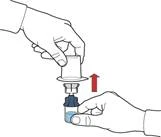
- Holding the edge of the device package, remove it without touching the device itself (Figure C).
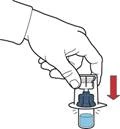
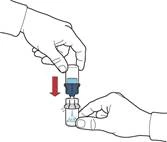
- Ensure the powder vial is placed on a stable surface; invert the solvent vial with the attached device so that the solvent vial is above the device; press the transparent adapter on the powder vial stopper to pierce the powder vial stopper with the plastic spike; the solvent will automatically begin to flow into the powder vial (Figure D).
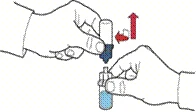
- After the solvent transfer, unscrew the blue part of the system to which the solvent vial is attached, and discard it (Figure E).
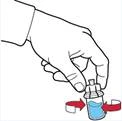
- Gently swirl the vial until the powder is completely dissolved (Figure F). Do not shake vigorously to avoid foaming.
Ensure that the powder is completely dissolved; otherwise, the medicinal product will be less effective.
| Fig. A |
Fig. B |
|
|
|

| Fig. B |
Fig. C |
|
|
|
| Fig. D |
Fig. E |
|
|
|
Administration of the solution
Before administration, visually inspect the solution for the presence of particles or discoloration. The solution should be clear or slightly opalescent. Do not use the solution if it is cloudy or contains precipitate.
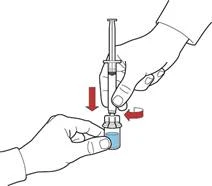
- Draw air into the syringe by pulling back the plunger; attach the syringe to the device and inject the air from the syringe into the vial with the reconstituted solution (Fig. E).
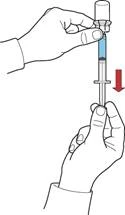
- While holding the plunger, invert the system so that the vial with the reconstituted solution is above the device. Slowly pull back the plunger to draw the concentrate into the syringe (Fig. F).
- Detach the syringe by rotating it counterclockwise.
- Visually inspect the solution in the syringe, which should be clear or slightly opalescent and free from particles.
- Attach a butterfly needle to the syringe and administer the preparation intravenously by infusion or slow injection.
| Fig. D |
Fig. E |
|
|
|
After opening, the contents of the vial must be used immediately.
The reconstituted solution drawn into a syringe must be used immediately.
The contents of the vial should be used for a single administration only.
Use of the medicinal product after the expiry date stated on the packaging is prohibited.
Any unused medicinal product or waste material remaining after use should be disposed of in accordance with local requirements.
Children.
The safety and efficacy of AYMAFIX in children under 6 years of age have not been established.
Overdose.
There have been no reports of symptoms related to overdose with human blood coagulation factor IX.
Adverse reactions.
Short description of the safety profile
Hypersensitivity or allergic reactions (including angioedema, burning and stinging sensations at the injection site, chills, flushing, generalized urticaria, headache, rash, hypotension, lethargy, nausea, restlessness, tachycardia, chest tightness, paresthesia, vomiting, and wheezing) occur infrequently and in some cases may progress to severe anaphylaxis (including shock). In some instances, these reactions progressed to severe anaphylaxis and were observed in close temporal association with the development of inhibitors to factor IX (see also section "Special precautions").
Nephrotic syndrome has been reported during attempts to induce immune tolerance in patients with haemophilia B who have factor IX inhibitors and a history of allergic reactions.
Neutralizing antibodies (inhibitors) to factor IX may develop in patients with haemophilia B. The presence of such inhibitors may manifest as a suboptimal clinical response. In such cases, consultation with a specialized haemophilia centre is recommended.
There is a potential risk of thromboembolic complications following administration of factor IX products, with a higher risk associated with the use of less purified products. Myocardial infarction, disseminated intravascular coagulation, venous thrombosis, and pulmonary embolism have been reported with the use of low-purity factor IX preparations. Thromboembolic events are rarely observed with highly purified factor IX products.
For safety information regarding transmission of infectious agents, see section "Special precautions".
List of adverse reactions in tabular form
Adverse effects that may occur during administration of human blood coagulation factor IX are presented in Table 2 according to MedDRA (Medical Dictionary for Regulatory Activities) system organ class and preferred terms.
Frequency categories are defined as follows: very common (≥ 1/10); common (≥ 1/100 to < 1/10); uncommon (≥ 1/1,000 to < 1/100); rare (≥ 1/10,000 to < 1/1,000); very rare (< 1/10,000); frequency not known (cannot be estimated from available data).
Confirmed data on the frequency of adverse reactions from clinical trials are lacking.
The following data are based on the safety profile of factor IX products and have been partially observed during the post-marketing period; since post-marketing adverse reaction reports are voluntary and come from a population of unknown size, it is not possible to reliably estimate their frequency.
Table 2
| MedDRA System Organ Class |
Adverse reactions (MedDRA preferred term) |
Frequency |
| Blood and lymphatic system disorders |
Disseminated intravascular coagulation |
Unknown |
| Immune system disorders |
Increased sensitivity or allergic reactions (hypersensitivity) |
Unknown |
| Anaphylactic reaction* |
Unknown |
|
| Anaphylactic shock |
Unknown |
|
| Psychiatric disorders |
Restlessness |
Unknown |
| Nervous system disorders |
Headache |
Unknown |
| Lethargy |
Unknown |
|
| Paraesthesia |
Unknown |
|
| Cardiac disorders |
Tachycardia |
Unknown |
| Myocardial infarction |
Unknown |
|
| Vascular disorders |
Flushing |
Unknown |
| Hypotension |
Unknown |
|
| Thromboembolic complications (embolism) |
Unknown |
|
| Vein thrombosis |
Unknown |
|
| Respiratory, thoracic and mediastinal disorders |
Wheezing |
Unknown |
| Pulmonary embolism (pulmonary embolism and lung infarction) |
Unknown |
|
| Gastrointestinal disorders |
Nausea |
Unknown |
| Vomiting |
Unknown |
|
| Skin and subcutaneous tissue disorders |
Angioneurotic oedema |
Unknown |
| Generalised urticaria |
Unknown |
|
| Rash (urticaria) |
Unknown |
|
| Renal and urinary disorders |
Nephrotic syndrome |
Unknown |
| General disorders and administration site conditions |
Burning sensation at injection site (burning sensation) |
Unknown |
| Acute pain at injection site (injection site pain) |
Unknown |
|
| Chills |
Unknown |
|
| Chest tightness (chest discomfort) |
Unknown |
|
| Pyrexia |
Unknown |
|
| Investigations |
Development of factor IX inhibitors (inhibitory antibodies)* |
Unknown |
* These reactions to factor IX products were also observed in the post-marketing period.
If there is no correspondence between the description of the adverse reaction and the preferred MedDRA term, the latter is indicated in parentheses.
Paediatric population
Specific data in children are not available.
Reporting suspected adverse reactions
Reporting suspected adverse reactions after authorisation of the medicinal product is important. It allows continued monitoring of the benefit-risk balance of the medicinal product. Medical and pharmaceutical professionals, as well as patients or their legal representatives, should report all suspected adverse reactions and lack of efficacy through the Automated Pharmacovigilance Information System at the following link: https://aisf.dec.gov.ua.
Shelf life
3 years.
Solvent (water for injections): 5 years.
After reconstitution, the product should be used immediately.
Storage conditions
Store in a refrigerator (at 2 to 8 °C). Do not freeze.
Store in the original packaging to protect from light, in a place inaccessible to children.
Incompatibilities
Due to the lack of compatibility studies, this medicinal product must not be mixed with other medicinal products.
Only the provided injection/infusion set should be used, as treatment may be ineffective due to adsorption of human coagulation factor IX onto the internal surfaces of another administration device.
Packaging
500 IU or 1000 IU per vial in a set with solvent (water for injections) 10 ml per vial and a reconstitution and administration set, in a cardboard box.
Prescription category. Prescription only.
Manufacturer
KEDRION S.P.A.
Manufacturer's location and address of the place of business
VIA PROVINCIALE (LOC. BOLOGNANA) - 55027 GALLICANO (LU), ITALY
Date of last review.