Abufen
Ukraine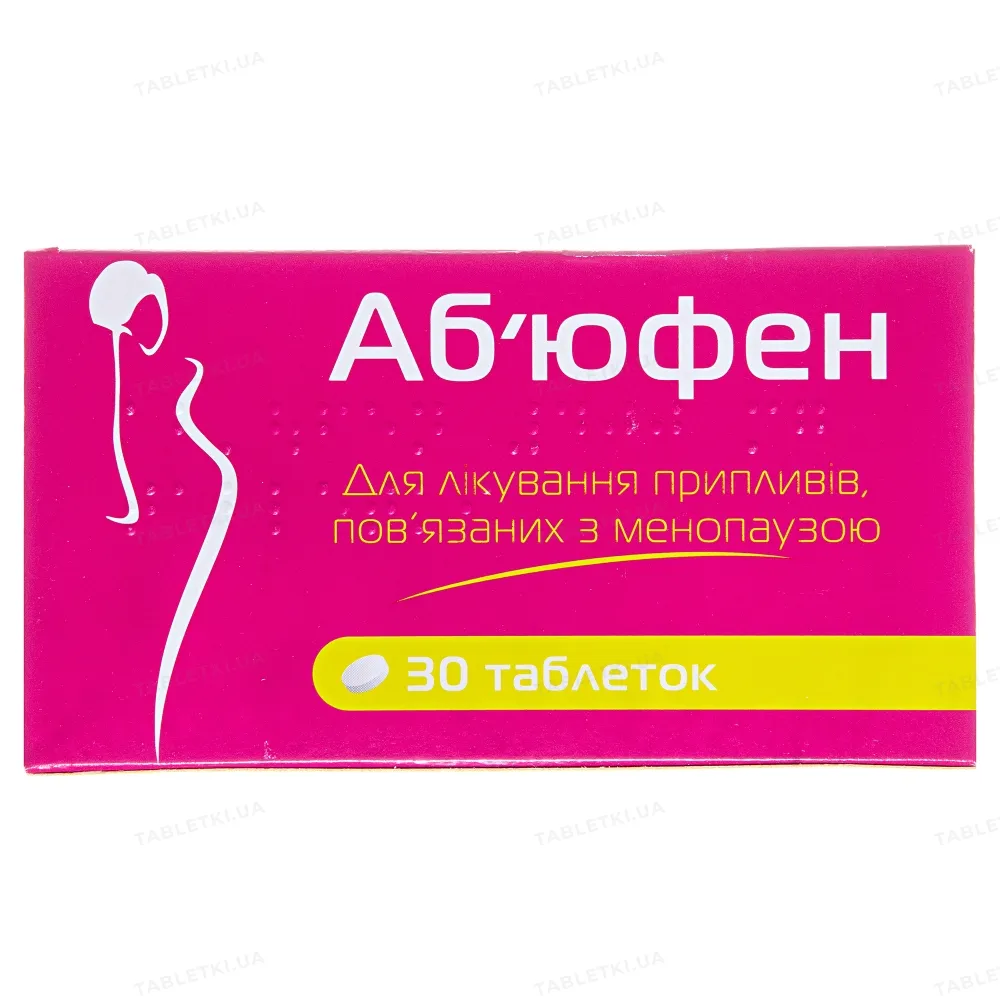
Table of Contents
INSTRUCTIONS FOR MEDICAL USE OF THE MEDICINAL PRODUCT ABUFENE (ABUFENE)
Composition:
Active ingredient: 1 tablet contains beta-alanine 400 mg;
Excipients: magnesium stearate, glycerol palmitostearate, colloidal anhydrous silicon dioxide, wheat starch.
Pharmaceutical form. Tablets.
Main physicochemical properties: white tablets with beveled edges.
Pharmacotherapeutic group.
Medicinal products used in gynaecology.
ATC code G02C X.
Pharmacological Properties.
Pharmacodynamics.
Beta-alanine is a pure amino acid with a chemical structure entirely different from that of hormones. The drug counteracts the sudden release of histamine. However, the drug does not possess antihistaminic activity (absence of H1-receptor blockade).
Beta-alanine has a direct effect exclusively on peripheral cutaneous vasodilation, causing vasomotor flushes, sensations of warmth, hot flashes, and headache.
At the physiological level, vasomotor flushes are caused by activation of thermoregulatory centers in the hypothalamus, leading to peripheral cutaneous vasodilation. This results from a mechanism triggered by an imbalance in cerebral neurotransmitters, which occurs after cessation of ovarian hormone secretion. The drug promotes saturation of peripheral neurotransmitter receptors involved in this process.
Clinical characteristics.
Indications.
Abufene is indicated for the treatment of hot flushes associated with menopause.
Contraindications.
Increased individual sensitivity to the components of the drug.
Wheat allergy (other than celiac disease).
Interaction with other medicinal products and other forms of interaction.
Not established.
Special precautions for use.
The drug is recommended for use in premenopausal, menopausal periods of various etiologies, and during the postmenopausal period.
Treatment with beta-alanine does not eliminate the need for any additional specific therapy.
Beta-alanine has no effect on body weight.
No signs of drug dependence have been observed. Sedative effects are absent.
If symptoms persist, worsen, or new symptoms appear, the treatment should be reviewed.
In case of skin-related adverse reactions (rash, itching), treatment should be discontinued.
Abufen can be prescribed to patients with celiac disease.
Wheat starch may contain gluten, but only in negligible amounts; therefore, it is considered safe for patients with celiac disease.
Use during pregnancy or breastfeeding.
The drug should not be used during pregnancy or breastfeeding.
Ability to influence reaction rate while driving or operating machinery.
No effect.
Method of administration and dosage.
Abiufen should be taken orally. The recommended dose is 1 to 2 tablets per day (before the main meal). This dose may be increased up to 3 tablets per day.
The minimum treatment duration is 5 to 10 days (until hot flushes cease).
If symptoms recur, treatment may continue throughout the entire period of clinical vasomotor disorders, without time restrictions on use.
Children.
The drug must not be administered to children.
Overdose.
No cases of overdose have been reported.
Adverse reactions
Adverse reactions reported worldwide following the marketing of the medicinal product, for which a reasonable causal relationship has been established, are listed below by system organ classes and frequency according to MedDRA: very common (> 1/10), common (≥ 1/100 to < 1/10), uncommon (≥ 1/1,000 to < 1/100), rare (≥ 1/10,000 to < 1/1,000), very rare (< 1/10,000), and not known (cannot be estimated based on available data).
Nervous system disorders
Very rare: paraesthesia^1.
Skin and subcutaneous tissue disorders
Very rare: allergic reactions (skin and mucosal rashes, pruritus, skin redness, urticaria, bruising).
Immune system disorders
Not known: anaphylactic reaction.
^1 Transient, most frequently in the extremities.
Reporting of adverse reactions after registration of the medicinal product is important. It allows continued monitoring of the benefit-risk balance of the medicinal product. Medical and pharmaceutical professionals, as well as patients or their legal representatives, should report all suspected adverse reactions and lack of efficacy via the Automated Pharmacovigilance Information System at: https://aisf.dec.gov.ua
Shelf life. 3 years.
Storage conditions.
Store in a place inaccessible to children, at a temperature not exceeding 25 °C.
Packaging.
15 tablets per blister; 2 or 4 blisters per cardboard box.
Supply category. Over-the-counter.
Manufacturer.
Laboratoires Bouchara Recordati, France.
Manufacturer's address and place of business.
Parc Mécatronic, 03410 Saint-Victor, France.
Marketing authorization holder.
Laboratoires Bouchara Recordati, France.