Zulbex
Poland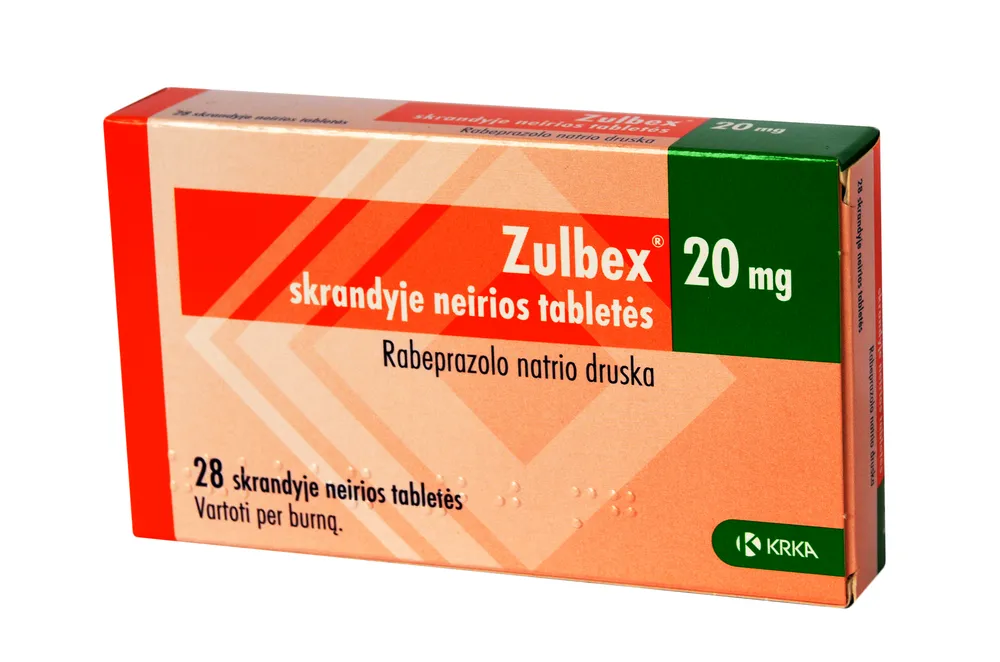
Table of Contents
PACKAGE LEAFLET: INFORMATION FOR THE PATIENT
Warning! Keep the leaflet. Information on the immediate packaging is in a foreign language!
Zulbex
20 mg, enteric-coated tablets
Rabeprazolum natricum
Please read this leaflet carefully before using the medicine, as it contains
important information for the patient.
- Keep this leaflet so that you can read it again if necessary.
- If you have any doubts, please consult your doctor or pharmacist.
- This medicine has been prescribed for a specific individual. Do not pass it on to others. The medicine may harm another person, even if their symptoms are the same.
- If you experience any adverse reactions, including those not listed in this leaflet, tell your doctor or pharmacist. See section 4.
Table of contents of the leaflet
- What Zulbex is and what it is used for
- Important information before taking Zulbex
- How to take Zulbex
- Possible side effects
- How to store Zulbex
- Contents of the pack and other information
1. What Zulbex is and what it is used for
Zulbex contains the active substance rabeprazole. It belongs to a group of medicines called proton pump inhibitors. The medicine works by reducing the amount of acid produced by the stomach.
Zulbex is indicated for:
- Active duodenal ulcer or active, benign gastric ulcer (peptic ulcers)
- Treatment of symptomatic gastro-oesophageal reflux disease (GORD) with erosions or ulcers, often referred to as acid-induced oesophagitis, associated with heartburn, or for long-term treatment of gastro-oesophageal reflux disease
- Symptomatic treatment of moderate to very severe gastro-oesophageal reflux disease (symptomatic GORD), also associated with heartburn
- Zollinger-Ellison syndrome, a rare condition characterized by excessive acid production in the stomach
- Treatment of H. pylori infection in patients with peptic ulcer disease, in combination with two antibiotics (clarithromycin and amoxicillin)
2. Important information before using Zulbex
When not to use Zulbex:
- if the patient is allergic to sodium rabeprazole or any of the other ingredients of this medicine (listed in section 6),
- during pregnancy, suspected pregnancy, or while breastfeeding (see section "Pregnancy and breastfeeding").
Warnings and precautions
Before starting treatment with Zulbex, discuss this with your doctor or pharmacist.
Inform your doctor or pharmacist:
- if the patient has had an allergic reaction to other drugs in the proton pump inhibitor group;
- if the patient has been diagnosed with stomach cancer;
- if the patient has a history of liver disease;
- if the patient is taking atazanavir (a medicine used to treat HIV infection) concomitantly;
- if the patient has vitamin B deficiency or risk factors for reduced vitamin B levels, and is being treated long-term with sodium rabeprazole; like all medicines that reduce (inhibit) gastric acid secretion, sodium rabeprazole may lead to reduced absorption of vitamin B;
- if the patient has ever experienced a skin reaction due to treatment with a medicine similar to Zulbex that reduces gastric acid secretion;
- about planned specific blood tests (chromogranin A levels).
If the patient develops a skin rash, especially in areas exposed to sunlight, inform the doctor immediately, as it may be necessary to discontinue Zulbex. Also report any other adverse effects such as joint pain.
Long-term use of the medicine may require medical monitoring.
Some patients have experienced blood or liver problems, which often resolved after stopping treatment with rabeprazole.
If watery or bloody diarrhoea occurs with high fever and abdominal pain or tenderness during treatment with Zulbex, stop taking the medicine and contact the doctor immediately.
Taking proton pump inhibitors such as Zulbex, especially for more than one year, may slightly increase the risk of fractures of the hip, wrist, or spine. Inform your doctor if you have been diagnosed with osteoporosis or if you are taking corticosteroids (which may increase the risk of osteoporosis).
While taking rabeprazole, interstitial nephritis (kidney inflammation) may occur. Signs and symptoms may include reduced urine volume or blood in the urine and/or allergic reactions such as fever, rash, and joint stiffness. Such symptoms should be reported to the treating physician.
Children and adolescents
Zulbex must not be used in children.
Zulbex and other medicines
Tell your doctor or pharmacist about all medicines the patient is currently taking or has recently taken, as well as any medicines the patient plans to take.
Inform your doctor or pharmacist:
- if the patient is taking ketoconazole or itraconazole (medicines used to treat fungal infections) concomitantly; Zulbex may reduce blood levels of these medicines; the doctor may adjust the dose;
- if the patient is taking atazanavir (a medicine used to treat HIV infection) concomitantly; Zulbex may reduce blood levels of this medicine, therefore it should not be used together with Zulbex;
- if the patient is taking methotrexate (a chemotherapeutic agent used in high doses to treat cancer) concomitantly; if the patient is receiving high-dose methotrexate, the doctor may temporarily interrupt treatment with Zulbex.
If in doubt whether any of the above situations apply to the patient, contact the doctor or pharmacist before taking Zulbex.
Pregnancy and breastfeeding
Inform your doctor or pharmacist about all medicines currently taken or recently taken, as well as any medicines the patient plans to take.
Do not use Zulbex during pregnancy or if the patient suspects she may be pregnant.
Do not use Zulbex while breastfeeding or if planning to breastfeed.
Driving and using machines
Taking Zulbex may cause drowsiness. In such a case, do not drive or operate machinery.
Zulbex contains sodium
This medicine contains less than 1 mmol (23 mg) of sodium per tablet, i.e. the medicine is considered "sodium-free".
3. How to use Zulbex
This medicine should always be taken exactly as prescribed by your doctor. If in doubt, consult your
doctor or pharmacist.
Zulbex is available in the following strengths: 10 mg, 20 mg.
ZULBEX TABLETS SHOULD BE SWALLOWED WHOLE.
TABLETS SHOULD NOT BE CRUSHED OR CHEWED.
The dosages given below are generally recommended for adults and elderly patients. Do not change
the dose or duration of treatment on your own.
Children and adolescents
Zulbex should not be used in children.
Active duodenal ulcer and active, benign gastric ulcer
The usual dose is 1 tablet of Zulbex 20 mg once daily.
For an active duodenal ulcer, treatment should continue for 4 weeks. After this time, your doctor may
decide to extend treatment for another 4 weeks. For an active, benign gastric ulcer, treatment should
continue for 6 weeks. After this time, your doctor may decide to extend treatment for another 6 weeks.
Gastroesophageal reflux disease (GERD) with erosions or ulcers
The usual dose is 1 tablet of Zulbex 20 mg once daily. Treatment should continue for 4 weeks. After
this time, your doctor may decide to extend treatment for another 4 weeks.
Long-term treatment of GERD
The usual dose is 1 tablet of Zulbex 10 mg or 20 mg once daily. Your doctor will decide how long
Zulbex should be taken. Regular consultations with your doctor are necessary to monitor symptoms
and dosage.
Symptomatic treatment of GERD
The usual dose is 1 tablet of Zulbex 10 mg once daily. A fixed dosage regimen is recommended for
4 weeks. If symptoms do not improve after this period, consult your doctor. After the initial 4 weeks
of treatment, if symptoms recur, your doctor may recommend taking 1 tablet of Zulbex 10 mg as
needed to control symptoms.
Zollinger-Ellison syndrome
The usual initial dose is 3 tablets of Zulbex 20 mg once daily. The dose may be adjusted by the doctor
during treatment depending on the patient's response. The number of tablets taken and duration of
treatment are determined by the doctor. Regular consultations with your doctor are necessary to
monitor symptoms and dosage.
Treatment of H. pylori infection
The usual recommended dose is Zulbex 20 mg (in combination with two antibiotics – clarithromycin
500 mg and amoxicillin 1 g) twice daily, usually for 7 days. Symptom relief usually occurs before
complete healing of the ulcer. Therefore, it is important not to interrupt treatment unless otherwise
advised by your doctor. For further information on other medicines used in H. pylori eradication,
please refer to the respective package leaflet.
Taking more Zulbex than prescribed
Do not take more tablets per day than prescribed by your doctor. If you accidentally take more
tablets than recommended, consult your doctor or go to hospital immediately. Take the tablets and
packaging with you to hospital so that the doctor can obtain information about the medicine taken.
Missing a dose of Zulbex
If you miss a dose, take it as soon as possible, then continue with your regular dosing schedule.
If you have not taken the medicine for more than 5 days, contact your doctor before restarting
treatment. Do not take a double dose to make up for a missed dose.
Stopping Zulbex treatment
Do not change the dose or stop treatment without consulting your doctor.
If you have any further questions about the use of this medicine, consult your doctor or pharmacist.
4. Possible adverse reactions
Like any medicine, this medicine can cause adverse reactions, although not everyone will experience them.
Adverse reactions are usually mild and resolve without the need to discontinue treatment with Zulbex.
You should stop taking Zulbex and contact your doctor immediately if any of the following adverse
reactions occur, as medical help may be required:
- Allergic reaction, symptoms of which may include sudden swelling of the face, breathing difficulties, low blood pressure which may cause fainting or collapse,
- Frequent infections such as sore throat or high temperature (fever), or mouth or throat ulcers,
- Easy bruising or bleeding; These adverse reactions are rare (may occur in no more than 1 in 1,000 patients).
- Severe skin peeling or pain and ulcers in the mouth or throat; These adverse reactions are very rare (may occur in no more than 1 in 10,000 patients).
Other possible adverse reactions:
Common adverse reactions (may occur in no more than 1 in 10 patients):
- Infection
- Insomnia (difficulty sleeping)
- Headache, dizziness
- Cough, sore throat, nasal mucosal inflammation (nasal congestion)
- Diarrhea, vomiting, nausea, abdominal pain, constipation, bloating (gas), mild gastric polyps
- Pain without apparent cause, back pain
- Asthenia (weakness), flu-like symptoms
Uncommon adverse reactions (may occur in no more than 1 in 100 patients):
- Nervousness or drowsiness
- Bronchitis, sinusitis
- Dyspepsia (indigestion), dry mouth, belching with regurgitation of stomach contents or gas
- Rash, skin redness
- Muscle and joint pain, leg cramps, fractures of the hip, wrist, or spine
- Urinary tract infections
- Chest pain
- Chills, fever
- Changes in blood test results indicating liver function abnormalities
Rare adverse reactions (may occur in no more than 1 in 1,000 patients):
- Anorexia (loss of appetite)
- Depression
- Hypersensitivity (including allergic reactions)
- Visual disturbances
- Gastric mucosal inflammation (stomach upset or pain), oral mucosal inflammation (mouth pain), taste disturbances
- Liver problems, such as hepatitis and jaundice (yellowing of the skin and whites of the eyes), hepatic encephalopathy (brain damage caused by liver disease)
- Itching, sweating, skin blisters (these reactions usually resolved after discontinuation of treatment)
- Excessive sweating
- Kidney problems, such as interstitial nephritis (connective tissue disease of the kidneys)
- Weight gain
- Changes in white blood cells (visible in blood tests), which may lead to frequent infections
- Thrombocytopenia (reduced platelet count) – this may cause weakness, easy bleeding or bruising
Adverse reactions with unknown frequency (frequency cannot be estimated from the
available data):
- Confusion
- Swelling of feet or ankles
- Breast enlargement in males
- Hyponatremia (low sodium levels in blood) – symptoms include nausea, muscle weakness, or feeling disoriented
- Rash associated with joint pain
- Colitis (leading to diarrhea) If Zulbex has been taken for longer than three months, there may be a risk of decreased magnesium levels in blood. Low magnesium levels may present as fatigue, involuntary muscle spasms, disorientation, seizures, dizziness, or rapid heartbeat. If any of these symptoms occur, inform your doctor immediately. Low magnesium levels may lead to decreased potassium or calcium levels in blood. Your doctor may recommend regular blood tests to monitor magnesium levels.
Reporting of adverse reactions
If any adverse effects occur, including any adverse effects not listed in this leaflet, inform your doctor or pharmacist. Adverse reactions can be reported directly to the Department of Monitoring Adverse Drug Reactions, Office for Registration of Medicinal Products, Medical Devices and Biocidal Products: Al. Jerozolimskie 181C, 02-222 Warsaw
Tel.: + 48 22 49 21 301
Faks: + 48 22 49 21 309
Website: https://smz.ezdrowie.gov.pl
Reporting adverse reactions helps to provide more information on the safety of the medicine.
5. How to store Zulbex
Keep this medicine out of sight and reach of children.
Do not use this medicine after the expiry date stated on the packaging. The expiry date refers to the last day of the stated month. The batch number is shown on the packaging.
Store below 30°C. Keep in the original packaging to protect from light and moisture.
Medicines must not be disposed of via wastewater or household waste. Ask your pharmacist how to dispose of medicines no longer required. This will help protect the environment.
6. Contents of the packaging and other information
What Zulbex contains
- The active substance is sodium rabeprazole. Each enteric-coated tablet contains 20 mg of sodium rabeprazole, equivalent to 18.85 mg of rabeprazole.
- The other ingredients are: mannitol (E 421), magnesium oxide, light, hydroxypropylcellulose (E 463), low-substituted hydroxypropylcellulose (E 463) in the tablet core; and ethylcellulose (E 462), magnesium oxide, light, hypromellose phthalate, diacetylated monoglyceride (E 472a), talc (E 553b), titanium dioxide (E 171), yellow iron oxide (E 172) in the tablet coating. See section 2 "Zulbex contains sodium".
What Zulbex looks like and contents of the pack
Enteric-coated tablets 20 mg: light brownish-yellow, round, biconvex tablets, approximately 7.2 mm in diameter.
Pack: 28 enteric-coated tablets in blisters, in a cardboard box.
For further information, contact the responsible party or parallel importer.
Marketing Authorisation Holder in the Czech Republic, country of export:
KRKA, d.d., Novo mesto
Šmarješka cesta 6
8501 Novo mesto
Slovenia
Manufacturer:
KRKA, d.d., Novo mesto
Šmarješka cesta 6
8501 Novo mesto
Slovenia
Parallel importer:
Medezin Sp. z o.o.
ul. Zbąszyńska 3
91-342 Łódź
Poland
Repackaged in:
Medezin Sp. z o.o.
ul. Zbąszyńska 3
91-342 Łódź
Poland
Marketing Authorisation number in the Czech Republic, country of export: 09/987/10-C
Parallel import authorisation number: 379/19
This medicinal product is authorised for sale in the European Economic Area countries under the following names:
| Austria | Rabeprazole Krka |
| Cyprus | Rabeprazole Krka |
| Germany, Spain | Rabeprazole TAD |
| Netherlands | Rabeprazol sodium Krka |
| Italy | Rabeprazolo Krka |
| Bulgaria, Czech Republic, Estonia, Latvia, Lithuania, Poland, Romania, Slovakia, Slovenia | Zulbex |