Zincteral
Poland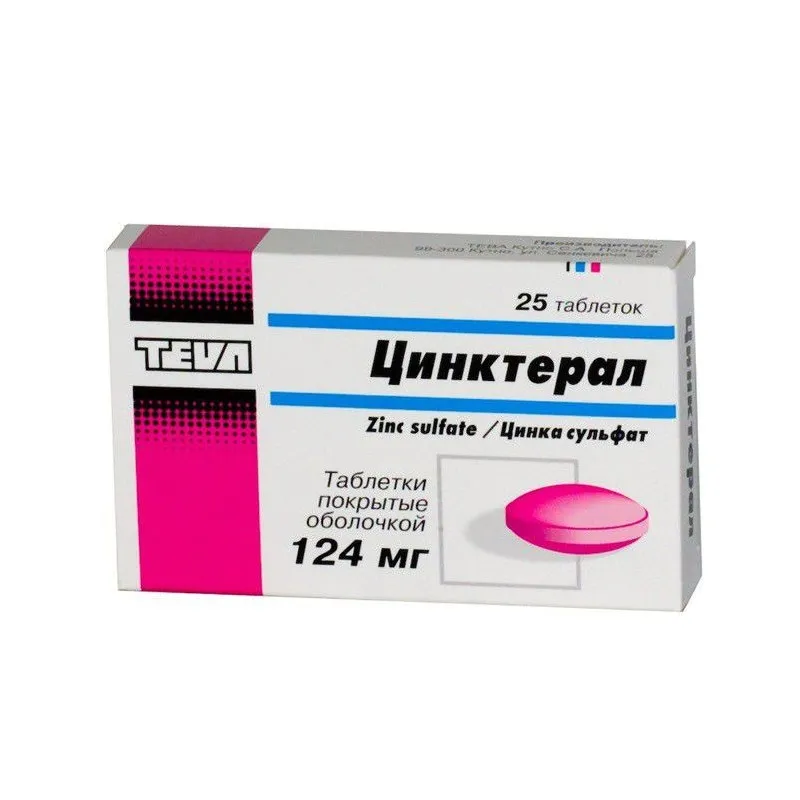
Table of Contents
Package leaflet: Information for the user
ZINCTERAL, 45 mg, coated tablets
Zinci sulfas
Please read all of this leaflet carefully before taking this medicine, because it contains
important information for the patient.
- Keep this leaflet, as you may need to read it again.
- If you have any further questions, please ask your doctor or pharmacist.
- This medicine has been prescribed for a specific individual. Do not pass it on to others. This medicine may harm others, even if their symptoms are the same.
- If you experience any adverse reactions, including any not listed in this leaflet, please inform your doctor or pharmacist. See section 4.
Contents of the leaflet:
- What Zincteral is and what it is used for
- Important information before taking Zincteral
- How to take Zincteral
- Possible side effects
- How to store Zincteral
- Contents of the pack and other information
1. What Zincteral is and what it is used for
Zincteral is a medicinal product in the form of coated tablets for oral administration, containing zinc ions as the active substance.
Zinc is one of the most important trace elements involved in cellular metabolism. It is a component of numerous enzymatic systems regulating fundamental metabolic processes – it participates in protein synthesis and carbohydrate metabolism. It is essential for normal growth and reproduction. Zinc is absorbed in the duodenum and small intestine.
Indications for Zincteral:
- Prophylaxis and treatment of zinc deficiency caused by improper nutrition.
- Malabsorption and zinc deficiency associated with conditions that impair zinc absorption or increase its loss.
- As adjunctive therapy in Wilson's disease.
2. Important information before using Zincteral
When not to use Zincteral
- If the patient has a known allergy (hypersensitivity) to zinc sulfate or zinc acetate, or to any of the other ingredients of Zincteral.
Warnings and precautions
- Exercise caution if the patient is pregnant.
- Be aware of the potential risk of copper deficiency during prolonged use of zinc-containing medications; if in doubt, consult a physician.
Zincteral and other medicines
Inform your doctor about all medications you are currently taking, including those
available without a prescription.
- Tetracyclines – zinc salts reduce gastrointestinal absorption of tetracyclines (zinc salts should be administered at least 2 hours after tetracyclines).
- Copper preparations – high doses of zinc may inhibit copper absorption (zinc salts should be administered at least 2 hours after copper preparations).
- Thiazide diuretics – increase urinary excretion of zinc.
- High-fiber diet (e.g. bran), high-phosphorus diet (e.g. dairy products), whole grain bread, or phytates – reduce zinc absorption by forming non-absorbable complexes; such foods should be consumed at least 2 hours after taking zinc salts.
- Folic acid – may slightly impair zinc absorption.
- Oral iron preparations – high doses of iron significantly reduce zinc absorption (zinc salts should be administered at least 2 hours after iron preparations).
- Penicillamine and other chelating agents – reduce zinc absorption (at least 2 hours should elapse between administration of penicillamine and zinc salts).
- Multivitamin and mineral supplements – concomitant use of multiple zinc-containing preparations may lead to excessive serum zinc concentrations.
- Quinolones – zinc reduces the absorption of quinolone antibiotics (norfloxacin, ciprofloxacin) and fluoroquinolones (ofloxacin). Zinc salts should be taken at least 2 hours after quinolones.
Zincteral with food and drink
The medicine should usually be taken 1 hour before or 2 hours after a meal, as many food products
may interfere with zinc absorption.
Foods containing phytic acid (e.g. whole grain bread) reduce zinc absorption and should be avoided
after taking zinc-containing medications.
Pregnancy and breastfeeding
If the patient is pregnant or breastfeeding, suspects she may be pregnant, or is planning to become pregnant, she should consult a doctor or pharmacist.
Pregnancy
Zinc crosses the placental barrier. The effects of commonly used doses of zinc salts on pregnancy and fetal development have not been adequately studied in humans, and appropriate animal studies are also lacking. Zincteral may be used during pregnancy only if, in the opinion of the physician, the benefit to the mother outweighs the potential risk to the fetus.
Breastfeeding
Zinc passes into human breast milk. The effects of commonly used doses of zinc salts in breastfeeding women have not been studied. Use of Zincteral during breastfeeding is not recommended.
Driving and operating machinery
Zincteral does not impair psychomotor performance or the ability to drive vehicles or operate
mechanical equipment.
Zincteral contains monohydrate lactose.
If the patient has previously been diagnosed with intolerance to certain sugars, the patient should
consult a doctor before taking this medicine.
Zincteral contains azorubine, lac (E 122).
This medicine may cause allergic reactions.
3. How to use Zincteral
This medicine should always be taken as directed by your doctor. If in doubt, consult your doctor or pharmacist.
Method of administration
The medicine is taken orally.
Adults
Usually 1 to 2 tablets per day.
Wilson's disease
In adults, the usual dose is 4 tablets per day using a 1-2-1 regimen, starting with a dose of 1 tablet per day and increasing every 3 days according to the following dosage schedule:
0-1-0 – one tablet per day
1-1-0 – two tablets per day
1-1-1 – three tablets per day
1-2-1 – four tablets per day
Children and adolescents
For children over 4 years of age and adolescents: 1 tablet per day.
The medicine is usually taken 1 hour before or 2 hours after a meal, as many food products may interfere with zinc absorption. If gastrointestinal irritation symptoms occur, the medicine may be taken just before or during a meal, although in such cases absorption of the medicine may be reduced.
Do not split or chew the tablets.
Use of a higher than recommended dose of Zincteral
Taking more Zincteral than recommended may lead to overdose.
If you have taken more than the recommended dose, seek medical advice immediately.
Symptoms
Burning pain in the mouth and throat, watery or bloody diarrhoea, painful urge to defecate, belching, hypotension (dizziness); jaundice (yellowing of eyes and skin); pulmonary oedema (chest pain, difficulty breathing); vomiting. Other possible symptoms include: haematuria, anuria, collapse, convulsions, haemolysis (breakdown of red blood cells with release of haemoglobin into plasma), fatigue.
Long-term use of zinc sulfate may lead to copper deficiency.
Missed dose of Zincteral
If you miss a dose of Zincteral, do not take a double dose to make up for the missed dose; take the next dose at the usual time.
If you feel the effect of the medicine is too strong or too weak, consult your doctor.
4. Possible adverse effects
Like all medicines, this medicine can cause adverse effects, although not everyone will experience them.
Gastrointestinal disorders (nausea, dyspepsia, heartburn), blood and lymphatic system disorders (blood morphology abnormalities), including leukopenia (reduced number of white blood cells) manifested by: fever, chills, sore throat; neutropenia (reduced number of granulocytes) manifested by: oral and pharyngeal ulcers; sideroblastic anemia (anemia caused by impaired red blood cell production) manifested by: fatigue, weakness, may occur with unknown frequency following high doses of zinc. Headache and metallic taste in the mouth may also occur.
Reporting of adverse effects
If any adverse effects occur, including any adverse effects not listed in this leaflet, inform your doctor or pharmacist.
Adverse effects can be reported directly to the Department of Monitoring of Adverse Drug Reactions, Office for Registration of Medicinal Products, Medical Devices and Biocidal Products, Al. Jerozolimskie 181C, 02-222 Warsaw,
Tel.: + 48 22 49 21 301,
Fax: + 48 22 49 21 309,
Website: https://smz.ezdrowie.gov.pl
Adverse effects can also be reported to the marketing authorization holder.
Reporting adverse effects helps to provide more information on the safety of this medicine.
5. How to store Zincteral
Keep this medicine out of sight and reach of children.
Store below 25°C.
Do not use this medicine after the expiry date stated on the packaging. The expiry date refers to the last day of the specified month.
Medicines must not be disposed of via wastewater or household waste. Ask your pharmacist how to dispose of medicines no longer in use. This will help protect the environment.
6. Contents of the pack and other information
What Zincteral contains
- The active substance is zinc sulfate monohydrate in an amount equivalent to 45 mg of zinc ions.
- Other ingredients of the medicine are: potato starch, monohydrous lactose, povidone, talc, magnesium stearate. Coating: carmine azorubine (E 122), polyethylene glycol, hydroxypropylmethylcellulose, titanium dioxide (E 171).
What Zincteral looks like and contents of the pack
Film-coated tablets, violet-pink in colour, round, biconvex, with a uniform surface.
50 tablets (2 blisters of 25 tablets each) in a cardboard box.
150 tablets (1 bottle containing 150 tablets) in a cardboard box.
Marketing Authorisation Holder and Manufacturer
Marketing Authorisation Holder
Teva Pharmaceuticals Polska Sp. z o.o.
ul. Emilii Plater 53
00-113 Warsaw
tel.: (22) 345 93 00
Manufacturer
Teva Operations Poland Sp. z o.o.
ul. Mogilska 80
31-546 Kraków