Zamidine
Poland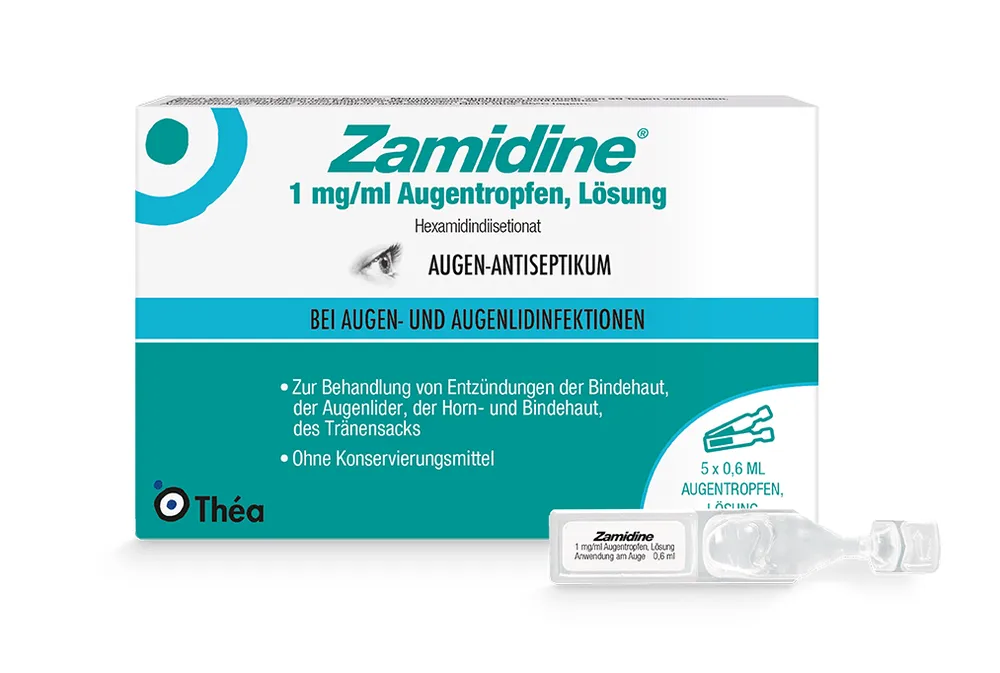
Table of Contents
Package leaflet: Information for the user
Zamidine, 1 mg/ml, eye drops, solution
Hexamidini diisethionas
Please read all of this leaflet carefully before using this medicine, because it contains
important information for you.
- Keep this leaflet, as you may need to read it again.
- If you have any questions, please ask your doctor or pharmacist.
- This medicine has been prescribed for a specific individual. Do not pass it on to others. It may harm someone else, even if their symptoms are the same.
- If you experience any adverse reactions, including any not listed in this leaflet, tell your doctor or pharmacist. See section 4.
Leaflet contents
- What Zamidine is and what it is used for
- Important information before using Zamidine
- How to use Zamidine
- Possible side effects
- How to store Zamidine
- Contents of the pack and other information
1. What Zamidine is and what it is used for
Zamidine contains an antibacterial antiseptic agent. The medicine is used as a topical antiseptic in the treatment of certain eye infections and infections of surrounding structures, such as:
- inflammation of the external surface of the eye (conjunctivitis),
- inflammation of certain parts of the eye: conjunctiva and cornea (keratoconjunctivitis),
- local inflammation of the eyelid margins, often at the base of the eyelashes (blepharitis),
- chronic inflammation of the lacrimal sacs.
This medicine is also used for disinfection of the conjunctival sacs (the space between the eyelids and the eyeball) prior to surgical procedures.
Zamidine is preservative-free eye drop solution.
2. Important information before using Zamidine
When not to use Zamidine
- if the patient is allergic to hexamidine or to any of the other ingredients of this medicine (listed in section 6).
Warnings and precautions
Before starting to use this medicine, discuss it with your doctor or pharmacist.
Treatment should be discontinued and medical advice sought if:
- the patient's condition does not improve after using the medicine as recommended,
- any new symptoms occur (redness, eye pain, or blurred vision). If the patient has an eye infection, contact lenses must not be worn throughout the treatment period.
Zamidine and other medicines
Inform your doctor or pharmacist about all medicines currently used, recently used, or planned to be used.
Pregnancy and breastfeeding
Zamidine may be used during pregnancy or breastfeeding.
Driving and operating machinery
Zamidine does not affect visual acuity, but may cause transient blurred vision or other visual disturbances, which could potentially affect the ability to drive or operate machinery. If blurred vision occurs, do not drive or operate machinery until vision returns to normal.
3. How to use Zamidine
This medicine should always be used exactly as directed by your doctor or pharmacist. If in doubt,
consult your doctor or pharmacist.
The recommended dose is one drop into the conjunctival sac (the space between the lower eyelid and the eye)
of the affected eye(s) 4 to 6 times daily.
Prolonged or frequently repeated treatment should be avoided, as bacteria may become
resistant to the product. For this reason, do not exceed the duration of treatment
recommended by your doctor.
Use in children
The safety and efficacy of these eye drops in children have not been established. There is
insufficient data available.
Method and route of administration
This medicine is for ocular use only.
If using this medicine together with other eye drops, wait at least 15 minutes between consecutive
applications.
This medicine is a preservative-free eye drop solution. Do not allow the tip of the multidose container
to touch the eye or surrounding areas. The tip may become contaminated and pose a risk of eye infection. To avoid possible contamination of the multidose container, keep the tip away from any surface.
For the 0.6 ml multidose container:
To use Zamidine, follow the instructions below:
- Wash your hands and assume a comfortable standing or sitting position.
- Open the sachet containing 5 multidose containers. Record the date of first opening on the sachet.
- Break off one multidose container from the strip.
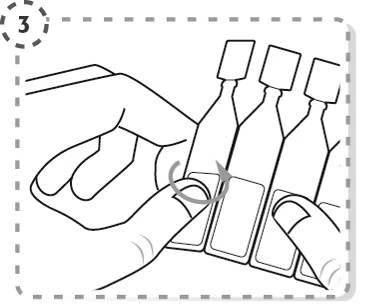
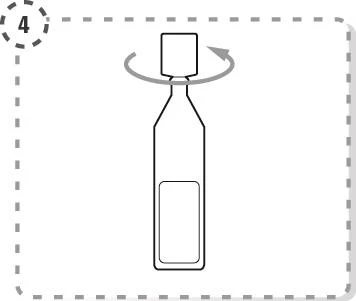
- Unscrew the top part of the multidose container as shown in the illustration. After opening, do not touch the tip of the container with your fingers.
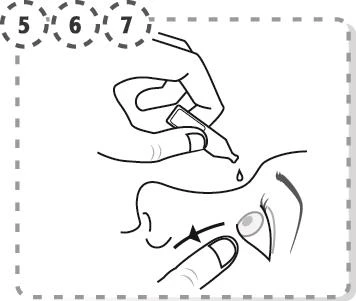
- Gently pull down the lower eyelid of the affected eye with your finger.
- Hold the tip of the multidose container close to the eye, but do not let the dropper touch the eye, eyelashes, fingers, or any other surface.
- Gently squeeze the multidose container so that one drop enters the eye, then release the lower eyelid.
- Repeat the steps for the second eye if affected.
- After use, immediately close the multidose container: firmly press the cap back onto the tip of the multidose container if not all of its contents have been used. Each recapped multidose container may be reused for up to 24 hours.
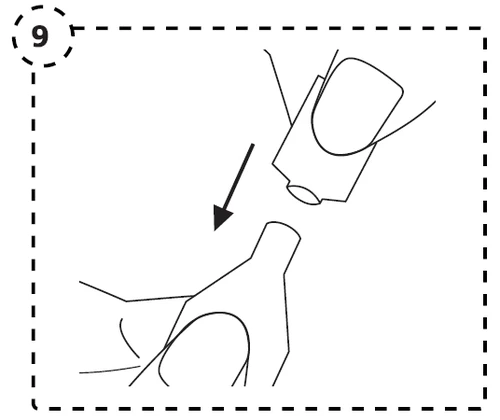
- Discard the multidose container 24 hours after opening or when empty.
For the 10 ml multidose container:
To use Zamidine, follow the instructions below:
- Wash your hands and assume a comfortable standing or sitting position.
- Unscrew the cap to open the multidose container. After opening, do not touch the tip of the container with your fingers.
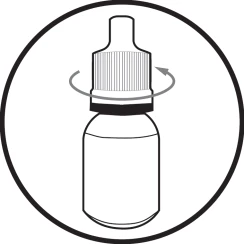
- Tilt your head backward and gently pull down the lower eyelid of the affected eye with your finger.
- Hold the tip of the multidose container close to the eye, but do not let the dropper touch the eye, eyelashes, fingers, or any other surface.
- Gently squeeze the multidose container so that one drop enters the eye, then release the lower eyelid.
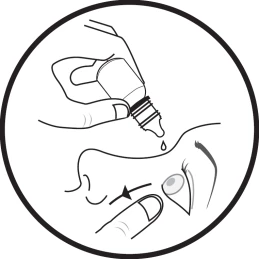
- Repeat the steps for the second eye if affected.
- After use, close the multidose container by screwing the cap back on.
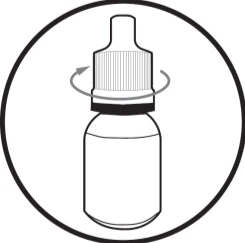
- Discard the multidose container 30 days after opening.
Use of a higher than recommended dose of Zamidine
If too much medicine is instilled into the eye, rinse the eye with physiological saline solution.
Missed dose of Zamidine
Do not use a double dose to make up for a missed dose.
Stopping Zamidine treatment
This medicine should be used exactly as described in this leaflet. If there is no improvement or
if the patient feels worse, consult your doctor.
If you have any further questions about the use of this medicine, consult your doctor or pharmacist.
4. Possible adverse reactions
Like all medicines, this medicine can cause adverse reactions, although not everybody gets them.
The following adverse reactions may occur:
Frequency unknown (frequency cannot be estimated from the available data).
- Local allergic reaction (eye redness, eyelid swelling and redness, itching).
Reporting of adverse reactions
If any adverse reactions occur, including any adverse reactions not listed
in this leaflet, inform your doctor or pharmacist.
Adverse reactions can be reported directly to the Department of Monitoring Adverse Drug Reactions at the Office for Registration of Medicinal Products, Medical Devices and Biocidal Products: Al. Jerozolimskie 181C, 02-222 Warsaw
tel.: +48 22 49 21 301, fax: +48 22 49 21 309
Website: https://smz.ezdrowie.gov.pl
Adverse reactions can also be reported to the marketing authorization holder.
Reporting adverse reactions helps provide more information on the safety of the medicine.
5. How to store Zamidine
Keep this medicine out of sight and reach of children.
For the 0.6 ml multidose container:
Do not use this medicine after the expiry date stated on the carton, sachet, and multidose container. The expiry date refers to the last day of the stated month.
For the 10 ml multidose container:
Do not use this medicine after the expiry date stated on the carton and multidose container. The expiry date refers to the last day of the stated month.
Store below 25°C.
For the 0.6 ml multidose container:
After first opening of the sachet: shelf life of the multidose containers: 30 days. Record the date of first opening on the sachet.
After first opening of the multidose container: shelf life of the re-closed multidose container: 24 hours from the first opening of the multidose container.
For the 10 ml multidose container:
After first opening of the multidose container: shelf life is 30 days from the first opening of the multidose container.
Medicines must not be disposed of via wastewater or household waste. Ask your pharmacist how to dispose of medicines no longer required. This will help protect the environment.
6. Contents of the pack and other information
What Zamidine contains
- The active substance is hexamidine diisethionate. 1 ml of solution contains 1 mg of hexamidine diisethionate.
- The other ingredients are: boric acid, borax, sodium chloride, water for injections.
What Zamidine looks like and contents of the pack
For the multidose container 0.6 ml:
This medicinal product is in the form of eye drops, solution. The solution is clear and colourless,
available in multidose containers packed in sachets of 5 units. Each multidose container
contains 0.6 ml of the medicine.
Each 0.6 ml multidose container contains at least 12 preservative-free eye drops.
For the multidose container 10 ml:
This medicinal product is in the form of eye drops, solution. The solution is clear and colourless,
available in 10 ml multidose containers.
Each 10 ml multidose container contains approximately 250 preservative-free eye drops.
The pack contains 5 or 10 (2x5) 0.6 ml multidose containers or one 10 ml multidose container.
Not all pack sizes may be marketed.
Marketing Authorisation Holder and Manufacturer
Marketing Authorisation Holder:
Laboratoires THEA
12 rue Louis Blériot
63017 Clermont-Ferrand Cedex 2
France
Manufacturer:
For the 0.6 ml multidose container:
Laboratoires THEA
12 rue Louis Blériot
63017 Clermont-Ferrand Cedex 2
France
LABORATOIRE UNITHER
1 rue de l’Arquerie
50200 Coutances
France
For the 10 ml multidose container:
Laboratoires THEA
12 rue Louis Blériot
63017 Clermont-Ferrand Cedex 2
France
For further information, contact the representative of the Marketing Authorisation Holder:
THEA Polska Sp. z o.o.
ul. Cicha 7
00-353 Warsaw
Tel.: +48 22 642 87 77
This medicinal product is authorised for sale in the European Economic Area under the following names:
Belgium, Luxembourg .................................................................................................. Zasetic
Bulgaria, Germany, Poland, Romania, Italy ................................................................. Zamidine
Czech Republic, Denmark, Finland, Iceland, Norway, Portugal, Slovakia, Sweden ....... Zamisept
France, Greece ............................................................................................................. Zameline
Detailed information on this medicine is available on the website www.urpl.gov.pl
Health education – Advice in case of eye infection
If there is no improvement or the patient feels worse, consult a doctor.
Since eye infection is contagious, take the following simple steps to avoid spreading the infection to the other eye or to other family members:
Wash hands regularly with warm water and soap
Do not rub the eyes
Wash pillows and face towels in hot water with detergent
Do not share towels and pillows