Iodide 200
Poland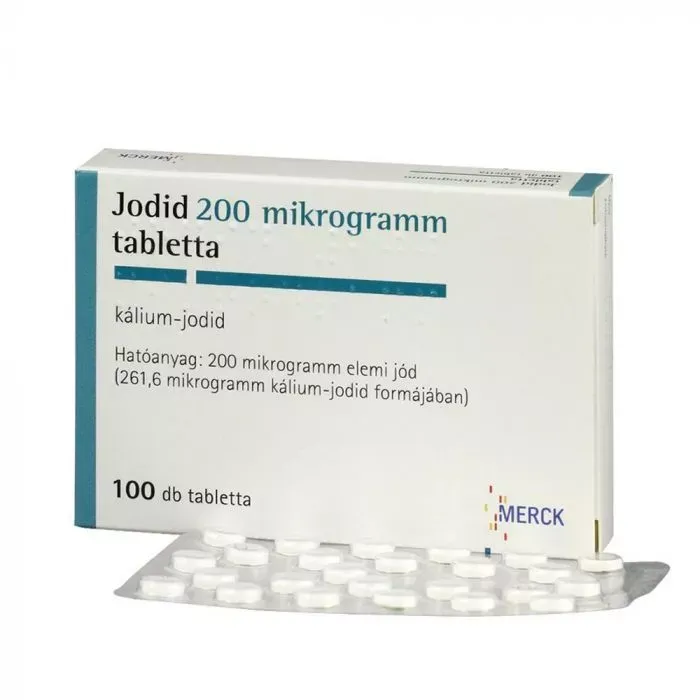
Table of Contents
Package leaflet: Information for the user
Jodid 200, 200 g tablet
Potassium iodide
Please read all of this leaflet carefully before taking this medicine, because it contains
important information for the patient.
- Keep this leaflet, as you may need to read it again.
- If you have any further questions, please consult your doctor or pharmacist.
- This medicine has been prescribed for a specific individual. Do not pass it on to others. It may harm them, even if their symptoms are the same.
- If you experience any adverse effects, including any not listed in this leaflet, inform your doctor or pharmacist. See section 4.
Table of contents
- What Jodid 200 is and what it is used for
- Important information before taking Jodid 200
- How to take Jodid 200
- Possible side effects
- How to store Jodid 200
- Contents of the pack and other information
1. What Jodid 200 is and what it is used for
Adequate intake of iodine is essential for the endogenous synthesis of thyroid hormones and for the proper development and function of the thyroid gland. Insufficient iodine intake may lead to disease, potentially causing goitre (thyroid enlargement/overgrowth), and in severe cases, congenital brain disorders (impaired intelligence). Jodid 200 tablets supply iodine and are indicated for the prevention and treatment of iodine deficiency.
Jodid 200 is used for:
- Prevention of goitre due to iodine deficiency, particularly during pregnancy and breastfeeding;
- Prevention of recurrent goitre after discontinuation of thyroid hormone therapy or after surgical removal of goitre caused by iodine deficiency;
- Treatment of iodine deficiency-induced goitre in newborns, children and adolescents.
2. Important information before using Jodid 200
When not to use Jodid 200
- in overt hyperthyroidism;
- in subclinical hyperthyroidism, when iodine doses exceed 150 micrograms per day;
- in autonomous thyroid adenoma and in the presence of focal or disseminated nodular goitre with autonomous hormone secretion;
- if the patient is allergic to the active substance or to any of the other ingredients of this medicine (listed in section 6).
Warnings and precautions
Before using the medicine, it must be established whether the patient currently has or has previously had hyperthyroidism or nodular goitre.
Before starting iodine treatment, appropriate diagnostic evaluation should be performed to exclude diffuse or focal autonomous thyroid hormone secretion, because in such cases, administration of iodine in doses exceeding 150 micrograms per day may induce hyperthyroidism.
Saturation of the thyroid gland with iodine may impair optimal uptake of radioactive iodine used for diagnostic or therapeutic purposes. The physician should avoid administering iodine to the patient prior to administration of radioactive iodine for diagnostic or therapeutic purposes.
Jodid 200 and other medicines
You should inform your doctor about all medicines you are currently taking or have recently taken, as well as any medicines you plan to take.
- Iodine deficiency enhances the response to antithyroid treatment in hyperthyroidism, whereas iodine excess diminishes this response. Therefore, if possible, the physician should discontinue iodine administration before and during treatment of hyperthyroidism.
- Antithyroid drugs block the organification of iodine in the thyroid gland and may therefore act as goitrogenic agents.
- Iodine uptake by the thyroid gland is competitively inhibited by substances with a similar "trapping" mechanism (e.g. perchlorate, which also blocks the internal iodine cycle) and by non-transported substances such as thiocyanate (at concentrations above 5 mg/dl).
- Concomitant use of high doses of iodine, which inhibits thyroid hormone release, and lithium may promote the development of goitre and hypothyroidism.
- High doses of potassium iodide combined with potassium-sparing diuretics may cause hyperkalaemia.
Pregnancy and breastfeeding
If the patient is pregnant or breastfeeding, suspects she might be pregnant, or is planning to have a child, she should consult her doctor before using this medicine.
During pregnancy and breastfeeding, the requirement for iodine increases. Therefore, adequate intake of iodine (200 μg/day) is particularly important. Iodine crosses the placenta and is excreted in breast milk. Iodine intake from dietary supplements should be taken into account. Additional iodine supplementation in breastfed newborns is not necessary.
Due to the high sensitivity of the fetal and neonatal thyroid gland, very high doses of iodine (in the milligram range) should be avoided during pregnancy and breastfeeding.
An exception is prophylactic thyroid blockade with high-dose iodine following nuclear accidents.
Driving and operating machinery
Iodine does not affect the ability to drive motor vehicles or operate machinery.
Jodid 200 contains lactose
If the patient has previously been diagnosed with intolerance to certain sugars, the patient should consult their doctor before taking this medicine.
3. How to use Jodid 200
This medicine should always be used as directed by the physician. In case of doubt, consult your doctor or pharmacist.
Recommended dose
Prevention of goitre due to iodine deficiency
Infants and children: 50 – 100 micrograms of iodine/day
Adolescents and adults: 100 – 200 micrograms of iodine/day
Pregnancy and breastfeeding: 200 micrograms of iodine/day
Prevention of recurrent goitre after discontinuation of thyroid hormone therapy or
after surgical removal of goitre caused by iodine deficiency
100 – 200 micrograms of iodine/day
Treatment of goitre caused by iodine deficiency
Newborns, children: 100 – 200 micrograms of iodine/day
Adolescents: 200 micrograms of iodine/day
Method of administration
The medicine should be taken after meals with an adequate amount of liquid, i.e. half a glass of water.
Prophylactic use of Jodid usually needs to last for many years, often for life.
In the treatment of iodine deficiency-induced goitre in newborns, treatment usually lasts for 2 to 4 weeks. In children and adolescents, iodine supplementation is usually required for 6 to 12 months, or even longer.
Use of a higher than recommended dose of Jodid 200
- Symptoms of toxic overdose may include: brownish mucous membranes, vomiting, abdominal pain and diarrhoea.
- Dehydration and shock may occur.
- In rare cases, oesophageal stricture has been observed.
- Fatalities have occurred only after ingestion of extremely large doses of iodine (30–250 ml of iodine tincture).
- Chronic overdose may lead to so-called iodism, with symptoms such as metallic taste in the mouth, rhinitis, conjunctivitis, gastric and bronchial mucosal irritation, skin changes such as blisters, thickening, desquamation of the epidermis, and angioedema. Very rarely, fever, acne and increased salivation have been reported. Treatment of acute poisoning consists of gastric lavage, symptomatic treatment of fluid and electrolyte imbalances, and treatment of shock. In cases of chronic overdose, discontinuation of iodine is indicated. In iodine-induced hypothyroidism, iodine administration should be discontinued and thyroid hormones administered. Iodine-induced hyperthyroidism is treated with antithyroid drugs; in very severe cases, admission to an intensive care unit, plasmapheresis (plasma purification), and sometimes even thyroidectomy (removal of the thyroid gland) may be necessary.
4. Possible adverse reactions
Like all medicines, this medicine can cause adverse reactions, although not everybody will experience them.
If there are large autonomous secretion foci in the thyroid gland, overt hyperthyroidism caused by iodine doses exceeding 150 micrograms per day cannot be completely ruled out.
In individuals predisposed to autoimmune thyroid diseases, formation of TPO antibodies (thyroid peroxidase antibodies) is possible.
Reporting of adverse reactions
If any adverse reactions occur, including any not listed in this leaflet, tell your doctor, pharmacist, or nurse. Adverse reactions can also be reported directly to the Department of Monitoring Adverse Drug Reactions of the Office for Registration of Medicinal Products, Medical Devices and Biocidal Products
Al. Jerozolimskie 181C, 02-222 Warsaw
tel.: + 48 22 49 21 301
fax: + 48 22 49 21 309
website: https://smz.ezdrowie.gov.pl
Reporting adverse reactions helps to provide more information on the safety of the medicine.
5. How to store Jodid 200
Do not store above 25°C.
Keep in the outer packaging and protect from light.
Keep the medicine out of sight and reach of children.
Do not use this medicine after the expiry date stated on the carton after: Expiry (EXP). The expiry date refers to the last day of the stated month.
Medicines must not be disposed of via wastewater or household waste. Ask your pharmacist how to dispose of medicines no longer required. Such measures will help protect the environment.
6. Contents of the pack and other information
What Jodid 200 contains
- The active substance is potassium iodide. Each Jodid 200 tablet contains 261.6 micrograms (μg) of potassium iodide, equivalent to 200 μg of iodine.
- Other ingredients are: magnesium stearate, microcrystalline cellulose, colloidal anhydrous silica, maize starch, powdered cellulose, monohydrate lactose.
What Jodid 200 looks like and contents of the pack
A round tablet, nearly white in colour, flat on both sides, with a break line, bevelled edges and the imprint EM 70.
The break line on the tablet is intended only to facilitate crushing for easier swallowing, and does not allow for equal dose division.
Jodid 200 is available in packs containing 50 or 100 tablets in a cardboard box.
Not all pack sizes may be marketed.
Marketing Authorisation Holder
Merck Sp. z o.o.
Al. Jerozolimskie 142B
02-305 Warsaw, Poland
Company logo
Manufacturer
Merck Healthcare KGaA
Frankfurter Strasse 250
64293 Darmstadt, Germany