Ylpio
Poland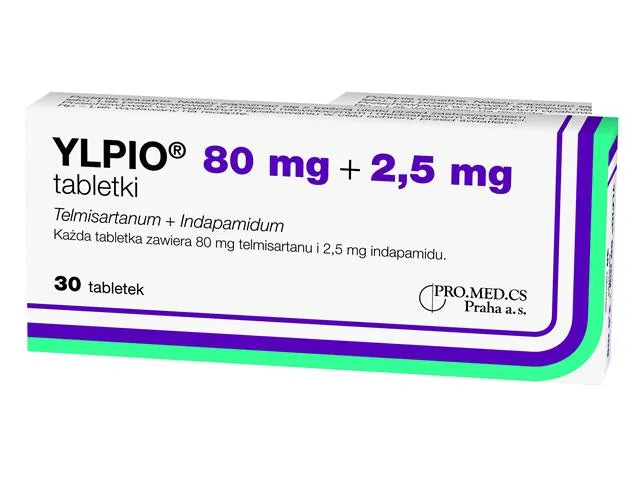
Table of Contents
Patient Information Leaflet
YLPIO, 80 mg + 2.5 mg, tablets
Telmisartan + Indapamide
Please read this leaflet carefully before taking this medicine, as it contains important information for you.
- Keep this leaflet for future reference.
- If you have any questions, consult your doctor or pharmacist.
- This medicine has been prescribed for a specific individual. Do not pass it on to others. This medicine may harm someone else, even if their symptoms are the same.
- If you experience any adverse reactions, including those not listed in this leaflet, inform your doctor or pharmacist. See section 4.
Leaflet Contents
- What YLPIO is and what it is used for
- Important information before taking YLPIO
- How to take YLPIO
- Possible side effects
- How to store YLPIO
- Contents of the pack and other information
1. What YLPIO is and what it is used for
YLPIO is a combination medicine containing two active substances, telmisartan and indapamide, in a single tablet. Both substances help control high blood pressure (hypertension).
- Telmisartan belongs to a group of medicines called angiotensin II receptor antagonists. Angiotensin II is a substance produced in the body that causes blood vessels to narrow, thereby increasing blood pressure. Telmisartan blocks the action of angiotensin II, causing blood vessels to widen and blood pressure to decrease.
- Indapamide belongs to a group of medicines called diuretics. Diuretics reduce blood pressure through two mechanisms: they increase the amount of urine produced by the kidneys and cause blood vessels to dilate, thus improving blood flow. Diuretics increase the amount of urine excreted by the kidneys. However, indapamide differs from other diuretics in that it causes only a slight increase in urine production.
Untreated high blood pressure can damage blood vessels in various organs and, in some cases, may lead to heart attack, heart or kidney failure, stroke, or loss of vision. Often, there are no symptoms of high blood pressure before these complications occur. Therefore, it is important to measure blood pressure regularly to ensure it remains within normal limits.
YLPIO is used for the treatment of high blood pressure in adults who have previously been controlled on the same doses of telmisartan and indapamide when given separately.
2. Important information before taking YLPIO
When not to take YLPIO
- if the patient is allergic to telmisartan, indapamide, any other sulfonamides, or any of the other ingredients of this medicine (listed in section 6),
- if the patient has severe liver disease or a condition called hepatic encephalopathy (liver dysfunction affecting the brain and central nervous system),
- if the patient has severe kidney disease,
- if the patient has low blood potassium levels,
- if the patient is pregnant (see section "Tell your doctor" or "Pregnancy, breastfeeding and fertility"),
- if the patient has disorders of bile flow from the liver and gallbladder,
- if the patient has diabetes or kidney dysfunction and is being treated with a blood pressure-lowering medicine containing aliskiren.
Warnings and precautions
Tell your doctor if the patient has or has had any of the following
conditions or diseases:
- kidney disease or kidney transplant,
- renal artery stenosis (narrowing of the blood vessels to the single functioning kidney or both kidneys),
- liver disease,
- heart disease,
- elevated aldosterone levels (water and salt retention in the body together with electrolyte imbalance),
- low blood pressure (hypotension), which is more likely to occur if the patient is dehydrated (excessive loss of water from the body) or has sodium deficiency due to diuretic (water tablet) therapy, a low-salt diet, diarrhoea or vomiting,
- increased blood potassium levels,
- diabetes,
- gout.
Before starting treatment with YLPIO, discuss with your doctor:
- if the patient is taking any of the following medicines used to treat high blood pressure:
- angiotensin-converting enzyme (ACE) inhibitors (e.g. enalapril, lisinopril, ramipril), particularly if the patient has kidney dysfunction related to diabetes,
- aliskiren. Your doctor may recommend regular monitoring of kidney function, blood pressure, and blood electrolyte levels (e.g. potassium). See also section "When not to take YLPIO".
- if the patient is taking digoxin.
- if the patient experiences blurred vision or eye pain. These may be symptoms of fluid accumulation in the vascular layer of the eye (choroidal effusion) or increased intraocular pressure, which may occur from a few hours to several weeks after taking YLPIO. If left untreated, this may lead to permanent vision loss. Patients with a history of allergy to penicillin or sulfonamides may be at higher risk of developing this condition.
Tell your doctor:
- if the patient suspects she is (or might be) pregnant. Use of telmisartan is not recommended during early pregnancy and must not be taken after the 3rd month of pregnancy,
as it may seriously harm the unborn child (see section "Pregnancy,
breastfeeding and fertility");
- if the patient is scheduled for surgery or anaesthesia;
- if the patient has increased sensitivity of the skin to sunlight or ultraviolet radiation (photosensitivity).
If, after taking YLPIO, the patient experiences abdominal pain, nausea, vomiting or diarrhoea,
discuss this with your doctor. Your doctor will decide whether treatment should continue. Do not
discontinue YLPIO on your own initiative.
Your doctor may order blood tests to check whether sodium or potassium levels are too low
and whether calcium levels are too high.
YLPIO may be less effective in lowering blood pressure in black patients.
Athletes should be aware that this medicine contains an active substance that may cause a
false positive result in doping tests.
Children and adolescents
YLPIO is not recommended for use in children and adolescents under 18 years of age.
YLPIO and other medicines
Tell your doctor or pharmacist about all medicines the patient is currently taking or has recently taken, as well as any medicines the patient plans to take. Your doctor may recommend adjusting the
dose or taking other precautions. In some cases, one of the medicines may need to be discontinued.
This is especially important when taking the following medicines together with YLPIO:
- digoxin;
- medicines that may increase blood potassium levels, such as potassium-containing salt substitutes, potassium-sparing diuretics (certain water tablets);
- medicines used to treat high blood pressure (ACE inhibitors, aliskiren, angiotensin II receptor antagonists);
- heparin (a medicine that reduces blood clotting);
- immunosuppressive medicines (medicines that suppress the immune system after organ transplantation or used in treating autoimmune diseases, severe rheumatic or dermatological conditions, e.g. cyclosporine or tacrolimus);
- trimethoprim (an antibiotic);
- lithium preparations, used in treating certain types of depression;
- non-steroidal anti-inflammatory drugs, NSAIDs (painkillers such as acetylsalicylic acid or ibuprofen);
- diuretics (water tablets), especially when used in high doses together with YLPIO, as this may lead to significant fluid loss and low blood pressure (hypotension);
- medicines used to treat heart rhythm disorders (e.g. quinidine, hydroquinidine, disopyramide, amiodarone, sotalol, dofetilide, ibutilide, cardiac glycosides);
- medicines used to treat psychiatric disorders such as depression, anxiety, schizophrenia or insomnia (e.g. tricyclic antidepressants, antipsychotics, neuroleptics, opioid painkillers);
- leflunomide (used to treat angina pectoris, a condition causing chest pain);
- cisapride (used to treat reduced motility of the stomach and oesophagus);
- difenoxin (used to treat gastrointestinal disorders such as ulcers, excessive gastric acid production, hyperactivity of the digestive system);
- sparfloxacin, moxifloxacin, intravenous erythromycin (antibiotics used to treat infections);
- intravenous vinpocetine (used to treat symptomatic cognitive disorders in the elderly, including memory loss);
- halofantrine (an antiparasitic medicine used to treat certain types of malaria);
- mizolastine (used to treat allergic reactions such as hay fever);
- pentamidine (used to treat certain types of pneumonia);
- amphotericin B (an antifungal medicine);
- oral corticosteroids (used to treat various diseases, including severe asthma and rheumatoid arthritis);
- tetracosactide (used to treat Crohn's disease);
- stimulant laxatives (used to treat constipation);
- baclofen (used to treat muscle stiffness occurring in conditions such as multiple sclerosis);
- amifostine (a protective agent used in cancer treatment);
- metformin (used to treat diabetes);
- iodine-containing contrast agents (used in diagnostic imaging with X-rays);
- calcium tablets or other calcium supplements;
- allopurinol (used to treat gout).
Taking YLPIO with food, drink and alcohol
Alcohol may cause a greater reduction in blood pressure and/or increase the risk of dizziness or fainting.
Pregnancy, breastfeeding and fertility
If the patient is pregnant or breastfeeding, suspects she may be pregnant, or is planning to have a
baby, she should consult her doctor or pharmacist before taking this medicine.
Pregnancy
YLPIO is not recommended during the first 3 months of pregnancy and must not be used
during later pregnancy (from the 4th to the 9th month).
Before planning a pregnancy or after confirming pregnancy, treatment should be switched to an alternative medicine as soon as possible.
Breastfeeding
YLPIO is not recommended for breastfeeding mothers, as the active substances of the medicine
may pass into breast milk. Your doctor may recommend taking another medicine if the patient wishes
to breastfeed, especially when feeding a newborn or premature infant.
Driving and operating machinery
Some patients taking YLPIO may experience dizziness or fatigue. In such cases, patients should not
drive or operate machinery.
YLPIO contains sodium
This medicine contains less than 1 mmol (23 mg) of sodium per dose, i.e. it is considered "sodium-free".
3. How to take Ylpio
This medicine should always be taken exactly as directed by your doctor or pharmacist. If in doubt,
consult your doctor or pharmacist.
The recommended dose of Ylpio is one tablet per day. It is important to take the tablet at the same
time each day. Ylpio must be taken daily unless otherwise instructed by your doctor.
In patients with impaired liver function, the doctor will adjust the dose of the medicine.
Ylpio may be taken with food or independently of meals. Tablets should be swallowed with an
adequate amount of water or another non-alcoholic liquid. The tablet may be divided into equal
doses.
Ylpio should be stored in the sealed blister. Tablets should be removed from the blister shortly
before administration.
Taking more Ylpio than recommended
If too many tablets are accidentally taken, contact your doctor immediately or go to the emergency
department of your nearest hospital. An overdose of Ylpio may cause low blood pressure, rapid
heartbeat, slow heartbeat, dizziness, reduced kidney function including kidney failure, nausea,
vomiting, muscle cramps, drowsiness, confusion, and changes in the amount of urine produced by the
kidneys.
If you miss a dose of Ylpio
Do not worry if you miss a dose. Take it as soon as you remember, then continue taking the medicine
according to your regular schedule. If the tablet is not taken within that day, take your usual dose the
next day. Do not take a double dose to make up for a missed dose.
Stopping Ylpio
Since treatment of high blood pressure is usually long-term, you should discuss stopping this medicine
with your doctor beforehand.
If you have any further questions about the use of this medicine, consult your doctor or pharmacist.
4. Possible adverse effects
Like all medicines, this medicine can cause adverse effects, although not everyone will experience them.
If any of the following adverse effects occur, stop taking the medicine
and contact your doctor immediately:
- Septicaemia (often referred to as blood poisoning, a serious infection with a systemic inflammatory response) which may occur by chance or be related to a mechanism not yet known (adverse effect occurring rarely).
- Sudden swelling of the skin of the limbs or face, swelling of the lips or tongue, swelling of the mucous membranes of the throat or airways causing breathlessness and difficulty swallowing (angioedema) (adverse effect occurring rarely).
- Severe skin reactions, including severe rash, redness of the entire skin surface, intense itching, formation of blisters, peeling and swelling of the skin, inflammation of mucous membranes (Stevens-Johnson syndrome) or other allergic reactions (adverse effect occurring very rarely).
- Inflammation of the pancreas (pancreatitis), which may cause severe upper abdominal pain radiating to the back, accompanied by a very poor general condition (adverse effect occurring very rarely).
- Life-threatening, irregular heart rhythm (frequency unknown).
- Brain disease caused by liver disease (hepatic encephalopathy) (frequency unknown).
- Inflammation of the liver (hepatitis) (frequency unknown).
Possible adverse effects of YLPIO:
Common (may occur in up to 1 in 10 patients):
- skin allergic reactions such as skin rashes in patients prone to allergies and asthmatic reactions
- red, raised rash
Uncommon (may occur in up to 1 in 100 patients):
- urinary tract infections, upper respiratory tract infections,
- decrease in red blood cells (anaemia),
- difficulty falling asleep,
- low mood (depression),
- fainting,
- sensation of spinning (peripheral vertigo),
- slow heart rate (bradycardia),
- low blood pressure (hypotension), dizziness when standing up (orthostatic hypotension),
- breathlessness, cough,
- abdominal pain, diarrhoea, abdominal discomfort, bloating, vomiting, red spots on the skin (purpura), itching, excessive sweating, drug rash,
- back pain, muscle cramps, muscle pain,
- kidney function disorders, including acute kidney failure,
- chest pain, feeling of weakness,
- increased blood creatinine levels,
- high potassium levels in plasma.
Rare (may occur in up to 1 in 1000 patients):
- septicaemia (often referred to as blood poisoning, a serious infection with a systemic inflammatory response which may lead to death),
- increase in the number of certain white blood cells (eosinophilia),
- low platelet count (thrombocytopenia),
- severe allergic reaction (anaphylactic reaction),
- allergic reactions (e.g. rash, itching, difficulty breathing, wheezing, facial swelling),
- feeling of anxiety,
- fatigue, headache, prickling and tingling sensations (paraesthesia),
- drowsiness,
- visual disturbances,
- rapid heart rate (tachycardia),
- nausea, constipation, dryness of the oral mucosa, gastritis, taste disturbances,
- liver function disorders (occur more frequently in patients of Japanese origin),
- sudden swelling of the skin and mucous membranes, which may lead to death (angioedema, including fatal cases),
- rash, redness of the skin, urticaria, severe drug eruption,
- joint pain, limb pain, tendon pain,
- influenza-like symptoms,
- decreased haemoglobin concentration (a protein in the blood),
- increased uric acid levels, a substance which may cause gout or worsen existing gout (joint pain),
- increased liver enzyme activity or creatine phosphokinase levels in blood,
- low blood sugar levels (in patients with diabetes),
Very rare (may occur in up to 1 in 10,000 patients):
- decrease in white blood cell count, which may cause fever, redness of the throat or other influenza-like symptoms (leucopenia),
- heart rhythm disorders (causing palpitations and awareness of heartbeat),
- interstitial lung disease (progressive lung fibrosis) has been reported during telmisartan treatment; however, a causal relationship with telmisartan use has not been established,
- pancreatitis, which may cause severe upper abdominal pain radiating to the back, accompanied by a very poor general condition,
- severe skin reactions, including severe rash, redness of the entire skin surface, intense itching, formation of blisters, peeling and swelling of the skin, inflammation of mucous membranes (Stevens-Johnson syndrome),
- high calcium levels (hypercalcaemia).
Frequency not known (frequency cannot be estimated from available data):
- short-sightedness, blurred vision,
- worsening of vision or eye pain due to high pressure (possible symptoms of fluid accumulation in the choroid layer of the eye (choroidal effusion) or acute angle-closure glaucoma),
- abnormal heart rhythm on ECG,
- brain disease caused by liver disease (hepatic encephalopathy),
- intestinal angioedema – after administration of similar products, intestinal swelling with symptoms such as abdominal pain, nausea, vomiting and diarrhoea has occurred,
- inflammation of the liver (hepatitis),
- possible worsening of symptoms of systemic lupus erythematosus (a type of collagenosis),
- photosensitivity reactions (skin appearance changes) after exposure to sunlight or artificial UV radiation,
- low potassium levels in blood,
- low sodium levels in blood, which may lead to dehydration and low blood pressure,
- increased blood glucose levels in diabetic patients.
Reporting of adverse effects
If any symptoms occur that may be adverse effects, including any adverse effects not listed
in this leaflet, inform your doctor or pharmacist. Adverse effects can be reported directly to the Department of Monitoring Adverse Drug Reactions of the Office for Registration of Medicinal Products, Medical Devices and Biocidal Products, Al. Jerozolimskie 181 C, 02-222 Warsaw, Tel.: +48 22 49 21 301,
Fax: +48 22 49 21 309, Website: https://smz.ezdrowie.gov.pl
Adverse effects can also be reported to the marketing authorisation holder.
Reporting adverse effects helps to provide more information on the safety of the medicine.
5. How to store Ylpio
Keep this medicine out of the sight and reach of children.
Store in the original packaging to protect from light.
Do not use this medicine after the expiry date stated on the carton and blister pack after EXP.
The expiry date refers to the last day of the stated month.
Medicines must not be disposed of via wastewater or household waste. Ask your pharmacist how to dispose of medicines no longer required. These measures help protect the environment.
6. Contents of the pack and other information
What YLPIO contains
- The active substances are telmisartan and indapamide. Each tablet contains 80 mg of telmisartan and 2.5 mg of indapamide.
- The other ingredients are mannitol (E 421), sodium hydroxide, povidone 25, and magnesium stearate.
What YLPIO looks like and contents of the pack
Pale yellow, round, biconvex tablets with a score line on both sides.
The tablets are supplied in OPA/Aluminum/PVC/Aluminum blisters, packed in a cardboard box.
Ylpio is available in packs containing 30 or 100 tablets.
Not all pack sizes may be marketed.
Marketing Authorisation Holder and Manufacturer
PRO.MED.CS Praha a.s.
Telčská 377/1
Michle, 140 00 Praha 4
Czech Republic
For further information about this medicinal product, please contact the local representative of the Marketing Authorisation Holder:
PRO.MED.PL Sp. z o.o.
[email protected]
This medicinal product is authorised in the European Economic Area under the following names:
Czech Republic (CZ): YLPIO
Poland: YLPIO
Romania: YLPIO 80 mg/2.5 mg comprimate
Slovakia: YLPIO 80 mg/2.5 mg tablety