Xylorin
Poland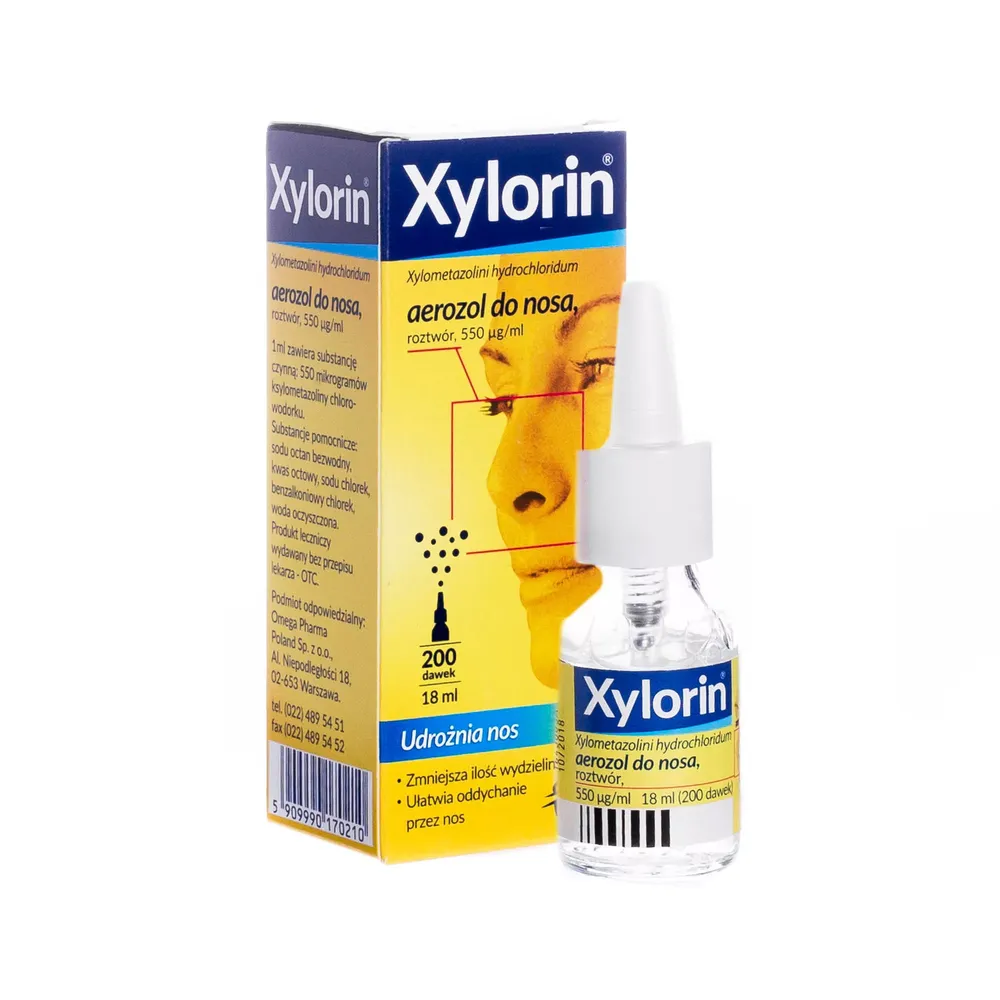
Table of Contents
PACKAGE LEAFLET: INFORMATION FOR THE USER
Xylorin, 550 μg/ml, nasal spray, solution
Xylometazolini hydrochloridum
Please read carefully the entire leaflet before using the medicine, as it contains
important information for the patient.
This medicine should always be used exactly as described in this patient leaflet or as directed by
a doctor or pharmacist.
- Keep this leaflet, as you may need to read it again.
- If you need advice or further information, please consult your pharmacist.
- If you experience any adverse reactions, including any not listed in this leaflet, inform your doctor or pharmacist. See section 4.
- If there is no improvement after 5 days (in children aged 6–12 years) or 7 days (in adolescents over 12 years of age and adults), or if you feel worse, consult a doctor.
Leaflet Contents
- What Xylorin is and what it is used for
- Important information before using Xylorin
- How to use Xylorin
- Possible side effects
- How to store Xylorin
- Contents of the pack and other information
1. What Xylorin is and what it is used for
Xylorin nasal spray contains xylometazoline hydrochloride. The medicine causes constriction of small nasal arteries, reducing swelling and congestion of the nasal mucosa. This leads to nasal decongestion, facilitates nasal breathing, and reduces the amount of nasal discharge. After spraying the medicine onto the nasal mucosa, local vasoconstriction occurs within 2–10 minutes and lasts for 10 to 12 hours.
Xylorin is indicated for symptomatic treatment of inflammation of the nasal mucosa (including allergic rhinitis) and of the paranasal sinuses.
The medicine is applied locally, into the nose, to reduce nasal mucosal congestion associated with inflammation of the nasal mucosa (including allergic rhinitis) and sinusitis, and as supportive treatment in otitis media resulting from a cold.
If there is no improvement after 5 days (in children aged 6–12 years) or 7 days (in adolescents over 12 years of age and adults), or if you feel worse, consult a doctor.
2. Important information before using Xylorin
When not to use Xylorin:
- if the patient is allergic to xylometazoline hydrochloride or any of the other ingredients of this medicine (listed in section 6),
- if the patient has narrow-angle glaucoma,
- if the patient is hypersensitive to adrenergic drugs,
- if the patient is taking tricyclic antidepressants,
- if the patient is taking monoamine oxidase inhibitors (medicines used, among others, in depression),
- if the patient has atrophic or dry rhinitis,
- after pituitary gland removal surgery or surgical procedures involving exposure of the dura mater.
Warnings and precautions
Before starting to use Xylorin, consult a doctor or pharmacist:
- if the patient has heart disease (e.g. long QT syndrome).
Do not use doses higher than recommended.
Prolonged or more frequent use than recommended may cause drug-induced nasal mucosal edema.
If symptoms worsen or persist during treatment with this medicine, consult a doctor or pharmacist.
Use with caution in patients with cardiovascular diseases (e.g. ischemic heart disease), arterial hypertension, diabetes, glaucoma, hyperthyroidism, pheochromocytoma, or benign prostatic hyperplasia.
Care should be taken to avoid microbial contamination of the medicine. To minimize the risk of spreading infection, the medicine should be used by only one person.
Protect the eyes from contact with the medicine.
Rare cases of Posterior Reversible Encephalopathy Syndrome (PRES) and/or Reversible Cerebral Vasoconstriction Syndrome (RCVS) have been observed during treatment with sympathomimetic drugs, including Xylorin.
Reported symptoms include sudden onset of severe headache, nausea, vomiting, and visual disturbances. In most cases, improvement or resolution of symptoms occurred within a few days of appropriate treatment.
Discontinue use and consult a doctor if sudden severe headache occurs.
Xylorin and other medicines
Inform your doctor or pharmacist about all medicines currently taken or recently used, as well as any medicines the patient plans to use.
Xylometazoline should not be used concomitantly with tricyclic antidepressants (e.g. amitriptyline, imipramine), which may cause increased blood pressure.
Do not use with monoamine oxidase inhibitors (medicines used, among others, in depression).
Avoid concomitant use of xylometazoline with other sympathomimetic drugs (e.g. ephedrine, pseudoephedrine) due to additive effects.
Xylometazoline may alter the effects of certain beta-blockers (beta-adrenolytics).
Pregnancy and breastfeeding
If the patient is pregnant or breastfeeding, suspects she may be pregnant, or is planning to have a baby, she should consult a doctor or pharmacist before using this medicine.
This medicine should not be used during pregnancy.
In breastfeeding women, the medicine should be used only after consulting a doctor.
Driving and operating machinery
Xylorin may cause transient visual disturbances. Patients should be advised not to drive or operate machinery if transient visual disturbances occur.
The medicine contains benzalkonium chloride
The medicine contains 0.018 mg of benzalkonium chloride per dose, equivalent to 0.2 mg/mL.
Benzalkonium chloride may cause irritation or swelling inside the nose, especially if used for a prolonged period.
3. How to use Xylorin
This medicine should always be used exactly as described in this patient leaflet or as directed by a doctor or pharmacist. If in doubt, consult a doctor or pharmacist.
Recommended dose
Children aged 6–12 years:
1 to 2 doses into each nostril every 10–12 hours for 3 to 5 days.
Adolescents over 12 years of age and adults:
1 to 2 doses into each nostril every 10–12 hours for 3 to 7 days.
Do not use this medicine in children under 6 years of age.
Do not use the medicine for longer than recommended or in higher doses than indicated.
If symptoms worsen or do not improve after 5 days of treatment (in children aged 6–12 years) or after 7 days of treatment (in adolescents over 12 years of age and adults), consult a doctor.
This medicine is administered intranasally.
- Before administration, clear the nose and remove the protective cap from the applicator.
- Hold the bottle upright with the applicator pointing upwards.
- Insert the applicator tip into the nostril and press. During this time, keep eyes and mouth closed.
- After use, replace the protective cap.
Protect the eyes from the medicine. Do not remove the pump from the container.
Overdose of Xylorin
In case of overdose, seek immediate medical advice from a doctor or pharmacist.
If this medicine is used in higher than recommended doses or for longer than recommended, adverse effects on the cardiovascular and/or central nervous system may occur, which may impair the ability to drive or operate machinery.
After overdose or accidental oral ingestion, especially in children, the following symptoms may occur: excessive sedation, visual disturbances, dizziness and headache, nervousness, insomnia, increased blood pressure, nausea, rapid heartbeat, and cardiac arrhythmias.
With systemic absorption, xylometazoline, as an alpha-adrenergic receptor agonist, may cause cardiovascular effects such as vasoconstriction and, consequently, hypertension. Bradycardia may also occur.
Children and adolescents
After poisoning with imidazoline derivatives (a chemical group to which xylometazoline belongs), especially in children, alternating periods of depression and excitation of the central nervous system may occur. Cardiovascular and respiratory adverse events have also been reported.
In case of overdose, appropriate symptomatic and supportive treatment should be administered.
Missed dose of Xylorin
Do not use a double dose to make up for a missed dose.
Stopping Xylorin
If you have any further questions about the use of this medicine, consult your doctor or pharmacist.
4. Possible adverse effects
Like all medicines, this medicine can cause adverse effects, although not everyone experiences them.
Not very common (in 1 to 10 patients out of 1,000): nosebleeds.
Rare (in 1 to 10 patients out of 10,000): nasal mucosa irritation, burning sensation in the nose, dryness of the nasal mucosa, sneezing, headache, visual disturbances, sleep disorders, generalized allergic reaction, increased heart rate, cardiac arrhythmia.
Frequency unknown (cannot be estimated from the available data): nausea, dizziness.
Prolonged use beyond the recommended duration may lead to recurrence of nasal mucosa hyperaemia, characterized by chronic redness, swelling, and catarrh.
Long-term use may lead to secondary, so-called drug-induced rhinitis, which is resistant to treatment.
Reporting of adverse effects
If any adverse effects occur, including any adverse effects not listed in this leaflet, inform your doctor or pharmacist. Adverse effects can be reported directly to the Department of Monitoring Adverse Drug Reactions of the Office for Registration of Medicinal Products, Medical Devices and Biocidal Products:
Al. Jerozolimskie 181C, 02-222 Warsaw, phone: +48 22 49 21 301, fax: +48 22 49 21 309,
Website: https://smz.ezdrowie.gov.pl
Adverse effects can also be reported to the responsible entity.
Reporting adverse effects helps to provide more information on the safety of the medicine.
5. How to store Xylorin
Keep this medicine out of sight and reach of children.
Do not use this medicine after the expiry date stated on the packaging after: EXP.
The expiry date refers to the last day of the stated month. Lot is the batch number.
Store below 25°C. Protect from light. Do not freeze.
Keep in the original packaging.
Medicines must not be disposed of via wastewater or household waste. Ask your pharmacist how to dispose of medicines no longer in use. This will help protect the environment.
6. Contents of the package and other information
What Xylorin contains
The active substance is xylometazoline hydrochloride. 1 ml of solution contains 550
micrograms of xylometazoline hydrochloride. One dose of the nasal spray contains 50
micrograms of xylometazoline hydrochloride.
The other ingredients are: anhydrous sodium acetate, acetic acid, sodium chloride, benzalkonium chloride, purified water.
What Xylorin looks like and contents of the pack
Xylorin nasal spray, solution is a colourless or slightly yellow liquid.
The bottle is made of colourless glass with a metering pump and nasal applicator, placed in a cardboard box.
Bottle 18 ml (200 doses)
Marketing Authorisation Holder and Manufacturer
Marketing Authorisation Holder:
Perrigo Poland Sp. z o.o.
ul. Domaniewska 48
02-672 Warsaw
tel.: +48 (22) 852 55 51
Manufacturer:
Richard Bittner GmbH,
Ossiacherstraße 7,
9560 Feldkirchen in Kärnten
Austria
{marketing authorisation holder's logo}