Xylometazolin wzf 0.05%
Poland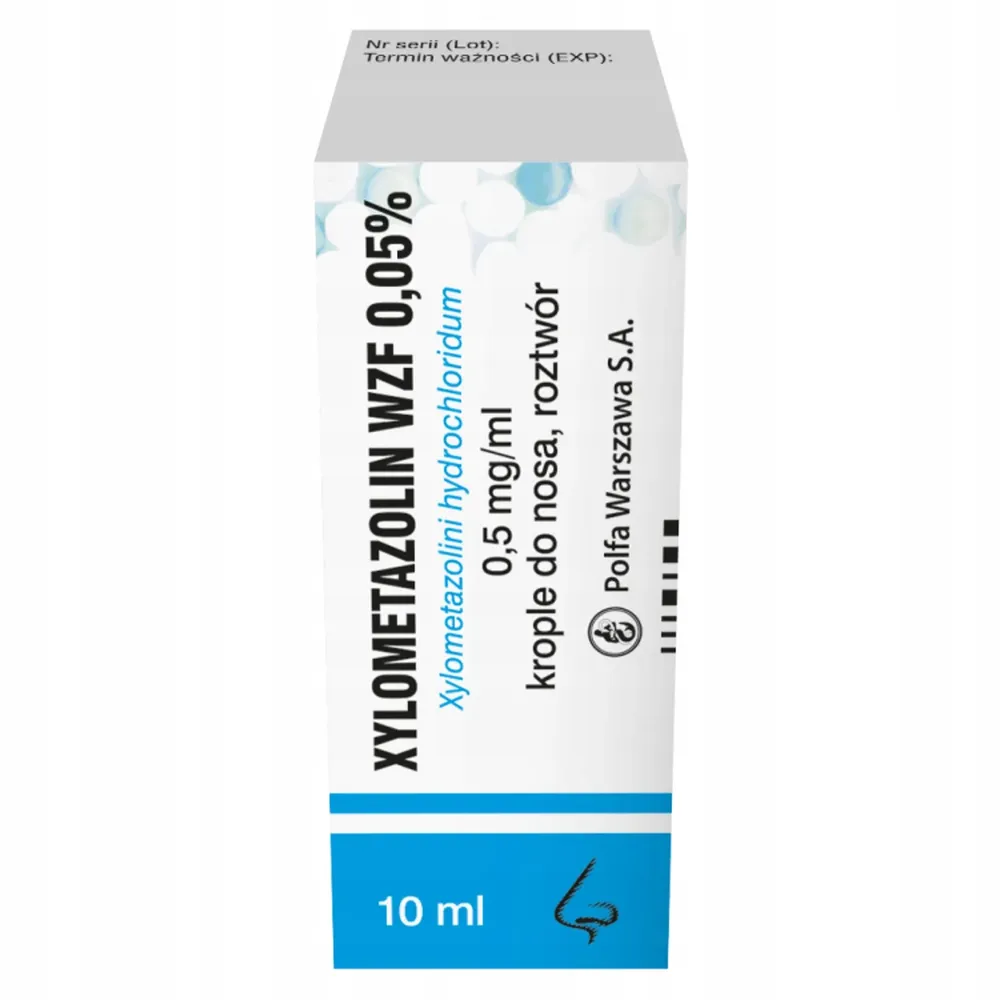
Table of Contents
- Package leaflet: Information for the user
- 1. What Xylometazolin WZF 0,05% is and what it is used for
- 2. Important information before using Xylometazolin WZF 0,05%
- 3. How to use Xylometazolin WZF 0.05%
- 4. Possible adverse effects
- 5. How to store Xylometazolin WZF 0.05% medicine
- 6. Contents of the pack and other information
Package leaflet: Information for the user
XYLOMETAZOLIN WZF 0,05%, 0.5 mg/ml, nasal drops, solution
Xylometazolini hydrochloridum
Please read the entire leaflet carefully before using the medicine, as it contains
important information for the patient.
This medicine should always be used exactly as described in this patient leaflet or as directed by a
physician or pharmacist.
- Keep this leaflet, so that you can read it again if necessary.
- If you need advice or further information, please consult your pharmacist.
- If you experience any adverse reactions, including any not listed in this leaflet, inform your doctor or pharmacist. See section 4.
- If there is no improvement or if symptoms worsen after 3 to 5 days, consult your doctor.
Table of contents
- What Xylometazolin WZF 0,05% is and what it is used for
- Important information before using Xylometazolin WZF 0,05%
- How to use Xylometazolin WZF 0,05%
- Possible side effects
- How to store Xylometazolin WZF 0,05%
- Contents of the pack and other information
1. What Xylometazolin WZF 0,05% is and what it is used for
Xylometazolin WZF 0,05% is a nasal drop formulation containing xylometazoline hydrochloride as the active substance, belonging to a group of medicines known as sympathomimetics. When applied to the nasal mucosa, Xylometazolin WZF 0,05% reduces swelling and congestion, decreases mucus secretion, and facilitates sinus drainage. As a result, it relieves the sensation of nasal and sinus congestion.
Xylometazolin WZF 0,05% is used:
- in acute viral or bacterial rhinitis,
- in acute or exacerbating chronic rhinosinusitis,
- in allergic rhinitis,
- in acute otitis media (to clear the Eustachian tube in the ear).
2. Important information before using Xylometazolin WZF 0,05%
When not to use Xylometazolin WZF 0,05%:
- If the patient is allergic (symptoms such as rash, facial and throat swelling, difficulty breathing) to xylometazoline hydrochloride or any of the other ingredients of this medicine (listed in section 6).
- If the patient has had the pituitary gland removed or has undergone other nervous system surgery.
- If the patient has defects or changes in the nasal mucosa.
Warnings and precautions
Before starting to use Xylometazolin WZF 0,05%, discuss this with a doctor or pharmacist.
- If children become agitated or have difficulty sleeping during treatment, discontinue use.
- If symptoms such as insomnia, dizziness, tremor, irregular heartbeat, or increased blood pressure occur during treatment, discontinue use. This especially applies to patients who previously experienced such symptoms after using other similarly acting medicines.
- The patient should consult a doctor before using the medicine if they have:
- Heart disease (e.g. long QT syndrome),
- High blood pressure,
- Angina pectoris (chest pain during exertion) or other circulatory system disorders,
- Diabetes (elevated blood sugar levels),
- Closed-angle glaucoma (increased eye pressure),
- Prostatic hyperplasia,
- Hyperthyroidism.
- Use in children under 2 years of age is not recommended.
- Xylometazolin WZF 0,05% should not be used for longer than 5 days, as prolonged use may cause persistent changes in the nasal mucosa that are difficult to treat.
Xylometazolin WZF 0,05% and other medicines
Tell your doctor or pharmacist about all medicines the patient is currently taking or has recently taken, as well as any medicines they plan to use.
- Do not use Xylometazolin WZF 0,05% while being treated with antidepressant medicines known as tricyclic antidepressants or MAO inhibitors.
Avoid taking Xylometazolin WZF 0,05% together with medicines such as ephedrine, pseudoephedrine (components of cold medicines).
Pregnancy and breastfeeding
If the patient is pregnant or breastfeeding, suspects she may be pregnant, or is planning to become pregnant, she should consult a doctor or pharmacist before using this medicine.
Do not use Xylometazolin WZF 0,05% during pregnancy.
Breastfeeding women should consult a doctor before using this medicine.
Driving and operating machinery
When Xylometazolin WZF 0,05% is used as directed in this leaflet, it usually does not affect the ability to drive or operate machinery.
However, if Xylometazolin WZF 0,05% is used for prolonged periods or in high doses, adverse effects described in section 4 (e.g. rapid and irregular heartbeat, increased blood pressure, headache, drowsiness) may occur. In such cases, driving and operating machinery should be avoided until these symptoms subside.
Xylometazolin WZF 0,05% contains benzalkonium chloride
The medicine contains 0.1 mg of benzalkonium chloride per ml of solution. Benzalkonium chloride may cause irritation or swelling inside the nose, especially if used for a prolonged period.
3. How to use Xylometazolin WZF 0.05%
This medicine should always be used exactly as described in this patient leaflet or as directed by a
physician. If in doubt, consult a doctor or pharmacist.
- This medicine should be used for the nose only (also in middle ear inflammation).
- For hygienic reasons, the medicine container should be used by only one patient.
- This medicine should not be used for longer than 3 to 5 days. If there is no improvement after 3 to 5 days, or if symptoms worsen, consult a doctor.
- Do not use doses larger than those indicated below.
Children aged 2 to 12 years:
1 to 2 drops into each nostril once or twice daily, every 8 to 10 hours. Do not administer more than 3 doses into each nostril per day.
Use of a higher than recommended dose of Xylometazolin WZF 0.05%
If a patient has used more than the recommended dose (overdose) or has accidentally swallowed the medicine, especially if a child has done so, contact a doctor immediately.
Seek immediate medical attention if any of the following symptoms occur, as they may indicate overdose or accidental oral ingestion by a child:
- rapid and irregular heartbeat,
- high blood pressure (symptoms: e.g. persistent, severe headache – especially in the back of the head; weakness, general malaise),
- drowsiness,
- irregular breathing or difficulty breathing,
- disturbances in consciousness,
- excessive sedation in children.
Missed dose of Xylometazolin WZF 0.05%
Do not use a double dose to make up for a missed dose.
4. Possible adverse effects
Like all medicines, this medicine can cause adverse effects, although not everybody will experience them.
If the patient experiences allergic reactions such as swelling of the face, lips, tongue, throat,
causing difficulty in breathing or swallowing, shortness of breath, discontinue use of the
medicine immediately and contact a doctor without delay. Such reactions occur very rarely.
Uncommon (occur less frequently than in 1 out of 100 people):
- nosebleeds.
Very rare (occur less frequently than in 1 out of 10,000 people):
- nausea,
- headache,
- weakness,
- fatigue,
- drowsiness,
- visual disturbances,
- palpitations,
- rapid heartbeat,
- increased blood pressure (especially in individuals with cardiovascular diseases).
The following may also occur: nasal irritation and dryness, burning sensation in the nose and throat, sneezing.
Prolonged use beyond the recommended duration and/or use in doses higher than recommended may
lead to persistent changes in the nasal mucosa that are difficult to treat.
Reporting of adverse effects
If any adverse effects occur, including any adverse effects not listed in this leaflet, inform a doctor or pharmacist. Adverse effects can be reported directly to the Department of Monitoring of Adverse Drug Reactions at the Office for Registration of Medicinal Products, Medical Devices and Biocidal Products
Al. Jerozolimskie 181C
02-222 Warsaw
Phone: +48 22 49 21 301
Fax: +48 22 49 21 309
Website: https://smz.ezdrowie.gov.pl
Adverse effects can also be reported to the marketing authorization holder.
Reporting adverse effects helps to provide more information on the safety of the medicine.
5. How to store Xylometazolin WZF 0.05% medicine
Store below 25°C.
Keep the bottle tightly closed in the outer packaging to protect from light.
Keep the medicine out of the sight and reach of children.
Do not use this medicine after the expiry date stated on the carton and bottle after: EXP.
The expiry date refers to the last day of the stated month.
After first opening the bottle, do not use the medicine for longer than 12 weeks.
Medicines must not be disposed of via wastewater or household waste. Ask your pharmacist how to dispose of medicines no longer in use. Such measures will help protect the environment.
6. Contents of the pack and other information
What Xylometazolin WZF 0.05% contains
- The active substance is xylometazoline hydrochloride. Each ml of solution contains 0.5 mg of xylometazoline hydrochloride. Each drop contains 0.025 mg of xylometazoline hydrochloride.
- The other ingredients are: disodium phosphate dodecahydrate; monosodium dihydrogen phosphate monohydrate; sodium chloride; sorbitol; disodium edetate; benzalkonium chloride, solution; purified water.
What Xylometazolin WZF 0.05% looks like and contents of the pack
Xylometazolin WZF 0.05% is a nasal drop solution that is colourless or almost colourless and clear.
The pack contains a polyethylene bottle with a dropper and a tamper-evident cap, containing 10 ml of solution, packed in a cardboard box.
Marketing Authorisation Holder
Zakłady Farmaceutyczne POLPHARMA S.A.
ul. Pelplińska 19, 83-200 Starogard Gdański
tel. + 48 22 364 61 01
Manufacturer
Zakłady Farmaceutyczne POLPHARMA S.A.
Medana Branch in Sieradz
ul. Władysława Łokietka 10, 98-200 Sieradz