Xevoben
Poland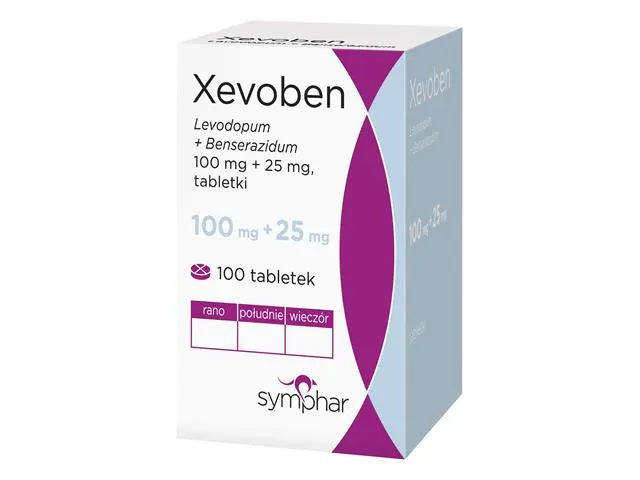
Table of Contents
Package leaflet: Information for the patient
Xevoben, 200 mg + 50 mg, tablets
Levodopum + Benserazidum
Please read carefully the entire leaflet before taking this medicine, as it contains
important information for the patient.
- Keep this leaflet, as you may need to read it again.
- If you have any doubts, please consult your doctor, pharmacist, or nurse.
- This medicine has been prescribed for a specific individual. Do not pass it on to others. This medicine may harm someone else, even if their symptoms are identical.
- If you experience any adverse reactions, including any not listed in this leaflet, inform your doctor, pharmacist, or nurse. See section 4.
Table of contents of the leaflet
- What Xevoben is and what it is used for
- Important information before taking Xevoben
- How to take Xevoben
- Possible side effects
- How to store Xevoben
- Contents of the package and other information
1. What Xevoben is and what it is used for
Xevoben is a medicine containing the active substances: levodopa and benserazide. The active substance levodopa is a precursor of a substance naturally produced in the human body – dopamine. Insufficient dopamine levels in certain areas of the brain are responsible for both Parkinson's disease and restless legs syndrome. This deficiency is compensated by conversion of levodopa into dopamine. The second active substance – benserazide – inhibits the breakdown of levodopa outside the brain and allows a lower dose of levodopa to be used.
Xevoben is used:
- in the treatment of Parkinson's disease (paralysis agitans, a condition characterized by tremor, movement slowness, and muscle stiffness);
- in the treatment of symptoms resembling Parkinson's disease, but resulting from poisoning, encephalitis, or brain changes caused by cerebral arteriosclerosis (parkinsonism). Exceptions are symptoms resembling Parkinson's disease induced by certain medicines (drug-induced parkinsonism).
- in the treatment of restless legs syndrome of unknown origin;
- in the treatment of restless legs syndrome resulting from renal failure requiring dialysis. Before initiating treatment with levodopa and benserazide, the doctor will ensure that restless legs syndrome symptoms are not caused by iron deficiency. If this is the case, iron supplementation should be initiated first.
2. Important information before using Xevoben
When not to use Xevoben
- if the patient is allergic to levodopa, benserazide, or any of the other ingredients of this medicine (listed in section 6);
- in patients under 25 years of age (skeletal development must be complete);
- in patients with severe disorders of specific hormone-producing organs, such as hyperthyroidism or significantly elevated blood cortisol levels (Cushing's syndrome), or with an adrenal tumour;
- in patients with severe metabolic, liver, kidney or bone marrow disorders;
- in patients with severe kidney disease not treated with dialysis (applies to patients with restless legs syndrome);
- in patients with severe heart disease, such as serious problems with rapid heartbeat (tachycardia), severe cardiac arrhythmias, or heart failure;
- in patients with specific mental disorders (psychoses), whether or not of physical origin;
- in patients concurrently taking antihypertensive medicines containing the active substance reserpine (see "Xevoben with other medicines");
- in patients being treated concurrently with non-selective monoamine oxidase inhibitors (MAO) (an antidepressant containing the active substance tranylcypromine) or with a combination of a selective MAO-A inhibitor (an antidepressant containing the active substance moclobemide) and a selective MAO-B inhibitor (a medicine used in the treatment of Parkinson's disease containing the active substance selegiline or rasagiline) (see "Xevoben with other medicines");
- in patients with high intraocular pressure (closed-angle glaucoma);
- in pregnant women;
- in women of childbearing potential who are not using effective contraception (see "Pregnancy and breast-feeding").
Warnings and precautions
Before starting treatment with Xevoben, discuss this with your doctor, pharmacist, or nurse.
Hypersensitivity reactions may occur in predisposed individuals.
Caution should be exercised when using Xevoben in patients who experience excessive daytime fatigue or sudden, unexpected sleep attacks during treatment with Xevoben. If this applies to the patient, consult a doctor (see "Driving and using machines").
Additional warning and precautions for patients with restless legs syndrome
- if the patient has a more severe form of restless legs syndrome and requires a higher dose of Xevoben than that described in section 3, treatment with Xevoben should be discontinued if symptoms worsen or occur earlier during the day.
Inform your doctor if the patient or their relatives notice unusual behaviours resulting from an irresistible impulse, compulsion, or obsessive performance of certain activities that are harmful to the patient or others. These behaviours are known as impulse control disorders and may include gambling addiction, excessive eating or spending, increased sexual drive, or intense sexual thoughts and feelings. It may be necessary for the doctor to reconsider the ongoing treatment.
Regular medical monitoring is essential if:
- the patient has previously had a heart attack;
- the patient currently has irregular heartbeat, reduced blood flow to the coronary arteries, or heart failure;
- the patient has previously had gastrointestinal ulcers;
- the patient has reduced bone strength;
- the patient has open-angle glaucoma, as levodopa may theoretically increase intraocular pressure;
- the patient has diabetes.
Additionally, liver, kidney, and cardiovascular function should be monitored periodically, and blood counts should be checked regularly.
Treatment with Xevoben may cause circulatory problems due to excessively low blood pressure (see section 4). These symptoms usually resolve or improve after reducing the dose of Xevoben. If the patient is elderly or is taking medicines for high blood pressure or other medicines that may lower blood pressure, or if the patient has circulatory problems due to low blood pressure, the doctor will closely monitor the patient, especially at the beginning of treatment or when increasing the dose.
Therefore, regular visits scheduled by the doctor are essential.
Warning
In a small number of patients with Parkinson's disease, cognitive and behavioural disorders may occur, which may be related to taking Xevoben in significantly higher doses than required for treating movement disorders, contrary to medical advice.
After many years of therapy with a medicine containing the same active substances as Xevoben, abrupt discontinuation of Xevoben may lead to withdrawal symptoms (known as malignant withdrawal syndrome from levodopa). Symptoms include very high fever, muscle rigidity, and mental changes. In severe cases, excretion of muscle proteins in urine (myoglobinuria), breakdown of muscle fibres (rhabdomyolysis), acute kidney failure, or complete immobility may occur. These symptoms are potentially life-threatening. In such a case, contact your doctor immediately!
If the patient has a planned surgical procedure under general anaesthesia, continue treatment with a medicine containing levodopa/benserazide for as long as possible before surgery, except when using halothane anaesthesia. For general anaesthesia with halothane, discontinue the medicine containing levodopa/benserazide 12–48 hours before the procedure due to the risk of blood pressure fluctuations and/or cardiac arrhythmias in patients concurrently receiving levodopa/benserazide and halothane. After surgery, treatment may be resumed, gradually increasing the dose until the previously used dose is reached.
Note
Gastrointestinal disturbances such as dry mouth, nausea, vomiting, or diarrhoea may occur, especially at the beginning of treatment (see section 4). These can be significantly reduced or eliminated by taking Xevoben with a small, low-protein meal (e.g. biscuits, crackers, or similar), taking the medicine with fluid, or gradually increasing the dose.
During long-term treatment and/or when using high doses, involuntary movements may occur (see section 4). These symptoms usually resolve or become less bothersome after reducing the dose.
Patients with Parkinson's disease have an increased risk of developing melanoma compared to the general population. It is unclear whether this increased risk is due to Parkinson's disease itself or other factors, such as the use of levodopa in treating Parkinson's disease. While taking Xevoben, patients should regularly examine their skin for suspicious changes and undergo periodic skin examinations by an appropriate specialist (e.g. dermatologist).
Note for people around the patient
Treatment with Xevoben may lead to abnormally low mood (depression), especially if there is a previous predisposition to such symptoms (see section 4). However, depression may also be one of the symptoms of Parkinson's disease or restless legs syndrome. Therefore, patients should be closely monitored for psychological changes to detect depression at an early stage. In such a case, contact your doctor.
Xevoben with other medicines
Tell your doctor or pharmacist about all medicines the patient is currently taking or has recently taken, as well as any medicines the patient plans to take.
Concurrent use of Xevoben with the following active substances or medicines may affect their action
- medicines used to treat low blood pressure, circulatory disorders, irregular heartbeat, medicines inducing labour, or medicines used to treat bronchospasm (called sympathomimetics), e.g. epinephrine, norepinephrine, isoprenaline, or amphetamine. The effect of sympathomimetic medicines may be enhanced. Therefore, their concurrent use is not recommended. If concurrent use is necessary, cardiovascular function should be closely monitored, and the dose of the sympathomimetic medicine may need to be reduced.
- medicines used to treat high blood pressure (called antihypertensives): the effect of antihypertensive medicines may be enhanced, thereby increasing the risk of low blood pressure. Therefore, blood pressure should be monitored regularly (see above). If necessary, the doctor will adjust the dose of Xevoben and/or the antihypertensive medicine.
The following medicines may affect the action of Xevoben
Weakening of effect by:
- certain painkillers (opioids);
- medicines used to treat high blood pressure containing the active substance reserpine. In this case, Xevoben should not be used (see above);
- certain medicines that lower mood (neuroleptics).
Enhancement of effect and possible increase in adverse effects by:
- medicines containing the active substance selegiline (used in the treatment of Parkinson's disease).
Other possible interactions:
- certain antidepressants (called MAO inhibitors): concurrent use of Xevoben and medicines containing tranylcypromine as the active substance may dangerously increase blood pressure. This situation may occur up to 2 weeks after stopping tranylcypromine treatment. Xevoben should not be used at that time (see above). Therefore, a 2-week interval should be maintained between stopping tranylcypromine and starting Xevoben treatment. On the other hand, concurrent use of Xevoben with moclobemide, selegiline, and rasagiline is considered safe.
- concurrent use of Xevoben with domperidone may lead to increased levodopa levels in the blood. Concurrent administration may increase the risk of cardiac arrhythmias.
Concurrent use of Xevoben with other anti-Parkinson's medicines (e.g. dopamine agonists, amantadine, anticholinergics, selegiline, bromocriptine) is permitted.
However, it should be noted that both desired and undesired effects of the medicine may be enhanced. The doctor may prescribe a reduced dose of Xevoben or the other medicine. If adjunctive treatment is initiated with a medicine containing entacapone, a reduction in the dose of Xevoben may also be necessary.
Changes in diagnostic laboratory tests
The following laboratory tests may be affected:
- levodopa may influence laboratory test results for catecholamines, creatinine, uric acid, and glucose (in glucosuria);
- false positive results for ketone bodies using dipstick tests may occur (this reaction does not change when the urine sample is boiled);
- false negative results for glucose in urine determined by glucose oxidase may occur;
- false positive results in the Coombs test may occur.
General anaesthesia with halothane
In the case of general anaesthesia requiring halothane, discontinue the medicine containing levodopa/benserazide 12–48 hours before the procedure due to the risk of blood pressure fluctuations and/or arrhythmias.
Xevoben with food and drink
Avoid eating high-protein meals shortly before taking Xevoben, as this may reduce the medicine's effectiveness.
Pregnancy and breast-feeding
If the patient is pregnant or breast-feeding, suspects she may be pregnant, or is planning to have a baby, she should consult her doctor or pharmacist before using this medicine.
A pregnancy test is recommended before starting treatment to rule out pregnancy.
Xevoben must not be used during pregnancy as there are no available studies in pregnant women, and animal studies have shown harmful effects on the unborn offspring of both active substances contained in Xevoben. Women of childbearing potential should use an effective method of contraception during treatment with Xevoben. If the patient becomes pregnant despite this, or suspects she may be pregnant, she should consult her doctor. The doctor will advise on how to discontinue treatment with Xevoben.
Breast-feeding must not be continued during treatment with Xevoben. If treatment with Xevoben is required, breast-feeding must be discontinued.
Driving and using machines
Xevoben may have a major influence on the ability to drive and use machines. In rare cases, treatment with Xevoben may cause excessive tiredness or sudden sleep attacks. If this applies to the patient, driving and using machines should be avoided to prevent the risk of serious injury to the patient or others until excessive tiredness or sudden sleep attacks have resolved.
Xevoben contains sodium
The medicine contains less than 1 mmol (23 mg) of sodium per tablet, meaning the medicine is considered "sodium-free".
3. How to use Xevoben
This medicine should always be used as directed by the physician. If in doubt, consult
your doctor or pharmacist.
The number of Xevoben tablets to be taken depends on the severity of the disease and the patient's
tolerance to Xevoben. The most optimal dose for a patient is determined by gradually
increasing the daily dose. For this reason, the dose prescribed to a patient may differ
from that prescribed to other patients. Do not change the dose prescribed by the
physician without medical advice.
Treatment of symptoms of Parkinson's disease
If the physician does not advise otherwise, the treatment regimen is as follows:
Treatment starts with low doses, which are then gradually increased in order to
minimize the occurrence of adverse effects and to maintain the likelihood of achieving a
therapeutic effect.
In patients who have not previously been treated for Parkinson's disease, treatment begins
with 100–200 mg of levodopa and 25–50 mg of benserazide per day. Every 3rd to 7th day,
the physician may increase the daily dose by 50 mg levodopa + 12.5 mg benserazide or by 100 mg
levodopa + 25 mg benserazide.
Do not take more than 800 mg of levodopa and 200 mg of benserazide per day.
Summary of dosing in tabular form:
| Initial dose 100–200 mg levodopa + 25–50 mg benserazide | Dose increase 50–100 mg levodopa + 12.5–25 mg benserazide | Maximum daily dose 800 mg levodopa + 200 mg benserazide |
| ½ - 1 tablet | ¼ - ½ tablet | 4 tablets |
If adverse reactions occur (see section 4, "Possible adverse effects"), the doctor may reduce the dose of the medicine. Any subsequent dose increase should be slower.
If the treatment regimen is changed from a medicine containing only levodopa to Xevoben (a combination of levodopa and benserazide), a similar therapeutic effect can be achieved by administering only 20% of the previous levodopa dose. When making such a change, a 12-hour interval must be maintained between the last dose of the previous medicine and the first dose of the new medicine.
If a patient is using another medicine for Parkinson's disease, Xevoben may be additionally administered. However, as soon as the patient's condition improves with Xevoben, the dose of the other medicine should be re-evaluated, reduced, and then, if necessary, gradually withdrawn.
Patients with impaired liver or kidney function
Dose adjustment of Xevoben is not required in patients with moderate impairment of liver function or mild to moderate impairment of kidney function (creatinine clearance ≥30 mL/min).
Use in children and adolescents
Xevoben must not be used in children and adolescents under 25 years of age (see section 2).
Method of administration
Oral use.
Xevoben tablets, 200 mg + 50 mg, can be divided into 2 or 4 equal doses.
Whenever possible, Xevoben should be taken 30 minutes before or 1 hour after a meal, swallowing the tablet(s) with an adequate amount of fluid (preferably a glass of water), or taken with a small, low-protein meal (e.g., biscuits, rusks, or similar).
Duration of treatment
Xevoben replaces the neurotransmitter dopamine, which is not sufficiently produced by the body. Therefore, treatment with Xevoben is long-term. At least 3 months of treatment may be required for the doctor to assess the therapy's effectiveness.
Dosing frequency
Initially, the daily dose is divided into 2 to 4 individual doses; at higher doses, at least 4 individual doses per day are recommended.
Patients experiencing significant fluctuations in motor function during the day (the “on-off” phenomenon) should receive smaller doses of Xevoben more frequently throughout the day. If necessary, the doctor may switch treatment to Xevoben prolonged-release hard capsules.
Treatment of restless legs syndrome (RLS) symptoms
The number of Xevoben tablets taken depends on the severity of restless legs syndrome. It may be necessary to determine the optimal dose for the patient by gradually increasing the daily dose.
RLS with difficulty falling asleep
Treatment is initiated with 100 mg levodopa and 25 mg benserazide per day (equivalent to ½ tablet of Xevoben, 200 mg + 50 mg). If the patient continues to experience difficulty falling asleep, the dose may be increased to 200 mg levodopa and 50 mg benserazide per day (equivalent to 1 tablet of Xevoben, 200 mg + 50 mg).
RLS with difficulty falling asleep and nocturnal sleep disturbances
For patients with RLS who experience both difficulty falling asleep and sleep disturbances during the night, a combination of Xevoben tablet and prolonged-release capsule (a formulation in which the active substance is released over a longer period) should be used. Take 100 mg levodopa + 25 mg benserazide as a prolonged-release formulation together with ½ tablet of Xevoben 200 mg + 50 mg, one hour before bedtime. If this does not provide sufficient symptom relief in the second half of the night, the dose may be increased to 200 mg levodopa + 50 mg benserazide as a prolonged-release formulation.
Note
The maximum daily dose should not exceed 200–300 mg levodopa and 50–75 mg benserazide per day (equivalent to 1–1½ tablets of Xevoben, 200 mg + 50 mg) to avoid worsening of symptoms, spread of symptoms to other body parts, or occurrence of RLS symptoms earlier during the day.
In such cases, it is important not to further increase the dose. Instead, the doctor should consider adjunctive treatment, reducing the dose of Xevoben, or gradually discontinuing Xevoben and replacing it with another medicine.
Patients with impaired liver or kidney function
Dose adjustment is not required in patients with moderate impairment of liver function or mild to moderate impairment of kidney function (creatinine clearance ≥30 mL/min).
Use in children and adolescents
Xevoben must not be used in children and adolescents under 25 years of age (see section 2).
Method of administration
Oral use.
Xevoben tablets, 200 mg + 50 mg, can be divided into 2 or 4 equal doses.
Whenever possible, Xevoben should be taken 30 minutes before or 1 hour after a meal, swallowing the tablet(s) with an adequate amount of fluid (preferably a glass of water), or taken with a small, low-protein meal (e.g., biscuits, rusks, or similar).
Duration of treatment
The doctor will inform the patient how long Xevoben should be taken for the treatment of restless legs syndrome. The tablets are used for a long time. The doctor will regularly check whether continued use of Xevoben is necessary.
If the patient feels that the medicine's effect is too weak or too strong, they should consult their doctor or pharmacist.
Use of a higher than recommended dose of Xevoben
If the patient accidentally takes twice the single dose, this does not affect further treatment; continue with the prescribed regimen.
If the patient takes a significantly higher dose of Xevoben, symptoms listed in section 4, "Possible adverse effects," may occur. If life-threatening symptoms occur, contact the nearest doctor immediately!
Treatment involves following general overdose management procedures, with special attention to monitoring cardiovascular parameters.
Missed dose of Xevoben
In Parkinson's disease/parkinsonism
Do not take a double dose to make up for a missed tablet. If the patient misses one dose of Xevoben, continue with the prescribed regimen.
However, it should be remembered that Xevoben is effective only when taken according to the dosing schedule prescribed by the doctor.
In restless legs syndrome
Do not take a double dose to make up for a missed dose. If the patient misses a dose of Xevoben, the missed tablet should be taken in the evening or at night, as soon as they remember. If the patient does not take the missed tablet until the next morning, continue taking Xevoben as before—do not take a double dose.
However, it should be remembered that Xevoben is effective only when taken according to the dosing schedule prescribed by the doctor.
Discontinuing Xevoben
Consult a doctor if any adverse reactions occur. The doctor will discuss alternative treatment regimens and whether other treatment options are available.
Do not discontinue Xevoben on your own, as symptoms may recur.
If there are any further doubts regarding the use of this medicine, consult your doctor, pharmacist, or nurse.
4. Possible adverse reactions
Like all medicines, this medicine can cause adverse reactions, although not everyone will experience them.
The frequency of adverse reactions during treatment with Xevoben is unknown.
Possible adverse reactions:
- Common cold, bronchitis, infections with fever.
- Decreased number of platelets, white and red blood cells.
- Reduced appetite.
- Cognitive disturbances and behavioural disorders when doses higher than recommended are taken (see section 2).
- Confusion, pathologically low mood (depression), which may be one of the clinical symptoms of Parkinson's disease or restless legs syndrome (see section 2, "Note for people in the patient's environment"), inner restlessness, anxiety, sensory hallucinations, delusions, distorted sense of time.
- The patient may experience an inability to resist impulses, urges or compulsions to perform actions that could be harmful to the patient or others, which may include:
- gambling addiction, despite serious personal or family consequences,
- altered or increased sexual interest and behaviours significantly affecting the patient or others, e.g. activities related to heightened sexual drive,
- compulsive, uncontrolled spending or compulsive shopping,
- binge eating (consuming large amounts of food in a short time) or compulsive eating (eating more food than normal and more than needed to satisfy hunger). Inform the doctor if the patient exhibits any of these behaviours, so that ways of managing or reducing these symptoms can be discussed.
- Loss of taste sensation, taste disturbances, involuntary movements resulting from long-term treatment and (or) high doses of the medicine (see section 2), fatigue, excessive daytime tiredness, sudden sleep attacks (see section 2 "Warnings and precautions"), dizziness, headache, dry mouth.
- Irregular heartbeat.
- Low blood pressure causing dizziness and fainting (see section 2).
- Nausea, vomiting, diarrhoea, especially at the beginning of treatment (see section 2), change in colour of saliva, tongue, teeth and oral mucosa.
- Increased transaminase activity, increased alkaline phosphatase activity, increased gamma-glutamyl transferase activity.
- Skin hypersensitivity reactions such as itching and rash.
- Increased blood urea levels, change in urine colour (urine usually turns red and darkens upon standing).
Psychiatric disorders such as inner restlessness, anxiety, sleep disturbances, sensory hallucinations, delusions, and distorted sense of time occur especially in elderly patients or in patients who previously had a predisposition to such disorders.
Additional adverse reactions in patients with Parkinson's disease/parkinsonism
- marked disturbances in motor coordination after prolonged treatment;
- sleep disorders.
Additional adverse reactions in patients with restless legs syndrome
- worsening or shift of symptoms to the afternoon or early evening with prolonged treatment and (or) high doses of the medicine (see section 3, heading "Note");
- sleep disorders unrelated to restless legs syndrome.
Reporting of adverse reactions
If any adverse reactions occur, including any not listed in this leaflet, inform your doctor, pharmacist, or nurse. Adverse reactions can be reported directly to the Department of Monitoring of Adverse Reactions to Medicinal Products at the Office for Registration of Medicinal Products, Medical Devices and Biocidal Products, Al. Jerozolimskie 181C, 02-222 Warsaw
Tel.: +48 22 4921301
Fax: +48 22 4921309
Website: https://smz.ezdrowie.gov.pl
Reporting adverse reactions helps to provide more information on the safety of this medicine.
5. How to store Xevoben
Keep this medicine out of sight and reach of children.
Do not use this medicine after the expiry date stated on the label or carton following:
EXP. The expiry date refers to the last day of the stated month.
There are no special storage temperature requirements for this medicine. Store the bottle
tightly closed to protect it from moisture.
Medicines must not be disposed of via the sewage system or household waste. Ask your
pharmacist how to dispose of medicines no longer in use. This will help protect
the environment.
6. Contents of the pack and other information
What Xevoben contains
- The active substances are levodopa and benserazide. Each tablet contains 200 mg levodopa + 50 mg benserazide (in the form of hydrochloride).
- Other ingredients are: sodium docosate, iron oxide red (E172), ethylcellulose 20 cps, colloidal anhydrous silica, microcrystalline cellulose, pregelatinized starch, corn starch, mannitol, calcium hydrogen phosphate, crospovidone type A, magnesium stearate.
What Xevoben looks like and contents of the pack
Round, light red tablets with a diameter of approximately 13 mm, embossed with "250T" on one side of the tablet and with two intersecting score lines on both sides.
Xevoben is available in HDPE bottles containing a desiccant, closed with a child-resistant white PE cap, and placed in a cardboard box containing 20, 50 or 100 tablets.
Not all pack sizes may be marketed.
Marketing Authorisation Holder and Manufacturer
Marketing Authorisation Holder
Farmak International Sp. z o.o.
ul. Koszykowa 65
00-667 Warsaw
tel.: +48 22 822 93 06
e-mail: [email protected]
Manufacturer/Importer
Farmak International Sp. z o.o.
ul. Chełmżyńska 249
04-458 Warsaw
This medicinal product is authorised in the European Economic Area countries:
Poland: Xevoben