Voriconazole polpharma
Poland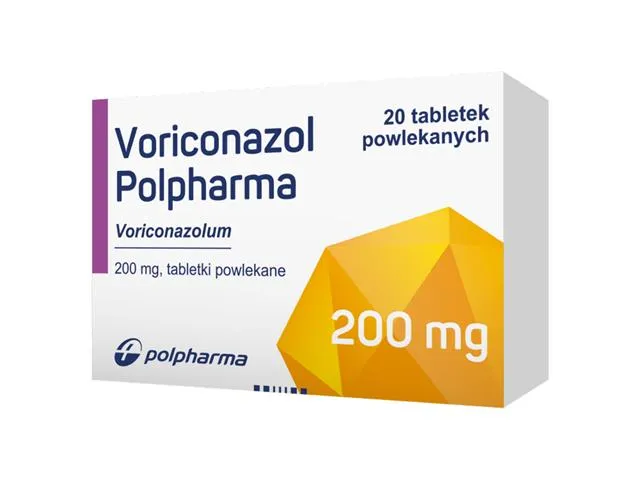
Table of Contents
Package leaflet: Information for the patient
Voriconazol Polpharma, 200 mg, film-coated tablets
Voriconazolum
Please read carefully all the information in this leaflet before taking the medicine, as it contains
important information for the patient.
Keep this leaflet, so that you can read it again if necessary.
If you have any further questions, please consult your doctor, pharmacist, or nurse.
This medicine has been prescribed for a specific individual. Do not pass it on to others. The medicine may harm other people, even if their symptoms are the same.
If you experience any adverse reactions, including any not listed in this leaflet, inform your doctor, pharmacist, or nurse. See section 4.
Contents of the leaflet
- What is Voriconazol Polpharma and what is it used for
- Important information before taking Voriconazol Polpharma
- How to take Voriconazol Polpharma
- Possible side effects
- How to store Voriconazol Polpharma
- Contents of the pack and other information
What Voriconazol Polpharma is and what it is used for
Voriconazol Polpharma contains the active substance voriconazole. Voriconazol Polpharma is an antifungal medicine. It works by killing the fungi causing infections or by inhibiting their growth.
The medicine is used to treat patients (adults and children over 2 years of age) with:
invasive aspergillosis (a type of fungal infection caused by fungi of the genus Aspergillus),
candidaemia (another type of fungal infection caused by fungi of the genus Candida) in patients without concomitant neutropenia (patients who do not have reduced numbers of white blood cells),
serious, invasive fungal infections caused by Candida species resistant to fluconazole (another antifungal medicine),
serious fungal infections caused by Scedosporium and Fusarium species (two different types of fungi).
Voriconazol Polpharma is intended for patients with progressive, life-threatening fungal infections.
The medicine is also indicated for the prevention of fungal infections in high-risk patients after allogeneic hematopoietic stem cell transplantation.
This medicine should only be used under the supervision of a physician.
Important information before taking Voriconazol Polpharma
When not to use Voriconazol Polpharma
Do not use this medicine if the patient is allergic to voriconazole or to any of the other ingredients of this medicine (listed in section 6).
| It is very important to inform your doctor or pharmacist about all medicines you are currently taking or have recently taken, including those obtained without a prescription or herbal medicines. | |
| It is very important to inform your doctor or pharmacist about all medicines you are currently taking or have recently taken, including those obtained without a prescription or herbal medicines. | |
Do not take Voriconazol Polpharma together with:
terfenadine (used to treat allergies),
astemizole (used to treat allergies),
cisapride (used for gastrointestinal disorders),
pimozide (used in psychiatry),
quinidine (used for heart rhythm disorders),
ivabradine (used to treat symptoms of chronic heart failure),
rifampicin (used to treat tuberculosis),
efavirenz (used to treat HIV infections) at doses of 400 mg or higher once daily,
carbamazepine (used to treat epilepsy),
phenobarbital (used for severe insomnia and epilepsy treatment),
ergot alkaloids (e.g. ergotamine, dihydroergotamine used for migraine),
sirolimus (used in transplant medicine),
ritonavir (used to treat HIV infections) at doses of 400 mg or higher twice daily,
St. John’s wort (herbal preparation),
naloxegol [used to treat constipation caused by opioid pain medicines (e.g. morphine, oxycodone, fentanyl, tramadol, codeine)],
tolvaptan [used to treat hyponatremia (low blood sodium levels) or to slow the worsening of kidney function in patients with polycystic kidney disease],
lurasidone (used to treat depression),
venetoclax [used to treat patients with chronic lymphocytic leukaemia (CLL)].
Warnings and precautions
Before starting treatment with Voriconazol Polpharma, discuss this with your doctor or pharmacist if:
you have known hypersensitivity to other azoles.
you have liver disease, including if it occurred in the past. In case of liver disease, your doctor may prescribe a lower dose of Voriconazol Polpharma. Your doctor should also monitor your liver function during treatment with Voriconazol Polpharma by ordering appropriate blood tests.
you have been diagnosed with cardiomyopathy, heart rhythm disorders, slow heart rate, or have changes in your electrocardiogram (ECG) called "prolonged QTc interval".
Avoid any exposure to sunlight during treatment. It is important to wear protective clothing and use sunscreen products with high sun protection factor (SPF) against ultraviolet (UV) radiation, as photosensitivity reactions may occur. These precautions also apply to children.
During treatment with Voriconazol Polpharma:
inform your doctor immediately if you experience
sunburn
severe skin rash or blisters
bone pain.
If the above skin disorders occur, your doctor may refer you to a dermatologist, who after consultation may decide on the need for regular visits. There is a small risk that long-term use of Voriconazol Polpharma may lead to skin cancer.
If you develop symptoms of "adrenal insufficiency"; a condition in which the adrenal glands do not produce sufficient amounts of certain steroid hormones, such as cortisol; symptoms include: chronic or prolonged fatigue, muscle weakness, loss of appetite, weight loss, abdominal pain, inform your doctor.
If you develop symptoms of "Cushing's syndrome", a condition in which the body produces too much of the hormone cortisol, which may lead to symptoms such as: weight gain, development of a fatty hump between the shoulders, rounded face, darkening of the skin on the abdomen, thighs, chest, and arms, thinning of the skin, increased tendency to bruising, increased blood sugar levels, excessive hair growth, excessive sweating, inform your doctor.
Your doctor should regularly monitor your liver and kidney function through blood tests.
Children and adolescents
Voriconazol Polpharma must not be used in children under 2 years of age.
Voriconazol Polpharma and other medicines
Tell your doctor or pharmacist about all medicines you are currently taking, have recently taken, or plan to take, including over-the-counter medicines.
Some medicines taken together with Voriconazol Polpharma may alter its effect, and Voriconazol Polpharma may also affect the action of other medicines.
Inform your doctor if you are taking the following medicine, as simultaneous use with Voriconazol Polpharma should be avoided whenever possible:
ritonavir (used to treat HIV infections) at doses of 100 mg twice daily,
glasdegib (used to treat cancers) – if it is necessary to use both medicines, your doctor will order frequent monitoring of heart rhythm.
Inform your doctor if you are taking any of the following medicines, as simultaneous use with Voriconazol Polpharma should be avoided whenever possible (if necessary, voriconazole doses may need to be adjusted):
rifabutin (used to treat tuberculosis). If you are being treated with rifabutin, blood counts and adverse effects of rifabutin should be monitored.
phenytoin (used to treat epilepsy). If you are being treated with phenytoin during treatment with Voriconazol Polpharma, its blood levels should be monitored and dose adjustment considered.
Inform your doctor if you are taking any of the following medicines, as dose adjustment or monitoring of these medicines and/or Voriconazol Polpharma may be necessary to ensure they remain effective:
warfarin and other anticoagulants (e.g. phenprocoumon, acenocoumarol; used to reduce blood clotting),
cyclosporine (used after organ transplantation),
tacrolimus (used after organ transplantation),
sulfonylurea derivatives, e.g. tolbutamide, glipizide, and glyburide (used in diabetes),
statins, e.g. atorvastatin, simvastatin (used to reduce cholesterol levels),
benzodiazepines, e.g. midazolam, triazolam (used for severe insomnia and stress),
omeprazole (used to treat ulcers),
oral contraceptives (if Voriconazol Polpharma is taken together with oral contraceptives, adverse effects such as nausea and menstrual irregularities may occur),
vinca alkaloids (Vinca), e.g. vincristine and vinblastine (used in cancer treatment),
tyrosine kinase inhibitors, e.g. axitinib, bosutinib, cabozantinib, ceritinib, cobimetinib, dabrafenib, dasatinib, nilotinib, sunitinib, ibrutinib, ribociclib (used in cancer treatment),
tretinoin (used to treat leukaemia),
indinavir and other HIV protease inhibitors (used to treat HIV),
non-nucleoside reverse transcriptase inhibitors (e.g. efavirenz, delavirdine, nevirapine) (used to treat HIV) (some doses of efavirenz must not be used together with Voriconazol Polpharma),
methadone (used to treat heroin addiction),
alfentanil, fentanyl, and other short-acting opioids such as sufentanil (pain medicines used during surgical procedures),
oxycodone and other long-acting opioids such as hydrocodone (used for moderate or severe pain),
non-steroidal anti-inflammatory drugs (e.g. ibuprofen, diclofenac) (used to treat pain and inflammatory conditions),
fluconazole (used for fungal infections),
everolimus (used to treat advanced kidney cancer and in transplant patients),
letermovir [used to prevent cytomegalovirus (CMV) disease after bone marrow transplantation],
ivacaftor: used to treat cystic fibrosis,
flucloxacillin (an antibiotic used to treat bacterial infections).
Pregnancy and breastfeeding
Do not take Voriconazol Polpharma during pregnancy unless your doctor decides otherwise.
Women of childbearing potential must use effective contraception during treatment with Voriconazol Polpharma. If you become pregnant while taking Voriconazol Polpharma, contact your doctor immediately.
If you are pregnant or breastfeeding, suspect you may be pregnant, or plan to have a child, you should consult your doctor or pharmacist before using this medicine.
Driving and using machines
Voriconazol Polpharma may cause visual disturbances and abnormal reaction to light. In such cases, avoid driving and operating machinery. Contact your doctor if such disturbances occur.
Voriconazol Polpharma contains lactose and sodium
If you have been previously diagnosed with intolerance to certain sugars, you should contact your doctor before taking this medicine.
The medicine contains less than 1 mmol (23 mg) of sodium per tablet, meaning the medicine is considered "sodium-free".
How to take Voriconazol Polpharma
Always take this medicine exactly as prescribed by your doctor. If in doubt, consult your doctor or pharmacist.
Your doctor will decide the dose based on body weight and type of infection.
The usual recommended dosing for adults (including elderly patients) is shown in the table below:
Tablets
Patients with body weight ≥40 kg Patients with body weight <40 kg
Loading dose 400 mg every 12 hours 200 mg every 12 hours
(first 24 hours) (first 24 hours)
Maintenance dose 200 mg twice daily 100 mg twice daily
(after first 24 hours)
Depending on response to treatment, your doctor may increase the daily dose to 300 mg twice daily.
In case of mild or moderate liver cirrhosis, your doctor may decide to reduce the dose.
Since Voriconazol Polpharma is not available as 50 mg coated tablets or oral suspension, if other doses or an oral suspension are required, your doctor will prescribe an appropriate medicine available on the market. Voriconazole is also available on the market as 200 mg powder for infusion solution.
Use in children and adolescents
The usual recommended dosing for children and adolescents is shown in the table below:
Tablets
Children aged 2 to 12 years and Adolescents aged 12 to 14 years
adolescents aged 12 to 14 years with body weight >50 kg and
with body weight ≤50 kg adolescents aged >14 years
Loading dose Treatment will be initiated as intravenous infusion 400 mg every 12 hours
(first 24 hours) (first 24 hours)
Maintenance dose 9 mg/kg body weight twice daily 200 mg twice daily
(after first 24 hours) (maximum dose 350 mg twice daily)
Depending on response to treatment, your doctor may increase or decrease the daily dose.
Treatment in children is initiated as intravenous infusion. Your doctor will consider switching to oral administration only after significant clinical improvement. Children may be given tablets if they are able to swallow them.
Method of administration
Tablets should be taken at least one hour before or one hour after a meal, swallowed whole with water. Do not split the coated tablets.
If you are taking Voriconazol Polpharma to prevent fungal infections, your treating doctor may discontinue the medicine if adverse effects related to treatment occur.
Overdose of Voriconazol Polpharma
If you take more tablets than recommended (or if anyone else takes the tablets), seek immediate medical advice or go to the nearest hospital, taking the Voriconazol Polpharma packaging with you. Overdose of Voriconazol Polpharma may cause photosensitivity.
Missed dose of Voriconazol Polpharma
Remember to take the medicine regularly at the same time each day. If you miss a dose, take the next dose at the scheduled time. Do not take a double dose to make up for a missed dose.
Stopping Voriconazol Polpharma treatment
Regular intake of Voriconazol Polpharma at fixed times may significantly affect its efficacy. Do not stop treatment on your own unless your doctor decides otherwise. It is important to take the medicine as described above.
Your doctor will decide how long you should take Voriconazol Polpharma. Do not stop treatment too early, as this may increase the risk of not curing the infection. Patients with reduced immunity or severe infections may require long-term treatment to prevent recurrence.
If your doctor decides to stop therapy, do not worry about the consequences of stopping.
If you have any further doubts about using this medicine, consult your doctor or pharmacist.
Possible adverse effects
Like all medicines, this medicine may cause adverse effects, although not everybody gets them.
If adverse effects occur, they are mostly mild and transient. However, some may be serious and require medical intervention.
Severe adverse effects – stop taking Voriconazol Polpharma immediately and contact your doctor
Rash
Jaundice; changes in blood test results related to liver function
Pancreatitis
Other adverse effects
Very common (occur in more than 1 in 10 patients)
Visual disturbances (changes in vision, including blurred vision, colour vision changes, abnormal light intolerance, loss of colour vision, eye disturbances, seeing halos, night blindness, perception of vibrating images, seeing sparks, visual aura, reduced visual acuity, bright vision, loss of part of normal visual field, floaters)
Fever
Rash
Nausea, vomiting, diarrhoea
Headache
Limb swelling
Abdominal pain
Breathing difficulties
Increased liver enzyme activity
Common (occur in less than 1 in 10 patients)
Sinusitis, gingivitis, chills, weakness
Low levels of certain types of blood cells, including severe cases, red blood cells (sometimes immune-mediated) and/or white blood cells (sometimes with fever), low levels of blood cells called platelets which help blood clotting
Low blood sugar, low blood potassium, low blood sodium
Anxiety, depression, confusion, agitation, insomnia, hallucinations
Seizures, tremor or uncontrolled muscle movements, tingling or unusual skin sensations, increased muscle tone, drowsiness, dizziness
Bleeding in the eye
Heart rhythm disorders, including very fast heartbeat, very slow heartbeat, fainting
Low blood pressure, phlebitis (which may be associated with blood clots)
Acute breathing difficulties, chest pain, facial swelling (mouth cavity, lips, and around eyes), fluid accumulation in the lungs
Constipation, indigestion, cheilitis
Jaundice, hepatitis, and liver damage
Rashes that may lead to severe blistering and skin peeling characterized by flat, red areas on the skin covered with small merging nodules, skin redness
Itching
Hair loss
Back pain
Kidney failure, blood in urine, changes in kidney function tests
Uncommon (occur in less than 1 in 100 patients)
Influenza-like symptoms, irritation and inflammation of the gastrointestinal tract, antibiotic-associated diarrhoea due to gastrointestinal inflammation, lymphangitis
Inflammation of the thin tissue lining the abdominal cavity and covering abdominal organs
Lymph node enlargement (sometimes painful), bone marrow failure, increased eosinophils
Adrenal dysfunction, hypothyroidism
Brain function disorders, Parkinson-like symptoms, nerve damage causing numbness, pain, tingling or burning sensations in hands or feet
Balance or coordination disorders
Brain swelling
Double vision, severe eye diseases, including: eye and eyelid pain and inflammation, abnormal eye movements, optic nerve damage leading to vision disturbances, optic disc swelling
Reduced sensitivity to touch
Taste disturbances
Hearing loss, tinnitus, labyrinthine vertigo
Inflammation of certain internal organs – pancreas and duodenum, tongue swelling and inflammation
Liver enlargement, liver failure, gallbladder diseases, gallstones
Arthritis, phlebitis under the skin (which may be associated with blood clots)
Kidney inflammation, proteinuria, kidney damage
Very fast heartbeat or skipped beats, sometimes with abnormal electrical impulses
Abnormal electrocardiogram (ECG)
Increased blood cholesterol, increased blood urea
Skin allergic reactions (sometimes severe), including life-threatening skin disease characterized by painful blisters with accompanying skin and mucous membrane pain, particularly in the mouth, skin inflammation, urticaria, sunburn or severe skin reaction after exposure to light or sun, skin redness and irritation, red or purpuric skin discolorations which may be caused by low platelet count, rash
Infusion site reaction
Allergic reaction or excessive immune response
Rare (occur in less than 1 in 1,000 patients)
Hyperthyroidism
Worsening of brain function, a severe complication of liver disease
Loss of most optic nerve fibres, corneal opacity, involuntary eye movements
Bullous rash due to photosensitivity
Disorders in which the immune system attacks part of the peripheral nervous system
Heart rhythm or conduction disorders (sometimes life-threatening)
Life-threatening allergic reaction
Blood clotting disorders
Skin allergic reactions (sometimes severe), including sudden swelling (acute edema) of dermis, subcutaneous tissue, mucous membranes, and submucosal tissues, itchy or painful thickened, red skin patches with silvery scales, skin and mucous membrane irritation, life-threatening skin disease characterized by peeling of large sheets of epidermis (outer skin layer) from deeper skin layers
Small, dry, flaking skin patches, sometimes thickened with sharp projections or "horns"
Frequency not known (cannot be estimated from available data)
- Freckles and pigmented spots
Other important adverse effects, frequency unknown, but which must be reported to your doctor immediately:
Skin cancer, including squamous cell carcinoma (may appear as a nodule or red, scaly patch; most commonly occurs in sun-exposed areas such as head, neck, and arms) and Bowen’s disease (a very early form of skin cancer; main symptom is a red, scaly patch on the skin)
Inflammation of tissue surrounding bone
Red, scaly patches or ring-shaped skin lesions, which may indicate an autoimmune disease called cutaneous lupus erythematosus
Due to the known effects of Voriconazol Polpharma on the liver and kidneys, the function of these organs should be monitored through appropriate blood tests. You should also inform your doctor of abdominal pain or changes in stool consistency.
Cases of skin cancer have been reported in patients treated with voriconazole for a long time.
Sunburn or severe skin reactions after exposure to light or sunlight occurred more frequently in children. If skin disorders occur, your doctor may refer you to a dermatologist, who after consultation may decide that regular dermatological check-ups are necessary. Increased liver enzyme activity has also been observed more frequently in children.
If any of these adverse effects persist or become bothersome, inform your doctor.
Reporting of adverse effects
If you experience any adverse effects, including any not listed in this leaflet, tell your doctor, pharmacist, or nurse. Adverse effects can be reported directly to the Department of Monitoring Adverse Drug Reactions, Office for Registration of Medicinal Products, Medical Devices and Biocidal Products
Al. Jerozolimskie 181C
02-222 Warsaw
Tel.: + 48 22 49 21 301
Fax: + 48 22 49 21 309
Website: https://smz.ezdrowie.gov.pl
Adverse effects can also be reported to the marketing authorization holder.
Reporting adverse effects helps provide more information on the safety of the medicine.
How to store Voriconazol Polpharma
Keep the medicine out of sight and reach of children.
Do not use this medicine after the expiry date stated on the packaging. The expiry date refers to the last day of the stated month.
The marking on the packaging: EXP indicates the expiry date, and Lot/LOT indicates the batch number.
No special storage conditions apply.
Do not dispose of medicines via wastewater or household waste. Ask your pharmacist how to dispose of medicines no longer in use. This helps protect the environment.
Contents of the pack and other information
What Voriconazol Polpharma contains
- The active substance is voriconazole. Each tablet contains 200 mg of voriconazole.
- Other ingredients are: monohydrate lactose, pregelatinized corn starch, sodium croscarmellose, povidone K-25, magnesium stearate (forming the tablet core), and Opadry 85F 18422 White (polyvinyl alcohol, titanium dioxide (E 171), polyethylene glycol 3350, talc), forming the tablet coating.
What Voriconazol Polpharma looks like and contents of the pack
Voriconazol Polpharma coated tablets are white or almost white, elongated, and biconvex.
| Voriconazole Polpharma is available in pack sizes of | 14, 20, 2 |
| Not all pack sizes may be marketed. | |
Marketing Authorisation Holder and Manufacturer
Zakłady Farmaceutyczne POLPHARMA S.A.
Pelplińska 19, 83-200 Starogard Gdański, Poland
tel. +48 22 364 61 01