Voquily
Poland
Table of Contents
Package leaflet: Information for the user
VOQUILY, 1 mg/mL, oral solution
Melatoninum
Please read this leaflet carefully before taking the medicine or giving it to a child,
as it contains important information for the patient.
- Keep this leaflet, as you may need to read it again.
- If you have any questions, please consult your doctor or pharmacist.
- This medicine has been prescribed for a specific individual. Do not give it to others. The medicine may harm another person, even if their symptoms are the same.
- If you experience any adverse effects, including any not listed in this leaflet, inform your doctor or pharmacist. See section 4.
Leaflet contents
- What VOQUILY is and what it is used for
- Important information before taking VOQUILY
- How to take VOQUILY
- Possible side effects
- How to store VOQUILY
- Contents of the pack and other information
1. What VOQUILY is and what it is used for
VOQUILY contains the active substance melatonin, a hormone naturally produced in the body. This hormone helps regulate the body's circadian rhythm.
VOQUILY may be used in the treatment of insomnia characterized by difficulty falling asleep in children and adolescents (6–17 years of age) with attention deficit hyperactivity disorder (ADHD), when sleep hygiene measures have proven insufficient.
2. Important information before taking VOQUILY
When not to take VOQUILY
- if the patient is allergic to melatonin or to any of the other ingredients of this medicine (listed in section 6).
Warnings and precautions
Before starting VOQUILY, discuss with your doctor or pharmacist if:
- the patient has epilepsy. VOQUILY may increase the frequency of seizures in patients with epilepsy.
- the patient has an autoimmune disease (a condition in which the immune system attacks the body itself).
- the patient has diabetes or impaired glucose tolerance, as this medicine may increase blood glucose levels (see section 3).
- the patient has impaired liver or kidney function.
- the patient smokes tobacco. Smoking may reduce the effectiveness of VOQUILY, as components of tobacco smoke enhance the liver's breakdown of melatonin.
- the patient is elderly.
- the patient is a woman of childbearing potential. During treatment with VOQUILY, contraceptive measures should be used. However, some contraceptives may affect the action of this medicine; for further information, see section "VOQUILY and other medicines".
Children under 6 years of age
This medicine should not be given to children under 6 years of age, as safety and efficacy have not been established.
VOQUILY and other medicines
Tell your doctor or pharmacist if the patient is taking, has recently taken, or might take any other medicines. This includes:
- fluvoxamine (used to treat depression and obsessive-compulsive disorder), as it may enhance the effect of melatonin.
- psoralens (used to treat skin disorders such as psoriasis), as psoralens may enhance the effect of melatonin.
- cimetidine (used to treat gastrointestinal disorders such as ulcers), as cimetidine may enhance the effect of melatonin.
- estrogens (used in contraceptive medicines and hormone replacement therapy), as estrogens may enhance the effect of melatonin.
- quinolones (used to treat bacterial infections), as quinolones may enhance the effect of melatonin.
- rifampicin (used to treat bacterial infections), as rifampicin may reduce the effect of melatonin.
- tobacco smoking, which may reduce the effect of melatonin.
- carbamazepine (used to treat epilepsy), as carbamazepine may reduce the effect of melatonin.
- beta-blockers (used to treat high blood pressure), as these medicines may reduce the effect of melatonin.
- nifedipine (used to treat high blood pressure), as melatonin may reduce the effect of nifedipine.
- benzodiazepine and non-benzodiazepine hypnotics (medicines used to induce sleep, e.g. midazolam, temazepam, zaleplon, zolpidem, zopiclone), as melatonin may enhance the sedative effect of these medicines and may enhance some side effects of zolpidem (morning drowsiness, nausea, confusion).
- warfarin (an anticoagulant medicine), as melatonin may affect the anticoagulant effect of warfarin.
- thioridazine (used to treat psychiatric disorders/mood disorders), as both medicines taken together may increase drowsiness and impair task performance.
- imipramine (used to treat psychiatric disorders/mood disorders), as both medicines taken together may increase drowsiness and impair task performance.
- caffeine (a stimulant), as melatonin interacts with caffeine.
Taking VOQUILY with food, drink and alcohol
- Do not consume alcohol before, during, or after taking VOQUILY, due to increased drowsiness when alcohol is taken together with melatonin.
Pregnancy, breastfeeding and fertility
If the patient is pregnant, breastfeeding, suspects she may be pregnant, or is planning to become pregnant, she should consult her doctor or pharmacist before using this medicine.
Contraception for women and girls of childbearing potential
Women and girls of childbearing potential should use contraceptive measures during treatment with VOQUILY. Since some contraceptives may increase melatonin levels in the body, the choice of contraceptive should be discussed with a doctor (see section "VOQUILY and other medicines").
Pregnancy
VOQUILY is not recommended for use in pregnant patients. Melatonin crosses the placenta, and information on the potential risk to the unborn child is insufficient.
Breastfeeding
VOQUILY is not recommended for use in breastfeeding patients. Melatonin passes into human milk, and a risk to the breastfed infant cannot be excluded.
Driving and using machines
VOQUILY may cause drowsiness and reduce alertness for several hours after administration. Therefore, do not take this medicine before driving or operating machinery.
VOQUILY contains sorbitol and propylene glycol
This medicine contains 140 mg of sorbitol per 1 mL. Sorbitol is a source of fructose.
If the patient (or their child) has previously been diagnosed with intolerance to certain sugars or with hereditary fructose intolerance, a rare genetic disorder in which the body cannot break down fructose, the patient should consult a doctor before taking this medicine or giving it to a child.
This medicine contains 150 mg of propylene glycol per 1 mL.
3. How to take VOQUILY
Always take this medicine exactly as prescribed by your doctor or pharmacist. If in doubt, consult your doctor or pharmacist.
The recommended initial dose is 1–2 mL (1–2 mg) taken 30–60 minutes before bedtime.
The dose should be individually adjusted, up to a maximum of 5 mL (5 mg) per day, regardless of age. The lowest effective dose should be used.
Treatment should be regularly monitored by a doctor (at least every 6 months) to assess whether continued treatment is still appropriate. Treatment should be interrupted once a year to evaluate whether continued treatment is still necessary.
Diabetes
If the patient has diabetes or impaired glucose tolerance, food should not be consumed for 2 hours before and 2 hours after taking VOQUILY; see section "Warnings and precautions".
Instructions for use
VOQUILY should be swallowed with a glass of water.
Do not consume food within 1 hour before and 1 hour after taking the medicine.
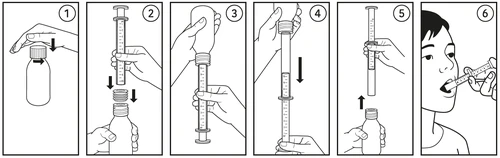
An oral syringe with a capacity of 10 mL, graduated in 0.5 mL increments, and a bottle adapter are provided with the product.
- Open the bottle and, on first use, press the adapter into the bottle neck (1-2).
- Insert the syringe into the adapter (2-3) and invert the bottle.
- Draw the required volume of medicine from the inverted bottle (4).
- Place the bottle upright again and remove the filled syringe from the adapter (5).
- Slowly administer the contents of the syringe into the mouth and swallow (6).
- Clean the syringe and close the bottle with the cap (the adapter remains in place).
Taking more VOQUILY than recommended
If the patient or child accidentally takes more than the recommended dose, or if a child swallows the medicine by mistake, contact a doctor or pharmacist immediately.
The most common symptoms of overdose include: drowsiness, headache, dizziness, and nausea.
If a dose of VOQUILY is missed
If the patient forgets to take the dose before bedtime and wakes up during the night, the missed dose may be taken, but not later than 04:00 a.m.
Do not take a double dose to make up for a missed dose.
Stopping VOQUILY
There are no known harmful effects associated with stopping or discontinuing treatment. No withdrawal effects have been observed after stopping VOQUILY treatment.
If you have any further questions about the use of this medicine, consult your doctor or pharmacist.
4. Possible adverse reactions
Like all medicines, this medicine can cause adverse reactions, although not everyone will experience them.
If the patient or child experiences any of the following severe adverse reactions,
the doctor must be informed immediately and use of this medicine must be stopped.
Frequency not known
- Hypersensitivity reaction (allergy-like reactions such as itching, difficulty breathing)
- Swelling of deeper skin layers (angioedema)
- Swelling of lips and tongue (swelling)
Other possible adverse reactions are listed below.
Common adverse reactions (may occur in up to 1 in 10 people)
- Headache
- Drowsiness
Uncommon adverse reactions (may occur in up to 1 in 100 people)
- Irritability, nervousness, agitation, insomnia
- Unusual dreams, nightmares, night sweats, anxiety, anxious agitation, physical weakness, lack of energy and motivation
- Migraine
- Dizziness
- High blood pressure
- Abdominal pain, mouth ulcers, dry mouth, nausea
- Skin disorders (dermatitis, itching, rash, dry skin)
- Pain in hands and feet
- Menopausal symptoms
- Chest pain
- Glucose excretion in urine, excessive protein in urine
- Blood composition changes which may cause yellowing of the skin and eyes
- Abnormal liver function test results
- Weight gain
Rare adverse reactions (may occur in up to 1 in 1000 people)
- Shingles (herpes zoster)
- Decreased number of white blood cells in blood
- Decreased platelet count
- Low levels of calcium or sodium in blood
- High levels of fats in blood
- Mood changes, aggression, agitation, crying, tension symptoms, disorientation, early waking, increased sexual drive (increased libido), low mood, depression
- Fainting, memory disturbances, concentration difficulties, drowsiness, unpleasant sensations in legs (restless legs syndrome), poor sleep quality, fatigue
- Vision disorders, blurred vision, increased tearing
- Sensation of dizziness or spinning (vestibular origin), dizziness upon standing or sitting
- Rapid heartbeat, chest pain due to angina
- Acid reflux, stomach and intestinal disturbances, blistering in the mouth, tongue ulceration, indigestion, vomiting, abnormal intestinal sounds, increased salivation, bad breath, bloating, discomfort in the abdominal area, inflammation of the stomach mucosa
- Abnormal skin sensations (paresthesia), skin disorders (rash, erythema, psoriasis), nail disorders, sudden feeling of warmth (hot flush)
- Joint pain, joint inflammation, muscle cramps, neck pain, nocturnal cramps
- Excessive urination, presence of red blood cells in urine, need to urinate at night
- Prolonged erection (priapism), prostate gland swelling (prostatitis)
- Thirst
- Increased liver enzyme levels, abnormal blood electrolyte values, abnormal laboratory test results
Frequency not known (frequency cannot be estimated from available data)
- Spontaneous milk discharge from breasts (also in men)
Additional adverse reactions in children and adolescents
Reported adverse reactions were generally mild and occurred infrequently.
The most common adverse reactions included headache, hyperactivity, sensation of dizziness or "spinning" (vestibular origin), and abdominal pain. No severe adverse reactions were observed.
Reporting of adverse reactions
If any adverse reactions occur, including any not listed in this leaflet, inform your doctor or pharmacist. Adverse reactions can be reported directly to the Department for Monitoring Adverse Drug Reactions of the Office for Registration of Medicinal Products, Medical Devices and Biocidal Products: Al. Jerozolimskie 181C, 02-222 Warsaw, phone: +48 22 49-21-301, fax: +48 22 49-21-309, website: https://smz.ezdrowie.gov.pl. Adverse reactions can also be reported to the marketing authorization holder. By reporting adverse reactions, additional information on the safety of this medicine can be collected.
5. How to store VOQUILY
Keep this medicine out of the sight and reach of children.
Do not use this medicine after the expiry date stated on the packaging and label
after "Expiry date". The expiry date refers to the last day of the stated month.
Store in the original packaging to protect from light.
No special temperature storage requirements for this medicine.
Shelf life after first opening: 6 months.
Medicines must not be disposed of via wastewater or household waste. Ask your
pharmacist how to dispose of medicines no longer required. Such measures will help
protect the environment.
6. Contents of the pack and other information
What VOQUILY contains
- 1 mL of solution contains 1 mg of melatonin.
- Other ingredients are:
- Propylene glycol, sorbitol liquid 70% (non-crystallising), sucralose, strawberry flavour (containing propylene glycol), purified water, hydrochloric acid concentrated (for pH adjustment).
What VOQUILY looks like and contents of the pack
VOQUILY is a clear, colourless to yellowish solution with a strawberry odour.
VOQUILY is supplied in an amber glass bottle with a child-resistant plastic screw cap and a tamper-evident seal. Each carton also contains a 10 mL oral plastic syringe graduated in 0.5 mL increments and a press-in adapter for the syringe/bottle.
Pack sizes: 60 mL or 150 mL.
Not all pack sizes may be marketed.
Marketing Authorisation Holder and Manufacturer
Marketing Authorisation Holder
Clinigen Healthcare B.V.
Schiphol Boulevard 359
WTC Schiphol Airport
D Tower 11th floor
1118BJ Schiphol
The Netherlands
Tel.: +48223075718
Manufacturer
Rafarm S.A.
Thesi Pousi-Xatzi
Agiou Louka
Paiania Attiki
19002 Paiania Attiki
Greece
This medicinal product is authorised in the Member States of the European Economic Area under the following names:
Austria VOQUILY 1 mg/ml solution for oral use
Belgium Voquily 1 mg/ml oral solution
France VOQUILY 1 mg/ml oral solution
Germany VOQUILY 1 mg/ml solution for oral use
Hungary VOQUILY 1 mg/ml oral solution
Ireland Voquily 1 mg/ml oral solution
Italy VOQUILY 1 mg/ml oral solution
The Netherlands VOQUILY 1 mg/ml oral solution
Poland VOQUILY
Spain VOQUILY 1 mg/ml oral solution
Sweden Voquily