Vivacor
Poland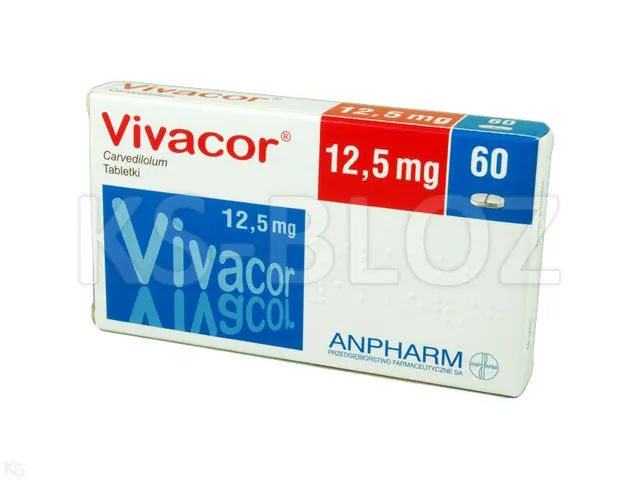
Table of Contents
Package leaflet: Information for the user
Vivacor, 6.25 mg, tablets
Vivacor, 12.5 mg, tablets
Vivacor, 25 mg, tablets
Carvedilol
Please read all of this leaflet carefully before taking this medicine, because it contains
important information for you.
- Keep this leaflet, as you may need to read it again.
- If you have any further questions, please ask your doctor or pharmacist.
- This medicine has been prescribed for a specific individual. Do not pass it on to others. It may harm other people, even if their symptoms are the same.
- If you experience any adverse reactions, including any not listed in this leaflet, inform your doctor or pharmacist. See section 4.
Contents of the leaflet
- What Vivacor is and what it is used for
- Important information before taking Vivacor
- How to take Vivacor
- Possible side effects
- How to store Vivacor
- Contents of the pack and other information
1. What Vivacor is and what it is used for
Vivacor 6.25 mg, 12.5 mg or 25 mg tablets contain carvedilol as the active substance, which
dilates blood vessels by blocking alpha-1-adrenergic receptors and inhibits
the renin-angiotensin-aldosterone system by blocking beta-adrenergic receptors.
Vivacor is indicated for the treatment of:
- symptomatic chronic heart failure (stable mild, moderate or severe chronic heart failure), in addition to standard background therapy,
- arterial hypertension,
- stable angina pectoris,
- patients after myocardial infarction with documented left ventricular dysfunction (left ventricular ejection fraction (LVEF) ≤ 40%).
2. Important information before using Vivacor
When not to use Vivacor
- if the patient is allergic to carvedilol or any of the other ingredients of this medicine (listed in section 6);
- if the patient has unstable or decompensated heart failure;
- if the patient has overt clinical liver dysfunction;
- if the patient has second- or third-degree atrioventricular block (unless the patient has a permanently implanted pacemaker);
- if the patient has a slow heart rate (< 50 beats/minute);
- if the patient has sick sinus syndrome (including sinoatrial block);
- if the patient has severe hypotension (systolic blood pressure < 85 mmHg);
- if the patient has severe cardiac disorders (cardiogenic shock);
- if the patient has a respiratory disorder associated with bronchospasm or asthma;
- if the patient has significant fluid retention or cardiac overload requiring intravenous administration of drugs that increase myocardial contractility;
- if the patient has metabolic acidosis;
- if the patient has a phaeochromocytoma (unless symptoms are effectively controlled with alpha-adrenergic receptor-blocking drugs).
Warnings and precautions
Before starting treatment with Vivacor, discuss this with your doctor or pharmacist.
When to exercise particular caution when using Vivacor
- if the patient has chronic heart failure, as this may lead to worsening of heart failure or fluid retention;
- if the patient has hypertension and chronic heart failure treated with cardiac glycosides (lanatosides), caution should be exercised when using Vivacor, as both cardiac glycosides and Vivacor slow atrioventricular conduction;
- if the patient has chronic heart failure and low blood pressure (systolic blood pressure < 100 mmHg), ischaemic heart disease, widespread vascular disease, and/or concomitant renal dysfunction. During dose escalation of Vivacor in these patients, the doctor will monitor renal function and, if deterioration is observed, may recommend discontinuation of treatment or dose reduction;
- if the patient has left ventricular dysfunction following acute myocardial infarction. Before initiating treatment with carvedilol, the patient's condition must be stable and the patient must have been receiving an ACE inhibitor for at least 48 hours at a dose unchanged for at least 24 hours;
- if the patient has chronic obstructive pulmonary disease (COPD), or has a tendency to bronchospasm but is not being treated for this with oral or inhaled medications. If any signs or symptoms of bronchospasm occur during treatment with Vivacor, inform the doctor;
- if the patient has diabetes, because Vivacor may impair glycaemic control and may mask or weaken early symptoms and signs of hypoglycaemia (low blood glucose levels). When initiating Vivacor or increasing its dose, regular monitoring of blood glucose levels and adjustment of antidiabetic medications are recommended, as treatment with Vivacor may lead to worsening of glycaemic control;
- if the patient has peripheral circulatory disorders or Raynaud's syndrome, because beta-adrenergic receptor-blocking drugs may increase the risk of occurrence or worsening of symptoms of arterial dysfunction;
- if the patient has hyperthyroidism, because Vivacor may mask signs and symptoms of hyperthyroidism;
- if the heart rate is slower than 55 beats/minute, consult the treating physician, who may decide to reduce the dose;
- if the patient has ever experienced severe hypersensitivity reactions, or if the patient is undergoing allergen immunotherapy (like other drugs in this class, Vivacor may increase sensitivity to allergens and exacerbate anaphylactic reactions);
- if the patient develops serious skin reactions. During treatment with carvedilol, very rare cases of severe skin reactions such as erythema multiforme, toxic epidermal necrolysis, or Stevens-Johnson syndrome have been reported (see section 4 Possible side effects). Carvedilol must be completely discontinued if serious skin reactions occur that may be related to carvedilol;
- if the patient has psoriasis associated with beta-adrenergic blocking agents. The doctor should consider the potential risks and benefits of using Vivacor;
- if the patient is taking other medicines, such as digoxin, cyclosporine, rifampicin, anaesthetics, or antiarrhythmics;
- if the patient has a phaeochromocytoma, the doctor's instructions must be strictly followed. Before administering Vivacor, the doctor will recommend treatment with an alpha-adrenergic blocking agent;
- if the patient is suspected of having Prinzmetal's angina, because administration of drugs blocking only beta-adrenergic receptors may be associated with chest pain. However, the additional alpha-1-adrenergic receptor-blocking properties of Vivacor may prevent such effects;
- if the patient wears contact lenses, because reduced tear secretion may occur.
As with all beta-adrenergic blocking agents, carvedilol should not be discontinued abruptly.
This is particularly important for patients with coronary artery disease. The dose of carvedilol should be gradually reduced (over 2 weeks).
Vivacor and other medicines
Inform your doctor or pharmacist about all medicines currently or recently taken, as well as any medicines the patient plans to take.
It is especially important to inform the doctor if the patient is taking the following medicines:
- medicines containing digoxin (used in the treatment of heart failure), as the doctor may recommend dose adjustment during concomitant use with Vivacor;
- oral cyclosporine (an immunosuppressive drug used to prevent organ transplant rejection), as Vivacor may enhance the effect of cyclosporine;
- rifampicin (an antibiotic used in the treatment of tuberculosis), as it may reduce the effectiveness of Vivacor;
- fluoxetine and paroxetine (medicines used in the treatment of depression);
- insulin and oral antidiabetic medicines, as Vivacor may enhance the effect of these drugs. The doctor may recommend more frequent monitoring of blood glucose levels;
- reserpine (a medicine affecting blood pressure) and monoamine oxidase inhibitors (a type of antidepressant), as these medicines may additionally slow heart rate and/or lower blood pressure;
- calcium channel blockers not belonging to the dihydropyridine class, amiodarone, and other medicines used in cardiac rhythm disorders. The doctor will monitor ECG and blood pressure;
- clonidine (a medicine used to lower blood pressure and treat migraine);
- other medicines that lower blood pressure. Vivacor may enhance the effect of concomitantly administered antihypertensive drugs (e.g. alpha-adrenergic receptor antagonists) and drugs whose side effect may include lowering of blood pressure (e.g. barbiturates used in epilepsy treatment, phenothiazine derivatives used in psychosis treatment, tricyclic antidepressants used in depression treatment, vasodilators), as well as alcohol;
- anaesthetics;
- non-steroidal anti-inflammatory drugs (NSAIDs), which may reduce the effectiveness of Vivacor;
- bronchodilators.
Taking Vivacor with food and alcohol
Vivacor may be taken with or without food.
Vivacor may enhance the effects of alcohol.
Pregnancy and breastfeeding
If the patient is pregnant or breastfeeding, suspects she may be pregnant, or is planning to have a child, she should consult her doctor or pharmacist before using this medicine.
Animal studies have shown adverse effects on fertility. The potential risk in humans is unknown.
Vivacor should not be used during pregnancy unless the expected benefits outweigh the potential risks.
Vivacor should not be used during breastfeeding unless the expected benefits outweigh the potential risks.
Driving and operating machinery
As with many other medicines used in the treatment of hypertension, it should be noted that if dizziness or other similar adverse symptoms occur, the patient should not drive or operate machinery. This is particularly relevant at the beginning of treatment, when changes in therapy are made, or when the medicine is taken together with alcohol.
All Vivacor tablets contain lactose, and Vivacor 6.25 mg contains sucrose.
Each tablet of Vivacor 6.25 mg contains 50 mg lactose and 12.5 mg sucrose.
Each tablet of Vivacor 12.5 mg contains 62.5 mg lactose.
Each tablet of Vivacor 25 mg contains 125 mg lactose.
If the patient has previously been diagnosed with intolerance to certain sugars, the patient should contact the doctor before taking this medicine.
Each tablet of Vivacor 12.5 mg and Vivacor 25 mg contains sodium.
The medicine contains less than 1 mmol (23 mg) of sodium per tablet, meaning the medicine is considered "sodium-free".
3. How to use Vivacor
This medicine should always be taken exactly as directed by your doctor or pharmacist. If in doubt, consult your doctor or pharmacist. If you feel that the effect of Vivacor is too strong or too weak, you should consult your doctor or pharmacist. Swallow the tablets with at least half a glass of water.
The Vivacor tablets should be taken with sufficient fluid. Patients with chronic heart failure should take the tablets with food.
Vivacor tablets are available in the following strengths:
6.25 mg, 12.5 mg and 25 mg
Symptomatic chronic heart failure
The dose of this medicine will be individually adjusted by your doctor.
Treatment with Vivacor will be initiated under the supervision of a physician experienced in the treatment of heart failure and will be preceded by an assessment of the patient's clinical status. Depending on the outcome of this assessment, the medicine will be administered either in an outpatient setting or in hospital.
Adults
The recommended starting dose is 3.125 mg twice daily for 2 weeks. If the medicine is well tolerated, your doctor will increase the dose every 2 weeks or more according to the following schedule: to 6.25 mg twice daily, then to 12.5 mg twice daily, and finally to 25 mg twice daily. The goal is to reach the highest dose tolerated by the patient.
The maximum recommended dose for all patients with severe chronic heart failure and for patients with mild or moderate heart failure weighing less than 85 kg is 25 mg twice daily. For patients with mild or moderate heart failure weighing more than 85 kg, the maximum recommended dose is 50 mg twice daily.
In patients with systolic blood pressure < 100 mmHg, increasing the dose of Vivacor may lead to worsening renal function and/or worsening heart failure. Therefore, before each dose increase, your doctor will monitor kidney function and assess the severity of subjective and objective symptoms of heart failure and vasodilation.
If treatment with Vivacor is interrupted for more than 2 weeks, re-initiation of therapy should begin at a dose of 3.125 mg twice daily, and the dose should then be gradually increased according to the dosing recommendations outlined above.
Elderly patients
Dosage is the same as for adults.
Children and adolescents
The safety and efficacy of the medicine have not been established in children and adolescents (under 18 years of age).
Hypertension
Once-daily dosing is recommended.
Adults
The recommended starting dose is 12.5 mg once daily for the first 2 days. This should then be increased to 25 mg once daily. This dose is sufficient for most patients, but if necessary, your doctor may increase the dose up to a maximum of 50 mg, administered as a single dose or in divided doses.
Dose increases should be made at intervals of no less than 2 weeks.
Elderly patients
The recommended starting dose is 12.5 mg daily. In many cases, this dose provides adequate blood pressure control. If the antihypertensive effect is insufficient, your doctor may gradually increase the dose up to the maximum recommended dose of 50 mg, administered as a single dose or in divided doses.
Children and adolescents
The safety and efficacy of the medicine have not been established in children and adolescents (under 18 years of age).
Angina pectoris
Adults
The recommended starting dose is 12.5 mg twice daily for the first 2 days. This should then be increased to 25 mg twice daily.
Elderly patients
The maximum recommended daily dose is 50 mg in divided doses.
Children and adolescents
The safety and efficacy of the medicine have not been established in children and adolescents (under 18 years of age).
Left ventricular dysfunction following acute myocardial infarction
For patients with left ventricular dysfunction following myocardial infarction, the recommended starting dose is 6.25 mg twice daily. The patient should be monitored for 3 hours after the first dose. The doctor will increase the dose every 3–10 days to 12.5 mg twice daily, and subsequently to 25 mg twice daily. For patients who do not tolerate a dose of 6.25 mg twice daily, the doctor will reduce the dose to 3.125 mg twice daily and continue this dose for 3–10 days. If this dose is well tolerated, it will be increased to 6.25 mg twice daily, and then gradually to 25 mg twice daily. The goal is to reach the highest dose tolerated by the patient.
Patients with concomitant liver disease
Administration of Vivacor is contraindicated in patients with concomitant hepatic impairment.
Patients with concomitant renal impairment
In patients with systolic blood pressure > 100 mmHg, no dose reduction is necessary.
Taking more Vivacor than recommended
If you take more Vivacor than you should, contact your doctor immediately or go to the nearest hospital.
Significant overdose may cause hypotension (blood pressure too low), bradycardia (abnormally slow heart rate), heart failure, cardiogenic shock (inadequate blood supply to tissues and organs due to heart failure), and circulatory arrest. Respiratory disorders, bronchospasm, vomiting, disturbances of consciousness, and generalized seizures have also been observed.
If you forget to take Vivacor
Do not take a double dose to make up for a missed dose. If you miss a dose (or several doses), do not increase the next dose. Take the next dose at the usual time. Continue treatment as directed by your doctor.
Stopping Vivacor
Treatment with Vivacor is intended for long-term use. Stopping treatment suddenly may lead to chest pain and increased blood pressure, especially in patients with angina pectoris. The medicine should be discontinued gradually, according to your doctor's instructions.
If you have any further questions about the use of this medicine, consult your doctor or pharmacist.
4. Possible adverse effects
Like all medicines, this medicine can cause adverse effects, although not everyone will experience them.
Frequency of possible adverse effects:
Very common (affecting more than 1 in 10 patients):
- dizziness, headache – usually mild and occurring at the beginning of treatment
- heart failure
- low blood pressure
- fatigue (weakness)
Common (affecting up to 1 in 10 patients):
- bronchitis, pneumonia, upper respiratory tract infection
- urinary tract infection
- anaemia
- weight gain
- hypercholesterolaemia (increased blood cholesterol levels)
- in diabetic patients, reduced effectiveness of glucose control, which may lead to hyperglycaemia (too high blood glucose levels) or hypoglycaemia (too low blood glucose levels)
- depression, low mood
- pre-syncope, fainting
- visual disturbances
- reduced tear secretion (dry eye syndrome), eye irritation
- bradycardia (slow heart rate)
- hypervolaemia (increased circulating blood volume) and fluid overload
- oedema (including generalised, peripheral, orthostatic, and localised in the genital area and lower limbs)
- orthostatic hypotension (sudden drop in blood pressure upon changing position)
- peripheral circulation disorders (cold extremities, peripheral vascular disease, worsening of intermittent claudication – calf muscle pain during walking, Raynaud's syndrome – pallor and cyanosis of fingers and toes, nose or ears due to blood vessel constriction)
- hypertension
- dyspnoea, pulmonary oedema, asthma in susceptible patients
- gastrointestinal disorders (including nausea, diarrhoea, vomiting, dyspepsia, abdominal pain)
- limb pain
- renal failure and worsening of kidney function in patients with generalized vascular disease and/or pre-existing kidney dysfunction
- pain
Uncommon (affecting 1 in 100 patients):
- sleep disorders
- paraesthesia (tingling and numbness in limbs)
- atrioventricular block (disturbance in electrical impulse conduction in the heart muscle)
- angina pectoris (chest pain)
- constipation
- skin reactions (e.g. allergic rash, dermatitis, urticaria, pruritus, psoriasiform or lichenoid skin lesions)
- alopecia
- erectile dysfunction, impotence
Rare (affecting 1 in 1,000 patients):
- low platelet count (thrombocytopenia)
- nasal mucosal congestion (swelling of the nasal mucosa)
- dryness of the oral mucosa
- urinary disorders
Very rare (affecting up to 1 in 10,000 patients):
- low white blood cell count (leukopenia)
- hypersensitivity (allergic reaction)
- abnormal liver function test results (increased alanine aminotransferase (AlAT), aspartate aminotransferase (AspAT), and gamma-glutamyl transferase activity)
- urinary incontinence in women
- severe skin reactions (e.g. erythema multiforme, Stevens-Johnson syndrome, toxic epidermal necrolysis)
In patients with congestive heart failure, increasing the dose of carvedilol may lead to worsening of heart failure and fluid retention.
In patients with chronic heart failure and low blood pressure, ischaemic heart disease, generalized vascular disease and/or coexisting kidney dysfunction, reversible worsening of kidney function has been observed during treatment with carvedilol.
The frequency of adverse effects does not depend on the dose, except for dizziness, visual disturbances, and bradycardia.
The adverse effect profile observed in patients with hypertension and angina pectoris treated with Vivacor is consistent with that observed in patients with heart failure, although the frequency of these effects is lower.
Since Vivacor has beta-adrenolytic activity, treatment may unmask latent diabetes, worsen glucose control, and impair glucose regulation.
Isolated cases of urinary incontinence in women, resolving after discontinuation of treatment, have been reported.
Other adverse effects not listed here may occur in some patients treated with Vivacor.
Reporting of adverse effects
If any adverse effects occur, including any adverse effects not listed in this leaflet, inform your doctor or pharmacist. Adverse effects can be reported directly to:
Department of Monitoring Adverse Drug Reactions
Office for Registration of Medicinal Products, Medical Devices and Biocidal Products
Al. Jerozolimskie 181C
02-222 Warsaw
Tel.: +48 22 49 21 301
Fax: +48 22 49 21 309
Website: https://smz.ezdrowie.gov.pl
Adverse effects can also be reported to the marketing authorisation holder.
Reporting adverse effects contributes to greater knowledge about the safety of this medicine.
5. How to store Vivacor
Store below 25°C.
Vivacor 6.25 mg tablets: Store in the original packaging to protect from light and moisture.
Vivacor 12.5 mg, 25 mg tablets: Store in the original packaging to protect from light.
Keep out of the sight and reach of children.
Do not use the medicine after the expiry date (EXP) stated on the packaging. The expiry date refers to the last day of the month.
Medicines must not be disposed of via wastewater or household waste. Ask your pharmacist how to dispose of medicines no longer required. This will help protect the environment.
6. Contents of the package and other information
What Vivacor contains
The active substance is carvededilol.
Each tablet contains 6.25 mg, 12.5 mg or 25 mg of carvedilol.
Other ingredients of the medicine are:
Vivacor 6.25 mg tablets - monohydrate lactose, crospovidone, sucrose, colloidal anhydrous silica, polyvinylpyrrolidone K-25, magnesium stearate, quinoline yellow Ariavit (E-104).
Vivacor 12.5 mg tablets - potato starch, monohydrate lactose, sodium lauryl sulfate, magnesium stearate, sodium croscarmellose, colloidal anhydrous silica.
Vivacor 25 mg tablets - potato starch, monohydrate lactose, sodium lauryl sulfate, magnesium stearate, sodium croscarmellose, colloidal anhydrous silica.
What Vivacor looks like and contents of the pack
Vivacor 6.25 mg tablets
Light yellow, elongated tablets marked with "E 341" on one side and a division line on the other side.
Vivacor 12.5 mg tablets
White or almost white, elongated, biconvex tablets with a division line on one side.
Vivacor 25 mg tablets
White or almost white, round, biconvex tablets with a division line on one side.
The tablets can be divided into equal doses.
Vivacor 6.25 mg tablets are available in packs containing 30 or 60 tablets in blisters made of OPA/Al/PVC/Al foil, packed in cardboard boxes.
Vivacor 12.5 mg and 25 mg tablets are available in packs containing 30 or 60 tablets in blisters made of PVC/Aluminium foil, packed in cardboard boxes.
Marketing Authorisation Holder
PROTERAPIA Spółka z o.o.
ul. Komitetu Obrony Robotników 45 D
02-146 Warsaw
Poland
Manufacturer
EGIS Pharmaceuticals PLC
1165 Budapest, Bökényföldi út 118-120.
Hungary
For further information, please contact the Marketing Authorisation Holder:
PROTERAPIA Spółka z o.o.
ul. Komitetu Obrony Robotników 45 D
02-146 Warsaw
Poland
Tel.: (22) 417 92 00