Vitamin b12 wzf
Poland
Table of Contents
- Package leaflet: Information for the patient
- 1. What Vitaminum B WZF is and what it is used for
- 2. Important information before using Vitaminum B12 WZF
- 3. How to use Vitaminum B WZF
- 4. Possible adverse reactions
- 5. How to store Vitaminum B12 WZF
- 6. Contents of the packaging and other information
- Information intended exclusively for medical professionals:
Package leaflet: Information for the patient
VITAMINUM B WZF 100 micrograms/ml, solution for injection
VITAMINUM B WZF 500 micrograms/ml, solution for injection
Cyanocobalaminum
Please read this leaflet carefully before using the medicine, as it contains important information for you.
- Keep this leaflet so that you can read it again if necessary.
- If you have any questions, please consult your doctor or pharmacist.
- This medicine has been prescribed for a specific individual. Do not pass it on to others. The medicine may harm someone else, even if their symptoms are the same.
- If you experience any adverse reactions, including any not listed in this leaflet, inform your doctor or pharmacist. See section 4.
Leaflet contents
- What Vitaminum B WZF is and what it is used for
- Important information before using Vitaminum B WZF
- How to use Vitaminum B WZF
- Possible side effects
- How to store Vitaminum B WZF
- Contents of the pack and other information
1. What Vitaminum B WZF is and what it is used for
Vitaminum B WZF contains cyanocobalamin (vitamin B_), which is essential for bodily growth processes. It affects the formation of blood cells and the proper functioning of the nervous system. Vitamin B_ deficiency may lead to pernicious anemia and irreversible neurological complications.
The medicine is used:
- in Addison-Biermer pernicious anemia (a specific type of anemia caused by vitamin B_ deficiency);
- in other megaloblastic anemias due to vitamin B_ deficiency;
- in vitamin B_ deficiency caused by the following conditions:
- complete exclusion of animal-derived products from the diet (strict vegetarianism);
- impaired (congenital or acquired) secretion of intrinsic factor required for vitamin B_ absorption (Castle's factor);
- absence of Castle's factor following gastrectomy (surgical removal of the stomach);
- chronic atrophic gastritis;
- malabsorption syndromes following resection of the ileum, in celiac disease (gluten intolerance), tropical sprue (also known as psylosis—an intestinal disorder leading to impaired nutrient absorption), or Crohn's disease (inflammatory bowel disease);
- utilization of vitamin B_ by intestinal bacteria (blind loop syndrome) or parasites (infection with Diphyllobothrium latum);
- in the Schilling test (a test assessing vitamin B_ absorption).
2. Important information before using Vitaminum B12 WZF
When not to use Vitaminum B12 WZF
- if the patient is allergic to vitamin B12, cobalt, or any of the other ingredients of this medicine (listed in section 6).
Warnings and precautions
Before starting treatment with Vitaminum B12 WZF, discuss this with your doctor or
pharmacist.
- In patients with Leber's disease (visual disturbances due to optic nerve atrophy), this medicine should be used with caution, as cyanocobalamin may accelerate optic nerve atrophy.
- In patients with pernicious anemia (during treatment with high doses of vitamin B12), blood potassium levels may decrease.
- In Addison-Biermer disease, vitamin B12 should be administered regularly for life. A temporary interruption of treatment, even if seemingly justified by good blood test results (hematology), may lead to irreversible damage to the nervous system.
- Treatment with vitamin B12 may reveal symptoms of polycythemia vera (marked redness of the face, hands, feet, and oral mucosa).
- Before starting treatment and between the 5th and 7th day of treatment, the following laboratory tests are recommended: serum folic acid concentration, hematocrit, reticulocytes (a significant increase in reticulocyte count—immature red blood cells—is an early sign of effective treatment), and vitamin B12 concentration. During long-term treatment, periodic monitoring of hematological parameters (blood status) and vitamin B12 concentration every 3 to 6 months is recommended.
Vitaminum B12 WZF and other medicines
Tell your doctor or pharmacist about all medicines you are currently taking, have recently taken, or plan to take.
- Some antibiotics, methotrexate (used in cancer treatment), or pyrimethamine (used in malaria treatment) may interfere with vitamin B12 serum concentration measurements, leading to false-negative results.
- Impaired absorption of vitamin B12 may occur during treatment with colchicine (used in gout treatment), para-aminosalicylic acid (an antituberculosis drug), or consumption of large amounts of alcohol for more than 2 weeks.
- Concurrent use of drugs that suppress bone marrow function (e.g. chloramphenicol) may reduce the response to vitamin B12 treatment.
- Long-term use of high-dose folic acid may reduce the concentration of vitamin B12 in the blood.
Pregnancy and breastfeeding
If the patient is pregnant or breastfeeding, suspects she may be pregnant, or is planning to become pregnant, she should consult her doctor or pharmacist before using this medicine.
This medicine may be used during pregnancy only if, in the opinion of the doctor, the benefit to the mother outweighs the potential risk to the fetus.
No adverse effects have been observed in infants breastfed by women taking recommended doses of vitamin B12.
Driving and operating machinery
Vitaminum B12 WZF has no influence on the ability to drive or operate machinery.
Vitaminum B12 WZF contains sodium
Vitaminum B12 WZF 100 micrograms/ml
This medicine contains 3.96 mg of sodium (a main component of table salt) per 1 ml ampoule. This corresponds to 0.2% of the maximum recommended daily dietary sodium intake for adults.
Vitaminum B12 WZF 500 micrograms/ml
This medicine contains less than 1 mmol (23 mg) of sodium per 2 ml ampoule, meaning it is considered "sodium-free".
3. How to use Vitaminum B WZF
This medicine should always be used as directed by a physician. If in doubt, consult a doctor or pharmacist.
The medicine should be administered by intramuscular injection or deep subcutaneous injection.
The medicine must not be administered intravenously. The dosage and method of administration are determined by the physician.
Detailed dosage instructions, as well as administration and preparation of the medicine, are provided at the end of this leaflet under the section "Information intended exclusively for healthcare professionals".
Use of a higher than recommended dose of Vitaminum B WZF
If the patient suspects having received an excessive dose of the medicine, a doctor should be informed immediately.
Cases of overdose are not known.
4. Possible adverse reactions
Like all medicines, this medicine can cause adverse reactions, although not everyone will experience them.
The following adverse reactions may occur during treatment with this medicine:
- cases of anaphylactic shock (symptoms: circulatory disturbances, drop in blood pressure, swelling of the face, lips, tongue, throat causing difficulty in breathing or swallowing, urticaria) and deaths following parenteral administration of vitamin B , hypersensitivity (very rare);
- pulmonary edema, congestive heart failure (symptoms: body swelling, fatigue, fluid accumulation in body cavities);
- peripheral vascular thrombosis;
- polycythemia vera;
- itching, rash;
- sensation of bloating, mild transient diarrhea;
- pain at the intramuscular injection site.
Reporting of adverse reactions
If any adverse reactions occur, including any adverse reactions not listed
in this leaflet, inform your doctor or pharmacist. Adverse reactions can
be reported directly to the Department of Monitoring of Adverse Drug Reactions at the Office for Registration of Medicinal Products, Medical Devices and Biocidal Products
Al. Jerozolimskie 181C
02-222 Warsaw
Tel.: +48 22 49 21 301
Fax: +48 22 49 21 309
Website: https://smz.ezdrowie.gov.pl
Adverse reactions can also be reported to the marketing authorization holder.
Reporting adverse reactions enables further information on the safety of the medicine to be collected.
5. How to store Vitaminum B12 WZF
Store ampoules in the outer packaging to protect from light, at a temperature below 25°C. Do not freeze.
Keep this medicine out of sight and reach of children.
Do not use this medicine after the expiry date stated on the carton and ampoule.
The expiry date refers to the last day of the stated month.
The label on the packaging shows EXP for the expiry date and Lot for the batch number.
Medicines should not be disposed of via wastewater or household waste. Ask your pharmacist how to dispose of medicines no longer in use. This will help protect the environment.
6. Contents of the packaging and other information
What Vitaminum B WZF contains
- The active substance is cyanocobalamin. Each ml of solution contains 100 or 500 micrograms of cyanocobalamin (vitamin B).
- Other ingredients are: sodium acetate trihydrate, glacial acetic acid, sodium chloride, water for injections.
What Vitaminum B WZF looks like and contents of the pack
Vitaminum B WZF is a pink, transparent liquid.
Packaging:
Vitaminum B WZF 100 micrograms/ml: 10 ampoules of 1 ml in a cardboard box.
Vitaminum B WZF 500 micrograms/ml: 5 ampoules of 2 ml in a cardboard box.
Marketing Authorization Holder
Zaklady Farmaceutyczne POLPHARMA S.A.
ul. Pelplinska 19, 83-200 Starogard Gdanski
tel. + 48 22 364 61 01
Manufacturer
Zaklady Farmaceutyczne POLPHARMA S.A.
ul. Pelplinska 19, 83-200 Starogard Gdanski
Information intended exclusively for medical professionals:
VITAMINUM B WZF 100 micrograms/ml, solution for injection
VITAMINUM B WZF 500 micro游戏副本/ml, solution for injection
Cyanocobalaminum
The medicinal product should be administered by intramuscular injection or deep subcutaneous injection.
The product must not be administered intravenously.
Co-administration of vitamin B__ solution with warfarin sodium for injection is not recommended.
Vitamin C destroys cyanocobalamin in vitro; therefore, concomitant administration of these vitamins should be avoided.
Instructions for opening the ampoule
Before opening the ampoule, ensure that the entire solution is located in the lower part of the ampoule.
Gently shake the ampoule or tap it with your finger to facilitate the flow of the solution downward.
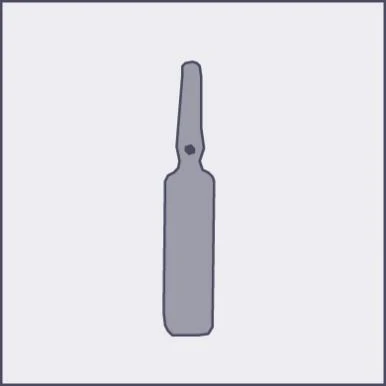
Each ampoule is marked with a colored dot (see Figure 1) indicating the score line located beneath it.
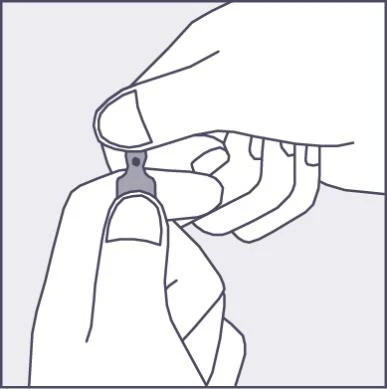
- To open the ampoule, hold it vertically in both hands, with the colored dot facing toward you – see Figure 2. The upper part of the ampoule should be gripped so that the thumb is positioned above the colored dot.
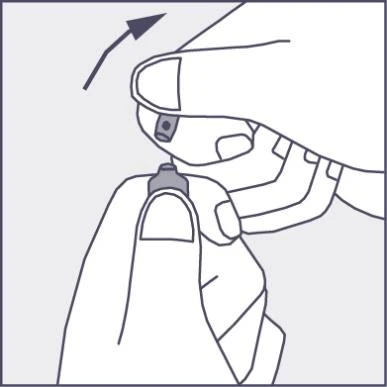
- Apply pressure as indicated by the arrow in Figure 3. The ampoules are intended for single use only and should be opened immediately before use. Any unused portion of the product must be destroyed in accordance with applicable regulations.
Figure 1 Figure 2 Figure 3
Dosage
Adults:
Pernicious anemia (Addison-Biermer disease) without neurological symptoms:
250 to 1000 micrograms every other day for 1 to 2 weeks, followed by 250 micrograms once weekly until hematological improvement is achieved. Maintenance dose: 1000 micrograms once monthly.
In cases with neurological complications (so-called spinal cord degeneration): 1000 micrograms every other day until improvement occurs.
Vitamin B__ deficiency following gastrectomy or due to malabsorption: 250 to 1000 micrograms once monthly.
Children:
Pernicious anemia (Addison-Biermer disease) without neurological symptoms:
Up to 3 years: 5 to 15 micrograms per day;
3–18 years: 15 to 30 micrograms per day.
Megaloblastic anemia:
Up to 3 years: 5 to 15 micrograms per week;
3–7 years: 15 to 25 micrograms per week;
7–18 years: 15 to 30 micrograms per week.
Anemia with neurological symptoms:
Up to 3 years: 100 to 200 micrograms per week;
3–7 years: 200 to 500 micrograms per week;
7–18 years: 500 to 1000 micrograms per week.
Schilling test
Following oral administration of radiolabeled vitamin B__, administer 1000 micrograms of vitamin B__ intramuscularly as a single dose.