Viregyt-k
Poland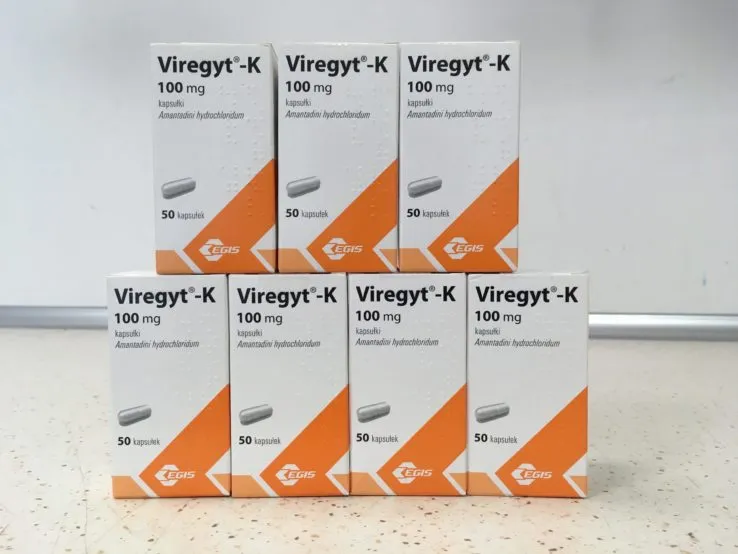
Table of Contents
Patient Information Leaflet
Warning! Keep this leaflet! Information on the immediate packaging in a foreign language.
Viregyt-K, 100 mg, hard capsules
Amantadini hydrochloridum
Please read the entire leaflet carefully before using this medicine, as it contains important information for the patient.
- Keep this leaflet so that you can read it again if necessary.
- If you have any doubts, consult your doctor or pharmacist.
- This medicine has been prescribed for a specific individual. Do not give it to others. The medicine may harm another person, even if their symptoms are identical.
- If the patient experiences any adverse reactions, including any adverse reactions not listed in this leaflet, inform the doctor or pharmacist. See section 4.
Table of contents of the leaflet:
- What is Viregyt-K and what is it used for
- Important information before taking Viregyt-K
- How to take Viregyt-K
- Possible side effects
- How to store Viregyt-K
- Contents of the pack and other information
1. What is Viregyt-K and what is it used for
Viregyt-K is a dopaminergic agent, meaning it may increase levels of certain chemical substances that transmit impulses in the nervous system, including in the brain. Viregyt-K also has antiviral activity.
Viregyt-K is used:
- in the treatment of Parkinson's disease by improving muscle control and reducing stiffness, tremor, and bradykinesia
- in the treatment of certain types of influenza (influenza A).
2. Important information before using Viregyt-K
When not to use Viregyt-K:
- if the patient is allergic to amantadine or any of the other ingredients of this medicine (listed in section 6),
- if the patient has seizures, for example epilepsy,
- if the patient has a history of peptic ulcer disease,
- if the patient has severe kidney disease,
- if the patient is pregnant or planning to become pregnant (see section 2 Pregnancy and breastfeeding),
- if the patient is breastfeeding (see section 2 Pregnancy and breastfeeding).
If any of the above apply to the patient, and in case of any doubts,
consult a doctor or pharmacist before starting treatment with Viregyt-K.
Warnings and precautions
Consult a doctor or pharmacist before starting treatment with Viregyt-K.
Consult a doctor before starting treatment with Viregyt-K
- if the patient has liver or kidney disease,
- if the patient has a history of heart or blood vessel disease,
- if the patient currently has heart function disorders or heart failure (heart problems causing shortness of breath or ankle swelling),
- if the patient has a psychiatric disorder, for example schizophrenia or dementia,
- if the patient has increased intracranial pressure (glaucoma).
If any of the above apply to the patient, and in case of any doubts,
consult a doctor or pharmacist before starting treatment with Viregyt-K.
Inform the doctor if the patient or family members or (and) caregivers notice
an urge or irresistible desire to behave in a way that is unusual for the patient and the patient is unable to resist these impulses, urges, or temptations to act in a way that could be harmful to the patient or others. These are known as impulse control disorders, which may include behaviors such as compulsive gambling, excessive eating or spending, abnormally increased sexual drive, or intensified sexual thoughts or feelings. The doctor may adjust the dose or discontinue treatment with Viregyt-K.
If the patient experiences blurred vision or other vision problems, contact an ophthalmologist immediately.
Abnormally low body temperature (below 35°C) may occur, especially in children treated for influenza. In such a case, inform the doctor immediately and discontinue use of Viregyt-K.
Children and adolescents
Do not administer this medicine to children under 5 years of age. Always consult a doctor before giving any medicine to a child.
Viregyt-K and other medicines
Tell your doctor or pharmacist about all medicines the patient is currently taking or has recently taken, as well as any medicines the patient plans to take.
Especially the following medicines, as they may interfere with the action of Viregyt-K:
- anticholinergic medicines - (used in the treatment of Parkinson's disease) such as procyclidine
- antispasmodic medicines - (used to treat stomach spasms) such as hyoscine
- levodopa - a medicine used in the treatment of Parkinson's disease
- antipsychotic medicines - (used to improve thinking, emotions, and behaviors in certain mental disorders) such as chlorpromazine, haloperidol
- diuretics - (used to reduce fluid retention and lower high blood pressure) such as hydrochlorothiazide, amiloride or triamterene.
Taking Viregyt-K with food, drink and alcohol
Do not consume alcoholic beverages during treatment with Viregyt-K.
Pregnancy and breastfeeding
If the patient is pregnant or breastfeeding, suspects she may be pregnant, or is planning to have a baby, she should consult a doctor or pharmacist before using this medicine.
Do not take Viregyt-K during pregnancy or when planning to become pregnant.
Do not take Viregyt-K during breastfeeding, as the medicine passes into breast milk and may have harmful effects on the infant.
Driving and operating machinery
Treatment with Viregyt-K may cause visual disturbances or dizziness. If such symptoms occur, do not drive or operate machinery until symptoms have resolved.
Viregyt-K contains monohydrate lactose
If the patient has previously been diagnosed with intolerance to certain sugars, the patient should contact a doctor before taking this medicine.
3. How to use Viregyt-K
This medicine should always be taken as prescribed by your doctor. If in doubt, consult your doctor.
The capsules should be swallowed whole with water.
The recommended dose varies depending on the disease being treated:
Parkinson's disease
Adults: 1 capsule (100 mg) daily for the first week.
Your doctor will increase this dose to 2 capsules daily (200 mg).
In some cases, higher doses may be used, up to 4 capsules (400 mg) daily. The dose of 400 mg/day should not be exceeded.
Adults over 65 years of age: 1 capsule (100 mg) once daily.
Influenza virus infection (influenza A)
Adults: 1 capsule (100 mg) daily.
Adults over 65 years of age: 1 capsule (100 mg) once daily.
For treatment of influenza: Viregyt-K should be used for approximately 4 to 5 days.
If there are kidney function disorders, your doctor may prescribe a lower dose.
Use in children and adolescents
Treatment of influenza virus infection (influenza A):
Children (10 to 15 years): 1 capsule (100 mg) daily.
Children (under 10 years): as directed by the doctor.
Taking more Viregyt-K than recommended
If a patient or another person accidentally takes too many capsules, contact a doctor immediately or go to the nearest hospital emergency department. Show the doctor the remaining medicine or empty packaging.
If you forget to take Viregyt-K
Do not be alarmed. If you miss a dose, take the next dose as soon as you remember, unless it is almost time for the next scheduled dose. Then return to your regular dosing schedule. Do not take a double dose to make up for a missed dose.
Stopping Viregyt-K
Do not stop taking Viregyt-K suddenly, as symptoms of the disease may worsen.
If you wish to discontinue Viregyt-K, consult your doctor, who will advise you on how to gradually reduce the dose.
If you are taking antipsychotic medicines (used to treat mental disorders) and suddenly stop taking Viregyt-K, a group of symptoms may develop, including:
- fever
- sweating
- rapid heartbeat
- muscle stiffness (difficulty moving)
- loss of bladder control (sudden need to urinate).
If any of these symptoms occur, contact your doctor immediately.
Some patients may notice that this medicine loses its effect in Parkinson's disease after regular use for several months. If this occurs, inform your doctor.
If you have any further questions about the use of this medicine, consult your doctor or pharmacist.
4. Possible adverse reactions
Like all medicines, this medicine can cause adverse reactions, although not everyone will experience them.
These reactions are often mild and may resolve after a few days of treatment. If adverse reactions are severe and persist for several days, inform your doctor or pharmacist.
If any of the following symptoms occur, contact your doctor or nearest hospital immediately:
- dizziness
- fainting
- seizures
Inform your doctor or pharmacist if any of the following or other symptoms occur during treatment with Viregyt-K.
Very common adverse reactions (may affect more than 1 in 10 people):
- ankle swelling
- red spots on the skin (mottled rash, livedo reticularis)
Common adverse reactions (may affect up to 1 in 10 people):
anxiety, excessive improvement in mood, difficulty sleeping, muscle pain, headache, rapid or irregular heartbeat, feeling tired, hallucinations, nightmares, low blood pressure upon standing from a lying position. This may cause dizziness or feeling faint. Difficulty controlling movements, dry mouth, speech disorders, loss of appetite, visual disturbances, feeling unwell, difficulty concentrating, constipation, feeling nervous, sweating, depression.
Uncommon adverse reactions (may affect up to 1 in 100 people):
blurred vision
Rare adverse reactions (may affect up to 1 in 1,000 people):
confusion, disorientation (lack of awareness of time and place), mental and behavioural disorders such as paranoid feelings, tremor, difficulty moving, neuroleptic malignant syndrome. This may include a feeling of heat and muscle stiffness. Diarrhoea, rash, burning and redness of the eyes, corneal damage, corneal swelling, decreased visual acuity, loss of bladder control. There may be difficulty passing urine or a sudden need to pass urine.
Very rare adverse reactions (may affect up to 1 in 10,000 people):
heart function disorders causing breathlessness or ankle swelling, decreased number of white blood cells (increasing the likelihood of infections), changes in blood test results indicating liver function abnormalities, photosensitivity.
Frequency not known (cannot be estimated from available data):
abnormally low body temperature (below 35°C), especially in children.
irresistible urge to behave in an unusual way – strong impulse towards excessive gambling, disturbed or increased sexual drive, uncontrolled excessive spending or shopping, binge eating (consuming large amounts of food in a short time), or compulsive overeating (consuming more food than usual and more than needed to satisfy hunger).
Reporting of adverse reactions
If any adverse reactions occur, including any not listed in this leaflet, inform your doctor or pharmacist. Adverse reactions can be reported directly to the Department of Monitoring of Adverse Drug Reactions, Office for Registration of Medicinal Products, Medical Devices and Biocidal Products, Al. Jerozolimskie 181C, 02-222 Warsaw, phone: +48 22 49 21 301, fax: +48 22 49 21 309, website: https://smz.ezdrowie.gov.pl.
Reporting adverse reactions helps to provide more information on the safety of this medicine.
5. How to store Viregyt-K
Store below 30°C, in the original packaging to protect from light.
Keep the medicine out of sight and reach of children.
Do not use this medicine after the expiry date stated on the packaging. The expiry date refers to the last day of the specified month.
Medicines must not be disposed of via wastewater or household waste. Ask your pharmacist how to dispose of medicines no longer required. This will help protect the environment.
6. Contents of the pack and other information
What Viregyt-K contains
- The active substance is 100 mg of amantadine hydrochloride.
- Other components: magnesium stearate, lactose monohydrate.
Capsule shell: quinoline yellow (E 104), indigo carmine (E 132), titanium dioxide (E 171), gelatin.
What Viregyt-K looks like and contents of the pack
Green hard capsules in a brown glass bottle with a PE screw cap with tamper-evident seal and a cushioning insert, packed in a cardboard box together with the patient leaflet.
Pack contains 50 hard capsules.
For more detailed information, please contact the marketing authorisation holder or the parallel importer.
Marketing Authorisation Holder in the Czech Republic, country of export:
Egis Pharmaceuticals PLC
Keresztúri út 30-38.
H-1106 Budapest
Hungary
Manufacturer:
Egis Pharmaceuticals PLC
Mátyás király u. 65.
H-9900 Körmend
Hungary
Parallel Importer:
InPharm Sp. z o.o.
ul. Strumykowa 28/11
03-138 Warsaw
Poland
Repackaged by:
InPharm Sp. z o.o. Services sp. k.
ul. Chełmżyńska 249
04-458 Warsaw
Poland
Marketing Authorisation Number in the Czech Republic, country of export: 27/014/74-S/C
Parallel Import Authorisation Number: 67/22