Velaxin er 150 mg
Poland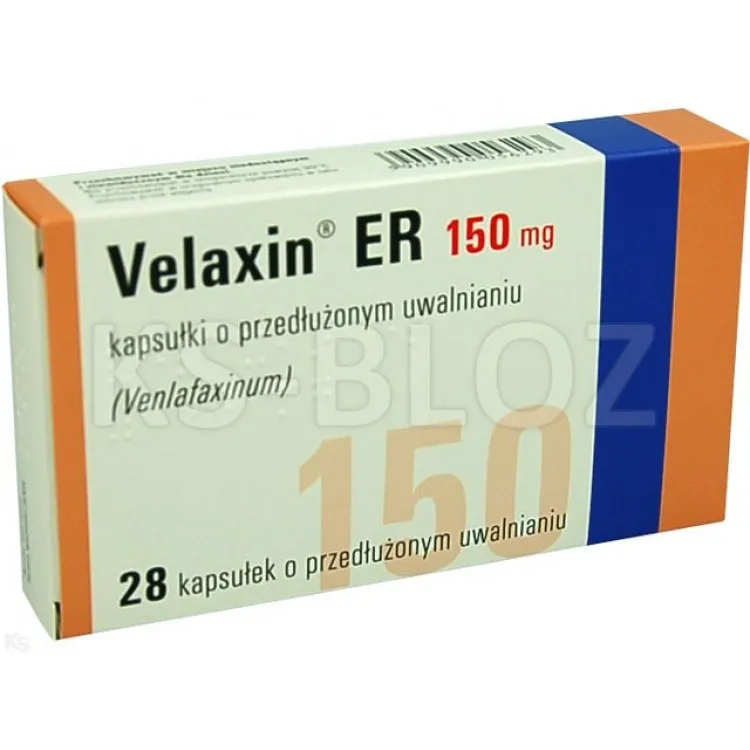
Table of Contents
Patient Information Leaflet
Velaxin ER 37.5 mg, prolonged-release capsules, hard
Velaxin ER 75 mg, prolonged-release capsules, hard
Velaxin ER 150 mg, prolonged-release capsules, hard
Venlafaxinum
Please read all of this leaflet carefully before taking this medicine, because it contains
important information for you.
- Keep this leaflet. You may need to read it again.
- If you have any further questions, ask your doctor or pharmacist.
- This medicine has been prescribed for you personally. Do not pass it on to others. It may harm someone else even if their symptoms are the same as yours.
- If you experience any side effects, including any not listed in this leaflet, tell your doctor or pharmacist. See section 4.
Leaflet Contents:
- What Velaxin ER is and what it is used for
- What you need to know before taking Velaxin ER
- How to take Velaxin ER
- Possible side effects
- How to store Velaxin ER
- Contents of the pack and other information
1. What Velaxin ER is and what it is used for
Velaxin ER contains the active substance venlafaxine.
Velaxin ER is an antidepressant medicine that belongs to a group of medicines called serotonin-norepinephrine reuptake inhibitors (SNRIs). Medicines in this group are used to treat depression and other conditions such as anxiety disorders. It is believed that people with depression and/or anxiety have lower levels of serotonin and norepinephrine in the brain. The exact mechanism of action of antidepressants is not fully understood, but they may help by increasing the levels of serotonin and norepinephrine in the brain.
Velaxin ER is used to treat depression in adults. Velaxin ER is also indicated for the treatment of the following anxiety disorders in adults: generalized anxiety disorder, social phobia (fear or avoidance of social situations), and panic disorder (panic attacks). Proper treatment is necessary for the patient to feel better.
If left untreated, depression and anxiety disorders may not improve, may worsen, and may become more difficult to treat.
2. Important information before taking Velaxin ER
When not to take Velaxin ER
- if the patient is allergic to venlafaxine or any of the other ingredients of this medicine (listed in section 6);
- if the patient is currently taking or has taken within the last 14 days any medicine from the group of irreversible monoamine oxidase inhibitors (MAOIs) used to treat depression or Parkinson's disease. Taking irreversible MAOIs together with Velaxin ER may cause severe or even life-threatening adverse reactions.
Also, before starting treatment with any medicine from the group of irreversible
MAOIs, the patient should wait at least 7 days after stopping treatment with Velaxin ER
(see also section “Velaxin ER with other medicines”).
Warnings and precautions
Before starting treatment with Velaxin ER, discuss this with your doctor or pharmacist:
- if the patient is taking other medicines that, when taken together with Velaxin ER, may increase the risk of serotonin syndrome (see section “Velaxin ER with other medicines”);
- if the patient has eye disorders, such as certain types of glaucoma (increased pressure in the eyeball);
- if the patient has previously had high blood pressure;
- if the patient has previously had heart diseases;
- if the patient has previously had cardiac arrhythmias;
- if the patient has previously experienced seizures (epilepsy);
- if the patient has previously had low sodium levels in the blood (hyponatremia);
- if the patient has a tendency to bruise easily or to bleeding (bleeding disorders), or if the patient is taking other medicines that may increase the risk of bleeding, e.g. warfarin (used as an anticoagulant), or if the patient is pregnant (see “Pregnancy and breastfeeding”);
- if the patient or any family member has previously experienced mania (feelings of excessive excitement or euphoria) or bipolar disorder;
- if the patient has previously exhibited aggressive behaviour.
Velaxin ER may cause feelings of restlessness or inability to sit still during the first few weeks of treatment. If such symptoms occur, inform your treating doctor immediately.
Do not consume alcohol during treatment with Velaxin ER, as this may cause extreme drowsiness and loss of consciousness. Concurrent use with alcohol and (or) certain medicines may worsen symptoms of depression and other medical conditions, such as anxiety disorders.
Suicidal thoughts and worsening of depression or anxiety disorders
Patients with depression and (or) anxiety disorders may sometimes experience thoughts about self-harm or suicide. These thoughts may intensify at the beginning of treatment with antidepressant medicines, as these medicines usually take effect after about 2 weeks, sometimes later.
Such thoughts may also occur when reducing the dose or discontinuing treatment with Velaxin ER.
The occurrence of suicidal thoughts, thoughts about self-harm or suicide is more likely if:
- the patient has previously experienced suicidal thoughts or self-harm;
- the patient is a young adult; clinical data indicate an increased risk of suicidal behaviour in individuals under 25 years of age with psychiatric disorders who were treated with antidepressant medicines.
If the patient experiences suicidal thoughts or thoughts about self-harm, seek immediate medical advice from a doctor or go to the nearest hospital emergency department.
It may be helpful to inform relatives or friends about the depression or anxiety disorder and ask them to read this leaflet. The patient may ask relatives or friends for support and request them to inform the patient if they notice worsening of depression or anxiety or concerning changes in behaviour.
Dry mouth
Dry mouth was reported in 10% of patients treated with venlafaxine. This may increase the risk of dental caries. Therefore, special attention should be paid to oral hygiene.
Diabetes
Velaxin ER may alter blood glucose levels and therefore may require adjustment of the dose of antidiabetic medicines.
Sexual dysfunction
Medicines such as Efectin ER (so-called SNRIs) may cause symptoms of sexual dysfunction (see section 4). In some cases, these symptoms persisted after discontinuation of treatment.
Children and adolescents
Velaxin ER should not be used in children and adolescents under 18 years of age. It should also be emphasized that patients under 18 years of age who take medicines from this group are at increased risk of adverse reactions, such as suicide attempts, suicidal thoughts, and hostility (particularly aggression, defiant behaviour, and manifestations of anger). Nevertheless, a doctor may prescribe Velaxin ER to patients under 18 years of age if they consider it beneficial. If a doctor has prescribed Velaxin ER to a patient under 18 years of age, any doubts should be discussed again with the doctor. Inform the doctor if any of the above-mentioned symptoms occur or worsen in patients under 18 years of age taking Velaxin ER. Long-term safety regarding the impact on growth, maturation, and cognitive and behavioural development in this age group has not yet been established.
Velaxin ER with other medicines
Inform your doctor or pharmacist about all medicines currently taken or recently taken, as well as any medicines you plan to take.
Your treating doctor will decide whether Velaxin ER can be used together with other medicines.
Do not start or stop taking other medicines, including over-the-counter medicines, natural or herbal remedies, without first discussing it with your doctor or pharmacist.
- Monoamine oxidase inhibitors used in the treatment of depression or Parkinson's disease must not be taken with Velaxin ER. Inform your doctor if you have taken these medicines within the last 14 days (MAOIs: see section “Important information before taking Velaxin ER”).
- Serotonin syndrome: During treatment with venlafaxine, a life-threatening condition or reactions resembling neuroleptic malignant syndrome (see section “Possible side effects”) may occur, especially when taken concomitantly with other medicines. Examples of such medicines include:
- triptans (substances used for migraine headaches);
- other medicines used to treat depression, e.g. selective serotonin reuptake inhibitors (SSRIs), serotonin-norepinephrine reuptake inhibitors (SNRIs), tricyclic antidepressants, or medicines containing lithium;
- medicines containing amphetamine derivatives [used to treat attention deficit hyperactivity disorder (ADHD), narcolepsy, and obesity];
- medicines containing the antibiotic linezolid (used to treat infections);
- medicines containing moclobemide, an MAO inhibitor (used to treat depression);
- medicines containing sibutramine (used for weight loss);
- medicines containing tramadol, fentanyl, tapentadol, pethidine, or pentazocine (used to treat severe pain);
- medicines containing dextromethorphan (used to treat cough);
- medicines containing methadone or buprenorphine (used to treat opioid dependence or severe pain);
- medicines containing methylene blue (used to treat high methemoglobin levels in the blood);
- medicines containing St. John's wort (Hypericum perforatum, herbal or plant-based remedies used to treat mild depression);
- medicines containing tryptophan (used for sleep problems and depression);
- antipsychotic medicines (used to treat illnesses with symptoms such as hearing, seeing, and feeling things that do not exist, delusions, unnatural suspicion, unclear thinking, social withdrawal).
Subjective and objective symptoms of serotonin syndrome may include: restlessness, hallucinations, loss of coordination, rapid heartbeat, elevated body temperature, rapid changes in blood pressure, hyperreflexia, diarrhoea, coma, nausea, vomiting.
The most severe form of serotonin syndrome may resemble neuroleptic malignant syndrome. Its subjective and objective symptoms include: fever, rapid heartbeat, sweating, muscle rigidity, confusion, increased muscle enzyme levels (detected in blood tests).
If serotonin syndrome is suspected, inform your doctor immediately or go to the nearest hospital emergency department.
If the patient is taking medicines that may affect heart rhythm, inform the doctor. Examples of such medicines:
- antiarrhythmic medicines, such as quinidine, amiodarone, sotalol, or dofetilide (used to treat cardiac arrhythmias);
- antipsychotic medicines, such as thioridazine (see above - serotonin syndrome);
- antibiotics, such as erythromycin or moxifloxacin (used to treat bacterial infections);
- antihistamines (used to treat allergies).
The following medicines may also interact with Velaxin ER and therefore should be used with caution. It is particularly important to inform the doctor if the patient is taking medicines containing:
- ketoconazole (an antifungal medicine);
- haloperidol or risperidone (medicines used to treat psychiatric disorders);
- metoprolol (a beta-blocker used to treat hypertension and heart diseases).
Taking Velaxin ER with food, drink and alcohol
Velaxin ER should be taken with food (see section 3 “How to take Velaxin ER”).
Do not consume alcohol during treatment with Velaxin ER. Concurrent use with alcohol may cause extreme drowsiness and loss of consciousness and may worsen symptoms of depression and other medical conditions, such as anxiety disorders.
Pregnancy and breastfeeding
If the patient is pregnant or breastfeeding, suspects she may be pregnant, or is planning to have a baby, she should consult her doctor or pharmacist before taking this medicine.
Velaxin ER should only be used after discussing the potential benefits and risks for the unborn child with a doctor.
Taking Velaxin ER towards the end of pregnancy may increase the risk of serious vaginal bleeding shortly after delivery, especially if the patient has a history of bleeding disorders. If the patient is taking Velaxin ER, she should inform her doctor or midwife so they can provide appropriate advice.
Similar medicines (SSRIs) taken during pregnancy may increase the risk of a serious condition in newborns called persistent pulmonary hypertension of the newborn, causing rapid breathing and cyanosis (bluish skin). These symptoms usually occur within 24 hours after birth. If the patient notices such symptoms in her baby, she should contact the midwife and (or) doctor immediately.
If the patient takes this medicine during pregnancy, in addition to breathing difficulties, the newborn may experience other symptoms such as poor feeding. If the patient is concerned about such symptoms in the newborn, she should contact her doctor and (or) midwife, who will be able to provide appropriate advice.
Velaxin ER passes into human milk. There is a risk of effects on the infant. The infant may become irritable, restless, and experience sleep disturbances. Withdrawal symptoms related to venlafaxine have also been reported after discontinuation of breastfeeding. Therefore, this issue should be discussed with the doctor, who will decide whether to discontinue breastfeeding or stop treatment with Velaxin ER.
Driving and using machines
Do not drive or operate machinery until the patient knows how this medicine affects them.
Velaxin ER contains sodium
Velaxin ER 37.5 mg and 75 mg contain less than 1 mmol (9 mg and 18 mg, respectively) of sodium per capsule, meaning the medicine is considered "sodium-free".
Velaxin ER 150 mg contains 36 mg of sodium (main component of table salt) in each capsule. This corresponds to 1.8% of the maximum recommended daily intake of sodium in the adult diet.
3. How to use Velaxin ER
This medicine should always be taken exactly as prescribed by your doctor. If you have any doubts,
you should consult your doctor or pharmacist.
The usual recommended starting dose for the treatment of depression, generalized anxiety disorders,
and social phobia is 75 mg per day. Your doctor may gradually increase this dose if necessary,
up to a maximum dose of 375 mg per day in the case of depression. For the treatment of panic
disorder, therapy should be initiated at a lower dose (37.5 mg), which should then be gradually
increased. The maximum dose for the treatment of generalized anxiety disorders, social phobia,
and panic disorder is 225 mg per day.
Velaxin ER should be taken daily at approximately the same time, regardless of whether in the
morning or evening. The capsules must be swallowed whole with liquid. Do not divide, crush,
chew, or dissolve them.
Velaxin ER should be taken with food.
Inform your doctor if you have any liver or kidney disorders, as a dose adjustment may be
necessary.
Do not discontinue taking this medicine without consulting your doctor (see section "Discontinuing
treatment with Velaxin ER").
Taking more Velaxin ER than prescribed
If you take more Velaxin ER than prescribed, contact your doctor immediately.
Overdose can be life-threatening, especially when taken with alcohol and/or certain other medicines
(see section "Velaxin ER and other medicines").
Symptoms of possible overdose may include rapid heartbeat, disturbances in consciousness (from
drowsiness to coma), visual disturbances, seizures, and vomiting.
Missing a dose of Velaxin ER
If you miss a dose, take it as soon as possible. However, if it is almost time for the next dose, skip
the missed dose and take only the next dose at the usual time. Do not take a double dose to make up
for a missed one. Do not take more than the prescribed daily dose of Velaxin ER in one day.
Discontinuing treatment with Velaxin ER
Do not stop treatment or reduce the dose of this medicine without talking to your doctor, even if you
feel better. If your doctor decides that Velaxin ER can be discontinued, they will advise you on how
to gradually reduce the dose before stopping treatment completely.
Patients discontinuing the medicine, especially after abrupt cessation or too rapid dose reduction,
may experience adverse effects such as suicidal thoughts, aggressive behavior, feeling tired,
dizziness, a sensation of emptiness in the head, headache, insomnia, nightmares, dry mouth, loss of
appetite, nausea, diarrhea, nervousness, agitation, disorientation, ringing in the ears, tingling or
numbness, weakness, sweating, seizures, flu-like symptoms, visual disturbances, and elevated
blood pressure (which may cause headaches, dizziness, ringing in the ears, sweating, etc.).
Your doctor will advise you on how to gradually discontinue Velaxin ER. This process may take
several weeks or months. For some patients, a very gradual discontinuation over several months or
longer may be necessary. If any of the listed symptoms occur, or any other symptoms that are
bothersome to you, contact your doctor.
If you have any further questions about the use of this medicine, consult your doctor or pharmacist.
4. Possible adverse effects
Like all medicines, this medicine can cause adverse effects, although not everyone will experience them.
When taking Velaxin ER, patients may notice small, white granules or beads in their faeces.
Inside the Velaxin ER capsules are granules or small, white beads containing the active substance, venlafaxine. These granules are released from the capsule into the gastrointestinal tract, travel through its entire length, and gradually release venlafaxine. The granule matrix does not dissolve and is excreted in the faeces. Therefore, even if a patient notices granules in the faeces, the dose of venlafaxine has been absorbed.
If any of the following adverse effects occur, discontinue Velaxin ER immediately and contact your doctor or go to the nearest hospital emergency department without delay.
Uncommon (may occur in up to 1 in 100 people)
- Swelling of the face, lips, tongue, throat, hands or feet, and (or) raised, itchy rash (urticaria), difficulty swallowing or breathing.
Rare (may occur in up to 1 in 1,000 people)
- Chest tightness, wheezing, difficulty swallowing or breathing;
- Severe skin rash, itching or urticaria (red or pale raised areas, often accompanied by itching);
- Symptoms of serotonin syndrome, which may include: restlessness, hallucinations, loss of coordination, rapid heartbeat, elevated body temperature, rapid changes in blood pressure, hyperreflexia, diarrhoea, drowsiness, nausea, vomiting;
- The most severe form of serotonin syndrome may resemble neuroleptic malignant syndrome. Symptoms of neuroleptic malignant syndrome may include fever, rapid heartbeat, sweating, muscle rigidity, confusion, and increased muscle enzyme levels (detected in blood tests).
- Signs of infection such as high fever, chills, shivering, headache, sweating, flu-like symptoms. This may result from a blood disorder that increases the risk of infection.
- Severe rash, which may lead to the formation of serious blisters and skin peeling;
- Muscle pain of unknown origin, tenderness or weakness. These may be symptoms of rhabdomyolysis.
Frequency not known (cannot be estimated from available data)
- Symptoms of a condition known as stress-induced cardiomyopathy (or "broken heart syndrome"), including: chest pain, shortness of breath, dizziness, fainting, irregular heartbeat.
If any of the following adverse effects occur, contact your doctor (the frequency of these adverse effects is listed below under "Other adverse effects"):
- Cough, wheezing and shortness of breath, possibly accompanied by high fever;
- Black (tarry) stools or blood in the stool;
- Itching, yellowing of the skin or whites of the eyes, or dark urine, which may be signs of liver inflammation;
- Heart problems such as rapid or irregular heartbeat, increased blood pressure;
- Vision disturbances such as blurred vision, dilated pupils;
- Nervous system disturbances such as dizziness, tingling sensations, movement coordination problems (muscle spasms or stiffness), seizures or convulsions;
- Psychiatric disturbances such as excessive restlessness and feelings of unnatural excitement;
- Withdrawal symptoms (see sections "How to take Velaxin ER" and "Stopping Velaxin ER");
- Prolonged bleeding – in case of a cut, the wound may bleed slightly longer than usual.
Other adverse effects
Very common (may affect more than 1 in 10 people)
- Dizziness; headache; drowsiness;
- Insomnia;
- Nausea; dry mouth; constipation;
- Sweating (including night sweats);
Common (may affect up to 1 in 10 people)
- Decreased appetite;
- Confusion; feelings of detachment (or separation) from oneself; anorgasmia; reduced sexual desire; restlessness; nervousness; unusual dreams;
- Tremor; feeling of anxiety or inability to sit still or remain motionless; tingling; taste disturbances; increased muscle tension;
- Vision disturbances, including blurred vision; dilated pupils; inability of the eye to accommodate (automatic adjustment of focus from distant to near objects);
- Ringing in the ears (tinnitus);
- Rapid heartbeat; palpitations;
- Increased blood pressure; sudden flushing;
- Shortness of breath; yawning;
- Vomiting; diarrhoea;
- Mild rash; itching;
- Increased frequency of urination; urinary retention; difficulty passing urine;
- Irregular menstruation, i.e. heavy bleeding or more frequent irregular bleeding;
- Ejaculation/orgasm disturbances (men); erectile dysfunction (impotence);
- Weakness (asthenia); fatigue; chills;
- Increased body weight; decreased body weight;
- Increased blood cholesterol levels.
Uncommon (may affect up to 1 in 100 people)
- Excessive excitement, racing thoughts and reduced need for sleep (mania);
- Hallucinations; feeling detached (or separated) from reality; orgasm disturbances; apathy; feeling of excessive excitement; teeth grinding;
- Fainting; uncontrolled muscle movements; disturbances in coordination and balance;
- Dizziness (especially when standing up too quickly); decreased blood pressure;
- Vomiting blood; black tarry stools (faeces) or blood in the stool, which may indicate internal bleeding;
- Light sensitivity; bruising; excessive hair loss;
- Urinary incontinence;
- Muscle stiffness, spasms and uncontrolled muscle movements;
- Minor changes in liver enzyme activity in blood.
Rare (may affect up to 1 in 1,000 people)
- Seizures;
- Cough, wheezing and shortness of breath, possibly accompanied by high fever;
- Confusion and disorientation, often with accompanying hallucinations (delirium);
- Excessive water retention in the body (known as SIADH, syndrome of inappropriate antidiuretic hormone hypersecretion);
- Decreased sodium levels in blood;
- Severe eye pain and worsening or blurred vision;
- Irregular, rapid or irregular heartbeat, which may lead to fainting;
- Severe abdominal or back pain (which may indicate serious intestinal, liver or pancreatic problems);
- Itching, yellowing of the skin or whites of the eyes, dark urine or flu-like symptoms, which are signs of liver inflammation (hepatitis).
Very rare (may affect fewer than 1 in 10,000 people)
- Prolonged bleeding, which may be a sign of reduced platelet count, indicating an increased risk of bruising or bleeding;
- Unusual milk secretion in women;
- Unexpected bleeding, e.g. bleeding gums, blood in urine or vomit, appearance of unexpected bruises or broken blood vessels (ruptured veins).
Frequency not known (cannot be estimated from available data)
- Suicidal thoughts and behaviours; cases of suicidal thoughts and behaviours have been reported during treatment with venlafaxine or shortly after treatment has been stopped (see section 2. Important information before taking Velaxin ER);
- Aggressive behaviour;
- Dizziness;
- Severe vaginal bleeding occurring shortly after childbirth (postpartum haemorrhage); see additional information in subsection "Pregnancy and breastfeeding" in section 2.
Velaxin ER may sometimes cause adverse effects of which the patient may not be aware, such as increased blood pressure or abnormal heart function; minor changes in liver enzyme activity, blood sodium or cholesterol levels. In even rarer cases, Velaxin ER may impair platelet function, increasing the risk of bruising or bleeding. Therefore, your doctor may recommend periodic blood tests, especially during long-term treatment with Velaxin ER.
Reporting of adverse effects
If any adverse effects occur, including any not listed in this leaflet, inform your doctor or pharmacist. Adverse effects can be reported directly to the Department of Monitoring Adverse Drug Reactions, Office for Registration of Medicinal Products, Medical Devices and Biocidal Products, Al. Jerozolimskie 181C, 02-222 Warsaw,
tel.: +48 22 49 21 301,
fax: +48 22 49 21 309,
Website: https://smz.ezdrowie.gov.pl
Adverse effects can also be reported to the representative of the responsible entity.
Reporting adverse effects helps to provide more information on the safety of the medicine.
5. How to store Velaxin ER
Do not store above 30°C. Keep in the original packaging to protect from moisture.
Store in a place out of sight and reach of children.
Do not use this medicine after the expiry date stated on the packaging.
The expiry date refers to the last day of the stated month.
Do not use this medicine if visible signs of deterioration are observed (e.g. change in colour).
Medicines should not be disposed of via wastewater or household waste. Ask your pharmacist how to dispose of medicines no longer required. Such practices help protect the environment.
6. Contents of the pack and other information
What Velaxin ER contains
The active substance is venlafaxine.
Velaxin ER 37.5 mg: each prolonged-release capsule contains 37.5 mg of venlafaxine (equivalent to 42.42 mg of venlafaxine hydrochloride).
Velaxin ER 75 mg: each prolonged-release capsule contains 75 mg of venlafaxine (equivalent to 84.84 mg of venlafaxine hydrochloride).
Velaxin ER 150 mg: each prolonged-release capsule contains 150 mg of venlafaxine (equivalent to 169.68 mg of venlafaxine hydrochloride).
The other ingredients are:
Velaxin ER 37.5 mg
Microcrystalline cellulose, sodium chloride, ethylcellulose, talc, dimethicone, potassium chloride, copovidone, anhydrous colloidal silica, xanthan gum, yellow iron oxide (E 172).
Capsule shell composition:
erythrosine (E 127), indigo carmine (E 132), titanium dioxide (E 171), yellow iron oxide (E 172), gelatin.
Velaxin ER 75 mg
Microcrystalline cellulose, sodium chloride, ethylcellulose, talc, dimethicone, potassium chloride, copovidone, anhydrous colloidal silica, xanthan gum, yellow iron oxide (E 172).
Capsule shell composition:
red iron oxide (E 172), titanium dioxide (E 171), yellow iron oxide (E 172), gelatin.
Velaxin ER 150 mg
Microcrystalline cellulose, sodium chloride, ethylcellulose, talc, dimethicone, potassium chloride, copovidone, anhydrous colloidal silica, xanthan gum, yellow iron oxide (E 172).
Capsule shell composition:
red iron oxide (E 172), titanium dioxide (E 171), yellow iron oxide (E 172), gelatin.
What Velaxin ER looks like and contents of the pack
Velaxin ER 37.5 mg
Hard gelatin capsules: orange cap, colourless capsule body.
Velaxin ER 75 mg
Hard gelatin capsules: red cap, colourless capsule body.
Velaxin ER 150 mg
Hard gelatin capsules: red cap, colourless capsule body.
Pack contains 28 (2 x 14) or 30 (3 x 10) prolonged-release capsules (37.5 mg, 75 mg and 150 mg) in PVC/PVDC/Aluminium blisters, packed in a cardboard box with an instruction leaflet.
Marketing Authorisation Holder
PROTERAPIA Spółka z o.o.
ul. Komitetu Obrony Robotników 45 D
02-146 Warsaw
Poland
Manufacturer
EGIS Pharmaceuticals PLC
Bökényföldi út 116-120, 1165 Budapest
Hungary
EGIS Pharmaceuticals PLC
Mátyás király u. 65, 9900 Körmend
Hungary