Vancomycin kabi
Poland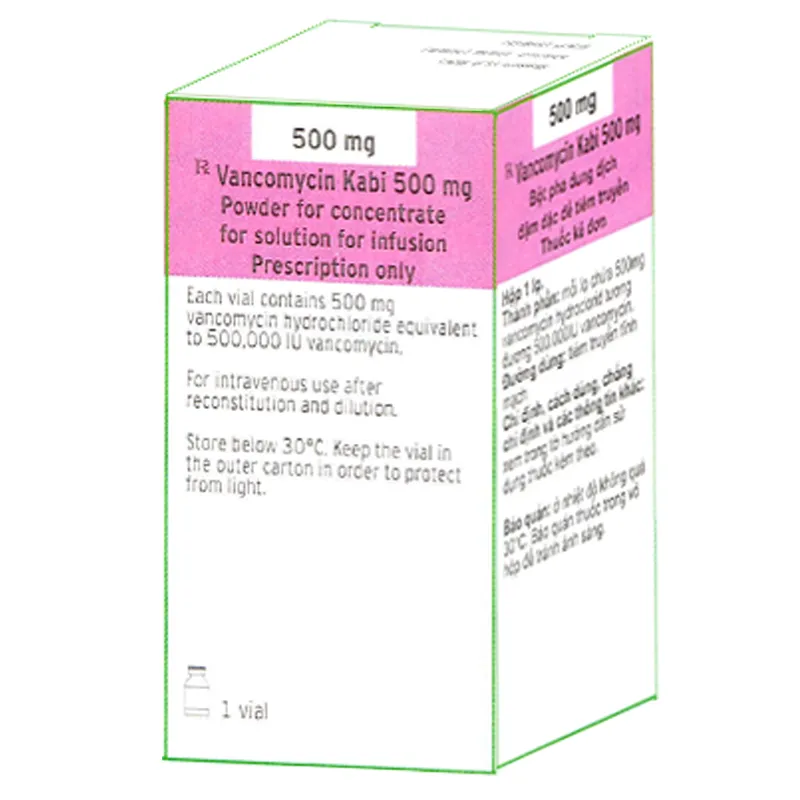
Table of Contents
- Package leaflet: Information for the user
- 1. What Vancomycin Kabi is and what it is used for
- 2. Important information before using Vancomycin Kabi
- 3. How to use Vancomycin Kabi
- 4. Possible adverse reactions
- 5. How to store Vancomycin Kabi
- 6. Contents of the Packaging and Other Information
- Information intended exclusively for healthcare professionals:
Package leaflet: Information for the user
Vancomycin Kabi, 500 mg, powder for the preparation of a concentrate solution for infusion
Vancomycin Kabi, 1000 mg, powder for the preparation of a concentrate solution for infusion
Vancomycin hydrochloride
Please read this leaflet carefully before using this medicine because it contains important information for you.
- Keep this leaflet. You may need to read it again.
- If you have any further questions, please ask your doctor or pharmacist.
- If you experience any side effects, including any not listed in this leaflet, please tell your doctor or pharmacist. See section 4.
Leaflet contents
- What Vancomycin Kabi is and what it is used for
- Important information before using Vancomycin Kabi
- How to use Vancomycin Kabi
- Possible side effects
- How to store Vancomycin Kabi
- Contents of the pack and other information
1. What Vancomycin Kabi is and what it is used for
Vancomycin Kabi is a medicine belonging to the class of antibiotics known as glycopeptides. Vancomycin Kabi works by killing certain bacteria that cause infections.
Vancomycin, as a powder, is used to prepare an infusion solution or an oral solution.
Vancomycin is administered intravenously (by infusion) in patients of all age groups for the treatment of the following serious infections:
- skin and soft tissue infections;
- bone and joint infections;
- lung infections known as pneumonia;
- infections of the inner lining of the heart (endocarditis), and prevention of endocarditis in high-risk patients undergoing major surgical procedures.
Vancomycin may also be administered orally in patients of all age groups for the treatment of infection of the mucous lining of the small and large intestine associated with mucosal damage (pseudomembranous colitis) caused by Clostridioides difficile bacteria.
2. Important information before using Vancomycin Kabi
When not to use Vancomycin Kabi
- If the patient is allergic (hypersensitive) to vancomycin.
- For intramuscular administration, due to the risk of tissue damage at the injection site.
Warnings and precautions
Severe adverse reactions, potentially leading to loss of vision, have occurred after injection of vancomycin into the eye.
Before starting treatment with Vancomycin Kabi, consult a doctor, hospital pharmacist, or nurse if:
- The patient has previously had an allergic reaction to teicoplanin, as this may indicate hypersensitivity to vancomycin as well;
- The patient has hearing problems, especially if elderly (hearing tests may be necessary during treatment);
- The patient has impaired kidney function (blood tests and monitoring of liver and kidney function may be required during treatment);
- The patient is receiving vancomycin by infusion instead of orally for the treatment of diarrhoea associated with Clostridioides difficile infection;
- The patient has ever experienced severe skin rash, skin peeling, blisters, and/or oral mucosal ulcers after receiving vancomycin.
During treatment with Vancomycin Kabi, consult a doctor, hospital pharmacist, or nurse if:
- The patient is being treated with vancomycin for a prolonged period (blood tests and monitoring of liver and kidney function may be necessary during treatment);
- The patient develops any skin reaction during treatment;
- The patient develops severe or persistent diarrhoea during or after completion of vancomycin treatment. In such a case, medical advice should be sought immediately. This may be a sign of intestinal inflammation (pseudomembranous colitis), which can occur during antibiotic therapy.
Severe skin reactions, including Stevens-Johnson syndrome, toxic epidermal necrolysis, drug reaction with eosinophilia and systemic symptoms (DRESS), and acute generalized exanthematous pustulosis (AGEP), have been reported during vancomycin therapy. If the patient experiences any of the symptoms described in section 4, vancomycin should be discontinued immediately and medical advice sought without delay.
Children
Vancomycin should be used with particular caution in premature infants and young infants, as their kidneys are not fully developed, which may lead to accumulation of vancomycin in the blood. In this age group, blood tests to monitor vancomycin blood levels may be necessary.
Concomitant administration of vancomycin and anaesthetic agents in children has been associated with skin flushing (erythema) and allergic reactions. Additionally, concomitant use with other drugs such as aminoglycoside antibiotics, non-steroidal anti-inflammatory drugs (NSAIDs, e.g. ibuprofen), or amphotericin B (an antifungal agent) may increase the risk of kidney damage, thus more frequent blood tests and kidney function monitoring may be required.
Vancomycin Kabi and other medicines
Inform the doctor about all medicines currently used, recently used, or planned for use.
The following medicines may interact with Vancomycin Kabi:
- Medicines used to prevent pain during surgery (anaesthetics);
- Muscle relaxants;
- Medicines used for bacterial infections (e.g. polymyxin B, piperacillin with tazobactam, colistin, bacitracin, aminoglycosides);
- An antifungal medicine (amphotericin B);
- An antituberculosis medicine (viomycin);
- An anticancer medicine (cisplatin);
- Potent diuretics (strong medicines that increase urine production), such as furosemide.
Pregnancy, breastfeeding, and fertility
If the patient is pregnant or breastfeeding, suspects she may be pregnant, or is planning to have a child, she should consult a doctor or pharmacist before using this medicine.
Vancomycin should be used during pregnancy and breastfeeding only if absolutely necessary. The doctor may advise discontinuation of breastfeeding.
Driving and using machines
Vancomycin has no effect or a negligible effect on the ability to drive and use machines.
3. How to use Vancomycin Kabi
Vancomycin Kabi will be administered to the patient by medical staff during a hospital stay.
The doctor will decide what dose the patient should receive each day and how long the treatment should last.
Dosage
The dose administered will depend on:
- the patient's age;
- the patient's body weight;
- the type of infection;
- the patient's kidney function;
- the patient's hearing status;
- any other medications the patient is taking.
Intravenous administration
Adults and adolescents (aged 12 years and older)
The dosage will be determined based on the patient's body weight. The usual infusion dose is 15 to 20 mg per kg of body weight. This dose is typically administered every 8 to 12 hours. In certain cases, the doctor may decide to use an initial dose of 30 mg per kg of body weight. The maximum daily dose should not exceed 2 g.
Children from one month of age and children under 12 years of age
The dose will be calculated based on the patient's body weight. The usual infusion dose is 10 to 15 mg per kg of body weight. This dose is typically administered every 6 hours.
Preterm infants and full-term newborns (from 0 to 27 days)
The dose will be calculated based on postconceptional age [the time elapsed from the first day of the mother's last menstrual period to delivery (gestational age) plus the time elapsed since birth (postnatal age)].
In elderly patients, pregnant women, and patients with impaired kidney function, a different dosage may be necessary.
Oral administration
Adults and adolescents (aged 12 to 18 years)
The recommended dose is 125 mg every 6 hours. In certain cases, the doctor may decide to use a higher daily dose, up to a maximum of 500 mg every 6 hours. The maximum daily dose should not exceed 2 g.
If the patient has previously had other gastrointestinal disorders (mucosal infection), a different dose and duration of treatment may be required.
Newborns, infants, and children under 12 years of age
The recommended dose is 10 mg per kg of body weight. This dose is typically administered every 6 hours. The maximum daily dose should not exceed 2 g.
Method of administration
Intravenous infusion (drip) means that the medicine flows from an infusion bottle or bag through a tube into one of the patient's veins. The doctor or nurse will always administer vancomycin into the bloodstream, never into muscle.
Vancomycin will be administered intravenously over at least 60 minutes.
For the treatment of gastrointestinal disorders (so-called pseudomembranous colitis), the medicine must be given as an oral solution (the patient will take the medicine by mouth).
Duration of treatment
The duration of treatment depends on the type of infection present in the patient and may last several weeks.
The duration of treatment may vary depending on the individual patient's response to therapy.
During treatment, the patient may undergo blood tests and urine analysis, and hearing tests may also be performed to monitor for signs of potential adverse effects.
Administration of a higher than recommended dose of Vancomycin Kabi
Since the medicine will be administered to the patient in hospital, it is unlikely that the patient will receive too high or too low a dose. Nevertheless, if the patient has any doubts, they should inform the doctor or nurse.
If there are any further questions regarding the use of this medicine, the patient should consult the doctor or nurse.
4. Possible adverse reactions
Like all medicines, this medicine can cause adverse reactions, although not everyone will experience them.
If the patient notices any of the following symptoms, treatment with
vancomycin must be stopped immediately and the doctor should be contacted without delay:
- Red, flat, target-like or circular rashes on the trunk, often with blisters in the centre, peeling of the skin, and ulceration of the mouth, throat, nose, genital organs and eyes. These severe skin rashes may be preceded by fever and flu-like symptoms (Stevens-Johnson syndrome and toxic epidermal necrolysis).
- Widespread rash, high fever and swollen lymph nodes (DRESS syndrome or drug hypersensitivity syndrome).
- Red, peeling rash with subcutaneous nodules and blisters, accompanied by fever at the beginning of treatment (acute generalised exanthematous pustulosis). Vancomycin may cause allergic reactions, although severe allergic reactions (anaphylactic shock) are rare. The doctor should be informed immediately if the patient experiences sudden wheezing, difficulty breathing, redness of the upper body, rash or itching.
Gastrointestinal absorption of vancomycin is minimal. However, if the patient has an inflammatory condition of the gastrointestinal tract, and particularly if there is also impaired kidney function, adverse reactions similar to those observed after intravenous infusion of vancomycin may occur.
The following adverse reactions have been reported:
Common adverse reactions (may occur in up to 1 in 10 patients):
- Low blood pressure;
- Shortness of breath, noisy breathing (high-pitched sound caused by an obstruction in the upper airways);
- Rash and inflammation of the oral mucosa, itching, itchy rash, urticaria;
- Kidney problems detectable by blood tests;
- Redness of the upper body and face, phlebitis.
Uncommon adverse reactions (may occur in up to 1 in 100 patients):
- Temporary or permanent hearing loss.
Rare adverse reactions (may occur in up to 1 in 1,000 patients):
- Decrease in the number of white blood cells, red blood cells and platelets (blood cells responsible for blood clotting);
- Increase in certain white blood cells in the blood;
- Balance disorders, tinnitus, dizziness;
- Vasculitis (inflammation of blood vessels);
- Nausea;
- Kidney inflammation and kidney failure;
- Chest pain and back muscle pain;
- Fever, chills.
Very rare adverse reactions (may occur in up to 1 in 10,000 patients):
- Severe skin allergic reaction, such as scaly or blistered skin, possibly associated with high fever and joint pain;
- Myocardial infarction (sudden cardiac arrest);
- Intestinal inflammation causing abdominal pain and diarrhoea, possibly with blood.
Frequency unknown (cannot be estimated from available data):
- Vomiting, diarrhoea;
- Confusion, drowsiness, lack of energy, swelling, fluid retention, reduced urine output;
- Rash with swelling and pain behind the ears, neck, groin, under the chin and under the arms (swollen lymph nodes), abnormal blood test results and liver function tests;
- Rash with blisters and fever.
Reporting of adverse reactions
If any adverse reactions occur, including those not listed in this leaflet, the patient should inform their doctor, hospital pharmacist or nurse. Adverse reactions can be reported directly to the Department of Monitoring Adverse Drug Reactions of the Office for Registration of Medicinal Products, Medical Devices and Biocidal Products
Al. Jerozolimskie 181C
02-222 Warsaw
Tel: +48 22 49 21 301
Fax: +48 22 49 21 309
Website: https://smz.ezdrowie.gov.pl
Adverse reactions can also be reported to the responsible entity.
Reporting adverse reactions helps to provide more information on the safety of the medicine.
5. How to store Vancomycin Kabi
The medical professional staff will be responsible for storage of the medicine.
Keep the medicine out of the sight and reach of children.
Do not use this medicine after the expiry date stated on the cardboard box and on the vial
after "EXP". The expiry date refers to the last day of the stated month.
Powder in the retail package
Store below 25 °C.
Keep the vial in the outer packaging to protect from light.
The shelf life of the reconstituted concentrate and the diluted medicinal product prepared from it is given below
in the additional information for medical personnel.
Medicines should not be disposed of via wastewater or household waste. Ask your pharmacist
how to dispose of medicines no longer required. These measures will help protect
the environment.
6. Contents of the Packaging and Other Information
What Vancomycin Kabi Contains
- The active substance is vancomycin.
Vancomycin Kabi 500 mg, powder for concentrate for solution for infusion
Each vial contains 500 mg of vancomycin hydrochloride, equivalent to 500,000 IU of vancomycin.
Vancomycin Kabi 1000 mg, powder for concentrate for solution for infusion
Each vial contains 1000 mg of vancomycin hydrochloride, equivalent to 1,000,000 IU of vancomycin.
What Vancomycin Kabi Looks Like and Contents of the Pack
Vancomycin Kabi 500 mg, powder for concentrate for solution for infusion
- White to cream-colored powder in a vial made of colorless glass (Type I), with a chlorobutyl rubber stopper (Type I) coated with silicone and a grey flip-off cap made of Aluminium/PP.
- Pack sizes: 1 vial, 10 vials.
Vancomycin Kabi 1000 mg, powder for concentrate for solution for infusion
- White to cream-colored powder in a vial made of colorless glass (Type I), with a chlorobutyl rubber stopper (Type I) coated with silicone and a green flip-off cap made of Aluminium/PP.
- Pack sizes: 1 vial, 10 vials.
The medicine is in powder form, which must be dissolved and diluted before administration to the patient.
Marketing Authorisation Holder and Manufacturer
Marketing Authorisation Holder
Fresenius Kabi Polska Sp. z o.o.
Al. Jerozolimskie 134
02-305 Warsaw
Poland
Manufacturer
Xellia Pharmaceuticals ApS
Dalslandsgade 11
2300 Copenhagen S
Denmark
For further information, please contact the Marketing Authorisation Holder:
Fresenius Kabi Polska Sp. z o.o.
Al. Jerozolimskie 134
02-305 Warsaw
Poland
Tel. +48 22 345 67 89
This medicinal product is authorised in the European Economic Area member states under the following names:
Belgium
Vancomycine Fresenius Kabi 500 mg powder for concentrate for solution for infusion
Vancomycine Fresenius Kabi 1000 mg powder for concentrate for solution for infusion
Bulgaria
Ванкомицин Каби 500 mg прах за концентрат за инфузионен разтвор
Ванкомицин Каби 1000 mg прах за концентрат за инфузионен разтвор
Czech Republic
Vancomycin Kabi
Denmark
Vancomycin Fresenius Kabi
Estonia
Vancomycin Kabi 500 mg
Vancomycin Kabi 1000 mg
Greece
Vancomycin/Kabi 500 mg κόνις για πυκνό σκεύασμα για παρασκευή διαλύματος προς έγχυση
Vancomycin/Kabi 1000 mg κόνις για πυκνό σκεύασμα για παρασκευή διαλύματος προς έγχυση
Netherlands
Vancomycine Fresenius Kabi 500 mg poeder voor concentraat voor oplossing voor infusie
Vancomycine Fresenius Kabi 1000 mg poeder voor concentraat voor oplossing voor infusie
Ireland
Vancomycin 500 mg powder for concentrate for solution for infusion
Vancomycin 1000 mg powder for concentrate for solution for infusion
Iceland
Vancomycin Fresenius Kabi
Lithuania
Vancomycin Kabi 500 mg milteliai infuzinio tirpalo koncentratui
Vancomycin Kabi 1000 mg milteliai infuzinio tirpalo koncentratui
Luxembourg
Vancomycin Kabi 500 mg Powder for a concentrate for solution for infusion or for oral solution
Vancomycin Kabi 1000 mg Powder for a concentrate for solution for infusion or for oral solution
Latvia
Vancomycin Kabi 500 mg pulveris infūziju šķīduma koncentrāta pagatavošanai
Vancomycin Kabi 1000 mg pulveris infūziju šķīduma koncentrāta pagatavošanai
Germany
Vancomycin Kabi 500 mg Pulver für ein Konzentrat zur Herstellung einer Infusionslösung oder einer Lösung zum Einnehmen
Vancomycin Kabi 1000 mg Pulver für ein Konzentrat zur Herstellung einer Infusionslösung oder einer Lösung zum Einnehmen
Norway
Vancomycin Fresenius Kabi 500 mg powder for concentrate for infusion solution, solution
Vancomycin Fresenius Kabi 1000 mg powder for concentrate for infusion solution, solution
Poland
Vancomycin Kabi
Portugal
Vancomicina Kabi
Romania
Vancomicina Kabi 500 mg pulbere pentru concentrat pentru soluție perfuzabilă
Vancomicina Kabi 1000 mg pulbere pentru concentrat pentru soluție perfuzabilă
Slovenia
Vankomicin Kabi 500 mg prašek za koncentrat za raztopino za infundiranje
Vankomicin Kabi 1000 mg prašek za koncentrat za raztopino za infundiranje
Slovakia
Vancomycin Kabi 500 mg
Vancomycin Kabi 1000 mg
Hungary
Vancomycin Kabi 500 mg por oldatos infúzióhoz való koncentrátumhoz
Vancomycin Kabi 1000 mg por oldatos infúzióhoz való koncentrátumhoz
United Kingdom
Vancomycin 500 mg powder for concentrate for solution for infusion
Vancomycin 1000 mg powder for concentrate for solution for infusion
Additional Sources of Information
Medical Advice/Education
Antibiotics are used to treat bacterial infections. They are ineffective against viral infections.
If your doctor has prescribed antibiotics, they are necessary to treat your current specific illness.
Despite antibiotic treatment, some bacteria may survive or continue to multiply. This phenomenon is known as resistance, which can result in antibiotics becoming ineffective. Inappropriate use of antibiotics promotes the development of resistance. Patients can also contribute to the emergence of resistance—and thus delay recovery or reduce the effectiveness of antibiotic therapy—by failing to follow the correct:
- dosage;
- treatment schedule;
- duration of treatment.
Therefore, to preserve the effectiveness of this medicine, you should:
1 – Use antibiotics only when prescribed by a doctor.
2 – Strictly follow the prescribed instructions for use.
3 – Do not reuse antibiotics without a doctor's recommendation, even to treat a similar illness.
Information intended exclusively for healthcare professionals:
Preparation
Concentrate
500 mg
Dissolve the contents of the vial in 10 ml of sterile water for injections.
1000 mg
Dissolve the contents of the vial in 20 ml of sterile water for injections.
Infusion solution
500 mg
Dilute the prepared concentrate (50 mg/ml) in at least 100 ml of 9 mg/ml (0.9%) sodium chloride solution for injection, 50 mg/ml (5%) glucose solution for injection, 9 mg/ml (0.9%) sodium chloride and 50 mg/ml (5%) glucose solution for injection, or Ringer's acetate solution for injection.
1000 mg
Dilute the prepared concentrate (50 mg/ml) in at least 200 ml of 9 mg/ml (0.9%) sodium chloride solution for injection, 50 mg/ml (5%) glucose solution for injection, 9 mg/ml (0.9%) sodium chloride and 50 mg/ml (5%) glucose solution for injection, or Ringer's acetate solution for injection.
The concentration in the prepared infusion solution should not exceed 0.5% w/v (5 mg/ml).
In patients with restricted fluid intake, a solution concentration of up to 10 mg/ml may be used; however, administration of such high concentrations may increase the risk of infusion-related adverse reactions.
Solutions obtained after reconstitution and dilution should be inspected visually for particulate matter and discoloration prior to administration. Only clear solutions free from visible particles should be used.
The infusion solution must not be mixed with other medicinal products.
Infusion
The appropriate dose should be administered slowly by intravenous infusion over at least one hour or at a rate not exceeding 10 mg/min (whichever is longer), corresponding to 2 ml/min when administering a 5 mg/ml solution.
Oral solution
A volume of 2.5 ml of the prepared concentrate contains 125 mg of vancomycin hydrochloride and should be diluted with 5 ml of water, i.e., one volume of the prepared concentrate should be diluted with two volumes of water. The diluted solution should be given orally or administered via a nasogastric tube.
A taste-masking agent, such as commonly used flavoring syrups, may be added to the prepared solution prior to administration.
Dosage
Intravenous administration
The initial dose should be individually adjusted according to total body weight. Usual dosage:
Patients aged 12 years and older
15 to 20 mg/kg body weight every 8 to 12 hours (doses greater than 2 g per dose should not be used).
Neonates from one month of age and children under 12 years of age
10 to 15 mg/kg body weight every 6 hours.
Term neonates (from birth to 27 days postnatal age) and preterm neonates (from birth to expected date of delivery plus 27 days)
To determine the appropriate dosing regimen for neonates, advice should be sought from a physician experienced in treating neonates. One possible vancomycin dosing regimen for neonates is presented in the table below:
| PMA (weeks) | Dose (mg/kg b.w.) | Interval between doses (hours) |
| <29 | 15 | 24 |
| 29-35 | 15 | 12 |
| >35 | 15 | 8 |
PMA: postmenstrual age [time elapsed from the first day of the last menstrual period to birth (gestational age) plus time elapsed since birth (postnatal age)].
Oral administration
Patients aged 12 years and older
Treatment of Clostridioides difficile infections (CDI):
The recommended dose of vancomycin is 125 mg every 6 hours for 10 days in the case of a first episode of non-severe Clostridioides difficile infection. The dose may be increased to 500 mg every 6 hours for 10 days in the case of severe or complicated infections. The maximum daily dose of 2 g must not be exceeded.
Newborns, infants and children under 12 years of age
The recommended dose of vancomycin is 10 mg/kg body weight every 6 hours for 10 days administered orally. The maximum daily dose of 2 g must not be exceeded.
Storage
Vancomycin Kabi, powder for concentrate solution for infusion, should be stored below 25°C. The vial should be kept in the outer packaging to protect from light.
Vancomycin Kabi, powder for concentrate solution for infusion, must not be used after the expiry date stated on the carton.
Prepared concentrate
Intravenous administration: the prepared concentrate should be diluted immediately after preparation.
Oral administration: chemical and physical stability of the concentrate has been demonstrated for 96 hours at 2–8°C.
Diluted medicinal product
From a microbiological and physicochemical point of view, the medicinal product should be used immediately after dilution.