Ursopol
Poland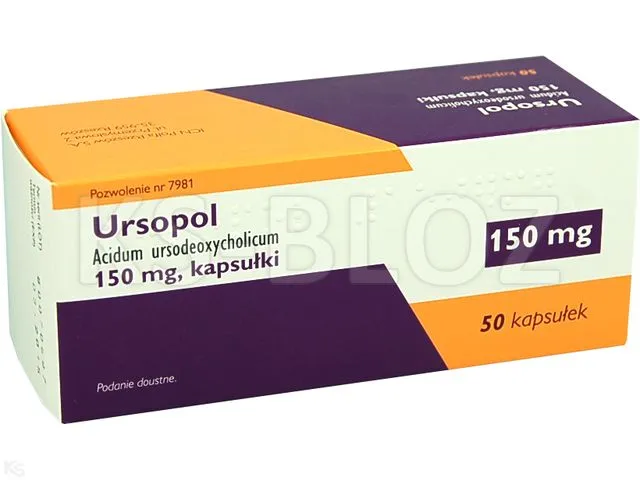
Table of Contents
Package leaflet: Information for the patient
Ursopol, 150 mg, hard capsules
Ursopol, 300 mg, hard capsules
Acidum ursodeoxycholicum
Please read the entire leaflet carefully before taking this medicine, as it contains
important information for the patient.
- Keep this leaflet, as you may need to read it again.
- If you have any questions, please consult your doctor or pharmacist.
- This medicine has been prescribed for a specific individual. Do not pass it on to others. This medicine may harm others, even if their symptoms are similar.
- If you experience any adverse reactions, including any not listed in this leaflet, inform your doctor or pharmacist. See section 4.
Table of contents:
- What Ursopol is and what it is used for
- Important information before taking Ursopol
- How to take Ursopol
- Possible side effects
- How to store Ursopol
- Contents of the pack and other information
1. What Ursopol is and what it is used for
Ursopol is a medicine containing ursodeoxycholic acid as the active substance—a bile acid occurring in small physiological amounts in bile.
It inhibits cholesterol absorption in the intestines, reduces cholesterol secretion into bile, and causes gradual dissolution of cholesterol deposits. Thus, it prevents the formation of cholesterol stones and dissolves existing cholesterol stones (provided they are not too large or calcified). In liver and biliary tract diseases, the drug exerts a protective effect on liver cells, improves their secretory function, and regulates immunological processes (i.e., processes involving the immune system).
Ursopol is indicated:
- for dissolution of radiolucent cholesterol gallstones with a diameter not exceeding 15 mm in patients with preserved gallbladder function;
- for symptomatic treatment of primary biliary cirrhosis, provided that decompensated cirrhosis is absent;
- for symptomatic treatment of other liver and biliary tract diseases of various etiologies;
- for symptomatic treatment of intrahepatic cholestasis of pregnancy during the second and third trimesters;
- for symptomatic treatment of bile reflux gastritis;
- for symptomatic treatment of hepatic and biliary dysfunction associated with cystic fibrosis in children and adolescents aged 6 to 18 years;
- for prophylaxis of gallstone formation in adult patients after bariatric surgery and in patients rapidly losing body weight.
2. Important information before taking Ursopol
When not to take Ursopol
- if the patient is allergic to ursodeoxycholic acid, other bile acids, or any of the other ingredients of this medicine (listed in section 6)
- if the patient has acute inflammation of the gallbladder or bile ducts
- if the patient has obstruction of the common bile duct or cystic duct
- if the patient experiences frequent upper abdominal pain resembling colic (episodes of biliary colic)
- if the patient has calcified gallstones visible on X-ray
- if the patient has impaired gallbladder contractility
- if the gallbladder is not visible on X-ray imaging
If there is any uncertainty regarding the above symptoms, consult a doctor. If any of the above conditions occurred in the past, inform the doctor.
Warnings and precautions
Ursopol should be used under medical supervision.
During treatment, the doctor will recommend monitoring liver function parameters every 4 weeks during the first 3 months of treatment, and then every 3 months thereafter.
If Ursopol is used to dissolve gallstones, the doctor should perform an ultrasound examination of the gallbladder after the first 6–10 months of treatment.
Female patients taking Ursopol for gallstone dissolution should use effective non-hormonal contraceptive methods, as hormonal contraceptives may promote gallstone formation.
When Ursopol is used in the treatment of primary biliary cholangitis (PBC), symptoms such as itching may occasionally worsen at the beginning of treatment. In such cases, contact the doctor to consider reducing the initial dose.
If chronic diarrhoea occurs, seek medical advice immediately, as it may be necessary to reduce the dose or discontinue treatment with Ursopol.
Prophylaxis of gallstone formation
Adult patients after bariatric surgery or those rapidly losing body weight and treated with Ursopol require medical monitoring of therapy due to possible changes in ursodeoxycholic acid absorption and the occurrence of diarrhoea, which may lead to dehydration and electrolyte imbalance.
Children and adolescents
Ursopol may be used in children and adolescents aged 6 to 18 years with liver and biliary tract disorders associated with cystic fibrosis.
Ursopol and other medicines
Inform the doctor about all medicines currently or recently taken, as well as any medicines planned for future use.
The effect of Ursopol may be reduced when taken concurrently with the following medicines:
- cholestyramine, colestipol (medicines that lower blood cholesterol levels)
- antacids containing aluminium compounds (used, among others, to relieve symptoms of acid reflux and heartburn). If use of a medicine containing any of these substances is necessary, it should be taken two hours before or two hours after taking Ursopol.
Ursopol may reduce the effect of:
- ciprofloxacin (an antibiotic used to treat bacterial infections)
- dapsone (used in the treatment of acne)
- nifedipine (used to lower blood pressure) and other drugs metabolized in a similar way. If necessary, the doctor may adjust the doses of these medicines.
Ursopol may alter the effect of:
- cyclosporine (an immunosuppressive medicine used, among others, after organ transplantation). In patients treated with cyclosporine, the doctor may recommend monitoring its blood concentration and, if necessary, adjusting the cyclosporine dose;
- rosuvastatin (a medicine used to lower high blood cholesterol levels).
If the patient is taking Ursopol to dissolve gallstones, they should inform the doctor about any concomitant use of oestrogen-containing medicines or cholesterol-lowering drugs such as clofibrate. These medicines may promote gallstone formation, counteracting the therapeutic effect of Ursopol.
Ursopol with food and drink
Ursopol should be taken during meals, with a small amount of liquid.
Pregnancy, breastfeeding, and fertility
If the patient is pregnant, breastfeeding, suspects she may be pregnant, or is planning to have a child, she should consult a doctor or pharmacist before taking this medicine.
Pregnancy
Ursopol should not be used during pregnancy unless the doctor considers it absolutely necessary.
Before starting treatment, the doctor should confirm that the patient is not pregnant. Early pregnancy should be ruled out before initiating therapy.
Ursopol should not be used during the first trimester of pregnancy unless clearly necessary. Ursopol may be used during the second and third trimesters of pregnancy if the doctor considers it necessary.
Women of childbearing potential taking Ursopol should use effective contraceptive methods. In female patients taking Ursopol for gallstone dissolution, effective non-hormonal contraception should be used, as oral hormonal contraceptives may promote gallstone formation.
Breastfeeding
In several documented cases, the concentration of ursodeoxycholic acid in the breast milk of nursing mothers has been found to be very low; therefore, adverse effects in breastfed infants are not expected.
Driving and operating machinery
Ursopol has no effect or a negligible effect on the ability to drive and operate machinery.
Ursopol 150 mg and 300 mg contain the colouring agent azorubine
This medicine may cause allergic reactions.
Ursopol 150 mg contains lactose monohydrate
If the patient has previously been diagnosed with intolerance to certain sugars, the patient should consult a doctor before taking this medicine.
Ursopol 300 mg contains sodium
This medicine contains less than 1 mmol (23 mg) of sodium per capsule, meaning the medicine is considered "sodium-free".
3. How to take Ursopol
This medicine should always be taken according to the doctor's instructions. If in doubt, consult your doctor or pharmacist.
The capsules should be taken whole, during meals, with a small amount of liquid.
Adults:
Gallstones
Oral administration: 8 to 10 mg/kg body weight per day in 2 or 3 divided doses taken during meals
(for example: for a patient weighing 75 kg, the dose is 2 capsules of 150 mg twice daily or 1 capsule of 300 mg twice daily). In obese patients, the dose may be increased to 15 mg/kg body weight per day.
Treatment is long-term and usually lasts from 6 months to 2 years, depending on the size and composition of the stones. It is recommended to continue treatment for at least 3 months after radiological or ultrasonographic confirmation of stone dissolution.
Primary biliary cirrhosis
Oral administration: 13 to 15 mg/kg body weight per day in 2 or 3 divided doses over a period of 1 to 2 years
(for example: for a patient weighing 75 kg, the dose is 7 capsules of 150 mg per day, i.e. 2 capsules in the morning, 2 at noon, and 3 in the evening). Capsules containing a higher dose of ursodeoxycholic acid may also be used. The capsules should be taken whole, during meals, with a small amount of liquid.
In rare cases, in patients with primary biliary cirrhosis, symptoms (e.g. pruritus) may worsen at the beginning of treatment. If this occurs, the doctor may reduce the daily dose of Ursopol and then gradually increase it (weekly) until the recommended dose is reached.
Other liver and biliary tract diseases of various etiologies:
10 to 20 mg/kg body weight per day in 3 divided doses. This corresponds to 4 to 14 capsules of 150 mg or 2 to 7 capsules of 300 mg. If an equal division of the daily dose is not possible, the larger dose should be taken in the evening.
Intrahepatic cholestasis of pregnancy:
10 to 16 mg/kg body weight per day in 2–3 divided doses. This corresponds to 4 to 10 capsules of 150 mg or 2 to 5 capsules of 300 mg.
Gastric mucosal inflammation caused by bile reflux:
3 capsules of 150 mg twice daily or 1 capsule of 300 mg three times daily.
Prophylaxis of gallstones in adult patients after bariatric surgery and in patients rapidly losing body weight:
2 capsules of 150 mg twice daily or 1 capsule of 300 mg twice daily (total 600 mg per day) for at least 6 months. Treatment should begin <10 days after surgery (in clinical studies, treatment initiation ranged from 2 to 30 days post-surgery), but the decision on when to start therapy is made by the physician.
Use in children and adolescents
Liver and biliary tract disorders associated with cystic fibrosis
Treatment should be initiated at 20 mg/kg body weight per day in 2–3 divided doses. This corresponds, depending on body weight, to 4 to 10 capsules of 150 mg or 2 to 5 capsules of 300 mg. If necessary, the dose may be increased to 30 mg/kg body weight per day.
Elderly patients
No dose adjustment is required.
Overdose of Ursopol
If too high a dose of the medicine is taken, contact your doctor.
Diarrhea may occur after ingestion of an excessive amount of the medicine. If diarrhea develops, the doctor will reduce the dose; if diarrhea persists despite dose reduction, discontinuation of the medicine will be recommended. Fluids and electrolytes should be replenished during episodes of diarrhea.
Symptomatic overdose is, however, unlikely because increasing the dose leads to reduced absorption of ursodeoxycholic acid (a greater amount is excreted in feces).
Missed dose of Ursopol
If a dose is missed at the scheduled time, take it as soon as possible. However, if the next dose is approaching, skip the missed dose. Do not take a double dose to make up for a missed dose.
Stopping Ursopol
If you have any further questions about the use of this medicine, consult your doctor or pharmacist.
4. Possible adverse effects
Like all medicines, this medicine can cause adverse effects, although they do not occur in everyone.
Common adverse effects (may occur in up to 1 in 10 people):
- pale stools, diarrhoea.
Very rare adverse effects (may occur in up to 1 in 10,000 people):
- severe pain in the upper right quadrant of the abdomen (in patients with primary biliary cirrhosis),
- calcification of gallstones,
- worsening of liver disease symptoms, partially reversible after discontinuation of the medicine (in patients with primary biliary cirrhosis),
- urticaria.
Reporting of adverse effects
If any adverse effects occur, including any adverse effects not listed in this leaflet, inform a doctor or pharmacist. Adverse effects can be reported directly to the Department of Monitoring Adverse Drug Reactions of the Office for Registration of Medicinal Products, Medical Devices and Biocidal Products, Al. Jerozolimskie 181 C, 02-222 Warsaw, Tel.: +48 22 49 21 301, Fax: +48 22 49 21 309, Website: https://smz.ezdrowie.gov.pl
Adverse effects can also be reported to the marketing authorisation holder.
Reporting adverse effects allows further information on the safety of the medicine to be collected.
5. How to store Ursopol
Keep this medicine out of sight and reach of children.
Store the medicine at a temperature not exceeding 25°C. Keep in the original packaging.
Do not use this medicine after the expiry date stated on the packaging.
The expiry date refers to the last day of the stated month.
Medicines must not be disposed of via wastewater or household waste. Ask
your pharmacist how to dispose of medicines no longer required. This will help
protect the environment.
6. Contents of the pack and other information
What Ursopol contains
- The active substance is ursodeoxycholic acid (150 mg per capsule or 300 mg per capsule).
- The other ingredients are:
Ursopol 150 mg: microcrystalline cellulose, monohydrate lactose, magnesium stearate, talc, yellow iron oxide (E 172), titanium dioxide (E 171), gelatin, azorubine (E 122), quinoline yellow (E 104), patent blue V (E 131).
Ursopol 300 mg: microcrystalline cellulose, colloidal silicon dioxide, sodium lauryl sulfate, talc, magnesium stearate, yellow iron oxide (E 172), quinoline yellow (E 104), indigo carmine (E 132), titanium dioxide (E 171), gelatin, azorubine (E 122), patent blue V (E 131).
What Ursopol looks like and contents of the pack
Ursopol 150 mg: yellow-brown capsules filled with light cream-colored powder.
Ursopol 300 mg: light green-brown capsules filled with light cream-colored powder.
Aluminum/PVC blisters in a cardboard box.
Ursopol 150 mg: 20 capsules (2 blisters of 10 capsules), 50 capsules (5 blisters of 10 capsules)
Ursopol 300 mg: 50 capsules (5 blisters of 10 capsules)
Marketing Authorisation Holder:
Bausch Health Ireland Limited
3013 Lake Drive
Citywest Business Campus
Dublin 24, D24PPT3
Ireland
Tel.: +48 17 865 51 00
Manufacturer:
ICN Polfa Rzeszów S.A.
Przemysłowa 2 Street
35-105 Rzeszów
Poland