Undofen amorolfine
Poland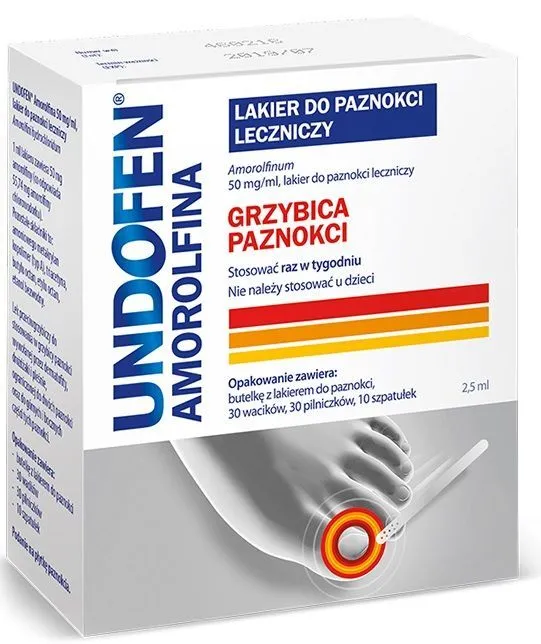
Table of Contents
Package leaflet: Information for the patient
Undofen Amorolfina, 50 mg/ml, medicinal nail lacquer
Amorolfinum
Please read all of this leaflet carefully before using this medicine, because it contains
important information for the patient.
This medicine should always be used exactly as described in this patient leaflet or as directed by
a doctor or pharmacist.
- Keep this leaflet so that it can be read again if necessary.
- If advice or additional information is needed, consult a pharmacist.
- If the patient experiences any adverse reactions, including any possible adverse reactions not listed in this leaflet, inform a doctor or pharmacist. See section 4.
- If there is no improvement or if the patient feels worse, contact a doctor.
Table of contents
- What Undofen Amorolfina is and what it is used for
- Important information before using Undofen Amorolfina
- How to use Undofen Amorolfina
- Possible side effects
- How to store Undofen Amorolfina
- Contents of the pack and other information
1. What Undofen Amorolfina is and what it is used for
- Undofen Amorolfina is an antifungal medicine in the form of a medicinal nail lacquer for topical use. The active substance, amorolfine, acts against various types of fungi causing nail fungal infections.
- Undofen Amorolfina is indicated for the treatment of fungal nail infections caused by dermatophytes, yeasts and moulds, limited to two nails and affecting only the upper and lateral parts of these nails (as shown in the first picture, for example). The medicine may be used when fungal infection of the nail plate has led to a change in nail colour (white, yellow or brown discolouration) or nail thickening. If the infected nail looks more like those shown in the second or third picture, consult a doctor before using this medicine.
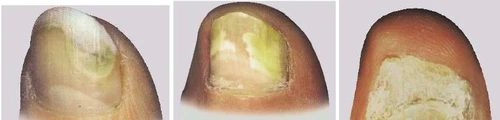
1 2 3
2. Important information before using Undofen Amorolfina
When not to use Undofen Amorolfina:
- if the patient is allergic to amorolfine or to any of the other ingredients of this medicine (listed in section 6).
Warnings and precautions
Before starting treatment with Undofen Amorolfina, consult a doctor or
pharmacist:
- if the patient has diabetes.
- if the patient is being treated for immunodeficiency.
- if the patient has poor blood circulation in the hands and feet.
- if the nails are severely damaged or infected.
This medicine is intended for external use on the nail plate only. Avoid contact of the nail lacquer with eyes, ears, and mucous membranes (mouth or nose). If the product comes into contact with eyes or ears, rinse immediately with water and seek immediate medical advice from a doctor or the nearest hospital.
The product is highly flammable. Keep away from fire. Do not use near open flames, lit cigarettes, or certain devices (e.g. hair dryers).
Wear impermeable protective gloves when in contact with solvents. This will protect the applied medicinal lacquer from dissolving.
Children and adolescents
Undofen Amorolfina should not be used in children and adolescents, as there is insufficient data on its use in this age group.
Undofen Amorolfina and other medicines
Inform your doctor or pharmacist about all medicines the patient is currently taking or has recently taken, as well as any medicines planned for future use.
No studies have been conducted on potential interactions between Undofen Amorolfina and other medicines.
Use with other nail polishes
During treatment, do not apply cosmetic nail polishes or artificial nails to the nail plate.
Pregnancy, breastfeeding and fertility
If the patient is pregnant or breastfeeding, suspects she may be pregnant, or is planning to become pregnant, she should consult a doctor or pharmacist before using this medicine.
Do not use this medicine during pregnancy or breastfeeding unless the doctor considers it absolutely necessary.
Driving and operating machinery
No influence of Undofen Amorolfina on the ability to drive or operate machinery has been observed.
This medicine contains ethanol
This medicine contains 482.5 mg of alcohol (ethanol) per ml of nail lacquer and may cause a burning sensation on damaged skin.
3. How to use Undofen Amorolfina
This medicine should always be used exactly as described in this patient leaflet or as directed by your doctor or pharmacist. If in doubt, consult your doctor or pharmacist.
Before starting treatment
On the diagram below, mark the diseased area of the nail. This information will be helpful when assessing the effectiveness of treatment. This procedure should then be repeated every three months until healthy nail has fully regrown. If fungal infection affects more than one nail, the diagram should reflect the appearance of the nail most severely affected. Keep this record to show your pharmacist or doctor if treatment effectiveness needs to be evaluated.

Before treatment 3 months 6 months 9 months
Dosage and method of use
- Undofen Amorolfina medicinal nail lacquer should be applied once weekly to the surface of infected fingernails or toenails.
- Nails grow slowly, so it may take 2–3 months before improvement is noticeable.
- It is important to continue applying the lacquer until the infection has completely resolved and healthy nail has regrown.
Apply the lacquer to the nail as described below.
Step 1. Before the first application of Undofen Amorolfina, the infected nail
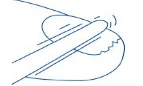
(particularly its surface) should be thoroughly filed using a nail file.
WARNING: To avoid spreading the infection, nail files used on infected nails must not be used on healthy nails. Also, ensure that no other person uses these files.
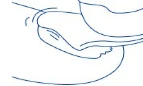
Step 2. Next, clean and degrease the nail surface using the alcohol-soaked swab provided. Before each subsequent application, prepare the nail as described above, and always clean off any remaining lacquer first using the nail file and swabs.
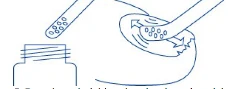
Step 3. Apply the lacquer with the spatula to the entire surface of the nail or nails. Before applying the lacquer, immerse the spatula into the lacquer bottle and remove it without wiping off excess lacquer on the rim.
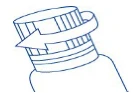
Step 4. After applying the lacquer, close the bottle tightly as quickly as possible.
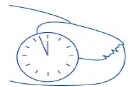
Step 5. Allow the lacquer to dry for 3 to 5 minutes.
WARNING: When working with organic solvents (thinners, paint thinner, etc.), wear impermeable gloves to protect the product from being removed from the nail.
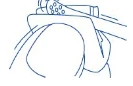
Step 6. After use, clean the spatula using the same swab used previously to clean the nail plate. Avoid contact between the swab and the nail. Dispose of the swab carefully, as it is flammable.
Duration of treatment
Treatment should be continued without interruption until the nail plate has fully regenerated and all infected areas have healed completely. The duration of treatment primarily depends on the severity and location of the infection. Typically, treatment lasts approximately 6 months for fingernails and about 9 to 12 months for toenails. Assessment of treatment efficacy is recommended approximately every 3 months.
Missed dose of Undofen Amorolfina
Do not be concerned if you forget to apply the lacquer at the scheduled time. As soon as you remember, resume treatment exactly as before.
If you have any further doubts regarding the use of this medicine, consult your doctor or pharmacist.
4. Possible adverse reactions
Like all medicinal products, this medicine can cause adverse reactions, although not everybody will experience them.
The adverse reactions listed below are categorized by frequency of occurrence:
Very common (affects more than 1 in 10 people)
Common (affects less than 1 in 10 people)
Uncommon (affects less than 1 in 100 people)
Rare (affects less than 1 in 1,000 people)
Very rare (affects less than 1 in 10,000 people)
Frequency not known (cannot be estimated from the available data).
Rare: nail plate disorders, nail brittleness, change in nail color, excessive nail fragility with nail layering.
Very rare: skin burning sensation.
Frequency not known: erythema, pruritus, contact dermatitis, urticaria, skin blisters.
Adverse symptoms may also be caused by the development of onychomycosis.
Reporting of adverse reactions
If any adverse reactions occur, including any adverse reactions not listed in this leaflet, inform your doctor or pharmacist. Adverse reactions can be reported directly to the Department for Monitoring Adverse Drug Reactions of the Office for Registration of Medicinal Products, Medical Devices and Biocidal Products:
Al. Jerozolimskie 181c,
02-222 Warsaw,
Phone: +48 22 49 21 301,
Fax: +48 22 49 21 309,
Website: https://smz.ezdrowie.gov.pl
Adverse reactions can also be reported to the marketing authorization holder.
Reporting adverse reactions helps to provide more information on the safety of the medicine.
5. How to store Undofen Amorolfina
Keep the medicine out of sight and reach of children.
Store at a temperature below 30°C. Protect from high temperatures. Store the bottle upright and tightly closed.
Do not use this medicine after the expiry date stated on the carton. The expiry date refers to the last day of the stated month.
Medicines must not be disposed of via the sewage system or household waste. Ask your pharmacist how to dispose of medicines no longer in use. Such measures will help protect the environment.
6. Contents of the pack and other information
What Undofen Amorolfina contains
- The active substance is amorolfine. One millilitre of the nail lacquer contains 50 mg of amorolfine (equivalent to 55.74 mg of amorolfine hydrochloride).
- The other ingredients are: ammonio methacrylate copolymer (type A), triacetin, butyl acetate, ethyl acetate, anhydrous ethanol.
What Undofen Amorolfina looks like and contents of the pack
An amber glass bottle (type I or type III) with a screw cap made of HDPE and a tamper-evident ring,
packaged in a cardboard box.
Pack sizes: 2.5 ml, 3 ml
The bottle is packaged together with 10 spatulas, 30 nail files, and 30 swabs.
Not all pack sizes may be marketed.
Marketing Authorisation Holder and Manufacturer
Marketing Authorisation Holder
Perrigo Poland Sp. z o.o.
ul. Domaniewska 48
02-672 Warsaw
tel.: +48 (22) 852 55 51
Manufacturer
Chanelle Medical Unlimited Company
Dublin Road
Loughrea
Co. Galway
Ireland