Ultrapiryna
Poland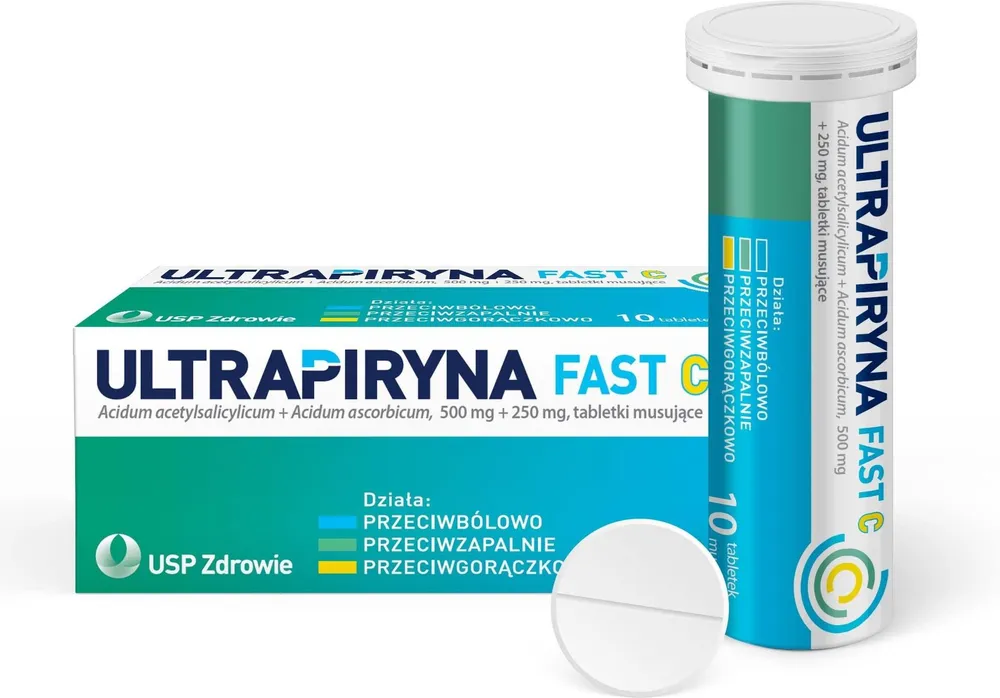
Table of Contents
- Package leaflet: Information for the patient
- 1. What Ultrapiryna is and what it is used for
- 2. Important Information Before Using the Medicine Ultrapiryna
- 3. How to use the medicine Ultrapiryna
- 4. Possible adverse effects
- 5. How to store the medicine Ultrapiryna
- 6. Contents of the packaging and other information
Package leaflet: Information for the patient
ULTRAPIRYNA, 325 mg, enteric-coated tablets
Acidum acetylsalicylicum
Please read this leaflet carefully before using the medicine, because it contains
important information for the patient.
This medicine should always be used exactly as described in this patient leaflet or as directed by a
physician or pharmacist.
- Keep this leaflet, as you may need to read it again.
- If you need advice or further information, please consult your pharmacist.
- If you experience any adverse reactions, including any possible side effects not listed in this leaflet, inform your doctor or pharmacist. See section 4.
- If there is no improvement after 3–5 days, or if you feel worse, consult your doctor.
Table of contents
- What Ultrapiryna is and what it is used for
- Important information before taking Ultrapiryna
- How to take Ultrapiryna
- Possible side effects
- How to store Ultrapiryna
- Contents of the pack and other information
1. What Ultrapiryna is and what it is used for
Acetylsalicylic acid contained in Ultrapiryna has analgesic, antipyretic and anti-inflammatory properties.
Indications for use
The main uses of Ultrapiryna are:
- colds, influenza, febrile conditions;
- chronic treatment of pain and inflammatory conditions, for example in rheumatoid arthritis, juvenile arthritis, systemic lupus erythematosus, osteoarthritis, Reiter's syndrome (conjunctivitis, mucocutaneous lesions, arthritis) and periarticular disorders;
- mild to moderate toothache, headache, and menstrual pain.
2. Important Information Before Using the Medicine Ultrapiryna
When not to use Ultrapiryna:
- if the patient is allergic to acetylsalicylic acid, other salicylates, or any of the other components of this medicine (listed in section 6);
- in conditions associated with bleeding or risk of bleeding, such as:
- haemorrhagic diathesis,
- gastric or duodenal ulcer disease;
- during pregnancy (in the third trimester of pregnancy);
- in patients with severe hepatic or renal insufficiency;
- in patients with a history of bronchial asthma attacks induced by salicylates or substances with similar effects, particularly non-steroidal anti-inflammatory drugs (NSAIDs);
- in children and adolescents under 16 years of age, unless otherwise directed by a physician, due to the risk of Reye’s syndrome, a rare but serious condition causing liver and brain damage (see also "Warnings and precautions", below);
- concomitantly with methotrexate at doses of 15 mg per week or higher.
Warnings and precautions
Before starting treatment with Ultrapiryna, consult your doctor or pharmacist:
- during pregnancy: first and second trimester;
- if the patient using the medicine is breastfeeding;
- in case of allergy to other anti-inflammatory or anti-rheumatic drugs or other allergenic substances;
- in case of severe liver or kidney disease;
- if the patient taking Ultrapiryna is simultaneously using anticoagulant drugs such as: heparin, coumarin;
- if the patient previously experienced gastric and/or duodenal ulcer disease while taking Ultrapiryna;
- if the patient has a tendency to bleed (haemophilia, vitamin K deficiency);
- in patients with glucose-6-phosphate dehydrogenase deficiency;
- during concomitant use of ibuprofen;
- if the patient suffers from bronchial asthma, chronic respiratory disorders, hay fever, nasal mucosal edema, or nasal polyps, as such patients may be more likely than others to react to NSAIDs, including acetylsalicylic acid, with asthma attacks, angioedema, or urticaria;
- when the patient taking Ultrapiryna is on a salt-free diet;
- in patients with reduced uric acid excretion, the medicine may trigger an attack of gout;
- in patients with glucose-6-phosphate dehydrogenase deficiency.
Consult your doctor even if the above warnings refer to conditions that occurred in the past.
Prolonged use of medicines containing acetylsalicylic acid may cause headaches that worsen with continued dosing.
Long-term use of analgesics, especially those containing multiple active substances, may lead to severe kidney dysfunction and renal failure.
During certain viral infections, particularly influenza A virus, influenza B virus, or varicella (chickenpox), especially in children and adolescents, there is a risk of developing Reye’s syndrome—a rare but life-threatening condition (see section "When not to use Ultrapiryna", above). Persistent vomiting during an infection may indicate the onset of Reye’s syndrome, requiring immediate medical attention.
The risk of Reye’s syndrome during viral infections may increase if acetylsalicylic acid is administered concurrently, although a causal relationship has not been proven.
Do not use at least 5 days before a planned surgical procedure due to the risk of increased bleeding.
Ultrapiryna may cause increased liver enzyme activity, increased blood urea and creatinine levels, hyperkalemia (increased potassium levels in blood), proteinuria, and prolonged clotting time.
Children and adolescents
Ultrapiryna should not be given to children and adolescents under 16 years of age (see "When not to use Ultrapiryna" and "Warnings and precautions" above).
Ultrapiryna and other medicines
Inform your doctor about all medicines you are currently taking, including those available without a prescription.
Ultrapiryna may:
- reduce the effectiveness of certain antihypertensive drugs;
- enhance the effect of anticoagulant drugs, increasing the risk of bleeding;
- intensify or alter the effects of drugs used for epilepsy;
- enhance the effect and toxic action of methotrexate;
- enhance the effect of oral antidiabetic drugs;
- reduce the effectiveness of drugs used for gout;
- reduce the effectiveness of spironolactone;
- increase the risk of peptic ulcer disease, gastrointestinal bleeding, and kidney damage when used concomitantly with non-steroidal anti-inflammatory drugs and glucocorticoids;
- increase digoxin plasma concentration;
- increase valproic acid plasma concentration and cause its toxic effects;
- exhibit reduced efficacy when used concomitantly with ibuprofen.
- Metamizole (a substance with analgesic and antipyretic properties) may reduce the effect of acetylsalicylic acid on platelet aggregation (clumping of blood cells and clot formation) when both drugs are used together. Therefore, caution is advised when using metamizole in patients receiving acetylsalicylic acid.
Pregnancy, breastfeeding, and fertility
If the patient is pregnant, breastfeeding, suspects she may be pregnant, or is planning to conceive, she should consult her doctor or pharmacist before using this medicine.
Use during early pregnancy increases the risk of miscarriage and congenital heart defects. Ultrapiryna should not be used in women during the first and second trimesters of pregnancy.
In the third trimester of pregnancy, the medicine may adversely affect the circulatory and respiratory systems and impair kidney function. Towards the end of pregnancy, use of Ultrapiryna may prolong bleeding time even with low doses and inhibit uterine contractions, leading to delayed or prolonged labor.
Therefore, Ultrapiryna must not be used during the third trimester of pregnancy.
Particular caution is required when using Ultrapiryna in breastfeeding women.
Ultrapiryna, at a dose equal to or greater than 500 mg of acetylsalicylic acid per day, belongs to the group of medicines (non-steroidal anti-inflammatory drugs) that may adversely affect fertility in women. This effect is reversible and resolves after discontinuation of therapy.
Driving and operating machinery
Ultrapiryna has no effect on the ability to drive vehicles or operate machinery.
The medicine contains less than 1 mmol (23 mg) of sodium per tablet, meaning it is considered "sodium-free".
3. How to use the medicine Ultrapiryna
This medicine should always be taken exactly as described in this patient leaflet or as directed by your doctor or pharmacist. If in doubt, consult your doctor or pharmacist.
The tablets should be taken orally, preferably after meals, with a large amount of liquid. Unless otherwise advised by a doctor, the following dosage applies: for pain relief and fever reduction – 1 tablet every 4 hours or 1 to 2 tablets every 6 hours.
In adolescents over 16 years of age, the dose should not exceed 1500 mg of acetylsalicylic acid per day.
Do not use in children and adolescents under 16 years of age (see “When not to use Ultrapiryna” and “Warnings and precautions” in section 2).
If you feel that the effect of Ultrapiryna is too strong or too weak, consult your doctor.
Taking more than the recommended dose of Ultrapiryna
If you take more than the recommended dose, seek immediate medical advice from your doctor or pharmacist.
Symptoms of overdose include ringing in the ears, headache, dizziness, nausea and vomiting, confusion, hallucinations, tremor, shortness of breath, excessive sweating, and fever.
If any of these symptoms occur, consult your doctor.
Missing a dose of Ultrapiryna
Do not take a double dose to make up for a missed dose.
Stopping Ultrapiryna
If you have any further doubts about using this medicine, consult your doctor or pharmacist.
4. Possible adverse effects
Like all medicines, this medicine may cause adverse effects, although not everybody will experience them.
Common adverse effects (occurring in 1 to 10 out of 100 people) are: gastrointestinal discomfort (heartburn, nausea, vomiting) and abdominal pain.
Rarely (occurring in 1 to 10 out of 10,000 people), inflammation of the stomach and intestines, peptic ulcer of the stomach and/or duodenum, occasionally leading to haemorrhage and perforation, as well as transient disturbances in liver function with increased aminotransferase activity have been observed.
Serious bleeding events such as gastrointestinal haemorrhage and cerebral haemorrhage, which may lead to anaemia and, in isolated cases, may be life-threatening, have occurred rarely or very rarely.
Very rarely (less than 1 in 10,000 patients), severe allergic reactions including anaphylactic shock, renal function disorders, and hypoglycaemia have been reported.
Frequency not known: increased risk of bleeding, prolonged bleeding time; bleeding events such as perioperative haemorrhage, haematomas, epistaxis, urogenital bleeding, gingival bleeding, hypersensitivity reactions (e.g. bronchospasm or skin reactions), dizziness, tinnitus, particularly in children and elderly patients, usually symptoms of overdose.
Long-term use of medicines containing acetylsalicylic acid may cause headache, which worsens with continued dosing, and may lead to severe kidney dysfunction and renal failure (particularly when taking multiple medications).
Reporting of adverse effects
If any adverse effects occur, including any not listed in this leaflet, inform your doctor or pharmacist. Adverse effects can be reported directly to the Department of Monitoring Adverse Drug Reactions of the Office for Registration of Medicinal Products, Medical Devices and Biocidal Products:
Al. Jerozolimskie 181C
02-222 Warsaw
Tel.: +48 22 49 21 301
Fax: +48 22 49 21 309
Website: https://smz.ezdrowie.gov.pl
Adverse effects can also be reported to the marketing authorization holder.
Reporting adverse effects helps to provide more information on the safety of this medicine.
5. How to store the medicine Ultrapiryna
Keep this medicine out of sight and reach of children.
Store below 25°C.
Do not use this medicine after the expiry date stated on the packaging following EXP.
The expiry date refers to the last day of the stated month.
Medicines must not be disposed of via sewage or household waste. Ask your pharmacist how to
dispose of medicines no longer in use. This will help protect the environment.
6. Contents of the packaging and other information
What Ultrapiryna contains
- The active substance is acetylsalicylic acid. Each tablet contains 325 mg of acetylsalicylic acid.
- The other ingredients are: tablet core: pregelatinized starch, microcrystalline cellulose, talc, sodium carboxymethyl starch (type A); tablet coating: Opadry YS-1-7027: hypromellose, titanium dioxide (E171), triacetin; ACRYL-EZE 93A18597 coating: methacrylic acid and ethyl acrylate copolymer, talc, titanium dioxide (E171), colloidal anhydrous silica, sodium bicarbonate, sodium lauryl sulfate; triethyl citrate.
What Ultrapiryna looks like and contents of the pack
Polyethylene tablet container with a polyethylene cap containing a desiccant, in a cardboard box. The container contains 30 or 100 enteric-coated tablets.
PVC/PVDC/Aluminum blister in a cardboard box. Each blister contains 4 or 6 tablets. The pack contains 4, 6, 12 or 18 enteric-coated tablets.
Marketing Authorisation Holder and Manufacturer
Marketing Authorisation Holder:
US Pharmacia Sp. z o.o.
Ziębicka Street 40
50-507 Wrocław
Manufacturer:
Medicofarma S.A.
Tarnobrzeska Street 13, 26-613 Radom
For further information, please contact the local representative of the Marketing Authorisation Holder:
USP Zdrowie Sp. z o.o.
Poleczki Street 35, 02-822 Warsaw
Tel.: +48 (22) 543 60 00