Tussicalin
Poland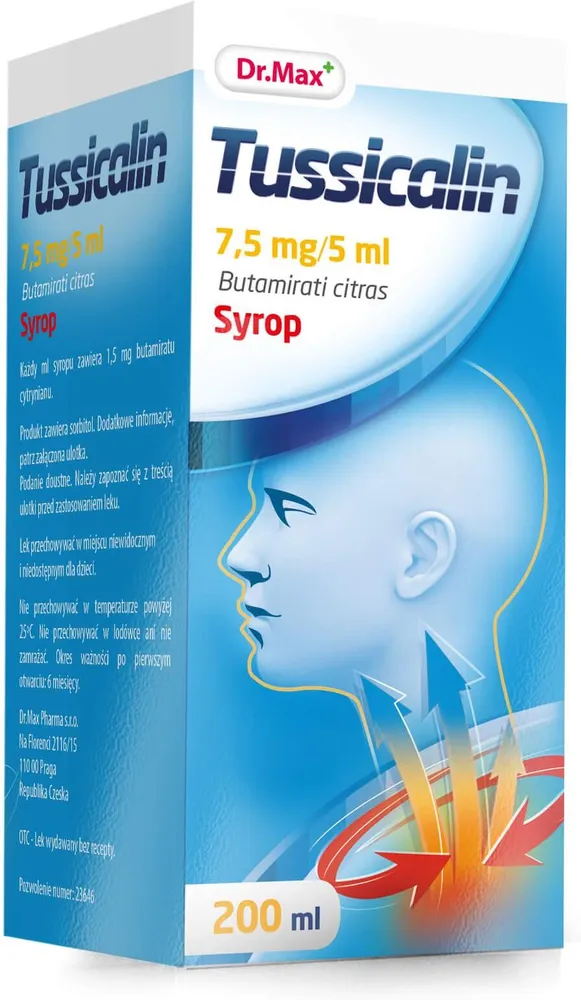
Table of Contents
Package leaflet: Information for the user
Tussicalin, 1.5 mg/ml, syrup
Butamirati citras
Please read all of this leaflet carefully before taking this medicine, because it contains
important information for you.
This medicine should always be taken exactly as described in this patient leaflet or as directed by your
doctor or pharmacist.
- Keep this leaflet so that you can read it again if necessary.
- If you need advice or further information, please consult your pharmacist.
- If you experience any adverse reactions, including any possible side effects not listed in this leaflet, inform your doctor or pharmacist. See section 4.
- If there is no improvement after 5 days (3 days in children), or if you feel worse, consult your doctor.
Contents of the leaflet:
- What Tussicalin is and what it is used for
- Important information before taking Tussicalin
- How to take Tussicalin
- Possible side effects
- How to store Tussicalin
- Contents of the pack and other information
1. What Tussicalin is and what it is used for
Tussicalin contains the active substance butamirate citrate, which belongs to a group of medicines known as antitussives.
Tussicalin syrup is used for the symptomatic treatment of dry, irritating cough of various origins.
This medicine may be used without consulting a doctor only for short-term treatment of acute cough, e.g. due to acute upper and lower respiratory tract infections, trachea or bronchi. This medicine may be used in the treatment of chronic cough only on medical advice.
You should consult your doctor if there is no improvement, or if you feel worse after 5 days of treatment (after 3 days in children under 12 years of age).
2. Important information before using Tussicalin
When not to use Tussicalin
- if the patient is allergic to citric butamirate or any of the other ingredients of this medicine (listed in section 6).
Children
Tussicalin may be used by adults, adolescents, and children over 3 years of age.
Tussicalin should not be used in children under 3 years of age, as the dosing device is not suitable for measuring the correct dose. Other pharmaceutical forms are more appropriate for this age group.
Tussicalin and other medicines
You must tell your doctor or pharmacist about all medicines currently taken or recently taken, as well as any medicines you plan to take.
Do not administer this medicine simultaneously with so-called expectorant medicines (which facilitate the expulsion of mucus), as combining these medicines may lead to mucus retention in the respiratory tract.
Pregnancy, breastfeeding and fertility
If the patient is pregnant or breastfeeding, suspects she may be pregnant, or is planning to have a child, she should consult her doctor or pharmacist before using this medicine.
Tussicalin should not be used during pregnancy or breastfeeding unless advised by a doctor.
Driving and operating machinery
Tussicalin may rarely cause drowsiness in some individuals. In such cases, driving or operating machinery should be avoided.
While being treated with Tussicalin, children should not ride bicycles or scooters.
Tussicalin contains propylene glycol
The medicine contains 50.75 mg of propylene glycol in 15 ml of syrup, equivalent to 3.38 mg/ml.
The maximum recommended daily dose (60 ml) contains 203 mg of propylene glycol.
Tussicalin contains sorbitol
The medicine contains 6,750 mg of sorbitol in 15 ml of syrup, equivalent to 450 mg/ml. The maximum recommended daily dose (60 ml) contains 27 g of sorbitol. Sorbitol is a source of fructose. If intolerance to certain sugars has previously been diagnosed in an adult (or child), or if hereditary fructose intolerance—a rare genetic disorder in which the body does not break down fructose—has been diagnosed, the patient should contact a doctor before taking the medicine or giving it to a child. Sorbitol may cause gastrointestinal discomfort and may have a mild laxative effect.
Tussicalin contains sodium benzoate
The medicine contains 15 mg of sodium benzoate in 15 ml of syrup, equivalent to 1 mg/ml. Sodium benzoate may increase the risk of jaundice (yellowing of the skin and whites of the eyes) in newborns (up to the 4th week of life).
Tussicalin contains sodium
The medicine contains less than 1 mmol (23 mg) of sodium per dose; therefore, the medicine is considered "sodium-free".
3. How to use Tussicalin
This medicine should always be used exactly as described in this leaflet or as directed by a
doctor or pharmacist. If in doubt, consult a doctor or
pharmacist.
The usual dose is:
| Body weight (kg) | Age | Dosage |
| 11-16 kg | 3-6 years | 5 ml (7.5 mg) three times daily |
| 17-39 kg | 6-12 years | 10 ml (15 mg) three times daily |
| Adolescents 40 kg and above | Over 12 years | 15 ml (22.5 mg) three times daily |
| Adults above 61 kg | Adults | 15 ml (22.5 mg) four times daily |
To correctly measure the dose, use the measuring device provided. The oral syringe should be washed and dried after each use. Do not pour the syrup remaining in the measuring device back into the bottle.
Do not use Tussicalin for longer than 7 days without consulting a doctor.
If symptoms worsen or do not improve within 5 days (3 days in children under 12 years of age) and (or) if fever, rash, or persistent headache occur, consult a doctor.
In the case of chronic cough, Tussicalin should only be used following medical advice, after the doctor has determined the appropriate dose and duration of treatment.
Always use the lowest possible dose for the shortest time needed to relieve symptoms.
Do not exceed the recommended dose.
Use of a higher than recommended dose of Tussicalin
If a higher than recommended dose of Tussicalin is taken, seek medical advice immediately.
Missed dose of Tussicalin
If a dose is missed, take it as soon as possible. Do not take a double dose to make up for a missed dose.
If you have any further questions about the use of this medicine, consult your doctor or pharmacist.
4. Possible adverse reactions
Like all medicines, this medicine can cause adverse reactions, although not everybody will experience them.
The following symptoms may occur in rare cases (may affect no more than 1 in 1,000 people):
- drowsiness,
- nausea,
- diarrhoea,
- skin rash (urticaria).
These adverse reactions should resolve after dose reduction or discontinuation of treatment. If these symptoms persist, use of Tussicalin should be stopped and medical advice should be sought from a doctor or pharmacist.
Reporting of adverse reactions
If any adverse reactions occur, including any adverse reactions not listed in this leaflet, inform a doctor or pharmacist. Adverse reactions can be reported directly to the Department of Monitoring of Adverse Drug Reactions at the Office for Registration of Medicinal Products, Medical Devices and Biocidal Products:
Al. Jerozolimskie 181C, 02-222 Warsaw, tel.: + 48 22 49-21-301, fax: + 48 22 49-21-309, website: https://smz.ezdrowie.gov.pl
Adverse reactions can also be reported to the marketing authorization holder.
By reporting adverse reactions, additional information on the safety of this medicine can be collected.
5. How to store Tussicalin
Do not store above 25°C. Do not store in the refrigerator or freeze.
Shelf life after first opening: 6 months.
Keep the medicine in a place inaccessible and not visible to children.
Do not use this medicine after the expiry date stated on the packaging, label, and cardboard box after EXP. The expiry date refers to the last day of the stated month.
Medicines must not be disposed of via wastewater or household waste. Ask your pharmacist what to do with medicines no longer required. This will help protect the environment.
6. Contents of the package and other information
What Tussicalin contains
- The active substance in Tussicalin is butamirate citrate. One ml of syrup contains 1.5 mg of butamirate citrate.
- The other ingredients are: sorbitol (E 420), glycerol, sucralose (E 955), sodium benzoate (E 211), citric acid monohydrate, caramel flavour (also containing propylene glycol (E 1520)), bitter chocolate flavour F 2428 (also containing propylene glycol (E 1520)), purified water.
What Tussicalin looks like and contents of the pack
Tussicalin syrup is a colourless or light yellow liquid.
Tussicalin syrup is packed in glass or plastic bottles with a plastic screw cap of 100 ml or 200 ml. Each pack contains a measuring cup with graduations at 5, 10, 15, 20, 25 and 30 ml.
Not all pack sizes may be marketed.
Marketing Authorisation Holder and Manufacturer
Marketing Authorisation Holder:
Dr.Max Pharma s.r.o.
Na Florenci 2116/15
110 00 Prague
Czech Republic
Manufacturer:
Balkanpharma Troyan AD
Krayrechna Str. 1
5600 Troyan
Bulgaria
This medicinal product is authorised in the European Economic Area countries under the following names:
Czech Republic Tussical
Poland Tussicalin
Slovakia Tussical