Trusopt
Poland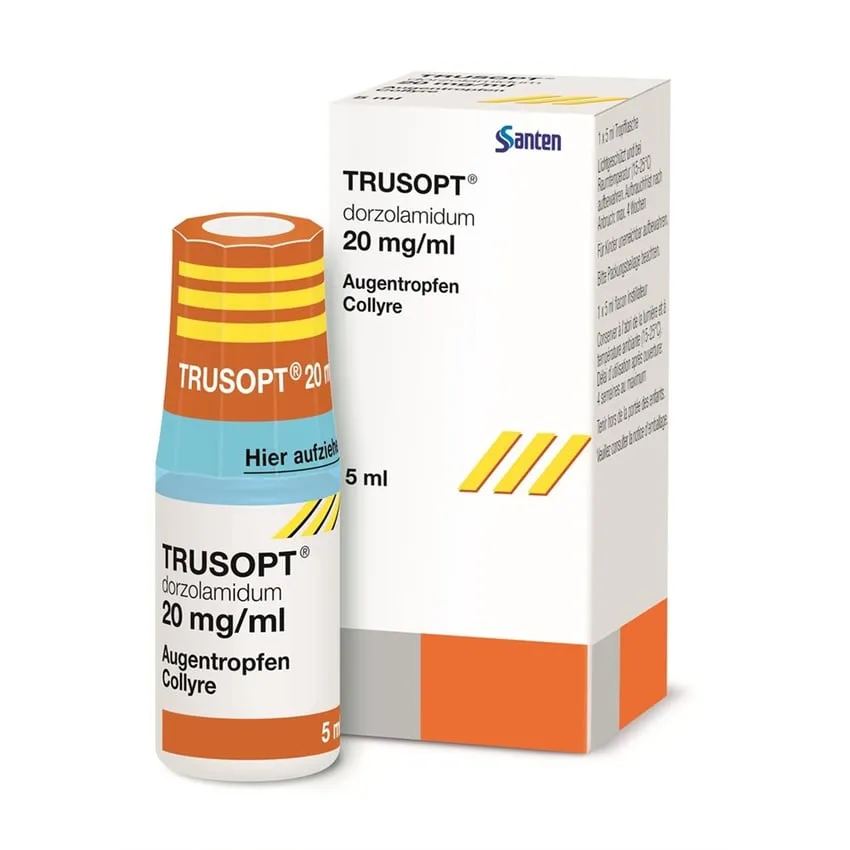
Table of Contents
Package leaflet: Information for the user
TRUSOPT, 20 mg/ml, eye drops, solution
dorzolamide
Please read all of this leaflet carefully before using this medicine because it contains
important information for you
- Keep this leaflet as you may need to read it again.
- If you have any questions, please ask your doctor or pharmacist.
- This medicine has been prescribed for a specific individual. Do not pass it on to others. It may harm someone else even if their symptoms are the same.
- If you experience any adverse reactions, including those not listed in this leaflet, tell your doctor or pharmacist. See section 4.
Contents of the leaflet
- What Trusopt is and what it is used for
- What you need to know before using Trusopt
- How to use Trusopt
- Possible side effects
- How to store Trusopt
- Contents of the pack and other information
1. What Trusopt is and what it is used for
Trusopt is a medicine containing dorzolamide hydrochloride, which belongs to a group of medicines called carbonic anhydrase inhibitors. Trusopt is used locally in the conjunctival sac.
Trusopt is indicated to reduce elevated intraocular pressure and for the treatment of glaucoma.
2. Important information before using Trusopt
When not to use Trusopt
- if the patient is allergic to the active substance or to any of the other ingredients of this medicine (listed in section 6).
Warnings and precautions
Before starting to use Trusopt, discuss this with your doctor or pharmacist.
Inform your doctor about any previous illnesses, current medical conditions, and any allergies to medicines.
If eye irritation occurs or new symptoms develop, such as eye redness or eyelid swelling, contact your doctor immediately.
If the patient suspects an allergic reaction after using Trusopt (e.g. rash, severe skin reaction, or itching), they should stop using the medicine and contact a doctor immediately.
If the patient wears contact lenses, remove the lenses before instilling the drops and wait at least 15 minutes before reinserting them.
Trusopt and other medicines
Tell your doctor or pharmacist about all medicines the patient is currently taking or has recently used, including any other eye drops and over-the-counter medicines. It is important to inform the doctor about the use of high doses of acetylsalicylic acid or sulfonamides.
Children and adolescents
Studies have been conducted on the use of Trusopt in infants and children under 6 years of age with elevated intraocular pressure or diagnosed glaucoma. For additional information, please consult your doctor.
Elderly patients
No significant differences in efficacy and safety of Trusopt have been observed in elderly patients compared to younger individuals.
Pregnancy and breastfeeding
If the patient is pregnant, breastfeeding, suspects she may be pregnant, or is planning to become pregnant, she should consult her doctor before using this medicine. The doctor will decide whether Trusopt can be used.
Use in patients with kidney or liver impairment
Inform your doctor about any past or current kidney or liver diseases.
Driving and operating machinery
Some adverse effects (such as dizziness and blurred vision) may affect the ability to drive or operate machinery (see section 4. Possible adverse effects). Until these symptoms have completely resolved, the patient should not drive or operate machinery.
Trusopt contains benzalkonium chloride
This medicine contains approximately 0.002 mg of benzalkonium chloride per drop, equivalent to 0.075 mg/mL.
Benzalkonium chloride may be absorbed by soft contact lenses and may change their color. Contact lenses should be removed before instillation and at least 15 minutes should pass before reinserting them.
Benzalkonium chloride may also cause eye irritation, especially in patients with dry eye syndrome or corneal disorders (the transparent layer at the front of the eye). If abnormal eye sensations, stinging, or eye pain occur after using the medicine, contact your doctor.
3. How to use Trusopt
This medicine should always be used exactly as your doctor has told you. If you are unsure, you should consult your doctor or pharmacist. The dose and duration of treatment are determined by your doctor.
If Trusopt is the only eye medicine being used, one drop should be instilled into the affected eye(s) three times daily (in the morning, afternoon, and evening).
If your doctor has also prescribed a beta-adrenergic blocking agent in the form of eye drops to reduce intraocular pressure, the recommended dose of Trusopt is one drop into the affected eye(s) twice daily – in the morning and evening.
If another locally applied eye medicine is used in addition to Trusopt, at least a 15-minute interval should be maintained between the administration of each medicine. Ointments should always be applied last.
Do not change the dose without consulting your doctor. If treatment needs to be discontinued, you should contact your doctor immediately.
Do not allow the dropper tip to touch the eye or surrounding areas. To avoid possible contamination of the solution, the dropper should not come into contact with any surface.
Instructions for use:
Do not use if the plastic tamper-evident band around the neck of the bottle is damaged or missing. When opening the container for the first time, remove the plastic tamper-evident band.
Each time you use Trusopt:
- Wash your hands.
- Open the container. Take special care not to touch the dropper tip to the eye, the skin around the eyes, or fingers. Failure to follow this instruction may result in contamination of the eye drops. Using contaminated eye drops may lead to serious complications, including loss of vision.
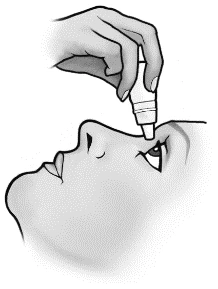
- Tilt your head backward and hold the bottle upside down over the eye.
- Gently pull down the lower eyelid and
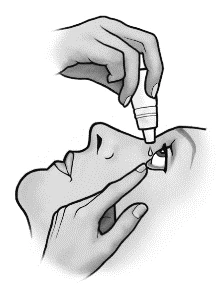
look upward. Gently press the bottle so that a single drop falls into the space between the lower eyelid and the eye.
- Close the eye and press with a finger on the inner corner of the eye for about two minutes.
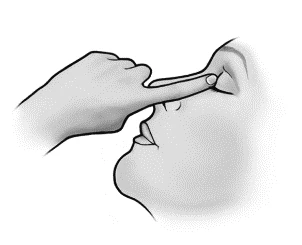
This helps prevent the medicine from being absorbed into the rest of the body.
- To instill the medicine into the other eye, if recommended by your doctor, repeat steps 3 to 5.
- Replace the cap and close the container tightly.
Use of more than the recommended dose of Trusopt
If the contents of the container are accidentally swallowed, seek immediate medical advice from a doctor.
Missed dose of Trusopt
Trusopt should be used as prescribed by your doctor. If you miss a dose, take it as soon as possible. However, if it is almost time for the next dose, do not take the missed dose. Return to your regular dosing schedule.
Stopping Trusopt treatment
Do not stop using Trusopt without first consulting your doctor. If you have any further questions about the use of this medicine, consult your doctor or pharmacist.
4. Possible adverse reactions
Like all medicines, this medicine can cause adverse reactions, although not everybody will experience them.
In clinical trials, the most commonly occurring adverse reactions (in approximately 3% of patients) were eye-related adverse reactions, particularly conjunctivitis and eyelid reactions.
If the patient experiences an allergic reaction, including urticaria, facial swelling, swelling of the lips, tongue and (or) throat, which may cause difficulty in breathing or swallowing, treatment must be discontinued immediately and urgent medical help must be sought.
Possible adverse reactions reported during clinical trials or after the medicine has been marketed, occurring in patients treated with Trusopt, listed according to frequency, are presented below.
Very common (occurring in more than 1 in 10 people):
- Burning and stinging of the eyes
Common (occurring in 1 to 10 in 100 patients):
- Headache
- Superficial punctate keratitis, lacrimation, conjunctivitis, blepharitis, eye itching, eyelid irritation, blurred vision
- Nausea, bitter taste in the mouth
- Feeling of weakness and fatigue
Uncommon (occurring in 1 to 10 in 1,000 patients):
- Iridocyclitis
Rare (occurring in 1 to 10 in 10,000 patients):
- Dizziness, tingling and numbness
- Irritation, including redness, pain, eyelid sticking, transient myopia (resolving after discontinuation of therapy), choroidal detachment following filtration surgery
- Nosebleeds
- Throat irritation, dry mouth
- Contact dermatitis, severe skin reactions (Stevens-Johnson syndrome, toxic epidermal necrolysis)
- Nephrolithiasis
- Subjective and objective local reactions (eyelid reactions) and symptoms of systemic allergic reactions, including angioedema, urticaria and itching, rash, bronchospasm
Frequency unknown (frequency cannot be estimated from available data):
- Dyspnea
- Foreign body sensation in the eye (feeling that something is in the eye)
- Strong, possibly rapid or irregular heartbeat (palpitations)
- Increased heart rate
- Increased blood pressure
- Unusual sensitivity of the eyes to light
Reporting of adverse reactions
If any adverse reactions occur, including any adverse reactions not listed in this leaflet, inform a doctor or pharmacist. Adverse reactions can be reported directly to the Department for Monitoring Adverse Drug Reactions at the Office for Registration of Medicinal Products, Medical Devices and Biocidal Products:
Al. Jerozolimskie 181C, 02-222 Warsaw
Tel.: +48 22 49 21 301
Fax: +48 22 49 21 309
Website: https://smz.ezdrowie.gov.pl
Adverse reactions can also be reported to the marketing authorization holder.
Reporting adverse reactions helps to provide more information on the safety of the medicine.
5. How to store Trusopt
Keep the medicine out of the sight and reach of children.
Store below 25°C, in the original outer packaging. Protect from light.
Do not use this medicine after the expiry date stated on the packaging following "EXP".
The expiry date refers to the last day of the stated month.
Period of validity after first opening the container: 4 weeks.
Medicines must not be disposed of via wastewater or household waste. Ask your pharmacist how to dispose of medicines no longer required. Such measures help protect the environment.
6. Contents of the pack and other information
What Trusopt contains
- The active substance is dorzolamide. 1 ml of solution contains 20 mg of dorzolamide (as dorzolamide hydrochloride).
- The other ingredients are: benzalkonium chloride, hydroxyethylcellulose, mannitol, sodium citrate, sodium hydroxide (to adjust pH), and water for injections.
What Trusopt looks like and contents of the pack
Trusopt is a clear, colourless or almost colourless, slightly viscous solution.
Trusopt is available in a white, semi-transparent plastic container containing 5 ml of solution. The plastic container is closed with a white screw cap.
An unbroken security strip on the container label indicates that the product has not been opened.
Pack sizes:
1 x 5 ml (1 container of 5 ml)
3 x 5 ml (a pack containing 3 containers of 5 ml each)
Not all pack sizes may be marketed.
Marketing Authorisation Holder
Santen Oy
Niittyhaankatu 20
33720 Tampere
Finland
Manufacturer
Santen Oy
Kelloportinkatu 1
33100 Tampere
Finland