Trifas cor
Poland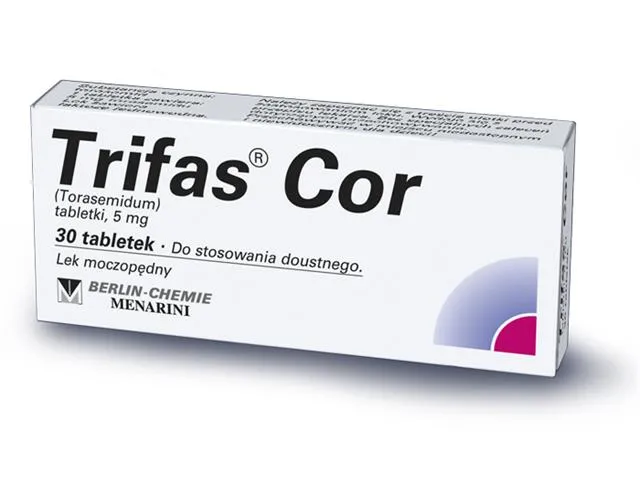
Table of Contents
Package leaflet: Information for the user
TRIFAS COR; 5 mg, tablets
Torasemidum
Please read all of this leaflet carefully before taking this medicine because it contains important information for you.
- Keep this leaflet. You may need to read it again.
- If you have any further questions, ask your doctor or pharmacist.
- This medicine has been prescribed for a specific individual. Do not pass it on to others. It may harm them even if their symptoms are the same.
- If you experience any adverse reactions, including any not listed in this leaflet, tell your doctor or pharmacist. See section 4.
Contents of the leaflet:
- What Trifas Cor is and what it is used for
- What you need to know before taking Trifas Cor
- How to take Trifas Cor
- Possible side effects
- How to store Trifas Cor
- Contents of the pack and other information
1. What Trifas Cor is and what it is used for
Trifas Cor contains the active substance torasemidum and belongs to a group of medicines called loop diuretics.
Torasemidum acts as a diuretic and also lowers blood pressure.
Trifas Cor is used in adults to:
treat essential hypertension and
treat and prevent recurrence of:
- fluid retention in tissues (oedema) and (or)
- fluid accumulation in body cavities (effusions), which may occur due to heart dysfunction (heart muscle weakness).
2. Important information before using Trifas Cor
When not to use Trifas Cor
- if the patient is allergic to
- the active substance torasemide
- substances with a similar chemical structure to torasemide (sulfonamide derivatives);
- any of the other ingredients of this medicine (listed in section 6);
- if the patient has kidney failure (anuria);
- if the patient has severe liver dysfunction accompanied by impaired consciousness (hepatic coma or pre-comatose state);
- if the patient has low blood pressure (hypotension);
- if the patient has reduced circulating blood volume (hypovolemia);
- if the patient has low levels of sodium or potassium in the blood (hyponatremia, hypokalemia);
- if the patient has significant urinary bladder emptying disorders (e.g., due to benign prostatic hyperplasia);
- if the patient is breastfeeding.
Warnings and precautions
Due to insufficiently documented research results, Trifas Cor should not be used in the following cases:
- gout;
- severe cardiac arrhythmias with slow heart rate;
- acid-base balance disorders;
- patients concurrently using lithium salts (medicines used in mood disorders and depression);
- patients using certain antibiotics for the treatment of infections, such as: aminoglycosides, cephalosporins;
- patients with blood morphology disorders, e.g., thrombocytopenia or anemia in patients without kidney dysfunction;
- patients with kidney dysfunction caused by nephrotoxic agents.
Children and adolescents
Trifas Cor should not be used in children and adolescents under 18 years of age due to lack of sufficient data on the use of Trifas Cor in children and adolescents under 18 years of age.
Impact on doping tests
The use of medicinal product Trifas Cor may result in positive anti-doping test results.
The effects of using Trifas Cor as a doping agent are difficult to predict; health risks cannot be excluded.
Trifas Cor and other medicines
Tell your doctor or pharmacist about all medicines you are currently taking or have recently taken, as well as any medicines you plan to take.
-
Use of Trifas Cor may affect the action of the following medicines:
-
Blood pressure-lowering medicines, especially angiotensin-converting enzyme (ACE) inhibitors: administering ACE inhibitors simultaneously or immediately after treatment with torasemide may cause a sudden drop in blood pressure. If you are unsure whether a medicine belongs to ACE inhibitors, ask your doctor or pharmacist.
-
Theophylline (medicines used in the treatment of asthma): Trifas Cor may enhance the effects of these medicines.
-
Neuromuscular blocking agents: increased muscle-relaxing effect.
-
Antidiabetic medicines: Trifas Cor may weaken the action of antidiabetic medicines.
-
Painkillers and rheumatic medicines – when high doses of salicylates are used, torasemide may enhance their toxic effects on the central nervous system.
-
Medicines used in the treatment of circulatory disorders (epinephrine and norepinephrine): Trifas Cor may weaken the action of these medicines.
-
The following medicines affect the action of Trifas Cor:
-
Probenecid (a medicine used in the treatment of gout): probenecid may inhibit the diuretic and antihypertensive effects of torasemide.
-
Some anti-inflammatory medicines (e.g., indomethacin, acetylsalicylic acid): these medicines may inhibit the diuretic and antihypertensive effects of torasemide.
-
Cholestyramine (a medicine used to lower cholesterol levels): concurrent use of cholestyramine may reduce the gastrointestinal absorption of Trifas Cor, thereby reducing its effectiveness.
-
During treatment with high doses (see section 3), Trifas Cor may intensify the following adverse effects:
-
Hearing and kidney damage caused by aminoglycoside antibiotics (e.g., kanamycin, gentamicin, tobramycin) used in the treatment of infections.
-
Hearing and kidney damage caused by cisplatin (used in cancer treatment).
-
Kidney damage caused by cephalosporins (a group of antibiotics) used in the treatment of infections.
-
Other interactions of Trifas Cor with other medicines:
-
Low potassium levels caused by Trifas Cor may intensify adverse effects of concurrently administered digitalis glycosides (used in the treatment of heart failure).
-
Laxatives may increase potassium loss caused by Trifas Cor.
-
Adrenal cortex hormones (mineralo- and glucocorticoids, e.g., cortisone), when used concurrently with Trifas Cor, may increase potassium loss caused by the medicine.
-
Concurrent treatment with Trifas Cor and lithium salts (used in the treatment of sudden mood changes and various types of depression) may increase lithium concentration in serum and thus intensify the heart- and kidney-damaging effects of lithium salts.
Pregnancy and breastfeeding
If the patient is pregnant or breastfeeding, suspects she may be pregnant, or is planning to have a child, she should consult a doctor or pharmacist before using this medicine.
Pregnancy
Trifas Cor may be used during pregnancy only after consultation with a doctor. Only the lowest possible dose should be used.
There is insufficient clinical knowledge regarding the effects of Trifas Cor on unborn children.
Breastfeeding
It is not known whether the active substance of Trifas Cor passes into human milk. Therefore, Trifas Cor must not be used during breastfeeding. If use of the medicine during breastfeeding is necessary, breastfeeding must be discontinued.
Driving and operating machinery
Trifas Cor may alter reaction time. Trifas Cor may impair the ability to actively participate in road traffic, operate machinery, or work without secure foot support. This particularly applies to:
- the initial period of treatment,
- the period during dose increase,
- the period after switching from another medicine,
- the period when starting concomitant treatment with another product.
Alcohol may intensify this effect. Alcohol should not be consumed during treatment with Trifas Cor.
Trifas Cor contains lactose
If the patient has previously been diagnosed with intolerance to certain sugars, the patient should consult a doctor before taking this medicine.
3. How to use Trifas Cor
This medicine should always be used as directed by the physician. If in doubt, consult your
doctor or pharmacist.
Follow the instructions in the leaflet to ensure proper effectiveness of Trifas Cor.
Dosage
Essential hypertension
The recommended initial dose is ½ tablet of Trifas Cor per day, corresponding to 2.5 mg of torasemide.
The antihypertensive effect of Trifas Cor begins gradually during the first week of treatment and
reaches its maximum effect no later than after approximately 12 weeks. If blood pressure has not normalized
after 12 weeks of treatment with Trifas Cor at a dose of ½ tablet (corresponding to 2.5 mg of torasemide)
per day, the dose may be increased to 1 tablet of Trifas Cor per day (corresponding to 5 mg of torasemide).
A stronger antihypertensive effect may be achieved with a higher dose when baseline blood pressure is very high,
and in patients with impaired renal function.
The dose should not be increased beyond one tablet of Trifas Cor (corresponding to 5 mg of torasemide)
per day, as this will not further reduce blood pressure.
Edema and effusions
The recommended initial dose is 1 tablet of Trifas Cor (corresponding to 5 mg of torasemide) per day.
This dose is usually maintained as the maintenance dose.
If the therapeutic response is inadequate and depending on the clinical picture, the dose may be increased
to 2 tablets of Trifas Cor per day (corresponding to 10 mg of torasemide), or up to a maximum of 4 tablets
of Trifas Cor per day (corresponding to 20 mg of torasemide).
If the required dose is 10 mg of torasemide or higher, Trifas 10 (10 mg torasemide) may be used instead.
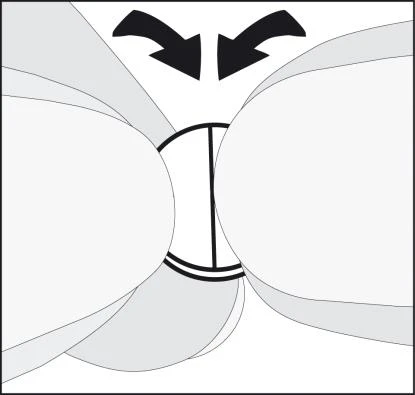
- Tablet splitting Tablets may be divided into two equal doses by breaking along the score line. This allows dose adjustment according to individual patient needs. Hold the tablet between the index fingers and thumbs of both hands, with the score line facing upwards, and break the tablet into two halves along the score line by pressing downwards with the thumbs.
- Patients with hepatic impairment Treatment should be administered with particular caution due to the potential for increased blood concentrations of torasemide.
- Elderly patients Dose adjustment is not required in elderly patients.
Administration
Tablets should be taken in the morning, with a small amount of liquid. The medicine may be taken with or
without food.
Duration of treatment
The duration of treatment with Trifas Cor is determined by the treating physician.
Use of a higher than recommended dose of Trifas Cor
Taking a higher than recommended dose of Trifas Cor may cause:
- increased urination, potentially leading to dangerous fluid and electrolyte loss,
- disturbances in consciousness,
- confusion,
- drop in blood pressure,
- circulatory collapse,
- gastrointestinal disturbances.
Immediately contact your doctor, who will recommend appropriate management.
Missed dose of Trifas Cor
Taking too low a dose reduces the effectiveness of the medicine. Missing a dose of Trifas Cor
also reduces effectiveness. This may manifest, for example, by:
- increased body weight,
- increased fluid retention in the body (edema).
Take the missed dose as soon as possible. However, do not take the missed dose if it is almost time for the next scheduled dose. Do not take a double dose to make up for a missed dose.
Stopping treatment with Trifas Cor
Discontinuation or premature termination of therapy may lead to worsening of symptoms. Under no
circumstances should treatment prescribed by the physician be changed or stopped without prior
consultation.
If you have any doubts regarding the use of this medicine, consult your doctor or pharmacist.
4. Possible adverse reactions
Like all medicines, this medicine can cause adverse reactions, although not everybody will experience them.
Common (may affect up to 1 in 10 people)
- Acid-base imbalance (metabolic alkalosis),
- Muscle cramps (especially at the beginning of treatment),
- Increased levels of uric acid, glucose and lipids (triglycerides, cholesterol) in the blood,
- Potassium deficiency (hypokalaemia), particularly when combined with a low-potassium diet, vomiting, diarrhoea, abuse of laxatives, or in patients with chronic liver dysfunction,
- Depending on the dose used and duration of treatment, disturbances in water and electrolyte balance may occur, particularly a reduction in circulating blood volume (hypovolaemia), loss of potassium and sodium: hypokalaemia and (or) hyponatraemia,
- Gastrointestinal disorders (e.g. loss of appetite, abdominal pain, nausea, vomiting, diarrhoea, constipation), especially at the beginning of treatment,
- Increased activity of certain liver enzymes (gamma-GT) in blood,
- Headaches and dizziness, feeling of fatigue, weakness (especially at the beginning of treatment).
Uncommon (may affect up to 1 in 100 people)
- Increased levels of urea and creatinine (muscle protein) and urea in blood,
- In patients with impaired urination (e.g. due to benign prostatic hyperplasia), urinary retention may occur. In such cases, urination becomes difficult or impossible,
- Dryness of the mouth,
- Sensation of numbness and coldness in the extremities (paraesthesiae).
Very rare (may affect up to 1 in 10,000 people)
- Decreased number of blood cells (red and white blood cells) and platelets (thrombocytes),
- Allergic reactions, for example itching, rash, photosensitivity, severe allergic skin reactions,
- Formation of blood clots in blood vessels (thromboembolic complications),
- Confusion,
- Low blood pressure (hypotension),
- Disorders in coronary or cerebral circulation (including myocardial and cerebral ischaemia). These conditions may lead to cardiac arrhythmias, chest tightness (angina pectoris), acute myocardial infarction, or sudden loss of consciousness (syncope),
- Pancreatitis,
- Visual disturbances,
- Tinnitus,
- Hearing loss.
If any of the adverse reactions listed above occur, inform your doctor immediately. The doctor will assess the severity of symptoms and decide which tests are required. In the event of sudden and severe adverse reactions, consult a doctor immediately. This is very important, as some adverse reactions may be life-threatening. The doctor will decide which analyses should be performed and whether treatment should be continued.
If any hypersensitivity reactions occur (e.g. severe allergic skin reaction), Trifas Cor must not be used again.
Reporting of adverse reactions
If you experience any adverse reactions, including any not listed in this leaflet, tell your doctor, pharmacist, or nurse.
Adverse reactions can be reported directly to the Department of Monitoring of Adverse Drug Reactions at the Office for Registration of Medicinal Products, Medical Devices and Biocidal Products:
Al. Jerozolimskie 181C,
02-222 Warsaw,
Tel.: +48 22 49 21 301,
Fax: +48 22 49 21 309,
Website: https://smz.ezdrowie.gov.pl
Adverse reactions can also be reported to the marketing authorisation holder.
Reporting adverse reactions helps to provide more information on the safety of the medicine.
5. How to store Trifas COR
Keep this medicine out of sight and reach of children.
This medicine does not require any special storage conditions.
Do not use this medicine after the expiry date stated on the carton and blister. The expiry date refers to the last day of the stated month.
Medicines must not be disposed of via wastewater or household waste. Ask your pharmacist how to dispose of medicines no longer required. Such measures help protect the environment.
6. Contents of the pack and other information
What Trifas Cor contains
The active substance is torasemide.
Each tablet contains 5 mg of torasemide.
Other ingredients are: monohydrate lactose, corn starch, colloidal silicon dioxide, magnesium stearate.
What Trifas Cor looks like and contents of the pack
White, round, slightly convex tablets with a score line on one side.
The pack contains 20, 30, 50 or 100 tablets.
Not all pack sizes may be marketed.
Marketing Authorisation Holder
Menarini International Operations Luxembourg S.A.
1, Avenue de la Gare,
L-1611 Luxembourg, Luxembourg
Manufacturer
Berlin-Chemie AG
Glienicker Weg 125
12489 Berlin, Germany
For further information, contact the Marketing Authorisation Holder's representative:
Berlin-Chemie/Menarini Polska Sp. z o.o.
Tel: (22) 566 2100
Fax: (22) 566 2101